Woods, Rose Mary
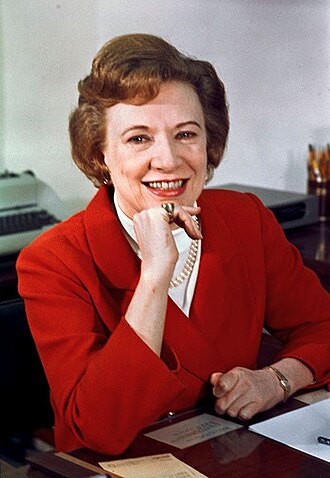
Rose Mary Woods served as President Richard Nixon's fiercely loyal Personal Secretary from January 1969 to May 1973, acting as a crucial gatekeeper to the Oval Office. During the White House taping period (February 1971 – July 1973), she maintained strict control over access to Nixon and was one of the few staff members whose daily interactions with the President were frequently recorded. Following the Watergate-related resignations of top aides H.R. Haldeman and John Ehrlichman, her responsibilities expanded and she was promoted to Executive Assistant and Personal Secretary to the President in June 1973, serving until August 1974. She later became infamous for the "Rose Mary stretch," claiming she accidentally erased 18.5 minutes of a subpoenaed June 1972 tape while transcribing it.
What Woods talks about on the tapes
Public relations 110White House administration 100Vietnam War 90Presidential scheduling 72Presidential schedule 61Speechwriting 59Scheduling 57White House operations 54Foreign Policy 49Watergate 41Political strategy 38Henry Kissinger 37
Conversations (745)
— Page 7 of 8President Nixon and his personal secretary, Rose Mary Woods, discuss the logistical risks surrounding a planned social event for Elmer Bobst at a New York law firm. Fearing disruptive protests due to the event’s location, Nixon decides not to attend, expressing concern that his presence would trigger a demonstration. They agree that Nixon will instead invite Bobst to meet with him privately during a separate visit to the firm, while suggesting that First Lady Pat Nixon attend the event in the President's place.
President Nixon and his personal secretary, Rose Mary Woods, discuss the logistical risks of attending a scheduled event in a neighborhood described as volatile. Concerned about the potential for hostile protests and public disruption, the two agree that the President should not attend the function in person. Nixon instructs Woods to find a way to gracefully cancel his attendance while ensuring the event's organizers are accommodated through other means.
President Nixon and personal secretary Rose Mary Woods met to manage administrative tasks and office correspondence. They discussed the President’s personal notes and specific letters, including a piece of correspondence from Marjorie P. Acker. The meeting also addressed logistical preparations for the President’s upcoming trip to New York.
President Nixon met with H.R. Haldeman, Rose Mary Woods, and Stephen B. Bull to discuss administrative transitions, personnel changes, and political strategy following the 1972 election. A significant portion of the discussion focused on the necessity of a formal, categorical statement regarding the Watergate investigation to protect the integrity of the presidency. Additionally, the participants deliberated on the logistics of announcing cabinet shifts and strategies for managing key political figures, including Bob Dole and Dwight Chapin.
President Nixon, Rose Mary Woods, and Zosimo T. Monzon met to coordinate the administrative processing of presidential correspondence and official White House mail. The discussion focused on establishing protocols for drafting, reviewing, and tracking responses to ensure letters were not duplicated or handled improperly. Additionally, the group briefly addressed logistical matters concerning the maintenance and condition of official pens used by the President.
President Nixon met with Rose Mary Woods, Stephen B. Bull, and Zosimo T. Monzon to discuss a wide range of administrative, personal, and scheduling matters. Key topics included office supply procurement, preparations for the 1973 Inauguration, holiday travel plans, and the management of family-related requests. The President also discussed foreign visitor scheduling, the selection of state gifts, and personnel issues involving members of his extended family.
President Nixon and his personal secretary, Rose Mary Woods, discussed the preparation of reading materials and folders for his upcoming travel. The President ensured that all necessary documents were secured in his briefcase for his scheduled trip, which included meetings with George P. Shultz and Henry Kissinger. They briefly coordinated the logistics of managing his paperwork while he remained occupied with official duties during his time away.
President Nixon and his personal secretary, Rose Mary Woods, discuss the logistics of procuring high-end gifts, specifically music boxes, for cabinet members and major political contributors. Nixon reviews song lists for the boxes and instructs Woods to coordinate orders while maintaining discretion regarding the recipients. The pair also considers the acquisition of high-quality writing pads during Woods' upcoming trip to New York to ensure appropriate presidential gift-giving materials.
President Nixon met with personal secretary Rose Mary Woods and aide Stephen B. Bull to address administrative matters and the management of various gifts received by the White House. The discussion covered the categorization and placement of presidential mementos, including a gold album, a watch, and other personal items designated for different presidential residences. Additionally, the participants briefly touched upon incoming correspondence, including a message from Henry Kissinger regarding Vietnam negotiations and a letter from Whittier, California.
In this Oval Office meeting, President Nixon, Henry Kissinger, H. R. Haldeman, and others discussed the state of Vietnam peace negotiations following a breakdown in talks and North Vietnamese public charges. The participants reviewed the administration's strategic efforts to maintain pressure on Hanoi, including the impact of recent bombing campaigns and the tone of Congressional relations. Additionally, the President and his staff coordinated personnel and administrative matters for the second term, specifically addressing campaign contributor recognition, the vetting of nominees for the Securities and Exchange Commission, and the desire for greater loyalty and political reliability in key appointments.
President Nixon met with H.R. Haldeman and key staff to coordinate end-of-year administrative tasks, including the scheduling of holiday messages and upcoming inaugural activities. The discussion focused on managing the White House staff's workload, press relations regarding the escalating bombing campaign in Vietnam, and strategic planning for bipartisan congressional outreach in the second term. Nixon also addressed personal correspondence regarding a recent article about his family and coordinated efforts related to the establishment of the Nixon Foundation.
President Richard Nixon met with his personal secretary, Rose Mary Woods, to manage administrative tasks, including the selection of gifts and the coordination of presidential correspondence. They discussed the distribution of custom-made music boxes and reviewed letters to individuals such as Ronald Kessler. Nixon also decided to reduce the number of congressional birthday calls and events, opting instead to prioritize more impactful outreach.
President Nixon and his personal secretary Rose Mary Woods briefly discuss the President's upcoming meeting with Associated Press reporter Saul Pett. They weigh the potential value of the interaction, with the President expressing skepticism about Pett's reputation and character. Ultimately, Nixon instructs Woods to gauge the reporter's intentions and determine whether a meeting is advisable.
President Nixon met with his personal secretary, Rose Mary Woods, to coordinate administrative logistics regarding the upcoming 1973 inauguration. They reviewed guest lists and ticket arrangements for individuals including Marjorie P. Acker and historian David Davis, the latter of whom was being considered for potential research collaborations. The discussion also touched upon the scheduling of upcoming appointments and the management of current office correspondence.
President Nixon and his personal secretary, Rose Mary Woods, discussed administrative arrangements regarding the President's upcoming schedule and specific documentation. The pair addressed the logistics of a planned helicopter flight and the handling of materials related to Robert Gray. Nixon directed Woods to leave the documents in his office so he could review them personally upon his return.
Charles W. Colson coordinated with Press Secretary Gerald L. Warren to expedite the release of an official presidential statement regarding the death of baseball legend Roberto Clemente. The participants prioritized the immediate recording and distribution of the statement to radio outlets, prompting Warren to delay his scheduled press briefing to ensure the tape could be broadcast promptly. The conversation also briefly touched upon humanitarian efforts for Nicaragua earthquake victims and the health of Rose Mary Woods.
President Nixon met with Stephen B. Bull, Rose Mary Woods, and Marjorie P. Acker to review administrative and scheduling matters. The group discussed the President's attendance at the upcoming Harry S. Truman memorial service and protocols for receiving foreign officials, as well as the scheduling of a bipartisan congressional meeting regarding wage and price controls. Additionally, the President and his staff organized the inventory and placement of various Christmas gifts, including wine, antique artifacts, and personal items.
President Nixon consulted with his personal secretary, Rose Mary Woods, to arrange a retirement or appreciation gift for Alexander M. Haig, Jr. He requested that Woods prepare an inscribed music box to be presented to Haig during a scheduled ceremony at the White House where Haig would receive the Distinguished Service Medal. The president specified that the gift's inscription should convey gratitude for Haig's dedicated service to the nation.
President Nixon hosted a ceremony in the Oval Office to honor General Alexander M. Haig, Jr. with the Defense Distinguished Service Medal. The event, attended by Haig’s family and high-ranking administration officials, served as a formal recognition of Haig’s significant contributions to national security and his diplomatic efforts, including his work supporting Henry Kissinger. The gathering concluded with photo opportunities and brief discussions regarding Haig's transition out of his White House role.
President Nixon met with Charles Colson, Henry Kissinger, and other staff members to discuss political messaging, legislative relations with Congress, and the strategic direction of his administration. The participants addressed the difficulties of maintaining secrecy during delicate negotiations, particularly concerning military actions and public perception of the war effort. The conversation reflects the President's frustration with congressional opposition and his intent to navigate these political challenges through careful control of the administration's public narrative.
President Nixon instructed his personal secretary, Rose Mary Woods, to arrange for a gift to be delivered to Madame Chiang Kai-shek at the Republic of China embassy in honor of the visiting Vice President of Taiwan. Nixon specified that the gift, which was intended to come from Mrs. Nixon, should be sent to the ambassador for delivery. The two also briefly confirmed the duration of the Vice President's visit and discussed local weather conditions.
President Nixon and Rose Mary Woods met to discuss a wide-ranging agenda of administrative, personal, and inaugural arrangements. They addressed technical logistics such as cassette tape organization and transcription, along with sensitive personnel decisions regarding White House staff and public relations strategies for the First Lady. Additionally, they reviewed potential inaugural activities and identified key appointments, emphasizing the importance of managing press relations and staffing to ensure the effective operation of the East Wing.
President Nixon met with Rose Mary Woods and Press Secretary Ronald L. Ziegler to discuss personal administrative tasks, the management of press relations, and upcoming media strategies. The President addressed recent inaccurate press coverage, specifically criticizing reporting regarding his administration's staffing decisions and internal power dynamics. The participants also evaluated the benefits of low-key media engagements versus formal interviews and finalized plans for how the administration would handle press inquiries regarding the Vietnam settlement and wage-price controls during the transition period.
President Nixon met with H. R. Haldeman and other staff to discuss administrative restructuring, press strategy, and the implementation of a new audio recording system. The participants addressed the potential reassignment of Herbert Klein to a Counselor for Communications role to maintain his utility to the administration, while also reviewing the status of upcoming Cabinet confirmations and Watergate-related concerns involving Egil Krogh. Additionally, Nixon directed staff to install transcription equipment at various locations to enhance the president’s ability to record personal notes and historical documentation.
President Nixon met with H.R. Haldeman, Stephen Bull, and staff members to discuss details regarding the President's 60th birthday celebration, the upcoming inauguration, and long-term staffing reorganization. The group reviewed the success of a surprise birthday film featuring football highlights and discussed the necessity of strictly limiting guests at inaugural events to avoid uncontrollable crowd sizes and political optics issues. Additionally, Nixon emphasized his desire to move toward more informal White House gatherings, while Haldeman provided updates on personnel appointments and strategies for handling the skeptical Washington press corps.
President Richard M. Nixon met with his personal secretary, Rose Mary Woods, in the Old Executive Office Building to review the President’s administrative schedule. The discussion focused on coordinating a specific phone call and confirming the President's precise location for upcoming commitments. No major policy decisions were reached, as the meeting served primarily as an operational check-in regarding the President's itinerary.
President Nixon met with Ronald Ziegler and H.R. Haldeman to coordinate the public messaging and timing regarding the ongoing Vietnam peace negotiations and Henry Kissinger's diplomatic schedule. The participants discussed managing press relations and maintaining staff secrecy as the administration navigated the conclusion of the war and preparations for the upcoming 1973 inauguration. Nixon also engaged in a brief, separate discussion with Rose Mary Woods concerning a symbolic gift calendar designed to reflect the duration of his second presidential term.
President Nixon met with H.R. Haldeman, Ronald Ziegler, Rose Mary Woods, and Marjorie P. Acker to discuss various administrative, political, and personal matters. The conversation touched upon federal budget allocations, the media's portrayal of a recent sniper incident, and Nixon's views on educational policies regarding racial integration. The group also spent significant time troubleshooting and learning the technical operation of a portable dictation recording device.
President Nixon met with H.R. Haldeman, Rose Mary Woods, and Marjorie Acker to discuss the technical operations, portability, and functionality of various dictation machines for use in his offices and during travel. The conversation also covered logistical details regarding the President's attire and protocol for the upcoming 1973 Inauguration, including coordination with family members. Additionally, the group touched on broader administrative matters, including personnel considerations for the second-term reorganization and the public perception of press relations staff.
President Nixon met with his personal secretary, Rose Mary Woods, to coordinate personal correspondence and administrative tasks. The President dictated a congratulatory note to Don Coryell, a former coach at Whittier College, acknowledging his success in the National Football League. Additionally, they briefly discussed the logistics of the President’s upcoming inaugural speech and checked on the health status of Alice Roosevelt Longworth.
President Nixon consulted with his personal secretary, Rose Mary Woods, to verify the text of his upcoming 1973 inaugural speech after noticing a potentially missing sentence regarding treaty commitments. The President expressed concern that the line, "We shall defend our interests," had been inadvertently or deliberately omitted from his current draft. To resolve the discrepancy, Nixon directed Press Secretary Ronald Ziegler to provide Woods with the official press copy for confirmation.
President Nixon met with his personal secretary, Rose Mary Woods, and Stephen B. Bull to review and reform the guest invitation process for White House social events. Expressing frustration with the repetition of the same attendees, the President directed that future guest lists prioritize new, diverse invitees and strictly limit repeat visits for staff and politicians. They also discussed logistical concerns regarding Inaugural event planning, religious services, and the management of contributor expectations.
President Nixon met with his personal secretary, Rose Mary Woods, to finalize administrative logistics following the announcement of a Vietnam peace settlement. The discussion focused on coordinating the distribution of letters to members of Congress and reviewing revisions to the President's public address regarding the settlement. Woods assisted in managing these critical communications and procedural tasks before concluding the brief meeting.
President Nixon consulted with his personal secretary, Rose Mary Woods, regarding the administrative handling of outgoing correspondence. The discussion focused on finalizing a personal note intended for former First Lady Lady Bird Johnson as well as the delivery logistics for official letters addressed to various members of Congress. Woods was tasked with coordinating the specific timing and dispatch of these communications through the military aide and speechwriter Raymond K. Price, Jr.
President Nixon met with his personal secretary, Rose Mary Woods, to coordinate arrangements for an upcoming televised address regarding the Vietnam peace settlement. The discussion focused on administrative logistics, specifically providing instructions for the chief White House operator and Press Secretary Ronald Ziegler to ensure the broadcast proceeded as planned. This meeting served to finalize the communication strategy for announcing the resolution of the Vietnam conflict to the American public.
President Nixon met with William E. Timmons, Rose Mary Woods, and Stephen B. Bull to discuss the administration's strategy regarding the 1974 budget, potential tax increases, and congressional relations. The participants reviewed the successful passage of a recent congressional resolution and coordinated the distribution of the President’s upcoming radio speech to Republican allies. Additionally, the group addressed logistical arrangements for upcoming state dinners, specifically focusing on managing guest lists and seating configurations to better accommodate political figures like Senator Hugh Scott.
President Nixon met with his personal secretary, Rose Mary Woods, to coordinate arrangements for upcoming funeral services. The discussion focused on logistical planning involving the Capitol, the National Cathedral, and the involvement of Billy Graham. Additionally, the two reviewed the President’s schedule at the Executive Office Building and addressed a memorandum from James D. Hughes to H. R. Haldeman.
Rose Mary Woods and Manolo Sanchez met in the President's Old Executive Office Building suite to coordinate personal or administrative matters. The brief interaction concluded with Sanchez indicating he was going to bed. No substantive policy or political decisions were recorded during this brief encounter.
President Nixon and Rose Mary Woods met to review upcoming social schedules, including guest lists for an upcoming state dinner for Edward Heath and plans for future White House entertainment. The conversation also touched upon public reaction to the recent Vietnam settlement and the President's firm stance against granting amnesty to those who avoided service. Additionally, the two discussed the President's personal health regimen, specifically referencing his interest in blood chemistry and medical advice regarding his diet and stress management.
President Nixon met with Stephen B. Bull and Rose Mary Woods to coordinate final arrangements for upcoming social events, including a dinner at Camp David and a State dinner. The discussion focused on fine-tuning guest lists, managing seating arrangements at round tables to facilitate mingling, and selecting appropriate menu items and entertainment. Nixon specifically directed the staff to ensure Cabinet secretaries and other key officials were integrated into the events to foster better professional and social relations.
President Nixon and his personal secretary, Rose Mary Woods, discussed administrative arrangements for an upcoming luncheon featuring Lady Cromer. The President requested that a music box be acquired and delivered as a gift for Lady Cromer prior to the event. Additionally, the pair touched upon the status of misplaced musical items and coordinated Woods’s schedule for later that day.
President Nixon and his secretary, Rose Mary Woods, met to discuss various administrative and political matters, including the handling of official correspondence, guest lists for state dinners, and public relations strategies. They reviewed the President's recent interactions with cabinet members and contributors, specifically focusing on balancing invitees to ensure both political loyalty and donor recognition. Additionally, they touched upon the ongoing political fallout from the Vietnam War, the President’s recent press conference, and the importance of personal communication, such as written notes, in maintaining support among key figures.
President Nixon met with his senior advisors, including Henry Kissinger and Ronald Ziegler, to manage public perception and diplomatic strategy following the announcement of Kissinger's upcoming trip to North Vietnam. The discussion focused on maintaining strict control over press coverage to ensure the secrecy and productivity of the negotiations, while simultaneously addressing the sensitive reintegration of returning POWs and the ongoing cease-fire efforts in Laos and Cambodia. Additionally, the President engaged in a wide-ranging geopolitical review, discussing potential appointments to the Arms Control and Disarmament Agency, strategies for dealing with European allies like Great Britain, and the administration’s mounting frustration with the United Nations.
President Nixon met with his personal secretary, Rose Mary Woods, and assistant Stephen B. Bull to coordinate administrative tasks and social planning. The discussion focused on managing the President's personal correspondence with celebrity acquaintances like Jane Wyman, delegating the handling of incoming telephone calls, and finalizing the guest list for an upcoming state dinner for King Hussein of Jordan. Nixon emphasized the need for a more structured approach to managing his communications to ensure effective engagement with his contacts.
President Nixon and Rose Mary Woods met to coordinate administrative details for upcoming White House events, including seating arrangements and guest lists for state dinners honoring the King of Jordan and Golda Meir. They discussed the potential inclusion of various political figures and guests, as well as scheduling a tea for Alice Roosevelt Longworth. Additionally, the President expressed frustration regarding the delayed Navy discharge of David Eisenhower, accusing Secretary of the Navy John Warner of politicizing the process.
President Nixon met with Charles W. Colson and later Henry Kissinger to discuss White House political strategy, administration appointments, and foreign policy objectives. The discussions focused on managing labor union relations, controlling the narrative through press and polling, and navigating congressional opposition to the administration's budget and reconstruction aid plans for North Vietnam. The President emphasized his desire to implement reorganization in his second term by replacing bureaucrats with political appointees and solidified plans for his upcoming diplomatic initiatives.
In this meeting, President Nixon met with Rose Mary Woods and H. R. Haldeman to address various administrative and political matters, including the guest list protocols for White House events and potential personnel changes for administration appointees. The discussion also covered the logistical planning for an upcoming radio address, where the President expressed frustration over inadequate preparation time and the poor quality of recent briefings provided by his staff. Additionally, they reviewed details regarding the 1973 inaugural ceremonies and the military discharge status of David Eisenhower, reaching consensus on how to manage these sensitive issues.
President Nixon met with his personal secretary, Rose Mary Woods, to discuss administrative tasks and revisions to a draft document. The conversation focused on specific markings, numbering changes, and the handling of cards. The meeting concluded with instructions regarding the delivery of materials to the residence.
President Nixon met with Press Secretary Ronald Ziegler to discuss media strategy, public perception of his foreign policy, and the administration’s response to various press inquiries. The conversation centered on managing criticism regarding Vietnam, addressing negative news stories about Secret Service staffing, and countering perceived bias within wire services like UPI, specifically naming reporters such as Helen Thomas. Nixon emphasized the importance of maintaining control over the news cycle by promoting positive, symbolic actions—such as the recent return of POWs—and coordinating consistent messaging across government departments.
President Nixon met with his staff to discuss public relations strategies, specifically focusing on the recent release of Prisoners of War (POWs), the need to manage expectations for upcoming press conferences, and the delicate political challenge of securing aid for North Vietnam. The President emphasized his desire to avoid "grandstanding" during his planned Pentagon visit while highlighting the need to address the emotional and physical well-being of returning veterans. Additionally, Nixon reviewed administrative staffing issues and social planning for upcoming events, directing his staff to organize White House functions that include a broad cross-section of Congress while managing internal personnel disputes involving the Secret Service and White House aides.
President Nixon met with Rose Mary Woods to discuss routine administrative matters, including White House maintenance schedules, correspondence, and potential staff changes involving Henry Kearns. Following Woods' departure, the President spoke with his daughter, Julie Nixon Eisenhower, to check on her well-being and invite her and David Eisenhower to an upcoming White House church service featuring Norman Vincent Peale. The conversations focused primarily on managing personal scheduling, family arrangements, and logistical issues concerning White House upkeep.
President Nixon, along with Ronald Ziegler and Rose Mary Woods, discussed strategies for an upcoming press conference, including potential questions and answers regarding Nguyen Van Thieu, economic devaluation, and aid to North Vietnam. They also deliberated on the distribution of "appreciation" gifts to political supporters and White House staff, detailing costs and recipients. Additionally, the conversation touched upon White House social events, specifically a dinner for Golda Meir and the performance of Van Cliburn, as well as press relations and public relations matters.
President Nixon, Stephen Bull, and Rose Mary Woods briefly discussed an individual named Mark Goode, who was apparently undertaking a special assignment and had some "Russian warrants" related to his station. The conversation also touched upon the spelling of Goode's name and a message from the President. Rose Mary Woods' entry into the meeting was noted, along with a mention of diplomatic credentials presentation and a separate meeting with Goode.
President Nixon met with Jack J. Dreyfus, Jr. to discuss the therapeutic potential of the drug Dilantin (DPH). Dreyfus sought to enlist the President's help in persuading the medical establishment and government officials to re-evaluate the drug for its use in treating a wide array of conditions beyond epilepsy, including heart arrhythmias, psychiatric disorders, and emotional volatility. As a result, Nixon directed his personal assistant, Rose Mary Woods, to arrange for meetings between Dreyfus and his former physician, Dr. Arnold A. Hutschnecker, as well as high-level officials to facilitate an expert review of the drug's benefits.
President Nixon met with his personal secretary, Rose Mary Woods, for an extremely brief administrative encounter in the Oval Office. Given the immediate departure of Woods at the same time the recording began, the interaction served as a quick exchange of instructions rather than a formal policy discussion. No significant substantive developments or policy decisions were recorded during this session.
President Nixon met with his personal secretary, Rose Mary Woods, and an unidentified individual to coordinate administrative tasks and White House social functions. The discussion focused on managing guest lists for upcoming state dinners—specifically for Italian Prime Minister Giulio Andreotti and potential events for Leonid Brezhnev—while balancing the inclusion of key political contributors and various ethnic groups. Additionally, Nixon addressed scheduling matters, personal correspondence, and the importance of securing high-quality entertainment for these high-profile social events.
President Nixon and his personal secretary, Rose Mary Woods, held a brief, informal meeting in the Oval Office to address administrative or logistical matters. The dialogue centered on the review of unspecified documents or materials that required Woods’s immediate attention. No major policy decisions were reached during this short interaction, which functioned primarily as a routine exchange concerning office workflow.
President Nixon contacted Rose Mary Woods to ensure the timely delivery of a note he had dictated for Robert C. “Bob” Wilson. During the brief check-in, Woods explained her early departure to attend a reception held in her honor by the American Newspaper Women. Nixon, satisfied that staff member Marjorie P. Acker would facilitate the delivery, emphasized the importance of the document reaching Wilson prior to his evening meeting.
President Nixon met with his personal secretary, Rose Mary Woods, to troubleshoot a faulty communication buzzer between their offices and verify the status of correspondence regarding an individual named Wilson. Nixon expressed concern over ensuring a specific letter was processed and delivered correctly. Woods confirmed her awareness of the dictation, leading Nixon to prioritize confirming the letter's dispatch before moving forward.
President Nixon and his personal secretary, Rose Mary Woods, met to discuss routine administrative matters, including scheduling, personal gifts, and correspondence. The conversation touched upon the President’s upcoming appointments, the delivery of clothing items, and the handling of a sensitive letter from the daughter of Philip F. Timberlake regarding her marriage and family. Woods provided logistical assistance, and the two briefly deliberated on how the President should respond to personal constituent mail.
President Nixon and his personal secretary, Rose Mary Woods, discuss the personal tragedy surrounding Philip Timberlake and his family, specifically regarding a letter sent to the President. They address the controversy involving a potential civil rights violation claim and the broader social embarrassment such issues could cause during an inauguration. The conversation reflects Nixon’s desire to handle the delicate situation with compassion while acknowledging the gravity of the family's history, including the suicide of Timberlake’s son.
President Nixon and Alexander Haig met to discuss the volatile situation in Vietnam, specifically focusing on North Vietnamese cease-fire violations and infiltration activities. They evaluated the potential for renewed US airstrikes, weighing the risks to POW releases and public opinion against the necessity of maintaining American credibility and enforcing the settlement. The conversation also touched upon tensions regarding the performance of the CIA and intelligence agencies, as well as friction between Henry Kissinger and other officials regarding policy implementation and press management.
President Nixon met briefly with his personal secretary, Rose Mary Woods, to discuss his daily schedule. The exchange was limited to a brief arrival confirmation, lasting only one minute before Woods departed. No significant policy decisions or substantive actions were recorded during this brief encounter.
Following an initial social segment with Pat Nixon and guests regarding White House events and gifts, the President met with Press Secretary Ronald Ziegler to discuss administration strategy. They analyzed the political landscape surrounding rising food prices, focusing on shifting the narrative to emphasize farmer cooperation in increasing production. The conversation also shifted to Watergate, where Nixon and Ziegler assessed the impact of recent press conferences on cooling Senate investigations and discussed Henry Kissinger’s problematic press relations as highlighted in a recent book by Henry Brandon.
President Nixon and his personal secretary, Rose Mary Woods, reviewed logistical preparations for upcoming state visits and dinners. The discussion focused on refining guest lists, specifically regarding the inclusion of Congressional members and contributors associated with Maurice Stans. The meeting served to finalize arrangements for high-profile social events and potential stag dinner configurations.
President Nixon, H. R. Haldeman, and Rose Mary Woods met to conduct an extensive review of White House social planning, focusing on guest list management for state dinners, church services, and stag dinners. The President provided specific guidance on balancing invitations between political supporters, Cabinet officials, and Congressional members, while stressing the importance of maintaining an appropriate atmosphere and limiting guest list size. Significant developments included decisions regarding upcoming events for South Vietnamese President Nguyen Van Thieu, the handling of sensitive guest selections for judicial and diplomatic receptions, and directives to improve the technical execution of entertainment at White House functions.
President Nixon met with Vice President George H.W. Bush, New Jersey Governor William Cahill, and other officials to discuss volatile primary election contests in New Jersey and the broader political strategy for upcoming races. The participants focused on managing divisive party primaries—specifically involving Charles Sandman—and the potential fallout from congressional fights and Watergate-related scrutiny. Nixon instructed his team to remain neutral in primaries while offering support to candidates in general elections, and they coordinated a public messaging approach regarding the President's stance on these state-level political matters.
President Nixon met with his personal secretary, Rose Mary Woods, to address a variety of administrative, logistical, and personal matters. The conversation covered routine office business, including the handling of official correspondence, the coordination of travel arrangements for family members, and the acquisition of gifts for supporters. Additionally, the pair discussed private financial matters and scheduling concerns regarding the President’s upcoming trip to Florida.
President Nixon and his personal secretary, Rose Mary Woods, met to discuss administrative matters and correspondence, specifically referencing a letter from Alice Widener. The discussion centered on identifying and handling a specific photograph mentioned in Widener's communication, which appeared in the New York Daily News. Nixon directed Woods on how to process the item, concluding the brief exchange with instructions for its management.
President Nixon met with his personal secretary, Rose Mary Woods, in the Old Executive Office Building to discuss administrative matters regarding incoming correspondence. The brief discussion centered specifically on a letter from Hobart D. ("Hobe") Lewis. No significant policy decisions or major strategic developments were recorded during this exchange.
President Nixon and his personal secretary, Rose Mary Woods, met briefly to address administrative matters concerning the preparation of a speech typescript. Their discussion focused specifically on formatting requirements, particularly the appropriate spacing for the document. The meeting concluded quickly after these instructions were provided.
President Nixon met with Henry Kissinger and Rose Mary Woods to refine the final text of an upcoming address regarding his administration's foreign policy and national defense strategies. Nixon and Kissinger reviewed phrasing related to the Vietnam War, relations with China and the USSR, and the importance of maintaining military strength to ensure successful arms reduction negotiations. The President expressed a desire to justify the current defense budget while addressing mounting political pressure from critics concerning both Vietnam and the Watergate scandal.
President Nixon met with his personal secretary, Rose Mary Woods, for a brief administrative session in the Executive Office Building. The discussion focused on specific clerical tasks, including the provision of typing instructions and guidance regarding the formatting of documents through underlining. The meeting concluded rapidly after these procedural directives were addressed.
President Nixon and his personal secretary, Rose Mary Woods, met to review materials for a forthcoming presidential address. The discussion centered on the preparation and content of the speech, which Nixon was finalizing during this period. No specific policy decisions were finalized, as the interaction focused primarily on administrative logistics and document coordination.
President Nixon met with his personal secretary, Rose Mary Woods, shortly after a meeting with John Ehrlichman to discuss administrative matters and follow-up tasks. The brief interaction focused on the handling of specific documents or copies related to ongoing discussions involving Chuck Colson’s public appearances and John Dean’s coordination with Ehrlichman regarding L. Patrick Gray. No major policy shifts were recorded, but the exchange highlights the logistical management of sensitive materials during a period of intense scrutiny over the administration's internal affairs.
President Nixon and his personal secretary Rose Mary Woods met briefly to discuss technical specifications for a typescript of an upcoming presidential speech, specifically regarding document spacing. The conversation also included informal remarks about the weather and climate experienced by Woods during her recent trip to California. No major policy decisions were made during this brief administrative check-in.
Rose Mary Woods and General Walter R. Tkach provide the President with positive feedback regarding his recent speech on Vietnam and returning prisoners of war. They highlight the public's emotional response to his rhetoric on patriotism and his firm stance against amnesty for draft evaders. The conversation concludes with the President requesting follow-up calls from key advisors and supporters, including Patrick Buchanan and Admiral Thomas Moorer, to further discuss the address.
President Nixon and personal secretary Rose Mary Woods discussed administrative details, including scheduling, gift logistics for Vietnam POWs and their families, and the potential for a visit with Norman Chandler. The conversation also focused on the President's ongoing work on his upcoming Vietnam speech, with Woods praising his decision to write the address personally to ensure the language remained direct and accessible. Nixon concluded the meeting by emphasizing his commitment to refining the speech through his own direct involvement.
President Nixon, Rose Mary Woods, and unidentified individuals met briefly in the Oval Office to facilitate an unspecified logistical or medical arrangement. The discussion involved technical coordination regarding telecommunications equipment and the movement of the participants within the office. The meeting concluded with the departure of the unknown parties, leaving the exact nature of the interaction largely unrecorded.
President Nixon met with Congressmen George A. Goodling and Samuel L. Devine to discuss the recent successful efforts to sustain his presidential vetoes in Congress. A significant portion of the conversation focused on Goodling's potential retirement and the prospect of Dwight David Eisenhower II running for his congressional seat in the 1976 election. Nixon advised the congressmen to keep their political plans confidential for the time being, suggested that Eisenhower should avoid officially declaring his candidacy prematurely, and cautioned against public signs of nepotism. The meeting concluded with informal pleasantries and the distribution of White House gifts by Rose Mary Woods.
President Nixon met with his personal secretary Rose Mary Woods, valet Manolo Sanchez, and other individuals to coordinate logistics for his daily schedule and movement between the Oval Office and the Executive Office Building. The brief discussion primarily focused on scheduling appointments, including meetings with Samuel L. Devine and David Eisenhower II. Additionally, the participants touched upon routine administrative matters, including Woods's recent travel to California.
President Nixon and his personal secretary, Rose Mary Woods, briefly coordinate the schedule for a forthcoming meeting with David Eisenhower. Nixon discusses the logistics of Eisenhower's arrival and expresses his intention to prepare specific talking points for their discussion. The exchange concludes with a brief mention of the day's timeline for their respective appearances at the Oval Office and the Executive Office Building.
President Nixon and H. R. Haldeman met to discuss the urgent need for a strategic public relations move regarding the escalating Watergate scandal. They reviewed the growing pressure from the U.S. Attorney’s office and problematic accounts provided by John Dean, specifically regarding the destruction of evidence and the alleged involvement of Charles Colson and L. Patrick Gray. Nixon and Haldeman concluded that the administration needed to proactively disclose information by 3:00 p.m. to regain control of the narrative before further leaks or accusations from prosecutors occurred.
President Richard Nixon met with his personal secretary, Rose Mary Woods, in the Oval Office to discuss undisclosed matters. The majority of the recorded session consists of a withdrawn segment classified as a personal returnable item. Consequently, no substantive policy decisions or administrative actions are publicly documented for this brief encounter.
President Nixon instructed his personal secretary, Rose Mary Woods, to coordinate the preparation of a typed version of his upcoming Watergate address. Woods confirmed that she had already forwarded a draft to the President that was difficult to read, prompting Nixon to direct her to send the document to speechwriter Raymond K. Price, Jr. for transcription. This brief exchange highlights the urgent logistical efforts to finalize the text for the President's public statement regarding the unfolding scandal.
President Nixon contacted his personal secretary, Rose Mary Woods, to request a specific verification regarding his schedule. He tasked her with researching and confirming the exact date of his previous meeting with Thomas A. Pappas. Woods agreed to locate the information and report back to him via telephone.
Rose Mary Woods provides President Nixon with the specific date of a prior meeting he held with Thomas A. Pappas. This brief exchange serves to clarify the President's past scheduling details. No further actions or significant policy discussions occur during the call.
Rose Mary Woods facilitates a telephone conversation between Ambassador John A. Volpe and the White House during a period of significant political instability. Volpe expresses his admiration and support for President Nixon following a televised address, praising the President’s courage and commitment to maintaining the integrity of the office. Volpe also offers to provide specific suggestions regarding White House staff reorganization, which he agrees to transmit via a formal cable marked for the President’s personal attention.
Rose Mary Woods instructs the White House operator to facilitate a sequence of incoming calls for President Nixon. She specifically directs the operator to connect Secretary of State William P. Rogers first, followed by Dr. Billy Graham. The request establishes the administrative workflow for the President's late-night communications.
President Nixon received a call from Secretary of Commerce Frederick B. Dent, who expressed his support and praise for the President's recent televised speech regarding the Watergate scandal. The two discussed the importance of showing strong leadership and maintaining administrative unity during this challenging period. Nixon concluded the brief exchange by confirming the rescheduling of an upcoming Cabinet meeting to Wednesday to accommodate the arrival of West German Chancellor Willy Brandt.
Henry Kissinger called President Nixon to express support following a speech regarding the Watergate scandal, framing the President's actions as courageous and historically significant. Nixon dismissed the political turmoil and criticism as temporary "hysteria" and insisted that his primary focus remained on maintaining world peace. The two men briefly discussed the necessity of ignoring the scandal and confirmed the scheduling of Kissinger’s upcoming trip to Moscow.
Tricia Nixon Cox and Rose Mary Woods discuss the incoming public and political reaction to President Nixon’s recent Watergate-related speech. The conversation focuses on logging telephone calls from key figures such as Nelson Rockefeller, Ronald Reagan, and Winton Blount to gauge national support. Woods reports that despite logistical challenges in tracking communications, early indicators from loyalists like Charles Colson suggest the President maintains strong support from his core base.
President Nixon and Rose Mary Woods discussed the management of his presidential schedule, emphasizing the need for stricter screening of appointments and visitor access to minimize distractions. The conversation further addressed the administration's reaction to Nixon's April 30 Watergate speech, with the two reviewing incoming phone calls and feedback from prominent supporters. Nixon expressed personal frustration regarding Vice President Spiro Agnew's conduct and discussed his reliance on Woods to organize incoming correspondence and messages during this period of political pressure.
President Nixon and his secretary, Rose Mary Woods, reviewed correspondence and reports concerning the public and political reaction to the President's April 30, 1973, televised address regarding the Watergate scandal. They discussed various supporters and critics, specifically noting concerns about Senator Charles Percy’s advocacy for a special prosecutor and the supportive messages received from family and political allies. The discussion served as an informal status update on the administration's political standing and the incoming volume of communications during the crisis.
In this meeting, President Nixon addressed his Cabinet and senior staff regarding the recent departures of top aides H.R. Haldeman and John Ehrlichman, framing the transition as a necessary move to restore stability amidst the escalating Watergate investigation. Nixon emphasized the importance of maintaining public trust, directed the staff to cooperate fully with investigators, and insisted that the White House avoid any appearance of a cover-up. Cabinet members and staff discussed the administration’s focus on governance, foreign policy, and economic management, reaffirming their collective commitment to the President's agenda despite the political crisis.
President Nixon and his personal secretary, Rose Mary Woods, discuss the implementation of attendance limits for White House staff at official social events. The conversation focuses specifically on the guest list for the upcoming state dinner for West German Chancellor Willy Brandt. During the discussion, they evaluate the inclusion of Peter M. Flanigan, noting his involvement in ongoing treaty negotiations.
Rose Mary Woods called President Nixon to express her pride and provide positive feedback regarding his recent speech at the New Majority dinner. She reported that prominent guests, including Bill and Alice Marriott, were deeply moved by his address despite the mounting political pressure Nixon faced. The President dismissed concerns regarding rumors of resignation or impeachment circulating among Congressmen, attributing the negativity to the limitations of his legislative liaison staff.
President Nixon met with Alexander Haig and Ronald Ziegler to coordinate White House messaging regarding administrative reorganization and the ongoing fallout from the Watergate scandal. The participants discussed strategies to project a positive image, including how to brief the press on the advisory roles of presidential counselors and the formation of cabinet committees. They also addressed the legal implications of the John Dean situation, specifically aiming to emphasize reports that lacked evidence linking the President to the scandal while preparing for upcoming Congressional hearings.
President Nixon and his personal secretary, Rose Mary Woods, briefly coordinated their schedules during an encounter in the Old Executive Office Building. The dialogue primarily concerned Woods's availability and attendance at an upcoming reception. The interaction concluded with a mutual agreement to postpone or adjust their immediate plans to accommodate other obligations.
President Nixon instructed his personal secretary, Rose Mary Woods, to relay a message of support to Maurice Stans and John Mitchell to avoid direct presidential contact that might create political exposure. He tasked Woods with assuring them of his confidence in their eventual vindication while specifically requesting that she also attempt to reach John and Martha Mitchell. This conversation highlights the President's efforts to maintain back-channel morale among key associates embroiled in the Watergate investigation without creating a traceable record of his involvement.