Irwin, John N., II
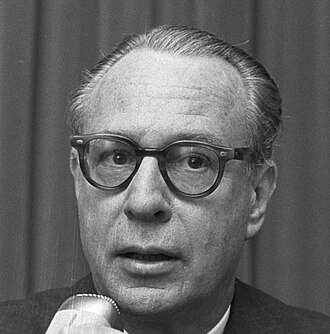
During the Nixon White House taping period, John N. Irwin, II served as a high-level diplomat. He began as Under Secretary of State in September 1970 and continued in that role until July 1972. At that point, his title changed to Deputy Secretary of State, a position he held until February 1973, effectively becoming the first person to hold that office. Shortly after, in March 1973, he transitioned to become the U.S. Ambassador to France, a post he held for the remainder of the Nixon administration.
President Nixon met with his national security team, including Vice President Agnew, Henry Kissinger, and William Rogers, to review the status of ongoing military operations in Southeast Asia and the complex diplomatic situation in the Middle East. Military leadership provided a detailed briefing on Operation Lam Son 719 and related efforts to interdict the Ho Chi Minh Trail, emphasizing that while the fighting is intense, the operations are effectively disrupting enemy logistics and protecting American withdrawal interests. The discussion subsequently shifted to the Middle East, where the President expressed frustration over Israel's reluctance to offer a concrete negotiating position despite Egypt's concessions. Nixon concluded by stressing the importance of maintaining a firm stance, noting that while the U.S. remains a reliable ally, it will not offer unconditional support without a reciprocal commitment to a serious peace process.
President Nixon and a wide-ranging group of Cabinet members, advisors, and Congressional representatives met to discuss the growing national energy crisis and the necessity of transitioning to nuclear power. AEC Chairman Glenn Seaborg and other experts detailed the technological, environmental, and economic advantages of the liquid metal fast breeder reactor, emphasizing its ability to maximize fuel efficiency and provide long-term, pollution-free energy. The participants concluded that a strong national commitment, including significant federal funding and industry collaboration, is essential to accelerate the development of demonstration reactors and ensure future energy independence.
President Nixon met with his Cabinet and key staff to coordinate legislative strategies and manage domestic policy agendas. The discussion focused on securing passage for welfare reform and other administration priorities by engaging directly with congressional leadership and balancing competing interests within the labor market. Participants assessed the challenges of mobilizing support among both Democrats and Republicans and emphasized the necessity of persistent lobbying and effective communication with legislative committees.
President Nixon met with Vice President Agnew, Treasury Secretary John Connally, and Republican Congressional leaders to address critical economic and legislative challenges. The primary focus was the potential bankruptcy of the Lockheed Corporation and the necessary legislative strategy to secure government loan guarantees to prevent a ripple effect of industrial failures and job losses. Additionally, the group reviewed the administration's legislative priorities, including welfare reform, general and special revenue sharing, and the status of various appropriations bills.
President Nixon met with his cabinet, diplomatic staff, and intelligence officials to declare drug abuse 'public enemy number one' and to coordinate a comprehensive strategy for eradicating the international supply of narcotics. The participants evaluated the effectiveness of current interdiction programs in Southeast Asia, the Middle East, and Europe, ultimately concluding that despite increased law enforcement efforts, the drug problem was expanding. The President directed his team to prioritize the escalation of foreign pressure, including potential subsidies for poppy crop eradication in Turkey, and announced the centralization of domestic drug policy under a new White House office.
President Nixon met with his National Security Council to discuss strategy for Mutual and Balanced Force Reduction (MBFR) negotiations with the Soviet Union, emphasizing the importance of verification and maintaining allied unity. The President and his advisors examined how to use these potential force reductions to counter domestic congressional pressure for unilateral troop withdrawals. Additionally, the group addressed the ongoing crisis surrounding the publication of the Pentagon Papers, with Nixon expressing a need to strengthen penalties for leaking classified information and to defend the executive branch's ability to maintain secure communications.
President Nixon met with Henry Kissinger, Adm. Thomas Moorer, and other administration officials to strategize on the escalating India-Pakistan crisis, specifically aiming to prevent an outbreak of war. The discussion emphasized a policy of U.S. neutrality and the importance of avoiding public pressure on Pakistan while encouraging quiet, behind-the-scenes diplomatic efforts to reach a political accommodation. Nixon decided to send representatives to explore humanitarian relief options as a pragmatic vehicle to facilitate these sensitive political conversations with Pakistani leader Yahya Khan.
President Nixon and members of the National Security Council met to review the Fiscal Year 1973 defense budget and evaluate U.S. strategic capabilities relative to the USSR. The discussion centered on balancing budgetary constraints with the requirements of the Nixon Doctrine, specifically regarding troop deployments in Europe, East Asia, and the need for flexible "swing forces." The participants assessed the modernization of strategic forces, naval requirements, and the political implications of U.S. military presence abroad in the context of ongoing diplomatic negotiations with China and the Soviet Union.
President Nixon convened a large meeting with Vice President Agnew and his Cabinet to discuss the national economy and the "New Economic Policy" he had announced the previous day. Key topics included the wage-price freeze, import surcharges, tax relief, budget cuts, and the convertibility of the dollar. The administration sought Cabinet support for these initiatives and discussed their potential impact on international trade and domestic employment.
President Nixon met with the National Security Council and senior advisors to conduct an extensive assessment of the deteriorating political and military situation in South Vietnam, focusing on the stability of the Nguyen Van Thieu administration and the threat posed by opposition factions and communist forces. The discussion covered strategic military planning for the upcoming dry season in Cambodia and Laos, the progress of Vietnamization, and the implications of U.S. troop withdrawal timelines on both the battlefield and domestic public opinion. Participants also evaluated the potential impact of diplomatic initiatives, including the President's announcement regarding Henry Kissinger’s trip to Peking, on North Vietnam's strategic calculations and internal morale.
President Nixon, Vice President Agnew, and members of his Cabinet met to coordinate a unified administration strategy ahead of critical International Monetary Fund (IMF) meetings and ongoing global trade negotiations. The discussion emphasized the necessity of maintaining the recently imposed 10% import surcharge and a firm bargaining stance to address the nation's economic balance of payments and reshape the international monetary system. Nixon and his advisors agreed that while foreign partners would likely criticize U.S. policy, maintaining domestic political support and correcting long-standing trade imbalances remained the administration's primary objective.
President Nixon and members of the National Security Council met to coordinate the United States' strategy regarding ongoing arms control negotiations with the Soviet Union. The discussion centered on the complexities of Anti-Ballistic Missile (ABM) systems, the status of Safeguard and hard site defenses, and the comparative capabilities of Soviet and American submarine-launched ballistic missiles (SLBMs) and ICBMs. Participants evaluated potential congressional reactions and internal administration messaging while addressing the strategic implications of Soviet negotiating positions.
President Nixon and the National Security Council met to coordinate U.S. strategy regarding European security, specifically focusing on the upcoming ministerial meetings in Brussels and the push for Mutual and Balanced Force Reduction (MBFR) talks. Participants discussed the complexities of navigating negotiations with Soviet counterparts, managing the varying interests of NATO allies, and addressing the political pressures surrounding troop levels and defense burden-sharing. The conversation concluded with a consensus on the need to maintain a unified diplomatic front while carefully managing the timing and scope of potential force reductions.
President Nixon met with senior administration officials, including Henry Kissinger, Richard Helms, and Admiral Thomas Moorer, to discuss urgent foreign policy concerns regarding the escalating India-Pakistan conflict and the geopolitical maneuvering of the Soviet Union. The participants evaluated the risks posed by Soviet involvement in the region and the potential for broader international instability. The meeting served to align the administration's strategic stance on these pressing global security challenges.
President Nixon called Deputy Secretary of State John N. Irwin, II to commend his skillful handling of a critical Washington Star article by George Sherman. Nixon characterized the journalist's report as a deliberate attempt to create discord between the White House and the State Department, a tactic he compared to past efforts against John Foster Dulles. The President praised Irwin's affirmative response to the press, reinforcing their unified stance against media efforts to stir internal departmental conflict.
President Nixon held a brief meeting with Deputy Secretary of State John N. Irwin, II to commend his handling of a recent public statement. Nixon praised Irwin’s professional conduct and ability to manage departmental criticism and internal gossip. The conversation served primarily as a brief expression of presidential support for Irwin's performance regarding sensitive State Department communications.
President Nixon and members of the National Security Council met to evaluate strategic options for the ongoing Strategic Arms Limitation Talks (SALT), focusing on ABM site deployments and the potential inclusion of submarine-launched ballistic missiles (SLBMs). Nixon emphasized the political necessity of securing an agreement that prevents Soviet strategic superiority, while participants debated the relative merits of "hard-site" defense versus current safeguard proposals and the impact of these negotiations on Congressional support. The discussion underscored a shared concern regarding the erosion of U.S. bargaining leverage and established a firm directive to pursue an agreement based on the principle of strategic equivalency.
President Nixon met with his Cabinet and key staff to discuss the upcoming departure of Secretary of the Treasury John B. Connally and to address broader administration matters. The discussion covered the timing of administrative changes, the transition of economic policy responsibilities to George Shultz, and the status of ongoing federal investigations following the recent shooting of George C. Wallace. Connally reflected on his tenure as Treasury Secretary and his future plans, while the President reaffirmed his commitment to his current economic program and leadership agenda.
President Nixon met with departing U.S. Ambassador to France John N. Irwin II and General Brent Scowcroft to discuss Irwin's mission and the strategic importance of U.S.-French relations. Nixon emphasized his desire for close personal and political cooperation with French President Georges Pompidou, particularly regarding East-West relations, global economic stability, and the inclusion of Japan in international consultations. The President underscored his commitment to strengthening alliances following breakthroughs with the USSR and China, tasking Irwin with conveying high-level American respect for French leadership and intellect.