Stans, Maurice H.
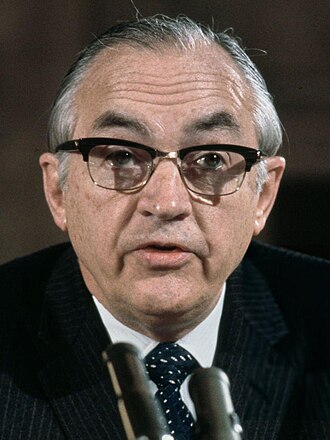
Maurice H. Stans served as President Nixon's Secretary of Commerce from January 1969 until February 1972. During the taping period, in February 1972, he resigned from his cabinet post to become the finance chairman for the Committee for the Re-Election of the President. In this role, he was a highly effective fundraiser for Nixon's 1972 campaign.
President Nixon and his Cabinet met to discuss the ongoing military operations in Indochina and the development of the administration's national health reform agenda. Regarding the war, officials reviewed the progress of South Vietnamese incursions into Laos and Cambodia, noting that the strategy was successfully disrupting enemy supply lines while shifting the burden of ground operations away from American forces. The conversation then transitioned to a detailed proposal from Secretary of Health, Education, and Welfare Elliot Richardson regarding healthcare reform, with the group debating the costs, tax implications, and administrative feasibility of implementing Health Maintenance Organizations (HMOs) and national health insurance standards.
President Nixon hosted a group of officials, family members, and congressional guests in the Oval Office for the ceremonial swearing-in of Thomas S. Kleppe as the new Administrator of the Small Business Administration (SBA). Following the oath of office, the group discussed the agency's primary objectives, specifically emphasizing the need for active engagement with the business community and the provision of low-interest loans for victims of the recent California earthquake. The meeting concluded with the President presenting gifts to the attendees and formal expressions of mutual support and cooperation.
President Nixon met with his Cabinet and key staff to discuss the status of the administration's revenue sharing legislative agenda and receive briefings on various international developments. Administration officials reported on their outreach efforts to build public and Congressional support for revenue sharing while addressing opposition from labor and minority groups. Additionally, Cabinet members provided updates on their recent foreign travels, emphasizing the geopolitical successes of the Nixon Doctrine in Southeast Asia and the strengthening of international cooperation on transportation and environmental safety.
President Nixon and his Cabinet met to discuss the ongoing challenge of inflation and rising construction costs, focusing on the administration's strategic options for economic stabilization. Dr. Paul McCracken reviewed current inflationary trends and labor market data, outlining a spectrum of potential responses ranging from maintaining current fiscal policies and targeted interventions to implementing more aggressive measures like wage and price controls. The meeting served as a forum to evaluate the efficacy of various regulatory mechanisms, such as the National Commission on Productivity and the suspension of the Davis-Bacon Act, while weighing the political and practical risks of further government intervention in the economy.
President Nixon and the Council on International Economic Policy (CIEP) met to review global economic trends, specifically focusing on the United States' competitive position regarding trade, technological exports, and shifting GNP shares among developed and developing nations. The participants discussed the challenges posed by Japanese industrial policies, the role of multinational corporations, and potential antitrust law reforms to better align with international business realities. The meeting served to define the CIEP’s procedural structure and establish priorities for future foreign economic initiatives, including trade legislation and adjustment assistance programs.
President Nixon met with Franco Mario Malfatti, President of the European Commission, and various U.S. officials to address rising protectionist tensions between the United States and the European Economic Community (EEC). The discussion focused on the necessity of reciprocal trade concessions, specifically identifying how minor, mutually beneficial adjustments—such as those regarding citrus and textiles—could alleviate domestic political pressures and prevent broader trade conflicts. Nixon emphasized the importance of finding practical solutions to avoid protectionism, while Malfatti discussed the EEC’s ongoing efforts toward economic integration and the logistical challenges posed by the community's potential expansion. To facilitate progress, the parties agreed to coordinate follow-up efforts, including an upcoming diplomatic mission by Ambassador David Kennedy to Europe and Asia.
President Nixon met with H. R. Haldeman, Maurice Stans, and James Lynn to review a comprehensive report by the Commerce Department regarding the business community's dissatisfaction with the administration. The participants discussed strategies to improve government-business relations, including mitigating the influence of anti-business sentiment in federal agencies, addressing specific grievances concerning antitrust and environmental regulations, and improving the commercial services provided by the State Department. Nixon directed his staff to maintain a defensive posture for business against Congressional and public pressure while cautioning that the administration's capacity to favor business is limited by the prevailing anti-industry political climate.
President Nixon and a wide-ranging group of Cabinet members, advisors, and Congressional representatives met to discuss the growing national energy crisis and the necessity of transitioning to nuclear power. AEC Chairman Glenn Seaborg and other experts detailed the technological, environmental, and economic advantages of the liquid metal fast breeder reactor, emphasizing its ability to maximize fuel efficiency and provide long-term, pollution-free energy. The participants concluded that a strong national commitment, including significant federal funding and industry collaboration, is essential to accelerate the development of demonstration reactors and ensure future energy independence.
President Nixon met with H. R. Haldeman to discuss political strategy for the Anti-Ballistic Missile (ABM) vote, emphasizing the need to avoid early deals and keep the administration's position firm until the final vote. Following the swearing-in of William J. Casey as SEC Chairman, Nixon conferred with his staff and Arthur F. Burns on domestic economic management, public relations, and the importance of projecting a more passionate and committed image to the public. Finally, Nixon met with Dr. Rainer Barzel of the German Christian Democratic Union to discuss the status of Berlin negotiations and the political implications of Willy Brandt's Ostpolitik, during which Nixon reaffirmed the United States' commitment to maintaining a federal presence in Berlin.
President Nixon met with his economic advisors and Henry Kissinger to strategize on managing mounting domestic and international pressures regarding textile, steel, and shoe import quotas. The discussion focused on leveraging diplomatic and economic inducements, such as trade initiatives and aid, to secure favorable voluntary restraint agreements with Japan, Taiwan, Hong Kong, and Korea. The participants concluded that a coordinated strategy involving high-level diplomatic outreach followed by technical negotiations was necessary to address industry concerns and prevent restrictive legislative action.
President Nixon and his Cabinet met to receive a briefing on international affairs and domestic policy, with a focus on Secretary of State William P. Rogers' recent diplomatic travels to the Middle East and the feasibility of desalinization technology. Rogers reported on his efforts to stabilize the Middle East through ceasefire maintenance and discussed the geopolitical concerns of various regional leaders. Dr. Edward E. David Jr. and other experts presented a detailed plan to advance domestic water desalinization and nuclear power capabilities, with the President calling for a major, accelerated federal effort to ensure American technological leadership. The meeting concluded with a brief status report from Treasury Secretary David M. Kennedy regarding the current international monetary situation and the fluctuations of the dollar.
President Nixon, Vice President Agnew, and a large group of Cabinet members and senior staff met to establish a strategic framework for domestic policy, budget planning for the 1973 fiscal year, and the development of the 1972 Republican legislative and election platform. Participants reviewed polling data regarding national, community, and family concerns, noting that the economy, inflation, and unemployment are primary public priorities while other issues like pollution and consumerism are often driven by media visibility. The President and attendees emphasized the need for better communication to receive credit for administration accomplishments, focusing on a limited number of 'gut issues' rather than overextending on too many programs. Ultimately, the group discussed the necessity of coordinating policy initiatives and messaging to ensure visible progress on key economic and social concerns ahead of the 1972 election.
President Nixon and his senior advisors and business leaders convened to formalize a national strategy for increasing veteran employment, emphasizing the need for businesses to provide veterans with a hiring advantage. The discussion included strategies for managing the fallout from the recently leaked Pentagon Papers, with Nixon directing his team to resist congressional hearings on war conduct while ensuring the documents were securely channeled to responsible leadership. Nixon also expressed a desire to keep the focus of the controversy on the previous administrations and away from current operations, tasking officials with maintaining a unified, firm stance against political opportunists.
President Nixon met with his Cabinet to address the persistent problem of unauthorized leaks within the federal bureaucracy and to establish clear expectations for departmental discipline. He emphasized that decision-making must remain internal and closed to prevent political sabotage, specifically citing the negative impact of leaks on economic policy and administrative unity. Nixon announced that H.R. "Bob" Haldeman would oversee efforts to tighten internal controls, while Secretary John Connally was designated to handle the official announcement of upcoming economic policy decisions.
President Nixon met with the National Commission on Productivity to discuss the evolving state of the global economy and the United States' competitive position in the post-World War II era. The conversation focused on the rapid industrial growth of Japan and Western Europe, the emergence of China, and the necessity for the U.S. to enhance its productivity to maintain economic leadership. Nixon emphasized that while diplomatic and political tensions with the Soviet Union might fluctuate, long-term economic stability and international influence would depend on domestic production and effective global economic engagement.
President Nixon met with members of the National Commission on Productivity, including union leaders, corporate executives, and government officials, to discuss strategies for enhancing American economic productivity and competitiveness. The conversation focused on the role of government-industry cooperation, the importance of basic versus applied research in fostering technological innovation, and the challenges posed by foreign trade competition and environmental regulations. Participants emphasized the need to align private sector investment with national economic goals to ensure long-term stability and job growth in an increasingly global market.
President Nixon met with his Cabinet members to discuss the delicate political landscape surrounding the administration's efforts to open communications with the People's Republic of China. The conversation centered on the necessity of maintaining strict discretion to avoid premature public speculation, which could jeopardize sensitive diplomatic negotiations and create political vulnerabilities. Nixon emphasized the importance of a unified front among Cabinet members to manage domestic and international expectations as the policy shift progressed.
President Nixon met with Vice President Agnew and his Cabinet to discuss the administration's foreign policy objectives and the state of the national economy. Agnew briefed the attendees on his recent international tour, highlighting the global reception of the Nixon Doctrine and the challenges posed by the Arab-Israeli conflict, East Pakistan, and the increasing Soviet and Chinese presence in various regions. Nixon and his advisers subsequently addressed the economic outlook, emphasizing the need for an aggressive, unified defense of administration policies regarding inflation and unemployment, while dismissing the viability of permanent wage and price controls. Finally, the President mandated a strict reduction in government personnel and grade-level escalation to improve budget management across executive departments.
President Nixon convened a large meeting with Vice President Agnew and his Cabinet to discuss the national economy and the "New Economic Policy" he had announced the previous day. Key topics included the wage-price freeze, import surcharges, tax relief, budget cuts, and the convertibility of the dollar. The administration sought Cabinet support for these initiatives and discussed their potential impact on international trade and domestic employment.
President Nixon met with the Council on International Economic Policy (CIEP) and key economic advisors to discuss the administration's post-August 15 New Economic Policy (NEP) and future international trade strategy. Peter G. Peterson led a presentation analyzing the shortcomings of global liberal trading systems and the challenges posed by foreign competitors like Japan, while other officials addressed the domestic economic impact, labor relations, and the status of ongoing monetary negotiations. The President emphasized the need for a firm but diplomatic approach toward Japan and directed his team to maintain the offensive on domestic economic policy while keeping options flexible regarding international monetary reform.
President Nixon met with the Cost of Living Council to assess the implementation and public reception of the 90-day wage-price freeze initiated on August 15, 1971. The council members, including John Connally, George Shultz, and Arthur Burns, reported on the effectiveness of enforcement efforts, current compliance levels, and the complexities of handling exemption requests. The discussion shifted toward strategic planning for Phase II, emphasizing the need for sustainable economic policies, public leadership, and the critical role of securing support from business and labor leaders before the freeze's conclusion.
President Nixon, Pat Nixon, and the Cabinet met with their spouses to discuss the implementation and public perception of the administration’s New Economic Policy. Secretary of the Treasury John Connally led a comprehensive briefing on the wage-price freeze, tax reforms, and international monetary adjustments aimed at curbing inflation. The discussion emphasized the necessity of these economic measures for restoring national growth, managing federal expenditures, and building public and congressional support for the administration's program.
President Nixon met with the members of the Commission on International Trade and Investment Policy, led by Chairman Albert L. Williams, to discuss the committee's recently completed report on global economic competition. The conversation focused on the necessity of re-evaluating U.S. trade, monetary, and labor policies in light of increased challenges from a revitalized Europe and a highly organized Japanese industrial sector. Nixon and the commission members explored strategies for restoring U.S. global competitiveness, including the role of investment tax credits, the impact of antitrust laws on industrial mergers, and the long-term implications of the August 1971 economic initiatives.
President Nixon held two distinct discussions: first, he met with Maurice Stans, George Shultz, and Kenneth Cole to strategize on economic policy, specifically debating the budget and political messaging for the Minority Business Enterprise program and the potential for controlling bank profits. He then met with Romanian Ambassador Corneliu Bogdan and Henry Kissinger to discuss international relations, including the desire for strengthened U.S.-Romanian economic ties and Romania's autonomy within the Eastern Bloc. Throughout the meeting, the President emphasized his firm stance on maintaining U.S. credibility and pressure regarding the ongoing Vietnam War negotiations.
President Nixon, Vice President Agnew, and members of his Cabinet met to coordinate a unified administration strategy ahead of critical International Monetary Fund (IMF) meetings and ongoing global trade negotiations. The discussion emphasized the necessity of maintaining the recently imposed 10% import surcharge and a firm bargaining stance to address the nation's economic balance of payments and reshape the international monetary system. Nixon and his advisors agreed that while foreign partners would likely criticize U.S. policy, maintaining domestic political support and correcting long-standing trade imbalances remained the administration's primary objective.
President Nixon met with his Cabinet and key staff members to review the administration’s domestic and foreign policy priorities, primarily focusing on the economic transition to 'Phase II' and the announcement of a 1972 Soviet summit. Officials discussed the successful implementation of the wage-price freeze and the strategy for securing organized labor's cooperation on the newly formed Pay Board and Price Commission to curb inflation. Additionally, the President addressed the importance of linking economic policy to job growth through his pending tax proposals, while Secretary of State Rogers and the President emphasized that international diplomatic overtures toward the Soviet Union and China were part of a cohesive, long-term strategy for global peace.
President Nixon met with his Cabinet Committee on Executive Reorganization to coordinate strategy for the administration's departmental restructuring proposals. The discussion focused on overcoming bureaucratic resistance, navigating complex Congressional committee jurisdictions, and addressing concerns regarding constituency-based programs like the Rural Electrification Administration. To advance these reforms, Nixon directed his Cabinet members to personally engage with key Congressional leaders and exert stricter control over their respective bureaucracies to ensure support for the legislative agenda.
President Nixon and the Cost of Living Council convened to discuss the efficacy of the administration's economic stabilization program, specifically the transition from Phase I to Phase II. Participants evaluated the success of existing price and wage controls and addressed the future of the Pay Board and Price Commission ahead of the 1972 calendar year. The meeting concluded with a formal vote to adopt an amendment to 'Option 2' regarding economic policy adjustments.
President Nixon met with his Cabinet officers to discuss a variety of domestic and international issues, including transportation leadership, government funding through a continuing resolution, and the cultivation of opium poppies in Turkey. The conversation also touched upon administrative transitions, such as the departure of Secretary of Agriculture Clifford Hardin, and strategies for managing the national economy and price controls. Nixon emphasized the importance of maintaining clear leadership and coordination across departments to ensure the success of his domestic policy initiatives.
Maurice Stans briefed President Nixon and Henry Kissinger on his recent 17-day trade exploration mission to the Soviet Union, Poland, and Sweden. Stans detailed positive, high-level discussions with Soviet Premier Alexei Kosygin regarding potential economic cooperation, including grain sales, industrial equipment credit, and the establishment of joint fact-finding groups. President Nixon directed Stans to maintain a low profile with the press to avoid prematurely committing to specific trade concessions while the administration maneuvers through ongoing geopolitical tensions in South Asia.
Vice President Spiro Agnew met with members of the Nixon Cabinet and congressional leadership to provide a detailed briefing on his recent diplomatic and trade-focused trip to the Soviet Union. The discussion centered on potential economic collaboration, the strategic importance of trade with the Soviets, and the ongoing international monetary negotiations regarding the devaluation of the dollar. Participants debated the risks of transferring technology to the Soviet Union, the necessity of bipartisan congressional support for upcoming trade and fiscal legislation, and the impact of the U.S. surcharge on global trade relations.
President Nixon placed a holiday call to Secretary of Commerce Maurice Stans, who was vacationing with John A. Mulcahy. The discussion primarily served to exchange Christmas greetings, though Nixon briefly addressed geopolitical concerns regarding the Soviet Union. The President praised Stans’s recent trip to the USSR and reaffirmed the administration’s strategic approach to upcoming diplomatic negotiations.
President Nixon met with his Vice President and Cabinet to discuss the state of the U.S. economy, the administration's fiscal policy, and the upcoming 1973 budget. Key areas of focus included interpreting unemployment data—specifically the impact of new entrants to the workforce—and managing inflation through Phase II price and wage controls. Nixon urged his department heads to aggressively implement approved spending programs to stimulate the economy, while simultaneously directing them to more effectively communicate and promote the administration's economic achievements and social policy investments to the public.
President Nixon met with Maurice Stans to discuss the formal announcement of Stans’s resignation from his cabinet position and his subsequent transition to a new political role. The participants reviewed the status of the economy and business policy, specifically addressing the Federal Trade Commission's actions toward cereal companies and the administration's relationship with the business community. Toward the conclusion of the meeting, Peter G. Peterson and Peter M. Flanigan joined the President to finalize the protocol and media strategy for the forthcoming personnel announcements.
President Nixon met with his Cabinet and senior staff to debrief them on the results and implications of his recent diplomatic trip to the People's Republic of China. The President emphasized that the primary success of the visit was the establishment of a new communication channel between the two nations, which he argued was essential for managing long-term stability and reducing the potential for future conflict. Nixon shared his impressions of Chinese leadership, particularly his discussions with Chou En-lai, noting the stark ideological differences while highlighting common strategic interests, such as peace in the Pacific and balancing influence against the Soviet Union. The discussion concluded with a focus on how this opening could be leveraged to reshape international relations and manage regional tensions across Asia.
President Nixon met with H. R. Haldeman and Maurice Stans to evaluate the 1972 re-election campaign's status, discussing polling data, fundraising, and strategic responses to George McGovern. The participants reviewed campaign finance regulations, media advertising efforts, and the political impact of the Watergate scandal on the Washington establishment. Additionally, they coordinated the President's upcoming schedule, including the production of campaign-related audio recordings and outreach to business and labor leaders.
President Nixon met with Clark MacGregor, Maurice Stans, and a large group of staff from the Finance Committee of the Committee to Re-elect the President in the Cabinet Room. The meeting served as a morale-boosting session or formal gathering for the campaign’s fundraising team. Due to the presence of a withdrawn item spanning over seven minutes, the specific substantive discussions remain restricted or were largely ceremonial in nature.
President Nixon met with H.R. Haldeman, Maurice Stans, and others to discuss second-term administrative reorganizations, press strategy, and Vietnam policy, specifically the impact of renewed bombing. Much of the discussion focused on managing the aftermath of the 1972 campaign, including the handling of surplus funds and the recognition of major donors through social events and potential appointments. Nixon expressed frustration over the perceived political hostility of the press and the impact of the Watergate scandal on his administration's public reputation and fundraising efforts.