Nixon, Richard M. (President)
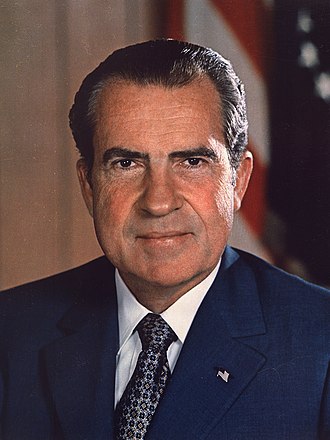
Richard M. Nixon served as the 37th President of the United States from January 1969 until his resignation in August 1974. In February 1971, he ordered the installation of a secret voice-activated taping system in the White House to preserve a historical record of his administration. Until the system's existence was revealed and dismantled in July 1973, the tapes captured Nixon directing major foreign policy initiatives, such as the opening to China, as well as his central role in the Watergate cover-up.
What Nixon talks about on the tapes
White House operations 4,718Presidential scheduling 2,225Public relations 1,784Presidential schedule 1,782Vietnam War 1,693Logistics 1,650Manolo Sanchez 1,626White House communications 1,400White House administration 1,399Presidential communication 1,243Henry Kissinger 1,191Foreign Policy 1,183
Conversations (21,010)
— Page 112 of 211President Nixon contacted the White House operator to initiate a telephone call to Frank L. Rizzo, the Mayor of Philadelphia. This communication served as an administrative request to facilitate direct contact between the President and the Mayor. No substantive policy discussions were recorded during this brief logistical exchange.
President Nixon held a brief administrative interaction with a White House operator to facilitate an outgoing communication. No substantive policy matters or historical events were recorded during this connection. The exchange was limited to the technical process of placing a telephone call.
President Richard Nixon contacted Philadelphia Mayor Frank L. Rizzo to inquire about his health following his recent hospital discharge. The two also touched upon political matters, including the President's upcoming trip to Wilkes-Barre, Pennsylvania, and the presidential campaign of George McGovern. Additionally, they briefly mentioned a prior conversation Nixon had held with John Cardinal Krol.
President Richard Nixon met with Philadelphia Mayor Frank Rizzo to exchange pleasantries and discuss recent interactions with local media representatives. The brief conversation focused on personal well-being following a hospitalization and general administrative updates regarding university relations. No major policy decisions were reached during this short, informal check-in.
President Nixon requested that the White House operator place an outgoing call to Charles W. Colson. This administrative exchange served as the precursor to a subsequent conversation between the President and his special counsel. No further substantive policy matters were discussed during this brief connection.
President Richard Nixon met with his valet, Manolo Sanchez, to discuss the logistics and organization of materials contained within a briefing book. The conversation focused on the provenance and historical placement of specific documents or items related to domestic affairs prepared by Patrick J. Buchanan. No substantive policy decisions were reached, as the dialogue centered on the physical management and location of presidential records.
President Nixon met with his personal valet, Manolo Sanchez, in the Old Executive Office Building to coordinate the delivery of specific briefing materials. The discussion focused on the logistics of transporting a briefing book to ensure the President had the necessary documents for his scheduled duties. No policy matters were addressed, as the brief exchange was limited to these administrative arrangements.
President Nixon held a brief, routine administrative interaction with the White House operator to facilitate an outgoing call. No substantive policy matters or political discussions were recorded during this exchange. The primary purpose of the contact was to manage the President's telecommunications needs.
President Richard M. Nixon and Charles W. Colson discussed the strategic messaging behind forthcoming administration announcements. The conversation focused specifically on public policy regarding the Vietnam War, particularly addressing the duration of tours of duty for draftees. This dialogue served to refine the administration's approach to communicating these sensitive military adjustments to the American public.
President Nixon met with special counsel Charles W. Colson in the Old Executive Office Building to discuss political strategy and sensitive administrative matters. While the transcript remains unavailable for this segment, the meeting served as a direct consultation between the President and a key advisor regarding the management of ongoing White House initiatives. The discussion concluded abruptly, leaving no documented record of specific directives or final outcomes from the session.
President Nixon contacted the White House operator to facilitate a telephone connection with his Press Secretary, Ronald L. Ziegler. The interaction was purely administrative, serving as a brief request to initiate communication with a key staff member. No substantive policy discussions or decisions were recorded during this brief exchange.
President Nixon and Press Secretary Ronald Ziegler consulted regarding an upcoming press statement. The discussion centered on the messaging strategy for a story concerning baseball greats and the anticipated public reaction to the announcement. The two agreed on the necessity of maintaining a firm and truthful tone in the release.
President Nixon and Press Secretary Ronald Ziegler met to discuss the logistics and strategic timing of a forthcoming televised press conference to be held in the East Room. The discussion focused on balancing the reach of the viewing audience against potential interruptions to prime-time network programming. Nixon tasked Ziegler with finalizing the scheduling details while considering the impact of different time slots on West Coast and Midwest viewership.
President Nixon contacted the White House operator to facilitate an urgent communication. The primary purpose of this brief exchange was to request an outgoing call to Stephen Bull, a key aide. This interaction served as a logistical step in managing the President's internal scheduling and administrative correspondence.
President Nixon initiates a brief communication with the White House operator to facilitate an outgoing call. The interaction serves as a routine administrative request to connect the President with another party. No further substantive policy or strategic discussions occur during this brief exchange.
President Richard Nixon contacted his aide, Stephen B. Bull, to conduct a brief administrative review of his daily schedule. The conversation focused on coordinating upcoming appointments and managing the President's immediate agenda. No major policy decisions were reached, as the call served strictly as a logistical check-in regarding the President's itinerary.
President Nixon and Stephen B. Bull coordinate the scheduling of a meeting with an unidentified individual, agreeing to set the time for approximately 2:00 or 2:30 p.m. During the discussion, Nixon also requests access to an original press book to review its background contents. This brief exchange serves primarily as an administrative check-in to manage the President's afternoon appointments and document retrieval needs.
President Nixon met with an unidentified individual in the Executive Office Building to facilitate the delivery of a specific, classified, or sensitive item. The meeting was brief, lasting no more than thirty-two minutes, and concluded with the individual departing the office. The nature of the item and the identity of the visitor remain unknown due to the lack of available transcripts.
President Nixon met with an unidentified individual in his Old Executive Office Building office to discuss confidential administrative or political matters. Due to the absence of a transcript and the lack of participant identification, the specific substance of the exchange remains unknown. This recording serves as a historical record of the President's private scheduling and engagements during this period of his administration.
President Nixon and H.R. Haldeman convened in the Old Executive Office Building to review administrative and strategic matters. The brief meeting served as a check-in for the President to address several pending items requiring Haldeman's attention. No specific policy decisions were finalized during this opening exchange as they transitioned into their private agenda.
President Nixon held a meeting with Special Counsel Charles W. Colson in the Executive Office Building to discuss administrative or political matters. While the specific substance of the dialogue remains undocumented due to the lack of a transcript, the session reflects the President's ongoing consultations with his senior staff during the period following the Watergate break-in. No specific outcomes or directive actions from this engagement are preserved in the historical record.
President Nixon, H.R. Haldeman, and Charles Colson met to discuss various political strategies, focusing heavily on managing press relations and public perception regarding the administration. The conversation addressed the potential resignation of John Mitchell due to his wife Martha's instability and the fallout from the Watergate break-in, with the participants strategizing how to frame Mitchell's departure as a personal decision to support his family. Additionally, Nixon directed his staff to research historical precedents for amnesty to counter political opponents, discussed the upcoming press conference schedule, and reviewed administrative control over public broadcasting appropriations.
President Nixon contacted the White House operator to facilitate a telephone connection with Alexander Butterfield. This brief exchange served solely as an administrative request to reach the Deputy Assistant to the President. No further substantive policy matters or discussions were recorded during this communication.
President Nixon held a brief, informal meeting with an unidentified individual in the Old Executive Office Building. The dialogue consists of cryptic, fragmented remarks concerning a "great quote" and references to an individual serving time. No substantive policy decisions or political actions were recorded during this brief exchange.
President Nixon met with John Ehrlichman to prepare for an upcoming press conference by refining administration positions on various domestic and foreign policy issues. The discussion covered strategies for addressing rising meat prices without imposing immediate controls, clarifying the administration's stance on busing legislation, and managing public expectations regarding gun control and welfare reform. They also reviewed political maneuvers concerning Social Security funding, the Legal Services Corporation, and the legal implications of the Ellsberg-Russo/Pentagon Papers case.
President Nixon and Henry Kissinger discussed the political strategy for communicating potential domestic spending cuts to the public. They emphasized the need to frame these budget adjustments within a comprehensive package to avoid creating a perception of imbalance or unfairness toward specific sectors of society. Nixon stressed the importance of carefully crafting his public responses to maintain a balanced image while addressing economic constraints.
President Nixon and Henry Kissinger discuss strategies for managing federal budget cuts within a comprehensive framework to ensure economic balance. They evaluate the political risks of these fiscal measures, specifically weighing the necessity of unpopular decisions against their potential ineffectiveness. The conversation centers on the implementation of these cuts over a two-year period to mitigate negative impacts on various societal sectors.
President Nixon consults with an unidentified associate regarding the logistics of managing and consolidating sensitive materials held in storage. He emphasizes the need for a comprehensive report on the status of these files, specifically requesting an update by the time he arrives at the California Center. The conversation also briefly touches upon personnel assignments involving Patrick J. Buchanan and the management of reporting staff.
President Nixon attempted to reach Alexander P. Butterfield via a White House operator. The conversation served as an unsuccessful administrative effort to establish contact with a key staff member. No further substantive discussion occurred due to the inability to complete the call.
President Nixon and Henry Kissinger met to refine strategy and talking points for an upcoming presidential press conference, focusing heavily on the Vietnam War and the Strategic Arms Limitation Treaty (SALT). They discussed how to address sensitive inquiries regarding the bombing of dikes, potential cloud seeding operations, the use of mercenaries, and the current status of North Vietnamese troop deployments. Kissinger provided counsel on managing public perception of these issues while emphasizing the administration's defensive stance on military parity and peace negotiations. The discussion served to prepare the President for likely media scrutiny while coordinating ongoing diplomatic efforts.
President Nixon consults with his valet, Manolo Sanchez, regarding personal travel arrangements and scheduling logistics. They discuss the uncertainty of the President’s own departure plans and the subsequent impact on Sanchez’s travel timeline. Nixon ultimately advises Sanchez to depart on Friday morning with his family to ensure a more efficient trip, rather than waiting for the possibility of traveling on the President’s aircraft.
President Nixon and his valet, Manolo Sanchez, discuss logistical arrangements regarding travel plans and upcoming personal engagements. The conversation focuses on balancing the President's itinerary, including a planned trip to New York and the desire to spend time with family. Sanchez offers input on the President's schedule to ensure the availability of time for these personal commitments.
President Nixon and H. R. Haldeman met to coordinate logistical arrangements for an upcoming trip to Camp David. The discussion focused on scheduling details involving Henry Kissinger, John Ehrlichman, and necessary support staff, as well as preparations for a forthcoming presidential press conference. The participants finalized personnel plans and delegated tasks related to the trip's briefing materials.
President Nixon consulted with his valet, Manolo Sanchez, regarding travel arrangements for an upcoming trip to Camp David. The President requested specific stationery for the visit and discussed his preference for solitary time while explicitly rejecting the need for additional staff or female company. This brief interaction served to finalize personal logistics for the President's retreat.
President Nixon and H. R. Haldeman engaged in a brief telephone consultation to coordinate the President's upcoming schedule. The discussion focused on logistical planning and the arrangement of official appointments. No specific policy decisions were finalized during this exchange, as the conversation served primarily to facilitate administrative workflow.
President Nixon and H.R. Haldeman discuss the President's schedule, including his potential plans to travel to Camp David for the evening. The brief exchange touches on the efficiency of handling tasks via telephone and coordinating the President's availability. No major policy decisions are recorded, as the conversation focuses primarily on logistics and workflow management.
President Nixon consulted with the White House operator to facilitate a telephone connection. The primary purpose of the brief interaction was to place a call to Manolo Sanchez, the President's personal valet. No other substantive policy or political discussions occurred during this exchange.
President Nixon and his personal secretary, Rose Mary Woods, met to address administrative matters regarding official correspondence. The primary focus of their discussion concerned the correct spelling of Chinese Premier Chou En-lai's name within a letter. This consultation ensured the accuracy of executive communications involving Henry Kissinger and international diplomatic relations.
President Nixon held a brief meeting in his Old Executive Office Building suite with an unidentified individual. Given the lack of a transcript or descriptive records, the specific subject matter and any resulting policy decisions remain historically inaccessible. The encounter lasted no longer than nineteen minutes before the participant departed.
President Nixon consulted with his personal secretary, Rose Mary Woods, regarding the official spelling of Chinese Premier Chou En-lai's name. The discussion focused on ensuring the accuracy of administrative correspondence or formal documentation involving high-level diplomatic figures. No other policy matters were addressed during this brief administrative interaction.
President Nixon met with his personal valet, Manolo Sanchez, to discuss administrative matters and correspondence. The primary focus of the brief exchange involved drafting a letter intended for Rose Mary Woods, which included input from National Security Advisor Henry Kissinger. The conversation concluded with the President coordinating logistical arrangements for a follow-up communication.
President Nixon met with his personal secretary, Rose Mary Woods, to attend to administrative matters regarding sensitive correspondence. The primary focus of the discussion concerned the proper sealing of a letter addressed to Chinese Premier Chou En-lai. No further substantive policy developments were recorded beyond this clerical task.
President Nixon held a brief, non-substantive meeting with an unidentified individual in the Old Executive Office Building. The recording consists entirely of repetitive affirmative utterances, providing no meaningful dialogue regarding administration policy, strategy, or official business. Consequently, no specific decisions or developments can be discerned from the available audio.
President Nixon and H. R. Haldeman engaged in a brief telephone conversation to coordinate administrative tasks and internal planning. The discussion centered on prioritizing ongoing projects to maintain momentum within the White House staff. No specific policy decisions were finalized, as the dialogue served primarily as a check-in to ensure alignment on current operational objectives.
President Nixon and H. R. Haldeman met to discuss the specific handling and physical presentation of sensitive documents. Nixon issued explicit instructions to avoid sealing the materials, emphasizing that they should be hand-delivered. This exchange highlights the administration's cautious and unconventional approach to managing internal communications during this period.
President Nixon initiated a request through the White House operator to be connected with aide Patrick J. Buchanan. The brief exchange served exclusively as a logistical step to facilitate direct communication between the President and his staff member. No further substantive policy matters were recorded during this brief administrative interaction.
President Richard Nixon and aide Patrick J. Buchanan consult regarding Buchanan's upcoming professional schedule and commitments. The brief discussion focuses on administrative coordination and the logistical management of Buchanan's time. No major policy developments are recorded, as the dialogue remains centered on internal staff planning.
President Nixon met briefly with an unknown individual in the Executive Office Building to address logistical matters regarding his personal schedule. The discussion centered on the departure of Manolo Sanchez and the arrangements for the President’s upcoming helicopter trip to Camp David. This short meeting concluded with the departure of the unidentified guest shortly before 4:00 pm.
President Nixon contacted the Camp David operator to facilitate an urgent telephone connection with his National Security Advisor, Henry Kissinger. This brief exchange served as an administrative request to establish a secure line for official executive communication. The conversation underscores the operational procedures maintained at Camp David for the President to consult directly with his key foreign policy advisors.
President Nixon held a brief meeting with an unidentified individual at the Aspen Lodge study in Camp David. While the specific details of the discussion remain unavailable due to the lack of a transcript, the session centered on an expression of appreciation. The encounter concluded within seven minutes, serving as a private engagement between the President and his guest.
President Nixon met with an unknown individual at the Aspen Lodge study to coordinate logistics for his departure from Camp David. The brief discussion centered specifically on scheduling the return trip to Washington. No further substantive policy matters were recorded during this encounter.
President Nixon held a brief, informal exchange with the Camp David switchboard operator while stationed at the Aspen Lodge. The conversation served to facilitate communication logistics at the presidential retreat. No substantive policy discussions or administrative decisions were recorded during this interaction.
President Nixon met with an unidentified individual at the Aspen Lodge to briefly discuss administrative logistics. The dialogue focused on the President's personal schedule and the departure arrangements for Craig S. Campbell. The meeting concluded quickly without broader policy implications.
President Nixon and Henry Kissinger discuss the status of Vietnam peace negotiations following North Vietnam's apparent acceptance of recent U.S. proposals and indicators of a potential ceasefire. They analyze the political implications of the upcoming trip to Hanoi by journalist Joseph Kraft, with Nixon urging Kissinger to sternly warn Kraft against encouraging the North Vietnamese to wait for a potential victory by George McGovern. Additionally, they criticize the Democratic Party's foreign policy platform as dishonest and disjointed, while coordinating the timing of a forthcoming grain deal announcement with the Soviet Union to maximize political benefit for the President.
President Nixon and Henry Kissinger discuss strategies for managing media coverage of the Vietnam War and orchestrating a potential ceasefire. They specifically analyze how to influence columnist Joe Kraft, intending to pressure him to frame the opposition as responsible for prolonging the war rather than the administration. The President emphasizes that any diplomatic breakthrough or ceasefire must ensure he receives full political credit, specifically instructing Kissinger to manage perceptions of authority leading up to the election.
President Nixon contacted the Camp David operator to facilitate an urgent communication with his Chief of Staff, H.R. Haldeman. This brief administrative interaction served as a logistical step to connect the President with his key advisor. The call highlights the established protocol for presidential communications while operating from the Camp David retreat.
President Nixon held an informal discussion with an unidentified individual at the Aspen Lodge in Camp David. The conversation centered on the behavior of an animal, specifically referencing whether it was running or had escaped its enclosure. No significant political decisions or policy matters were addressed during this brief exchange.
President Nixon initiated a brief communication with the Camp David operator from the Aspen Lodge to manage logistical or telephonic arrangements. As no transcript exists for this interaction, the specific subject matter remains undocumented beyond standard administrative operations. This recording serves primarily as a procedural record of the President's internal communications while stationed at Camp David.
President Nixon consulted with H.R. Haldeman, who was meeting with John Mitchell, to coordinate the administration's stance on ongoing federal and state prosecutions in New Jersey. They expressed concern that the prosecutors involved were Republicans, lamenting this instance of political "cannibalism" within the party. Nixon ultimately decided to maintain a "no comment" position regarding the pending legal matters during his upcoming press conference.
President Nixon and H. R. Haldeman briefly discuss a legal matter concerning a New Jersey-based investigation involving prosecutors. The conversation centers on the political or judicial implications of this specific case as it relates to the administration. No definitive action items are established during this short exchange, as the dialogue serves primarily as an update on ongoing legal developments.
President Nixon contacted the Camp David operator to initiate a telephone call to White House Special Counsel Charles W. Colson. This brief exchange served solely as a logistical request to establish communication with a key administrative aide. No substantive policy discussions or decisions occurred during this brief administrative interaction.
President Nixon contacted the Camp David operator from the Aspen Lodge study to facilitate a communication request. This brief interaction served administrative purposes to connect the President with another party. No substantive policy matters or major developments were recorded during this brief exchange.
President Nixon and Charles Colson discuss strategies for the upcoming press conference, focusing on maintaining a calm demeanor while sidelining political controversies. They analyze recent negative media coverage of the Democratic Party's internal divisions and assess Senator George McGovern's political vulnerabilities, particularly his comments on the Vietnam POW issue and the potential for a third-party challenge from George Wallace. Additionally, they discuss the status of Republican prosecutors in New Jersey and coordinate efforts to bolster the 'Democrats for Nixon' campaign organization.
President Nixon and Charles Colson discuss administration messaging regarding the Vietnam War, specifically minimizing public concern over naval and air forces in Thailand while focusing on the withdrawal of ground troops. The two also address political damage control in New Jersey and the President’s strategy for handling press conferences by avoiding partisan combat. Nixon expresses confidence regarding pending negotiations and the potential for a resolution before the July 4th holiday.
President Nixon initiated a brief telephone communication through the Camp David operator to facilitate a call to his Assistant for Domestic Affairs, John D. Ehrlichman. This interaction served purely as an administrative bridge to connect the President with his senior advisor. No policy matters or substantive discussions were conducted during this brief exchange.
President Nixon spoke with the Camp David operator to address logistical or communication needs while residing at the Aspen Lodge. The exchange reflects the routine administrative coordination required to maintain the president's accessibility and operational support at the presidential retreat. No major policy developments or substantive political discussions occurred during this brief contact.
President Nixon held a brief, unscheduled meeting at the Aspen Lodge in Camp David with an unidentified individual. While no transcript or record of the discussion exists, the interaction involved the review of physical documents. The session concluded within five minutes without any documented follow-up or specific policy outcomes.
President Nixon consulted with an unidentified individual regarding the statistical impact of proposed welfare reform legislation. The discussion focused on contrasting the projected enrollment numbers of the Rybakov proposals against the administration's reform bill, specifically highlighting concerns that the latter would result in an excessively high number of welfare recipients. Nixon ultimately dismissed the granular details of the projections once he grasped the comparative magnitude of the expansion, signaling his disapproval of the current reform bill's scale.
President Nixon and John Ehrlichman discussed communication strategies for an upcoming press conference, specifically focusing on how to frame complex policy issues for the public. They reviewed messaging on welfare reform and Social Security, with Nixon advising that absolute numbers are more effective than percentages for explaining the impact of welfare changes. Additionally, the pair coordinated positions on current political issues, including gun control, the Supreme Court's ruling on the death penalty, federal flood relief funding, and legislative maneuvers regarding anti-busing amendments.
President Nixon and John Ehrlichman discuss communication strategies regarding welfare reform and the political messaging of Social Security increases. They also deliberate on administrative stances toward gun control, specifically the regulation of Saturday night specials, and debate the management of supplemental legislative funding. The conversation concludes with Nixon reaffirming his position on maintaining a moratorium on certain spending issues.
President Nixon held a brief, private meeting with an unidentified individual at the Aspen Lodge in Camp David. While the lack of a transcript prevents a definitive analysis of the discussion's substance, the meeting occurred during a period of significant presidential activity in the summer of 1972. No official records or action items have been attributed to this specific engagement.
President Nixon held a brief, private meeting at the Aspen Lodge in Camp David with an unidentified individual. Given the lack of a transcript or record of the discussion, the specific subject matter and any resulting policy decisions remain historically inaccessible. The nature of this interaction suggests a confidential or informal exchange occurring within the secluded environment of the presidential retreat.
President Nixon held a brief, five-minute meeting with an unidentified individual in the Old Executive Office Building. The primary content of the discussion remains inaccessible due to the withdrawal of the recording segment for personal return, leaving no record of the topics addressed or decisions reached. Consequently, the purpose and nature of this interaction remain historically unknown.
President Nixon instructed the White House operator to manage communication with an unidentified individual. He directed the operator to avoid reaching the person during their lunch hour and to facilitate a return call once they were available. This interaction highlights the administrative oversight the President maintained over his personal and professional scheduling.
President Richard Nixon met with Chief of Staff H. R. Haldeman in the Old Executive Office Building to discuss current administrative priorities and management of White House staff operations. While specific details remain undocumented due to the lack of a transcript, these brief consultations typically centered on addressing urgent political challenges or internal personnel matters. The meeting served as a routine touchpoint between the President and his primary aide to ensure alignment on ongoing executive objectives.
President Nixon met with H.R. Haldeman and Henry Kissinger to strategize for an upcoming press conference, focusing on Vietnam policy, troop withdrawals, and the handling of persistent Watergate-related questions. The conversation included significant discussion regarding John Mitchell’s resignation as campaign manager and the volatile public behavior of his wife, Martha Mitchell, following the break-in. Additionally, the participants reviewed the President's schedule, pending social security legislation, and internal administrative staffing matters within the White House.
President Nixon held a brief, five-minute meeting in the Old Executive Office Building with an unidentified individual. The encounter centered on the formal delivery of undisclosed items to the President. No further substantive details regarding the nature of the materials or subsequent action items are discernable from the available record.
President Nixon met with Charles Colson and Henry Kissinger to coordinate administration messaging and policy strategy. The discussion focused on preparing for an upcoming press conference, specifically regarding Vietnam negotiations, potential troop withdrawal announcements, and the current posture of North Vietnamese negotiators. The participants also consulted polling data and analysis from George Shultz concerning the political impact of economic price controls, particularly among the farming community.
President Nixon held a brief communication with a White House operator to facilitate an outgoing call. The interaction served as a logistical step in managing the President's telephonic correspondence. No substantive policy matters or major decisions were recorded during this brief administrative exchange.
President Nixon met briefly with his personal aide, Manolo Sanchez, to discuss the scheduling of his upcoming presidential commitments. Following Sanchez's departure, the President spoke with speechwriter Patrick J. Buchanan to coordinate the drafting of a formal statement regarding capital punishment. This discussion served to finalize the administration's public stance on the death penalty as part of the broader political agenda.
President Nixon met with Patrick J. Buchanan to discuss the political and legal implications of capital punishment in light of recent Supreme Court opinions. The brief consultation focused on the administration's stance and reaction to judicial developments regarding the death penalty. No specific policy shift was finalized during the session, which served primarily as a briefing on the evolving constitutional landscape.
President Nixon met with unidentified individuals to discuss the status of pending legislation regarding the Office of Economic Opportunity (OEO). The conversation centered on the strategic involvement of John D. Ehrlichman and Clark MacGregor in managing the OEO's legislative future. No further records or transcripts exist to clarify the specific decisions reached during this brief consultation.
President Nixon received a brief telephone call while working in his Old Executive Office Building suite. The interaction, facilitated by the White House operator, served as a routine communication channel for the President. No substantive policy discussions or administrative decisions were recorded during this brief exchange.
President Nixon met with his personal valet, Manolo Sanchez, in the Old Executive Office Building for a private conversation. The dialogue, conducted in Welsh, focused on the necessity of telling the truth, though the specific context remains unclear due to the personal nature of the exchange. No administrative or political actions were recorded as a result of this brief discussion.
President Nixon and Henry Kissinger met to discuss the legislative hurdles facing the ratification of the Strategic Arms Limitation Treaty (SALT), specifically addressing concerns from political critics like Senators Buckley and Goldwater. The conversation also touched upon the 1972 presidential campaign, the impact of the defense budget, and potential negotiating strategies regarding Vietnam. They focused on refining policy stances for an upcoming press conference, particularly concerning ceasefire conditions and the release of American prisoners of war.
President Nixon met briefly with David C. Hoopes in the Old Executive Office Building to facilitate the delivery of materials. The primary focus of the discussion concerned items related to Henry A. Kissinger. No further substantive developments were recorded during the brief one-minute exchange.
President Nixon met with an unidentified individual in the Old Executive Office Building to discuss legal or judicial matters. The participant spoke in Welsh, requesting that Nixon secure the presence of specific courts. Due to the limited available record and the withdrawn segments, no further policy decisions or substantive actions were documented.
President Richard M. Nixon met with his personal valet, Manolo Sanchez, in the Old Executive Office Building for a private engagement. Given the absence of a transcript and the informal nature of the participants, the discussion likely concerned personal logistics or administrative household matters rather than matters of state. No specific policy decisions or significant government actions are recorded as stemming from this brief encounter.
President Nixon and H.R. Haldeman conducted an extensive post-mortem review of the President's recent press conference, analyzing his performance, the style of his responses, and the media's reaction. They discussed a broad range of policy issues addressed during the session, including the Supreme Court's stance on the death penalty, Vietnam troop withdrawals, and concerns regarding food prices and the economy. Additionally, the President issued specific directives regarding a potential veto of the public broadcasting appropriation bill and discussed political strategies for managing press relations.
President Nixon held a large-scale photographic session in the Oval Office with numerous Republican senators, representatives, and congressional candidates. The event was coordinated by technical staff to capture official images of the President with party members. Following the main group session, Clark MacGregor remained for a brief private discussion with the President.
President Nixon and Henry Kissinger met to review the President’s recent press conference, focusing heavily on Vietnam policy, peace negotiations, and the political implications of bombing campaigns. They discussed strategies for managing international arms control, specifically regarding submarine and ABM costs in coordination with Anatoliy Dobrynin. Furthermore, the two evaluated a broad array of foreign and domestic policy issues, including welfare reform, NATO, and the administration’s legislative agenda, while also touching upon recent internal administration personnel matters.
President Nixon met with the Cost of Living Council to address surging food and meat prices, emphasizing the need to combat inflation without imposing direct price controls. The discussion focused on managing supply-side pressures, including reduced military food stockpiles and potential adjustments to meat import policies, while coordinating a "jawboning" strategy to encourage price restraint among industry leaders and labor unions. Nixon urged the council to publicly highlight the administration's commitment to fighting inflation while cautioning against speculating on a price freeze, which he warned would destabilize the market.
President Nixon initiated a call to the White House operator to facilitate a communication with Vice President Spiro T. Agnew. This brief administrative interaction served as the necessary logistical step to connect the President with the Vice President for further deliberation. No substantive policy discussions occurred during this brief exchange.
President Nixon and Press Secretary Ronald L. Ziegler held a brief meeting to discuss political support for the administration. The conversation focused on the public stance of journalist Clifford Evans regarding his backing of the President. No further policy decisions were recorded during this one-minute exchange.
President Nixon held a brief communication with the White House operator to facilitate an outgoing call. The discussion was purely administrative, serving as a functional request to connect the President to another party. No substantive policy matters or major political decisions were recorded during this brief exchange.
President Nixon met with his personal aide, Stephen B. Bull, to discuss administrative matters and the logistics of his daily schedule. The brief interaction focused on coordinating upcoming appointments and logistical arrangements for the President's time in the Oval Office. No major policy decisions were recorded during this meeting.
President Nixon met with his aide, Stephen B. Bull, in the Oval Office to discuss the details and logistics of the President's upcoming daily schedule. The brief meeting centered on coordinating administrative arrangements and ensuring that upcoming appointments were properly organized. No specific policy decisions were recorded during this short briefing.
President Richard Nixon and Vice President Spiro Agnew discuss the President's recent press conference, specifically focusing on his handling of questions regarding recent Supreme Court decisions on capital punishment. Agnew praises the President's performance, while they both express frustration over the media's lack of depth and understanding regarding the legal nuances of the Court's rulings. Additionally, the conversation touches upon administrative scheduling and the political implications of a lawsuit filed by the Press Club against the Administration.
President Richard M. Nixon met with Vice President Spiro T. Agnew in the Oval Office to discuss internal political matters and high-level administration business. While specific details remain restricted due to the withdrawal of material from the official record, the discussion focused on executive strategy during a pivotal period in the Nixon presidency. The brief meeting concluded without a publicly available transcript, leaving the exact nature of their deliberations obscured.
President Nixon and his aide, Stephen B. Bull, met in the Oval Office to conduct a brief administrative review of the President's upcoming schedule. This routine consultation served to coordinate official appointments and manage the President's immediate time commitments. The meeting concluded quickly with Bull departing the office immediately afterward.