Nixon, Richard M. (President)
Richard M. Nixon served as the 37th President of the United States from January 1969 until his resignation in August 1974. In February 1971, he ordered the installation of a secret voice-activated taping system in the White House to preserve a historical record of his administration. Until the system's existence was revealed and dismantled in July 1973, the tapes captured Nixon directing major foreign policy initiatives, such as the opening to China, as well as his central role in the Watergate cover-up.
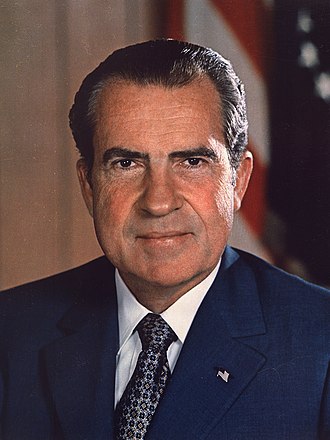
What Nixon talks about on the tapes
White House operations 4,718Presidential scheduling 2,225Public relations 1,784Presidential schedule 1,782Vietnam War 1,693Logistics 1,650Manolo Sanchez 1,626White House communications 1,400White House administration 1,399Presidential communication 1,243Henry Kissinger 1,191Foreign Policy 1,183
Conversations (21,010)
— Page 130 of 211President Nixon met with Republican Congressional leaders to discuss the critical need for a $250 billion federal spending ceiling to combat inflation and prevent the necessity of tax increases. The participants strategized on how to manage the upcoming House vote on HR 16810, expressing concern that Democratic leadership was pushing irresponsible, expansive spending bills—including massive social welfare and Social Security packages—that threatened the administration's fiscal goals. The President emphasized that passing the spending cap was a vital political and economic tool to hold Congress accountable and establish a framework for the 1974 budget, while also providing leverage for future presidential vetoes.
President Nixon met briefly with an unidentified woman in the Oval Office to discuss his daily schedule. The conversation focused on coordination regarding John D. Ehrlichman. The meeting concluded quickly, with the unidentified visitor departing shortly after her arrival.
President Nixon met with H. R. Haldeman and later John Ehrlichman to coordinate administrative scheduling and legislative strategy. The discussions covered logistics for diplomatic credential presentations, Pat Nixon’s appearances at upcoming events, and the status of John Connally. Additionally, the group debated legislative strategy regarding a debt limit and expenditure ceiling bill, specifically evaluating the effectiveness of White House congressional liaisons and the necessity of direct presidential engagement with legislative leaders.
President Nixon and Alexander P. Butterfield met to finalize logistical arrangements for a reception honoring Soviet Foreign Minister Andrei A. Gromyko. They specifically discussed the protocol for the receiving line, the placement of tables, and the provision of refreshments in the State Dining Room. During the brief consultation, Nixon decided against personally receiving the guests, tasking Butterfield with managing the event's execution.
President Nixon and Henry Kissinger discussed the status of Vietnam peace negotiations, specifically reporting on Alexander Haig's recent meeting with President Nguyen Van Thieu regarding U.S. withdrawal proposals and the political implications of a constituent assembly. The two also coordinated strategy for Nixon's upcoming meeting with Soviet Foreign Minister Andrei Gromyko, focusing on keeping Secretary of State William Rogers distanced from sensitive negotiation details. Finally, they finalized a timeline for initiating the second round of Strategic Arms Limitation Talks (SALT II) to ensure the administration maintained control over the diplomatic announcement schedule.
President Nixon and Henry Kissinger met to coordinate the agenda for an upcoming session with Soviet Foreign Minister Andrei A. Gromyko. During the brief discussion, they addressed the inclusion of Helmut Sonnenfeldt as the designated note-taker for the meeting. This consultation served to finalize personnel arrangements and ensure diplomatic preparations were set for the high-level engagement.
President Nixon and H.R. Haldeman discussed strategies for managing press relations during the 1972 re-election campaign, specifically addressing concerns over media bias and unfavorable coverage. They evaluated the merits of holding an Oval Office press conference versus utilizing radio addresses to communicate directly with the public while avoiding the perceived pitfalls of traveling press events. The two men ultimately decided to prioritize scheduling a press conference for the coming week to preempt George McGovern's planned Vietnam speech and control the news cycle on issues like the campaign, foreign policy, and the Soviet grain deal.
President Nixon met with Soviet Foreign Minister Andrei Gromyko and other high-ranking officials to review the state of U.S.-Soviet relations following the May 1972 Moscow summit. The discussion focused on progress in arms control, including the scheduling of upcoming SALT II talks, and the complexities of achieving peace in the Middle East and Vietnam. Nixon emphasized the constraints imposed by the ongoing U.S. election cycle, while both sides reaffirmed their commitment to maintaining the strategic course established during the Moscow summit despite lingering regional tensions.
President Nixon, Henry Kissinger, and William P. Rogers met to coordinate foreign policy strategy ahead of the 1972 election, focusing on the potential political backlash from the American Jewish community regarding Soviet exit visas and trade agreements. The participants discussed the 'linkage' of these issues and debated the necessity of maintaining a firm stance against congressional amendments that would tie trade status to Soviet emigration policies. Additionally, the President and Kissinger reviewed the status of Vietnam peace negotiations, with Nixon emphasizing his resolve to use a post-election mandate to finalize a settlement while refusing to halt bombing operations without a clear agreement on the release of prisoners of war.
President Nixon contacted the White House operator to facilitate a telephone connection with First Lady Pat Nixon. The brief interaction served solely as an administrative request to place a personal call. No further substantive policy or political discussions occurred during this exchange.
President Nixon consulted with the White House operator to facilitate an outgoing call. This brief interaction served administrative purposes to connect the President with another party for official business. No substantive policy discussions or significant political decisions occurred during this brief exchange.
President Nixon met with Alexander P. Butterfield to review and coordinate the President's upcoming daily schedule. The discussion specifically addressed arrangements for a planned political meeting involving H.R. Haldeman. This brief consultation served to confirm logistical priorities and ensure the synchronization of the President's administrative and political engagements.
President Nixon held a brief, four-minute meeting with an unidentified woman in the Oval Office. The transcript for this interaction remains undefined, providing no record of the substantive topics addressed or specific decisions made. Consequently, the purpose and nature of this brief encounter cannot be determined from the available documentation.
President Richard Nixon and First Lady Pat Nixon engaged in a brief, private telephone conversation. The recording consists entirely of personal material and has been formally withdrawn from the public record. Consequently, no official policy or political matters were addressed in this exchange.
President Richard Nixon met briefly with First Lady Pat Nixon in the Oval Office to discuss personal scheduling or private family matters. Given the extremely short duration of the meeting and the lack of a transcript, no significant policy developments or administrative actions were recorded. The encounter served as a routine interpersonal exchange within the private presidential residence and office space.
President Nixon met with Ronald Ziegler and H.R. Haldeman to discuss strategies for managing negative press coverage regarding his campaign activities and perceived lack of public visibility. The participants analyzed how to address media inquiries about the President's schedule and his refusal to directly confront opponent George McGovern. To neutralize media pressure, Nixon decided to hold an in-office press conference to address a range of domestic and foreign policy topics while maintaining control over the narrative.
President Nixon met with Stephen B. Bull in the Oval Office to coordinate his personal schedule. The discussion centered primarily on arranging a haircut and determining the appropriate timing for the appointment. No other policy or administrative matters were recorded during this brief encounter.
President Nixon and Stephen B. Bull briefly conferred regarding the scheduling and availability of Press Secretary Ronald L. Ziegler. The discussion centered on coordinating Ziegler’s movements and ensuring his return for a subsequent meeting. No major policy decisions were made during this brief administrative check-in.
President Nixon held a brief meeting with Zosimo T. Monzon in the Oval Office to address scheduling matters. The discussion focused on the President's upcoming activities at the Executive Office Building (EOB). No significant policy decisions were recorded during this short administrative session.
President Nixon met with H.R. Haldeman and other staff to review logistics for upcoming meetings with Soviet officials at Camp David and to finalize political strategies for the general election. The discussion covered the administration's stance on congressional relations, specifically rejecting a "gimmicky" proposal to write individual letters to members of Congress regarding debt limit legislation. Additionally, Nixon and Haldeman analyzed polling data—including public sentiment on the U.S.-Soviet grain deal and Vietnam POW issues—to gauge the effectiveness of their campaign messaging against Senator George McGovern.
President Nixon met with his aide Stephen B. Bull in the Old Executive Office Building to review and coordinate the President's upcoming daily schedule. The discussion focused on logistical planning and the management of Nixon's appointments. The meeting concluded without any recorded major policy shifts, serving primarily as a routine administrative review of the executive calendar.
President Nixon held a meeting with an unidentified individual in his Old Executive Office Building suite to discuss unspecified matters. Due to the withdrawal of a 21-second segment categorized as personal and returnable, the substantive content of the discussion remains unavailable. The participants concluded their meeting shortly before 2:37 pm without any public record of decisions or actions.
President Richard Nixon met with H. R. Haldeman in the Old Executive Office Building to discuss confidential administrative or personal matters. The majority of the meeting's content remains restricted due to the withdrawal of the primary recording segment. Consequently, no substantive policy decisions or actionable directives are available for historical analysis from this specific transcript.
President Nixon instructed the White House operator to facilitate a meeting with Charles W. Colson. The President requested that Colson relocate to his office in the Executive Office Building to conduct business. This brief exchange served as a logistical coordination to initiate a subsequent consultation between the two men.
President Nixon initiates a request for the White House operator to connect him with Charles 'Chuck' Coulson of the Office of Drug Abuse Prevention. The brief exchange serves as a logistical bridge to facilitate an official policy discussion regarding federal drug initiatives. No further substantive dialogue occurs during this short segment before the connection is processed.
President Nixon and Charles Colson reviewed campaign strategy and addressed aggressive corruption allegations leveled against the administration by Democratic opponent George McGovern in a recent speech to UPI editors. The discussion included potential responses to McGovern's criticisms, specifically concerning the Vietnam War and the administration's treatment of the press. Additionally, the two reviewed pending domestic legislative priorities, including concerns regarding the federal water bill and the fiscal impact of proposed Social Security tax increases.
President Nixon contacted the Camp David operator to facilitate an urgent connection to White House Chief of Staff H.R. Haldeman. This brief administrative exchange served solely to bridge communication between the President and his top aide. No further policy or strategic matters were discussed during this request.
President Nixon and H. R. Haldeman consulted on campaign advertising strategy, specifically regarding a documentary film and television speech scheduled for October 4, 1972, which were to highlight domestic and foreign policy achievements. The pair also reviewed the President's public relations schedule, focusing on whether Nixon should host a reception for the National Newspaper Association. Ultimately, they decided to verify if the guest list overlapped with previous events and discussed having First Lady Pat Nixon attend as an alternative if the President's presence was redundant.
President Nixon and H. R. Haldeman discussed the logistics of an upcoming National Newspaper Association reception proposed by Herb Klein. Nixon expressed frustration over the potential redundancy of the event, noting his previous time-consuming engagements with similar organizations like the ASNE. He ultimately decided that First Lady Pat Nixon should attend the reception in his place to manage his schedule more efficiently.
President Nixon met with his aide, Stephen B. Bull, at Camp David to manage logistical arrangements regarding the arrival of an unspecified group from California. The brief discussion centered on coordinating these travel plans and confirming details for the expected visitors. No further significant policy or administrative decisions were documented during this short exchange.
President Nixon contacted the Camp David operator to facilitate an outgoing call to Charles W. Colson. The interaction served as a logistical request to establish communication between the President and his special counsel. No substantive policy discussions or complex strategic decisions occurred during this brief exchange.
President Nixon met with his personal valet, Manolo Sanchez, at the Aspen Lodge during a retreat at Camp David. The interaction consisted primarily of personal matters, as evidenced by the immediate withdrawal of the recording segment due to its private nature. No policy discussions or significant political developments occurred during this brief, informal encounter.
President Nixon contacted the Camp David operator to facilitate a telephone call to his daughter, Julie Nixon Eisenhower. The brief interaction served as a routine administrative request to establish communication with a family member. No other policy or political matters were discussed during this short exchange.
President Nixon communicated with the Camp David operator to request assistance with a phone connection. The brief exchange focused on facilitating an outgoing call from the Aspen Lodge study. No substantive policy matters or major political decisions were addressed during this brief administrative interaction.
President Richard M. Nixon met with his personal valet, Manolo Sanchez, during a brief stay at Camp David. The interaction, which lasted less than eight minutes, primarily concerned the handling of personal items or private matters. No substantive policy discussions occurred, and the recording concludes with Sanchez departing shortly thereafter.
President Nixon and his daughter, Julie Nixon Eisenhower, exchanged updates regarding their respective schedules, campaign travel plans, and personal family matters. Julie reported on her recent conversation with Bebe Rebozo concerning the health and opinions of Lyndon B. Johnson, as well as her own upcoming campaign appearances across several states. They also coordinated logistics for Tricia Nixon Cox’s attendance at a youth rally in Indiana.
President Nixon met with his daughter, Julie Nixon Eisenhower, at the Aspen Lodge during a weekend at Camp David. The conversation functioned as a private, informal check-in between family members rather than a formal policy briefing. Due to the lack of an available transcript and the brevity of the meeting, no specific executive decisions or significant political developments were recorded.
President Nixon contacted the Camp David operator to request an outgoing telephone connection to Charles W. Colson. The call served as a routine administrative request to facilitate communication between the President and his special counsel. No substantive policy discussions or decisions occurred during this brief exchange.
President Nixon communicated with a Camp David operator from the Aspen Lodge study to address logistical needs or facilitate internal communications. While specific details of the dialogue remain undocumented due to the lack of a transcript, the interaction represents a routine administrative connection managed via the Hard Wire system. This brief exchange highlights the President's reliance on support staff during his working retreats at the presidential compound.
President Nixon and Charles Colson evaluated the evening news coverage provided by major television networks, specifically focusing on the biased reporting regarding Vice President Spiro Agnew and Democratic challenger George McGovern. Colson critiqued the perceived hostility of CBS toward the administration while highlighting the relative coverage of news editors and networks. The conversation also touched upon the political implications of AFL-CIO polling in Connecticut and included mention of a meeting with Andrei Gromyko at Camp David.
President Nixon met with special counsel Charles Colson at Camp David to discuss sensitive political or administrative matters. While the primary substance of the conversation remains restricted due to a withdrawn item, the meeting reflects the ongoing high-level coordination between the President and his aide regarding critical White House strategy. No specific actions or public policy outcomes were recorded for this brief encounter.
President Nixon directed the Camp David operator to connect him with National Security Advisor Henry Kissinger. Nixon sought to determine if Kissinger was currently meeting with Soviet Ambassador Anatoliy Dobrynin and Foreign Minister Andrei Gromyko at Birch Lodge. The primary objective was to facilitate a direct communication line with Kissinger amidst his high-level diplomatic discussions.
President Nixon and Henry Kissinger met at Camp David to discuss an urgent, sensitive message expected from the People's Republic of China, which they speculated concerned either the Vietnam War or issues regarding Japan. The conversation also touched upon the progress of negotiations with the Soviet Union, including upcoming discussions with Andrei Gromyko, and domestic political strategy regarding the 1972 election. Kissinger emphasized the need for a decisive approach to the Vietnam situation, noting that if current diplomatic efforts failed, the administration would need to escalate its military stance shortly after the election.
President Nixon contacted the Camp David operator to facilitate communication regarding the whereabouts of a specific individual. The conversation focused on locating a person potentially meeting with an associate named Mr. Romero. No significant policy decisions were reached, as the exchange was limited to logistical coordination.
President Nixon instructs Henry Kissinger to emphasize to Soviet Ambassador Anatoliy Dobrynin that his past willingness to take decisive actions, such as the bombing of Cambodia and the Moscow summit, reflects a readiness to act despite political risks. Nixon intends to project a firm stance, signaling that while he prefers diplomatic restraint, the Soviets should not underestimate his resolve or his capacity for unilateral action. Kissinger agrees to convey this message of underlying strength to ensure the Soviets understand the President's commitment to his policies.
President Nixon instructed Henry Kissinger to convey a firm message to an unnamed interlocutor regarding the administration's political stability and resolve. Nixon emphasized that despite a measured, diplomatic tone, the other party must not underestimate his willingness to take decisive action. The conversation served to ensure that Kissinger explicitly articulated this posture of strength to prevent the President's intentions from being misread during ongoing negotiations.
President Nixon contacted the Camp David operator to facilitate a telephone connection with his close friend and confidant, Charles G. “Bebe” Rebozo. The brief exchange served strictly as a logistical request to place the long-distance call to Florida. No policy matters or substantive political discussions occurred during this brief administrative interaction.
President Nixon contacted the Camp David operator to facilitate an outgoing communication from the Aspen Lodge. This brief interaction served administrative purposes to ensure connectivity from the President's retreat. No substantive policy discussions or significant political developments occurred during this brief exchange.
President Nixon met with his aide Stephen B. Bull in the Oval Office to briefly coordinate the President's daily schedule. During this session, they discussed matters related to John D. Ehrlichman, including his presence or upcoming appointments. The interaction concluded shortly thereafter when Bull and an accompanying woman departed the room.
President Nixon and John Ehrlichman discussed legislative strategies, specifically the administration's stance on H.R. 1, the pending water quality bill, and potential Social Security legislation. They emphasized the need to maintain a firm position on spending limits to bolster Nixon's reelection campaign, including the potential use of a veto to contrast the administration's fiscal discipline with Congressional spending. Furthermore, they reviewed media relations and planned public events, such as a revenue-sharing ceremony, to highlight administration accomplishments while minimizing negative coverage.
President Nixon and H. R. Haldeman met to discuss administration strategies for handling media coverage, particularly regarding NBC and the Washington Post, and to review a project analyzing press bias and failed journalistic predictions. They evaluated the performance of specific reporters and judges, while considering political tactics for responding to the press and George McGovern's campaign. The conversation also touched upon logistical planning for the President's upcoming schedule, including decisions regarding press relations and his travel plans to Camp David and Florida.
President Nixon met with American Legion National Commander Joseph L. Matthews and his associates to discuss the organization's upcoming schedule, recruitment of Vietnam veterans, and support for his administration's foreign policy. Matthews briefed the President on his extensive travel plans, which include visiting all 58 American Legion departments and potentially conducting diplomatic trips to Eastern Europe, specifically Poland and Romania. The meeting concluded with a brief photo session and the presentation of commemorative gifts to the delegation.
President Nixon met with leaders of the Professional Air Traffic Controllers Organization (PATCO), including John F. Leyden, Robert E. Poli, and Robert C. Sturgil, to discuss the union's relationship with the administration and air traffic safety. The discussion touched upon Nixon's personal experiences with air travel and his wartime naval service involving aircraft control, as well as comparisons between aviation and automobile safety. The meeting concluded with a ceremonial presentation of presidential memorabilia to the union representatives.
President Nixon met with Henry Kissinger in the Oval Office to coordinate their respective schedules. During this brief exchange, Kissinger signaled his intent to provide a formal report to the President. The meeting served primarily as a logistical check-in to facilitate ongoing policy briefings.
President Nixon and Henry Kissinger discussed the status of Vietnam peace negotiations, including efforts to leverage Soviet influence on North Vietnam and the potential for a breakthrough before the 1972 election. Kissinger briefed the President on his recent meeting with Soviet Foreign Minister Andrei Gromyko, while they reviewed military strategies, including the use of B-52 air strikes, to pressure North Vietnam into a settlement. They also addressed broader political concerns, such as managing media and congressional relations, and planned the logistics for Kissinger's upcoming trip to Paris and potentially Saigon to finalize a peace agreement.
President Nixon contacted the White House operator to request a telephone connection with First Lady Pat Nixon. The brief interaction served as a formal initiation of a private communication between the President and his wife. No substantive political or policy matters were addressed during this exchange.
President Nixon met with his aide Stephen B. Bull to review and refine his upcoming daily schedule. The discussion centered on coordinating meetings with H.R. Haldeman and Senator Robert P. Griffin, as well as managing a scheduled filming session. Additionally, the two addressed the status of arrangements at Camp David, noting the need for final confirmation from Clark MacGregor.
President Richard M. Nixon met with his personal valet, Manolo Sanchez, in the Old Executive Office Building for a brief, informal encounter. The majority of the interaction was comprised of a one-minute withdrawn segment categorized as a personal returnable item. No substantive policy matters or administrative decisions were recorded during this brief visit.
President Nixon held a brief, informal exchange with a White House operator while located in the Old Executive Office Building. The conversation primarily serves as a fragment of administrative communication, with the President offering a casual remark about an unspecified subject. No policy decisions, political strategy, or significant administrative actions were recorded during this interaction.
President Richard Nixon and First Lady Pat Nixon engaged in a brief telephone conversation. The nature of the discussion is restricted as the contents have been withdrawn from the public record for personal privacy reasons. Consequently, no specific policy decisions or political developments are documented in this recording.
President Nixon met briefly with First Lady Pat Nixon in the Old Executive Office Building. Due to the brevity of the encounter and the lack of a transcript, the specific substance of their discussion remains undocumented. The interaction serves as a brief point of contact between the President and the First Lady during the 1972 campaign season.
President Nixon initiates a request through the White House operator to place a telephone call to former Treasury Secretary John B. Connally. The interaction serves as a brief logistical bridge to connect the President with his political advisor. No substantive policy discussions occur during this brief exchange.
President Richard Nixon met with his personal valet, Manolo Sanchez, in the Old Executive Office Building to discuss personal matters. The brief interaction consisted primarily of private administrative or domestic concerns, as evidenced by the immediate withdrawal of recorded content labeled as personal. No significant policy decisions or official government business were conducted during this encounter.
President Richard M. Nixon met with his personal valet, Manolo Sanchez, in the Old Executive Office Building for a brief discussion. The conversation was largely personal in nature, as indicated by the withdrawal of the recorded segment for privacy reasons. No significant policy decisions or administrative actions were documented during this private interaction.
President Nixon initiates a routine communication request by speaking with the White House operator. The brief exchange serves as a logistical bridge to connect the President to another party, as indicated by his request for assistance. No substantive policy matters or political developments are addressed in this short interaction.
President Nixon and John B. Connally discussed their respective health statuses and logistical challenges during a telephone conversation. Connally provided updates on his recovery from a sinus infection, his upcoming travel schedule, and the personal difficulties of relocating his household. The two also addressed the rescheduling of a television appearance, which Connally coordinated with staff to ensure proper planning.
President Nixon and John B. Connally engage in a brief, informal check-in regarding their respective health and current scheduling commitments. The two discuss the wisdom of postponing public appearances to recover from illness and coordinate upcoming travel plans, including a scheduled event in Atlanta. The conversation serves primarily as a personal wellness check rather than a substantive policy briefing.
President Nixon contacted the White House operator to request a telephone connection to his daughter, Tricia Nixon Cox. The brief interaction served as a logistical attempt to facilitate this personal communication. No policy matters or significant administrative decisions were discussed during this request.
President Nixon contacted the White House operator to request a telephone connection with his daughter, Tricia Nixon Cox. The brief exchange served as a routine administrative request to facilitate a personal call. No substantive policy discussions or political developments occurred during this brief interaction.
President Richard Nixon engaged in a brief personal telephone conversation with his daughter, Tricia Nixon Cox. The discussion was entirely private and classified as a personal, returnable item, resulting in no substantive policy developments or official administrative actions. Consequently, the record contains no actionable information for historical research purposes.
President Richard Nixon met briefly with his daughter, Tricia Nixon Cox, in the Old Executive Office Building. The conversation, lasting only one minute, was personal in nature rather than focused on official government policy. No significant political decisions or administrative actions resulted from this interaction.
President Nixon contacted the White House operator to facilitate a direct communication with Stephen B. Bull. The brief call served exclusively as an administrative request to place a telephone connection to Bull. No further substantive matters were discussed during this interaction.
President Nixon met briefly with an unidentified individual to receive an update regarding pending communications from the police. This encounter served as a precursor to a scheduled meeting with Charles W. Colson. The discussion remained limited, concluding shortly after the notification of the incoming inquiries.
President Nixon initiates a brief request for the White House operator to place a phone call to an individual identified as Mr. Burwell. This exchange serves as a routine administrative coordination to facilitate direct communication with the specified party. No other substantive topics or policy discussions occurred during this brief interaction.
President Nixon coordinates his afternoon schedule with Stephen B. Bull regarding a meeting with Senator Robert P. Griffin. They finalize plans for a 3:45 PM television appearance followed by a 4:00 PM appointment. The President also confirms that his daughter, Tricia Nixon Cox, will accompany him and authorizes H.R. Haldeman to include additional staff members as needed.
President Nixon and Stephen B. Bull briefly coordinate logistics for an upcoming afternoon appearance, confirming a 4:00 p.m. departure time. The discussion establishes that the President will meet with Bull shortly before leaving and confirms that Tricia Nixon will accompany him. The exchange serves as a final administrative check to ensure all arrangements for the scheduled event are in place.
President Nixon met with Charles Colson, Henry Kissinger, and John Ehrlichman to coordinate the administration's political strategy against George McGovern's campaign. The discussion centered on countering McGovern’s accusations of moral corruption by projecting strength and avoiding defensive maneuvers, while also managing media relations and planning responses to legislative challenges. Key decisions included maintaining a firm stance on welfare reform legislation to avoid appearing inconsistent and preparing a strategic public response to potential developments in Vietnam peace negotiations.
President Nixon met with his aide Stephen B. Bull to address administrative tasks, specifically concerning the preparation of a condolence letter. The discussion focused on drafting formal correspondence for Rose Mary Woods regarding the passing of Harrison McCall. No further substantive policy matters were recorded during this brief encounter.
President Nixon met with his personal secretary, Rose Mary Woods, to coordinate his upcoming schedule and address various administrative and personal matters. The discussion centered on arrangements for Harrison McCall’s memorial service, the health status of several acquaintances, and the coordination of travel and social commitments, including events involving Tricia Nixon Cox and William J. Casey. Stephen B. Bull joined briefly at the end of the meeting to facilitate the President's transition to a subsequent meeting in the Cabinet Room involving Elliot Richardson and other staff.
President Nixon met with Elliot Richardson and several senior staff members to discuss political strategy regarding the welfare reform bill, H.R. 1, and the potential impact of a new amendment offered by Senator Adlai E. Stevenson III. The group analyzed the risks of appearing inconsistent if the administration supported the Stevenson proposal, which closely mirrored the President's original welfare plans, while balancing the need to preserve the administration's credibility as the bill faced likely defeat. Ultimately, they discussed using a parliamentary tactic—having Senator Hugh Scott support the amendment—to expose the lack of substantive differences between the two parties and ensure the administration would not be blamed if the legislation failed.
President Nixon and Stephen B. Bull met in the Oval Office to address logistical and administrative requirements regarding recording equipment. The discussion focused on the management of cords associated with the taping system. The exchange served as a brief technical coordination session to ensure the continued functionality of the White House recording apparatus.
President Nixon met with Senator Robert Griffin and William Timmons to discuss public perception of the welfare system and the fiscal implications of various welfare program titles. The participants critiqued the administrative handling of welfare funds, specifically citing frustrations with social workers and the perceived prevalence of benefit misuse. The brief exchange underscored the political pressure to address the high costs associated with these legislative titles.
President Nixon consults with Ronald Ziegler and H.R. Haldeman regarding a recent, ostensibly personal telephone call from journalist Walter Cronkite. Nixon clarifies his willingness to speak with Cronkite only if the matter is non-journalistic in nature. The brief discussion also touches upon logistical updates regarding operations at Camp David and the status of staff members.
President Nixon contacted the Camp David operator to facilitate a personal phone call to his daughter, Julie Nixon Eisenhower. The exchange was strictly administrative, serving only to connect the President with his daughter. No political, policy, or substantive matters were discussed during this brief communication.
President Nixon and H. R. Haldeman met at Camp David to discuss the President’s schedule, re-evaluating how to balance his time between the White House, Camp David, and Key Biscayne to maintain a consistent public presence. They analyzed polling data from Massachusetts regarding George McGovern’s policy proposals, deciding to intensify targeted television advertisements highlighting issues like welfare and marijuana legalization rather than having the President visit the state personally. The conversation also touched on press coverage of the administration, specifically regarding allegations of corruption, and the political implications of Vice President Agnew’s conservative public image.
President Nixon communicated with the Camp David operator via the facility's hard-wire system to address logistical or telephonic requirements while at the Aspen Lodge. The brief exchange focused on facilitating necessary administrative communication during his residence at the retreat. No substantial policy matters were recorded, as the interaction served purely as a routine operational coordination.
President Richard Nixon and his daughter, Julie Nixon Eisenhower, held a brief personal telephone conversation while the President was at Camp David. As the entirety of the recorded dialogue is classified as a personal returnable item, no substantive policy or political matters are documented. The exchange serves as a brief record of private family communication during the 1972 campaign season.
President Nixon met with his daughter, Julie Nixon Eisenhower, at the Aspen Lodge during a stay at Camp David. As this brief interaction was not captured in a formal transcript, the specific nature of their discussion remains part of the withdrawn or private records of the presidential family. The meeting highlights the President's personal engagement with his family while at the executive retreat.
President Nixon and H.R. Haldeman met at Camp David to coordinate the President's upcoming schedule, radio addresses, and political strategy against Senator George McGovern. They discussed managing media relations, specifically handling a request from Walter Cronkite for a televised presidential appearance, while ensuring the administration’s policy positions remained clear to the public. Additionally, they reviewed sensitive Vietnam negotiations, weighing Henry Kissinger’s progress in Paris against the strategic concerns of South Vietnamese President Nguyen Van Thieu and the potential for a post-election settlement.
President Nixon contacted the Camp David operator to request an outgoing call to White House Special Counsel Charles W. Colson. This brief administrative exchange served solely to facilitate a direct line of communication between the President and his advisor. No substantive policy discussions or political developments occurred during this brief interaction.
President Nixon met with his personal valet, Manolo Sanchez, and special counsel Charles W. Colson at the Aspen Lodge to discuss administrative matters and the President's upcoming schedule. While the specific substance of the dialogue remains unrecorded, the meeting served as an opportunity for Nixon to coordinate logistical details and staffing issues during his stay at Camp David. The session concluded with Sanchez departing the study while Nixon continued his deliberations with Colson.
President Nixon and Charles Colson discussed political strategy for the 1972 campaign, focusing on the President's public image and the management of domestic issues. They evaluated the political impact of George McGovern's campaign, specifically agreeing to encourage and amplify McGovern's recent focus on corruption charges, which they believed would alienate voters. The conversation also covered tactical legislative developments regarding welfare and Social Security, as well as plans to use deceptive tactics to exploit internal divisions between R. Sargent Shriver and labor leader George Meany.
President Nixon and Charles Colson discuss campaign strategy, specifically focusing on messaging against their political opponents and defining the administration's stance on key social issues like welfare, busing, and amnesty. They review positive polling data from Southern California and strategize on how to manage media narratives regarding the Vietnam peace plan and potential legislative vetoes. The conversation concludes with a directive to mobilize letter-writing campaigns to solidify public support for the administration's aggressive political rhetoric.
President Nixon contacted the Camp David operator to facilitate an urgent connection with White House Chief of Staff H.R. Haldeman. This brief administrative interaction served as a logistical bridge to initiate a direct discussion with his top aide. No substantive policy matters were addressed during this transitionary call.
President Nixon met with his personal valet, Manolo Sanchez, at the Aspen Lodge during a retreat at Camp David. The interaction, which lasted less than a minute, was categorized as a personal matter. No substantive policy discussions or administrative decisions were recorded during this brief encounter.
President Nixon met with his valet, Manolo Sanchez, at Camp David to discuss logistical arrangements regarding the departure of H.R. Haldeman and Tod R. Hullin. The President provided specific instructions to contact an individual named Mr. Tillman to resolve a potential issue involving law enforcement. This brief exchange focused primarily on internal administrative coordination and personal travel concerns.
President Nixon communicated with the Camp David operator from the Aspen Lodge to handle administrative or logistical needs related to his stay at the retreat. Given the lack of a transcript, the interaction likely involved standard requests for telecommunications support or facility operations. No major policy discussions or significant political developments resulted from this brief exchange.
President Nixon and H. R. Haldeman briefly conferred regarding logistical arrangements for their respective departures from Camp David. The discussion centered on Haldeman's preference to travel by car to expedite his return home, rather than traveling through town. The two confirmed their evening schedules without establishing any substantive policy or administrative actions.
President Nixon and H.R. Haldeman held a brief administrative coordination meeting to discuss scheduling arrangements. The conversation focused on determining travel logistics and timing preferences for an upcoming engagement. No major policy decisions were made, as the exchange was limited to confirming operational details regarding the President's itinerary.
President Nixon met with his personal valet, Manolo Sanchez, at the Aspen Lodge during a retreat at Camp David. The brief discussion focused on administrative matters regarding the President's upcoming schedule. No major policy developments or strategic decisions were recorded during this interaction.