Nixon, Richard M. (President)
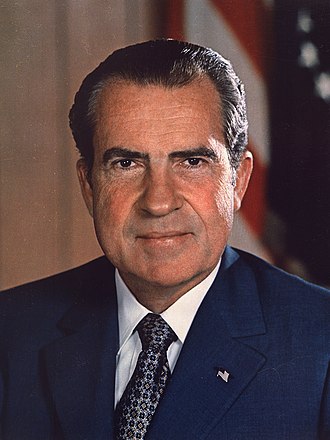
Richard M. Nixon served as the 37th President of the United States from January 1969 until his resignation in August 1974. In February 1971, he ordered the installation of a secret voice-activated taping system in the White House to preserve a historical record of his administration. Until the system's existence was revealed and dismantled in July 1973, the tapes captured Nixon directing major foreign policy initiatives, such as the opening to China, as well as his central role in the Watergate cover-up.
What Nixon talks about on the tapes
White House operations 4,718Presidential scheduling 2,225Public relations 1,784Presidential schedule 1,782Vietnam War 1,693Logistics 1,650Manolo Sanchez 1,626White House communications 1,400White House administration 1,399Presidential communication 1,243Henry Kissinger 1,191Foreign Policy 1,183
Conversations (21,010)
— Page 16 of 211President Nixon instructed the White House operator to place a telephone call to Congressman Wilbur D. Mills of Arkansas. This administrative interaction served as the necessary bridge to facilitate a direct discussion between the President and the powerful Ways and Means Committee Chairman. No further substantive policy matters were discussed during this brief connection.
President Nixon instructed the White House operator to connect him with Secretary of the Treasury John B. Connally. This brief administrative exchange served as the precursor to a subsequent high-level policy consultation between the President and his Treasury Secretary. The call functioned solely as a logistical step to facilitate direct communication between the two officials.
President Nixon and John B. Connally discuss strategy for securing a Senate victory for the Supersonic Transport (SST) project following a successful vote in the House. They identify key senators to target for persuasion, including those influenced by public works funding and the aerospace industry. Nixon and Connally commit to personally lobbying specific legislators to secure the three additional votes needed to pass the measure.
President Nixon called Representative Wilbur D. Mills to express his gratitude for the House Ways and Means Committee's progress on H.R. 1, a significant piece of welfare and tax reform legislation. The two discussed the legislative schedule for the bill, including plans for a closed rule and potential hurdles in the Senate. Nixon affirmed his commitment to personally lobby Senate leadership, characterizing the legislation as a collaborative partnership between the White House and the committee.
President Nixon initiates a call to Congressman John W. Byrnes of Wisconsin through the White House operator. The brief exchange serves as a procedural request to establish communication with the Representative. No further policy discussion or substantive deliberation occurs during this short administrative interaction.
President Nixon consulted with the White House operator to coordinate a follow-up communication with Congressman John W. Byrnes of Wisconsin. Upon learning that the Congressman was traveling home, the President instructed the operator to leave a message at Byrnes's residence. This exchange served as a logistical effort to facilitate a pending political conversation.
President Nixon contacted the White House operator to place a personal telephone call to his close friend and confidant, Charles G. "Bebe" Rebozo. The interaction served solely to facilitate this connection between the President and Rebozo. No further policy or substantive matters were discussed during this brief administrative exchange.
President Nixon consulted with the White House operator to determine the whereabouts of his close friend, Charles G. "Bebe" Rebozo. The operator provided an update regarding Rebozo’s travel status, noting that his boat, the Denali City, had been located as expected. This brief exchange served primarily to confirm Rebozo’s location and safety.
President Nixon initiates a brief telephone call to connect with Roger E. Johnson. The conversation is limited to a direct request for the operator to place the call. No substantive policy discussions or administrative decisions are recorded during this exchange.
President Nixon requested that the White House operator place a telephone call to his daughter, Julie Nixon Eisenhower. The operator promptly acknowledged the request to initiate the connection. No further substantive policy or administrative matters were discussed during this brief exchange.
President Nixon held a brief, informal telephone conversation with his daughter, Julie Nixon Eisenhower. The discussion focused primarily on personal matters and family updates rather than official policy or administrative business. As the majority of the call is restricted for privacy, the interaction serves as a brief window into the President's personal communications.
President Nixon met with Henry Kissinger and H.R. Haldeman to coordinate strategy regarding the Mansfield Amendment, which sought to withdraw U.S. troops from Europe. The President emphasized his firm opposition to the amendment, arguing that such decisions must be handled through executive negotiation rather than legislative mandate. The discussion also covered the delicate geopolitical maneuvering regarding a 'two-China' policy at the United Nations, domestic welfare reform messaging, and the management of economic news to combat negative public sentiment.
President Nixon and Secretary of State William Rogers discussed strategies to defeat the Mansfield Amendment, which proposed significant troop reductions in Europe. Nixon instructed Rogers to convey to Senator Mike Mansfield that the administration would aggressively oppose the measure because it would destabilize U.S. foreign policy and undermine ongoing negotiations with the Soviet Union and NATO allies. They also planned to coordinate with senior former officials and pressure skeptical Republican senators to ensure the administration's position prevailed.
President Nixon met with Secretary of Health, Education, and Welfare Elliot Richardson, incoming official Dr. Merlin K. "Morty" DuVal, and senior staff to discuss the administration's health care reform strategy and the challenges of managing federal health bureaucracies. The President emphasized the need for DuVal to establish firm control over autonomous agencies like the NIH and NIMH while cautioning him against being co-opted by the entrenched bureaucracy. The group also strategized on how to secure political support from the medical profession for the administration's health plan, framing it as a pragmatic, centrist alternative to the more radical proposals championed by Senator Edward Kennedy.
President Nixon met with his personal aide, Stephen B. Bull, for a brief administrative check-in at the Oval Office. The primary focus of the discussion was reviewing John D. Ehrlichman's upcoming schedule. No significant policy decisions were recorded during this short briefing.
President Nixon met with key staff and Mayor Richard J. Daley to coordinate administrative policy, discuss political strategies for the 1972 election, and address urban issues. The conversation covered the management of welfare reform, the privatization of legal services, and the handling of social issues like narcotics and homosexuality. Nixon specifically emphasized establishing a direct, cooperative relationship with Mayor Daley to navigate urban housing challenges, reinforce law enforcement support, and promote federal initiatives at the local level.
President Nixon met with Treasury Secretary John Connally and the Citizens' Committee for Government Reorganization to discuss the administration's proposals for executive branch restructuring. The participants focused on the importance of bureaucratic reform, the necessity of securing congressional support, and strategies for navigating political opposition to these institutional changes. The President emphasized the historical significance of the committee's work and presented commemorative gifts to the attendees at the conclusion of the session.
President Nixon held a brief, informal meeting in the Oval Office with an unidentified individual to discuss his daily schedule. The conversation focused on the logistical management of an incoming phone call, though the dialogue remained fragmentary and lacks substantial policy content. No significant decisions or developments were recorded during this brief administrative interaction.
President Nixon met with Alexander P. Butterfield to coordinate scheduling details regarding a meeting with James M. Roche. The discussion focused on managing the President's upcoming commitments and the internal logistics of the meeting's participants. Butterfield sought clarification on the agenda, while Nixon provided brief updates regarding the status of the planned appointment.
President Nixon and H.R. Haldeman reviewed various administrative matters, including the President's upcoming schedule, Mrs. Nixon's travel engagements, and the potential security risks associated with a presidential visit to Bohemian Grove. They discussed political strategy, specifically regarding the Supersonic Transport (SST) project, the influence of communist organizers in anti-NATO protests, and the political efficacy of public demonstrations. The conversation concluded with an evaluation of Vice President Spiro Agnew’s role in public outreach and a critique of contemporary media depictions of the American working class, such as the television show 'All in the Family.'
President Nixon met with journalist Walter Trohan to discuss administrative matters, including the dictation of a personal letter. The pair reviewed comparisons between Nixon's presidency and that of Herbert Hoover, while also addressing concerns regarding press coverage and security. Additionally, the conversation touched upon lighthearted topics such as sports and the Bohemian Grove.
President Nixon and Stephen B. Bull reviewed the President’s upcoming daily schedule, focusing on coordination for a series of high-level meetings. The discussion specifically addressed the logistics for upcoming appointments with Henry Kissinger, Barber, and James M. Roche. John D. Ehrlichman and Peter G. Peterson were identified as additional participants for the scheduled meeting with Roche.
In this meeting, President Nixon and Henry Kissinger discussed the delicate status of SALT negotiations, specifically weighing whether to press for further wording changes with the Soviets or accept the current draft to avoid diplomatic irritation and potential leaks. Following Kissinger's departure, Nixon met with John Ehrlichman, Peter Peterson, and James Roche to address the challenges facing the American automobile industry. The group focused on mitigating overly rigid safety and environmental regulations that threatened the industry's competitiveness against foreign imports, while exploring broader strategies to maintain America's technological and economic dominance in an increasingly globalized market.
President Nixon initiates a brief telephone call through the White House operator to contact his aide, Dwight L. Chapin. The exchange serves as a routine administrative request to facilitate a direct conversation between the President and a member of his staff. No further substantive policy matters are addressed in this short communication.
President Nixon initiates a call to Maryland Senator J. Glenn Beall Jr. through the White House operator. The conversation focuses on locating the Senator, who is currently at the Sacred Heart Hospital in Cumberland, Maryland. The operator confirms the request and proceeds to facilitate the connection for the President.
President Nixon initiates a brief administrative interaction with the White House operator to place an outgoing telephone call. The exchange serves solely as a functional request to connect the President to another party. No substantive policy discussions or decisions are recorded during this brief connectivity process.
President Nixon consulted with the White House operator to facilitate a telephone connection with Senator Glenn Beall of Maryland. The operator confirmed the Senator's current location at Sacred Heart Hospital in Cumberland, Maryland. This administrative exchange served as the necessary logistical precursor to establish direct contact between the President and the Senator.
President Nixon and Dwight L. Chapin discussed logistical arrangements for an upcoming event or visit involving Tricia Nixon Cox. The conversation focused on coordination with the Marriott hotel chain, specifically regarding J. Willard Marriott, Jr. and the review of floor plans. Chapin was directed to manage these site details through the White House advance team to ensure the event's security and operational requirements were met.
President Nixon and Dwight L. Chapin discuss logistics for an upcoming event involving Tricia Nixon and her mother, specifically regarding hotel accommodations. The conversation focuses on ensuring the arrangements meet the President’s expectations for the guests' attendance. No major policy decisions were made during this brief exchange.
President Nixon met with H.R. Haldeman, John Ehrlichman, John Connally, and others to discuss strategies for securing Senate support for the supersonic transport (SST) project and to coordinate political appointments. The group analyzed the legislative landscape, focusing on shifting the framing of the SST from a purely environmental issue to a matter of jobs and economic impact. Furthermore, Nixon emphasized the need for a loyal, aggressive leader within the IRS to ensure the administration could effectively utilize the agency to monitor political enemies and friends alike.
President Nixon initiated this brief call to Senator J. Glenn Beall, Jr. to offer encouragement regarding the activities of a group of legislators referred to as the "fearsome sixsome." During the exchange, the President emphasized the importance of the Senator's return to Washington. Beall confirmed his scheduled return to the Senate for the following week before the conversation concluded.
President Nixon consulted with H.R. Haldeman to arrange a telephone call with William M. Magruder regarding his current activities. Upon learning that Magruder was located in the Virgin Islands and already engaged in a separate discussion with Tod R. Hullin, Nixon decided to cancel the request. He ultimately opted to receive a briefing on the situation through his secretary instead of interrupting the ongoing call.
President Nixon initiates a brief telephone call to connect with Clark MacGregor, who served as the Congressional Liaison for the White House. The conversation consists solely of the President directing the White House operator to place the call, signaling an immediate need for coordination with his legislative affairs team. No substantive policy discussions occur during this brief exchange as the connection is being established.
President Nixon initiated a brief telephone call with Clark MacGregor to confirm his current location. The primary purpose of the exchange was to request that MacGregor travel to the White House for an immediate in-person meeting. No substantive policy matters were discussed during this brief logistical coordination.
President Richard M. Nixon and Treasury Secretary John B. Connally held a brief telephone conversation regarding official matters. Due to the withdrawal of the primary content of this recording, the specific substantive details of their discussion remain restricted. No definitive policy decisions or action items are available for analysis from this segment.
President Nixon and Alexander Haig discussed a strategic plan to secure public support for a forthcoming presidential statement by utilizing endorsements from former Cabinet members. The discussion focused on coordinating these endorsements, specifically involving Dean Acheson and William P. Rogers, to bolster the administration's position. Haig outlined the procedure for staging these endorsements to ensure maximum political impact for the President's signature.
President Nixon met with a large group of senior military and diplomatic officials to discuss the current state of NATO and the importance of maintaining U.S. commitment to the alliance. The participants focused on the economic and political strength of Europe, the potential for future unity, and the necessity of preventing unilateral troop reductions that could jeopardize geopolitical stability. The discussion highlighted the administration's efforts to influence congressional opinion, specifically regarding legislative proposals like the Mansfield Amendment, while emphasizing the administration's resolve to sustain a strong, collective defense posture.
President Nixon held a brief meeting in the Oval Office with an unidentified individual to discuss the scheduling of National Security Advisor Henry A. Kissinger. The exchange lasted less than two minutes and concluded with the departure of the guest. The primary focus of the session appears to have been limited to logistical coordination regarding Kissinger's availability.
President Nixon and Henry Kissinger met to discuss legislative strategy regarding the Mansfield resolution on U.S. troops in Europe and the upcoming announcement of the Strategic Arms Limitation Talks (SALT). Kissinger updated the President on sensitive negotiations with Soviet Ambassador Anatoliy Dobrynin and emphasized the political value of Nixon leading the 'establishment' on foreign policy to neutralize congressional opposition. The conversation underscored the President's goal of securing a bipartisan consensus to bolster his foreign policy agenda ahead of the upcoming congressional recess.
President Nixon consulted with Nellie L. Yates to determine the current location of National Security Advisor Henry Kissinger. Yates informed the President that Kissinger was at the office of Vice President Spiro T. Agnew. This brief exchange served to facilitate communication between the President and his advisor during the workday.
President Nixon contacted the White House operator to request a telephone connection with First Lady Pat Nixon. The brief interaction served as a logistical bridge to facilitate a personal conversation between the President and his wife. No policy matters or administrative decisions were addressed during this call.
President Nixon and H. R. Haldeman met to coordinate upcoming travel, press strategies, and the scheduling of First Lady Pat Nixon. The discussion centered on managing the President's public image and political capital regarding issues like the Supersonic Transport (SST) program and NATO, while ensuring administration goals remained insulated from unfavorable press coverage. They also reviewed various appointments and personnel matters, including strategies for Texas political races and the handling of sensitive meetings involving external groups.
President Nixon and First Lady Pat Nixon held a brief telephone conversation to discuss personal matters. Due to the withdrawal of the recording for privacy reasons, no substantive political or administrative details are available. The call remains a part of the President's personal correspondence records.
President Nixon met with Stephen B. Bull to coordinate the scheduling of several upcoming appointments, including meetings for Pat Nixon and John McCowan. The President specifically inquired about the status and personal circumstances of certain guests to ensure appropriate meeting arrangements. The discussion concluded with adjustments to the President's daily agenda to accommodate these interactions.
President Nixon met with John McCowan, Alexander P. Butterfield, and White House photographer Oliver Atkins to facilitate a brief, cordial exchange of gifts and correspondence. During the meeting, the President presented McCowan with official pens and cufflinks while also arranging for the autographing of items for the visitor. The session concluded with the scheduling of a follow-up photograph and informal well-wishes regarding McCowan's travel plans.
President Nixon and Stephen B. Bull reviewed the President’s upcoming schedule to manage his time effectively. The discussion focused on coordinating a meeting with senior citizens organizations and adjusting the timing for an appointment involving Leonard Garment. They also briefly touched upon the President's engagement with the National Advisory Committee on Foreign Aid, resulting in instructions to shorten the duration of scheduled meetings.
President Nixon directs H. R. Haldeman to meet with Senator John Tower to discuss developments regarding John B. Connally and Texas politics. Nixon emphasizes that a significant deal involving Connally is reaching a critical stage and is being handled at the highest level. The President instructs Haldeman to ensure Tower is briefed on this matter and to discourage any potential political skepticism or complaints from the Senator.
President Nixon met briefly with an unidentified individual in the Oval Office to coordinate administrative details. The discussion was limited in scope, focusing primarily on the specific scheduling arrangements for the mystery participant. No substantive policy matters or major decisions were recorded during this two-minute exchange.
President Nixon and Henry Kissinger met to refine the wording and timing of a forthcoming public announcement regarding ongoing negotiations. The discussion also addressed the shifting geopolitical climate surrounding the Vietnam War, specifically analyzing confusing signals from Soviet and Chinese diplomatic channels regarding prisoner exchanges and potential military offensives. Furthermore, Nixon touched upon recent discussions regarding U.S. troop levels in Europe, expressing disdain for the perspectives of various establishment figures and reinforcing his intent to maintain firm control over foreign policy strategy.
President Richard M. Nixon met with representatives from several prominent senior citizens' organizations to discuss federal policy and the specific needs of the elderly population. The participants, including administration officials such as George Shultz and Dr. Arthur S. Flemming, addressed critical issues including Social Security cost-of-living adjustments, Medicare and health care accessibility, housing, and transportation. The President emphasized his commitment to addressing these challenges through government programs and invited the organizations to continue providing input to his staff to assist in developing effective legislative solutions.
President Nixon met with his aide Stephen B. Bull to coordinate upcoming appointments on his daily schedule. The two discussed logistics for meeting with various individuals, specifically determining the appropriate location to host Max M. Fisher. Nixon finalized arrangements to see Fisher in a private office area to accommodate a brief discussion.
President Richard M. Nixon and personal aide Stephen B. Bull met briefly in the Oval Office to coordinate administrative logistics. The discussion focused on managing the President's upcoming schedule and coordinating the availability of his personal secretary, Rose Mary Woods. Following these brief arrangements, the two departed the office to transition the President into a period of rest.
President Nixon held a brief, informal meeting in the Oval Office with unidentified individuals. The discussion was largely non-substantive, characterized by vague exchanges and fragmentary dialogue. No policy decisions, strategic developments, or administrative action items were recorded during this brief encounter.
President Nixon met with his aide, Stephen B. Bull, to discuss administrative logistics and the President's upcoming schedule. The conversation specifically addressed a planned meeting with Jacob A. Preus and concerns regarding related press coverage. The discussion concluded quickly as the participants coordinated these routine scheduling and public relations matters.
President Nixon met with his aide Stephen B. Bull in the Oval Office to coordinate administrative logistics regarding the President's daily schedule. The primary focus of the discussion was the arrangement of official photo coverage for an upcoming meeting with Jacob A. Preus. No other policy matters were addressed during this brief encounter.
President Nixon met with Jacob A. Preus, General James D. Hughes, and others to discuss diplomatic efforts aimed at securing the release of American prisoners of war (POWs) in Vietnam. Preus reported on his international travels, highlighting conversations with Swedish, Indian, and Vatican officials regarding the separation of humanitarian POW issues from the broader military conflict. The discussion underscored the strategic necessity of maintaining pressure on North Vietnam while navigating the complexities of international negotiations and countering negative public perceptions of U.S. efforts in Southeast Asia.
President Nixon and Stephen B. Bull briefly met to finalize details regarding the President’s upcoming schedule. The primary focus of the discussion concerned arrangements for an exhibition and a ceremony honoring individuals associated with the lunar space program. Bull departed immediately following this administrative briefing.
President Nixon met with Max M. Fisher and Paul W. McCracken to discuss strategies for improving the administration's relationship with the business community, which Fisher described as feeling isolated and harassed by regulatory policies. The participants analyzed the economic impact of rising interest rates on the housing industry, leading Nixon to direct Fisher to coordinate with Treasury Secretary John Connally regarding these concerns. Nixon expressed frustration with congressional pressure on environmental and consumerist legislation, specifically highlighting his personal efforts to curb mandates such as automobile air bags.
President Nixon and Stephen B. Bull coordinated logistics for a tree-planting ceremony and a tour for visiting Illinois Republican leaders. Nixon emphasized the political importance of the Illinois delegation and instructed Bull to streamline the transition between these events. They finalized a tight schedule to ensure the guests were handled efficiently without disrupting the First Lady's participation.
President Nixon and Donald Rumsfeld met briefly to discuss the swearing-in of Ellen McConnell and the performance of the Cabinet. They specifically reviewed the contributions of cabinet members John A. Volpe, George W. Romney, John B. Connally, and Clifford M. Hardin. Additionally, they coordinated on the President's upcoming schedule, including remarks to be delivered at a tree-planting ceremony involving Senator Charles H. Percy.
President Nixon met with M. Jean Robb, Jon M. Huntsman, and photographer Oliver F. Atkins to formally acknowledge Robb’s service. During this brief engagement, the President presented her with a commemorative gift as a gesture of appreciation. The participants also utilized the time to coordinate a photograph to memorialize the occasion before discussing Robb’s upcoming relocation to Florida.
President Nixon met with Landrum Bolling and D. Elton Trueblood to discuss their recent travels to the Middle East and the USSR, as well as their personal connections to Quakerism. During the discussion, Nixon emphasized his refusal to allow domestic political pressure from the American Jewish community to dictate his Middle East foreign policy or drag the U.S. into a conflict. The meeting concluded with the exchange of gifts, including correspondence regarding Abraham Lincoln, and plans for a future meeting with Quakers in October.
President Nixon and Stephen B. Bull reviewed logistical arrangements for an upcoming trip, specifically focusing on helicopter transport and landing times. The discussion centered on coordinating the President's schedule with Henry Kissinger’s involvement. Nixon provided clear instructions regarding his arrival and personal standing protocol for the departure.
President Nixon and Henry Kissinger met with Senator Edward Brooke to discuss the administration's strategic foreign policy, specifically focusing on the delicate negotiations regarding the People's Republic of China, Vietnam, and arms control. The President emphasized the need for discretion regarding ongoing initiatives to avoid undermining diplomatic efforts or domestic support, while urging Brooke to maintain a unified front against congressional efforts to impose troop withdrawal deadlines. The conversation served to align their messaging and ensure that legislative pressure, such as the Mansfield Amendment, would not jeopardize the administration's broader geopolitical objectives.
President Nixon and Secretary of State William P. Rogers discuss the administration's strategy for countering the Mansfield Amendment ahead of an upcoming Senate vote. Rogers advises the President to avoid personal attacks on Senator Mike Mansfield, noting that Dean Acheson’s disparaging public comments about the Senator have generated sympathy for him among other lawmakers. Rogers also provides an update on his recent testimony before the Senate Foreign Relations Committee regarding war powers and foreign policy, emphasizing the ongoing legislative tension over the Senate's role in executive decision-making.
President Nixon contacted the White House operator to place a telephone call to National Security Advisor Henry A. Kissinger. This brief administrative interaction served as a logistical step to facilitate direct communication between the President and his advisor. No further substantive discussion was recorded during this specific exchange.
President Nixon and Henry Kissinger coordinate a brief, informal meeting to take place in the Lincoln Sitting Room. The exchange serves primarily as a logistical check-in to confirm the location for their upcoming discussion. No substantive policy matters are addressed during this short administrative call.
President Nixon requested that the White House operator place a telephone call to John D. Ehrlichman. The interaction served as a logistical bridge to facilitate direct communication between the President and his Assistant for Domestic Affairs. No further policy discussions or substantive developments occurred during this brief exchange.
President Nixon consulted with the White House operator to determine the whereabouts of John D. Ehrlichman. The President confirmed he had already spoken with George P. Shultz regarding his inquiries. The exchange served as a brief administrative coordination effort to facilitate further executive communications.
President Nixon and George Shultz discuss the immediate economic threat posed by a national railroad strike, specifically its potential to cripple the auto and steel industries if it persists beyond a few days. The administration is pushing for emergency Congressional legislation to force the Signalmen’s union back to work by July 1, while closely monitoring House hearings led by Harley Staggers. Nixon authorizes Shultz to pressure the union leadership directly if the legislative process stalls or if the strike threatens to create a prolonged economic shutdown.
President Nixon met with Alexander P. Butterfield to review the latest developments regarding the Mansfield Amendment in Congress. The discussion focused on evaluating the status of this legislative proposal and its progress through the congressional process. No further actions were recorded in this brief exchange.
President Nixon dictates a memorandum to H. R. Haldeman outlining political messaging strategies intended to appeal to the "far right" while neutralizing critics on the left. The President emphasizes the importance of projecting a bold, courageous image regarding his foreign policy—specifically Vietnam—and his economic agenda, including the Family Assistance Plan and budget priorities. This guidance serves as an directive for the White House staff to adopt a more assertive posture in public communications and future press conferences.
President Nixon met with Landrum Bolling to discuss the latter's recent book and follow up on their previous conversation from May 14, 1971. The President expressed his personal views on the text, praising its objective tone and candid approach. During the meeting, Nixon dictated a formal letter to Bolling reflecting on their exchange and emphasizing a desire for peaceful resolution.
President Nixon met with Representative Joe D. Waggonner, Jr. to discuss the contents and reception of Waggonner's recent newsletter. The conversation centered on the political messaging within the publication and its potential impact on media coverage. Nixon acknowledged the newsletter's effectiveness, suggesting a shared interest in managing public perception through strategic communication.
President Nixon met briefly with Alexander P. Butterfield to address administrative scheduling matters, specifically concerning the calendar of George P. Shultz. The discussion touched upon the potential involvement of Paul W. McCracken in these scheduling arrangements. This brief exchange served to coordinate high-level personnel availability within the administration.
President Nixon and Henry Kissinger discussed urgent strategy regarding the ongoing Strategic Arms Limitation Talks (SALT) and the necessity of finalizing agreements with Soviet officials. The conversation focused on navigating diplomatic obstacles, specifically concerning the precise wording of proposed terms and coordination with Anatoliy Dobrynin. Nixon emphasized the importance of resolving these issues promptly during the current week to preempt potential domestic political complications, such as the Mansfield amendment.
President Nixon met with his Cabinet and Republican Congressional leaders to coordinate the administration's legislative agenda, specifically addressing the ongoing national railroad strike and the upcoming Congressional vote on the military draft. The discussion also focused on foreign policy, with Secretary of Defense Melvin Laird and Henry Kissinger providing briefings on the status of NATO, the credibility of U.S. military commitments in Europe, and the implications of recent Soviet statements regarding mutual force reductions. The President urged the Congressional leaders to maintain a firm stance against unilateral U.S. force withdrawals while emphasizing the need to handle these matters through stable, negotiated frameworks rather than disruptive legislative amendments.
President Nixon initiates a brief telephone call to Secretary of State William P. Rogers. The communication serves solely as a request for the operator to connect the President with his Secretary of State. No substantive policy discussions or decisions are recorded during this exchange.
President Nixon and Secretary of State William P. Rogers discuss the administration's opposition to the Mathias Amendment and its potential impact on U.S. foreign policy and NATO negotiations. They express concern that the amendment’s requirements for reporting to Congress and forcing mutual force reductions would undermine diplomatic leverage with the Soviet Union. The two agree to maintain a firm stance against the proposal while planning to coordinate later to manage the legislative strategy.
President Nixon and Secretary of State William P. Rogers discussed their firm opposition to a proposed congressional amendment requiring biannual reporting on sensitive diplomatic negotiations, arguing that such transparency would undermine the administration's ability to conduct effective foreign policy. Nixon expressed his intent to maintain a hard line against the amendment, asserting that there was no acceptable compromise to offer lawmakers. The two agreed to postpone a scheduled meeting to accommodate the President's upcoming engagement with state legislators regarding revenue sharing.
President Nixon met with his aide, Stephen B. Bull, to review and finalize the President’s daily schedule. The brief discussion facilitated the coordination of upcoming appointments and logistical planning for the morning. The meeting concluded immediately following these administrative arrangements, with Bull departing shortly thereafter.
President Nixon and Henry Kissinger met to discuss the status of negotiations for the Strategic Arms Limitation Talks (SALT) and concerns regarding a potential delay or rejection of the agreement by the Soviet Union. Kissinger provided updates on his communications with Anatoliy Dobrynin, emphasizing the importance of managing the announcement timing and the need to maneuver around domestic congressional pressure, specifically the Mathias Amendment. Nixon expressed deep frustration with the lack of resolve among Republican congressional leadership and reiterated his commitment to maintaining a firm stance on foreign policy and military force levels despite political opposition.
President Nixon met with H.R. Haldeman to finalize his upcoming public schedule, focusing on managing media engagements and minimizing redundant appearances with business leaders. The conversation addressed the logistical handling of upcoming events, including a trip to the Lyndon B. Johnson Library opening and the scheduling of Saudi King Faisal, while also coordinating the administration's stance on the Supersonic Transport (SST) funding and a ongoing railroad strike. Additionally, they reviewed internal personnel issues, specifically regarding the promotion of a member of the First Family's extended relatives and the necessity of maintaining presidential control over executive scheduling.
President Nixon met with his aide, Stephen B. Bull, to conduct a brief administrative review of his daily schedule. The primary focus of the discussion was coordinating the President’s upcoming meeting with National Security Advisor Henry Kissinger. No other substantive policy matters or major decisions were recorded during this short exchange.
President Nixon and Henry Kissinger met to discuss the status of ongoing Strategic Arms Limitation Talks (SALT) negotiations with the Soviet Union, specifically focusing on the timing of a public announcement and the potential for bureaucratic delays. Kissinger expressed confidence that an agreement remained likely, despite concerns over the State Department's recent publication of diplomatic communications and the political implications of the Mansfield Amendment. The conversation also touched upon domestic political challenges, with both men expressing skepticism regarding the seriousness of various Democratic politicians, including Jimmy Carter and Edward Kennedy.
President Nixon met with his aide Stephen B. Bull to review and coordinate the President's daily schedule. The brief discussion centered on managing the President's upcoming commitments, specifically mentioning a scheduled appointment with his barber. No major policy decisions were made, as the conversation served primarily as a logistical check-in regarding the day's itinerary.
President Nixon and Alexander P. Butterfield met to review and process official correspondence, specifically focusing on a letter from Congressman Charles C. Diggs, Jr. The President sought clarification regarding Diggs's role as a representative of the Black Caucus. Following this brief administrative consultation, Nixon proceeded to sign the documents.
President Nixon met with John Ehrlichman and George Shultz to discuss the political collapse of the Supersonic Transport (SST) program and strategy regarding a pending railroad strike. The participants reviewed the administration's economic agenda, including the need for a long-term fiscal strategy and a potential tax revision to address property taxes and broaden the political constituency. Additionally, they coordinated preparations for an off-the-record briefing with business magazine editors and discussed international economic concerns and civil unrest.
President Nixon met with Alexander P. Butterfield in the Oval Office to review and process administrative documents requiring presidential authorization. The brief discussion served as a routine procedural session for signing official paperwork. No policy matters or major strategic decisions were recorded during this short encounter.
President Nixon met with Marjorie P. Acker in the Oval Office to discuss administrative matters related to the schedule of his personal secretary, Rose Mary Woods. The brief interaction focused on the management of Woods' professional calendar and daily operations within the executive office. No significant policy decisions or major developments were recorded during this exchange.
President Nixon held a brief meeting with an unidentified man and woman in the Oval Office to discuss matters related to his presidential schedule. The conversation concluded within sixteen minutes, though the specific details of the agenda remain undocumented due to the lack of a transcript. No further actions or significant policy decisions were recorded during this brief encounter.
President Nixon and John Ehrlichman discuss the need to reprimand Dr. Bertram S. Brown of the National Institute of Mental Health for publicly contradicting statements made by the President during a recent press conference. Nixon expresses frustration that an administration official would undermine his position and instructs Ehrlichman to investigate Brown's credentials. Ultimately, the President directs press secretary Ron Ziegler to publicly refute Brown's comments to ensure administrative discipline.
President Nixon met with H.R. Haldeman to discuss a wide range of administrative and political concerns, including public messaging on drug policy and the vetting of potential presidential appointees. The two reviewed preparations for the 1972 campaign, with a focus on convention scheduling and state-level political strategy in Pennsylvania, Ohio, and Illinois. Additionally, they deliberated on personnel assignments, specifically evaluating Donald Rumsfeld for a leadership role in the Office of Emergency Preparedness and addressing the ongoing challenges regarding John Volpe’s performance in the Cabinet.
President Nixon met with his aide, Stephen B. Bull, to coordinate his daily schedule and logistical arrangements. The primary focus of the brief discussion centered on managing the President's appointments, specifically concerning Henry A. Kissinger. This interaction served to confirm the structure of the President's meetings for the day.
President Nixon met with his aide Stephen B. Bull to review and coordinate upcoming appointments for administration officials. The discussion focused on scheduling logistics for Henry Kissinger, Donald Rumsfeld, and Robert Finch. The brief session concluded with Bull tasked to verify the availability of specific individuals for a requested 4:15 p.m. meeting.
President Nixon and Henry Kissinger met in the Oval Office to coordinate strategy regarding ongoing SALT negotiations and domestic opposition in the Senate. They discussed frustration over Soviet delays in finalizing terms and explored the potential for a major breakthrough in foreign policy, including upcoming summits and arms control agreements. Additionally, the President reviewed his interactions with Congressional leadership and expressed disdain for the lack of support from moderate Republicans and Senate colleagues regarding his Vietnam and foreign policy agenda.
President Nixon, H.R. Haldeman, and Charles Colson met to discuss political strategy for the 1972 election, focusing on how to undermine potential Democratic rivals like Edward Kennedy and Edmund Muskie. They also assessed the legislative status of the Supersonic Transport (SST) and expressed frustration regarding the current leadership in the U.S. Senate. Henry Kissinger joined the latter portion of the meeting to finalize the timing and announcement strategy for the upcoming Strategic Arms Limitation Talks (SALT) negotiations with the USSR.
President Nixon and H.R. Haldeman met to coordinate scheduling and strategy regarding upcoming meetings with Henry Kissinger, John Scali, and Ronald Ziegler. The brief discussion emphasized the political importance of the events slated for the following weekend. The participants aimed to ensure alignment among key advisors to effectively manage the administration's messaging.
President Nixon met with his staff and advisors to coordinate the strategic announcement of the Strategic Arms Limitation Talks (SALT) agreement with the Soviet Union. The group focused heavily on controlling the release of information to the press and Congressional leaders to prevent premature leaks and to ensure that the administration controlled the narrative regarding the agreement's historical significance. They devised a plan to conduct high-level briefings for wire services and network correspondents to shape media coverage, while also briefly discussing the termination of the Supersonic Transport (SST) project.
President Nixon met with a group of business editors to discuss the long-term competitive standing of the U.S. economy and the administration's strategic domestic and international policy goals. Key topics included the challenges of maintaining U.S. economic superiority against rising competition from Japan and Europe, the importance of labor-management relations, and the necessity of re-evaluating antitrust and tax policies. Nixon emphasized a preference for liberal trade policies while stressing that the U.S. must adopt a long-term pragmatic vision to ensure future competitiveness.