Nixon, Richard M. (President)
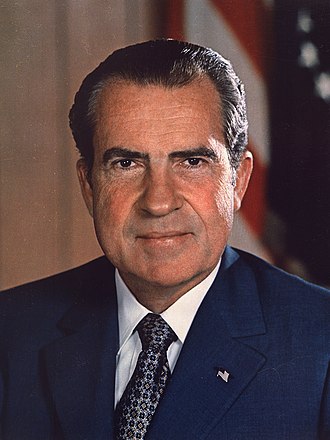
Richard M. Nixon served as the 37th President of the United States from January 1969 until his resignation in August 1974. In February 1971, he ordered the installation of a secret voice-activated taping system in the White House to preserve a historical record of his administration. Until the system's existence was revealed and dismantled in July 1973, the tapes captured Nixon directing major foreign policy initiatives, such as the opening to China, as well as his central role in the Watergate cover-up.
What Nixon talks about on the tapes
White House operations 4,718Presidential scheduling 2,225Public relations 1,784Presidential schedule 1,782Vietnam War 1,693Logistics 1,650Manolo Sanchez 1,626White House communications 1,400White House administration 1,399Presidential communication 1,243Henry Kissinger 1,191Foreign Policy 1,183
Conversations (21,010)
— Page 167 of 211President Nixon met with Donald Rumsfeld to confirm his travel arrangements for a commercial flight to Europe, with specific attention paid to his departure schedule from National Airport. Following this logistical check, Stephen Bull joined the discussion to coordinate a photo opportunity for Rumsfeld in the Rose Garden. The meeting concluded with the participants preparing to head outside for the scheduled photographs before Rumsfeld's departure.
President Nixon and Donald Rumsfeld met to discuss U.S. foreign policy challenges, particularly the strain on NATO and European allies' criticism of American actions in Vietnam and recent diplomatic overtures to the Soviet Union and China. The President expressed frustration with the lack of European self-sufficiency and the necessity of convincing allies that the U.S. is indispensable to their security. Following this, the conversation shifted to domestic politics, with Nixon offering his support for Rumsfeld’s potential Senate candidacy and criticizing the perceived weakness and lack of leadership in both the U.S. Senate and the House of Representatives.
President Nixon contacted the White House operator to facilitate a telephone connection with his Press Secretary, Ronald L. Ziegler. The brief exchange served as a routine administrative request to initiate communication with a key staff member. No further policy or strategic discussions took place during this short connection.
President Nixon met with his aide Stephen B. Bull in the Oval Office to coordinate his daily itinerary. The primary focus of the brief discussion was to confirm the logistics for an upcoming meeting with Press Secretary Ronald L. Ziegler. Following the confirmation of these scheduling details, the meeting concluded shortly thereafter.
President Nixon and Press Secretary Ronald Ziegler met to discuss media strategy, focusing on controlling the narrative regarding White House staffing changes and press relations. They specifically addressed public rumors concerning the departure of Secret Service official Robert Taylor, with Ziegler defending the administration's version of events against press inquiries from journalists like Helen Thomas and Dan Rather. Additionally, the pair discussed the repatriation of prisoners of war (POWs) and the importance of highlighting the POWs' reported support for the President to bolster public perception.
President Nixon and Press Secretary Ronald Ziegler coordinated the administration's messaging regarding potential hijacking negotiations with Cuba, emphasizing that Secretary of State William P. Rogers would address the topic at an upcoming press conference. The two also discussed the protocol for lowering the American flag to half-mast in light of recent inquiries, noting that senior staff members including Alexander Haig and H.R. Haldeman supported the move. Nixon instructed Ziegler to bring relevant documentation to his office at 2:45 p.m. for final review and approval.
President Nixon contacted the White House operator to facilitate a telephone call to Hollywood producer John Ford. Acting on instructions from S. Bruce Herschensohn, the President requested that the operator locate Ford’s contact information through his former office, managed by a Mr. Hutchinson. The primary objective of the call was to establish communication with Ford for the President.
President Richard Nixon called film director John Ford to offer him the Presidential Medal of Freedom. The two discussed Ford’s ongoing recovery from surgery, leading them to agree to schedule the presentation for mid-March when the President would be in California. During the exchange, Ford expressed strong support for the administration's Vietnam policies, and the pair shared a moment of mutual admiration regarding the emotional return of American prisoners of war.
President Nixon contacted the White House operator to facilitate an outgoing call to an unidentified individual. This brief administrative interaction served as a logistical step to connect the President with an external party. No specific policy details or substantive discussions were recorded during this brief operator-assisted connection.
President Nixon and Press Secretary Ronald Ziegler discussed the positive press reception regarding the flag-lowering protocol observed following the death of Lyndon B. Johnson. They also reviewed the successful media impact of recent photo opportunities featuring George Shultz, John Scali, and Donald Rumsfeld. The two agreed that these staged appearances helped generate favorable news coverage and justified the rapid scheduling of these meetings.
President Nixon initiates a request through the White House operator to place a telephone call to his close friend and confidant, Charles G. “Bebe” Rebozo. The brief interaction serves solely to facilitate this personal communication. No policy matters or administrative decisions are addressed during this short logistical exchange.
President Nixon and Stephen B. Bull reviewed the presidential schedule, focusing on upcoming receptions for AFL-CIO leadership, Vietnam supporters, and major campaign contributors. The pair discussed logistical details for long-range events, including guest lists and the management of contributor receptions to avoid excessive social obligations. Additionally, Nixon addressed plans for a football safety film produced by Wilson Sporting Goods and scheduled revisions for an upcoming radio speech.
President Nixon and Stephen B. Bull met to coordinate the President's schedule, specifically regarding farewell meetings with departing staff members. The discussion touched upon the professional standing of White House personnel compared to assistant secretaries and cabinet members. Nixon also expressed personal interest in the status of his friend Curtis Thompson, who was associated with the Federal Mediation and Conciliation Service, and confirmed an upcoming meeting with Charles Colson.
President Nixon consulted with the White House operator to facilitate an outgoing call. This routine interaction served as a administrative step to connect the President with a third party. No substantive policy discussions or significant political decisions occurred during this brief telephonic coordination.
President Nixon met with his personal aide, Stephen B. Bull, to discuss preparations for an upcoming radio address. The conversation focused on the logistical and structural details required for the broadcast. This meeting served to coordinate executive messaging strategy during a period of significant administrative activity.
President Richard M. Nixon met with his personal aide, Stephen B. Bull, to discuss the drafting and preparation of an upcoming presidential address. The conversation focused on the logistical and structural planning required for the speech. No further details were recorded regarding the specific subject matter or final decisions made during the brief consultation.
President Nixon and his close associate Charles G. "Bebe" Rebozo coordinated potential travel plans for the President to visit Key Biscayne, Florida, over the upcoming weekend. The discussion focused primarily on monitoring local weather forecasts to determine the feasibility of the trip. Nixon decided to delay his final decision until Friday morning, at which point he planned to confirm his travel status with Rebozo and his daughter, Julie Eisenhower.
President Richard Nixon met with his close friend Charles G. "Bebe" Rebozo to coordinate travel plans for the upcoming weekend. The discussion centered on finalizing the timing of their departure, with Nixon noting he needed to remain at the White House through Thursday evening. The two men agreed to touch base via telephone once Rebozo reached their destination to confirm the logistics.
President Nixon initiates a request through the White House operator to place a telephone call to his daughter, Julie Nixon Eisenhower. The brief interaction serves strictly as a procedural effort to establish contact with a family member. No other substantive political or administrative matters are addressed during this brief exchange.
President Nixon met with his personal secretary, Rose Mary Woods, to discuss administrative tasks and revisions to a draft document. The conversation focused on specific markings, numbering changes, and the handling of cards. The meeting concluded with instructions regarding the delivery of materials to the residence.
President Nixon met with Stephen B. Bull to coordinate upcoming meetings with Charles W. Colson and William E. Timmons regarding congressional relations. They discussed strategies for engaging Vietnam supporters, specifically focusing on labor and ethnic groups. Bull confirmed that Colson believes current outreach efforts are sufficient and that congressional allies will handle remaining matters.
President Nixon met with his aide Stephen B. Bull to coordinate logistical details regarding a forthcoming seminar at Camp David. The discussion focused on the involvement of William E. Timmons and the potential for a telephone update to the President concerning these arrangements. The meeting functioned as a brief administrative briefing to ensure communication flow for the retreat planning.
President Nixon met with Charles Colson and staff to discuss strategies for managing the Watergate scandal, specifically debating the invocation of executive privilege to protect White House confidentiality. The conversation also covered broader public relations efforts, including leveraging the homecoming of Vietnam prisoners of war to bolster national pride and the President’s standing. Furthermore, the participants analyzed political challenges such as public resistance to amnesty for draft dodgers, economic concerns regarding dollar devaluation, and ongoing tensions with the press and the FBI.
President Nixon met with Press Secretary Ronald Ziegler to discuss media strategy, public perception of his foreign policy, and the administration’s response to various press inquiries. The conversation centered on managing criticism regarding Vietnam, addressing negative news stories about Secret Service staffing, and countering perceived bias within wire services like UPI, specifically naming reporters such as Helen Thomas. Nixon emphasized the importance of maintaining control over the news cycle by promoting positive, symbolic actions—such as the recent return of POWs—and coordinating consistent messaging across government departments.
President Nixon met with outgoing CIA Director Richard Helms to discuss Helms's upcoming ambassadorial appointment to Iran and to provide strategic guidance on global foreign policy. Nixon emphasized the importance of Helms applying his intelligence background to the critical issue of energy and oil production while maintaining a balanced, pragmatic approach to international relations. The two also addressed the challenges of managing global criticism of the U.S., regional security dynamics in the Persian Gulf, and the complex geopolitical task of negotiating a Middle East settlement between Israel and the Arab states.
President Nixon and Stephen B. Bull met to finalize logistical arrangements regarding the recognition of returning prisoners of war (POWs). The discussion focused on coordinating the delivery of commemorative cards and corsages, involving a San Diego florist with personal connections to the White House staff. Additionally, they briefly reviewed the President’s upcoming schedule, including meetings with General Andrew J. Goodpaster and Elliot Richardson.
President Nixon and Stephen B. Bull met to finalize logistical preparations for an upcoming radio address to be recorded in the President's private office. The discussion focused on technical requirements, specifically reviewing seating arrangements for the President and the optimal placement of microphones for the recording equipment. This session served as a final operational check to ensure the quality and professional setup of the broadcast.
President Nixon met with Stephen B. Bull to discuss an incoming telephone call from Admiral Thomas H. Moorer and General Brent Scowcroft. The conversation focused on the positive feedback received from returning prisoners of war (POWs), specifically regarding their support for the December 1972 bombing campaign. Bull facilitated the coordination of this intelligence and a potential follow-up meeting between the President and the military officials.
President Nixon and Stephen B. Bull met to review and finalize the President’s daily schedule. The discussion focused on coordinating upcoming appointments, specifically regarding meetings with Edward L. Morgan and Admiral Thomas H. Moorer. A key outcome of the consultation was the confirmation of General Brent G. Scowcroft’s attendance at the Moorer meeting and the planning for related announcements.
President Nixon held a brief administrative interaction with a White House operator to facilitate telephonic communication. The conversation served as a functional bridge to connect the President with other parties, as indicated by the presence of subsequent sub-segments in the recording log. No policy discussions occurred, as the exchange was limited to operator-assisted call processing.
President Nixon held a series of brief meetings in the Oval Office to express personal appreciation and host photo sessions for various administration officials, their families, and departing staff members. Throughout these interactions, the President acknowledged the professional contributions of personnel from the Treasury and Commerce Departments, as well as individuals transitioning to new roles in law and the public sector. The session served primarily as a gesture of gratitude for their service, during which Nixon also briefly touched upon ongoing administrative priorities such as school desegregation and employment initiatives.
President Nixon met with Stephen B. Bull to be introduced to Thomas Hart, an individual with a background in business education. The brief discussion focused on Hart’s educational history at Harvard Business School and the prevailing political attitudes and voting patterns of students during the 1972 presidential election. The interaction served primarily as a formal introduction and a cursory exchange regarding youth political sentiments.
President Nixon instructed the White House operator to place an outgoing call to his daughter, Julie Nixon Eisenhower, on hold. The brief exchange served as a procedural request to manage the President's telephonic communications. No substantive policy matters or further actions were discussed during this interaction.
President Richard Nixon met briefly with his personal valet, Manolo Sanchez, in the Oval Office. The conversation focused on the provision of refreshments. No major policy decisions or significant political developments resulted from this short interaction.
President Nixon initiated a brief contact with the White House operator to facilitate an external communication. The interaction served as a functional logistical task to connect the President with an outside party. No substantive policy matters or significant executive decisions were recorded during this brief exchange.
President Nixon and his daughter, Julie Nixon Eisenhower, coordinate their evening dinner plans and discuss the President's inability to travel to Florida to visit Bebe Rebozo. The conversation includes a recommendation from the President for Julie to view a specific photograph in the Washington Star depicting the return of the first prisoners of war. Julie agrees to review the media coverage and confirms her attendance for dinner at the White House.
President Nixon initiates a request for the White House operator to connect him with his daughter, Julie Nixon Eisenhower. This brief exchange serves as a standard administrative facilitation to establish a private personal communication. No policy matters or substantive political topics were discussed during this brief request.
President Nixon met with his daughter, Julie Nixon Eisenhower, for a brief, informal discussion regarding upcoming scheduling arrangements. The conversation focused on coordinating a planned gathering or appearance, specifically confirming a meeting time of 6:00 p.m. The interaction concluded with lighthearted personal remarks, reflecting their family relationship.
President Nixon met with H.R. Haldeman, John Ehrlichman, Ronald Ziegler, and Stephen Bull to strategize on public relations, press management, and the administration’s social calendar. The President emphasized the need for more impactful, quotable language in his speeches and instructed his team to refine his media appearances and social events to better court political allies and financial contributors. Key decisions included structuring upcoming “Evenings at the White House” to feature small, rotating dinner groups to maximize personal engagement with guests while streamlining the presidential schedule for upcoming weeks.
President Nixon met with his personal valet, Manolo Sanchez, in the Oval Office to discuss lunch arrangements and coordinate logistical details regarding a radio speech. The conversation focused on the practical coordination of the President's personal schedule and upcoming communications commitments. No major policy decisions were recorded during this brief administrative interaction.
President Richard M. Nixon met with his personal aide, Stephen B. Bull, in the Oval Office for a brief consultation. While the specific details of their discussion remain restricted due to the withdrawal of personal returnable materials, the interaction was part of the standard daily administrative operations of the White House. No further actions or records are available regarding the substance of this private meeting.
President Nixon met with his aide Stephen B. Bull in the Oval Office to conduct a brief review of the President's upcoming daily schedule. The discussion focused on logistical planning and the coordination of presidential commitments. The meeting concluded quickly without any recorded policy decisions or major developments.
President Nixon met with television technicians in the Oval Office to prepare for and record a televised address concerning national environmental policy and energy concerns. During the session, technicians managed lighting, audio, and room arrangements to facilitate the President's formal remarks. Nixon’s address focused on the need for legislative action regarding environmental quality and the development of comprehensive energy initiatives to address growing national fuel shortages.
President Nixon met with his personal valet, Manolo Sanchez, to discuss the President's immediate schedule. During the brief interaction, Nixon indicated his need for a period of rest, specifically requesting to take a nap. No broader policy or administrative matters were addressed during this short exchange.
President Nixon requested that the White House operator connect him with an individual named Steve. The interaction was brief and served solely as a logistical request to place a telephone call to this specific party. No further policy or substantive matters were discussed during this brief exchange.
President Nixon initiates a brief telephonic request to the White House operator to be connected with his personal aide, Stephen B. Bull. This administrative exchange serves the purpose of facilitating direct communication between the President and his staff. No further substantive policy discussions occurred during this brief interaction.
President Nixon instructed his aide, Stephen B. Bull, to coordinate a meeting with George H.W. Bush and H.R. Haldeman for later that afternoon. The President directed that the meeting be officially placed on his schedule, but explicitly excluded a photo opportunity. Nixon also adjusted his subsequent appointment with John Ehrlichman to accommodate the timing of the meeting with Bush.
President Nixon consulted with his aide Stephen B. Bull regarding the scheduling of a meeting with George H.W. Bush. The discussion centered on adjusting the timing of Bush's visit, with Nixon requesting that Bull coordinate the appointment around other existing obligations. Ultimately, Nixon directed Bull to reach out to his staff to finalize the updated meeting time.
President Nixon initiated a brief telephone request through the White House operator to be connected with William E. Timmons. The President specified that he could reach Timmons through an aide named David. No further substantive policy matters were discussed during this brief administrative exchange.
President Nixon consulted with the White House operator to facilitate personal arrangements for visiting various dining establishments and cafes. The brief discussion focused on logistical coordination for these informal outings. No significant policy or political matters were addressed during this exchange.
President Nixon and William Timmons coordinate the guest list and scheduling for an upcoming congressional reception designed to shore up political support ahead of a pending presidential veto on REAP legislation. Nixon directs Timmons to adopt a more generous criteria for Republican attendees, suggesting they overlook past defections for members who might still be persuaded to support the administration. Conversely, they agree to exclude outspoken critics who have consistently opposed the White House, while strategizing on how to manage relationships with members who have recently signaled a desire to return to good standing.
President Nixon and legislative liaison William E. Timmons discuss the strategic timing for upcoming congressional sessions and managing Republican congressional relations. The conversation touches upon the sensitivities of maintaining party discipline and avoiding personal embarrassment for specific members during political maneuvers. The President ultimately tasks Timmons with exercising discretion in handling these delicate legislative and personnel matters.
President Nixon contacted the White House operator to facilitate communication with his aide, Stephen B. Bull. This brief exchange served as a routine administrative request to place a telephone call. No substantive policy matters or further developments were recorded during this interaction.
President Nixon met with Stephen B. Bull to coordinate the scheduling of a meeting with George H.W. Bush. The conversation centered on establishing a specific time for the appointment, with the discussion concluding on the need to set the engagement for 4:00 pm. No other policy matters were addressed during this brief logistical exchange.
President Nixon met with Admiral Thomas H. Moorer to discuss the triumphant return of American Prisoners of War (POWs) from Vietnam and the strategic success of the recent air campaigns. The two focused on leveraging the high morale and patriotism of the returning POWs to solidify public support for the administration's military policies and to justify the necessity of the Vietnam bombing raids. Additionally, they reviewed strategies for future military planning, the importance of maintaining a strong defense budget, and the administration’s firm opposition to amnesty for draft evaders.
President Nixon met with George H.W. Bush, Anne Armstrong, and H.R. Haldeman to discuss RNC strategy, campaign planning for the 1974 and 1976 elections, and administrative efforts to consolidate Republican political messaging. They addressed organizational challenges within the RNC, potential Senate and House recruitment, and the strategic importance of courting specific ethnic and regional voting blocs. Additionally, the President reviewed the positive political impact of returning POWs and defended his recent bombing campaign as a vital demonstration of American resolve and credibility to both allies and adversaries.
President Nixon directed Stephen B. Bull to coordinate a cabinet meeting scheduled for the following Friday. Bull was tasked with verifying the availability of Vice President Spiro Agnew and George Shultz to provide briefings at the session. Nixon emphasized his preference for both officials to attend but authorized the meeting to proceed if at least one of them was confirmed.
President Nixon and Secretary of Defense Elliot L. Richardson discussed plans for a presidential visit to the Pentagon to bolster military morale following the return of American prisoners of war (POWs). They coordinated the meeting's logistics, including the invitation list of military and NSC officials and the public messaging strategy to frame the event around honoring the heroes of the Vietnam War. Nixon emphasized that the visit was specifically intended to boost national and military pride in the wake of the ceasefire agreement.
President Nixon and Secretary of Defense-designate Elliot L. Richardson discuss the strategic messaging and format for Richardson’s upcoming visits to various military agencies. The President emphasizes the importance of boosting military morale and ensuring service secretaries and military chiefs feel included in the decision-making process. They finalize plans for a meeting the following day to discuss policy initiatives and personnel attendance, aiming to present a unified and appreciative front to the armed services.
President Nixon instructed the White House operator to place an outgoing call to Hobart D. Lewis, the president and editor-in-chief of Reader's Digest, at his office in New York. The brief exchange served purely administrative purposes to facilitate contact between the President and the media executive. No further policy discussions or substantive developments occurred during this brief request for operator assistance.
President Nixon met with Ronald Ziegler and General Brent Scowcroft to coordinate an upcoming visit to the Pentagon for lunch with Secretary Elliot Richardson and the Joint Chiefs of Staff. The primary objective of the visit was to receive a status report on returning prisoners of war (POWs) and to determine how to formally recognize their service. Additionally, the President intended to use the meeting as a strategic opportunity to bolster military morale and acknowledge the contributions of the service secretaries and the military leadership.
President Nixon and John Ehrlichman met to coordinate administration strategy on key political and administrative challenges, including farm policy and the confirmation process for acting FBI Director L. Patrick Gray. Nixon emphasized the need for close control over the Gray confirmation to ensure he properly managed Watergate-related inquiries, while also discussing the reassignment of White House staff members to mitigate negative publicity. Additionally, the pair reviewed staffing for the ACTION agency and addressed personnel tensions surrounding H.R. Haldeman’s staff, aiming to improve administration optics and operational cohesion.
President Nixon and Hobart D. Lewis discussed the positive public impact of returning American POWs from Vietnam and the strategic success of the December 1972 bombing campaign. They explored the potential for a high-profile media narrative to document these events and emphasize the administration's resolve in achieving the cease-fire terms. The conversation concluded with a plan for Lewis to facilitate a meeting between Admiral Thomas H. Moorer and journalist Hanson Baldwin to begin coordinating this coverage.
President Nixon instructed the White House operator to place an outgoing call to Secretary of State William P. Rogers. The brief exchange served as a routine administrative request to facilitate communication between the President and the Secretary. No further substantive policy matters were discussed during this brief connection.
President Nixon met with his aide Stephen B. Bull to review logistical details for upcoming executive engagements, including a Pentagon visit, a Cabinet meeting, and a briefing on international monetary policy. They discussed strategies for public relations regarding 'Operation Homecoming' for returning POWs and finalized scheduling for a meeting with Sir Christopher Soames. Additionally, the President issued instructions regarding an ongoing hijacking agreement with Cuba, opting to have the ambassador deliver a message rather than personally addressing the matter.
President Nixon and Stephen B. Bull discussed managing the President’s schedule, specifically regarding the high volume of requests for meetings, photographs, and handshake sessions with White House staff and administration supporters. Nixon expressed concerns about maintaining a proper balance of visitors, cautioning against an overrepresentation of White House staff at the expense of other supporters. They also reviewed administrative staffing transitions, including potential departures and appointments for various roles such as the Secretary of Transportation.
President Nixon met with his staff to discuss public relations strategies, specifically focusing on the recent release of Prisoners of War (POWs), the need to manage expectations for upcoming press conferences, and the delicate political challenge of securing aid for North Vietnam. The President emphasized his desire to avoid "grandstanding" during his planned Pentagon visit while highlighting the need to address the emotional and physical well-being of returning veterans. Additionally, Nixon reviewed administrative staffing issues and social planning for upcoming events, directing his staff to organize White House functions that include a broad cross-section of Congress while managing internal personnel disputes involving the Secret Service and White House aides.
President Nixon met with his senior environmental and interior officials to coordinate a public relations strategy for the administration's environmental and energy policies. The discussion focused on framing the upcoming energy message and budget as a positive, proactive agenda rather than a series of cutbacks, while emphasizing the restoration of the environment as a central legacy of the 1970s. The group specifically discussed the need to promote land-use planning and to advocate for the repurposing of the Highway Trust Fund to support mass transit as a solution to urban congestion and smog.
President Nixon instructed the White House operator to place an urgent call to either Secretary of Defense Elliot L. Richardson or Admiral Thomas H. Moorer. This outreach served as a direct request for consultation with key national security and defense leadership. The operator acknowledged the directive to secure one of the two officials immediately.
President Nixon met with Generals Brent Scowcroft and Andrew Goodpaster to discuss the strategic implications of the Vietnam settlement, the return of American POWs, and future NATO relations. Nixon emphasized that the recent peace agreement and the successful December 1972 bombing campaign significantly bolstered American credibility with allies and boosted domestic morale. The group also analyzed the importance of maintaining a firm stance with NATO partners during ongoing security negotiations and the potential for long-term military force restructuring in Europe.
President Nixon held a brief three-minute meeting with an unidentified individual in the Oval Office. The discussion appears to have centered on the President's upcoming daily schedule. No specific policy decisions or significant developments were recorded during this session.
President Nixon met with J. Curtis Counts to discuss Counts’s transition from government service to the private sector and his upcoming work in the construction industry. The two discussed the challenges of labor-management relations, the competence of various labor lawyers, and the difficulties of negotiating within a fragmented industry. They also touched upon the public impact of returning prisoners of war and the strategic necessity of the recent bombing of North Vietnam. Before concluding the meeting, Nixon presented Counts with presidential gifts and offered professional advice regarding his future career path.
President Nixon met with an unknown individual to review a list of potential ambassadorial candidates and staff appointments. The discussion focused on administrative protocols for correspondence, specifically the use of first names and the procedure for marking selections on the provided list. Nixon confirmed his preference for circling names to expedite the preparation of official letters.
President Nixon met with Stephen B. Bull to coordinate administrative and logistical arrangements regarding upcoming photography sessions and staff schedules. The discussion focused on ensuring specific staff members were included in photographs and managing travel logistics for General Brent Scowcroft’s visit to the Pentagon. Additionally, they briefly touched upon the scheduling of Ronald L. Ziegler and other personnel matters.
President Nixon met with an unknown woman in the Oval Office to coordinate the handling of specific correspondence. During the brief discussion, the President instructed the visitor to leave two letters on his desk rather than mailing them immediately. The interaction focused on ensuring the proper temporary storage and subsequent dispatch of this personal documentation.
President Nixon met with his personal valet, Manolo Sanchez, in the Oval Office to prepare for the President's departure from the White House. The brief interaction focused on logistical arrangements, specifically the retrieval and preparation of the President's topcoat. The conversation concluded as the two men exited the office together.
President Nixon met with an unidentified individual in the Oval Office for a brief, three-minute session regarding the President's daily schedule. The conversation concluded without a recorded transcript, and no specific policy outcomes or significant historical developments were documented during this short engagement. The meeting served primarily to address logistical arrangements related to the President's time management.
President Nixon initiates a request for the White House operator to place a telephone call to his close friend and confidant, Charles “Bebe” Rebozo. The brief exchange serves as an administrative directive to facilitate communication between the President and Rebozo. No further substantive policy matters are discussed in this recording.
President Nixon and Charles G. "Bebe" Rebozo discuss logistics and weather prospects for the President’s upcoming trip to Florida. Rebozo provides updated meteorological reports from both the National Weather Service and the Air Force to help inform the President’s travel decision. Additionally, the two touch upon a potential future visit by the President to Jamaica, with Nixon indicating plans to consult John B. Connally regarding the arrangements.
President Nixon contacted the White House operator to facilitate a telephone connection with Admiral Thomas H. Moorer, the Chairman of the Joint Chiefs of Staff. This brief interaction served solely as a logistical request to initiate a high-level consultation with the nation's top military official. No substantive policy matters were discussed during this specific exchange with the operator.
President Nixon consulted with Admiral Thomas Moorer regarding a request from Reader's Digest publisher Hobart Lewis to produce a feature article on the return of American Prisoners of War. Nixon proposed that military analyst Hanson Baldwin be granted access to collect information for the story, provided all details remain confidential until the repatriation process concluded on March 28. Moorer agreed to cooperate with Baldwin and assured the President that the security of the information would be maintained.
President Nixon contacted the White House operator to place a personal telephone call to his daughter, Julie Nixon Eisenhower. The brief exchange served solely as a request for the operator to connect the President with his daughter. No further administrative or political business was discussed during this brief communication.
President Nixon and H. R. Haldeman discussed the administrative handling of Robert H. Taylor and William L. Duncan. They decided to immediately mail requested letters to both individuals to resolve the matter. Furthermore, they agreed to schedule a photograph session with the President for the following week and tasked Stephen Bull with facilitating the arrangements.
President Nixon initiates a request for the White House operator to place a telephone call to William E. Timmons, then serving as the Assistant to the President for Legislative Affairs. This brief exchange serves strictly as an administrative coordination to facilitate direct communication between the President and his congressional liaison. No further policy discussions or substantive matters occur during this connection.
President Nixon and his daughter, Julie Nixon Eisenhower, coordinate plans for a potential family trip to Florida and discuss the President's upcoming schedule. The conversation also features a detailed explanation from the President regarding personnel changes within his Secret Service detail, specifically concerning agents William L. Duncan and Robert H. Taylor. Despite Julie’s reservations about the circumstances of these staff reassignments, the President defends the administrative decisions as career-building moves for the agents involved.
President Nixon consulted with William E. Timmons regarding the strategic value of hosting a breakfast meeting with Senate leaders Mike Mansfield, Hugh Scott, Robert Griffin, and Robert Byrd. The President sought to use this session to cultivate rapport and brief the senators on developments in Southeast Asia, trade negotiations, and the Soviet Union's Most Favored Nation status. Nixon emphasized the necessity of Mansfield’s attendance, deciding that if the Senate Majority Leader could not attend, the meeting would not proceed.
President Nixon consulted with General Brent Scowcroft regarding the status of ongoing ceasefire negotiations in Laos and Cambodia to prepare for upcoming meetings with Senate leaders, including Mike Mansfield. Scowcroft reported that the Laos negotiations were in the final stages despite lingering disagreements over minor points. The President requested brief summaries on the status of these negotiations, as well as on potential economic aid to North Vietnam, to ensure he could adequately brief Congress and secure legislative support.
President Nixon initiated a brief telephone communication through the White House operator to be connected with First Lady Pat Nixon. The primary purpose of the call was to facilitate personal contact between the President and his wife. No policy matters or significant administrative decisions were discussed during this brief exchange.
President Richard Nixon and First Lady Pat Nixon discussed plans for a potential trip to Florida to visit Julie Nixon Eisenhower. The President consulted his schedule regarding an upcoming AFL-CIO board meeting to determine the feasibility of the travel dates. They tentatively coordinated their departure and return to ensure the President could fulfill his professional obligations while accommodating their personal itinerary.
President Nixon and aide Stephen B. Bull coordinate the President's schedule, specifically addressing the cancellation of a breakfast meeting with Mike Mansfield and the subsequent rescheduling of appointments. The discussion focuses on finalizing a 9:00 a.m. meeting with L. Patrick Gray, accompanied by John Ehrlichman, followed by a meeting with Sir Christopher Soames. Nixon emphasizes keeping the Gray meeting off the record while utilizing the Soames appointment as a formal reason to depart from a scheduled Cabinet meeting.
President Nixon contacted the White House operator to facilitate a personal call to First Lady Pat Nixon. The brief exchange served as an administrative request to connect the President with his wife. No substantive political or policy matters were addressed during this connection.
President Nixon and First Lady Pat Nixon coordinate their travel schedules and departure time for an upcoming trip. The President informs the First Lady of a potential stop in South Carolina on their return journey to attend a military-related engagement. He confirms that the stop will not require her participation as he finalizes the logistics.
President Nixon instructed the White House operator to place a personal telephone call to his daughter, Julie Nixon Eisenhower. The brief interaction served as a logistical request to facilitate communication between the President and his family. No policy matters or official government business were addressed during this exchange.
President Nixon initiates a request through the White House operator to place a telephone call to entertainer Bob Hope, who is located in California. This brief administrative interaction serves solely to facilitate communication between the President and the celebrity. No substantive policy discussions or political decisions occur during this brief exchange.
President Nixon contacted the White House operator to request a telephone connection with his aide, Stephen B. Bull. This brief administrative interaction served as a routing request to facilitate direct communication with a member of the President's staff. No substantive policy matters were discussed during this short exchange.
President Nixon coordinated his upcoming trip to Florida with Stephen B. Bull, confirming a departure time and potential stop in Jacksonville. The President instructed Bull to hold the public announcement until the following morning and to consult with Secretary of Labor Peter J. Brennan regarding a potential meeting with AFL-CIO leadership, including George Meany. This request was intended to facilitate a diplomatic encounter with labor officials during the President’s weekend stay in Florida.
President Nixon contacted the White House operator to facilitate a telephone connection. The primary purpose of this brief communication was to request that the operator place a call to Stephen B. Bull. No further substantive policy or administrative discussions occurred during this exchange.
President Nixon directed Stephen Bull to extend invitations to Clark MacGregor and Bryce Harlow for an upcoming Cabinet meeting. The President specifically requested that these former administration officials be invited to attend if their schedules allowed. Bull acknowledged the instruction and committed to carrying out the request.
President Nixon held a phone call with Bob and Dolores Hope to discuss the emotional return of American prisoners of war (POWs) from Vietnam and the strategic necessity of the 1972 bombing campaign in securing their release. The President praised the heroism of the returning soldiers, emphasizing the importance of national unity and the administration’s commitment to "peace with honor." Additionally, Nixon consulted Hope regarding a future ceremony to present the Medal of Freedom to director John Ford and discussed coordinating schedules for upcoming social engagements in California.
President Nixon directed the White House operator to place a call to professional golfer Arnold Palmer at his Pennsylvania golf club. The operator also provided a status update regarding an unsuccessful attempt to reach Julie Nixon Eisenhower, noting that a Secret Service agent was working to facilitate a return call. The President acknowledged the situation and instructed the operator to continue her efforts to establish contact.