Nixon, Richard M. (President)
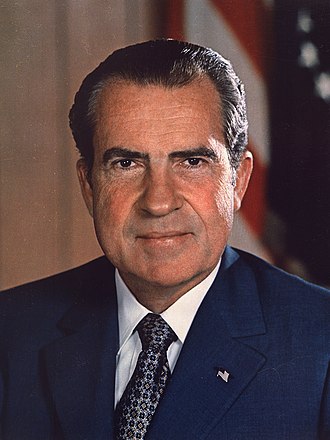
Richard M. Nixon served as the 37th President of the United States from January 1969 until his resignation in August 1974. In February 1971, he ordered the installation of a secret voice-activated taping system in the White House to preserve a historical record of his administration. Until the system's existence was revealed and dismantled in July 1973, the tapes captured Nixon directing major foreign policy initiatives, such as the opening to China, as well as his central role in the Watergate cover-up.
What Nixon talks about on the tapes
White House operations 4,718Presidential scheduling 2,225Public relations 1,784Presidential schedule 1,782Vietnam War 1,693Logistics 1,650Manolo Sanchez 1,626White House communications 1,400White House administration 1,399Presidential communication 1,243Henry Kissinger 1,191Foreign Policy 1,183
Conversations (21,010)
— Page 168 of 211President Nixon instructed the White House operator to place an outgoing call to evangelist Billy Graham, who was reportedly traveling in the Bahamas. Nixon specified that the nature of the conversation was not confidential. The primary purpose of this communication was to facilitate a personal contact between the President and Graham.
President Nixon directed the White House operator to place an outgoing telephone call to professional golfer Arnold Palmer. The brief exchange served as a logistical request to initiate communication between the President and the athlete. No further policy or substantive matters were discussed during this connection.
President Nixon held a brief telephone conversation with professional golfer Arnold Palmer to discuss Palmer's recent tournament victory and upcoming professional plans. The two also addressed the return of American prisoners of war and reflected on the political implications of the December 1972 bombing campaign in North Vietnam. The discussion served as a cordial exchange regarding both the status of professional golf, including references to Bob Hope and Jack Nicklaus, and the broader context of national military policy.
President Nixon held a phone conversation with Bebe Rebozo, who was hosting Frank and Marguerite Rackley for dinner. During the call, Nixon coordinated plans for his upcoming Florida trip and discussed potential weather concerns with Rebozo. The President also took the opportunity to speak directly with Frank and Marguerite Rackley to express his personal gratitude for their long-standing political loyalty and support during the early 1960s.
President Nixon contacted the White House operator to facilitate a telephone connection with his close friend and confidant, Charles G. (“Bebe”) Rebozo. The brief exchange served strictly as an administrative request to initiate this private communication. No substantive policy discussions or further actions were recorded during this brief interaction.
President Nixon met with his aide Stephen B. Bull to facilitate a telephone call to evangelist Billy Graham. The discussion focused on coordinating this outreach, serving as a brief administrative interaction to connect the President with his prominent religious advisor. No further policy developments or complex deliberations were recorded during this brief exchange.
President Nixon met with H. R. Haldeman and Stephen B. Bull to coordinate his upcoming travel schedule, including a trip to Florida, and to manage White House social outreach to key congressional members and political contributors. They also discussed public relations regarding Prisoners of War (POWs), specifically highlighting the positive public statements made by Col. Robinson Risner in support of the administration. Additionally, the group reviewed logistics for upcoming meetings with labor leaders George Meany and Peter J. Brennan, and solidified plans for announcing these engagements.
President Nixon, John Ehrlichman, and L. Patrick Gray discussed Gray’s upcoming confirmation process for the FBI directorship amidst the escalating Watergate investigation. Nixon emphasized the necessity of maintaining a relationship with the Bureau director characterized by total discipline and secure, direct communication, akin to his past interactions with J. Edgar Hoover. They deliberated on how Gray should handle hostile questioning regarding domestic wiretaps and potential illegal activities by the previous administration, ultimately deciding that Gray should meet these inquiries head-on to maintain control of the narrative.
President Nixon met with Vice President Agnew, Cabinet members, and key staff to discuss recent foreign policy developments and economic strategy. Vice President Agnew briefed the group on his recent tour of Southeast Asian nations, while Treasury officials and Cabinet members deliberated on international monetary policy, trade barriers, and the need for a more competitive U.S. industrial posture. The President emphasized the importance of maintaining international engagement, securing legislative tools for trade negotiations, and justifying reconstruction aid for Vietnam as a strategic security necessity rather than purely humanitarian relief.
President Nixon met with Sir Christopher Soames and administration officials to address the growing trend of isolationism in both the United States and Europe and its potential impact on trans-Atlantic relations. The discussion focused on complex trade negotiations, the role of an enlarged European Economic Community, and the necessity of maintaining unified Western political and economic strength in the face of competition from Japan and shifting global powers. Nixon emphasized the political difficulty of passing trade legislation in a protectionist-leaning U.S. Senate and urged European leaders to cooperate on a balanced approach to trade and energy security to prevent an ugly confrontation.
President Nixon, John Ehrlichman, and George Shultz met to discuss labor department personnel, specifically the management and staffing challenges facing Labor Secretary Peter J. Brennan. The participants coordinated travel plans involving Ehrlichman and Brennan, while also addressing George Meany’s inquiries regarding tax reform and presidential authority. Finally, the group discussed political strategy concerning potential aid to North Vietnam and how to frame domestic spending relative to historical post-war investments in Germany and Japan.
President Nixon contacted the White House operator to facilitate a telephone connection with his Press Secretary, Ronald L. Ziegler. The brief exchange served solely as a logistical request to initiate this communication. No substantive policy discussions or decisions occurred during this brief administrative interaction.
President Nixon contacted the White House operator to facilitate a telephone connection with Stephen B. Bull. This brief exchange served as a routine administrative request to locate and connect the President with a member of his staff. No further substantive policy discussions occurred during this brief request.
President Nixon expressed sudden, intense frustration during a brief interaction with the White House operator. The exchange is notable primarily for the President's use of profanity, suggesting a moment of acute irritation or anger while managing administrative communications. No substantive policy matters or official business were discussed beyond this outburst.
President Nixon consulted with the White House operator regarding an administrative or logistical matter during a brief meeting in the Old Executive Office Building. The conversation primarily served to facilitate communication or call routing as part of the President's daily operational workflow. No further records or transcripts exist to elaborate on the specific subject of the request or subsequent actions taken.
President Nixon consulted with Stephen B. Bull regarding the scheduling of Reverend Norman Vincent Peale for an upcoming White House church service. The President explicitly requested to extend the expected length of Peale’s sermon from the standard 10 minutes to 20 minutes due to his admiration for the minister’s speaking abilities. Bull committed to relaying this directive to the appropriate parties once the Reverend’s participation was confirmed.
President Nixon and Stephen B. Bull briefly discuss logistical concerns regarding communication equipment, specifically expressing a desire to remove a ten-minute limitation on a 'back line.' The conversation focuses on ensuring the operational efficiency of the President’s telephone or recording infrastructure. No further substantive policy decisions were reached during this brief exchange.
President Nixon and Press Secretary Ronald Ziegler discuss scheduling the President's upcoming press conference to avoid media oversaturation. They determine that Henry Kissinger’s planned Thursday briefing on China and the Vietnam settlement necessitates rescheduling the President's event to avoid competing with that news cycle. Ultimately, they decide to move the President's press conference to the following Tuesday to ensure better news coverage and momentum.
President Nixon and Press Secretary Ronald Ziegler discuss media strategy and the risk of over-saturating the press with information. Nixon expresses concern regarding the volume of material provided to journalists and seeks to refine how the administration manages the narrative. The brief exchange highlights the President’s focus on controlling the flow of information to avoid media exhaustion or negative competitive coverage.
President Nixon instructed the White House operator to cease the recording process during a brief encounter in the Old Executive Office Building. This interaction served solely as a procedural directive to deactivate the taping equipment. No substantive political or administrative matters were addressed during this exchange.
President Nixon instructed the White House operator to place an outgoing call to his aide, Patrick J. Buchanan. The brief exchange served as a logistical request to facilitate direct communication with a senior staff member. No policy discussions occurred during this administrative interaction.
President Nixon and Patrick J. Buchanan coordinate the scheduling of an upcoming presidential press conference to avoid conflict with major announcements regarding Henry Kissinger’s briefings on China and North Vietnam. Nixon determines that delaying the press conference until the following Tuesday will allow time for developments with Egypt and ensure he can effectively address domestic and foreign policy concerns, particularly Vietnam. During the call, Nixon emphasizes the importance of framing the Vietnam War as a matter of national credibility rather than solely focusing on the return of prisoners of war.
President Nixon met with Secretary of Labor Peter J. Brennan to discuss administrative scheduling and the coordination of departmental activities. The discussion touched upon the heavy workload facing the administration and the need to streamline internal communications and test procedures. Additionally, the President briefly emphasized the importance of addressing the status and welfare of prisoners, suggesting a need for increased attention toward this issue.
President Nixon initiates a request through the White House operator to be connected with William E. Timmons, then serving as an assistant to the President for legislative affairs. The brief communication serves as a standard administrative directive to establish a direct line of contact with a key staff member. No policy discussions occur during this exchange, as the call functions solely to facilitate subsequent communication.
President Nixon met with his aide, Stephen B. Bull, to review and finalize details regarding his upcoming schedule. The primary focus of the discussion was coordinating the logistics and location for a high-level meeting with National Security Advisor Henry A. Kissinger. This administrative exchange facilitated the necessary planning for the President's ongoing diplomatic engagements.
President Richard Nixon met with his personal valet, Manolo Sanchez, in the Old Executive Office Building to discuss personal arrangements. The brief interaction focused specifically on food-related matters. No further administrative or policy developments were recorded during this segment of the conversation.
President Nixon held a private meeting with an unidentified individual in the Old Executive Office Building to discuss classified matters. Due to the absence of a transcript and the redaction of the material under a deed of gift, the specific subject matter and any resulting directives remain undocumented. The session concluded when the guest departed the office prior to 4:15 pm.
President Nixon and Henry Kissinger met to review the geopolitical implications of Kissinger's recent trip to the People's Republic of China, specifically focusing on the personal messages exchanged with Chairman Mao Zedong and the state of U.S.-PRC relations. They discussed the nuances of a potential peace settlement in Vietnam, including the complexities of managing domestic opposition and maintaining support for the administration's policies as prisoners of war prepared to return. Additionally, the President and Kissinger coordinated on press strategy and international diplomacy, with instructions to involve William P. Rogers in subsequent briefings to maintain unified messaging on these sensitive foreign policy developments.
President Nixon directed William E. Timmons to reschedule a meeting with Mike Mansfield to Thursday morning, citing a need for Henry Kissinger to recover from travel and to better prepare for the discussion. Nixon also noted that Secretary of State William P. Rogers was scheduled to testify the following day. Timmons confirmed the change to the new 11:00 am slot, and the President instructed him to coordinate the update with the necessary parties.
President Nixon contacted the White House operator to place an outgoing call to the renowned orchestra conductor Eugene Ormandy in Philadelphia. The brief exchange served as a logistical request to facilitate the connection between the President and the musician. No substantive political or policy discussions took place during this administrative interaction.
President Nixon and Henry Kissinger called Philadelphia Symphony Orchestra conductor Eugene Ormandy to share the exclusive news that the People's Republic of China had selected his orchestra to be the first Western symphony to perform in China. Kissinger explained that the invitation was a direct result of the President's personal advocacy for the ensemble during recent diplomatic discussions with Chou En-lai. Ormandy was instructed to maintain strict confidentiality regarding the development until the official public announcement on Thursday.
Stephen B. Bull contacted President Nixon regarding an urgent decision required on piano tariff rates before the existing escape clause expired at midnight. Bull sought approval to deliver the memorandum from Peter M. Flanigan for the President's signature. Nixon instructed Bull to send the document over, noting that Manolo Sanchez would handle the delivery to ensure the deadline was met.
President Nixon initiated a brief telephone request for the White House operator to connect him with National Security Advisor Henry A. Kissinger. This call served as a logistical step to facilitate direct communication between the President and his advisor regarding ongoing foreign policy matters. The interaction concluded immediately after the President issued his instructions to the operator.
President Nixon and Henry Kissinger discussed the management of Secretary of State William P. Rogers regarding the upcoming announcement of a U.S.-PRC liaison office, as well as the difficult legislative challenge of securing Congressional approval for bilateral aid to North Vietnam. They strategized on how to frame the aid as essential leverage to ensure North Vietnamese compliance with peace agreements and regional troop withdrawals, while debating how to overcome opposition from both conservative skeptics and liberal critics. Ultimately, the pair resolved to lobby key Senators individually to emphasize that failing to support the aid program would effectively invite further regional instability.
President Nixon contacted the White House operator to place an urgent follow-up telephone call to National Security Advisor Henry A. Kissinger. This brief administrative exchange served as a logistical step to re-establish communication with Kissinger during a period of high-level diplomatic activity. No substantive policy discussions occurred during this brief request for the operator's assistance.
President Nixon and Henry Kissinger coordinated the preparation for Secretary of State William P. Rogers' upcoming testimony regarding foreign relations. The discussion confirmed that Rogers had been briefed on the imminent release of a U.S.-People's Republic of China communiqué. They agreed that providing Rogers with the text by the following afternoon was the appropriate strategy to handle potential congressional inquiries on the matter.
President Nixon contacted the White House operator to request a telephone connection with his daughter, Julie Nixon Eisenhower. The brief interaction served solely as an administrative bridge to facilitate this private communication. No substantive policy matters or political topics were addressed during this exchange.
President Nixon consulted the White House operator regarding a failed attempt to reach Julie Nixon Eisenhower and David Eisenhower, who were unavailable for the evening. After deciding to defer his conversation with his daughter until the following day, the President directed the operator to initiate a call to Reverend Billy Graham. This brief exchange highlights the President’s management of personal and professional communications through the White House staff.
President Nixon consulted with the White House operator regarding the status of a placed call to Reverend Billy Graham. Upon learning that Graham was unavailable at his hotel in Atlanta, the President declined the offer to leave a message. He ultimately decided to postpone the communication and attempt to reach Graham again the following day.
President Nixon and Stephen B. Bull met to review and adjust the President's upcoming schedule, including various diplomatic, political, and social commitments. They coordinated logistics for meetings with Pakistani officials, congressional leaders, and civic groups, while evaluating potential speaking engagements such as an education policy address at the National Association of School Administrators convention. Nixon provided guidance on prioritizing these events and delegating administrative details, specifically addressing requests from cabinet members and staff regarding the President's availability.
President Nixon consulted with a White House operator to facilitate a telephone connection involving the Rogers Basin area. The brief exchange served primarily to establish communication channels for official business. No further substantive policy decisions were documented in this short interaction.
President Nixon and Secretary of State William Rogers consulted regarding Rogers' upcoming congressional testimony concerning the Vietnam settlement and proposed economic aid. Nixon advised Rogers to defend the administration’s record by framing the aid as part of a global, multilateral effort while emphasizing the success of previous reconstruction efforts in Germany and Japan. The two also discussed strategies to counter partisan domestic criticism and coordinate upcoming White House outreach to members of Congress.
President Nixon and Secretary of State William P. Rogers discuss strategies for defending administration policies and military spending against domestic political opposition, particularly from Congressional Democrats and the media. The President emphasizes the need to frame these policies as essential for peace and national interest, drawing parallels to post-World War II reconstruction efforts in Germany and Japan. To build support, Nixon outlines plans for upcoming White House outreach events with members of Congress to cultivate key allies.
President Nixon contacted the White House operator to place an outgoing call to Mrs. Benjamin Freeman, a resident of Philadelphia. The brief interaction served exclusively to facilitate the connection of this telephone call. No further discussion or policy-related matters were recorded during the exchange.
President Nixon interacts with a White House operator to facilitate communication through the executive switchboard. This brief exchange serves a routine administrative purpose related to the President's immediate telephonic needs. No substantive policy matters or historical developments are recorded during this brief encounter.
President Nixon held a brief meeting in the Oval Office with an unidentified individual to discuss an unspecified matter. During the engagement, Nixon requested that Press Secretary Ronald L. Ziegler join them. The meeting concluded quickly, with the guest departing the office shortly thereafter.
President Nixon called Mrs. Benjamin Freeman to offer his personal condolences following the recent death of her husband, a longtime friend and the President’s former tailor. Nixon reflected on their two-decade relationship, emphasizing his deep personal affection for Freeman beyond their professional association. The President expressed his regret at being unable to attend the funeral services in person due to his duties, but he conveyed his support and sympathy to the surviving family.
President Nixon met briefly with Linda Freeman to offer condolences and personal support following the recent passing of her husband, Ben. Nixon expressed his high regard for Ben and shared his regrets regarding his inability to attend the funeral services in person. The conversation served as a private gesture of comfort from the President and the First Lady to a grieving family member.
President Nixon and Press Secretary Ronald Ziegler met to discuss the President's potential attendance at the upcoming Gridiron dinner and other press-related social functions. Ziegler advised against Nixon attending the Gridiron due to the contentious history with George McGovern, who was scheduled to speak. They ultimately decided to decline the Gridiron invitation while considering a "drop-by" strategy for other events, such as the White House Correspondents' dinner, to maintain professional relations with the press without being subjected to lengthy or uncomfortable programs.
President Nixon initiates a brief request to the White House operator to be connected with Harry Dent. The operator clarifies that Dent is currently occupied on another call. This exchange serves as a routine administrative effort to facilitate communication between the President and his advisor.
President Nixon and Ronald Ziegler reviewed upcoming scheduling commitments for several prominent media events, including the Gridiron Dinner, the White House Correspondents Association dinner, and the Radio and Television Correspondents dinner. The discussion focused on coordinating these appearances with a potential visit from South Vietnamese President Nguyen Van Thieu and the desire to avoid public perception of boycotting specific press functions. Nixon evaluated his attendance at these events, weighing the political optics of his presence against scheduling conflicts and his personal distaste for the critical nature of the Gridiron dinner.
President Nixon contacted the White House operator to place a telephone call to political advisor Harry S. Dent. The operator noted that Dent might currently be in South Carolina, though he could have already returned to Washington. This brief interaction served as a logistical attempt by the President to initiate contact with a key staff member for unspecified discussion.
President Nixon consulted with the White House operator to facilitate a meeting with Harry S. Dent, who was visiting Washington D.C. The operator informed the President that Dent was in town and expected at the White House shortly. Nixon acknowledged the update and requested that the information be relayed to Steve, confirming that arrangements for the interaction were in progress.
President Nixon consulted with the White House operator while Press Secretary Ronald L. Ziegler was present in the Oval Office. Although no transcript exists for this brief exchange, the interaction reflects the President's routine administrative coordination during a period of high-level activity. Ziegler departed the room immediately following this brief engagement, marking the conclusion of his brief appearance.
President Nixon initiated a brief contact with the White House operator to facilitate a telephonic connection. This interaction functioned as a routine administrative task to establish communication with an unnamed external party. No substantive policy discussions or policy decisions occurred during this brief exchange.
President Nixon consulted with the White House operator to facilitate an outgoing call. The brief exchange focused on establishing a telephonic connection to an unnamed party. No substantive policy matters or complex developments were addressed during this logistical interaction.
President Nixon instructed the White House operator to place a telephone call to his daughter, Julie Nixon Eisenhower. This brief administrative interaction served as a logistical request to initiate private communication between the President and a family member. No policy matters or substantive political business were discussed during this brief exchange.
President Nixon attempted to reach his daughter, Julie Nixon Eisenhower, via a telephone call placed through the White House operator. Upon learning she was temporarily unavailable, the President instructed the operator to have her return the call at her convenience. The interaction served strictly as a personal check-in with no substantive policy or administrative matters discussed.
President Nixon met with Rose Mary Woods to discuss routine administrative matters, including White House maintenance schedules, correspondence, and potential staff changes involving Henry Kearns. Following Woods' departure, the President spoke with his daughter, Julie Nixon Eisenhower, to check on her well-being and invite her and David Eisenhower to an upcoming White House church service featuring Norman Vincent Peale. The conversations focused primarily on managing personal scheduling, family arrangements, and logistical issues concerning White House upkeep.
President Nixon and his daughter, Julie Nixon Eisenhower, discussed recent public reception of the President's trip to South Carolina and the logistics of upcoming White House social events, including a church service with Norman Vincent Peale and a dinner for Golda Meir. Julie provided an update on her attendance at a Van Cliburn performance and his upcoming engagement at the White House. The President also addressed an administrative issue regarding White House staff, noting that he had consulted with Rex Scouten about the citizenship requirements for hiring waiters.
President Nixon directed the White House operator to place a telephone call to Reverend Billy Graham. This brief exchange served as a logistical request to initiate direct communication between the President and the prominent evangelist. No further policy discussions or substantive developments occurred during this short administrative interaction.
President Nixon met with his aide Stephen B. Bull to coordinate his daily schedule and manage upcoming appointments. The discussion focused on organizing meetings with James Keogh, Henry Kissinger, and members of the press, specifically Robert Clark and Edgar Allen Poe. Nixon emphasized the importance of his interaction with the press, directing staff to finalize the timing of these interviews.
President Nixon initiates a brief request for the White House operator to connect him to an individual identified as "Dr." This exchange reflects standard administrative procedure for placing outgoing executive calls from the Oval Office. No further substantive discussion occurs during this short segment of the recording.
President Nixon calls Harry Dent to coordinate an immediate meeting at the White House. The President requests that Dent provide a briefing on the political climate in South Carolina. Additionally, the conversation serves to arrange for a formal photograph to be taken during Dent's visit.
President Nixon met briefly with White House aide Harry S. Dent to coordinate an informal briefing regarding developments in South Carolina. The conversation served primarily as a scheduling touchpoint to ensure Dent could provide a report and photograph after attending to other business. No major policy decisions were reached during this short interaction.
President Nixon instructed the White House operator to reattempt a telephone connection to evangelist William F. “Billy” Graham. This brief exchange served as a procedural request to facilitate communication between the President and Graham. No further substantive policy matters were discussed during this brief administrative interaction.
President Nixon instructed the White House operator to connect him with Press Secretary Ronald L. Ziegler. He specified that Ziegler should be asked to step away from a meeting with the Vice President to take the call. This exchange served as a logistical coordination to facilitate an urgent discussion between the President and his press secretary.
President Nixon and Stephen B. Bull met briefly to coordinate an upcoming session with Harry S. Dent. The discussion focused on logistical arrangements for a photography session involving official White House photographer Oliver F. Atkins. Press Secretary Ronald L. Ziegler was also mentioned as part of the preparations for the meeting.
President Nixon dictated a personal letter to composer Meredith Willson to express appreciation for Willson's recent letter in the Los Angeles Times regarding political philosophy and music. The President affirmed his own conservative outlook and shared lighthearted commentary on the varied, often unorthodox, international renditions of the American national anthem he encountered during his travels. This brief recording served to facilitate official correspondence between the President and the musician.
President Nixon met with Ronald Ziegler and Henry Kissinger to coordinate the administration's public schedule, specifically addressing the timing of President Nguyen Van Thieu's visit and the President's upcoming press conference regarding troop withdrawals. The group discussed logistical and political considerations for various correspondents' dinners, including whether the President should attend the Gridiron dinner given the hostile posture of Democratic leaders like George McGovern. Additionally, Nixon and Kissinger reviewed foreign policy developments involving the Soviet Union and the People's Republic of China, emphasizing the need for strict confidentiality regarding these sensitive diplomatic channels.
President Nixon met briefly with his personal aide, Stephen B. Bull, to coordinate his daily schedule and upcoming appointments. The discussion focused on managing the logistics for scheduled meetings with Harry S. Dent, Rose Mary Woods, and likely H.R. Haldeman. This meeting served as a routine administrative check-in to organize the President’s morning agenda.
President Nixon and Harry S. Dent reviewed the political success of the President's recent visit to South Carolina, focusing on favorable media coverage and the positive reception he received despite a Democrat-controlled state government. The conversation shifted to long-term political strategy, including the potential for a party switch by John B. Connally and the search for viable Republican candidates in the South for the 1974 elections. Nixon also discussed his ongoing efforts to curb government spending, expressing frustration with congressional resistance and special interest groups while reaffirming his commitment to his second-term domestic and foreign policy agendas.
President Nixon consulted with the White House operator regarding a request or suggestion to attempt to reach Billy Graham. The exchange was brief and focused on administrative assistance in establishing contact with the evangelist. No further policy-related developments were recorded during this short interaction.
President Nixon consulted with Stephen B. Bull to coordinate a telephone call between the President and Vice President Spiro T. Agnew. Bull facilitated the outreach by directing H.R. Haldeman and Press Secretary Ronald Ziegler to assist in connecting the call. The brief exchange served to finalize the logistical arrangements for this executive communication.
President Nixon consulted with the White House operator to facilitate a call to Press Secretary Ron Ziegler. The brief discussion centered on Ziegler's capability to manage communications and provide effective counsel. This interaction served primarily as a logistical step to secure direct contact with a key advisor.
President Nixon and Press Secretary Ronald Ziegler discuss the President's decision to decline attendance at the upcoming Gridiron dinner. Nixon expresses concern that his presence would improperly elevate political opponents like George McGovern to his own stature, a view supported by Henry Kissinger. To manage the optics, Nixon decides that Vice President Spiro Agnew should attend the Gridiron dinner instead, while Nixon will exclusively attend the White House Correspondents' dinner.
President Nixon and Press Secretary Ronald Ziegler briefly consulted on a strategic decision regarding a previously discussed policy matter. The President expressed a firm stance on rejecting a proposal, citing concerns raised by Henry Kissinger about its potential negative impact on established metrics. The discussion concluded with a brief internal agreement to proceed with this rejection.
President Nixon coordinated a telephone exchange with Reverend Billy Graham through the White House operator. After learning that Graham was traveling to his mother's residence, the President instructed the operator to hold the call until the afternoon. Nixon concluded the brief exchange by noting he would attempt to reach Graham later in the day despite his own potentially fluctuating schedule.
President Nixon briefly conversed with the White House operator to address a logistics issue regarding seating arrangements. Due to the lack of available space, the President instructed the operator to hold the request and indicated he would call back to resolve the matter. No other substantive policy or administrative topics were discussed during this brief exchange.
President Nixon initiates a brief administrative request through the White House operator to summon Stephen B. Bull to the Oval Office. This directive serves as a procedural step to facilitate an immediate in-person meeting between the President and his aide. No substantive policy or political discussions occurred during this brief exchange.
President Nixon consulted with the White House operator to facilitate an outgoing call. This brief interaction served administrative purposes to connect the President with another party. No substantive policy matters or major decisions were recorded during this brief coordination.
President Nixon and Stephen B. Bull met to coordinate scheduling details, including appointments regarding South Vietnamese President Nguyen Van Thieu and various White House events. The conversation focused on managing outreach to the wives of Prisoners of War, with Nixon requesting a comprehensive list of those expressing support. Additionally, they reviewed personnel administration, specifically discussing departure timelines for staff members transitioning to consultant roles or external employment.
President Nixon met with an unidentified individual to discuss scheduling arrangements and coordinate upcoming availability. The brief interaction served to confirm the President's status and clear any potential conflicts regarding his time. No substantive policy matters or strategic decisions were addressed during this exchange.
President Nixon met with aide Stephen B. Bull to coordinate the scheduling and logistical arrangements for an upcoming state visit by Zulfiker Ali Bhutto. The discussion centered on identifying the specific date of the request, confirming the timeline for the visit, and addressing the status of the ambassador. This administrative briefing served to ensure the President was prepared for upcoming diplomatic proceedings.
President Nixon and Stephen B. Bull met to coordinate the logistics and scheduling for an upcoming visit by Pakistani leader Zulfikar Ali Bhutto. The discussion focused on finalizing the specific dates for the visit and evaluating the potential involvement of National Security Advisor Henry Kissinger. They ultimately sought to adjust the existing itinerary, reflecting the President's personal attention to the planning details.
President Nixon and Henry Kissinger met to coordinate administrative and diplomatic matters, including the President's decision to skip the Gridiron dinner due to his disdain for George McGovern's political conduct. They discussed the logistics of hosting South Vietnamese President Nguyen Van Thieu and selecting an ambassador for the People's Republic of China, with Nixon emphasizing the need for a high-level political appointee rather than a career diplomat to maintain White House control. Additionally, they coordinated a confidential update for William Downey regarding the impending release of his brother, John Downey, from imprisonment in China, and reflected on the success of the administration's Vietnam policy and the resulting strengthening of Nixon's public standing.
President Nixon and Henry Kissinger spoke with William Downey to convey promising news regarding the impending release of his brother, John Downey, from captivity in the People's Republic of China. Based on Kissinger's negotiations with Zhou Enlai, the Chinese agreed to review John Downey's sentence in the second half of the year due to his exemplary behavior, with potential for an earlier release if Nixon personally appeals regarding the illness of Downey's mother. Kissinger advised William Downey to maintain strict confidentiality until a formal public announcement was made the following day.
President Nixon met briefly with Stephen B. Bull to address scheduling and administrative matters. The discussion centered on coordinating a meeting with James Keogh and managing phone calls from John B. Connally. H.R. Haldeman was also identified as a subject of interest during this short administrative briefing.
President Nixon met with USIA Director James Keogh and National Security Advisor Henry Kissinger to discuss the agency's mission, budget, and strategy for improving America's image abroad. Nixon emphasized the need for the USIA to provide a balanced narrative of the United States to counter the negative, sensationalized reporting prevalent in international media. The President directed Keogh to collaborate closely with Kissinger and the National Security Council to ensure USIA programs effectively support administration foreign policy objectives.
President Nixon held a brief, one-minute meeting with his personal aide, Stephen B. Bull, in the Oval Office. Given the extremely limited duration of the interaction, no substantive policy matters or administrative developments were recorded. The encounter served primarily as a brief administrative check-in between the President and a member of his immediate staff.
President Nixon and Rex W. Scouten discussed various logistical and renovation projects at the White House, specifically focusing on the construction of a new bowling alley and necessary improvements to the shop and kitchen areas. They deliberated on financial strategies for these projects, including how to categorize expenses as government-funded write-offs versus contributions from private donors. Additionally, the pair addressed staffing concerns, specifically the difficulty in recruiting white house staff and the optics regarding the racial composition of the butler corps during state visits.
President Nixon met with his aide Stephen B. Bull to review administrative arrangements, specifically discussing scheduling for an upcoming meeting with freshman Congressmen. The two deliberated on the most effective way to communicate specific political points during these sessions. Additionally, Bull informed the President that Billy Graham had returned his telephone call, which Nixon planned to address shortly.
President Nixon and H. R. Haldeman discussed a wide range of administrative and political issues, including the management of White House renovations, the scheduling of upcoming presidential appearances, and strategies for maintaining positive congressional and public relations. They debated the optics of Nixon's potential attendance at the Gridiron dinner and discussed the importance of securing private contributions to fund renovations to avoid budget controversies. Additionally, they addressed the recent return of Henry Kissinger, the status of Vietnam-related letters to Congress, and the selection of military aides. The conversation concluded with a brief overview of the latest developments concerning the ongoing Watergate investigation.
President Nixon directs the White House operator to place an outgoing call to Senator John C. Stennis. This administrative contact initiates a communication sequence between the President and the Senator regarding official business. The interaction serves as the preliminary step for the subsequent recorded discussion between the two men.
President Nixon consulted with the White House operator to facilitate an outgoing connection to another party. This brief interaction served an administrative purpose, functioning solely to initiate a telephonic communication. No substantive policy discussions or policy-related decisions were recorded during this brief exchange.
President Nixon and Stephen B. Bull reviewed administrative details concerning the first anniversary of the President’s historic trip to the People's Republic of China, including the presentation of a commemorative pen. They also discussed upcoming scheduling commitments, specifically verifying the timing of a meeting involving Hafez Ismail and Henry Kissinger. Nixon directed Bull to confirm the precise scheduling of these appointments to avoid any conflicts.
President Nixon and Stephen B. Bull met to manage the logistical complexities of the President’s daily schedule, focusing on meeting durations and the coordination of upcoming appointments. They discussed specific scheduling challenges regarding meetings with Hafez Ismail, Charles S. Rhyne, and various members of Congress, with Nixon emphasizing the need for more realistic time allotments for these encounters. Additionally, the President directed Bull to improve the system for managing congressional visits and finalized arrangements for a party hosted by Senator Strom Thurmond.
President Nixon calls Senator John C. Stennis to check on the senator's recovery and to provide a confidential briefing on recent diplomatic developments. The discussion centers on the favorable implications of the Laos cease-fire for U.S. military expenditures and the upcoming announcement regarding the establishment of liaison offices between the United States and the People’s Republic of China. Additionally, Nixon previews the release of American prisoners held in China, including CIA operative John Downey, and suggests that these improved relations serve as a strategic check on the Soviet Union.
President Nixon briefed Senator John C. Stennis on recent developments in U.S.-China relations and the shifting status of the conflict in Southeast Asia. Nixon discussed the implementation of a ceasefire in Laos, the planned establishment of reciprocal liaison offices with China, and commitments from the Chinese government regarding the release of American prisoners. These discussions aimed to keep the Senator informed on foreign policy initiatives intended to stabilize the region and strategically manage relations with both China and the Soviet Union.
President Nixon instructed the White House operator to place an outgoing call to evangelist William F. "Billy" Graham. This brief exchange served as a routine administrative request to facilitate communication between the President and the prominent religious leader. No further substantive policy matters were discussed during this connection.