Nixon, Richard M. (President)
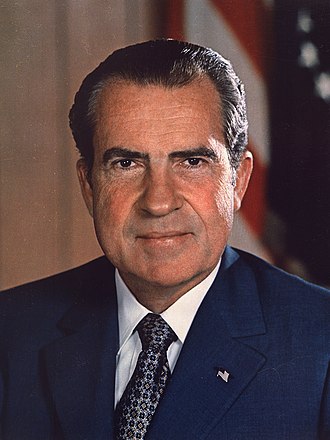
Richard M. Nixon served as the 37th President of the United States from January 1969 until his resignation in August 1974. In February 1971, he ordered the installation of a secret voice-activated taping system in the White House to preserve a historical record of his administration. Until the system's existence was revealed and dismantled in July 1973, the tapes captured Nixon directing major foreign policy initiatives, such as the opening to China, as well as his central role in the Watergate cover-up.
What Nixon talks about on the tapes
White House operations 4,718Presidential scheduling 2,225Public relations 1,784Presidential schedule 1,782Vietnam War 1,693Logistics 1,650Manolo Sanchez 1,626White House communications 1,400White House administration 1,399Presidential communication 1,243Henry Kissinger 1,191Foreign Policy 1,183
Conversations (21,010)
— Page 169 of 211President Nixon consulted with the White House operator to determine the whereabouts of Reverend Billy Graham, who was currently traveling home. The President established protocol for the operator to follow should Graham attempt to contact him during a planned one-hour absence. No significant policy decisions were made, as the exchange focused strictly on scheduling and communication logistics.
President Nixon met with his personal valet, Manolo Sanchez, in the Oval Office to receive personal assistance. The brief interaction focused on the delivery of refreshments to the President. No major policy decisions or historical developments were recorded during this informal engagement.
President Nixon consulted with a White House operator to facilitate a telephonic connection. This brief interaction served administrative purposes to establish contact with another party. No substantive policy discussions or significant political decisions occurred during the exchange.
President Nixon held a brief meeting in the Oval Office with an unknown individual, during which Press Secretary Ronald L. Ziegler was also present to facilitate the delivery of materials. While the specific substance of the dialogue remains unrecorded due to a lack of transcript, the meeting concluded within eight minutes. No definitive policy decisions or significant developments are documented for this exchange.
President Nixon consulted with the White House operator to manage his incoming communications as he prepared to depart the office for an extended period. The brief exchange focused on coordinating the return of a pending phone call later in the day. The President confirmed his unavailability, effectively placing his immediate call schedule on hold.
President Nixon and Ronald Ziegler briefly discussed upcoming social events, including the Gridiron and White House Correspondents Association dinners, and the President's planned nonattendance at the former. The conversation also touched upon Ziegler's press briefing strategy and Henry Kissinger's meetings. A significant portion of the discussion focused on the Watergate scandal, specifically the E. Howard Hunt, Jr. and G. Gordon Liddy stories, and how Ziegler and Gerald Warren should respond to news reports, particularly those linking Hunt to Dita Beard and Charles Colson, amidst ongoing Senate hearings.
President Nixon and H. R. Haldeman discuss a request for the President to attend a reception hosted by Senator Strom Thurmond for Senator Carl Curtis. Nixon decides against attending, arguing that it would appear redundant and potentially negative in the press given that he is already hosting a major congressional reception at the White House. Haldeman agrees with this assessment and commits to filtering future scheduling requests through his office to prevent such oversights.
President Nixon and H. R. Haldeman deliberate on the political optics of attending a reception for Senator Carl Curtis immediately following a White House event for congressmen. Nixon expresses concern that rushing to the Capitol would create a negative press narrative and undermine his congressional relations. Ultimately, the pair weighs the administrative convenience of the appearance against the potential for unfavorable media coverage.
President Nixon met with Stephen B. Bull to coordinate the logistics surrounding John B. Connally’s visit to the White House. The brief discussion focused on the timing of Connally's arrival and departure to ensure he exited the premises before the arrival of other scheduled parties. No policy decisions were made during this logistical briefing.
President Nixon and John B. Connally discuss potential career paths for former Attorney General Richard G. Kleindienst, emphasizing the benefits of joining a stable, prestigious law firm over solo practice. The conversation transitions to domestic politics, with Nixon expressing support for his ongoing budget cuts and fiscal policies despite pressure from special interest groups and the media. Finally, the two address international affairs, including the potential for deeper U.S. association with Caribbean nations like Jamaica, the release of American prisoners in the People's Republic of China, and planning for Connally's upcoming international travel.
President Nixon met with John D. Ehrlichman in the Oval Office to discuss administrative logistics or strategic planning. The brief exchange focused on breaking down specific tasks or information, though the transcript remains largely undefined. The meeting concluded quickly, with the unknown participant departing before 4:02 pm.
President Nixon and Henry Kissinger met to briefly coordinate the scheduling of upcoming appointments with John B. Connally and John D. Ehrlichman. The discussion focused on adjusting the timing of these meetings to align with the President's availability for the remainder of the afternoon. The participants ultimately decided to reschedule the consultations for 5:00 p.m.
President Nixon met with key advisors and staff, including H.R. Haldeman, John Ehrlichman, and Henry Kissinger, to manage several pressing domestic and foreign policy issues. The discussion covered the President's upcoming appearance at the Gridiron dinner, strategic coordination for the proposed energy message and potential deregulation of gas prices, and the finalization of a tax reform package. Additionally, the President and his team addressed personnel matters regarding ACTION, debated the best approach for congressional relations, and received a comprehensive briefing from Kissinger on international developments, specifically regarding Vietnam, the Middle East, and relations with the People's Republic of China.
President Nixon met with H. R. Haldeman, Stephen Bull, and Ronald Ziegler to manage administrative staffing, personnel appointments, and public relations strategies. Key discussions focused on Henry Kissinger’s upcoming press briefing regarding the Vietnam settlement, the logistics for the White House Correspondents' dinner, and resolving job placement issues for Patricia Hitt and other administration figures. The group also addressed concerns regarding the tendency of staff members to over-expand their own bureaucracies and the importance of message discipline when communicating budget and policy stances to Congress.
President Nixon and Henry Kissinger discuss the successful leverage of U.S.-China relations to expedite a visit from Soviet leader Leonid Brezhnev, tentatively scheduled for June. Kissinger outlines potential bilateral agreements regarding SALT, health, and energy, while advising caution on nuclear weapons proposals to avoid alienating NATO allies and China. Additionally, the two address the recent Israeli shootdown of a commercial airliner, with Nixon stressing the need for Israel to offer financial compensation to mitigate diplomatic fallout.
President Nixon instructed the White House operator to place a telephone call to his Chief of Staff, H.R. Haldeman. The brief exchange served as a procedural request to initiate communication with a key advisor. No substantive policy matters were discussed during this connection attempt.
President Nixon and H. R. Haldeman coordinate the recruitment of an unnamed woman for a new position, agreeing that Haldeman should manage the negotiation to distance the President from the personnel matter. They identify the need to move her out of an agency facing impending budget cuts and into a more prestigious role. To incentivize her acceptance, Nixon instructs Haldeman to highlight an upcoming major announcement regarding the People's Republic of China and a promised summer trip there.
President Nixon directs the White House operator to initiate a telephone call to evangelist Billy Graham. The primary purpose of the communication is to facilitate a direct conversation between the President and the prominent religious leader. The interaction consists solely of this logistical request to connect the line.
President Nixon and Billy Graham discuss the positive national reaction to the return of American POWs from Vietnam and express mutual frustration with the anti-war stance of Senators Mark Hatfield and Harold Hughes. The conversation shifts to foreign affairs, specifically condemning Israel’s recent shoot-down of a civilian airliner and the resulting diplomatic tensions ahead of Golda Meir's visit. Finally, the two address growing societal friction regarding Jewish-Christian relations and antisemitism, while briefly discussing their shared desire to challenge the perceived radicalism of the World Council of Churches through a new international religious initiative.
President Nixon contacted the White House operator to request a telephone connection with First Lady Pat Nixon. Upon learning that she was already occupied on another line, the President instructed the operator to place the call once her line became available. This brief exchange reflects standard administrative procedures for internal White House communications.
President Nixon consulted with the White House operator to facilitate an outgoing call. The brief exchange focused on establishing a connection with a specific, though unidentified, party. No further substantive policy matters were addressed during this transition.
President Nixon held a brief morning meeting in the Oval Office with an unidentified individual and his personal valet, Manolo Sanchez. The discussion centered on scheduling logistics, coordinated by Stephen B. Bull, and administrative tasks involving Rose Mary Woods. No significant policy decisions were recorded during this short interaction.
President Nixon met with Stephen B. Bull to coordinate administrative and social logistics, including scheduling breakfast meetings and relaying instructions to staff regarding telephone calls. The President finalized plans to attend a performance of the play "Irene" at the National Theater with First Lady Pat Nixon, emphasizing the importance of managing the associated publicity. Additionally, Nixon directed Bull to prioritize the prompt distribution of invitations to Republicans for an upcoming "Evening at the White House" event, specifically involving William E. Timmons and Senator Hugh Scott.
President Nixon directs the White House operator to facilitate a telephone connection for Henry Kissinger to speak with Secretary of State William P. Rogers. This administrative request was made to coordinate high-level communication between the National Security Advisor and the State Department. The interaction serves as a routine procedural step for managing presidential staff logistics.
President Nixon and Henry Kissinger met to coordinate foreign policy strategies and manage domestic political optics regarding the Vietnam peace process and relations with the Soviet Union. The discussion centered on countering press and congressional opposition to administration policies in Southeast Asia, as well as planning logistics for an upcoming televised interview with Barbara Walters. Additionally, the pair strategized on managing upcoming meetings with international figures, including Soviet leader Leonid Brezhnev’s representatives and other foreign dignitaries, to ensure continued diplomatic momentum.
President Nixon calls First Lady Pat Nixon to discuss the redecoration of their private living quarters with a specific set of 19th-century paintings. He suggests removing existing artwork in the bedroom to prioritize the display of these colorful, historically interesting pieces. The conversation concludes with a brief confirmation of their upcoming attendance at a performance of the musical "Irene."
President Nixon met with his personal valet, Manolo Sanchez, in the Oval Office to receive refreshments. The conversation was informal and focused solely on domestic service duties rather than policy or administrative matters. No significant political decisions or historical developments were recorded during this brief interaction.
President Nixon met with his aide, Stephen B. Bull, to coordinate his upcoming daily schedule and manage personal logistics. The discussion focused on the appointments and movements of key individuals, specifically Rose Mary Woods, First Lady Pat Nixon, and Tricia Nixon Cox. No major policy decisions were reached, as the meeting was primarily administrative in nature to organize the President’s domestic and professional itinerary.
President Nixon met with his aide Stephen B. Bull in the Oval Office to coordinate administrative scheduling. The primary focus of the meeting involved arranging a session between the President and John D. Ehrlichman. This interaction functioned as a routine logistical briefing to facilitate senior staff access and maintain the President's daily agenda.
President Nixon and Stephen B. Bull met to coordinate upcoming scheduling logistics, including meetings involving John Ehrlichman, H.R. Haldeman, and John Dean. The discussion focused on arrangements for presidential travel to Camp David, a scheduled meeting with George Shultz in the Executive Office Building, and the planning of a radio address. The participants also discussed coordinating a video conference, with the President reserving final decisions on his departure timeline for later.
President Nixon met with his aide Stephen B. Bull in the Oval Office to discuss administrative or scheduling matters, possibly involving Franklin R. Gannon. Due to the limited nature of the record, the conversation appears to focus on routine White House operations and the coordination of personnel. No significant policy decisions or major developments are captured in the available transcript.
President Nixon met with his aide, Stephen B. Bull, to facilitate a discussion involving William E. Timmons. The brief interaction focused on coordinating administrative scheduling or legislative liaison efforts, as evidenced by the involvement of the Congressional relations lead. No substantive policy shifts were recorded during the exchange, which served primarily as a logistical point of contact for the President's staff.
President Nixon instructed William Timmons to send out invitations for White House events, specifically prioritizing Republicans for an upcoming worship service. The discussion also touched upon the inclusion of Senator William B. Saxbe, despite his past criticisms, as a signal of the administration's willingness to engage with those who disagree. Nixon asked Timmons to consult with Samuel L. Devine regarding potential concerns about Saxbe's attendance.
President Nixon and Press Secretary Ronald Ziegler met to review the public reception of Henry Kissinger’s recent press briefing regarding the release of U.S. prisoners in Vietnam and the establishment of liaison offices with the People's Republic of China. The pair also coordinated the President's upcoming attendance at the White House Correspondents Association dinner and his declination of an invitation to the Gridiron dinner. Finally, they discussed entertainment arrangements for White House events, specifically focusing on the involvement of Sammy Davis, Jr. and the potential participation of Sonny and Cher.
President Nixon met with his aide, Stephen B. Bull, to coordinate a scheduled meeting with attorney Charles S. Rhyne. The brief discussion served to manage the President's calendar and prepare for Rhyne's visit. No further substantive policy matters were addressed during this transitionary exchange.
President Nixon met with Charles S. Rhyne and a large group of individuals, including White House staff and representatives from various organizations. The primary discussions revolved around Rhyne's proposal for a National Institute of Justice Commission, focusing on the need for reform in the U.S. justice system, including legal education, police, and the prison system. They also touched upon international law, the role of the US in its development, and potential funding mechanisms. Later, the President participated in a photo session and received an honorary award from the Boy Scouts of America, who presented their annual report and highlighted their conservation and drug abuse prevention programs.
President Nixon met with D.C. Mayor Walter E. Washington, his family, and staff in the Oval Office to conduct a ceremonial swearing-in for the Mayor's third term. The President praised Washington's leadership, specifically highlighting improvements in city safety and the Mayor's diplomatic role in hosting international dignitaries. The participants also engaged in a photo session and exchanged lighthearted remarks about the upcoming Bicentennial and the Washington Redskins.
President Nixon and Stephen B. Bull met to coordinate logistics for upcoming White House events, including an 'Evening at the White House' entertainment program and various social receptions. They discussed potential guests, such as Apollo astronauts and Wallace Wade, as well as production details for musical performances featuring Irving Berlin and the Army Chorus. Additionally, Nixon provided specific instructions on how to handle incoming communications from returned prisoners of war and their families.
President Nixon met with his aide, Stephen B. Bull, to coordinate his daily schedule and manage upcoming appointments. The discussion focused on facilitating meetings involving key staff members, specifically H.R. Haldeman’s interaction with Anne L. Armstrong and a briefing with William E. Timmons. Bull was tasked with managing these logistical arrangements to ensure the President's scheduled commitments proceeded as planned.
President Nixon and General Brent Scowcroft discussed the positive reception to Scowcroft’s outreach calls to recently released prisoners of war (POWs) and their families. They addressed concerns regarding allegations that POW statements were government-programmed, with Scowcroft citing Defense Department official Roger Shields to refute these claims as unfounded. The two concluded that the public remained supportive of the administration's policy and that negative reports regarding the POWs were failing to gain traction.
President Nixon met with his staff and Secretary of State William P. Rogers to coordinate legislative strategy regarding White House social events and foreign policy initiatives. The discussion focused on managing congressional relations, particularly concerning aid to North Vietnam and the framing of the recent peace settlement, with Kissinger briefing the President on his recent press engagement. The group emphasized the need to build public and congressional support for reconstruction aid by drawing parallels to past U.S. efforts in Japan and Germany while navigating hostility from liberal critics.
President Nixon and Stephen B. Bull met to coordinate the logistical details of the President’s morning schedule and movement patterns within the White House. The conversation specifically addressed the timing of breakfast and the preferred route for the President’s departure through the building. Nixon finalized the decision to avoid a specific path, instructing Bull to adjust the departure protocol accordingly.
President Nixon contacted the White House operator to facilitate a personal telephone call to his daughter, Julie Nixon Eisenhower. The brief interaction served as a logistical request to connect the President with a family member. No policy matters or official business were discussed during this brief communication.
President Nixon met with his personal valet, Manolo Sanchez, in the Old Executive Office Building. The brief interaction centered on the provision of food for the President. No further policy or administrative developments were recorded during this exchange.
President Nixon consulted with the White House operator to facilitate an outgoing call. This interaction served a logistical purpose, as the President utilized the operator's services to establish a secure or routed connection. No further substantive policy matters or specific decisions were recorded during this brief administrative exchange.
President Nixon met with his personal valet, Manolo Sanchez, in the Old Executive Office Building to review logistical details of the President's schedule. The discussion centered on routine personal arrangements and administrative tasks related to the President's daily agenda. No significant policy decisions were recorded during this brief administrative briefing.
President Nixon and his daughter, Julie Nixon Eisenhower, discuss potential plans to host prominent guests, such as Norman Vincent Peale, for overnight stays at the White House to attend church services. During the conversation, Julie also updates the President on the professional status and salary of John Wardlow, a pool driver for the Senate. The pair concludes the call by confirming Julie’s upcoming travel arrangements to visit the White House for several days.
President Nixon consulted with his daughter, Julie Nixon Eisenhower, to propose a plan for hosting guests at a future dinner. The brief exchange focused on coordinating logistics for these social invitations and ensuring timing for the event. The conversation concluded with Nixon expressing his intention to finalize the details and facilitate the gathering.
President Nixon initiates a request through the White House operator to place an outgoing call to Thomas Hart. This brief exchange serves strictly as a logistical connection to facilitate communication between the President and Hart. No substantive policy matters or further developments are discussed during this interaction.
President Nixon consulted with the White House operator to facilitate an outgoing call. This brief interaction served as a logistical step to connect the President with another party for official communications. No substantive policy discussions occurred during this brief exchange.
President Nixon directs Thomas Hart to schedule a radio address for the following day at 2:00 p.m. The two coordinate the logistics of the recording, specifying that it will take place in the President’s office. Nixon requests that the final draft of the script be delivered for his review once available.
President Nixon initiates a call to Speaker of the House Carl B. Albert through the White House operator. The primary objective is to establish direct communication with the Speaker for pending legislative or political discussions. This brief exchange serves as a logistical step to facilitate the connection between the President and the House leadership.
President Nixon and Thomas Hart held a brief meeting to coordinate the logistics and distribution of administrative documents. The discussion centered on the scheduling and handling of copy production for materials to be reviewed in the office. No significant policy decisions were made during this brief procedural exchange.
President Richard M. Nixon and H. R. Haldeman convened in the Old Executive Office Building to coordinate the President's upcoming professional schedule. The discussion focused primarily on the logistical arrangements and objectives for a forthcoming meeting. No specific policy decisions were finalized, as the dialogue remained centered on managing the President's immediate calendar.
President Nixon consulted with a White House operator to facilitate a telephonic connection. This brief interaction served the administrative purpose of routing an external call. No substantive policy discussions or decisions occurred during this brief technical exchange.
President Nixon and H.R. Haldeman met to discuss a wide-ranging agenda of personnel appointments, political strategy, and the ongoing Watergate investigation. Key topics included coordinating legislative strategy with Senator Howard Baker regarding the Ervin Committee hearings, managing the public image of the administration, and navigating staffing transitions within the Justice Department and the Bicentennial Commission. The President also deliberated on the handling of upcoming public appearances, potential executive privilege claims, and campaign funds, ultimately deciding to maintain a firm stance on staff loyalty and the strategic use of political assets.
President Nixon consulted with Speaker of the House Carl Albert regarding the selection of House members for future diplomatic visits to the People's Republic of China. Nixon advised Albert to coordinate closely with House Minority Leader Gerald Ford to recommend a delegation that would ensure fair and cooperative representation for the House. This conversation served to delegate the vetting process to congressional leadership, with the President pledging to facilitate the administration's approval of their choices.
President Nixon initiates a brief telephonic request through the White House operator to reach Stephen B. Bull. The interaction serves solely as a logistical bridge to connect the President with his aide. No substantive policy discussions or significant political developments occur during this brief exchange.
President Nixon directs Stephen Bull to schedule an unannounced meeting for the following morning with Attorney General Richard G. Kleindienst. Nixon specifies that he wishes to meet with Kleindienst alone to discuss the administration's crime policy. Although Bull suggests a public announcement for the meeting, the President emphasizes the need for a private, thirty-minute consultation.
President Nixon initiates a brief telephone call through the White House operator to contact his National Security Advisor, Henry Kissinger. The interaction serves solely as a logistical request to establish direct communication with Kissinger. No substantive policy discussions or decisions are recorded during this brief exchange.
President Nixon met with Senator Howard H. Baker, Jr. to discuss the ongoing Senate Watergate hearings and the importance of managing the political fallout. The two reviewed strategies for navigating the committee's inquiries, with Nixon emphasizing the need to avoid negative public commentary and prevent a broader scandal. They explored tactics to shift the narrative and ensure the administration maintains a controlled response to the investigators' requests.
President Nixon and Henry Kissinger coordinated the communication strategy regarding upcoming air strikes in Laos and Cambodia, specifically ensuring that Secretary of State William P. Rogers and Elliot Richardson were properly briefed. The strikes were framed as necessary responses to cease-fire violations, justified by formal requests from Souvanna Phouma. Additionally, the pair discussed the political strategy for securing future Congressional support for economic aid in Southeast Asia, with plans to delay formal requests until the performance of the peace agreements could be evaluated.
President Nixon and Henry Kissinger discussed the enforcement of the Vietnam peace agreements, focusing on the potential consequences for violations. The conversation emphasized the necessity of a firm stance regarding military breaches to ensure adherence to established protocols. Kissinger later met with an unidentified individual, marking a transition in the morning's proceedings.
President Nixon met briefly with his personal aide, Stephen B. Bull, to coordinate his daily schedule. The primary objective of the discussion was to address the timing of a planned meeting with John D. Ehrlichman. The interaction concluded with the President deciding to postpone the appointment.
President Nixon contacted the White House operator to issue a formal request for William E. Timmons to report to the Oval Office. This brief communication served as a logistical arrangement to facilitate a high-level meeting between the President and his Assistant for Legislative Affairs. No further policy or administrative matters were discussed during this exchange.
President Nixon initiates a request through the White House operator to place a personal telephone call to First Lady Pat Nixon. The interaction is strictly logistical, serving as a formal bridge to connect the President with his wife. No substantive policy matters or political decisions are discussed during this brief communication.
President Nixon consulted with the White House operator to facilitate an outgoing call. The interaction was brief, focusing primarily on the mechanics of connecting the President to his intended party. No substantive policy discussions or major administrative decisions occurred during this brief exchange.
President Nixon met with John D. Ehrlichman to discuss legislative strategy, political damage control, and personnel issues, including the administration's stance on executive privilege regarding congressional inquiries. The two reviewed tactics for managing the Watergate investigation, specifically focusing on the involvement of White House staff and the potential impact of public testimony by administration officials. Additionally, they addressed upcoming tax reform proposals, the cultivation of key support groups like farmers and veterans, and the potential intervention required to prevent Jimmy Hoffa from assuming a leadership role in a Detroit labor union.
President Nixon met with his aide, Stephen B. Bull, to coordinate his daily schedule and logistical arrangements for an upcoming weekend trip to Camp David. The discussion focused on rescheduling various meetings with officials, including Peter J. Brennan and Henry Kissinger, and designating the Executive Office Building for specific briefings. Additionally, Nixon provided instructions regarding transportation and travel plans for himself and Pat Nixon, contingent upon weather conditions.
President Nixon met with Attorney General Richard Kleindienst and Stephen Bull to discuss potential post-government career options for Kleindienst, including offers from law firms and international business ventures. The conversation also touched upon the strategy for handling investigations, particularly concerning the Watergate affair and the handling of FBI documents, with Nixon emphasizing a hard-line approach and the importance of executive privilege. Nixon also instructed Kleindienst to take action regarding Jimmy Hoffa's parole if he attempted to run for office.
President Nixon and Stephen B. Bull briefly met in the Oval Office to discuss an upcoming meeting. The conversation focused on press relations and potentially using a meeting with Secretary Shultz as an opportunity to reach an agreement, with Kenneth R. Cole, Jr. also mentioned as a participant in future discussions.
President Nixon met with Secretary of Labor Peter J. Brennan and members of the National Committee of Jobs for Veterans to discuss the status of veteran employment programs and strategies for their eventual phase-out. The participants reviewed progress on job placement goals, addressed concerns regarding the competition between returning veterans and draft evaders, and finalized plans for an "Honor Veterans Week" to coincide with the return of the final POWs. Nixon emphasized the importance of a robust economy and addressed potential tensions surrounding affirmative action and minority hiring programs in the private sector.
President Nixon and Henry Kissinger met to discuss various personnel appointments and high-stakes foreign policy strategies in the Middle East and Southeast Asia. The conversation focused on the loyalty of potential administration appointees, such as J. William Middendorf and William P. Clements, as well as the need to manage Secretary of State William P. Rogers's involvement in Egyptian negotiations. Nixon emphasized the importance of maintaining a firm, strategic negotiating posture and expressed concern that Israeli leadership adopt a more conciliatory approach to facilitate progress toward a peace settlement.
President Nixon met with Egyptian officials Hafez Ismail and M. Hafez Ghanem, along with Henry Kissinger and Brent Scowcroft, to discuss the Middle East conflict and the potential for peace. Ismail conveyed a message from Sadat and emphasized Egypt's desire for normalized relations with the US and a balanced approach to regional stability. Key topics included the origins of the Arab-Israeli conflict, the Palestinian question, security concerns for Israel, and the US role as a peace guarantor, with a focus on establishing a clear process for future negotiations.
President Nixon briefly met with Stephen B. Bull and an unidentified man in the Oval Office to discuss arrangements for upcoming meetings and events. Key topics included the President's meeting with Ambassador John A. Volpe, arrangements for Norman Vincent Peale's visit (including breakfast and a sermon), and the involvement of actors like Debbie Reynolds and John Gielgud. The conversation also touched upon Mrs. Nixon's departure and a meeting in the outer office.
President Nixon consulted with the White House operator to facilitate a connection for an outgoing telephone call. This brief interaction served as a routine administrative step to bridge the President to an external party. No policy discussions or significant substantive developments occurred during this brief exchange.
President Richard Nixon and First Lady Pat Nixon coordinate the logistical details of bedroom furnishings and the layout of the President's workspace. The President requests specific modifications to his bedding and the placement of office equipment, including two dictaphones and multiple telephones. He emphasizes that these items must be located on the right side of his bed to accommodate his natural physical habits upon waking.
President Nixon and First Lady Pat Nixon discussed domestic arrangements and the reorganization of furniture in their private living quarters. The conversation focused on the practical placement of bedroom furniture, specifically regarding nightstands, mattresses, and the installation of dictaphones and lighting. No policy or administrative matters were addressed during this brief exchange.
President Nixon instructed the White House operator to place a telephone call to his aide, Stephen B. Bull. This brief exchange served as an administrative request to facilitate direct communication with a member of the President's staff. No substantive policy discussions occurred during this brief request.
President Nixon met with his aide Stephen B. Bull in the Oval Office to coordinate administrative details regarding the President's upcoming schedule. The discussion focused on managing the logistics and sequence of subsequent meetings for the day. No substantive policy decisions were recorded during this brief administrative encounter.
President Nixon met briefly with White House photographer John A. Volpe and Henry Kissinger in the Oval Office. The primary purpose of the meeting was to arrange a photograph session for Volpe before his departure, with Nixon suggesting a walk in the Rose Garden to allow press photographers to take pictures. The conversation also touched upon Volpe's schedule and briefly mentioned upcoming visits and personnel matters.
President Nixon met with outgoing Secretary of Transportation John A. Volpe and Henry Kissinger to discuss Volpe’s transition to his new role as U.S. Ambassador to Italy. They reviewed strategic objectives for the ambassadorship, focusing on strengthening ties with Italian political factions to ensure stability and navigating the country's complex economic and political climate. The discussion also addressed broader administration goals, including improving outreach to ethnic communities, managing public perception of domestic achievements, and the logistical challenges of a potential presidential tour of Europe.
President Nixon met with an unidentified individual in the Oval Office to coordinate preparations for an upcoming radio address. The brief discussion focused on logistical readiness for the broadcast. No further substantive details regarding the content of the address were captured in this recording.
President Nixon met with an unidentified individual and his personal valet, Manolo Sanchez, in the Oval Office. The primary activities during the meeting included the dictation of material to be typed and the provision of refreshments. No significant policy decisions or substantive political developments were recorded during the brief exchange.
President Nixon met with an unknown female staff member in the Oval Office to provide administrative instructions. The brief interaction focused on the specific task of retyping a document. No policy or political matters were discussed during this exchange.
President Nixon met with an unknown female staff member to review and approve specific language for an upcoming radio address. The discussion centered on revising the press copy for the broadcast to ensure the messaging aligned with the President's requirements. Nixon instructed the staffer to finalize these changes and ensure the updated text was distributed accordingly.
President Nixon requests administrative assistance from an unidentified staff member to secure copies of his daily schedules for the current and previous day. The President specifies a desire for these schedules to be presented in a graphic format. The brief exchange concludes with the staff member acknowledging the task and preparing to retrieve the requested documents.
President Nixon met with his valet, Manolo Sanchez, to discuss logistical arrangements and the President's upcoming schedule. The conversation focused on the President's transition between the Oval Office and the Executive Office Building for a scheduled meeting with George P. Shultz. The interaction served primarily to coordinate these movements and confirm the administrative details of the President's afternoon itinerary.
President Nixon met with Bud Wilkinson to discuss a variety of personal and political matters, ranging from sports and the upcoming Olympic committee roles to potential Republican candidacies for governor and senate seats in Oklahoma. Nixon encouraged Wilkinson to pursue a political office, citing a lack of quality candidates in the current landscape and noting that Oklahoma would benefit from his leadership. The pair also touched upon the return of prisoners of war from Vietnam and potential future diplomatic or administrative assignments for Wilkinson.
President Nixon held an brief, private meeting with an unidentified individual in his Old Executive Office Building workspace. Due to the lack of a transcript or specific metadata, the nature of the discussion remains undocumented in the historical record. This conversation is cataloged as part of the formal White House taping system but currently provides no actionable intelligence or insight into policy decisions.
President Nixon held a brief, informal meeting in the Old Executive Office Building with an unidentified male visitor. The dialogue remains largely unintelligible, consisting of repetitive, vague pleasantries regarding the nature of their discussion. No substantive policy matters or administrative decisions were recorded during this brief encounter.
President Nixon met with his valet, Manolo Sanchez, in the Old Executive Office Building for a brief, informal session. The conversation centered on the President requesting a rehearsal or practice session for an unspecified upcoming event. No major policy decisions or significant administrative actions were recorded during this brief interaction.
President Richard Nixon met with his personal valet, Manolo Sanchez, in the Old Executive Office Building to discuss personal logistics. The brief interaction focused primarily on the arrangement of furniture, specifically the positioning of a chair within the office. No significant policy decisions were made during this informal engagement.
President Nixon instructed his aide, Stephen B. Bull, to ensure that members of the press no longer displace audience members to secure seating during his future visits to the National Theatre. Nixon expressed concern over reports that eight patrons had lost their seats to reporters, characterizing the practice as improper. Bull clarified that the theater had independently allocated the seats, and he agreed to the President’s directive that future press coverage should occur from the back of the venue.
President Nixon met with aide Stephen B. Bull to issue a strict directive regarding protocol during his visits to the White House theater. The President expressed frustration over unauthorized television use and the presence of press members, specifically a reporter named Kate, during these private viewings. He ordered Bull to ensure that such intrusions are prohibited in the future, stipulating that any permitted guests must stand in the back and that television sets must remain off.
President Nixon instructed the White House operator to place a telephone call to Mrs. William Randolph Hearst at her residence in New York. The brief exchange served as a logistical request to facilitate direct communication with the prominent social figure. The operator acknowledged the directive and proceeded to initiate the connection.
President Nixon consulted with the White House operator to facilitate a telephone call to Mrs. William Randolph Hearst. The attempt to reach Mrs. Hearst was unsuccessful because she had recently departed for her country home. The President agreed to have the operator continue the effort to connect them later in the day.
President Nixon initiated a brief administrative request to the White House operator to be connected with George H.W. Bush. The conversation served exclusively as a logistical step to facilitate direct communication with the Republican National Committee Chairman. No policy matters or substantive discussions occurred during this exchange.
President Nixon communicated with a White House operator regarding the timing and status of an upcoming broadcast or news bulletin. The brief exchange focused on coordinating the monitoring of a specific report or media event. No broader policy decisions were finalized during this logistical interaction.
President Nixon held a brief, informal interaction with a White House operator in the Executive Office Building. The exchange appears to be a routine communication or social pleasantry rather than a substantive policy discussion. No significant administrative decisions or historical action items resulted from this specific call.