Nixon, Richard M. (President)
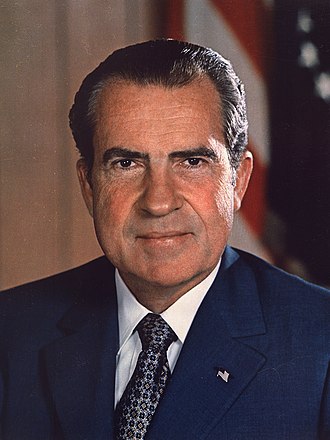
Richard M. Nixon served as the 37th President of the United States from January 1969 until his resignation in August 1974. In February 1971, he ordered the installation of a secret voice-activated taping system in the White House to preserve a historical record of his administration. Until the system's existence was revealed and dismantled in July 1973, the tapes captured Nixon directing major foreign policy initiatives, such as the opening to China, as well as his central role in the Watergate cover-up.
What Nixon talks about on the tapes
White House operations 4,718Presidential scheduling 2,225Public relations 1,784Presidential schedule 1,782Vietnam War 1,693Logistics 1,650Manolo Sanchez 1,626White House communications 1,400White House administration 1,399Presidential communication 1,243Henry Kissinger 1,191Foreign Policy 1,183
Conversations (21,010)
— Page 196 of 211President Nixon met with his personal valet, Manolo Sanchez, in the Old Executive Office Building to discuss adjustments to the President's daily schedule. The brief interaction centered on the timing of specific commitments, with the President specifically inquiring about an appointment set for three o'clock. The exchange concluded with the logistical coordination of his afternoon agenda.
President Nixon met with his personal valet, Manolo Sanchez, in the Old Executive Office Building to discuss the President's personal schedule and need for rest. During the brief interaction, the President expressed a desire to arrange time away from his official duties. No further substantive policy matters were recorded.
President Richard M. Nixon met with his personal valet, Manolo Sanchez, in the Old Executive Office Building to review the President’s daily schedule. The conversation centered on administrative logistics and the management of Nixon's upcoming agenda. No further policy-related developments were recorded during this brief administrative interaction.
President Nixon requested assistance from the White House operator to place an outgoing telephone call. The interaction was limited to the logistics of connecting the President to a specific party. No further substantive policy matters or developments were recorded during this brief administrative exchange.
President Nixon instructed the White House operator to connect him with his personal aide, Stephen B. Bull. This brief administrative call served solely to facilitate communication between the President and his staff. No further substantive policy matters or tactical decisions were recorded during this connection.
President Nixon and Alexander Haig met to discuss managing the ongoing Watergate crisis, focusing on the legal strategy surrounding pending grand jury testimony and the handling of sensitive White House documents. They reviewed the status of former officials and aides—including John Dean, H.R. Haldeman, and John Ehrlichman—while coordinating how to address potential leaks and FBI files related to national security wiretaps. The conversation emphasized maintaining a strong defense, asserting executive privilege over specific records, and preparing for the impact of forthcoming indictments on the administration's political standing.
President Nixon and aide Stephen B. Bull briefly conferred regarding the identity of an individual, likely named Mark, who had been observed in the vicinity. The brief exchange focused on verifying this person's presence before Nixon subsequently met with an unidentified man to discuss the removal of specific materials. The conversation serves primarily as a logistical check preceding a sensitive, short-duration meeting.
President Nixon held a brief, unscheduled exchange with a White House operator. The interaction served as a routine administrative communication regarding telephone connectivity or call placement. No substantive policy discussions or significant political developments occurred during this brief contact.
President Nixon and George Shultz met briefly to coordinate on an ongoing project or initiative, emphasizing the strategic value of the effort. The discussion focused on evaluating personnel or logistical arrangements, with Shultz confirming his role in executing the next steps. They concluded by agreeing to monitor the situation closely to capitalize on the potential for a significant success.
President Nixon requested that the White House operator place a telephone call to an individual in Los Angeles. This brief administrative exchange served solely to facilitate a personal or official communication between the President and an outside party. No further substantive policy matters or decisions were discussed during this short interaction.
President Nixon and Alexander Haig held a brief, informal meeting in the Old Executive Office Building to discuss administrative strategy and personnel considerations. Their conversation touched on the potential involvement of John Connally and the management of federal programs to ensure effective executive control. The discussion primarily focused on navigating internal political maneuvers and reinforcing the administration's authority in the wake of ongoing institutional pressures.
President Nixon consulted with his aide, Stephen B. Bull, to adjust his late-afternoon schedule regarding an upcoming meeting with Nelson Rockefeller. To accommodate additional administrative tasks, the President pushed the start time of the meeting back to 4:15 p.m. in the Oval Office. Nixon also confirmed that Rockefeller would be accompanied by former Delaware Governor Russell W. Peterson.
President Nixon and Alexander Haig discuss the handling of sensitive White House memoranda and internal records in the context of the unfolding Watergate investigation. They specifically evaluate the potential risks associated with releasing these documents, comparing them to personal diaries, and assess the implications of testimony involving John Dean and the FBI. The discussion reflects the administration's strategic efforts to manage the disclosure of internal materials while anticipating the legal and political fallout of the scandal.
President Nixon held a brief administrative interaction with a White House operator. The primary purpose of the communication was to facilitate a connection to another party. No substantive policy discussions or significant political decisions occurred during this brief exchange.
President Nixon initiated a brief communication with the White House operator to facilitate an external connection. The exchange served primarily as a logistical step to reach another party. No substantive policy discussions or significant political developments occurred during this short administrative interaction.
President Nixon consulted with his aide, Stephen B. Bull, to reschedule a pending afternoon meeting. Nixon requested that his appointment be moved from 4:00 p.m. to 4:15 p.m. to allow him more time to complete ongoing tasks. Bull confirmed the new time, and the meeting concluded with the adjustment of the President's daily schedule.
President Nixon requested that the White House operator connect him to Press Secretary Ronald L. Ziegler. This brief administrative interaction served as a logistical step to facilitate direct communication between the President and his primary spokesperson during the height of the Watergate investigation. No further substantive discussion occurred between the President and the operator.
President Nixon initiates a brief, informal interaction with a White House operator. The exchange serves primarily as a logistical request to facilitate an outgoing call. No substantive policy matters or significant historical decisions are addressed during this brief connection.
President Nixon and Press Secretary Ronald Ziegler discuss the public reception of William D. Ruckelshaus's statement regarding FBI files recovered from John Ehrlichman's safe. They aim to frame the narrative to demonstrate that the White House was transparent rather than obstructive in handling these documents. Additionally, they monitor developments regarding John Dean's files currently under judicial review and prepare for upcoming testimony from General Vernon A. Walters.
President Nixon and Press Secretary Ronald Ziegler briefly discussed the progress of a court proceeding involving a judge reviewing documentation. The conversation reflects the administration's defensive posture regarding legal challenges and the need to maintain a composed public stance. No specific directives were issued, but the exchange underscores the mounting pressure from ongoing investigations during this period.
President Nixon met with Nelson Rockefeller, Russell Peterson, and Kenneth Cole to discuss the progress of Rockefeller’s Commission on Critical Choices for Americans, emphasizing the need for bipartisanship and the selection of high-profile contributors. During the discussion, Nixon and Rockefeller pivoted to the Watergate scandal, with Nixon dismissing the involvement of his inner circle as the actions of "cheap crooks" while expressing frustration over the press's focus on the scandal over his 1972 foreign policy achievements. Nixon asserted his innocence regarding the break-in, framing his administration’s prior efforts as necessary measures to stop damaging national security leaks.
President Nixon and Press Secretary Ronald L. Ziegler held a brief meeting to address immediate administrative or public relations concerns following the mounting pressures of the Watergate scandal. The discussion served as a logistical coordination point between the President and his primary spokesperson. No definitive policy shifts were established during this one-minute exchange, which functioned primarily as a status update.
President Nixon met with his aide Stephen B. Bull in the Oval Office to discuss documents prepared by speechwriter Raymond K. Price, Jr. The meeting focused on reviewing and coordinating these materials, reflecting the ongoing administrative effort to manage White House messaging during the intensifying Watergate crisis. No specific policy decisions were recorded during this brief administrative exchange.
President Nixon met with his aide Stephen B. Bull to coordinate logistical details regarding the President's upcoming schedule. The discussion focused on confirming appointments and reviewing the availability of key personnel, including Ronald Ziegler and George H.W. Bush. The conversation served as a brief administrative session to manage the flow of the President’s calendar for the remainder of the week.
President Nixon met with his aide Stephen B. Bull to review logistical preparations for upcoming administrative activities and diplomatic engagements. The discussion focused on scheduling details for a visit by Emperor Haile Selassie and administrative arrangements for a meeting with bipartisan congressional leaders. Nixon also provided instructions regarding the handling of official gifts and briefed Bull on document editing procedures.
President Nixon met with an unknown individual to coordinate scheduling arrangements, specifically regarding a request for a meeting with Press Secretary Ronald L. Ziegler. The conversation also addressed logistical planning for the President's upcoming activities, including a personal grooming appointment. The discussion concluded with brief administrative inquiries before the participant departed.
President Richard Nixon met with his longtime personal valet, Manolo Sanchez, in the Oval Office. The informal exchange primarily concerned personal services, specifically the provision of refreshments. No significant policy decisions or political matters were recorded during this brief interaction.
President Nixon held a brief, informal meeting in the Oval Office with an unidentified individual, during which they coordinated logistics regarding Press Secretary Ronald Ziegler's travel to Oregon and communications with office staff. The discussion also included brief mentions of scheduling a barber appointment and managing the pace of interactions with other personnel. No significant policy decisions were recorded during this brief administrative check-in.
President Nixon met with his aide Stephen B. Bull to review and refine a draft document. The discussion focused on incorporating specific suggestions while addressing difficulties encountered during the drafting process. The meeting served as a consultative session to finalize the language and content of the unidentified draft.
Press Secretary Ronald Ziegler met with President Nixon to discuss administrative or political strategy, utilizing metaphorical language regarding the challenges of initiating a new project or initiative. The conversation focused on the difficulties of early implementation, specifically characterizing the task as comparable to starting with a single horse. No specific policy decisions were finalized during this brief exchange.
President Nixon and Stephen B. Bull reviewed the President’s upcoming schedule, specifically focusing on the sixth draft of an election reform speech and the arrangements for recording a message on the topic. They further coordinated appointments involving J. Fred Buzhardt, potential meetings with Bangladesh envoys based on Henry Kissinger’s recommendations, and matters regarding the FBI. This discussion served to organize the President’s administrative priorities and logistical preparations for diplomatic and legislative engagements.
President Nixon and Stephen B. Bull briefly met in the Old Executive Office Building to address operational logistics surrounding an ongoing event. Their exchange focused on clarifying the duration and schedule of activity occurring within the workspace. The discussion concluded without major policy developments, serving primarily to manage the daily administrative environment.
President Nixon and Press Secretary Ronald Ziegler met to strategize a response to a damaging news report from the Santa Ana Register, which falsely alleged that Nixon used campaign funds to purchase his San Clemente estate. Nixon vehemently denied the claims, explaining that the property was held in a trust involving associates Robert Abplanalp and Bebe Rebozo for the Nixon Foundation. The two men coordinated an immediate public rebuttal to discredit the report and discussed concerns regarding potentially leaked documents related to E. Howard Hunt.
President Nixon and Stephen B. Bull met to finalize the logistics and guest list for an upcoming dinner honoring returned Prisoners of War (POWs). They discussed specific Congressional invitees recommended by William E. Timmons, as well as the event's arrangements, including tent requirements, security, and press coverage. Nixon provided input on the program format, ultimately deciding to keep his remarks brief and requesting coordination with Lucy Winchester and other staff members to ensure the event's success.
President Nixon met with United States Secret Service agents in the Oval Office to discuss logistics regarding his movements and notification protocols. The brief exchange primarily focused on the President's location and potential travel to the Executive Office Building. Due to the limited nature of the recording, no further substantive decisions or developments were captured before the conversation concluded.
President Nixon and Lawrence Higby discussed the ongoing Watergate crisis, specifically focusing on rebutting false allegations regarding the President's personal finances and the San Clemente property. They evaluated the hostile actions of John W. Dean III, analyzed the legal implications of grand jury testimony for former aides H.R. Haldeman and John Ehrlichman, and brainstormed public relations strategies to defend the presidency. The conversation emphasized a commitment to fighting these accusations through a more proactive and organized White House communications approach.
President Nixon held a brief, recorded meeting with J. Fred Buzhardt, Jr. regarding ongoing matters of administration concern. The transcript for this brief encounter is undefined, indicating that the meeting concluded almost immediately after the participants were present. No specific policy decisions or substantive discussions were documented in this segment.
President Nixon met with J. Fred Buzhardt, Jr., to coordinate defense strategies and assess legal risks regarding the growing Watergate scandal and the impending Ervin Committee hearings. They discussed the potential legal implications of John Dean’s documents, the handling of White House records, and the broader fallout concerning national security wiretaps. The President emphasized the need for a rigorous, fact-based response while cautioning against any actions that could be perceived as an excessive use of executive power.
President Nixon met with his personal valet, Manolo Sanchez, in the Oval Office to receive refreshments. The interaction primarily involved the service of coffee to the President. No substantive policy discussions or significant political developments occurred during this brief encounter.
President Nixon met with Ronald Ziegler, Alexander Haig, and Leonard Garment to manage the administration's defensive response to ongoing Watergate investigations and emerging media scrutiny regarding the President's personal finances. The group discussed the legal and political implications of recent testimony from Lt. Gen. Vernon Walters, concerns regarding potential indictments of senior staff, and the management of sensitive documents related to the Huston Plan. Nixon emphasized maintaining a strategy of resilience, rejecting the idea of constant public rebuttals, while coordinating efforts to handle inquiries from the Ervin Committee and prosecutors without further damaging the presidency.
President Nixon held a brief, informal interaction with a White House operator. The exchange consisted of a cordial religious greeting rather than a discussion of policy or administrative business. No official decisions or significant developments resulted from this brief communication.
President Nixon met with speechwriter Raymond K. Price, Jr. to provide final revisions for an upcoming address regarding presidential and congressional term limits. Nixon directed Price to advocate for a single six-year presidential term while deliberately omitting specific proposals for the Senate to avoid political controversy. The President emphasized adjusting the draft's language to ensure the messaging remained focused on the executive office and the House of Representatives.
President Nixon met with his personal valet, Manolo Sanchez, in the Old Executive Office Building to coordinate administrative tasks. The primary focus of the brief interaction was the delivery of the President’s briefcase to the office of speechwriter Raymond K. Price, Jr. Sanchez successfully carried out these instructions before departing the office.
Alexander Haig briefed President Nixon on the handling of sensitive documents and the impending testimony of Lieutenant General Vernon Walters regarding the Watergate scandal. Haig coordinated a meeting with J. Fred Buzhardt, Jr. to prepare for Walters’s appearance before the Senate Armed Services Committee, aiming to manage the committee’s growing desire to distance themselves from the controversy. The participants agreed to discuss further details in person to avoid continued exposure over the telephone.
President Nixon and Leonard Garment, coordinated by Ronald Ziegler, discuss the administration's frustration with the Senate Watergate Committee's delay in addressing false allegations that the President stole $1 million in campaign funds. Garment reports on his unsuccessful efforts to reach Senators Sam Ervin and Howard Baker, while Nixon aggressively instructs him to pressure Fred Thompson for swifter action. They conclude that the committee's inability to promptly deny these claims provides the White House with a strategic political advantage.
President Nixon directs the White House operator to place an urgent call to Leonard Garment. The President specifically requests that Press Secretary Ron Ziegler be connected to the conversation as well. This exchange facilitates communication regarding arrangements for an upcoming dinner.
President Nixon, Ron Ziegler, and Leonard Garment coordinate a confrontational strategy to force the Ervin Committee to issue a public retraction regarding unsubstantiated allegations against the President. Nixon expresses significant frustration with the perceived lack of aggression from his legal team, specifically criticizing Howard Baker's response to the committee's reporting. The President directs Garment to demand an immediate apology and threaten the committee's overall credibility to ensure they do not successfully propagate false charges.
President Nixon met with Ronald Ziegler, Leonard Garment, and Lawrence Higby to strategize the White House response to recent press allegations regarding the funding of the President's San Clemente property. The group discussed mounting a public counter-offensive, including demanding a retraction and formal apology from the Ervin Committee and considering a libel lawsuit against the Associated Press. Nixon emphasized the necessity of fighting these charges vigorously to protect his credibility and shift the focus away from the ongoing Watergate scandal.
President Nixon held a brief, informal meeting with unidentified individuals characterized by fragmented dialogue and extraneous remarks. The exchange lacks coherent policy substance or actionable intelligence, consisting largely of colloquialisms and non-sequiturs in multiple languages. No significant administrative decisions or developments resulted from this interaction.
President Nixon summoned Alexander M. Haig, Jr. to his office in the Old Executive Office Building for a brief administrative consultation. The discussion focused on coordinating Haig’s immediate availability and personal schedule following the conclusion of his prior meetings. This interaction served to facilitate urgent face-to-face communication between the President and his Chief of Staff.
President Nixon met with an unknown individual in the Executive Office Building to share refreshments. The brief exchange consisted of casual social pleasantries regarding drinks. No substantive policy matters or official business were conducted during this interaction.
President Nixon instructed the White House operator to place a telephone call to Press Secretary Ronald L. Ziegler. This brief administrative interaction served as a logistical step to facilitate direct communication with a key advisor during a period of intense public scrutiny. No further substantive discussion occurred between the President and the operator.
President Nixon met with Alexander Haig and later Ronald Ziegler to coordinate the administration’s defensive strategy regarding the Watergate scandal, specifically targeting allegations concerning his San Clemente property and the conduct of John Dean. Nixon emphasized the need for a combative public response, directing Ziegler to demand a formal apology and retraction from the Ervin Committee for the circulation of libelous claims. Throughout the discussion, Nixon underscored his desire to maintain executive privilege for his aides while expressing distrust of various administration officials and confirming his use of a White House taping system.
President Nixon directs Press Secretary Ronald Ziegler to launch a public offensive against the Senate Watergate Committee, specifically targeting Senators Sam Ervin and Howard Baker. Nixon instructs Ziegler to denounce the committee for its failure to formally repudiate a recent Santa Ana Register story, arguing that the committee has essentially 'indicted itself' through its inaction. He mandates that Ziegler use his upcoming press briefing to demand a formal retraction, an apology, and the firing of the responsible committee staffer.
President Nixon initiates a request through the White House operator to be connected with his Press Secretary, Ronald L. Ziegler. The brief interaction serves solely as a logistical bridge to facilitate official communication between the President and his primary spokesperson. No further substantive policy matters are addressed during this brief exchange.
President Nixon and Press Secretary Ronald Ziegler discussed the White House's strategy to discredit the Ervin Committee regarding recent leaked reports about presidential finances. Nixon instructed Ziegler to adopt an aggressive, televised stance during his upcoming press briefing, demanding that the committee retract their statements, apologize, and initiate an internal investigation leading to the firing of the responsible staff members. By painting the committee as irresponsible and biased, the President aimed to force the Senate investigators into a defensive position before their scheduled hearings began.
President Nixon initiates a request to the White House operator to place a telephone call to National Security Advisor Henry A. Kissinger. This brief administrative interaction serves as the preliminary step for the President to establish direct communication with Kissinger. No substantive policy discussions occur during this exchange.
The President consults with a White House operator regarding the availability of Henry Kissinger, who is currently attending an event at the Kennedy Center. Upon determining that Kissinger should not be disturbed, Nixon instructs the operator to place a call to Lawrence M. Higby instead. This exchange reflects the President’s process for managing communications and personnel during his schedule.
President Nixon consulted with a White House operator to facilitate contact with Lawrence M. Higby. The primary objective was to coordinate a follow-up telephone call once Higby arrived at his residence. The President requested that the operator reach out to him personally as soon as Higby became available.
President Nixon directed the White House operator to place a telephone call to Leonard Garment, who was serving as acting White House Counsel at the time. This brief exchange served solely as a logistical request to facilitate communication between the President and his advisor. No substantive policy discussions or decisions occurred during this brief interaction.
President Nixon directed the White House operator to place a telephone call to Herbert G. Klein, then serving as the Director of Communications for the Executive Branch. The brief interaction served as a logistical bridge to facilitate direct communication between the President and a key member of his administration. No substantive policy matters were discussed during this initial exchange.
President Nixon and Leonard Garment discussed the upcoming Federal Election Reform speech, specifically focusing on how to frame campaign finance proposals and secure bipartisan support. They debated the merits of including specific policy suggestions, such as limits on cash contributions, versus delegating those tasks to a reform commission. Additionally, Nixon directed Garment to ensure Press Secretary Ron Ziegler took a aggressive public stance against the Ervin Committee regarding ongoing financial allegations, aiming to discredit the committee's credibility.
President Nixon and aide Lawrence Higby discuss the need for H.R. Haldeman and John Ehrlichman to publicly refute any implication that their past actions involving the CIA and national security matters constituted a Watergate cover-up. The President emphasizes that his top advisors must be assertive and non-apologetic regarding their efforts to investigate leaks, specifically concerning the 'Plumbers' operation and Daniel Ellsberg. Additionally, they discuss strategy for addressing negative stories regarding the President's finances, emphasizing a planned aggressive pushback against the Ervin Committee.
President Nixon and Herbert G. Klein discuss a defamatory Associated Press story falsely alleging that campaign funds were used to purchase property in San Clemente. Nixon expresses outrage at the report, emphasizing that it is libelous and demanding a retraction while strictly advising Klein against disclosing additional details that might invite further press scrutiny. They agree that Klein will confront the reporter, James W. Gallagher, and use his upcoming speech to criticize the press and the Ervin Committee for their role in circulating irresponsible allegations.
President Nixon met with his personal valet, Manolo Sanchez, in the Oval Office to discuss scheduling matters. The conversation focused on the arrangement of an unknown individual’s itinerary. No significant political developments or major policy decisions were recorded during this brief encounter.
President Nixon met with his personal valet, Manolo Sanchez, to discuss logistical arrangements and the whereabouts of specific staff members. The conversation focused on the schedule of an unidentified man and the current location of Thomas Hart. No major policy decisions were made during this brief, informal administrative check-in.
President Nixon met with his personal valet, Manolo Sanchez, in the Oval Office to discuss logistical arrangements. The conversation focused on the schedule managed by Stephen B. Bull, specifically concerning potential delays and the designated location for upcoming presidential activities. No major policy decisions were reached during this brief interaction.
President Nixon held a brief morning meeting in the Oval Office with an unidentified woman to handle routine administrative matters. The discussion centered on the delivery of a specific item and the review of scheduling details for Stephen B. Bull and Thomas Hart. No major policy decisions were recorded during this short interaction.
President Nixon met with Nellie L. Yates in the Oval Office to discuss the current whereabouts of Press Secretary Ronald L. Ziegler. The conversation was brief and administrative in nature, focusing on locating a key member of the President's staff. No further substantive policy matters were addressed before Yates departed.
President Nixon and Ronald Ziegler met to strategize on managing the public perception of the ongoing Watergate scandal, emphasizing the need to focus on substantive executive actions rather than reacting to individual news leaks. The discussion covered the upcoming release of documentation regarding the President's San Clemente property, potential responses to the Ervin Committee, and the need to streamline White House staff and communications. Nixon also expressed a desire to maintain a rigorous daily schedule of formal meetings to project strength and stability amidst political pressure.
President Nixon and Ronald Ziegler held a brief morning briefing to coordinate the logistics and public relations strategy for an upcoming meeting with bipartisan Congressional leadership. The discussion touched upon the presence of Elliot L. Richardson and the handling of press relations regarding the event. They also addressed tactical concerns regarding building access and potential restrictions for attendees gathering for the session.
President Nixon and Stephen B. Bull discussed the scheduling and parameters of an upcoming meeting with Assistant Attorney General Henry E. Petersen. The President emphasized his desire to hear a personal message from Petersen, while noting that the conversation should remain distinct from ongoing grand jury matters. This exchange served to facilitate the logistics and communication protocols for the President's engagement with the Justice Department official.
President Nixon met with Stephen B. Bull to coordinate a forthcoming discussion with Assistant Attorney General Henry E. Petersen regarding the ongoing Watergate investigation. The two discussed logistical delays caused by inclement weather and the necessity of ensuring privacy for the meeting. The conversation focused on managing the interaction to avoid premature or public association with grand jury proceedings.
President Nixon, Nellie L. Yates, and several unknown individuals met briefly in the Oval Office to discuss technical equipment and its operation. The participants coordinated the timing and functionality of a device, specifically focusing on the necessity of an external switch. This discussion also touched upon administrative personnel and arrangements regarding escort duties.
President Nixon met with individuals, potentially including General Brent Scowcroft, to coordinate the logistics and formal arrangements for the upcoming state visit of Ethiopian Emperor Haile Selassie. The discussion focused on essential protocol and security preparations required for the diplomatic event. The conversation concluded abruptly before further substantive policy matters could be addressed.
President Nixon met with a broad group of Republican Congressional leaders to propose the creation of a bipartisan, independent commission on federal election reform. The President outlined the commission's broad mandate to study and recommend improvements to campaign financing, ethics, disclosure rules, and potentially the length of election campaigns. Nixon emphasized that the commission, which would include both public members and Congressional representatives, should serve as a catalyst for practical reform and generate public support for legislative action without preempting the authority of existing Congressional committees. The meeting focused on establishing a non-partisan framework to address the inefficiencies and technical challenges identified in previous election laws.
President Nixon and Stephen B. Bull reviewed the President’s schedule, focusing specifically on logistics for an upcoming meeting with John B. Connally. Nixon directed Bull to coordinate a series of preliminary briefings for Connally with administration officials including George P. Shultz, Charles J. DiBona, Roy L. Ash, and Alexander M. Haig, Jr. to discuss economic, energy, and White House policy issues. The President emphasized the need for these meetings to occur before his private consultation with Connally to ensure an productive exchange regarding potential assignments.
President Nixon met with an unidentified individual to discuss the procurement and logistics of presidential gifts. The conversation focused specifically on the selection of cuff links intended for Ethiopian Emperor Haile Selassie. No other major policy developments or personnel issues were recorded during this brief administrative exchange.
President Nixon met with an unidentified individual in the Oval Office to acknowledge the receipt of a gift. The discussion centered on a pair of cufflinks presented to the President, for which he expressed his personal gratitude. No other substantive political or administrative matters were recorded during this brief encounter.
President Nixon met with an unidentified individual to coordinate his immediate schedule and manage upcoming arrivals. The discussion focused on logistical preparations involving Henry E. Petersen, Stephen B. Bull, and Ronald L. Ziegler. The brief engagement concluded with the departure of the guest as the President prepared for further staff briefings.
President Nixon met with Henry E. Petersen to discuss the ongoing Watergate investigation, the appointment of a special prosecutor, and the administration's continued cooperation with the Justice Department. Nixon emphasized his desire for transparency and his frustration with the perceived leaks and the handling of the Daniel Ellsberg case, specifically regarding the unauthorized entry into his psychiatrist's office. The two also addressed concerns about the impact of the Ervin Committee's televised hearings on the ability of key figures like John Mitchell to receive a fair trial.
President Nixon and Alexander Haig met to discuss the urgent need to appoint a Special Prosecutor for the Watergate investigation, specifically focusing on the confirmation process for Elliot Richardson and the potential risks of selecting an independent candidate. The President expressed frustration with current legal strategies and directed Haig to coordinate with J. Fred Buzhardt to develop a new "game plan" to regain political initiative. Additionally, they reviewed scheduling logistics for John Connally and Henry Kissinger, as well as preparations for an upcoming presidential address regarding Vietnam and national economic policies.
President Nixon met with an unidentified individual in the Oval Office to discuss the current whereabouts of Ethiopian Emperor Haile Selassie. The brief exchange focused exclusively on tracking the Emperor's location during his diplomatic movements. No further policy decisions or administrative actions were recorded during this session.
President Nixon met with Emperor Haile Selassie of Ethiopia, accompanied by Minassie Haile and General Brent Scowcroft, to discuss the deteriorating security situation in the Horn of Africa and the Red Sea region. Selassie expressed grave concern over the rapid military buildup in Somalia, fueled by Soviet arms and advisors, and urged the United States to provide emergency military assistance to maintain regional stability. Nixon acknowledged these concerns, affirming the vital importance of Ethiopia's integrity to U.S. interests, and tasked General Scowcroft with reviewing the Emperor's specific requests for hardware and economic aid to navigate the challenges of Congressional funding constraints.
President Nixon met with Stephen B. Bull and an unidentified individual to finalize scheduling logistics regarding a meeting with John B. Connally, George P. Shultz, Charles DiBona, and Roy L. Ash. During the brief exchange, the unidentified visitor delivered documentation to the President. The participants confirmed that specific arrangements were secure and established a follow-up meeting for later that afternoon.
President Nixon and Stephen B. Bull reviewed the President's upcoming schedule to manage his time and prioritize meetings. They specifically coordinated the timing of a telephone conversation with George P. Shultz alongside the President's obligations to meet with various Congressmen. The brief discussion concluded with the President finalizing his afternoon agenda to accommodate these pressing administrative and legislative appointments.
President Nixon met with an unidentified individual in the Oval Office to briefly coordinate upcoming administrative matters. The discussion focused primarily on the President’s daily schedule and the logistics regarding the arrival of a congressman. The meeting concluded quickly without any major policy developments recorded.
President Nixon met with Congressman Stanford E. Parris and a group of Virginia representatives to commemorate the centennial anniversary of Manassas, Virginia. The participants discussed the history of the Manassas battlefield and exchanged ceremonial gifts, including commemorative coins for the presidential library and presidential cuff links. The meeting served as a brief formal engagement to acknowledge the delegation's support for the administration.
President Nixon met with an unidentified individual, potentially a staffer or press aide, to briefly review information regarding Ronald L. Ziegler’s schedule and an upcoming press briefing. The exchange served as a short administrative check-in to confirm procedural details before the President moved on to other business. No major policy decisions were made during this brief interaction.
President Nixon met with an unidentified individual to briefly discuss the status of a press briefing and the related schedule managed by Press Secretary Ronald L. Ziegler. The conversation centers on the timing of an ongoing broadcast or news cycle event. No significant policy decisions or further actions were recorded during this brief interaction.
President Nixon and Henry Kissinger met to discuss the logistics and morale surrounding Kissinger’s upcoming diplomatic trip to Paris. The President reflected on his recent meeting with Haile Selassie and offered encouragement to Kissinger, emphasizing the significance of his mission despite the administration's broader political stresses. The exchange served primarily to bolster Kissinger’s confidence and confirm the scheduling for his departure.
President Nixon instructed the White House operator to place an outgoing telephone call to Secretary of the Treasury George P. Shultz. The conversation consisted solely of this administrative request to initiate contact. This brief exchange served as a precursor to a substantive discussion between the President and the Secretary.
President Nixon and Alexander Haig met to strategize on the mounting pressures of the Watergate scandal, specifically focusing on the necessity of appointing an independent prosecutor to restore administrative control and credibility. They discussed managing Henry Kissinger’s volatile psychological state and potential future roles, as well as the ongoing fallout from the FBI wiretap revelations. The two also coordinated upcoming public statements, legislative messaging, and internal staff realignments to stabilize the administration amidst the crisis.
President Nixon consulted with a White House operator to facilitate an outgoing telephone communication. This brief interaction served as a standard administrative request to connect the President with a specific party. No substantive policy matters or major political decisions were recorded during this brief exchange.
President Nixon instructed the White House operator to have Secretary of the Treasury George P. Shultz return his call. The President emphasized that while the matter was not urgent, the conversation needed to occur before 1:30 p.m. This brief exchange served as a logistical coordination to facilitate direct communication between the two officials.
President Nixon consults with the White House operator to facilitate a communication with an unidentified individual attempting to travel by train. The conversation focuses on coordinating logistical arrangements for the caller to reach a farm. No significant policy decisions or administrative developments occur during this brief administrative exchange.
President Nixon met briefly with an unidentified individual to discuss scheduling arrangements regarding Press Secretary Ronald L. Ziegler’s ongoing press briefing. The conversation centers on logistical coordination between the Oval Office and the Executive Office Building, specifically regarding the timing of the briefing and the President's subsequent movements. No substantive policy decisions were reached during this short interaction.
President Nixon instructed the White House operator to place an outgoing telephone call to his Chief of Staff, Alexander M. Haig, Jr. The brief exchange served as a routine administrative request to establish a direct line of communication with Haig. No further policy or substantive matters were discussed during this connection attempt.
President Nixon met with Secret Service agents in the Oval Office to coordinate logistics for the upcoming state visit of Ethiopian Emperor Haile Selassie. The discussion centered on managing the President’s schedule, specifically regarding the timing for press photography sessions and the rotation of security personnel. The agents also reviewed security protocols, including checking the physical locks in the area, to ensure the venue was properly prepared for the dignitary's arrival.
President Nixon and Alexander Haig coordinate the logistics of a briefing or document delivery involving a third party who is currently in transit to an office. The brief exchange focuses on scheduling the arrival of materials to the President within approximately 20 minutes. No major policy decisions are reached, as the conversation serves primarily as a status update on administrative communication.