Nixon, Richard M. (President)
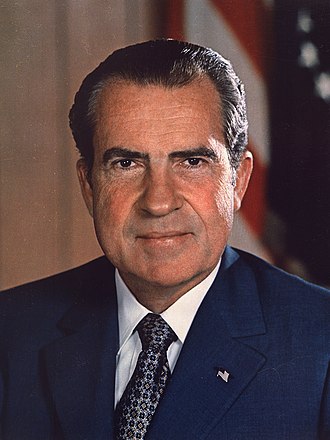
Richard M. Nixon served as the 37th President of the United States from January 1969 until his resignation in August 1974. In February 1971, he ordered the installation of a secret voice-activated taping system in the White House to preserve a historical record of his administration. Until the system's existence was revealed and dismantled in July 1973, the tapes captured Nixon directing major foreign policy initiatives, such as the opening to China, as well as his central role in the Watergate cover-up.
What Nixon talks about on the tapes
White House operations 4,718Presidential scheduling 2,225Public relations 1,784Presidential schedule 1,782Vietnam War 1,693Logistics 1,650Manolo Sanchez 1,626White House communications 1,400White House administration 1,399Presidential communication 1,243Henry Kissinger 1,191Foreign Policy 1,183
Conversations (21,010)
— Page 195 of 211President Nixon initiated a brief telephone communication through the White House operator to place an outgoing call. The primary purpose of the interaction was to facilitate contact with Stephen B. Bull. No substantive policy discussions or complex administrative decisions occurred during this brief operator-assisted connection.
President Nixon initiates a brief communication through the White House operator to facilitate a connection to another party. This administrative interaction serves as a routine logistical step in the President's daily workflow. No substantive policy discussions or significant political developments occur during this brief exchange.
President Nixon held a brief, informal meeting with an unidentified individual, potentially a staff member, to discuss personal logistical arrangements and travel plans. The dialogue touches upon the President's upcoming schedule at Camp David, the use of transportation, and the attendee's personal life, including a potential marriage. The conversation concludes with the President confirming the attendee's departure as he prepares to transition to his own transport.
President Nixon met with an unidentified individual to coordinate logistics for an upcoming trip to Camp David. The discussion focused on transportation arrangements, specifically the President’s preference for traveling by car rather than utilizing other transit options. The meeting concluded with brief planning regarding his arrival and departure schedule for the retreat.
President Nixon and Alexander Haig met to strategize on managing public perception and internal testimony regarding Watergate-related documents and investigations. They discussed ensuring that individuals like General Vernon Walters and L. Patrick Gray maintained a narrative of presidential innocence while maneuvering to leak specific, favorable information to the press to counter negative allegations. The meeting focused on controlling the dissemination of records to ensure the President was portrayed as having no prior knowledge of the scandal.
President Nixon contacted the Camp David operator to initiate a telephone connection with his Chief of Staff, Alexander M. Haig, Jr. The brief exchange served strictly as a logistical request to establish communication with Haig. No substantive policy discussions or administrative decisions were made during this short interaction.
President Nixon and Alexander Haig discuss the political fallout and potential disclosure of White House-authorized wiretaps, specifically regarding individuals like Tony Lake. They debate whether to preemptively admit to these national security-related taps or maintain a defensive stance while coordinating with William Ruckelshaus on a public statement. Ultimately, Nixon directs Haig to verify the scope of existing wiretap records to ensure the administration is prepared for impending press scrutiny and to protect Henry Kissinger and Ronald Ziegler from contradictory information.
President Nixon initiated a brief telephone request to the Camp David operator to be connected with his Chief of Staff, Alexander M. Haig, Jr. The exchange served as a logistical bridge to facilitate direct communication between the President and his top aide. No substantive policy or political discussions took place during this short administrative interaction.
President Nixon and Alexander Haig met to strategize on managing public and legal fallout from the ongoing Watergate scandal, specifically focusing on the unauthorized surveillance of National Security Council staffer Anthony Lake. They debated the necessity of publicly framing these wiretaps as legitimate national security measures while distancing the White House from illegal conduct by comparing their practices favorably to those of previous administrations. The pair discussed coordinating statements for Henry Kissinger and William Ruckelshaus, while emphasizing the need to locate specific files to support their defense that these operations were essential for protecting sensitive diplomatic initiatives.
President Nixon contacted the Camp David operator to facilitate a telephone connection with H. R. Haldeman. This brief administrative interaction served as a logistical bridge to reach a key staffer during the President's stay at the retreat. No substantive policy matters were discussed during this request for communication.
President Nixon contacted the Camp David operator to inquire about the whereabouts of H. R. Haldeman. The operator informed the President that Haldeman was attending dinner and a theater performance and would be unavailable until 10:00 p.m. Nixon decided against attempting to reach him elsewhere, opting to delay the call until later that evening.
President Nixon contacted the Camp David operator to facilitate a telephone connection to Alexander M. Haig, Jr. This brief administrative interaction served as a logistical step to reach his Chief of Staff. No substantive policy discussions or decisions occurred during this specific exchange.
President Nixon and Alexander Haig discussed the status of White House investigations into past wiretaps and surveillance operations to ensure they could mount a strong defense against potential public backlash. The two reviewed documentation regarding the scope of these activities, confirming they were authorized for national security purposes and were limited in number compared to previous administrations. They coordinated a strategy for William Ruckelshaus to deliver a public statement on the findings by the following week, while also preparing Henry Kissinger to deflect questions regarding these matters during his upcoming briefings.
President Nixon contacted the Camp David operator to facilitate an outgoing telephone call to White House Chief of Staff Alexander M. Haig, Jr. The brief exchange served as a logistical step to establish communication between the President and his staff. No substantive policy matters were discussed during this connection process.
President Nixon and Alexander Haig held a strategic meeting to manage the fallout from the Watergate scandal, specifically focusing on press narratives, the handling of sensitive CIA memoranda, and the upcoming testimony of administration officials. They discussed coordinating with figures like L. Patrick Gray and CIA officials to emphasize that the President had directed forceful investigations into potential intelligence leaks, rather than attempting a cover-up. The conversation centered on maintaining a firm stance on national security grounds regarding the custody of sensitive documents while countering unfavorable media interpretations of the President's past directives.
President Nixon contacted the Camp David operator to facilitate an urgent telephone connection with Roy L. Ash, the Director of the Office of Management and Budget. This brief communication served solely as a logistical request to initiate an official call between the two men. No substantive policy matters or further details were discussed during this exchange.
President Nixon and Roy Ash discussed the administration's economic policy, specifically affirming their rejection of a price freeze despite pressure from some advisors. They also coordinated cabinet management strategies, with Nixon tasking Ash to reassure Caspar Weinberger regarding his continued importance as a key domestic counselor. Finally, the President reflected on the recent, painful resignations of H.R. Haldeman and John Ehrlichman, reiterating that these departures were necessary steps for the administration to move past the Watergate scandal.
President Nixon requested that the Camp David operator connect him via telephone to Roy L. Ash, the Director of the Office of Management and Budget. The brief exchange served as a logistical step to facilitate direct communication between the President and his budget chief. No substantive policy discussions occurred during this administrative interaction.
President Nixon directed Office of Management and Budget Director Roy Ash to contact John B. Connally to solicit his advice and assistance on several administration priorities, including energy policy, export promotion, tax legislation, and wage and price controls. Nixon expressed concern over the political optics of Connally’s potential involvement in energy, given Connally’s known business interests in Soviet and Middle Eastern gas deals. Ash agreed to coordinate with Connally, acknowledging the need to balance utilizing Connally's expertise while insulating the administration from criticisms regarding his private sector ties.
President Nixon and Henry Kissinger discuss the fallout from Kissinger's recent press briefing regarding national security wiretaps and his access to intelligence reports during the Watergate scandal. Kissinger reviews the success of his briefing, which aimed to refocus public attention on the upcoming Soviet summit and Strategic Arms Limitation Talks (SALT), while Nixon emphasizes that the administration’s wiretap policies were authorized and less extensive than those of the Kennedy administration. The two conclude by agreeing that the administration should resist releasing a list of wiretapped individuals to protect innocent parties and maintain focus on key foreign policy objectives.
President Nixon contacted the Camp David operator to facilitate a telephone connection with his Press Secretary, Ronald L. Ziegler. The brief exchange served as a routine administrative request to place an outgoing call. No substantive policy discussions or policy developments occurred during this brief interaction.
President Nixon and Press Secretary Ronald Ziegler consulted on managing public relations regarding the Watergate investigation and upcoming foreign policy developments. The discussion focused on drafting a press statement or orchestrating a strategic leak to clarify Nixon’s limited interactions with L. Patrick Gray and to refute allegations of presidential involvement in a cover-up. Additionally, they coordinated efforts to bolster support for a proposed commission on election reform by involving Republican leadership, while noting that Henry Kissinger’s recent briefings on the Soviet summit were successfully overshadowing Watergate concerns in the news cycle.
President Nixon contacted the Camp David operator to facilitate an outgoing call to White House Chief of Staff Alexander M. Haig, Jr. The brief exchange served as a routine administrative request to connect the President with his staff while he was working from the Camp David retreat. No substantive policy matters or decisions were discussed during this brief connection phase.
President Nixon and Alexander Haig discussed the legal and political risks surrounding sensitive memoranda of conversation (memcons) related to the Watergate investigation and potential CIA involvement. Concerned about potential leaks and forthcoming testimony from officials like James Schlesinger and Vernon Walters, Nixon insisted that these documents remain in White House possession to protect national security and the administration's legal standing. The two also coordinated a strategy for press secretary Ronald Ziegler to counter negative narratives by emphasizing past administrations' use of wiretaps and ensuring the administration's public stance on cooperation remains consistent.
President Nixon requested that the Camp David operator connect him via telephone to White House Chief of Staff Alexander M. Haig, Jr. The brief exchange served solely as an administrative coordination to facilitate direct communication with Haig. No substantive policy matters or further developments were discussed during this short interaction.
President Nixon and Alexander Haig discuss legal strategy regarding the Watergate investigation, specifically focusing on John Dean’s role and his potential testimony. They review documentation of Dean's interactions with Lt. Gen. Vernon Walters, aiming to frame these as standard investigative procedures while distancing the President from Dean’s actions. The two conclude that J. Fred Buzhardt should consult with Richard Helms to assert national security privilege over specific records to limit their disclosure during the ongoing inquiry.
President Nixon contacted the Camp David operator to request a telephone connection with Alexander M. Haig, Jr. The brief exchange served as a logistical step to facilitate direct communication between the President and his Chief of Staff. No policy discussions occurred during this transition, as the interaction focused solely on establishing the call.
President Nixon and Alexander Haig discussed administrative strategies for responding to the escalating Watergate scandal, specifically focusing on efforts to manage public perception and counter negative media coverage. The two reviewed press briefings given by Ronald Ziegler and strategized on how to engage political allies like John Stennis to influence legislative and public opinion. Additionally, the conversation addressed the importance of preventing the release of names linked to previous administration wiretaps, with the President asserting that such disclosures would be disastrous for innocent parties.
President Nixon requested that the Camp David operator connect him via telephone to White House Chief of Staff Alexander M. Haig, Jr. The brief exchange served as a logistical coordination to initiate a conversation with his senior advisor. No substantive policy matters were discussed during this request for assistance.
President Nixon and Alexander Haig coordinate a public relations strategy regarding Louis Patrick Gray III's upcoming testimony and statements concerning the Watergate investigation. Nixon directs Haig to ensure Gray emphasizes that the President had instructed him to conduct a thorough and unrestricted investigation regardless of who it might implicate. The objective is to use this narrative to override damaging revelations surfacing from grand jury proceedings and congressional testimony.
President Nixon contacted the Camp David operator to facilitate an outgoing telephone call to Press Secretary Ronald L. Ziegler. The brief interaction served purely as a request for telephonic assistance to connect the President with a member of his administration. No substantive policy discussions or administrative decisions occurred during this exchange.
President Nixon and Press Secretary Ronald Ziegler discuss the administration's public relations strategy regarding Watergate-related media reports and allegations involving L. Patrick Gray III. Ziegler confirms he has briefed major news outlets to emphasize the President's commitment to a thorough investigation and to deny any White House participation in a cover-up. The two prioritize contacting Gray to coordinate testimony and prevent inconsistent statements, while also noting potential vulnerabilities regarding John W. Dean III.
President Nixon utilized the Camp David operator to facilitate a telephone connection with his Chief of Staff, Alexander M. Haig, Jr. The exchange functioned solely as an administrative coordination point to bridge the President to his staff during his retreat. No substantive policy discussions or decisions were recorded during this brief logistical interaction.
President Nixon and Alexander Haig discuss the administration’s strategy regarding Watergate-related documents, specifically focusing on the handling of memoranda of conversation (memcons) and the containment of information held by Vernon Walters and Richard Helms. They emphasize the necessity of maintaining a unified stance that no such records exist or will be released, framing this as a critical protection of presidential papers under the guise of national security. Furthermore, they coordinate efforts to contact L. Patrick Gray for testimony and confirm the preparation of additional materials by Leonard Garment for review at Camp David.
President Nixon initiated a brief telephone request to connect with Alexander M. Haig, Jr. via the Camp David operator. The exchange served primarily as a logistical step to facilitate direct communication with his Chief of Staff. No substantive policy matters were discussed during this brief administrative interaction.
President Nixon consulted with Alexander Haig and Ronald Ziegler to strategize on managing the political fallout from the ongoing Watergate investigation. The discussion focused on characterizing Nixon's past communications with L. Patrick Gray and his inquiries into potential CIA involvement as legitimate efforts to uncover the facts rather than as attempts to obstruct justice. They emphasized the need to frame these interactions through the lens of national security and asserted that the President had consistently ordered a thorough, high-level investigation. The group also discussed managing potential evidence, such as memoranda of conversation (memcons), and reinforcing the narrative that John Dean was the primary source of the administration's legal difficulties.
President Nixon contacted the Camp David operator to facilitate a telephone connection with his Chief of Staff, Alexander M. Haig, Jr. The brief exchange served as a logistical step to initiate a direct line of communication between the President and his top advisor. No substantive policy matters were discussed during this specific interaction.
President Nixon and Alexander Haig discussed the ongoing Watergate investigation, focusing on managing the public and legal narrative surrounding H.R. Haldeman and John Ehrlichman. Nixon sought to convince Haig that interactions between his aides and the CIA were not a conspiratorial attempt to orchestrate a cover-up, but rather an effort to keep the CIA out of the investigation. The two men coordinated on strategies for upcoming grand jury testimony, specifically considering the use of executive privilege to protect Haldeman from potential perjury charges while emphasizing the need to ensure favorable, non-incriminating testimony from figures like Vernon Walters.
President Nixon contacted the Camp David operator to initiate a follow-up telephone call to Press Secretary Ronald L. Ziegler. The brief interaction served as a logistical step to facilitate direct communication with his senior staff member. No substantive policy discussions occurred during this exchange with the operator.
President Nixon consulted with his daughter, Julie Nixon Eisenhower, while stationed at Camp David. Following their brief discussion, the President coordinated with a telephone operator regarding the expected arrival time of Press Secretary Ronald L. Ziegler. The conversation concluded with arrangements for Ziegler to place a follow-up call to the President once he reached his office.
President Nixon and Press Secretary Ronald Ziegler consulted at Camp David to coordinate the administration's public relations strategy regarding ongoing press coverage of the Soviet summit and the Watergate scandal. They discussed promoting positive bipartisan cooperation on a new election commission while maintaining a firm, defensive narrative against damaging leaks, specifically regarding FBI wiretap files and allegations of CIA involvement. Nixon emphasized the need to frame his inquiries into intelligence activities as logical and routine, while Ziegler confirmed that the White House had successfully countered misleading reports concerning the President's past communications with L. Patrick Gray.
President Nixon contacted the Camp David operator to facilitate an outgoing telephone call to his Chief of Staff, H.R. Haldeman. This brief interaction served as an administrative request to establish communication with a key advisor. No substantive policy matters were discussed during this connection attempt.
President Nixon and H. R. Haldeman consulted on the administration's strategy for responding to the intensifying Watergate investigation and the looming Senate hearings. They discussed the complexities of invoking executive privilege to protect presidential papers and testimony, specifically concerning meetings involving John Ehrlichman, H. R. Haldeman, and CIA Director Richard Helms. Nixon urged Haldeman to maintain a defiant stance, emphasizing the need to frame their past actions as a legitimate attempt to protect the CIA from being unfairly implicated in the scandal.
President Nixon initiated a brief administrative call via the Camp David operator to establish a connection with Alexander M. Haig, Jr. The primary purpose of the communication was to facilitate a direct conversation between the President and his Chief of Staff. No substantive policy matters or political discussions occurred during this exchange, which served solely as a logistical bridge to initiate a follow-up conversation.
President Nixon and Alexander Haig discuss strategic responses to the Watergate scandal, focusing on managing public perception and protecting administration documents. They address the controversy surrounding Central Intelligence Agency involvement, the potential risks of disclosing "memcons" (memoranda of conversation), and the necessity of maintaining a unified front among staff and foreign diplomats. Additionally, Nixon proposes a new commission on election reform as a distraction to shift media focus away from the ongoing investigations.
President Nixon initiated a telephone call to the Camp David operator to request a connection to speechwriter Raymond K. Price, Jr. This brief interaction served as a functional logistical step to facilitate direct communication with a key member of his staff. No substantive policy matters were discussed during this request.
President Nixon and aide Raymond K. Price, Jr. discussed the development of a forthcoming message to Congress regarding campaign finance and practice reform. Nixon proposed establishing a bipartisan commission to examine election irregularities, including campaign spending, organizational contributions, and violent campaign demonstrations, while also suggesting structural reforms like four-year terms for House members. The President decided to meet with congressional leaders on Tuesday to solicit their input before finalizing and delivering the message on Wednesday to demonstrate a bipartisan approach.
President Nixon initiated a brief telephone call to his personal secretary, Rose Mary Woods, through the Camp David operator. The exchange served as a functional administrative request to facilitate communication with his staff. No substantive policy matters or major political decisions were recorded during this brief connection.
President Nixon and his secretary Rose Mary Woods discussed administrative matters, staff assignments, and the administration's political strategy during the Watergate crisis. Nixon directed Woods to initiate a project of making 15 to 20 appreciation calls daily to political supporters to bolster morale and counter negative media coverage. The two also exchanged views on the perceived conspiracy by the press, Congress, and political opponents to undermine the presidency.
President Nixon requested that the Camp David operator attempt to place a telephone call to Congressman Joe D. Waggonner, Jr. of Louisiana. Nixon specified that the operator should not disturb the Congressman if he was unavailable, expressing his intent to postpone the outreach until the following day if necessary. The brief exchange served as a logistical arrangement to facilitate a direct communication between the President and the Representative.
President Richard Nixon and Representative Joe D. Waggonner, Jr. discussed the mounting political pressures of the Watergate scandal and ongoing challenges in Congress. Waggonner expressed his loyalty and support for the administration, while Nixon criticized the media, the Senate hearings, and the legal treatment of figures like Daniel Ellsberg. The two men also reviewed legislative strategy regarding Cambodia, agreed on the importance of demanding an accounting for MIAs in Indochina, and expressed optimism about the President’s ability to overcome the current political crisis.
President Nixon instructed the White House operator to place a telephone call to Press Secretary Ronald L. Ziegler. The conversation served solely as a brief administrative request to facilitate direct communication with his staff. No further substantive policy matters or tactical decisions were discussed during this short exchange.
President Nixon and Press Secretary Ronald Ziegler discussed upcoming public appearances and the administration's strategic response to the ongoing Watergate scandal. The conversation focused on preparations for H. R. Haldeman’s grand jury testimony, the status of John Dean’s potential immunity, and the timeline for William Ruckelshaus's public statement regarding White House documents. Nixon emphasized the importance of maintaining a normal presidential schedule to project stability while coordinating a bipartisan effort for a new Commission on Federal Election Reform.
President Nixon initiates a brief telephone call through the White House operator to contact Alexander M. Haig, Jr. The primary purpose of the communication is to establish a connection with his Chief of Staff. No further substantive discussion occurs during this short exchange beyond the placement of the call.
President Nixon and Alexander Haig held a strategic discussion regarding the administration's defensive posture in the ongoing Watergate investigation. They reviewed the status of key witnesses, including L. Patrick Gray’s successor, FBI files, and the expected testimony of figures like John Dean and Vernon Walters. Furthermore, Nixon proposed declassifying decade-old national security records, such as those related to the Bay of Pigs and the death of Ngo Dinh Diem, as a diversionary tactic to generate favorable controversy and shift public focus away from Watergate.
President Nixon instructed Stephen B. Bull to coordinate a meeting involving Lawrence M. Higby to discuss the processing of reports derived from the White House taping system. This administrative request sought to streamline the management of sensitive recordings housed in the Executive Office Building. Bull was tasked with arranging the logistics for this consultation to ensure the President and his staff could effectively review the material.
President Nixon held a brief, informal meeting with an unidentified male visitor in the Oval Office. The primary purpose of the encounter was the visitor's request for a subsequent meeting with White House Press Secretary Ronald L. Ziegler. Following this brief interaction, the unidentified man departed the office.
President Nixon met with Ronald Ziegler, Alexander Haig, and Lawrence Higby to discuss the ongoing fallout from the Watergate scandal and manage the White House's public relations strategy. They addressed the intensifying pressure surrounding John Dean’s allegations, the potential for impeachment, and the legal implications of White House files and intelligence activities. Nixon emphasized a strategy of holding the line, challenging Dean’s credibility, and maintaining administrative operations despite the investigation's encroachment on his staff and records.
President Nixon and Stephen B. Bull met briefly in the Oval Office to discuss administrative logistics and scheduling. The primary action item involved a request for a meeting with Lawrence M. Higby. Additionally, the two engaged in brief casual conversation regarding the weather and weekend plans.
President Nixon met with Stephen B. Bull in the Oval Office to review administrative matters, specifically focusing on Lawrence M. Higby’s schedule. During the brief session, the President also attended to the signing of a document concerning a foundation. The meeting concluded with no further developments recorded before Bull's departure.
President Nixon met with Lawrence Higby to discuss the location and existence of specific political memoranda that might have been shared with John Dean or H.R. Haldeman. Concerned about the potential impact of these documents in the context of the Watergate investigation, Nixon instructed Higby to verify their existence by consulting secretaries Beverly Kaye and Rose Mary Woods. The conversation also touched upon the sensitivity of national security documents mentioned by Dean in court and potential unauthorized activities involving E. Howard Hunt.
President Nixon met with his personal secretary, Rose Mary Woods, to discuss the management and security of sensitive documents, specifically memos and John D. Ehrlichman's diaries related to the ongoing Watergate investigation. Nixon instructed Woods to verify the contents of their files and retrieve certain personal dictated notes to ensure they were kept separate from official records. The conversation also touched upon the climate of the administration, with Woods offering personal support and encouragement to the President as he navigated the mounting political crisis.
President Nixon held a brief administrative conversation with a White House operator to facilitate a telephonic connection. This interaction served a routine communication purpose, as the President utilized the operator to initiate a subsequent call. No substantive policy discussions or major decisions occurred during this brief exchange.
President Nixon instructed the White House operator to place an outgoing telephone call to Lawrence M. Higby. This brief administrative interaction served as a formal bridge to connect the President with a member of his staff. No substantive policy discussions or decisions were documented during this short communication.
President Nixon and Lawrence Higby discuss efforts to verify whether any presidential memoranda were sent to John W. Dean III regarding Watergate. Higby confirms that secretaries Beverly J. Kaye and Pat McKee have independently denied typing such documents, and Nixon directs him to further verify this by contacting Terry L. Decker. Nixon expresses strong frustration regarding the scrutiny of his past files, insisting that he never authored memoranda on Watergate-related matters.
President Nixon and Lawrence Higby discussed the integrity and control of internal White House documents and potential records related to the Watergate scandal. Nixon expressed deep concern over the handling of sensitive materials and instructed Higby to verify the origin and distribution of specific files and copies. The exchange highlights the President's anxiety regarding the potential paper trail and his efforts to manage internal information security during the investigation.
President Nixon and his personal secretary, Rose Mary Woods, met to organize and review sensitive records, including Presidential memoranda and dictabelt tapes relevant to the Watergate investigation. The President reviewed specific files and dictabelt content to manage and verify the filing procedures for these materials. During the meeting, they established instructions for the handling and marking of these tapes to maintain control over the documentation.
President Nixon and an unidentified aide discuss the political impact of recent public statements made by Clay T. Whitehead and Kevin Phillips regarding administration policy. They conclude that while these individuals are advancing the administration's goals, their inflammatory rhetoric has become counterproductive. The conversation concludes with the President requesting copies of relevant materials and reviewing taped recordings to manage future appearances and public messaging.
President Nixon and his personal secretary, Rose Mary Woods, met to conduct a review of specific dictabelt recordings related to the Watergate scandal. The discussion centered on organizing and verifying the chronological date ranges of these sensitive materials. This effort was part of the administration's internal process for managing and cataloging evidence during the unfolding investigation.
President Nixon utilized this session to review and listen to content from a previously recorded dictabelt tape. The discussion centered on appointments, specifically focusing on the involvement of ethnic groups and minorities within the political landscape. The meeting concluded with instructions for H.R. Haldeman regarding the follow-up on these administrative and personnel-related matters.
President Nixon reviewed personal dictabelt recordings from mid-March 1973 with an unknown participant to reflect on past events. The discussion revisited the President's preparations for his March 15th press conference and a subsequent meeting with Senator Hugh Scott at Camp David. The session served as a retrospective analysis of political strategy and internal challenges faced during that period.
President Nixon reviews past instructions intended for H.R. Haldeman regarding George H.W. Bush by listening to previously recorded dictabelt tapes. He also consults with George P. Shultz to discuss ongoing difficulties concerning the Labor Management Committee and the composition of its membership. The pair evaluates international economic affairs and specific administrative memos to address current organizational challenges.
President Nixon reviewed personal dictabelt recordings and memos to document his internal thoughts and prior communications regarding the unfolding Watergate scandal. He assessed the legal and political vulnerabilities of key staff members, including H.R. Haldeman, John Ehrlichman, and John Dean, while considering potential legal strategies involving immunity and clemency. The session served as a retrospective evaluation of his administration's handling of the crisis and his efforts to establish a clear record of his knowledge and decision-making.
President Nixon met with an unknown individual to request the retrieval of specific memoranda. The brief exchange focused on securing documentation relevant to ongoing administrative business or inquiries. No further context or policy decisions were documented during this short interaction.
President Richard Nixon met with his personal secretary, Rose Mary Woods, to discuss the organization and status of sensitive Watergate-related memoranda. The conversation focused on distinguishing between internal files and documents prepared for distribution, including materials originating from Camp David. Nixon confirmed that the records were properly accounted for and verified, indicating the completion of a review process regarding these sensitive papers.
President Nixon and Press Secretary Ronald Ziegler met to coordinate the White House response to upcoming media reports concerning the Pentagon Papers investigation and wiretapping activities. Nixon instructed Ziegler to frame the administration's involvement in the Egil Krogh-led investigation as a routine, legitimate national security measure. The two also discussed the status of presidential files and sought to downplay the administration's prior knowledge of sensitive intelligence activities by emphasizing the President's lack of personal recollection of specific documents.
President Nixon instructed the White House operator to place a telephone call to Lawrence M. Higby. This interaction served as an administrative request to connect the President with a member of his staff. The conversation concluded once the operator initiated the connection to Higby.
President Nixon met with his personal secretary, Rose Mary Woods, to discuss sensitive files related to the Watergate investigation. The brief interaction focused on the President's assessment of these documents and their management. No specific action items were recorded beyond the handling and review of these materials.
President Nixon met with unidentified individuals to finalize the logistical details for an upcoming bill-signing ceremony involving Vera Clemente. The discussion focused on coordinating the press relations and event participants, specifically noting the involvement of Senator Hugh Scott and baseball players Willie Stargell and Manny Sanguillen. The primary objective was to facilitate the presentation of a commemorative medal, with proceeds directed toward the Roberto Clemente Memorial Fund.
President Nixon held a brief, routine communication with the White House operator while in the Oval Office. The interaction served to facilitate administrative connectivity, as the President utilized the operator to initiate or manage telephonic communications. No substantive policy matters or major historical developments were recorded during this brief exchange.
President Nixon and Lawrence M. Higby discuss the status of a records search, specifically concerning potential memoranda related to John W. Dean III and files held by Rose Mary Woods. Higby reports that an initial review of the materials yielded no significant findings, prompting the President to urge continued diligence in the search. The conversation concludes with Nixon preparing to attend a Citizens Medal presentation for Mrs. Roberto Clemente while awaiting further updates.
President Nixon met with aide Lawrence M. Higby to briefly discuss the status of a requested report and the administrative handling of presidential correspondence. Nixon inquired about specific documentation regarding his expressed concerns over public demonstrations. The conversation concluded without a definitive resolution, reflecting the President's ongoing preoccupation with political optics during the Watergate era.
President Nixon hosted Vera Clemente, widow of baseball legend Roberto Clemente, alongside several legislators and fellow professional athletes to honor the late humanitarian and star outfielder. The meeting focused on the formal signing of H.R. 3841, a bipartisan bill authorizing a commemorative medal in Clemente’s honor. During the ceremony, the President presented the Citizen’s Medal to Mrs. Clemente, offered commemorative gifts for her children, and coordinated photographs with the attendees.
President Nixon met with an unidentified individual to discuss a specific, crudely described anecdote or story. The conversation briefly addressed this narrative before the visitor departed. No policy decisions or substantive administrative actions were recorded during this brief encounter.
President Nixon and Stephen B. Bull met in the Oval Office to coordinate the logistics and schedule for an upcoming bipartisan congressional leadership meeting. They reviewed the guest list, which included notable figures such as John B. Connally, Elliot L. Richardson, and Alexander M. Haig, Jr. The discussion centered on finalizing the administration of the meeting, including confirming attendee lists and relevant legislative contacts.
President Nixon met with Lawrence Higby and Alexander Haig to discuss the unfolding Watergate scandal, focusing on the potential legal vulnerabilities of H.R. Haldeman and John Ehrlichman. Nixon expressed concerns regarding the motives and credibility of John Dean, specifically speculating about his possession of sensitive files and his efforts to secure immunity. The participants assessed the likely impact of forthcoming Ervin Committee testimony, emphasizing the need to maintain executive privilege and protect the administration from legal fallout.
President Nixon and Alexander Haig met to strategize the administration's response to the Watergate scandal, specifically focusing on managing the public statements of William Ruckelshaus and mitigating the impact of documents held by John Dean. They discussed the necessity of distancing the President from specific FBI and White House activities involving J. Edgar Hoover and William C. Sullivan. Nixon expressed relief after a review of his own files and private memoranda confirmed that no evidence existed linking him directly to the controversial actions under scrutiny.
President Nixon held a brief, six-minute meeting in the Oval Office with an unidentified individual to discuss an unspecified matter involving a third party still present at a different location. The exchange remained elliptical, providing no clear insight into the specific subject matter or subsequent action items beyond confirming the status of the individual in question. Due to the lack of context and the nature of the transcript, the primary intent of this brief encounter remains indeterminate.
President Nixon met with an unidentified individual to discuss the status of Press Secretary Ronald L. Ziegler, who was currently engaged in a lengthy press briefing. The participants briefly noted that Ziegler was facing a high volume of questions from the press corps. No major policy decisions were made during this short exchange, which focused primarily on scheduling updates.
President Nixon met with an unidentified individual to coordinate logistical matters involving Press Secretary Ronald L. Ziegler. The discussion focused on scheduling a press briefing and facilitating a meeting at Ziegler’s office in the Executive Office Building. The participants also briefly addressed the status of ongoing tasks and potential outreach to a third party.
President Nixon met with his valet, Manolo Sanchez, in the Old Executive Office Building to discuss personal arrangements. The brief interaction focused on the President's immediate plans and the provision of refreshments. The conversation concluded with Nixon deciding to depart the office shortly thereafter.
President Nixon and Alexander Haig coordinate the administration's public response to ongoing Watergate-related pressures, specifically addressing critical statements made by William D. Ruckelshaus. They discuss drafting a formal White House statement intended to emphasize the administration's cooperation with the FBI. The two men also strategize on how to frame internal narratives regarding John D. Ehrlichman and the handling of the investigation to minimize political damage.
President Nixon and Alexander Haig discuss the administration's strategy for responding to Watergate-related investigations, specifically focusing on FBI records and the potential political exploitation of past wiretaps from the Eisenhower, Kennedy, and Johnson administrations. Nixon instructs Haig to pressure FBI Acting Director William Ruckelshaus to investigate the disposition of previous administrations' records to deflect scrutiny from the White House. The two also address the legal challenges posed by Judge John Sirica's access to John Dean's documents and the potential transfer of these materials to the Ervin Committee and the grand jury.
President Nixon consulted with a White House operator to facilitate an outgoing telephone connection. This brief interaction served administrative purposes to establish a line for an upcoming conversation. No substantive policy matters or political discussions were recorded during this exchange.
President Richard M. Nixon and Alexander M. Haig, Jr. held a brief, informal meeting in the Old Executive Office Building. The exchange consisted of inconsequential social pleasantries rather than substantive policy deliberations or strategic planning. No significant decisions were made or action items assigned during this minute-long interaction.
President Nixon and Stephen B. Bull reviewed the President's upcoming schedule to manage his time commitments and prioritize meetings. They discussed various appointments, including prospective visits with political figures and reports from individuals returning from official trips. Nixon explicitly directed that certain visitors, such as Peter G. Peterson, must undergo extensive vetting and reporting to other administration officials like John B. Connally and Henry Kissinger before being granted an audience with him.
President Nixon met with Ronald Ziegler and Alexander Haig to formulate a public relations strategy to counter the ongoing Watergate scandal. The discussion focused on shifting public attention toward the previous Democratic administrations by highlighting missing FBI wiretap records from the Kennedy and Johnson eras. Nixon emphasized the importance of aggressive tactics, including the declassification of sensitive documents and the promotion of a narrative that the White House had fully cooperated with investigations into national security leaks.
President Nixon met with Ronald Ziegler and Alexander Haig to strategize on press relations and the escalating Watergate crisis. The discussion focused on managing media inquiries, the potential use of executive privilege regarding sensitive documents, and assessing the implications of ongoing investigations involving former aides like John Dean, H.R. Haldeman, and John Ehrlichman. Key deliberations included the administration's cooperation with the FBI and CIA, the potential for a presidential statement, and addressing public perceptions concerning the involvement of high-ranking officials.
President Nixon met with his personal valet, Manolo Sanchez, in the Old Executive Office Building to discuss personal refreshments. During the brief interaction, the President requested that Sanchez bring him an additional bottle of tea. The conversation concluded with Sanchez acknowledging the request and specifying the type of beverage to be provided.
President Nixon held a brief, undocumented meeting with an unidentified individual in the Old Executive Office Building. The exchange appears to center on the physical receipt or delivery of a specific document or item mentioned by the visitor. Due to the lack of clear transcript data, the broader administrative or political purpose of this interaction remains obscured.