Nixon, Richard M. (President)
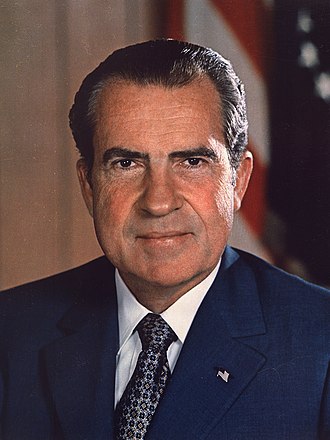
Richard M. Nixon served as the 37th President of the United States from January 1969 until his resignation in August 1974. In February 1971, he ordered the installation of a secret voice-activated taping system in the White House to preserve a historical record of his administration. Until the system's existence was revealed and dismantled in July 1973, the tapes captured Nixon directing major foreign policy initiatives, such as the opening to China, as well as his central role in the Watergate cover-up.
What Nixon talks about on the tapes
White House operations 4,718Presidential scheduling 2,225Public relations 1,784Presidential schedule 1,782Vietnam War 1,693Logistics 1,650Manolo Sanchez 1,626White House communications 1,400White House administration 1,399Presidential communication 1,243Henry Kissinger 1,191Foreign Policy 1,183
Conversations (21,010)
— Page 197 of 211President Nixon utilized the White House operator to place an outgoing telephone call to his Chief of Staff, Alexander M. Haig, Jr. The primary purpose of this brief communication was to facilitate a direct connection between the President and his senior advisor. No substantive policy discussions or decisions were recorded during this brief administrative exchange.
President Nixon and Alexander Haig discuss the ongoing Watergate investigation, specifically focusing on the recent testimony of Vernon Walters regarding CIA involvement. The conversation centers on managing potential incriminating notes held by John Ehrlichman and the risks posed by John Dean's anticipated testimony, which may implicate Charles Colson. Nixon emphasizes the need for legal counsel J. Fred Buzhardt to consult with Colson immediately to coordinate a strategy for handling these developments.
President Nixon initiates a brief telephone call through the White House operator to contact Stephen B. Bull. The purpose of the communication is to request a connection to the Stable, the designated code name for the White House Military Office. No substantive policy discussions or policy-related decisions occurred during this brief request for a connection.
President Nixon directed his aide, Stephen B. Bull, to reschedule a meeting with John B. Connally from late afternoon to the following morning at 10:00 am. Nixon cited a cold and the need to prepare for an upcoming state dinner honoring Haile Selassie as the reasons for the change. Bull confirmed that he would arrange the adjustment to the President's schedule.
President Nixon initiates a brief telephone call to Secretary of the Treasury George P. Shultz through the White House operator. The conversation serves solely as a logistical request to establish a direct line of communication with the Secretary. No further policy discussions or substantive developments occur during this brief exchange.
President Nixon and George Shultz discussed adjustments to the administration's minimum wage bill to facilitate progress in congressional committee negotiations. They agreed to drop the proposed youth differential for 18 and 19-year-olds, implement a notification-based policing process for 16 and 17-year-olds, and concede on the coverage of state and local employees. Additionally, they reaffirmed the decision to avoid concessions on common-situs picketing, agreeing that Secretary of Labor Peter Brennan should lead the minimum wage negotiations to allow him to claim a legislative victory.
President Nixon initiates a call to the White House operator to be connected with Alexander M. Haig, Jr. The brief exchange serves as a procedural request to establish communication with his Chief of Staff. No substantive policy matters or decisions were discussed during this initial operator contact.
President Nixon and Alexander Haig discuss ongoing Watergate pressures, focusing on the management of sensitive documents, potential witnesses, and the search for a new Special Prosecutor. They review the strategy for Lt. Gen. Vernon Walters’s testimony, emphasizing the assertion of national security privilege to withhold classified intelligence documents. Additionally, Nixon justifies the use of wiretaps to address leaks within the National Security Council and strategizes with Haig on how to maintain administrative operations while navigating these unfolding scandals.
President Nixon initiates a call to the White House operator to be connected with Press Secretary Ronald L. Ziegler. The brief interaction serves as a functional request to establish communication with a key staff member. No substantive political or policy discussions occur during this short exchange.
President Nixon and Press Secretary Ronald Ziegler discuss the status of materials related to John W. Dean III held in a secure container. The President expresses impatience regarding the delayed inspection of these documents and instructs Ziegler to verify their current accessibility. Ziegler commits to immediately checking the progress of the review and reporting back to the President.
President Nixon and Press Secretary Ronald Ziegler discussed White House media strategy and the ongoing developments regarding Watergate and John W. Dean, III. Ziegler reported that the press was becoming increasingly skeptical of Dean's credibility, and the pair agreed on the need for daily, coordinated briefings among senior staff to present a more proactive, less defensive public posture. They also reviewed the status of sealed documents held by Judge John J. Sirica, with Nixon instructing Ziegler to have J. Fred Buzhardt, Jr. meet with him to further coordinate their response.
President Nixon initiates a request through the White House operator to be connected with speechwriter and advisor Raymond K. Price, Jr. The brief communication serves primarily as a logistical step to facilitate a direct conversation between the President and his staff member. No substantive policy matters or further details were recorded during this brief exchange.
President Nixon consulted with speechwriter Raymond K. Price, Jr. to refine a draft for an upcoming radio address concerning campaign reform. The President instructed Price to adjust the language regarding constitutional amendments, specifically requesting a more neutral framing for the proposal of a single six-year presidential term while maintaining a firm stance on extending terms for the House of Representatives. These revisions were intended to ensure the speech prioritized clear policy positions while downplaying less feasible constitutional changes.
President Nixon initiates a call through the White House operator to reach Press Secretary Ronald L. Ziegler. The brief exchange serves as a logistical bridge to facilitate a conversation with his primary spokesperson during a period of intense scrutiny regarding the Watergate scandal. No policy decisions or substantive discussions occur between the President and the operator.
President Nixon consulted with a White House operator to determine the whereabouts of Press Secretary Ronald L. Ziegler. Upon learning that Ziegler had already left his office and was heading home, the President requested that a message be left for him to return the call. This brief exchange served primarily to facilitate communication between the President and his senior staff late in the evening.
President Nixon held a brief, unscheduled meeting with an unidentified individual in the Oval Office. The discussion served as a precursor to the President's subsequent meeting with National Security Advisor Henry A. Kissinger. No further details regarding the specific topics or outcomes were recorded due to the lack of available transcripts or descriptive logs.
President Nixon met with an unknown individual in the Oval Office to facilitate maintenance work on the office clock. The brief encounter focused exclusively on the practical repair of the timepiece. No political or administrative matters were discussed, and the visitor departed shortly after completing the task.
President Nixon and Henry Kissinger met to discuss the mounting political pressures of the Watergate scandal and the administration's ongoing foreign policy objectives. Nixon expressed frustration over the scandal's impact on his staff and presidential authority, while Kissinger urged the President to remain resilient, citing upcoming diplomatic successes such as the Soviet summit and nuclear treaties as the means to shift public focus. They also explored potential strategies for managing the fallout, including the possibility of a political counterattack against the press and Congress once the initial intensity of the crisis subsided.
President Nixon met with an unidentified individual in the Oval Office for a brief morning discussion. The primary purpose of the meeting was the visitor's formal request for a sit-down with White House Press Secretary Ronald L. Ziegler. No further significant policy matters or official decisions were recorded during this short exchange.
President Nixon met with his personal valet, Manolo Sanchez, in the Oval Office. The encounter served as a brief, informal interaction between the President and a member of his domestic staff. No policy discussions or significant administrative decisions were recorded, as the meeting was limited to the provision of refreshments.
President Nixon met briefly with an unidentified male visitor in the Oval Office for an informal encounter. The meeting lasted less than five minutes and consisted primarily of a formal greeting. No substantive policy discussions, political developments, or specific action items were recorded during this brief interaction.
President Nixon and Press Secretary Ronald Ziegler met to strategize the White House response to intensifying Watergate-related scrutiny, specifically regarding the role and credibility of former counsel John Dean. They focused on clarifying the internal investigation process and justifying previous press statements by emphasizing that Ziegler’s assurances of no White House staff involvement were based on Dean's repeated, deceptive briefings. The pair decided to shift toward an offensive communications strategy, framing the investigation as a standard administrative function performed by the counsel's office rather than a specific, top-down directive from the President.
President Nixon directs the White House operator to place an urgent telephone call to J. Fred Buzhardt, Jr., his special counsel handling legal matters related to the Watergate investigation. The brief exchange serves as a logistical bridge to facilitate direct communication with Buzhardt regarding ongoing legal defense strategies. No substantive discussion occurs during this initial connection request, as the President is merely establishing the line.
President Nixon and J. Fred Buzhardt discussed the contents of sensitive documents removed by John Dean, which Buzhardt identified as materials related to the Huston Plan concerning domestic intelligence collection rather than the Watergate scandal. Fearing that these classified records regarding U.S. intelligence capabilities could be leaked if released to the Ervin Committee, they strategized on methods to suppress the documents through the court system. Buzhardt was tasked with finalizing his identification of the materials and briefing Alexander Haig to ensure the administration was prepared for potential disclosure.
President Nixon spoke briefly with a White House operator to facilitate an outgoing call. The interaction served as a standard administrative step to connect the President to another party. No substantive policy matters or major political decisions were recorded during this brief exchange.
President Nixon and White House counsel J. Fred Buzhardt, Jr. discuss the contents of a mysterious 43-page document to determine if it involves sensitive national security matters or potential political liabilities. They deliberate on whether the information relates to domestic intelligence gathering and if it is appropriate or necessary to disclose these materials to a judge. Nixon ultimately praises Buzhardt's investigative progress and instructs him to provide a follow-up report on the document's implications.
President Nixon and Stephen B. Bull met briefly to coordinate the President's schedule and finalize logistical arrangements. The discussion centered on confirming that a specific agreement had been reached, signaling that the administration’s immediate scheduling goals were settled. The encounter concluded with both parties agreeing that their arrangements were finalized.
President Nixon met with Alexander Haig and J. Fred Buzhardt to strategize on the burgeoning Watergate scandal, specifically focusing on John Dean's possession of sensitive documents and the potential for a damaging investigation into domestic intelligence operations. The participants discussed controlling the narrative surrounding CIA and NSA involvement, maintaining the loyalty of White House staff, and managing the political fallout of ongoing testimony. Additionally, Haig briefed the President on his recent discussions with John Connally regarding potential White House personnel changes, the appointment of a special prosecutor, and the necessity of presenting a strong, defiant front against congressional and legal pressures.
President Nixon directs the White House operator to place an outgoing call to J. Fred Buzhardt, Jr., a member of his legal defense team. This brief administrative exchange serves as a transition to a private consultation regarding the ongoing Watergate investigations. No substantive policy discussions or decisions occur during this brief interaction.
President Nixon consulted with an unidentified staff member regarding the scheduling of his upcoming meetings with John B. Connally and Roy L. Ash. The President specifically requested that he meet with Connally independently, deciding against a joint session with Ash. This brief interaction served to finalize the structure of his appointments for the day.
President Nixon initiates a brief administrative request, asking the White House operator to connect him to a specific party. The conversation serves solely as a routine bridge to facilitate a subsequent communication. No substantive policy matters or political discussions were addressed during this short exchange.
President Nixon and White House counsel J. Fred Buzhardt, Jr. discussed the identification and control of sensitive internal intelligence documents provided by John W. Dean, III. Buzhardt confirmed that he had secured materials including memos from Dean to John Mitchell and Tom Huston to H.R. Haldeman regarding 1970 intelligence operations. To mitigate potential exposure, the administration moved to secure the documents within the Justice Department and implement strict oversight for their storage.
President Nixon and legal counsel J. Fred Buzhardt, Jr. held a brief meeting to verify the status of undisclosed materials or records. Buzhardt confirmed that the requested items had been secured and reviewed, though he noted that the effort yielded unsuccessful or unproductive results. This exchange served as a status update regarding the handling of sensitive documentation amidst the unfolding Watergate investigation.
President Nixon and Ronald Ziegler discuss the political fallout of the Watergate scandal, specifically focusing on John Dean’s documents regarding 1970 domestic intelligence coordination and their classification status. They also address John B. Connally’s advocacy for a broad staff "housecleaning" that would remove figures like H.R. Haldeman and John Ehrlichman. Nixon rejects the necessity of such drastic personnel changes, particularly regarding the State Department, citing the complexity of upcoming Soviet summit negotiations.
President Nixon met with an unidentified individual to briefly discuss the President's upcoming schedule. The conversation concluded immediately, with the participant departing the Oval Office at the same time the recording began. No significant policy decisions or substantive developments were captured during this brief exchange.
President Nixon and John B. Connally met to discuss upcoming administration challenges, specifically focusing on the President's public relations strategy, necessary personnel changes, and impending foreign policy milestones, including the Soviet summit. Nixon expressed his determination to press forward with major international initiatives, such as nuclear non-proliferation and Middle East negotiations, despite the political turmoil caused by the Watergate scandal. Connally advised the President on restructuring White House operations, including potential staffing changes in the press office and cabinet, and recommended that Nixon adopt a more aggressive, resilient posture to regain public confidence.
President Nixon consulted with an unidentified individual regarding the development of his public statement on campaign reform. The brief discussion touched upon the president's upcoming schedule and addressed logistical concerns related to taping procedures. No major policy shifts were recorded during the short exchange.
President Nixon met with an unidentified individual to prepare for the delivery of a formal statement regarding campaign finance reform. The discussion focused on finalizing the language and strategy for the President’s public address on the matter. The meeting concluded immediately following these preparations, signaling the administration's intent to pivot toward legislative action on electoral accountability.
President Nixon and Alexander M. Haig, Jr. met briefly in the Oval Office to coordinate their upcoming daily schedules. The discussion focused on logistical planning, specifically regarding a planned engagement with John B. Connally. No major policy decisions were recorded during this brief administrative exchange.
President Nixon met with an unidentified individual in the Oval Office to discuss his daily agenda and official schedule. The brief interaction served primarily to coordinate administrative logistics for the President's upcoming commitments. No further details regarding the participants or specific policy decisions were recorded during this session.
President Nixon and Alexander Haig met to discuss the escalating pressures of the Watergate scandal, specifically focusing on the resignation of G. Bradford Cook and the potential legal exposure of William J. Casey. The President emphasized his refusal to resign, dismissed impeachment concerns, and stressed the need for the White House staff to remain resilient. They also evaluated potential personnel changes, including roles for Ron Ziegler and John Scali, and monitored Elliot Richardson's progress in selecting a Special Prosecutor.
President Nixon met with an unidentified individual in the Oval Office to discuss the status of a press briefing conducted by Press Secretary Ronald L. Ziegler. The conversation focuses on verifying whether Ziegler had already commenced his scheduled media engagement. No major policy decisions or significant developments are recorded in this brief, administrative exchange.
President Nixon held a brief, informal meeting with an unidentified individual in the Oval Office. The conversation consisted of routine pleasantries regarding the local weather and scheduling logistics for a press briefing involving Press Secretary Ronald L. Ziegler. No substantive policy matters or major political decisions were recorded during this brief encounter.
President Nixon and his personal secretary, Rose Mary Woods, met to discuss the mounting political pressure from the Watergate scandal and strategies for maintaining a strong public image. They strategized on counter-messaging, including encouraging supporters to write letters to editors defending the administration and framing the opposition as McCarthyist. Additionally, they reviewed Nixon’s recent public appearances and discussed the need to project resilience and resolve in the face of calls for the President’s resignation.
President Nixon and Stephen B. Bull reviewed the President’s upcoming schedule and administrative details regarding social events. The discussion focused on a meeting request from the Council of the Americas’ Board of Trustees, an invitation championed by Henry Kissinger that Nixon criticized for poor planning. They also addressed scheduling arrangements for a meeting with Mustafizur Rahman Siddiqui of Bangladesh, ultimately deciding to delay certain agenda items until 11:00 a.m.
President Nixon held an Oval Office meeting with an unidentified individual to discuss administrative logistics and daily scheduling. The conversation addressed the President’s personal schedule as well as the upcoming press briefing agenda for Press Secretary Ronald L. Ziegler. Beyond these operational matters, the exchange included brief, casual dialogue regarding the placement of refreshments in the room.
President Nixon and Alexander Haig met to discuss urgent personnel changes, the management of the ongoing Watergate scandal, and strategies to stabilize the administration's public and congressional standing. The conversation focused on potential replacements for high-level positions, including the FBI director and congressional liaison staff, while evaluating the performance of White House staff like Ronald Ziegler. Nixon emphasized a need for steady decision-making and resistance to panic as they navigated mounting political pressure and potential legal vulnerabilities surrounding Watergate.
President Nixon met with his personal valet, Manolo Sanchez, in the Old Executive Office Building to handle routine personal matters. During this brief encounter, the President provided specific instructions regarding Ronald L. Ziegler’s schedule and requested refreshments. This interaction reflects the administrative and domestic coordination required within the daily operations of the White House.
President Richard Nixon met with his personal valet, Manolo Sanchez, in the Old Executive Office Building. The brief discussion primarily concerned the President's personal schedule, specifically focusing on Nixon's need for a nap. The interaction served administrative and personal maintenance purposes within the President's daily routine.
President Nixon met with Nellie L. Yates to discuss the administrative management of press secretary Ronald L. Ziegler’s schedule and briefing materials. The conversation focused on the excessive length of Ziegler's briefings and the burden of reviewing lengthy, multi-page reports. No formal policy changes were enacted, but the exchange highlighted the President's frustration with the volume of documentation required for upcoming briefings.
President Nixon and Stephen B. Bull met in the Oval Office to review and manage the President’s upcoming schedule. They specifically discussed a scheduling conflict regarding a meeting with Treasury Secretary George P. Shultz. Additionally, Bull confirmed the timeline for a June appearance before the Council of the Americas’ Board of Trustees.
President Nixon consulted with the White House operator to facilitate an outgoing call. This interaction served purely administrative purposes to connect the President with a third party. No substantive policy matters or strategic discussions were recorded during this brief exchange.
President Nixon met with his legal counsel, J. Fred Buzhardt, Jr., to address legal strategies concerning the ongoing Watergate investigation. The discussion focused on coordinating the administration’s response to inquiries and managing the complexities of potential testimony or evidence disclosure. No specific action items are detailed in the available record, as the conversation primarily served to align legal defenses during a critical phase of the scandal.
President Nixon met with an unidentified male visitor in the Oval Office for a brief discussion. The available documentation provides no substantive details regarding the purpose or content of the meeting beyond a recorded reference to refreshments. Consequently, no specific policy decisions or action items can be verified from this segment.
President Nixon and Press Secretary Ronald Ziegler met to coordinate public relations strategy regarding the evolving Watergate scandal and the implications of John Dean’s testimony. They discussed managing press inquiries, particularly regarding allegations of a CIA cover-up and the administration's internal investigations. Nixon emphasized maintaining a narrative that the White House sought the truth while facing external obstacles, and he directed Ziegler to remain firm in briefings while avoiding direct meetings with specific journalists.
President Nixon initiates a brief request for the White House operator to connect him to his Press Secretary, Ronald L. Ziegler. The conversation serves strictly as a logistical administrative step to facilitate a direct communication line between the President and his key communications aide. No substantive policy matters or further details were discussed during this brief exchange.
President Richard M. Nixon met with his personal valet, Manolo Sanchez, in the Old Executive Office Building. The conversation primarily addressed personal or administrative matters, as indicated by the withdrawal of sensitive material from the public record. No significant policy decisions or governmental developments were recorded during this brief interaction.
President Nixon met with his personal aide, Manolo Sanchez, to coordinate administrative details regarding his upcoming schedule. The discussion focused on logistical adjustments, specifically involving Stephen B. Bull and a necessary time change for a lunch meeting in the Oval Office. No major policy developments occurred, as the conversation was limited to internal White House scheduling arrangements.
President Nixon consulted with a White House operator to facilitate a telephonic connection. The brief exchange focused on establishing a direct line to another party. The interaction concluded with the operator successfully initiating the requested call.
President Nixon and Press Secretary Ronald Ziegler discuss a strategy to address potential inquiries regarding the administration's involvement in the Watergate break-in investigation. Nixon instructs Ziegler to maintain that he directed a comprehensive inquiry into the involvement of various agencies, specifically to determine if the CIA played a role. Additionally, Nixon directs Ziegler to gather data on John W. Dean III's past access to FBI reports and staff briefings to serve as a defensive counter-narrative.
President Nixon and Ronald Ziegler discussed internal investigations into agency involvement, specifically focusing on the CIA's potential role and the necessity for a thorough, broad-based inquiry. Nixon directed Ziegler to gather specific data regarding FBI reports and the timeline of staff involvement in Los Angeles to clarify administrative oversight. This exchange reflects the White House's attempt to manage and compartmentalize information surrounding ongoing investigations.
President Nixon initiates a brief telephone call through the White House operator to contact J. Fred Buzhardt, Jr. The exchange serves primarily as a logistical step to facilitate direct communication with his legal counsel. No substantive policy or political discussions occur during this short connection process.
President Nixon held a brief, informal check-in with the White House operator to clarify the location or status of an unidentified individual. The interaction, characterized by an ambiguous reference to an "arm," serves as a minor administrative inquiry within the President's daily schedule. No substantive policy decisions or political developments resulted from this brief communication.
President Nixon consulted with White House counsel J. Fred Buzhardt regarding his recent meeting with Charles Colson and the ongoing evaluation of sensitive documents provided by John W. Dean. Buzhardt confirmed that the materials matched the President's description but noted they presented significant legal or political complications. The two agreed that Buzhardt should take the necessary time to complete his assessment and prepare a formal report for the President.
President Nixon met briefly with his counsel, J. Fred Buzhardt, Jr., to coordinate their schedules following an ongoing meeting. The discussion functioned primarily as a brief administrative exchange to ensure they were prepared to convene once Buzhardt became available. No substantive policy or legal strategy decisions were recorded during this brief encounter.
President Nixon requested that the White House operator place an outgoing telephone call to J. Fred Buzhardt, Jr., his legal counsel. The brief interaction served as a logistical step to facilitate direct communication with Buzhardt regarding matters related to the ongoing Watergate investigations. No substantive policy discussions occurred during this exchange.
President Nixon initiated this brief exchange to coordinate an in-person meeting with White House counsel J. Fred Buzhardt, Jr. The President requested that Buzhardt come to the Oval Office immediately to discuss urgent matters. This logistical communication facilitated a follow-up session between the two key figures during the height of the Watergate investigation.
President Nixon met with J. Fred Buzhardt, Jr. and Alexander Haig, Jr. to discuss the legal and political implications of recently surfaced documents, specifically those related to the "Huston Plan" and its potential connection to the Watergate burglary. They analyzed how to manage the release of this sensitive, high-level intelligence information while attempting to separate the President's role from illegal activities, such as surreptitious entries. The participants concluded that they needed to identify the exact scope of past intelligence operations and develop a strategic communication plan—possibly a white paper—to justify the programs as necessary for domestic security during a period of civil unrest.
President Nixon initiates a request for the White House operator to connect him with General Alexander M. Haig, Jr. The call serves as a brief administrative bridge to facilitate direct communication with his Chief of Staff. No further substantive policy matters are addressed in this short exchange.
President Nixon and Alexander Haig discuss the urgency of consulting Tom C. Huston regarding his knowledge of sensitive matters. Nixon instructs Haig to have J. Fred Buzhardt, Jr. contact Huston immediately to consolidate information and potentially preempt additional calls. The conversation concludes with a plan for a follow-up briefing in thirty minutes.
President Nixon met with an unknown individual to receive a memorandum regarding a voluntary oil allocation program. The meeting was brief, serving primarily as a delivery point for documentation intended for the library. No further substantive policy discussions occurred during this interaction.
President Nixon and Secretary of the Treasury George Shultz met to coordinate strategy on several administrative and economic issues, including energy policy, the federal budget, and personnel appointments. Shultz briefed the President on potential voluntary allocation plans for energy and strategies for maintaining a balanced budget, while the two also discussed the political impact of the Watergate scandal and the status of ongoing grand jury investigations. Furthermore, they reviewed international development commitments and specific cabinet-level appointments, with Nixon encouraging Shultz to pursue these initiatives despite the prevailing political climate.
President Nixon and Treasury Secretary George Shultz met to discuss the management of the national economy and the public perception of the administration’s Phase III wage and price controls. Shultz argued that Phase III should be viewed as a flexible administrative process rather than a static system, noting that progress was being made in wage bargaining with major unions like the Teamsters. Nixon affirmed his skepticism toward dramatic interventions, such as a price freeze, and emphasized his commitment to achieving a balanced budget for fiscal year 1974 as a key economic priority.
President Nixon held a brief meeting with an unidentified individual to coordinate logistical arrangements for his upcoming schedule. The discussion focused on establishing timing expectations for an appearance or appointment later that evening. The participants concluded the exchange after confirming the President’s anticipated arrival time.
President Nixon met with Alexander Haig and J. Fred Buzhardt to discuss the potential fallout from the 'Huston Plan,' a controversial domestic intelligence program. The participants assessed the extent to which the plan was implemented and whether any illegal activities, such as domestic wiretapping or the break-in of Daniel Ellsberg's psychiatrist's office, could be legally linked to it. Nixon directed his team to gather facts from intelligence agencies while simultaneously attempting to keep the sensitive documents out of the hands of the Ervin Committee, fearing that public exposure would lead to a damaging narrative of a massive government conspiracy.
President Nixon directed Alexander Haig to contact H.R. Haldeman regarding his recent meeting with Richard Helms, Vernon Walters, and John Ehrlichman. Nixon expressed frustration over the perception of a cover-up and instructed Haig to reassure Haldeman that their actions were based on presidential directives to investigate the matter. The discussion highlights Nixon’s effort to manage the fallout of the Watergate scandal by ensuring his staff remained firm in their defense against the ongoing investigation.
President Nixon held a brief meeting in the Oval Office with an unidentified individual to discuss his personal schedule and administrative logistics. The conversation included a reference to a note intended for First Lady Pat Nixon and a mention of Alexander M. Haig, Jr. The exchange remained cursory and did not result in any substantive policy decisions or significant developments.
President Nixon and Press Secretary Ronald Ziegler met to discuss the potential political damage associated with the disclosure of documents related to the 1970 "Huston Plan" for internal security. Nixon emphasized that the Huston Plan was a distinct interagency effort regarding riot control and should be separated from unrelated controversies like the Watergate break-in, the Plumbers' activities, and FBI wiretapping. They examined the necessity of keeping these operations legally and publically compartmentalized to mitigate potential criticism from civil libertarians and Senator Sam Ervin.
President Nixon met with Stephen B. Bull and an unidentified individual in the Oval Office to discuss administrative logistics and the President's schedule. During the brief encounter, the participants addressed the handling of a briefcase and discussed the health status of the unknown visitor. The exchange concluded with refreshments and arrangements regarding the individual's upcoming schedule.
President Nixon met with an unidentified individual in the Oval Office to inquire about the current whereabouts of J. Fred Buzhardt, Jr. The discussion focused on locating Buzhardt, who served as a key legal advisor during the Watergate investigation. No significant policy decisions were reached during this brief exchange.
President Nixon and J. Fred Buzhardt discussed the status of the "Huston Plan," specifically seeking evidence that the controversial intelligence program had been formally rescinded or terminated. They aimed to locate documentation of its termination to distance the White House from the plan and counter potential allegations that it provided a legal "cover" for the Watergate break-in. Nixon and Buzhardt speculated that John W. Dean may have attempted to use the document as a retroactive justification for his actions, and they agreed to coordinate with intelligence agencies to establish a clear record of the plan's cancellation.
President Nixon held an brief, informal meeting in the Oval Office with an unidentified individual regarding his schedule. The conversation centered on logistics concerning Alexander M. Haig, Jr. and Ronald L. Ziegler. No significant policy decisions were recorded during this interaction.
President Nixon and Alexander Haig met to strategize a defense against potential political damage stemming from the Watergate investigation, specifically focusing on the 1970 Huston Plan. They debated how to frame the plan—which authorized aggressive domestic surveillance tactics like surreptitious entry—as a necessary, albeit unimplemented, contingency response to civil unrest by radical groups. The participants aimed to distance the President from any association between the Huston Plan and the Watergate burglary while planning to utilize J. Fred Buzhardt to coordinate with relevant figures like Robert Mardian and clarify that the program was superseded and never operational.
President Nixon held a brief, undocumented meeting or telephone call with an unidentified individual late in the evening. Given the lack of surviving transcript content and the extremely short duration of the recording, the specific subject matter remains unknown. No policy decisions, actionable items, or substantive developments can be verified from this interaction.
President Nixon met with Alexander Haig and J. Fred Buzhardt to strategize their defense against emerging congressional inquiries related to the Watergate scandal and past national security operations. The participants focused on establishing that a controversial domestic intelligence plan—which had been recommended to the President—was formally suspended by White House officials shortly after its approval. They determined that they should let the Ervin Committee overreach on this issue, planning to use the resulting national security arguments to discredit the committee’s investigation while preparing witnesses to testify that the proposed operation was never implemented.
President Nixon requested that the White House operator connect him with his Press Secretary, Ronald L. Ziegler. This brief administrative exchange served as the precursor to a subsequent discussion between the President and his top spokesperson. No substantive policy matters or decisions were finalized during this specific interaction.
President Nixon and Press Secretary Ronald Ziegler discuss the strategy for countering potential congressional revelations regarding the Huston Plan during the Watergate investigation. Nixon emphasizes the narrative that while he initially approved the plan as a contingency measure, he quickly revoked it at the urging of J. Edgar Hoover and the Attorney General, ensuring no illegal actions were actually implemented. They conclude that if John Dean attempts to use the plan to implicate the White House, they will counter by highlighting its non-implementation and framing the initiative as a brief, discontinued attempt to address civil unrest.
President Nixon and Alexander Haig met to discuss ongoing Watergate-related pressures, specifically focusing on the handling of the Huston Plan and the potential public release of sensitive national security documents. They strategized on how to frame the history of the Huston Plan—emphasizing that it was a discontinued interagency effort that was never fully implemented—to mitigate political fallout. Additionally, they reviewed tactics for managing the administration's public relations response, including potential testimonies by officials like Vernon Walters, while maintaining a firm stance against prematurely surrendering privileged information.
President Nixon held a brief, four-minute meeting in the Oval Office with an unidentified individual. The encounter appears to have been limited to a short social interaction or the serving of refreshments. No substantive policy discussions or administrative decisions were recorded during this session.
President Nixon and J. Fred Buzhardt, Jr. met to coordinate the White House's response to the Watergate scandal, specifically focusing on the 1970 'Huston Plan' and the potential release of incriminating documents held by John W. Dean III. The President and Buzhardt discussed the history of the intelligence plan's approval and subsequent suspension to ensure that the administration could argue that no illegal domestic surveillance activities were ever actually implemented. Nixon instructed Buzhardt to secure affidavits from relevant intelligence officials to establish the truth and mitigate public fallout, while emphasizing the need to maintain executive privilege regarding presidential conversations.
President Nixon initiated a call through the White House operator to contact Secretary of the Treasury George P. Shultz. The conversation was purely administrative, serving as the bridge to connect the President with his Treasury Secretary for an upcoming discussion. No policy matters or substantive decisions were addressed during this brief exchange.
President Nixon consulted with a White House operator to facilitate an outgoing call. This routine interaction served as a precursor to more substantive communications handled by the switchboard. The exchange was limited to the technical logistics of connecting the President to his intended party.
President Nixon met with an unidentified individual in the Oval Office to discuss administrative logistics. The conversation centered on a specific request involving George P. Shultz, specifically regarding the procurement or handling of Xeroxed materials. The meeting concluded with the visitor departing shortly before the taping session ended.
President Nixon and George P. Shultz discuss growing public concern over inflation and declining confidence in the administration's economic policies, as highlighted by a recent Harris poll. Nixon directs Shultz to convene a meeting with key economic advisors—including John T. Dunlop, Herbert G. Stein, and Roy L. Ash—to re-evaluate the potential for a price freeze. While acknowledging the political pressure to act, Nixon emphasizes that he will not pursue a freeze if it is deemed ineffective or economically damaging.
President Nixon and George P. Shultz met to discuss the urgent need to address economic instability, specifically rising inflation and public concern regarding economic confidence. The President tasked Shultz with convening a group of economic advisors—including Herbert Stein, Roy Ash, and others—to evaluate potential policy responses and determine if they would be politically and practically viable. Nixon emphasized his refusal to pursue any policy measures that he deemed a guaranteed failure, directing the team to rigorously assess whether a new initiative could genuinely restore confidence.
President Nixon consults with an unidentified associate regarding the logistics of an upcoming briefing or meeting involving a specific group. The participants discuss the need to review talking points and strategies after the associate completes administrative tasks, specifically mentioning a prior consultation with an individual named Charles. The exchange focuses on ensuring coordination and availability for the President's scheduled interactions with his staff.
President Nixon met with Ronald Ziegler, Alexander Haig, and J. Fred Buzhardt to strategize the administration's response to escalating Watergate-related inquiries, specifically regarding CIA involvement, the 'Huston Plan,' and leaked documents. A central focus was managing the upcoming press briefings and public narrative to distance the President from illicit activities by framing actions as legitimate national security initiatives. They also addressed personnel moves, deciding to remove H.R. Haldeman and John Ehrlichman from the White House payroll to mitigate political optics while ensuring they remained restricted from sensitive files.
President Nixon and Stephen B. Bull met to coordinate the scheduling of a visit from Charles G. “Bebe” Rebozo. The discussion focused on Rebozo’s recent travel between New York and Virginia and determining a suitable time for him to meet with the President for a private, relaxing visit at the White House. The President approved an arrangement for Rebozo to arrive by 5:00 p.m. to ensure they could spend time together away from other staff.
President Nixon met with an unidentified individual to discuss scheduling and ceremonial matters, specifically regarding the upcoming visit of Mustafizur Rahman Siddiqui. The conversation addressed the logistics of a congressional chair presentation involving Ralph J. Perk and Donald D. Clancy. The participants reviewed necessary press coverage and photography arrangements for the scheduled event.
President Nixon met briefly with an unidentified individual to discuss a matter involving the potential installation or use of a wire. The President explicitly rejected the idea, stating, 'I don't want a wire,' before the participant exited the Oval Office shortly thereafter. The exchange appears to be a quick logistical or security-related interaction rather than a substantive policy discussion.