Nixon, Richard M. (President)
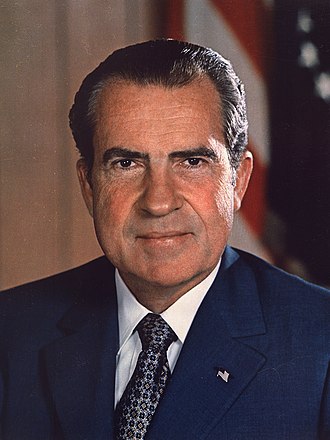
Richard M. Nixon served as the 37th President of the United States from January 1969 until his resignation in August 1974. In February 1971, he ordered the installation of a secret voice-activated taping system in the White House to preserve a historical record of his administration. Until the system's existence was revealed and dismantled in July 1973, the tapes captured Nixon directing major foreign policy initiatives, such as the opening to China, as well as his central role in the Watergate cover-up.
What Nixon talks about on the tapes
White House operations 4,718Presidential scheduling 2,225Public relations 1,784Presidential schedule 1,782Vietnam War 1,693Logistics 1,650Manolo Sanchez 1,626White House communications 1,400White House administration 1,399Presidential communication 1,243Henry Kissinger 1,191Foreign Policy 1,183
Conversations (21,010)
— Page 205 of 211President Nixon contacted the White House operator to facilitate an outgoing call to Melvin R. Laird. This brief administrative exchange served solely to initiate communication with the former Secretary of Defense. No policy discussions occurred during this transition period.
President Nixon and Charles Colson discuss strategies to combat negative press coverage and bolster public support following Colson's recent television appearance regarding Watergate. They focus heavily on discrediting John W. Dean, III, whom they view as a compromised witness attempting to secure immunity for his own testimony against the White House. The conversation reflects their shared determination to frame the ongoing investigations as a politically motivated attack on the presidency by the media and Democratic opponents, with Nixon emphasizing the importance of resisting efforts to turn over his presidential papers.
President Nixon met with an unidentified individual to facilitate communication with White House staffer Steve Bull. The exchange served primarily as an administrative coordination effort to locate Bull and bring him to the Oval Office. No substantive policy matters were addressed during this brief encounter.
President Nixon and Stephen B. Bull discussed the scheduling requirements for a Council of the Americas meeting. Nixon expressed concern regarding whether Secretary of State William P. Rogers needed to attend, contingent upon whether the Council had already met with Rogers following his recent trip to Latin America. Bull was tasked with verifying the Council's itinerary to determine if Rogers' presence at the White House was necessary.
President Nixon met with Stephen B. Bull to coordinate his upcoming schedule and manage his professional engagements. They discussed the President's attendance at a Council of the Americas meeting, noting the involvement of William P. Rogers and Nelson Rockefeller, while Nixon expressed skepticism regarding the meeting's overall utility. Additionally, Nixon decided against a trip to Florida for the weekend and determined that Rose Mary Woods would not need to accompany Alexander Haig on his own planned travel.
President Nixon met with his aide Stephen B. Bull to review and organize the President’s daily schedule. The discussion focused on coordinating upcoming meetings, specifically with Alexander M. Haig, Jr. and a full Cabinet session. A key priority addressed during the briefing was the preparation of a Vietnam policy paper intended for the Cabinet’s review.
President Nixon and Alexander Haig discussed the implementation of a potential new economic package, including a possible 60-day price freeze to address inflation and establish presidential leadership. They also reviewed the status of Vietnam peace negotiations, expressed frustration with South Vietnamese President Nguyen Van Thieu, and strategized on how to manage the ongoing Watergate investigations and the pressure regarding the release of White House documents. Nixon emphasized the need for a strong, decisive stance on both economic policy and the defense of presidential papers, while Haig provided updates on administrative personnel and efforts to control the narrative surrounding the administration's involvement in past activities.
President Nixon met with his Cabinet and key legislative leaders to discuss the restructuring of domestic policy operations, the appointment of Clarence M. Kelley as FBI Director, and strategies for improving congressional cooperation. Nixon emphasized a team-based approach to policy formulation, delegating significant oversight to Mel Laird, and urged Cabinet members to actively engage with Congress to pass the administration's legislative agenda. The discussion also addressed the administration's response to inflation, the importance of maintaining public morale amidst the Watergate crisis, and the necessity of presenting a unified, forward-looking policy front to the American people.
President Nixon met with an unknown visitor in the Oval Office to coordinate logistics for his upcoming schedule and official appointments. The discussion focused on preparations for a scheduled photograph and the coordination of meetings involving Clarence M. Kelley, Ronald L. Ziegler, and Elliot L. Richardson. The meeting concluded briefly thereafter with no major policy shifts recorded.
President Nixon met with Attorney General Elliot Richardson and FBI Director-designate Clarence M. Kelley to coordinate strategy ahead of Kelley’s Senate confirmation hearings. The discussion focused on highlighting Kelley’s leadership potential and his record on reducing local crime rates to ensure bipartisan support. Nixon provided guidance on the themes Kelley should emphasize, specifically FBI cooperation with other law enforcement agencies and the administration's progress in crime reduction.
President Nixon met with an unidentified individual to verify the readiness of the Oval Office for a scheduled Council of the Americas meeting. The discussion focused on logistical preparations, including the status of room seating and cleaning. The conversation concluded with the confirmation that the venue would be prepared within minutes for the upcoming event.
President Nixon met with Secretary of State William P. Rogers and the Board of Trustees of the Council of the Americas to discuss the status of United States relations with Latin America following Rogers's recent diplomatic tour of the region. The conversation addressed challenges such as political anti-Americanism, foreign expropriation of assets, and the need for a coherent long-term strategy for the Western Hemisphere. To foster closer cooperation, the participants agreed to form a study group tasked with developing an integrated economic and political program for the next decade, with Nixon emphasizing the necessity of maintaining strong national defense to support these foreign policy goals.
President Nixon met with an unknown individual in the Oval Office to discuss his daily schedule. The conversation concluded shortly after they met, and both parties departed the office at 11:33 am. No substantive policy matters or significant historical developments were recorded during this brief exchange.
President Nixon met with unidentified individuals in the Cabinet Room for a brief, informal exchange. The conversation consisted of pleasantries, general remarks regarding health and advice, and expressions of mutual appreciation. No substantive policy decisions or political strategies were recorded during this brief interaction.
President Nixon met with his personal aide, Stephen B. Bull, to discuss administrative logistics and upcoming scheduling matters. The conversation primarily focused on Rose Mary Woods's itinerary regarding a trip to Florida and the transport of materials related to the administration's economic program. No major policy decisions were reached, as the discussion remained centered on coordinating personal travel arrangements and the handling of a suitcase.
President Nixon and Alexander Haig met to discuss urgent economic and administrative challenges, specifically deliberating on whether to implement a price freeze and how to restructure White House economic and energy policy leadership. They considered roles for John Connally and the potential appointment of Lady Bird Johnson to the Bicentennial Commission. Additionally, Haig briefed the President on a sensitive, emerging legal issue concerning Charles G. "Bebe" Rebozo, involving an unreported Howard Hughes campaign contribution, and the two discussed strategies for securing appropriate legal counsel to mitigate potential political fallout.
President Nixon instructed the White House operator to connect him with Stephen B. Bull. The brief communication functioned primarily as a logistical request to initiate a follow-up conversation. No substantive policy discussions or complex administrative decisions occurred during this brief exchange.
President Nixon initiated a brief contact with the White House operator to facilitate an outgoing call. The discussion was purely administrative, focusing on the mechanical connection of the President to an external party. No substantive policy matters or political issues were addressed during this interaction.
President Nixon consulted with the White House operator to facilitate a communication bridge with Mr. Bowles. The brief exchange focused on coordinating a return call to the President once Bowles became available. No substantive policy matters were addressed, as the interaction served solely as a logistical administrative task.
President Nixon initiates a request to the White House operator to place a telephone call to Gerald L. Warren. This brief administrative interaction serves solely to facilitate communication between the President and his Deputy Press Secretary. No substantive policy discussions occur during this short exchange.
President Nixon spoke with a White House operator to facilitate an outgoing call. This brief interaction served administrative purposes to connect the President with another party. No substantive policy discussions or decision-making occurred during this brief communication exchange.
President Nixon consulted with a White House operator to facilitate an outgoing telephone connection from his office in the Old Executive Office Building. The brief interaction focused strictly on the logistical coordination of placing the call. No substantive policy matters or broader political discussions were recorded during this brief exchange.
President Nixon and Deputy Press Secretary Gerald L. Warren discussed the positive reception of Clarence M. Kelly following his introduction as the nominee for FBI Director. Warren briefed the President on his interactions with the press, noting that Kelly’s emphasis on local cooperation and a balanced "war on crime" provided a welcome distraction from Watergate coverage. The pair also coordinated messaging regarding the wholesale price index and Alexander M. Haig Jr.’s contributions, aiming to shift public and media attention toward the administration's economic and domestic policy efforts.
President Nixon met with Deputy Press Secretary Gerald Warren for a brief discussion regarding the internal pressures and frustrations facing White House staff. The conversation focused on the exhaustion and morale challenges resulting from ongoing administrative difficulties. No major policy decisions were reached, as the exchange primarily served as an informal check-in on the staff's ability to cope with persistent operational stressors.
President Nixon met with Stephen B. Bull to coordinate upcoming remarks and logistics for his schedule, specifically concerning cabinet meetings. The two discussed the scope of congressional participation, weighing concerns about the inefficiency of large attendance versus the need for political engagement. They evaluated the roles of various advisors and Republican leaders in managing these sessions to ensure productive executive-legislative interactions.
President Nixon contacted the White House operator to facilitate a telephone connection to Stephen B. Bull. This brief exchange served as an administrative request to reach the President's personal aide. No further substantive policy matters were discussed during this short interaction.
President Nixon met with an unidentified individual in the Old Executive Office Building to discuss administrative matters regarding his official schedule. The brief conversation focused on the timing and preparation requirements for upcoming meetings. No significant policy decisions were recorded during this short encounter.
President Nixon held a brief administrative interaction with a White House operator to facilitate an outgoing call. The conversation served primarily as a functional bridge to connect the President with another party. No substantive policy discussions or significant political developments occurred during this short exchange.
President Nixon and Stephen B. Bull discussed the scheduling logistics for the President's upcoming travel to attend commencement exercises at Florida Technical University. Bull explained that an early departure was necessary to accommodate the event's start time and to mitigate the risk of inclement weather, which typically increases in the afternoon. The conversation concluded with Bull confirming that the schedule would allow the President to reach his residence in Key Biscayne by approximately 12:30 pm.
President Nixon consulted with his aide, Stephen B. Bull, regarding the administrative details of an upcoming phone call. The brief exchange focused on identifying the appropriate department or contact for the President's intended communication. The meeting concluded quickly after these logistical arrangements were initiated.
President Richard Nixon met with his valet, Manolo Sanchez, at the Old Executive Office Building to discuss personal services. The conversation was limited to the provision of refreshments. No significant political or policy developments occurred during this brief interaction.
President Nixon met briefly with David C. Hoopes in the Old Executive Office Building to discuss the President’s upcoming schedule. The primary focus of the session was facilitating a telephone call between the President and Charles W. Colson. The meeting concluded after two minutes, serving as a brief administrative coordination point for the President's communications.
President Nixon instructed the White House operator to contact J. Fred Buzhardt, Jr. to request an immediate meeting in the Executive Office Building. He specifically directed the operator not to interrupt Buzhardt if he was already engaged in another meeting. This brief administrative exchange facilitated a direct consultation with the President's legal counsel.
President Nixon consulted with a White House operator regarding logistical arrangements for an upcoming meeting. The brief exchange focused on excusing the operator from attendance at the scheduled event. The President confirmed the operator's flexibility to decline participation in the meeting.
President Nixon met with J. Fred Buzhardt, Jr. to discuss legal strategy regarding the Watergate scandal, focusing specifically on managing the upcoming testimony of Richard A. Moore and John W. Dean. The conversation addressed the potential for Dean to secure immunity, the risks associated with various depositions, and the handling of sensitive documents related to ITT and the break-in at Daniel Ellsberg's psychiatrist's office. Nixon emphasized the importance of keeping the White House's internal documents and tapes secure while working to ensure that upcoming testimony from associates like Henry Petersen would support the administration's position.
President Nixon and J. Fred Buzhardt discussed legal strategies for managing ongoing Watergate investigations, specifically focusing on potential testimony from Henry Petersen, Richard Moore, and John Dean. They reviewed the discrepancies in Dean's memory regarding his White House meetings and discussed the risks of Special Prosecutor Archibald Cox’s requests for presidential appointment logs. Nixon emphasized that he must maintain the position that he has 'nothing to hide' while Buzhardt prepared to invoke executive privilege to protect the separation of powers and limit the scope of the inquiry.
President Nixon met with his aide Stephen B. Bull to coordinate late-afternoon administrative matters regarding his daily schedule. The discussion focused on finalizing arrangements for meetings with James A. Schlesinger and Alexander M. Haig, Jr. Bull concluded the brief session by facilitating these scheduled departures and staff transitions.
President Nixon and Alexander Haig met to discuss several pressing administrative and political matters, including the selection of an energy czar and the development of a potential 60-day economic price freeze to leverage Congressional action. They also addressed the inclusion of John Connally in White House operations and reviewed efforts to maintain message discipline within the State Department regarding nuclear war agreements and Vietnam negotiations. Additionally, the pair touched upon ongoing Watergate concerns, specifically the activities of William J. Casey and the status of internal files.
President Nixon and Alexander M. Haig, Jr. met to discuss a range of pressing administrative issues, including strategies for handling Watergate-related legal matters, particularly regarding Bebe Rebozo's involvement with Howard Hughes' contributions. They also addressed personnel appointments, including potential roles for Peter G. Peterson and Ellsworth Bunker, and debated the implementation of a 60-day national economic freeze. The President directed Haig to ensure that his economic team, led by George Shultz, thoroughly prepared all policy options—including the freeze—while utilizing Camp David facilities to facilitate their work.
President Nixon met with his personal aide Stephen B. Bull to address administrative matters involving Rose Mary Woods. The discussion focused on the management of a guest list and the handling of a presidential receipt. The interaction served as a brief briefing to ensure proper documentation of these specific items.
President Nixon initiates a request to the White House operator to place an outgoing call to his close friend and confidant, Charles G. “Bebe” Rebozo. The brief exchange serves as a logistical bridge to connect the President with Rebozo. No further substantive policy or political discussions occur during this short administrative interaction.
President Nixon and his close associate Bebe Rebozo discussed logistics for the President’s upcoming weekend trip to Key Biscayne and exchanged personal well-wishes regarding their families' health. The conversation shifted to the political climate, with both men agreeing that public scrutiny surrounding the Watergate scandal was subsiding. They further expressed approval of recent administration personnel moves, specifically praising the appointment of Clarence M. Kelley as FBI director and the public messaging of Melvin Laird and Alexander Haig.
President Nixon and Alexander Haig discuss an impending economic freeze supported by John Connally and review the progress of Henry Kissinger’s negotiations regarding South Vietnam. They determine that if the South Vietnamese government continues to obstruct the peace process, the U.S. should issue an ultimatum regarding future foreign aid. Additionally, Nixon agrees to meet with John Volpe during a helicopter ride to discuss remarks made by Pope Paul VI.
President Nixon contacted the White House operator to place an outgoing call to former Treasury Secretary John B. Connally. This interaction served solely as a logistical request to connect with Connally for a private discussion. No further policy or administrative actions were conducted during this brief exchange.
President Nixon and John B. Connally discussed the urgent need for a comprehensive national economic policy to combat severe inflation characterized by rising wholesale prices. Connally advised the President that the current piecemeal approach was inadequate, recommending a 60-day price freeze followed by mandatory controls, along with potential tax surcharges and credit restrictions to cool the overheated economy. The participants agreed that a bold, decisive action was necessary, and Connally committed to presenting these proposals to economic advisors to prepare for a formal announcement by the President.
President Nixon instructed the White House operator to place a call to H. R. Haldeman. He specified that the call should only be connected if Haldeman was at his residence, explicitly requesting not to be connected if Haldeman was dining out. This exchange highlights the President's efforts to reach his former Chief of Staff amidst the ongoing scrutiny of the Watergate scandal.
President Nixon and H.R. Haldeman coordinate an upcoming meeting to discuss scheduling matters, specifically referencing the President's travel to Florida for a commencement speech. The two agree to meet in the Lincoln Sitting Room later that evening. The brief exchange concludes with the President instructing Haldeman to take his time arriving at the White House.
President Nixon contacted the White House operator to place an outgoing call to former special counsel Charles W. Colson. This communication served as a brief administrative request to initiate a conversation with a key political advisor. No further details regarding the substance of the intended discussion are available.
President Nixon consulted with the White House operator to facilitate a follow-up conversation with Charles W. Colson. Upon learning that Colson was currently traveling from Virginia to his residence, Nixon requested that the operator arrange for a return call in approximately thirty minutes. The brief exchange served as a coordination effort to ensure communication with the former aide.
President Nixon and Charles Colson discuss strategies for countering the negative media narrative surrounding the Watergate scandal, particularly focusing on how to distance the President from the ongoing Ervin Committee investigations. Colson details his recent television interviews where he defended Nixon's integrity and challenged the testimony of John Dean. They express concern over political maneuvers by Senator Henry "Scoop" Jackson regarding the upcoming Brezhnev summit and agree that maintaining a focus on national issues like the economy and foreign policy is essential to shifting public opinion and neutralizing attacks from the press.
President Nixon met with an unidentified individual in the Oval Office to briefly discuss his upcoming schedule. The conversation focused on preparations for an impending meeting with National Security Advisor Henry A. Kissinger. No significant policy decisions were recorded during this brief administrative exchange.
President Nixon met with an unidentified individual in the Oval Office to briefly review internal administrative matters. The primary focus of the discussion concerned the scheduling of Henry A. Kissinger’s upcoming staff meeting. The meeting concluded shortly thereafter, with no further significant developments recorded.
President Nixon met with Nellie L. Yates to discuss administrative logistics and scheduling matters, specifically concerning an upcoming meeting with Henry Kissinger. Beyond the professional agenda, the two engaged in casual conversation regarding the President’s travel plans to Florida and Yates's recent personal activities. The discussion concluded with the President finalizing his schedule and confirming his preference for refreshments.
President Nixon and Alexander Haig met to coordinate White House strategy regarding the national economy, ongoing Vietnam negotiations, and the intensifying Watergate scandal. They discussed the necessity of developing a definitive economic plan to address inflation and potential price controls while managing congressional and public expectations ahead of Leonid Brezhnev’s upcoming visit. Furthermore, they strategized on how to counter negative media and political pressure related to Watergate by mobilizing congressional allies and shifting the public debate toward the President’s policy achievements.
President Nixon met with an unidentified individual in the Oval Office to discuss his daily official schedule. The brief four-minute interaction focused on coordination with Press Secretary Ronald L. Ziegler regarding the President's upcoming appointments. No further substantive policy matters were recorded during this brief administrative encounter.
President Nixon, Ronald Ziegler, and Alexander Haig met to discuss communication strategies for managing the fallout from the Watergate scandal and countering negative press narratives. They analyzed recent media commentary, specifically columns by Joseph Alsop and Patrick Buchanan, to reinforce their resolve against John Dean and the Ervin Committee hearings. Nixon and his advisors decided to shift the White House's public focus toward positive domestic issues, such as the national economy and the forthcoming visit of Leonid Brezhnev, while adopting a more aggressive, "slam-bang" stance toward political opponents.
President Nixon met with Alexander Haig to discuss personnel and political strategy regarding Watergate, specifically focusing on the role of Attorney General Elliot Richardson. Following this, Nixon convened with John Connally, George Shultz, Herbert Stein, and John Dunlop to debate the administration's economic response to mounting Congressional pressure for a wage and price freeze. The group evaluated various options, ultimately deciding on a strategy that balanced political necessity with the risks of economic uncertainty, while preparing for a follow-up consultation with labor and management leaders.
President Nixon held a brief meeting in the Oval Office with an unidentified individual, during which the conversation centered on mundane administrative matters, specifically a food order for consommé. No significant political or policy discussions were recorded during this four-minute interaction. The exchange concluded promptly with the departure of the guest.
President Nixon met with an unidentified individual to coordinate his official schedule and upcoming public engagements. The discussion focused on arranging a meeting with Henry A. Kissinger and facilitating a press photograph as recommended by Ronald L. Ziegler. The conversation concluded with the President finalizing these administrative and media-related logistical arrangements.
President Nixon met with aide Stephen B. Bull to arrange a gift of golf clubs for John B. Connally, including instructions for adding a presidential seal and drafting an accompanying note. The two also discussed logistical coordination regarding the President's upcoming schedule, specifically coordinating a potential visit by the Connallys to San Clemente during the Fourth of July holiday. Additionally, Bull provided a brief update on a scheduled meeting between Donald Nixon and his lawyer.
President Nixon and Henry Kissinger met to coordinate the final details of upcoming Vietnam peace negotiations and the logistics of a summit with Leonid Brezhnev. The discussion focused on the delicate status of the South Vietnamese government's participation and the necessity of managing Congressional expectations during a briefing on the agreements. Amidst the pressure of the Watergate scandal and ongoing media criticism, the two men discussed strategies for maintaining the administration's foreign policy momentum and projecting public confidence.
President Nixon held a brief meeting with an unidentified individual in the Oval Office. The discussion appears to have been limited to logistical or technical communications, specifically involving the relay of numeric codes or coordinates. No significant policy decisions or administrative actions were recorded during this brief encounter.
President Nixon held a brief, unscheduled meeting in the Oval Office with an unidentified individual. The encounter concluded quickly, with the participant departing shortly after arrival. The content of the discussion remains undocumented due to the brevity and lack of identifiable context in the recording.
President Nixon and Press Secretary Ronald Ziegler met to discuss the administration's public relations strategy amidst intensifying Watergate scrutiny, particularly regarding allegations involving John Dean, H.R. Haldeman, and claims of hush money. The two analyzed shifts in press coverage and evaluated how to manage media inquiries regarding upcoming Ervin Committee testimony and potential grand jury indictments. Nixon instructed Ziegler to avoid commenting on legal matters and emphasized that the administration should remain focused on its schedule rather than reacting to aggressive media antagonism.
President Nixon and Alexander Haig met to discuss strategies for managing the national economy, including potential wage and price controls, and to coordinate preparations for the upcoming visit of Soviet leader Leonid Brezhnev. The two also addressed personnel matters regarding Attorney General Elliot Richardson and assessed the political impact of the ongoing Watergate investigation. Nixon expressed frustration with the political nature of the Ervin Committee hearings and the handling of potential immunity for figures like John Dean.
President Nixon initiates a request through the White House operator to be connected with Stephen B. Bull. The brief administrative exchange serves to facilitate direct communication with his aide. No further policy or substantive matters are discussed in this recording.
President Nixon interacted with a White House operator to facilitate an outgoing call. This brief exchange served exclusively as a logistical step to establish a connection with another party. No substantive policy discussions or administrative decisions occurred during this brief communication.
President Nixon contacted his aide, Stephen B. Bull, to coordinate a brief haircut appointment before his 3:00 p.m. meeting. He specifically requested that Bull instruct the barber to limit the service to a ten-minute trim to ensure the President remained on schedule. This conversation served as a logistical update to manage the President's afternoon calendar.
President Nixon coordinated with his personal aide, Stephen B. Bull, to schedule an appointment with his barber for that afternoon. The brief exchange focused on finalizing a specific time for the haircut, with the President suggesting a 2:45 p.m. slot. This interaction reflects routine administrative management of the President's daily schedule.
President Nixon instructed the White House operator to summon J. Fred Buzhardt, Jr. to the Oval Office for a meeting. The President requested that the operator locate Buzhardt immediately, even if he was at lunch. This brief exchange served to facilitate an urgent direct consultation with his legal counsel.
President Nixon instructed the White House operator to monitor the availability of an individual named Bazaar. He requested to be kept informed of this person's status, specifically whether they were currently at lunch or otherwise occupied. The conversation served as a brief administrative directive regarding call placement and staff availability.
President Nixon met with his personal aide, Manolo Sanchez, to discuss routine administrative matters regarding his daily schedule. During the brief interaction, the President requested refreshments and instructed Sanchez to coordinate with Stephen B. Bull to cancel his scheduled barber appointment for the day. Nixon noted that the haircut would be rescheduled for the following day.
President Nixon met with J. Fred Buzhardt to strategize the legal defense against John Dean's anticipated testimony before the Ervin Committee. The discussion focused on establishing procedures for cross-examining Dean, reviewing White House documents for inconsistencies, and addressing concerns about potential claims of tape recordings. Nixon and Buzhardt also assessed the ongoing investigation by Henry Petersen and discussed the political fallout and public perception regarding the Watergate hearings.
President Nixon and his close associate Charles G. "Bebe" Rebozo spoke to coordinate Rebozo's upcoming travel plans, which included a trip to New York City with an associate named Bill. During the brief exchange, Rebozo confirmed he would return via Washington, D.C., and offered an update on a lawyer, Kenneth Gemmill, affirming that he was a "good man." The conversation served primarily as a personal check-in between the two men.
President Nixon initiates a request through the White House operator to place a telephone call to National Security Advisor Henry Kissinger. This brief administrative interaction serves as the preliminary step for a subsequent discussion between the two men regarding national security affairs or ongoing foreign policy developments. No further substance is provided in the recording, marking the connection as a routine logistical exchange.
President Nixon and Henry Kissinger discuss the logistical and security arrangements for Soviet leader Leonid Brezhnev’s upcoming visit to San Clemente. Nixon emphasizes the site's suitability, noting its controlled environment on a military base, while Kissinger highlights the Soviet delegation’s significant concerns regarding security and reported plots. The two agree to resolve the site issue by the following day to finalize travel arrangements.
President Nixon consulted with a White House operator to facilitate an outgoing call. The brief interaction served as a technical coordination step to connect the President to another party. No substantive policy discussions or administrative decisions were documented during this short exchange.
President Nixon and Henry Kissinger discuss logistics and security arrangements for an upcoming trip, focusing on the necessity of maintaining a strictly controlled itinerary. The two weigh the potential security risks of landing at specific bases and whether such details should be disclosed publicly. They conclude the brief exchange by confirming departure times and reaffirming the need for operational discretion.
President Nixon instructed the White House operator to place a return telephone call to his close friend Charles 'Bebe' Rebozo. The President sought to connect with Rebozo, who was in Philadelphia meeting with an attorney named Kenneth Wilfred Gemmill. The operator agreed to track down the contact information to facilitate the requested communication.
President Nixon contacted the White House operator to facilitate a request for contact information regarding an attorney based in Philadelphia. He directed the operator to coordinate with the office of General Alexander M. Haig, Jr. to retrieve the specific name. This brief interaction served as a procedural step in managing the President’s outreach to legal counsel associated with his associate, Bebe Rebozo.
President Nixon consulted with the White House operator regarding an unclear policy directive originating from Philadelphia. The brief exchange focused on identifying the specific nature and status of these orders. No further significant actions or substantive developments were recorded during this short interaction.
President Nixon held a brief, routine administrative exchange with a White House operator. The conversation serves primarily as a procedural interaction typical of White House telecommunications management. No substantive policy discussions or significant political decisions were recorded during this brief contact.
President Nixon consulted with the White House operator regarding his attempt to reach his close confidant, Charles G. “Bebe” Rebozo. Upon learning that Rebozo was unavailable, the President opted to cancel his immediate efforts to connect. The two agreed to reschedule the attempt for that evening, noting that Rebozo would likely be accompanied by Robert H. Abplanalp.
President Nixon met with his personal physician, Dr. Walter R. Tkach, in the Old Executive Office Building for a brief three-minute consultation. Due to the withdrawal of the primary content under a deed of gift, the specific medical or personal matters addressed during this session remain classified. No public record of the discussion exists, and the meeting concluded without any documented policy decisions.
President Nixon consulted with a White House operator regarding the logistics of an upcoming communication attempt. The brief exchange focused on establishing a connection, with the operator confirming the technical feasibility of the President's plan. No further substantive policy matters or major developments were addressed during this short administrative interaction.
President Nixon consulted with his personal secretary, Rose Mary Woods, regarding the personal schedule of his daughter, Julie Nixon Eisenhower. The brief exchange focused on confirming whether Julie would be at home that evening. No major policy or political decisions resulted from this administrative inquiry.
President Nixon and Alexander Haig discussed the potential resignation of Attorney General Elliot Richardson regarding his professional loyalty and trust in the administration. The conversation centered on Richardson's concerns regarding the Watergate scandal and his involvement in the ITT investigation. Nixon expressed firm resistance toward Richardson’s potential departure, emphasizing that he would not force the issue before a jury or capitulate to demands based on internal distrust.
President Nixon met with the President's Advisory Committee on Labor-Management Policy to discuss the state of the national economy and potential strategies for curbing inflation, specifically focusing on the recent surge in food prices. Participants, including key labor leaders like George Meany and Leonard Woodcock, debated the merits of various policy options, including a possible price freeze versus maintaining the flexibility of Phase III controls. Nixon emphasized his administration's goal of returning to a free economy while acknowledging the need for potential short-term actions to restore public confidence and address the public's anxiety over rising costs.
President Nixon initiates a routine administrative request to connect with his National Security Advisor, Henry Kissinger. The exchange serves solely as a logistical bridge to facilitate an upcoming high-level policy consultation. No substantive policy matters were discussed during this brief request.
President Nixon met with George Shultz, Herbert Stein, and John Dunlop to discuss economic strategies for curbing inflation, specifically focusing on the implementation of export controls and potential wage-price freezes. The participants debated the necessity and credibility of these measures, particularly regarding food prices and foreign aid, while considering the political implications of upcoming electoral cycles. Nixon expressed a determination to eventually move toward a strengthened Phase III economic policy and tasked the advisors with developing a concrete plan to manage these economic interventions effectively.
President Nixon and Alexander Haig met to discuss urgent economic policy, specifically the need for dramatic action on inflation and food prices, including the possibility of a 60-day price freeze. The two also addressed ongoing Watergate fallout, focusing on managing relations with Attorney General Elliot Richardson and mitigating the potential damage from John Dean's upcoming testimony. Additionally, they reviewed staffing changes involving Bryce Harlow and the importance of maintaining a strong presidential image despite political pressures.
President Nixon met with his brother, F. Donald Nixon, to discuss personal business interests, family matters, and the ongoing political fallout from the Watergate scandal. Donald provided updates on his various international business ventures and requested advice regarding potential conflicts of interest with White House counsel. The conversation also touched on the President's upcoming travel schedule and general frustration with the political atmosphere surrounding the Watergate investigation.
President Nixon, Rose Mary Woods, and an unidentified individual met briefly in the Oval Office to coordinate administrative logistics. The discussion focused on locating items within the President's briefcase and managing his immediate schedule. The participants concluded their brief interaction by confirming the placement of specific materials before departing the office.
President Nixon and Henry Kissinger discuss the final preparations for Leonid Brezhnev's upcoming visit, confirming agreements on nuclear arms, SALT, and peaceful uses of atomic energy. Kissinger briefs the President on positive developments in Vietnam negotiations, noting that Chinese rhetoric regarding Laos and Cambodia suggests potential diplomatic leverage against North Vietnam. They also address security concerns for the summit and coordinate the schedule for briefing materials and upcoming public announcements.
President Nixon consulted with the White House operator to facilitate a telephone connection with his close associate, Charles G. "Bebe" Rebozo. The operator informed the President that Rebozo was currently located in New York City with businessman Robert H. Abplanalp. No further substantive policy discussions occurred during this brief request for assistance in reaching Rebozo.
President Nixon instructed the White House operator to place a call to J. Fred Buzhardt, Jr. The President specified that the connection should only be made if Buzhardt was available and alone, rather than currently occupied with guests or dinner. This request reflects the high level of discretion required by the President when coordinating with his legal counsel during the ongoing Watergate investigations.
President Nixon calls his close friend Charles "Bebe" Rebozo to receive an update on the recruitment of Kenneth Gemmill to manage a sensitive financial issue, specifically regarding a Howard Hughes campaign contribution. Rebozo expresses high confidence in Gemmill’s ability to resolve the matter discreetly and confirms that he has facilitated a meeting between Gemmill and Jesse Calhoun to finalize the process. The two agree that Gemmill’s legal expertise and approach will ensure the situation is handled effectively and without public attention.
President Nixon instructed the White House operator to place an outgoing telephone call to Reverend Billy Graham. This brief administrative interaction served as the initiation of communication between the President and the prominent evangelist, who frequently served as a spiritual advisor to the administration. No further dialogue was recorded on this segment of the tape.
President Nixon received a brief status update from the White House operator regarding the travel itinerary of Reverend Billy Graham. The operator informed the President that Graham was currently en route to Los Angeles and could not be reached that evening. Nixon acknowledged the information and decided to postpone his attempt to contact the Reverend until the following day.
President Nixon and J. Fred Buzhardt discussed legal strategy regarding the upcoming Watergate hearings, specifically focusing on coordinating with Fred D. Thompson for the cross-examination of John Dean. Buzhardt reported on his recent meetings with Thompson and Henry Petersen, highlighting the potential for shifting the committee's focus toward Democratic campaign financing and the increasingly political nature of the hearings. The participants emphasized the need to prepare a detailed chronology of the President's interactions with Dean to challenge his anticipated testimony and mitigate potential legal damage.