Nixon, Richard M. (President)
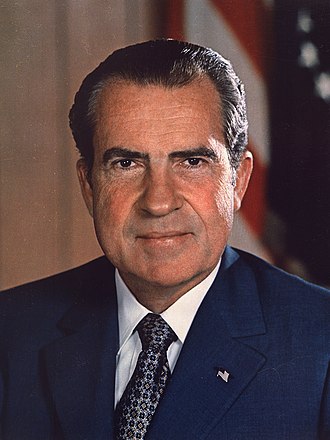
Richard M. Nixon served as the 37th President of the United States from January 1969 until his resignation in August 1974. In February 1971, he ordered the installation of a secret voice-activated taping system in the White House to preserve a historical record of his administration. Until the system's existence was revealed and dismantled in July 1973, the tapes captured Nixon directing major foreign policy initiatives, such as the opening to China, as well as his central role in the Watergate cover-up.
What Nixon talks about on the tapes
White House operations 4,718Presidential scheduling 2,225Public relations 1,784Presidential schedule 1,782Vietnam War 1,693Logistics 1,650Manolo Sanchez 1,626White House communications 1,400White House administration 1,399Presidential communication 1,243Henry Kissinger 1,191Foreign Policy 1,183
Conversations (21,010)
— Page 206 of 211President Nixon contacted the White House operator to facilitate a telephone connection with his daughter, Tricia Nixon Cox. The conversation served primarily as a logistical request to reach her at her residence in New York City. No further policy or administrative matters were discussed.
President Nixon and Alexander Haig met to coordinate the President's schedule with congressional leaders, specifically addressing briefings on the upcoming Leonid Brezhnev summit and Vietnam negotiations. They decided to postpone a meeting with congressional leaders regarding economic controls to avoid presenting an appearance of unresolved conflict in Paris. The discussion also briefly touched upon the political implications of current Watergate-related news and Vice President Spiro Agnew's recent activities.
President Nixon held a brief administrative exchange with a White House operator to facilitate an outgoing call. This routine interaction served as a communication bridge to connect the President with another party for official business. No substantive policy discussions or significant decisions were recorded during this brief connection.
President Richard Nixon and his daughter, Tricia Nixon Cox, discussed the President's upcoming travel and logistical schedule regarding the official visit of Soviet leader Leonid Brezhnev. The conversation centered on the timeline for meetings at Camp David, the state dinner, and a potential trip to California. Nixon noted that while his travel plans remained flexible due to the heavy workload at the White House, he emphasized the historic significance of the summit.
President Nixon and Rose Mary Woods discussed the ongoing political pressure from the Watergate scandal, focusing on the negative impacts of the Ervin Committee hearings and hostile media coverage. Nixon and Woods strategized on how to handle potential campaign contributions and expressed frustration regarding the testimony of figures like John Dean. Throughout the discussion, Woods emphasized the widespread public support for the President and the importance of maintaining his resolve against calls for impeachment.
President Nixon initiates a request to the White House operator to place a telephone call to Bryce N. Harlow. This interaction serves as a logistical administrative step to facilitate a direct conversation between the President and his advisor. No substantive policy discussions occur during this brief exchange.
President Nixon initiates a brief communication through the White House operator to place an outgoing telephone call. The exchange serves primarily as a logistical request for the operator to connect him with an unspecified party. No further policy or substantive discussion occurs during this short administrative interaction.
President Nixon consults with Bryce N. Harlow to finalize his return to the White House staff in a senior advisory role. Nixon clarifies that he expects Harlow to serve as a key political strategist and confidant alongside Alexander M. Haig, Jr. and Melvin R. Laird, rather than merely focusing on congressional relations. The conversation concludes with an agreement for Harlow to begin his tenure on July 2, 1973, with a formal announcement scheduled for the following Saturday.
President Nixon met with Bryce Harlow and Alexander Haig to manage the political fallout from the Watergate scandal, coordinate the administration's stance on economic policy, and prepare for the upcoming state visit of Leonid Brezhnev. The participants discussed strategies to deflect partisan criticism, including leveraging statements from sympathetic senators and countering media narratives regarding past wiretapping practices. Additionally, they coordinated a briefing schedule for Congressional leaders to maintain support for the administration's foreign policy and Vietnam negotiations amid ongoing domestic instability.
President Nixon held a brief, three-minute meeting in the Oval Office with an unidentified individual, followed by a discussion with Press Secretary Ronald L. Ziegler. Due to the limited duration of the recording and technical audio issues, the substantive content of these exchanges remains unrecoverable. No specific policy decisions or significant action items were documented during this interval.
President Nixon and Ronald Ziegler discussed media strategy and public relations, focusing on methods to counter unfavorable Watergate coverage, specifically regarding John Dean's upcoming testimony and immunity. They reviewed the importance of cultivating support among key congressional allies and influential columnists to defend the administration's record. Furthermore, the two explored ways to highlight the President's foreign policy achievements, particularly regarding Vietnam, to shift public focus away from the ongoing domestic scandals.
President Nixon initiates a call to the White House operator to be connected with Howard Morgens, the president of Procter & Gamble. This administrative request facilitates a conversation with the executive of the Cincinnati-based corporation. No further policy discussions or substantive developments occur during this brief exchange.
President Nixon requested that the White House operator place a call to Howard Clark, the president of Procter & Gamble, at his office in Cincinnati. The brief exchange served as a logistical coordination to initiate this external communication. No further policy matters or significant developments occurred during this brief request.
President Nixon held a brief, five-minute meeting with an unidentified individual in the Oval Office. Although the transcript remains officially undefined, the meeting coincided with a scheduled discussion involving Roy L. Ash regarding matters on Capitol Hill. No substantive details or policy decisions were recorded during this brief encounter.
President Nixon met with his personal aide, Manolo Sanchez, to facilitate a brief coordination of logistics regarding a phone call from Charles G. “Bebe” Rebozo. The discussion touched upon Rebozo’s current location in New York and his upcoming travel plans to Florida. No major policy decisions were made during this short administrative check-in.
President Nixon consulted with an unidentified staff member regarding adjustments to his daily schedule. The discussion focused on coordinating appointments with Roy L. Ash and the White House barber. The participants concluded the exchange by deferring the finalization of the President’s itinerary until the following day.
President Nixon met with Roy L. Ash to strategize a response to ongoing national economic difficulties, specifically discussing the potential implementation of a 45-to-60-day price freeze. The participants emphasized the need to "condition" public opinion and regain control of the economic narrative, noting that while a freeze may be poor economic policy, it serves as a necessary political tool to stop Congress from imposing more restrictive measures. Additionally, Nixon and Ash briefly discussed the political fallout of the Watergate scandal and the President's approach to managing congressional relations amid upcoming veto battles.
President Nixon and Howard Morgan discussed the temporary release of Bryce Harlow from his duties at Procter & Gamble to serve on the White House staff. Nixon expressed gratitude for Morgan's cooperation and addressed potential concerns regarding conflicts of interest and the political climate surrounding the Watergate scandal. The two parties agreed that Harlow would consult with congressional leaders to mitigate any sensitivities regarding his appointment as the administration prepares for Leonid Brezhnev's upcoming visit.
President Nixon held a brief, two-minute meeting in the Oval Office with General Brent Scowcroft and an unidentified individual. The discussion, characterized by ambiguous remarks regarding a lack of a "storefront," remains largely unintelligible due to the brevity and indistinct nature of the recording. No definitive policy decisions or significant administrative actions were captured during this exchange.
President Nixon and General Brent Scowcroft met to discuss the status of stalled Vietnam peace negotiations, specifically focusing on Henry Kissinger’s ongoing efforts in Paris to finalize a communiqué. The conversation centered on South Vietnam’s refusal to accept proposed language regarding elections and territorial zones of control, which the President viewed as minor procedural hurdles. Nixon and Scowcroft expressed deep concern that a failure to reach an agreement would alienate Congress and accelerate U.S. isolationism, potentially jeopardizing the long-term survival of the South Vietnamese government.
President Nixon initiates a brief telephone call through the White House operator to contact J. Fred Buzhardt, Jr. The primary purpose of the communication is to facilitate a direct conversation between the President and his legal counsel. No substantive policy matters or additional developments are recorded in this short administrative exchange.
President Nixon initiates a brief communication via the White House operator to facilitate an additional telephone call. The exchange serves primarily as a logistical step to connect the President with another party, as indicated by the instruction to start at the beginning of the line. No substantive policy matters or political strategies are discussed during this brief administrative interaction.
President Nixon held a brief, private meeting with an unidentified male visitor in the Oval Office. The limited transcript does not reveal the substance of the discussion, containing only brief logistical exchanges regarding the guest's departure. No policy decisions, political strategies, or significant actions were recorded during this interaction.
President Nixon and J. Fred Buzhardt, Jr. discuss the legal implications of the Ervin Committee's grant of immunity to John Dean and the anticipated strategy for his upcoming testimony. They strategize on undermining Dean's credibility and decide to withhold their cross-examination plan until after his private session, allowing them to better prepare for his public testimony. Additionally, Nixon encourages Buzhardt to pressure the Government Accountability Office (GAO) to release information regarding Democratic campaign finances as a counter-offensive strategy.
President Nixon and J. Fred Buzhardt, Jr. discuss the ongoing Watergate investigation and the public perception of the administration's involvement. The two men review the political implications of the case, expressing frustration over public sentiment and the perceived bias of investigators, while emphasizing the need to frame their own narrative. Nixon explicitly rejects any possibility of delaying the proceedings, insisting that the administration must maintain a posture of transparency and innocence regarding the scandal.
President Nixon met with Alexander M. Haig, Jr. to coordinate White House strategy regarding ongoing economic policy, administrative personnel appointments, and the unfolding Watergate investigation. The discussion focused on managing the upcoming testimony of John W. Dean, III before the Ervin Committee and preparing a public relations response that would emphasize presidential leadership and reinforce denials of culpability. Additionally, Nixon and Haig evaluated potential presidential vetoes of Congressional spending bills and discussed utilizing radio addresses to communicate directly with the public on economic concerns.
President Nixon consulted with an unidentified individual regarding his upcoming meeting with speechwriter Raymond K. Price, Jr. The brief discussion centered on preparing for this scheduled appointment, with the President framing Price as the primary point of contact or focus for the session. No further substantive policy or strategic decisions were recorded before the unidentified participant departed.
President Nixon met with Raymond K. Price, Jr. to plan an upcoming televised address to the nation regarding new economic measures to combat inflation. Nixon outlined his strategy to implement a temporary price freeze while maintaining a positive tone about the broader economy and emphasizing the necessity of congressional cooperation. The discussion also touched upon the political challenges surrounding the ongoing Watergate investigations, specifically regarding the potential impact of testimony from former aides on the administration.
General Brent Scowcroft updated President Nixon on ongoing Vietnam negotiations following a lengthy meeting reported by Henry Kissinger. To pressure Saigon during this critical window, Nixon directed Scowcroft to expedite a cable emphasizing that South Vietnamese intransigence risks jeopardizing crucial U.S. congressional support and aid. Nixon instructed Scowcroft to explicitly promise public support for Saigon's position if they agree to move forward, aiming to prevent Congress from using the stalemate as a justification to cut off assistance.
President Nixon initiates a request through the White House operator to place a telephone call to General Brent Scowcroft. This brief administrative interaction serves as the logistical bridge to facilitate a direct conversation between the President and his National Security Advisor. No substantive policy matters were discussed during this specific exchange.
President Nixon instructed General Brent Scowcroft to relay a personal message to South Vietnamese President Nguyen Van Thieu regarding ongoing Vietnam negotiations. Nixon promised to issue a unilateral public statement—separate from the Joint Communiqué—reaffirming specific commitments on elections to address Thieu’s concerns. Scowcroft was directed to ensure Thieu understands this commitment will be personally delivered by Nixon and emphasized during an upcoming meeting with congressional leaders.
President Nixon initiates a brief communication through the White House operator to place an outgoing call. The conversation serves solely as a functional administrative bridge to connect the President with a desired party. No substantive policy discussions or decisions are recorded during this brief administrative interaction.
President Nixon instructed General Brent Scowcroft to deliver a personal message to an unnamed contact, affirming the President's commitment to specific concerns from a Christian perspective. Nixon emphasized his desire to issue a unilateral statement that he would personally clear to ensure the recipient's satisfaction. The President also directed that this matter be routed through the Congressional Review process.
President Nixon consulted with a White House operator to facilitate a telephonic connection with J. Fred Buzhardt, Jr. The primary purpose of the communication was to establish contact with Buzhardt regarding ongoing legal or administrative matters. No further substantive details regarding the conversation were recorded as the call served strictly as a logistical request for assistance in reaching the counsel.
President Nixon held a brief, routine administrative exchange with a White House operator. The conversation served as a functional interaction to facilitate telephonic communication. No significant policy matters or substantive political developments were addressed during this brief contact.
President Richard Nixon and Alexander M. Haig, Jr. met to coordinate administration strategy regarding Vietnam policy and upcoming domestic economic announcements. They discussed maintaining support for South Vietnamese President Thieu and reviewed preparations for a high-level economic meeting involving Arthur Burns and George Shultz. Additionally, the President provided guidance on the tone and content for an impending address concerning price control measures, specifically regarding food and gasoline costs.
President Nixon and J. Fred Buzhardt, Jr. discussed strategies for conducting a rigorous cross-examination of John Dean in anticipation of his upcoming testimony before the Ervin Committee. The President emphasized highlighting Dean’s failure to report key information to the Department of Justice, despite his regular access to officials like L. Patrick Gray and Henry Petersen. They further reviewed chronological evidence to prove that Dean’s involvement in fund-raising and obstruction predated his meetings with the President, with the goal of undermining Dean's credibility and distancing the White House from his illicit activities.
President Nixon met with his counsel J. Fred Buzhardt to strategize the administration's defense regarding the Watergate scandal, specifically focusing on John Dean's conduct and credibility. Nixon emphasized the need for a general denial strategy, suggesting that Dean's failure to report information directly to the President proves Dean withheld details of the cover-up. They discussed potential lines of questioning to undermine Dean's narrative and explored the legal defense surrounding national security claims and hush money demands.
President Nixon contacted the White House operator to facilitate a telephone connection with his close confidant, Charles G. “Bebe” Rebozo. This brief administrative interaction served as an intermediary step in establishing direct communication between the President and Rebozo. No further substantive policy or political discussions occurred during this specific exchange.
President Nixon met with his valet, Manolo Sanchez, in the Old Executive Office Building to coordinate his professional agenda. The brief exchange focused on managing the President's immediate schedule. Nixon concluded the interaction by instructing Sanchez to provide a follow-up check-in after a twenty-minute interval.
President Nixon consulted with a White House operator to facilitate an outgoing call. The brief exchange focused exclusively on coordinating communication logistics. No substantive policy matters or administrative decisions were addressed during this interaction.
President Nixon coordinated with a White House operator to manage his communication schedule with his close friend, Charles “Bebe” Rebozo. After being informed of Rebozo's arrival at the airport, Nixon instructed the operator to facilitate a return call in approximately ninety minutes. This brief exchange served to schedule their upcoming private discussion once Rebozo reached the compound.
President Nixon consulted with a White House operator to facilitate an outgoing connection. The exchange serves primarily as a procedural administrative task to connect the President to another party. No substantive policy matters or strategic decisions were addressed during this brief logistical interaction.
President Nixon met with Stephen B. Bull in the Oval Office to address a specific offer that had been presented to the President. During this brief interaction, Nixon formally accepted the offer. No further details regarding the nature of the transaction or additional administrative directives were recorded in this segment.
President Nixon met with an unidentified individual in the Oval Office to coordinate logistics for a forthcoming meeting. The brief discussion primarily concerned the arrival of additional participants scheduled to join the session. The interaction served as a logistical transition to prepare for a larger gathering.
President Nixon met with his senior economic advisors and staff to deliberate on a strategy for stabilizing the national economy, specifically focusing on a proposed 60-day price freeze on food and gasoline. The discussion covered the implementation of Phase IV economic controls, the necessity of securing congressional support for trade and spending measures, and the political challenges of potential vetoes on agricultural and minimum wage legislation. Nixon emphasized the importance of public education regarding his administration's economic goals and requested that his cabinet members and advisors actively advocate for these policies to build public and congressional confidence.
President Nixon held a brief, three-minute meeting in the Oval Office with an unidentified individual. Due to the lack of intelligible audio and the brief duration of the exchange, the specific subject matter and any potential outcomes remain unknown. The recording preserves only a momentary interaction that lacks discernible administrative or historical substance.
President Nixon held a brief, informal meeting with an unidentified individual to arrange for a personal valet to report for duty. The discussion focused solely on logistics regarding administrative staffing for the President’s office. No significant policy or political matters were addressed during this short exchange.
President Nixon initiates a routine request to the White House operator to place a telephone call to his close friend and confidant, Charles G. “Bebe” Rebozo. The brief exchange serves strictly administrative purposes to facilitate personal communication between the President and Rebozo. No substantive policy matters or further developments are discussed during this connection attempt.
President Nixon and Alexander Haig met to coordinate administration responses to economic challenges, including potential price freeze legislation and export regulation policies. The two discussed personnel management and morale within the White House staff, addressing friction between Roy Ash and other key advisors while emphasizing Haig’s role as the primary operational authority. Additionally, they reviewed political strategies regarding Congressional relations and the ongoing Watergate investigations, specifically regarding anticipated testimony from John Dean.
President Nixon consulted with the White House operator to facilitate a telephonic connection. This interaction served purely as an administrative step to initiate further communication. No substantive policy discussions or decisions were recorded during this brief administrative exchange.
President Nixon met with his personal valet, Manolo Sanchez, in the Oval Office to address routine administrative tasks. The discussion centered on the President's upcoming schedule, specifically regarding a planned telephone call to his close friend Charles G. “Bebe” Rebozo. The interaction concluded with the arrangement of the President's briefcase, signaling preparations for his continued workflow.
President Nixon consulted with an unidentified individual regarding adjustments to his daily schedule. The conversation centered on the logistical coordination of the President's upcoming appointments. Consequently, Nixon requested that his barber be informed of a brief delay to accommodate the ongoing meeting.
President Nixon and Ronald Ziegler reviewed media strategies and potential responses to the ongoing Ervin Committee hearings regarding the Watergate scandal. The discussion focused on managing public perception through favorable opinion columns and editorials, while also coordinating the timing of an upcoming presidential address on economic policy and an energy-related press briefing by Henry Kissinger. The participants concluded that while the White House could facilitate public support, it was more effective to rely on spontaneous public resentment toward the committee's proceedings.
President Nixon and Bebe Rebozo discuss the ongoing management of a sensitive Howard Hughes financial contribution in the context of the Watergate investigation. Rebozo reports on his coordination with attorney Kenneth Gemmill, drawing comparisons to a 1960 case involving Ted Sorensen to justify their legal strategy. They finalize the plan to return the funds to the donor, with Rebozo expressing confidence that the transaction will be resolved without further complications.
President Nixon instructed the White House operator to place a personal telephone call to his daughter, Julie Nixon Eisenhower. He specified that the operator should attempt to reach her only at her home. This brief exchange served solely to facilitate a private family communication.
President Nixon consulted with a White House operator to facilitate a personal phone call to his daughter, Julie Nixon Eisenhower. The President instructed the operator to attempt to reach her at her residence if she was unavailable at her primary location. This brief administrative interaction served purely as a logistical request for the President's personal communication.
President Nixon met with Alexander Haig and Rose Mary Woods to discuss routine administrative tasks, including the President's upcoming schedule and staff support for a potential book project. The conversation shifted significantly to Watergate, specifically focusing on the ongoing Ervin Committee hearings and the legal difficulties facing John Mitchell, Maurice Stans, and John Dean. They also touched upon concerns regarding Martha Mitchell's behavior and the involvement of Thomas Pappas in financial matters related to legal defense funds.
President Nixon met with Raymond K. Price, Jr. and Alexander M. Haig, Jr. to refine the rhetoric and strategic messaging for an upcoming national address regarding the implementation of new price controls. The discussion focused on balancing economic management, specifically the rising costs of food and fuel, with the political necessity of addressing public concern while avoiding recessionary risks. Additionally, the President consulted with his staff on potential candidates for an 'energy czar' position, weighing the merits of figures like William W. Scranton, and touched upon the upcoming summit with Soviet leader Leonid Brezhnev.
President Nixon and his daughter, Julie Nixon Eisenhower, held a brief personal conversation to discuss recent positive public support for the administration. Julie shared encouraging feedback from a television appearance in Dayton, Ohio, noting an audience's strong support and a grassroots donation sent to the President. Additionally, the two confirmed the President's recent boat outing with Alexander Haig and coordinated their upcoming plans to see each other.
President Nixon contacted the White House operator to place an outgoing call to Alexander M. Haig, Jr. The brief exchange served as a logistical administrative request to facilitate communication with his Chief of Staff. No further substantive policy matters were discussed during this connection.
President Nixon and Alexander Haig discuss the potential appointment of former Pennsylvania Governor William W. Scranton to lead the administration's energy initiatives. Nixon characterizes Scranton as a capable administrator who could benefit the administration by bringing an outside perspective to the complex energy challenge, potentially supported by Charles DiBona. The conversation concludes with Nixon instructing Haig to contact Scranton the following morning to gauge his interest.
President Nixon requested that the White House operator place a telephone call to J. Fred Buzhardt, Jr., who was serving as White House Counsel at the time. This brief interaction served solely to facilitate official communication between the President and his legal advisor. No further substantive details regarding the purpose or outcome of the subsequent discussion were recorded in this initial connection request.
President Nixon consulted with a White House operator to facilitate an outgoing telephone connection. The brief exchange was limited to the technical process of placing the call. No substantive policy matters or strategic developments were addressed during this interaction.
President Nixon and J. Fred Buzhardt, Jr. discussed strategies to discredit John W. Dean III and Jeb Stuart Magruder ahead of their anticipated testimony before the Ervin Committee. They reviewed documentation, including meeting logs and briefing materials, that they believed could expose inconsistencies in Dean's timeline and claims regarding his investigation into White House involvement in Watergate. The President and Buzhardt decided to prepare a sharp public response to counter potential media leaks of Dean's testimony while planning to use cross-examination to highlight his lack of credibility and personal motive to lie.
President Nixon and White House counsel J. Fred Buzhardt, Jr. met to discuss legal defense strategies regarding ongoing investigations and potential witness reliability. The conversation centered on concerns regarding a witness's propensity for lying and the risk that their testimony could undermine the administration's legal position. They weighed the strategic implications of how specific evidence or documentation might be contested or utilized during formal proceedings.
President Nixon instructed the White House operator to place a telephone call to evangelist Billy Graham in Los Angeles. He specified that the operator should avoid interrupting Graham if he was currently attending a dinner or other engagement. The President ultimately decided to postpone the conversation until the following day should Graham be unavailable.
President Nixon attempted to initiate a telephone call to Reverend Billy Graham, who was reportedly staying at a hotel in Los Angeles. The White House operator informed the President that Graham could not be reached at his room, leading to a decision to postpone the outreach until the following day. No further substantive matters were discussed during this brief administrative exchange.
President Nixon contacted the White House operator to place a direct phone call to the home of his Press Secretary, Ronald L. Ziegler. The brief exchange served as a logistical request for the operator to connect the President with Mrs. Ziegler. No substantive policy matters or further developments were discussed during this brief administrative interaction.
President Nixon utilized the White House operator to facilitate a telephone connection with his Chief of Staff, Alexander M. Haig, Jr. The primary purpose of the call was to locate Press Secretary Ronald L. Ziegler, who was reportedly en route home. Nixon directed the operator to ensure that Haig returned the call immediately upon receiving the message.
President Nixon and Alexander Haig discuss the recruitment of William W. Scranton to lead administration energy initiatives. They evaluate Scranton's administrative credentials, his strong ties to the oil and coal industries, and the positive press reception his appointment would generate despite his past political differences with the White House. Haig is instructed to contact Scranton to solicit his services, with the goal of finalizing the offer during a meeting in order to facilitate a formal announcement by Thursday.
President Nixon and Ronald Ziegler discussed media treatment of the Nixon family, specifically criticizing a radio correspondents' dinner and a television appearance by Julie Nixon Eisenhower on the Phil Donahue show. Nixon expressed deep frustration with the press, mandating that Ziegler confront the responsible parties and effectively ending the President’s future attendance at social functions with the media corps. Additionally, they reviewed the Watergate investigation, focusing on John W. Dean’s recent invocation of the Fifth Amendment and developing a strategy to publicly discredit Dean’s anticipated testimony by highlighting his inconsistent accounts and potential legal liability.
Alexander M. Haig, Jr. informed President Nixon that Soviet leader Leonid Brezhnev had agreed to visit San Clemente, while simultaneously canceling a planned stop in Houston. Nixon expressed enthusiasm for the visit, emphasizing his desire to host Brezhnev as a personal guest in his own home to facilitate private, secure, and relaxed discussions. Haig was instructed to confirm these arrangements with Soviet Ambassador Anatoliy Dobrynin and ensure the security and lodging details were settled for the upcoming summit.
President Nixon instructed the White House operator to place an urgent call to Soviet Ambassador Anatoliy F. Dobrynin. This brief exchange served as a procedural request to facilitate a direct diplomatic communication channel. No further details regarding the substance of the intended discussion were recorded during this interaction.
President Nixon and Ambassador Anatoliy Dobrynin discuss final logistical and security arrangements for Soviet leader Leonid Brezhnev’s upcoming visit to the United States. They coordinate the travel schedule to San Clemente, emphasizing the need for privacy and informal, high-level policy discussions at both Casa Pacifica and Camp David. Additionally, they finalize plans for the signing of agreements regarding nuclear war prevention and establish a protocol for press appearances intended to symbolize a cooperative "spirit" of diplomacy.
President Nixon initiated a brief telephone call through the White House operator to contact Alexander M. Haig, Jr. The primary purpose of the exchange was to facilitate this connection, which was necessary for late-night executive communication. No further substantive dialogue occurred during this specific interaction.
President Nixon and Alexander Haig discuss the final logistics for Leonid Brezhnev’s upcoming visit, emphasizing security arrangements at San Clemente and the preference for a controlled environment over a potential trip to Houston. Nixon notes that he has secured a commitment for private, high-level meetings between himself, Brezhnev, and Henry Kissinger. Additionally, they coordinate a recruitment strategy to bring William Scranton into the administration, with the President tasking Haig with offering Scranton a seat on the National Security Council to secure his acceptance.
President Nixon contacted the White House operator to place an urgent call to General Brent G. Scowcroft, who served as his Deputy Assistant for National Security Affairs. The brief interaction focused solely on establishing this high-level communication link. No further policy discussions or substantive developments occurred during this exchange.
President Nixon directed General Brent Scowcroft to inform Henry Kissinger about a successful arrangement with Soviet Ambassador Anatoliy Dobrynin regarding the upcoming summit with Leonid Brezhnev at San Clemente, which would be limited to a small group of key principals. The two also discussed sensitive Vietnam negotiations, specifically the pressure being placed on South Vietnam to finalize a communique. Nixon emphasized that he had provided personal assurances to the South Vietnamese and warned that failure to comply would risk the loss of Congressional funding.
President Nixon initiates a late-night telephone call through the White House operator to reach his personal secretary, Rose Mary Woods. The brief exchange serves as a logistical coordination to establish contact with Woods. No further policy or administrative developments are captured in this recording.
President Nixon and his secretary, Rose Mary Woods, coordinate the guest list for an upcoming dinner with Soviet leader Leonid Brezhnev, specifically finalizing the inclusion of Earl Butz and labor union leaders while excluding Elliot Richardson. The pair also discusses the favorable public reception of Maurice Stans’ recent testimony before the Ervin Committee, with Nixon emphasizing the importance of television coverage over negative newspaper reports. Finally, they briefly reflect on Tricia Nixon Cox's wedding anniversary and Julie Nixon Eisenhower's recent television appearance.
President Nixon initiated a brief telephone request to the White House operator to be connected with his personal secretary, Rose Mary Woods. The primary objective of the call was to facilitate administrative communication between the President and his long-time aide. No substantive policy matters or major developments occurred during this brief request for a connection.
President Nixon directed his personal secretary, Rose Mary Woods, to finalize the guest list for an upcoming after-dinner event honoring Soviet General Secretary Leonid Brezhnev. The President requested that all administration officials with experience traveling to the USSR be included and specifically instructed that individuals who had already attended multiple White House events be excluded. Furthermore, Nixon expressed frustration with the current vetting process, ordering that future guest lists provided by Warren L. “Bill” Gulley be strictly managed to ensure a fresh rotation of attendees.
President Nixon contacted the White House operator to place an urgent call to his personal secretary, Rose Mary Woods. The primary objective of the request was to facilitate communication with Woods, though the specific purpose or subject matter of the intended conversation remained undisclosed. The exchange served strictly as a logistical directive for the operator to connect the President with his secretary.
President Nixon consulted his secretary, Rose Mary Woods, regarding the entertainment arrangements for an upcoming dinner with Soviet leader Leonid Brezhnev. The discussion focused on finalizing the lineup, specifically confirming the participation of the Johnny Mann Singers and Debbie Reynolds as preferred choices of Pat Nixon and Julie Nixon Eisenhower. The President also briefly considered the feasibility of including entertainer Danny Kaye, noting potential concerns regarding his reception by the Soviet delegation.
President Nixon met with Stephen Bull and other staff to coordinate logistics for upcoming travel, including a trip to Illinois and an appearance with Mrs. Dirksen. They discussed scheduling for a diplomatic credentials ceremony, the selection of high-profile passengers for Air Force One, and the need to manage various administrative appointments. The conversation focused on balancing the President's public appearances with his internal preparations for a speech on the economy.
President Nixon met with Ronald Ziegler, Alexander Haig, and William Timmons to coordinate White House strategy regarding the impending Ervin Committee testimony of John Dean and the administration’s broader press relations. The participants discussed the necessity of discrediting Dean and managing public perception amid the Watergate scandal, while balancing these concerns with the President's upcoming economic address and the diplomatic significance of the forthcoming Leonid Brezhnev summit. Nixon emphasized the importance of maintaining a unified front with congressional allies and directed his staff to ensure that supporters, including members of the Chowder and Marching Society, publicly prioritize national policy over the ongoing hearings.
President Nixon contacted the White House operator to facilitate a connection with Alexander M. Haig, Jr. The brief exchange served as an administrative request to reach the White House Chief of Staff. No substantive policy matters or further developments were recorded in this brief coordination call.
President Nixon met with Raymond K. Price, Jr. and Alexander M. Haig, Jr. to refine a forthcoming televised speech addressing the American economy and ongoing national policy challenges. The discussion focused on establishing an upbeat, confident tone regarding U.S. economic strength, specifically outlining the implementation of a 60-day price freeze and new controls to curb inflation. Nixon also deliberated on the political messaging surrounding the Vietnam peace process, energy shortages, and upcoming legislative strategies, emphasizing a need for decisive executive leadership in the face of domestic criticism.
President Nixon and Alexander Haig coordinate the upcoming announcement of William W. Scranton’s appointment to an energy position and the timing of a related presidential economic speech. They discuss the strategic staging of news to ensure maximum media impact, specifically aiming to hold the Scranton announcement for the Sunday papers while keeping the energy message for Saturday. Additionally, the pair reviews the logistics for that day's scheduled Cabinet and Bipartisan Congressional Leadership meetings.
President Nixon instructed the White House operator to connect him with Press Secretary Ronald L. Ziegler for a telephone conversation. He explicitly directed the operator to avoid interrupting Ziegler if he was currently speaking at a podium. The primary objective of the call was to facilitate an immediate communication between the President and his press secretary.
President Nixon consulted with a White House operator to facilitate an outgoing telephone communication. This brief interaction served administrative purposes to connect the President with an unspecified party. No further details regarding the substance of the subsequent call are available due to the lack of an existing transcript.
President Nixon and Press Secretary Ronald L. Ziegler coordinate the dissemination strategy for an upcoming policy text to ensure legislative leaders and their staff receive it simultaneously at 7:00 p.m. Nixon explicitly instructs Ziegler to withhold the document from congressional leaders and staff beforehand to prevent unauthorized revisions or delays. This measure aims to maintain executive control over the messaging and prevent legislative interference with the final text.
President Nixon and Press Secretary Ronald Ziegler coordinated the messaging strategy for an upcoming televised speech on the economy. The discussion focused on maintaining public momentum following recent diplomatic successes while carefully managing media expectations. Nixon explicitly instructed Ziegler to withhold the full text of the speech from Cabinet members and Congressional leaders prior to the 7:00 pm briefing to avoid last-minute critiques and prevent market volatility.
President Nixon communicated with the White House operator to initiate a telephone call. The request was specifically made to connect the President with J. Fred Buzhardt, Jr. No further substantive discussion occurred during this brief administrative exchange.
President Nixon consulted with a White House operator to facilitate an outgoing communication. This brief interaction served as a logistical step to connect the President with another party. No substantive policy discussions or major developments were recorded during this brief administrative exchange.
President Nixon and J. Fred Buzhardt, Jr. coordinate a meeting to review drafts and notes related to ongoing legal or administrative matters. The President requests an hour of Buzhardt’s time to work through these materials comprehensively during the day. Buzhardt confirms his availability and agrees to head to the White House immediately to begin the session.
President Nixon and White House counsel J. Fred Buzhardt, Jr. coordinate a meeting to review ongoing legal materials. The participants discuss scheduling an hour-long session to process documentation, with the President prioritizing a thorough review over immediate speed. No specific policy decisions were finalized, but the exchange highlights the logistical planning required to manage sensitive White House records.
President Nixon met with J. Fred Buzhardt, Jr. to coordinate the White House's strategy for addressing the escalating Watergate scandal and the forthcoming Ervin Committee hearings. They engaged in a detailed review of internal chronologies and presidential recollections, focusing specifically on John W. Dean III's credibility, potential testimony, and his role in the cover-up. The conversation underscored the necessity of formulating a unified response to Special Prosecutor Archibald Cox and managing the political risks associated with the potential release of sensitive documents and recordings.
President Nixon met with David C. Hoopes for a brief one-minute discussion regarding legislative matters. The dialogue focused on congressional relations, specifically concerns involving the Senate and a potential ticket. No further substantive developments were recorded during this brief encounter.