Nixon, Richard M. (President)
Richard M. Nixon served as the 37th President of the United States from January 1969 until his resignation in August 1974. In February 1971, he ordered the installation of a secret voice-activated taping system in the White House to preserve a historical record of his administration. Until the system's existence was revealed and dismantled in July 1973, the tapes captured Nixon directing major foreign policy initiatives, such as the opening to China, as well as his central role in the Watergate cover-up.
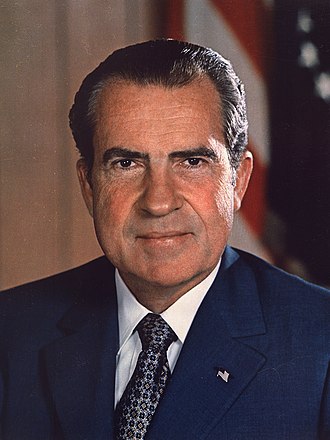
What Nixon talks about on the tapes
White House operations 4,718Presidential scheduling 2,225Public relations 1,784Presidential schedule 1,782Vietnam War 1,693Logistics 1,650Manolo Sanchez 1,626White House communications 1,400White House administration 1,399Presidential communication 1,243Henry Kissinger 1,191Foreign Policy 1,183
Conversations (21,010)
— Page 78 of 211President Nixon met with professional football player Roger Staubach following the Dallas Cowboys' victory in Super Bowl VI. The President expressed personal admiration for Staubach's athletic performance and bravery on the field. During the meeting, Nixon dictated a congratulatory letter to the quarterback to formally acknowledge his achievements.
President Nixon and Raymond K. Price, Jr. discussed the drafting and tone of the upcoming State of the Union message. The conversation focused on refining specific policy references, particularly balancing mentions of the Secretary of the Treasury and the Vice President regarding tax reform, and adopting a more assertive posture toward Congress by emphasizing the need for legislative action in 1972. Nixon requested that Price consult with John Ehrlichman and Clark MacGregor on these revisions and finalize a draft that strikes the appropriate balance in its concluding appeals to Congress and future generations.
President Nixon and speechwriter Raymond K. Price, Jr. consulted on the final revisions for an upcoming presidential address. The discussion focused on refining the tone and drafting specific inserts to strengthen the speech's conclusion. Nixon instructed Price to continue working on the draft and to look for additional input to ensure the document was polished before finalization.
President Nixon contacted the White House operator to facilitate an urgent communication with Charles W. Colson. The brief exchange served as a logistical request to place a telephone call to the Special Counsel to the President. No further policy or substantive matters were discussed during this brief connection.
President Nixon consulted with a White House operator to facilitate an outgoing telephone connection. This brief interaction served administrative purposes, as the President utilized the operator's services to initiate a call to a third party. No substantive policy matters or critical decision-making processes were documented during this short exchange.
President Nixon and Charles Colson discuss strategies for the 1972 election, focusing on leveraging the contrast between Nixon’s composed media appearances and Senator Edmund Muskie’s perceived evasiveness. They evaluate potential vulnerabilities in Muskie’s campaign, specifically regarding his campaign finances and his "trust" theme. Additionally, they discuss utilizing Vice President Spiro Agnew for media interviews and coordinating with labor leader Frank Fitzsimmons to bolster support in key industrial states.
President Nixon and Charles Colson discuss media strategy and the public perception of various political commentators and personalities. The two analyze the performance and communication styles of specific individuals, debating how to effectively leverage these figures for the administration's messaging efforts. The conversation concludes with a focus on managing the longevity and impact of these media surrogates to ensure they remain effective political assets.
President Nixon initiates a brief telephone request for the White House operator to connect him with speechwriter and advisor William L. Safire. The call serves as a logistical bridge to facilitate direct communication between the President and Safire. No further substantive policy matters are addressed in this short exchange.
President Nixon consulted with the White House operator to facilitate an outgoing call. This brief interaction served as a logistical step to connect the President with another party for official communications. No substantive policy discussions or major decisions occurred during this brief exchange.
President Nixon consulted with William Safire to outline a forthcoming televised address regarding the Vietnam War, emphasizing the need for a concise, compelling format over the overly detailed drafts produced by the National Security Council. The President instructed Safire to draft the speech privately to maintain control over the messaging, which centered on disclosing previously secret peace negotiations, the record of U.S. troop withdrawals, and recent diplomatic offers. Nixon explicitly directed Safire to keep the speech under 20 minutes and to avoid any tone of gloating, aiming instead to unify public opinion behind a clear, honorable path to ending the conflict.
President Nixon met with speechwriter William Safire to refine a public address regarding secret negotiations to end the Vietnam War. Nixon emphasized the necessity of demonstrating that the administration had exhausted all diplomatic channels, including specific peace offers and withdrawal deadlines, while justifying his previous silence on these efforts as a means to protect ongoing back-channel discussions. The primary goal of the meeting was to distill these complex foreign policy developments into a concise, credible 20-minute speech that would convey a narrative of an honorable and inevitable path to peace.
President Nixon and William Safire engaged in a brief exchange regarding the logistics of document review and potential follow-up communication. The dialogue centered on coordinating the delivery of materials and establishing a procedure for the President to reach Safire for further input. This short interaction served primarily as a logistical check-in to facilitate ongoing administrative tasks.
President Nixon dictated a letter to Dallas Cowboys quarterback Roger Staubach, following up on their interactions regarding Staubach's Super Bowl performance and his positive influence on American youth. Additionally, Nixon directed his secretary, Rose Mary Woods, to draft correspondence to John Mack Carter of the Ladies Home Journal. These instructions aimed to express the President's appreciation for a feature story about First Lady Pat Nixon and the involvement of Hannah Milhous Nixon.
President Nixon met with his personal aide, Manolo Sanchez, to coordinate the processing of administrative materials. Nixon instructed Sanchez to deliver a dictabelt containing a draft of a speech to his secretary, Rose Mary Woods. Additionally, the pair discussed the inclusion of specific correspondence to be addressed alongside the drafting work.
President Nixon met with his staff and Treasury Secretary John Connally to coordinate administrative messaging, discuss upcoming speeches, and refine international economic policy. A significant portion of the discussion focused on political strategy for the 1972 election year, with Connally advising the President to adopt a more aggressive, "fighting" posture rather than strictly maintaining a "professional" presidential image. Additionally, the participants deliberated on restructuring roles within the White House, specifically regarding Pete Peterson and Peter Flanigan, to centralize economic and trade authority under the Treasury Department.
President Nixon and H. R. Haldeman held a brief, one-minute meeting in the Old Executive Office Building to coordinate the President's schedule. The conversation consisted of a cursory exchange regarding the President's availability for a follow-up discussion. No substantial policy decisions or significant developments were recorded during this brief encounter.
President Nixon and H.R. Haldeman reviewed drafts of upcoming major addresses, specifically the President's Vietnam peace plan speech and his State of the Union address. The discussion focused on refining the tone, structure, and factual presentation of these speeches, with particular emphasis on how to communicate the complexity of secret peace negotiations and the necessity of the Vietnamization policy to the American public. They also coordinated logistical details for a forthcoming White House dinner and discussed personnel management within the administration, including the roles of John Connally and Peter Flanigan.
President Nixon contacted the White House operator to facilitate an urgent connection to his Chief of Staff, H.R. Haldeman. This brief administrative interaction served as a logistical step to initiate a high-level briefing or discussion between the President and his key advisor. No substantive policy matters were addressed during this specific request for communication.
President Nixon and H.R. Haldeman discuss the political implications of a memorandum authored by Raymond Price and Patrick Buchanan regarding the upcoming State of the Union address and the 1972 election strategy. Nixon expresses skepticism toward Price’s appraisal of the 1970 campaign, favoring Buchanan’s analysis of the media and the necessity of proactive political maneuvering. Haldeman is tasked with consulting Price, Leonard Garment, Richard Moore, and William Safire to refine the administration’s messaging on domestic policy issues such as revenue sharing and welfare reform.
President Nixon contacted the White House operator to place a personal telephone call to his close friend and confidant, Charles G. “Bebe” Rebozo. The brief exchange served as a routine administrative request to facilitate private communication between the President and Rebozo. No other policy matters or substantive political issues were discussed during this brief connection.
President Nixon and Bebe Rebozo engaged in an informal discussion centered on the recent Super Bowl game between the Miami Dolphins and the Dallas Cowboys. The conversation transitioned into personal updates regarding travel plans to Florida and participation in the television program 'American Sportsman' with Robert Abplanalp and the President’s daughters. They concluded by briefly evaluating the political landscape of the upcoming Florida presidential primary, specifically noting the strategies of Democratic candidates Hubert Humphrey, Edmund Muskie, and George Wallace.
President Nixon met with Stephen B. Bull to coordinate his daily schedule and manage upcoming appointments. The discussion focused on arranging meetings with key advisors, including John Ehrlichman, George Shultz, John Connally, and Arthur Burns, to address economic concerns such as the West Coast dock strike. Bull was tasked with finalizing the sequence of these engagements to ensure efficient management of the President's afternoon agenda.
President Nixon met with Alexander P. Butterfield and Rose Mary Woods to manage a variety of administrative and scheduling tasks, ranging from locating missing Treasury Department memoranda to coordinating the President’s personal correspondence. The President emphasized the urgent need for a final draft of his State of the Union speech by late afternoon and directed his staff to compile favorable editorial coverage regarding First Lady Pat Nixon’s trip to Africa. These discussions served to streamline White House operations and ensure the timely completion of key policy and public relations materials.
President Nixon met with Alexander P. Butterfield to discuss administrative matters regarding a memorandum authored by John B. Connally. The discussion focused on personnel requests involving Henry A. Kissinger, the National Security Council staff, and potentially Peter G. Peterson. The brief exchange served to coordinate internal executive staffing and organizational oversight.
President Nixon and John Ehrlichman discussed administrative strategy regarding the West Coast dock strike, emphasizing the need for a firm stance against Harry Bridges to avoid public relations issues. The President also requested an options paper by early the following week concerning federal policy on school busing, specifically seeking legislative or constitutional alternatives to pending court decisions. Nixon underscored his desire to clarify his position on the busing issue for the upcoming State of the Union address, directing Ehrlichman to ensure the message was drafted and ready for review.
President Nixon instructed the White House operator to summon Special Counsel Charles W. Colson to the Oval Office for an immediate meeting. This brief administrative exchange served as a directive to facilitate a direct consultation between the President and one of his key political advisors. No further substantive details regarding the agenda for this meeting were captured in the recording.
President Nixon interacted with the White House operator in the Oval Office to place a routine request for food service. The brief exchange focused specifically on ordering a meal for the President. No substantive policy matters or administrative decisions were addressed during this interaction.
President Nixon met with Charles Colson to strategize for the 1972 campaign, emphasizing the need for an aggressive, hard-hitting approach against Democratic opponents. The discussion focused on framing the Vietnam War as the responsibility of the Democratic Party and exploiting divisions among contenders like Edward Kennedy, Edmund Muskie, and Hubert Humphrey. Nixon and Colson also reviewed the political impact of busing, polling data trends, and the necessity of keeping Republican Congressional leadership actively engaged in the political counterattack.
President Nixon initiated a telephone call through the White House operator to contact speechwriter William L. Safire. The conversation served as a brief administrative interaction to facilitate this connection. No substantive policy discussions occurred during this exchange.
President Nixon and William Safire discuss the drafting process for a high-stakes speech regarding secret foreign policy negotiations and the handling of POW issues. To maintain strict confidentiality, Nixon mandates that only Rose Mary Woods may type the draft, emphasizing the importance of themes centered on credibility and the strategic necessity of past official silence. The two finalize a schedule for Safire to deliver his work to the Executive Office Building so Nixon can review it around his other commitments, including the State of the Union preparations and a meeting on the dock strike.
President Nixon attempted to initiate an outgoing telephone call from the Oval Office but was unable to complete the connection. During the process, he engaged in a brief, unrecorded interaction with an unidentified staff member or operator regarding his planned agenda. No substantive policy discussions or administrative decisions were documented as the call failed to connect.
President Nixon and Stephen B. Bull briefly conferred regarding the logistics of the President's upcoming daily schedule. The primary focus of the meeting was to coordinate the timing and appearance of scheduled appointments with Arthur F. Burns and John B. Connally. Bull also alerted the President to the imminent arrival of Dr. Hayes for a subsequent meeting.
President Nixon met with Ronald Ziegler and Stephen Bull to coordinate the strategy for his upcoming State of the Union address and related public relations tasks. The discussion focused on separating the content of the address into an oral message primarily covering domestic policy, while reserving foreign policy for the upcoming 'State of the World' report. Additionally, Ziegler prepared for a trip to New York to meet with network executives regarding the President’s visit to the People's Republic of China, and the group briefly addressed the West Coast Dock strike and a loan controversy involving F. Donald Nixon and Howard Hughes.
President Nixon met with Arthur Burns and John Connally to coordinate economic policy and public messaging ahead of the State of the Union and the upcoming budget message. The discussion focused on establishing a federal spending ceiling, managing inflation, and potential leadership changes within the Pay Board, including the possible recruitment of Arthur Goldberg. The group also addressed the challenges of wage and price controls, specifically concerning the decontrol of small businesses and the administration's political narrative regarding economic recovery.
President Nixon met with Alexander P. Butterfield to discuss a phone call from Senate leaders Hugh Scott and Mike Mansfield. The brief exchange served as a situational update regarding the legislative leadership's communication with the White House. No specific policy decisions were finalized during this short interaction.
President Nixon consulted with Senate leaders Hugh Scott and Mike Mansfield regarding the formal opening of the Senate and his upcoming address to a joint session of Congress. Nixon confirmed his intention to speak on January 20th, joking about the length of his remarks while coordinating logistics for his appearance. The participants also exchanged pleasantries about their recent recesses and briefly discussed the senators' lack of involvement in current presidential campaigns.
President Nixon met briefly with Senate leaders Hugh Scott and Mike Mansfield to coordinate an upcoming meeting and discuss general scheduling. The President noted the unique position of both senators as non-candidates in the upcoming election cycle, expressing his desire to engage in informal dialogue away from partisan pressures. The exchange served primarily as a brief pleasantry to arrange a more substantive future engagement.
President Nixon met with John Ehrlichman and George Shultz to discuss strategies for addressing the persistent West Coast dock strike and the administration's public posture toward labor unions. They evaluated the political necessity of firm rhetoric and potential legislative action, including an arbitration bill, while managing the logistical challenges of upcoming budget messaging and the appointment of Peter Peterson to the Commerce Department. The discussion also addressed the administration's broader concerns regarding the State Department's performance, foreign policy negotiations, and the need to mount a more aggressive political defense against Democratic challengers like Edward Kennedy.
President Nixon held a brief, informal call with House leaders Hale Boggs, Gerald Ford, and Tip O'Neill to coordinate the logistics of his upcoming State of the Union address. The participants discussed the President's plan to deliver a live address on Thursday combined with a supplementary written message to keep the presentation concise. The conversation also included lighthearted banter regarding the recent Super Bowl and a joking remark about the lack of presidential candidates within the House compared to the Senate.
President Nixon, H.R. Haldeman, and John Connally met to discuss 1972 political strategy, the President's upcoming schedule, and the administration's internal power dynamics. A central focus was addressing the professional friction between Henry Kissinger and William Rogers by drafting a formal directive to ensure the President remained fully informed on sensitive foreign policy matters, including negotiations with China, the Soviet Union, and the Middle East. Additionally, the participants evaluated 1972 election campaign tactics, polling data, and plans to manage public perceptions of the President, including strategies for handling potential political attacks from the Kennedy camp.
President Nixon initiates a call to Secretary of the Treasury John B. Connally through the White House operator. This brief administrative interaction serves as the bridge to facilitate a direct policy discussion between the President and the Secretary. No further deliberation occurs during this connection phase.
President Nixon directed John Connally to coordinate with Arthur Burns regarding the strategic release and public relations management of the upcoming federal budget message. They discussed leaking information to the Sunday papers to build anticipation, aiming to maximize political impact by framing the initiative as a proposal under consideration. Connally agreed to manage the messaging with Burns to ensure the President could finalize and announce the decision during the official budget release.
President Nixon held a brief, three-minute meeting in the Oval Office with an unidentified individual, potentially H.R. Haldeman. The discussion remains largely obscured due to the lack of a clear transcript, resulting in no identifiable policy decisions or administrative actions. The encounter serves primarily as a record of a short, private interaction during the President's daily schedule.
President Nixon instructed the White House operator to contact William Safire and request his immediate presence at the Executive Office Building. This brief administrative exchange served to coordinate a direct meeting between the President and his speechwriter. No further policy or strategic details were addressed during the call.
President Nixon contacted the White House operator to facilitate a meeting with his speechwriter, Raymond K. Price, Jr. The President requested that Price be summoned to his office in the Executive Office Building for a consultation. This administrative call functioned to coordinate immediate staff assistance for the President's ongoing work.
President Nixon initiated a telephone call to his special counsel, Charles W. Colson, through the White House operator. Although the recording captures the request for the connection, the subsequent substance of the conversation remains unavailable due to a lack of transcript documentation. Consequently, no specific policy decisions or action items can be determined from this brief exchange.
President Nixon and Charles Colson discussed political strategies to manage Democratic opposition, particularly regarding Senator Edward Kennedy's recent criticisms of the administration's Vietnam policy. They strategized on how to leverage the resulting friction between Kennedy and Senator Edmund Muskie, while also utilizing Congressional Republicans to attack the Democrats' past involvement in the war. Additionally, they reviewed positive economic indicators—including stock market gains and housing statistics—and finalized plans for the Administration to take a public stand against ongoing West Coast dock strikes to bolster their political standing.
President Nixon held this meeting in the Oval Office to express personal gratitude to an unidentified individual. While specific details of the discussion remain unavailable due to the lack of a transcript, the interaction focused on the President acknowledging the visitor's contributions or actions. The meeting concluded shortly after these remarks were delivered, marking a brief but deliberate exchange of appreciation from the President.
President Nixon and aide Stephen B. Bull coordinate the technical logistics for an upcoming rehearsal of the State of the Union Address. The President instructs Bull to arrange a test of the new podium and lighting setups in the Roosevelt Room to ensure proper television presentation. Additionally, the pair discusses the delivery of materials from Secretary of State William P. Rogers and routine adjustments to the President's daily schedule.
President Nixon consulted with Alexander P. Butterfield regarding the availability of speechwriter Raymond K. Price, Jr. The discussion centered on coordinating a meeting to review a draft of an upcoming presidential speech. Butterfield facilitated the scheduling request to ensure the document would be delivered to the President promptly.
President Nixon initiates a brief telephone call to the White House operator to request a connection to New York Governor Nelson A. Rockefeller. This routine administrative request facilitates high-level communication between the President and the Governor. No substantive policy matters were discussed during this brief exchange.
President Nixon consulted with a White House operator to facilitate an outgoing call. The interaction served as a brief administrative bridge to connect the President with another party. No substantive policy matters or major decisions were recorded during this brief logistical exchange.
President Nixon met with his aide, Stephen B. Bull, to review administrative logistics regarding his upcoming schedule. The primary focus of the discussion was the coordination of a draft speech prepared by Raymond K. Price, Jr., which Nixon requested to review prior to their scheduled meeting. The President emphasized the need to examine the text in advance to ensure the draft met his requirements.
President Nixon met with his aide, Stephen B. Bull, in the Oval Office to review administrative paperwork. The primary purpose of the brief encounter was for the President to provide his initials on a specific document. The meeting concluded quickly once the task was completed, with no other substantive policy discussions recorded.
President Nixon and New York Governor Nelson Rockefeller discuss Rockefeller’s recent 'State of the State' speech, which criticized New York City Mayor John V. Lindsay and proposed decentralizing city government modeled after London's boroughs. Nixon outlines his strategy for an upcoming 'State of the Union' address, emphasizing a conciliatory approach toward Congress to encourage revenue sharing while warning that he will shift to a more aggressive political stance if legislative progress stalls. Additionally, Rockefeller advises the President to release withheld mass transportation funds to avoid political vulnerabilities during the election year, an action Nixon agrees to discuss with George Shultz.
President Nixon and New York Governor Nelson Rockefeller met to discuss political strategy and domestic policy ahead of the 1972 election cycle. The two leaders coordinated their public messaging, with Nixon advising a conciliatory stance toward Congress to prevent Democrats from casting his administration as partisan while pushing for revenue sharing. They also shared disparaging views regarding political opponents, characterized by their mutual critique of a rival's perceived lack of substance.
President Nixon met with his personal aide, Stephen B. Bull, to discuss the preparation and refinement of a specific speech draft. The brief interaction focused on the logistics of drafting and reviewing remarks for an upcoming engagement. No further details regarding the speech's content were captured, and the meeting concluded with Bull departing shortly thereafter.
President Nixon held a brief, unscheduled meeting in the Oval Office with an unidentified individual. During the exchange, the President issued a specific directive requesting that speechwriter Raymond K. Price, Jr. be summoned to join him. No other substantive policy or political matters were recorded during this brief interaction.
President Nixon met with his staff, including Raymond K. Price, Jr. and Ronald L. Ziegler, to finalize the text and release strategy for his upcoming State of the Union Address. They discussed refining the speech's tone and content, particularly regarding foreign policy, agriculture, and the need for a non-partisan approach to contrast with Senator Edward Kennedy's recent criticisms. Additionally, the President and Ziegler addressed the political fallout from the Jack Anderson Papers, focusing on managing administration credibility and the role of Henry Kissinger in sensitive foreign policy matters.
President Richard M. Nixon met with his longtime valet, Manolo Sanchez, in the Oval Office. The brief interaction consisted primarily of an informal exchange of greetings between the President and a trusted member of his personal staff. No significant policy decisions or administrative actions were recorded during this encounter.
President Nixon met with H.R. Haldeman and other staff to review administrative priorities, including the upcoming State of the Union address preparations and the handling of congressional relations. A significant portion of the discussion focused on managing the conflicting foreign policy roles of Henry Kissinger and Secretary of State William Rogers, with Nixon emphasizing the need for better information flow and coordination. Additionally, the President discussed his reliance on Treasury Secretary John Connally for economic policy and political judgment, strategizing on how to integrate Connally’s role without alienating other Cabinet members or White House staff.
President Nixon contacted the White House operator to place an outgoing call to Dr. Dacosh. The brief exchange served as a procedural request to facilitate this communication. No further substantive policy or political discussions took place during this specific connection.
President Nixon contacted his physician, General Walter R. Tkach, to request medical attention for Fina Sanchez, who had recently returned from Spain with the flu. Nixon expressed concern for her health and directed Tkach to personally see to her care or send a member of his staff immediately. Tkach agreed to follow the President's instructions to provide the necessary treatment.
President Nixon initiates a request for the White House operator to place a telephone call to Secretary of the Treasury John B. Connally. This brief exchange serves as a standard administrative directive to connect the President with a key cabinet official. No substantive policy matters were discussed during this brief request.
President Nixon consulted with John B. Connally regarding the final draft of his upcoming State of the Union speech, specifically requesting feedback on its tone and style. Nixon characterized the speech as conciliatory in response to recent political attacks from figures like Ted Kennedy and Fred Harris, while noting that a broader administration strategy would handle partisan criticisms. Connally agreed with the approach of letting Congressional allies, such as Hugh Scott and Gerald Ford, counter attacks while the President maintained a more elevated posture.
President Nixon initiates a request to the White House operator to place a telephone call to speechwriter and advisor William L. Safire. The brief interaction serves as a functional bridge to facilitate a direct communication line between the President and his staff member. No policy matters or substantive political issues were discussed during this request.
President Nixon and speechwriter William Safire coordinated the delivery of a new draft for an upcoming Vietnam-related speech. Safire confirmed his scheduled meeting with Secretary of State William P. Rogers, while the President requested the draft be delivered to his office in the Executive Office Building via his valet, Manolo Sanchez. The President intended to review the document in between his work on the State of the Union address.
President Nixon and H. R. Haldeman briefly conferred regarding the successful outcome of a prior engagement or event. Following this confirmation of progress, Nixon invited Haldeman to the Oval Office to continue their discussion in person. The conversation served primarily as a logistical bridge to facilitate a more detailed follow-up meeting.
President Nixon held a brief telephone conversation with his daughter, Julie Nixon Eisenhower, to check in or conduct personal business. The dialogue was primarily social in nature, serving as a private family exchange between the President and his daughter. No policy matters or administrative decisions were addressed during this short interaction.
President Nixon and Secretary of the Treasury John B. Connally reviewed the draft of the upcoming State of the Union speech to refine its tone and specific phraseology. Connally provided editorial feedback, including the suggestion to include Canada alongside European nations and Japan when discussing monetary agreements. The pair also discussed the speech's low-key tone, specifically regarding campus unrest and foreign policy, agreeing that the language struck an appropriately subtle and effective balance.
President Nixon contacted the White House operator to facilitate a telephone connection with his speechwriter, Raymond K. Price, Jr. The call served as a routine administrative request to initiate a conversation with a member of his communications staff. No further substantive policy discussions were captured in this brief exchange.
President Nixon and speechwriter Raymond K. Price, Jr. confer regarding final revisions to the upcoming State of the Union address. The discussion focuses on refining specific phrasing to improve the tone and ensuring the inclusion of Canada alongside Japan in references to international trade and diplomatic relations. Nixon directs Price to finalize these technical edits and coordinates communication with staff members Marjorie Acker and John D. Ehrlichman to ensure the speech is ready for delivery.
President Nixon initiates a request through the White House operator to place a telephone call to General Walter R. Tkach. The brief exchange serves as a procedural step to connect the President with his personal physician. No further policy or substantive matters are addressed during this brief communication.
President Nixon consulted with his personal physician, General Walter R. Tkach, in a brief telephone call regarding personal health matters. Due to the withdrawal of the primary segment of the recording under privacy protections, the specific clinical details or medical directives discussed remain unavailable for public review. The conversation served as a routine communication between the President and his attending physician.
President Nixon contacted the White House operator to facilitate a personal telephone call to Fina Sanchez. The brief exchange served as a directive for the operator to locate and connect Sanchez in her room. No other official policy matters or political topics were addressed during this communication.
President Richard M. Nixon held a brief telephone conversation with Fina Sanchez. Due to the withdrawal of the recording's content for personal reasons, no substantive policy matters or administrative developments are documented. The interaction remains classified as a personal communication.
President Nixon instructed the White House operator to connect him to his daughter, Julie Nixon Eisenhower. The brief exchange served strictly as a logistical request to facilitate a personal phone call to her residence. No substantive political or policy matters were discussed during this brief administrative interaction.
President Nixon consulted with the White House operator to clarify logistical details regarding his daughter Julie Nixon Eisenhower’s schedule. The brief discussion centered specifically on her attendance at an upcoming event at the Kennedy Center. No further policy or administrative actions were taken during this exchange.
President Nixon contacted the White House operator to place an urgent call to his Chief of Staff, H.R. Haldeman. The brief exchange served as a logistical step to facilitate direct communication between the President and his top aide. No further policy or substantive matters were discussed during this connection attempt.
President Nixon instructed H. R. Haldeman to ensure Charles W. Colson was included on the guest list for an upcoming White House dinner with Cabinet officers. Nixon emphasized that Colson’s presence was essential to signal his high-level authority and influence to the administration's leadership. Haldeman acknowledged the directive, confirming that Colson would be added to the event if he was not already scheduled to attend.
President Nixon contacted the White House operator to place an outgoing call to his Chief of Staff, H. R. Haldeman. This brief interaction served solely as a logistical request to connect the President with his top aide. No substantive policy discussions or administrative decisions were recorded during this exchange.
President Nixon contacted the White House operator to determine if he should interrupt H. R. Haldeman during a briefing in the East Room. Upon learning that Haldeman would be available in his office shortly, Nixon decided to wait for his return. This exchange functioned as a brief coordination effort to facilitate a follow-up conversation between the President and his Chief of Staff.
President Nixon, H. R. Haldeman, and Alexander Butterfield review a recent staff meeting, praising Henry Kissinger for his effective presentation on foreign policy and his ability to project confidence regarding ongoing challenges in Vietnam, China, and the Soviet Union. The discussion transitions to administrative planning, specifically coordinating future Congressional outreach through breakfast meetings and finalizing the agenda for an upcoming Cabinet meeting focused on the budget. The participants also refine arrangements for a White House dinner to ensure smooth protocol and effective engagement with political allies.
President Nixon contacted the White House operator to facilitate a telephone connection with his Chief of Staff, H.R. Haldeman. This brief interaction served as a logistical step to initiate a direct communication line between the President and his top aide. No substantive policy discussions or decisions were recorded during this connection request.
President Nixon consulted with H. R. Haldeman to finalize a personal appearance decision regarding a forthcoming speech. Nixon explicitly instructed Haldeman that he would not utilize the services of a makeup artist for the event. This brief communication served to clarify the President's aesthetic preferences for his televised presentation.
Julie Nixon Eisenhower calls the President to relay an editorial correction from Rose Mary Woods regarding the upcoming State of the Union address. The discussion focuses on updating the text to accurately reflect the number of recent Supreme Court decisions mentioned on page 21. After initial confusion, the President confirms the correction of the figure to five.
President Nixon met with his personal valet, Manolo Sanchez, to manage administrative and logistical tasks within the Oval Office. During the brief interaction, the President requested refreshments and directed the relocation of his briefcase to the Executive Office Building. The exchange focused primarily on these routine personal services and the management of confidential documents.
President Nixon contacted the White House operator to facilitate a call to William C. Lewis. The brief discussion focused on identifying Lewis's contact information in relation to Senator Margaret Chase Smith. The operator committed to locating the necessary details and initiating the connection for the President.
President Nixon instructed the White House operator to place a telephone call to William C. Lewis, who was located in Senator Margaret Chase Smith's office. This request served as the primary purpose of the brief communication. The interaction concluded with the operator confirming the instructions to initiate the call.
President Nixon met with his personal secretary Rose Mary Woods to discuss the reception of his recent State of the Union Address and administrative strategy. The two analyzed the reactions of political opponents, specifically Senator Edward Kennedy, and reviewed the logistics of promoting the Equal Rights Amendment to ensure the administration's position was clear. Additionally, the President discussed personal matters, including securing funding for his daughters, Julie and Tricia, to purchase campaign-appropriate clothing to bolster their public appeal.
President Nixon attempted to reach William C. Lewis via a phone call placed through the White House operator. Upon learning that Lewis was out to lunch and unavailable, the President instructed the operator to leave a message. The conversation concluded with a brief exchange regarding the expected time of Lewis's return.
President Nixon consulted with his aide, Stephen B. Bull, to coordinate the schedules of Charles W. Colson and Clark MacGregor. The President instructed Bull to verify if either individual was available to meet immediately. The conversation resulted in Bull taking action to confirm the availability of these staff members for an impromptu briefing.
President Nixon met with his senior advisors and staff to debrief on the reception and political impact of his January 1972 State of the Union address. The participants analyzed media commentary and the reactions of congressional Democrats, specifically noting the effectiveness of the President's shift toward a more statesmanlike, moderate tone. Nixon and his team developed a strategy to pressure Congress by highlighting legislative inaction through daily congressional floor reminders, aiming to frame Democrats as obstructionists ahead of the 1972 election. They also discussed future messaging, emphasizing the importance of focusing on tangible economic results over rhetoric.
President Nixon directed Stephen B. Bull to arrange a meeting with Henry Kissinger, provided Kissinger was available and not currently engaged in social plans. The President specifically requested that the interaction remain separate from lunch engagements or other pre-existing commitments. This discussion served to coordinate Kissinger's schedule in relation to an upcoming Cabinet meeting and his planned trip to Florida.
President Nixon and Stephen B. Bull met briefly to coordinate logistics regarding Henry Kissinger's current location. Bull provided information about a specific building to facilitate the President's upcoming travel plans. Following the exchange, the President directed a move to the location.
President Nixon met briefly with an unidentified individual in the Oval Office. The exchange was limited to the President requesting a serving of coffee. No substantive policy discussions or significant political developments occurred during this short interaction.
President Nixon met with Alexander P. Butterfield to address administrative paperwork requiring presidential signature. The discussion focused on documents prepared in anticipation of a forthcoming Cabinet meeting. The brief encounter concluded after the President completed the necessary tasks.
President Nixon and his personal secretary, Rose Mary Woods, discuss the recent death of Harold O. Lovre. The President instructs Woods to ensure that a wreath is sent on his behalf, specifically coordinating with a military aide to handle the arrangement. This brief administrative exchange serves to ensure a proper expression of presidential condolences for the late former congressman.
President Nixon met with his Vice President and Cabinet to discuss the state of the U.S. economy, the administration's fiscal policy, and the upcoming 1973 budget. Key areas of focus included interpreting unemployment data—specifically the impact of new entrants to the workforce—and managing inflation through Phase II price and wage controls. Nixon urged his department heads to aggressively implement approved spending programs to stimulate the economy, while simultaneously directing them to more effectively communicate and promote the administration's economic achievements and social policy investments to the public.
President Nixon met with H. R. Haldeman and Ronald Ziegler to coordinate the White House's political strategy regarding the fallout from his recent State of the Union address and upcoming labor legislation. The group discussed attacking Democratic critics like Edmund Muskie for their perceived partisanship while managing media coverage and potential responses to a dock strike. Nixon specifically instructed staff to employ aggressive, memorable rhetoric to characterize labor strikers as selfish and irresponsible in order to pressure Congress into taking action.