Nixon, Richard M. (President)
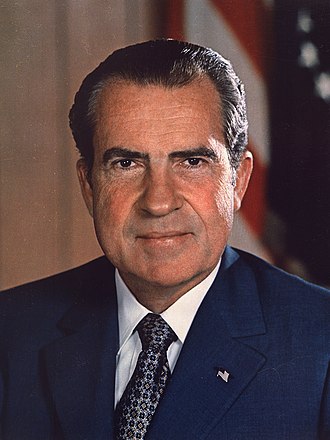
Richard M. Nixon served as the 37th President of the United States from January 1969 until his resignation in August 1974. In February 1971, he ordered the installation of a secret voice-activated taping system in the White House to preserve a historical record of his administration. Until the system's existence was revealed and dismantled in July 1973, the tapes captured Nixon directing major foreign policy initiatives, such as the opening to China, as well as his central role in the Watergate cover-up.
What Nixon talks about on the tapes
White House operations 4,718Presidential scheduling 2,225Public relations 1,784Presidential schedule 1,782Vietnam War 1,693Logistics 1,650Manolo Sanchez 1,626White House communications 1,400White House administration 1,399Presidential communication 1,243Henry Kissinger 1,191Foreign Policy 1,183
Conversations (21,010)
— Page 79 of 211President Nixon initiated a request to place a telephone call to Richard E. Berlin, a prominent publishing executive. The White House operator informed the President that Berlin was currently a patient at Roosevelt Hospital in New York City. The brief exchange served to confirm Berlin's status and location for the purpose of connecting the President to him.
President Nixon met with Cardinal Cooke, administration officials, and military leadership to discuss several pressing national and international issues. The conversation covered the morale of U.S. troops in Vietnam, the administration's efforts to provide government aid to private and parochial schools, and upcoming high-level diplomatic trips to China and the Soviet Union. Nixon also coordinated with General Westmoreland regarding the strategic importance of U.S. military security assistance programs, specifically for Indonesia and Latin America, as a means to maintain global influence.
President Nixon coordinated a telephone call with the White House operator to reach Richard E. Berlin. He specifically provided the operator with the necessary room number, 1010, to facilitate the connection. This brief exchange served solely to ensure the operator could successfully place the call to Berlin.
President Nixon attempted to reach Richard E. Berlin via telephone to discuss an unspecified matter. After the operator reported that Berlin was unavailable, the President instructed the operator to discontinue the current effort but expressed an intent to retry the call later. No substantive policy discussions occurred during this brief administrative exchange.
President Nixon consulted with his aide, Stephen B. Bull, regarding his immediate schedule and the presence of Henry Kissinger. Nixon directed Bull to inform Kissinger that he required 15 minutes to attend to document signing before their meeting. Consequently, Bull was instructed to reschedule the appointment for 6:15 pm.
President Nixon instructed the White House operator to place an urgent call to Robert H. Finch at his home. The operator confirmed Finch's availability despite his illness. This interaction served solely as a logistical request to establish direct communication with one of the President's key advisors.
President Nixon met with Alexander P. Butterfield to handle routine administrative tasks, including the signing of official documents and coordination regarding H. R. Haldeman’s schedule for an upcoming Cabinet dinner. The President also engaged in a brief, informal telephone conversation with Robert H. Finch concerning his health and recovery. The interaction concluded with the President emphasizing the need for strategic political momentum heading into the upcoming months.
President Nixon calls Robert H. Finch to express sympathy regarding Finch’s recent health struggles and to discuss the reception of the President's recent State of the Union address. The two men reflect on the speech's tone, specifically praising the strategic use of references to Harry S. Truman to highlight the administration's legislative positioning. Nixon emphasizes the importance of his upcoming policy agenda, framing the final year of his term as the 'fourth quarter' requiring decisive action.
President Nixon met with his aide Stephen B. Bull to review and refine his upcoming executive schedule. The discussion focused specifically on managing the President's interactions and appointments with Henry A. Kissinger. This brief administrative consultation was intended to ensure the proper organization of the President's calendar regarding key foreign policy engagements.
President Nixon and Henry Kissinger met to coordinate strategy for the President's upcoming peace plan speech, evaluate the North Vietnamese military build-up, and discuss diplomatic relations with the Soviet Union and China. They concluded that while the U.S. would not immediately launch new bombing campaigns to avoid complicating the peace proposal, they would prepare for a firm military response should the North Vietnamese offensive escalate. Additionally, the pair reviewed the success of the recent State of the Union address and finalized preparations for Kissinger’s forthcoming meeting with Soviet Ambassador Anatoliy Dobrynin.
President Nixon initiates a brief telephone exchange with the White House operator to request a connection to National Security Advisor Henry Kissinger. This casual interaction serves as a logistical bridge to facilitate an urgent communication between the President and his top foreign policy aide. No further policy discussions or substantive developments occur during this short bridge call.
President Nixon and Henry Kissinger discuss the drafting of an upcoming speech regarding Vietnam, focusing on how to explain the history of secret negotiations to the American public. Nixon expresses concern that the draft appears too defensive and emphasizes the need to explicitly link the U.S. peace offers—including prisoner of war releases and ceasefires—with a credible warning of continued military action if negotiations fail. They conclude by coordinating a strategy to rally Congressional supporters and address the broader ideological divide between liberals and conservatives concerning the conflict.
President Richard M. Nixon met with his longtime valet, Manolo Sanchez, in the Oval Office to discuss a specific personal request. While the precise details of the interaction remain unrecorded, the meeting centered on administrative or logistical needs requiring the President's direct attention. Sanchez departed shortly thereafter, marking the conclusion of their brief private discussion.
President Nixon met with an unidentified woman in the Oval Office to conduct an unscheduled administrative or personal engagement. During the meeting, the President summoned White House aide Stephen B. Bull to join the discussion. The woman departed shortly thereafter, though the specific purpose of the interaction remains undocumented due to the lack of a transcript.
President Nixon and Stephen B. Bull met to finalize logistical arrangements for the upcoming signing of the 1973 budget message. They discussed the necessity of coordinating with photographer Oliver F. Atkins and established that no press presence would be permitted at the event. The conversation concluded with Bull confirming that only a sketch of the signing would be released to the public.
President Nixon met with his personal valet, Manolo Sanchez, to discuss mundane administrative and personal logistics at the White House. The brief conversation included inquiries regarding the whereabouts of staff members and the schedule of Rose Mary Woods, specifically concerning Marjorie P. Acker. No significant policy decisions were made during this exchange, which focused primarily on routine personnel management.
President Nixon met with an unknown female staff member to provide specific administrative instructions regarding the preparation of his budget message. He guided the individual through the process of editing and compiling the document by inserting, copying, and arranging various text segments. The meeting concluded once the instructions for finalizing the rough draft were clearly established.
President Nixon met with a large contingent of Office of Management and Budget (OMB) staff in the Cabinet Room for a ceremony regarding the signing of the Fiscal Year 1973 Budget Message. During the brief visit, the President expressed his appreciation for the intensive labor and dedication the staff contributed to the budgetary process. The discussion focused on acknowledging the team's professional efforts and coordinating the logistics for the formal bill-signing event.
President Nixon, H. R. Haldeman, and various staff members met to coordinate administrative logistics, including the upcoming budget message press strategy and the planning of political events. The discussion touched on the status of the Bicentennial celebration in Philadelphia, the professional transition of Major General James D. Hughes, and the management of White House social functions. The group also finalized communication tactics for the President’s forthcoming Vietnam peace plan speech, emphasizing the need for a unified public relations effort involving key administration officials and congressional allies.
President Nixon, H.R. Haldeman, and Henry Kissinger met to coordinate the media strategy and briefing rollout for the President's upcoming January 25, 1972, Vietnam peace plan speech. The group discussed the timing of notifications for Congressional leaders, Cabinet members, and international allies, while emphasizing the need to maintain operational secrecy regarding the negotiations until the official announcement. Kissinger and the President also addressed potential political fallout and criticisms regarding the administration's use of secret back-channel diplomacy.
President Nixon met with UN Secretary-General Kurt Waldheim, Secretary of State William P. Rogers, and Ambassador George H.W. Bush to discuss the future of the United Nations and U.S.-UN relations. The President emphasized that the U.S. remains committed to the organization but noted that public and congressional support is currently strained due to financial issues and perceived failures. The group discussed administrative reforms, the need for the UN to play a role in global peacekeeping, and strategies for Waldheim to establish strong, fair leadership to restore international and domestic confidence in the UN.
President Nixon and Press Secretary Ronald Ziegler met to finalize briefing points regarding an upcoming meeting with United Nations Secretary-General Kurt Waldheim. The discussion focused on establishing a clear public stance on U.S. support for the UN, while also addressing concerns regarding the organization's budget and the need to manage public perceptions of government spending. Additionally, the pair coordinated logistics for the President's travel, specifically addressing media presence during plane arrivals and an upcoming trip to Florida involving dock strike issues.
President Nixon and Stephen B. Bull briefly met to review the President’s upcoming schedule, specifically focusing on a meeting with Frank L. Rizzo. The participants also engaged in casual conversation regarding presidential travel logistics, concerns about public awareness of landing details, and reflections on past trips to Florida. No major policy decisions were reached during this short administrative check-in.
President Nixon and Stephen B. Bull reviewed the President’s daily schedule, focusing on coordination for upcoming appointments and document reviews. Key items included arranging a meeting with Frank L. Rizzo, scheduling a photograph session with John D. Ehrlichman, and managing the review of a speech draft prepared by William L. Safire. The discussion concluded with instructions for Bull to manage the logistics of these meetings and finalize the timeline for the President's remaining tasks.
President Nixon met with Philadelphia Mayor Frank L. Rizzo and John D. Ehrlichman to discuss urban policy, federal funding, and the political landscape of Philadelphia heading into the 1972 election. Rizzo expressed his personal support for the President and his desire to align with Republican principles, though he and Nixon strategized on how to manage this shift without alienating Rizzo’s Democratic base. They further coordinated on establishing direct lines of communication between the White House and city officials to bypass local political friction and secure federal aid for Philadelphia through programs like revenue sharing and the LEAA.
President Nixon and Stephen B. Bull briefly coordinated the President's personal schedule regarding an appointment with his barber. Bull informed Nixon of the barber's arrival, leading the President to immediately depart the Oval Office to meet him. This brief interaction served as a logistical update to facilitate the President's personal grooming arrangements.
President Nixon instructed the White House operator to place an urgent call to Congressman Wilbur D. Mills. The President specified that the operator should attempt to reach Mills at his home in Arkansas or at his office if he was currently in Washington, D.C. This request was a precursor to a subsequent conversation between the two men.
President Nixon met with his personal valet, Manolo Sanchez, in the Old Executive Office Building for a brief administrative check-in. The discussion primarily focused on the President’s daily schedule and logistical arrangements regarding his upcoming movements. No significant policy decisions were reached during this short interaction.
President Nixon met with his valet, Manolo Sanchez, to facilitate the retrieval of documents drafted by speechwriter William Safire. Nixon expressed a clear preference to review these specific materials personally before they were officially presented to him. Consequently, staff were directed to locate and secure these papers from the office of the State Boats.
President Nixon and John D. Ehrlichman coordinate their upcoming schedules to facilitate a follow-up discussion. The exchange focuses on arranging a meeting to address specific administrative or policy issues referred to as 'vitamins' and 'grease oil.' The conversation concludes with the two agreeing to meet the following day to deliberate on these matters.
President Nixon met with his personal valet, Manolo Sanchez, in the Old Executive Office Building to discuss personal matters and logistical arrangements. The brief interaction focused on private staff-related concerns and service duties rather than policy or administrative affairs. No significant political decisions or historical developments resulted from this meeting.
President Nixon consulted with the White House operator to facilitate contact with Congressman Wilbur Mills. The President sought to determine whether Mills was currently at his residence in Arkansas or in Washington, D.C. This coordination was initiated to establish a line of communication with the Congressman for an unspecified purpose.
President Nixon and John Ehrlichman met to coordinate political strategy for the 1972 reelection campaign, with a heavy emphasis on securing Pennsylvania through the support of Philadelphia Mayor Frank Rizzo. The discussion covered the importance of maintaining an ethnic, law-and-order coalition in key urban centers and utilizing damaging information about Democratic opponents to bolster the President's standing. Additionally, they addressed personnel concerns, including the management of Howard Hughes-related loan controversies and the navigation of diplomatic and economic challenges like relations with China and the Soviet Union.
President Nixon called Congressman Wilbur D. Mills to express concern regarding Mills’s recent back injury and to recommend a personal physician, Dr. W. Kenneth Riland, who also treated other prominent political figures. The two men discussed treatment options and potential scheduling for a consultation once Mills returned to Washington. During the call, Nixon also briefly conversed with Mills’s granddaughter and mother, maintaining a cordial and personal rapport.
President Nixon met with his aide Stephen B. Bull in the Old Executive Office Building to discuss administrative logistics and presidential scheduling. The brief conversation primarily focused on arrangements involving John B. Connally. No major policy decisions were reached during this short interaction regarding the President's daily agenda.
President Nixon and speechwriter William Safire coordinated the final revisions for an upcoming address regarding Vietnam policy. Nixon directed Safire to hold off on sharing the draft with Secretary of State William P. Rogers while he personally reviewed recent additions proposed by Henry Kissinger. The President committed to providing further instructions and finalized feedback on the speech text later that afternoon.
President Nixon and speechwriter William Safire engaged in a brief, disjointed exchange regarding the preparation of pending documents or speaking subjects. The President deferred immediate action, indicating he needed to review the subject matter before providing further instructions to Safire. The discussion concluded with an agreement for the President to follow up with Safire once he had completed his internal review.
President Nixon and Henry Kissinger met to review and refine the draft of the President's upcoming Vietnam policy speech. The two discussed specific revisions to the text, incorporating suggestions previously deliberated during Nixon's consultations with William L. Safire. This meeting served as a final editorial session to finalize the rhetoric and messaging regarding the administration's stance on the conflict.
President Nixon met with Alexander P. Butterfield to discuss the pending appointment of Robert Anderson, a Foreign Service officer, to an ambassadorship in Dahomey. The primary objective was to review the necessary background documentation and prepare the paperwork for the President's signature. The brief exchange focused on verifying Anderson's credentials and ensuring the nomination process was moving forward.
President Nixon instructed the White House operator to place an outgoing telephone call to Secretary of the Treasury John B. Connally. This brief exchange served solely as a logistical request to facilitate direct communication between the President and the Secretary. No substantive policy matters or decisions were discussed during this connection attempt.
President Nixon consulted with the White House operator to facilitate an outgoing telephone call. The exchange served as a brief administrative coordination for the President to reach an unspecified party. No further policy discussions or substantive developments occurred during this brief interaction.
President Nixon and John B. Connally discuss the administration’s upcoming speech on Vietnam, with Nixon arranging to have Henry Kissinger or William Safire deliver a draft to Connally for review. The two men also evaluate the positive reception of Connally’s recent speeches targeting labor and business leaders. Additionally, they deliberate on legislative strategy regarding aid to parochial schools and exchange pleasantries regarding a gift purchased by the Cabinet for Nixon’s San Clemente residence.
President Nixon and John B. Connally discuss preparations for an upcoming speech, emphasizing the importance of diligent preparation over off-the-cuff remarks. The conversation briefly touches upon political acquaintances and logistical concerns regarding school closures before transitioning into personal topics, including a gift for the President's San Clemente home and travel plans involving fishing in the Bahamas. No major policy decisions were reached, as the meeting served largely to coordinate schedules and manage social pleasantries.
President Nixon contacted the White House operator to place a personal telephone call to Adele Rogers, the wife of Secretary of State William P. Rogers. The brief exchange served as a logistical request to initiate communication with Mrs. Rogers. No policy matters or substantive political decisions were discussed during this brief connection.
President Nixon requested that the White House operator connect him to the wife of Secretary of State William Rogers. This brief interaction served as a logistical coordination to facilitate a phone call between the President and Mrs. Rogers. No substantive policy matters were discussed during this brief exchange.
President Nixon consulted with the White House operator regarding administrative scheduling and outreach efforts. The operator provided a status update on the return of Adele Rogers to her home, leading the President to request that she call him back later. Additionally, Nixon directed the operator to place a follow-up call to Congressman Frank T. Bow.
President Nixon directs the White House operator to contact Congressman Frank to communicate the details of a specific offer. The discussion focuses on facilitating political outreach or legislative coordination through an intermediary. This brief administrative exchange serves as a logistical instruction for managing executive-congressional communications.
President Nixon and Henry Kissinger met to finalize the content and tone of an upcoming speech regarding Vietnam, focusing on the public disclosure of secret negotiations. They also discussed preparations for the President’s historic trip to the People's Republic of China, specifically addressing the need for tailored briefing books and the management of diplomatic note-taking. The President instructed Kissinger to compile essential background materials and intelligence to ensure he was fully prepared for upcoming summits and potential military contingencies.
President Nixon called Congressman Frank T. Bow to express his regret and appreciation upon learning of Bow's decision to retire from Congress. During the brief discussion, they touched upon Bow's successor, Elford A. Cederberg, whom both men agreed would be a capable replacement. The President also inquired about Bow's upcoming plans, expressing his willingness to find a less strenuous role for the Congressman within the administration after his final term.
President Nixon spoke with Adele Rogers to express his personal appreciation for a thoughtful gift presented by Cabinet members for his San Clemente home. The conversation focused on the aesthetic suitability of the sculpture selected by Rogers and Nellie Connally, as well as the positive reception of a recent anniversary dinner the President had hosted for his Cabinet. This interaction served primarily as a social gesture to reinforce interpersonal relationships between the President and his Cabinet wives.
Henry Kissinger informs speechwriter William Safire of final edits to the President's upcoming Vietnam address, noting that several clever wordings were removed to ensure effective translation. Kissinger conveys that the President considers the draft finalized and decides against further review by Secretary of State William Rogers, despite Rogers's expectations. Rose Mary Woods is tasked with typing the final version for delivery to Safire, signaling the end of the drafting process.
President Nixon instructed the White House operator to place an outgoing call to Attorney General John N. Mitchell. This brief administrative exchange served as the precursor to a substantive discussion between the President and his Attorney General. No further policy matters were addressed during this specific telephonic connection.
President Nixon held a brief, informal communication with the White House operator to facilitate an outgoing call. The discussion served as a logistical bridge to connect the President with a subsequent party. No substantive policy matters or administrative decisions were documented during this brief administrative exchange.
President Nixon and John Mitchell discuss political strategies for the 1972 campaign, focusing on the administration’s forthcoming Vietnam speech and the public disclosure of secret peace negotiation offers. They review efforts to secure support from key political figures, including Philadelphia Mayor Frank Rizzo and Illinois Governor Richard Ogilvie, through federal funding and policy coordination. The conversation also touches upon military strategy in South Vietnam and the administration's intent to pressure domestic opponents by highlighting the generous terms offered to North Vietnam regarding prisoner releases and troop withdrawal.
President Nixon and John Mitchell discuss political strategy for the upcoming election cycle, including managing federal funding for municipal support and monitoring the Democratic primary field. The conversation covers the political viability of various candidates, specifically mentioning George Wallace and Hubert Humphrey, while addressing concerns about party loyalty and public perception. The two also evaluate the necessity of maintaining consistent engagement with key local political figures like Frank Rizzo to secure future electoral support.
President Nixon met with his personal valet, Manolo Sanchez, in the Old Executive Office Building to organize official materials. During the brief encounter, the President instructed Sanchez on the specific handling and separation of documents contained within two separate briefcases. The meeting concluded immediately after these logistical arrangements were settled.
President Nixon met with H.R. Haldeman and Peter Flanigan to reorganize the administration’s handling of international economic policy and finalize diplomatic and personnel appointments. The President formally tasked Flanigan with leading international economic matters as an "inside" broker to minimize conflicts between Henry Kissinger and John Connally. Additionally, the group discussed strategic ambassadorial appointments, the political necessity of appealing to Catholic voters, and personal efforts to secure spots at the Sidwell Friends School for the children of economist Marina von Neumann Whitman, whom Nixon intended to appoint to the Council of Economic Advisers.
President Nixon initiated this phone call with columnist William S. White to personally offer well wishes following White's recent hospitalization for a spinal fusion. The conversation served primarily as a professional courtesy, during which White updated the President on his recovery and return to work. Nixon expressed his relief at White's improved health and communicated his continued interest in reading the journalist's future columns.
President Nixon initiates a request to the White House operator to place a telephone call to Treasury Secretary John B. Connally. The interaction serves as a brief administrative coordination to facilitate direct communication between the President and the Secretary. No further policy discussions or substantive matters were recorded during this brief exchange.
President Nixon consulted with the White House operator to determine the whereabouts of Secretary John B. Connally. Upon learning that Connally had departed for his residence, Nixon requested that the Secretary return his call once he arrived home. This brief exchange served to facilitate a follow-up communication between the President and the Secretary.
President Nixon consulted John B. Connally regarding the search for a new U.S. Ambassador to West Germany after William P. Clements, Jr. declined the position. Nixon inquired about Richard M. Paget, seeking Connally's assessment of his temperament, professional background, and suitability for the diplomatic post. Connally expressed confidence in Paget's abilities and agreed to contact him to gauge his interest in the appointment.
President Nixon and Henry Kissinger coordinate the final revisions for an upcoming televised address regarding Vietnam policy. They agree to adjust the phrasing concerning South Vietnamese President Nguyen Van Thieu's election proposal to ensure it correctly reflects Thieu’s agency rather than appearing as a U.S. mandate. Additionally, they discuss concerns over potential ambiguities regarding Thieu’s possible resignation and decide to clarify the two-stage nature of the U.S. October 11 peace proposal to maintain transparency.
President Nixon and Charles Colson briefly discussed rescheduling a meeting with political analyst Richard Scammon due to the President's upcoming television address regarding his Vietnam peace proposal. Nixon prioritized preparing for the broadcast and indicated a desire to review recent political literature, specifically referencing Scammon and Ben Wattenberg’s work, *The Real Majority*. Colson was tasked with coordinating the scheduling change to accommodate the President's agenda.
President Nixon met with his Deputy Assistant Alexander P. Butterfield in the Oval Office to discuss the preparation and refinement of a specific speech draft. The conversation centered on administrative coordination regarding the document's content and finalization. No definitive policy decisions were recorded, as the dialogue focused on the logistical management of executive communication.
President Nixon met with his senior advisors and staff to finalize the details of his upcoming January 25, 1972, televised address regarding a new Vietnam peace proposal. The discussion focused on coordinating network scheduling, managing media speculation, and refining the tone of the speech to ensure it effectively presented the administration's negotiating efforts. Additionally, the participants reviewed staffing requirements for upcoming presidential trips and strategic political considerations for the 1972 election cycle, including Robert Finch's future political trajectory.
President Nixon met with Robert Finch and H. R. Haldeman to finalize details for his upcoming televised address regarding the administration's Vietnam peace plan. During the discussion, Nixon emphasized the necessity of public disclosure to counter North Vietnamese intransigence and correct misperceptions about U.S. negotiating efforts. Additionally, the President reviewed his broader political strategy for 1972, focusing on his legislative agenda and the need to adopt a more aggressive, combative stance against political opponents, drawing parallels to the campaign tactics of Franklin D. Roosevelt and Harry S. Truman.
President Nixon held a brief, private meeting with his valet, Manolo Sanchez, in the Old Executive Office Building. The conversation primarily consisted of personal matters, as indicated by a short duration and the withdrawal of the recorded content for personal return. No substantive policy discussions or administrative actions were documented during this interaction.
President Nixon and H. R. Haldeman discussed the guest list for an upcoming presidential speech on Vietnam, focusing specifically on whether to include key members of the Appropriations Committee. The pair also addressed the health status of Henry Kissinger and coordinated a follow-up regarding a personal matter Kissinger wished to discuss. The conversation concluded with Nixon deciding to personally inquire about Kissinger's concerns.
President Nixon met with Rose Mary Woods, Henry Kissinger, and Marjorie Acker to finalize the text and pacing of an upcoming major address on Vietnam. The participants coordinated last-minute revisions to the speech, discussed international diplomatic reactions—specifically regarding the French government—and reviewed feedback from administration officials like Robert Finch. Additionally, Nixon established communication protocols for the evening, directing staff to screen all incoming calls so he could focus exclusively on the speech preparations.
President Nixon held a brief meeting with unknown participants to coordinate scheduling arrangements. The conversation focused on logistical updates regarding appointments with Alexander M. Haig, Jr. and Henry A. Kissinger. No substantive policy decisions were reached during this short administrative interaction.
President Nixon and Henry Kissinger met to finalize specific language and strategic messaging for the President’s forthcoming Vietnam speech. The discussion focused on refining the phrasing regarding troop withdrawal timelines, election processes, and a proposed reconstruction program for Indochina to ensure the policy objectives were clearly communicated. They also weighed the potential international reactions to these proposals, specifically considering the involvement of French diplomacy and the reception from foreign officials.
President Richard Nixon met with his personal valet, Manolo Sanchez, in the Old Executive Office Building to discuss personal matters. The brief interaction concluded with Sanchez departing the office shortly after the meeting began. Due to the lack of a transcript and the presence of withdrawn material, the specific nature of their exchange remains restricted to personal or private business.
President Nixon and H. R. Haldeman coordinated the final logistical and presentational preparations for a forthcoming televised address regarding Vietnam. The discussion focused on managing the President's appearance, including makeup and wardrobe choices, while also touching upon the scheduling of meetings with bipartisan congressional leaders. They further deliberated on the management of White House staff and the anticipated press strategy led by communications officials to ensure favorable coverage.
President Nixon met with his personal valet, Manolo Sanchez, in the Old Executive Office Building. Given the absence of a transcript and the classification of the recorded segment as personal, the conversation did not involve matters of public policy or administration. The interaction concluded with no documented official actions or developments.
President Nixon met with Alexander P. Butterfield to finalize details and talking points for an upcoming televised address regarding the Vietnam War. The discussion also addressed administrative logistics, including a memorandum intended for Secretary of State William P. Rogers involving John B. Connally and a review of menu arrangements. This brief exchange served to synchronize final preparations for the President's public policy messaging and internal executive correspondence.
President Nixon instructed the White House operator to place a personal telephone call to his daughter, Tricia Nixon Cox. This brief communication served solely as a request to initiate contact with a family member. No policy matters or administrative business were conducted during this interaction.
President Nixon met with an unidentified individual to review prepared talking points and administrative documents. The discussion centered on an unspecified State Department proposal that the White House staff had previously drafted. No significant policy decisions were recorded during this brief administrative exchange.
President Nixon utilized this session in the Old Executive Office Building to rehearse his televised 'Address to the Nation Making Public a Plan for Peace in Vietnam.' Accompanied at various points by Manolo Sanchez and an unidentified woman, Nixon refined the delivery of his speech, which sought to disclose previously secret negotiations with North Vietnam. The rehearsal focused on presenting the administration's comprehensive peace plan, including the withdrawal of U.S. forces, the release of prisoners of war, and proposals for new presidential elections in South Vietnam.
President Nixon held this session to rehearse his upcoming nationally televised address detailing a comprehensive peace plan for the Vietnam War. By disclosing the details of previously secret negotiations conducted by Henry Kissinger, the President aimed to demonstrate that the United States had made significant, ignored overtures to North Vietnam. This strategic public disclosure was intended to break the deadlock in Paris and clarify to the American public that the administration had pursued every viable diplomatic channel to achieve an honorable peace.
President Nixon practices a public statement regarding the administration’s Vietnam policy, specifically addressing the withdrawal of American forces and the transition to South Vietnamese self-defense. The recording captures the President rehearsing his rhetoric to ensure a clear articulation of the consequences should the enemy reject diplomatic negotiations or escalate military aggression. This exercise serves as a preparation for a forthcoming address aimed at justifying the administration's strategic posture in the ongoing conflict.
President Richard Nixon engaged in a brief, informal telephone conversation with his daughter, Tricia Nixon Cox. The dialogue was personal in nature, reflecting the President's routine family communications during his time in office. No formal policy matters, governmental decisions, or substantive political actions were recorded during this brief exchange.
President Nixon practices a speech with his daughter, Tricia Nixon Cox, regarding his administration's peace proposals for the Vietnam War. The discussion focuses on articulating the President's commitment to protecting U.S. forces while justifying his pursuit of a negotiated end to the conflict. Nixon emphasizes the need for national unity in support of his peace plan, explicitly addressing skepticism toward the government's credibility.
President Richard M. Nixon used this meeting to rehearse his televised 'Address to the Nation,' in which he aimed to break the deadlock in Vietnam War negotiations. He reviewed the history of secret diplomatic channels and clarified his administration's extensive, previously private peace proposals, including a plan for total American force withdrawal. By going public with these terms, Nixon sought to counter domestic criticism regarding the pace of negotiations and pressure North Vietnam to engage in meaningful diplomatic dialogue.
President Nixon held a meeting with an unidentified individual in his Old Executive Office Building suite. The brief recording contains a withdrawn segment of personal material, rendering the substance of the discussion inaccessible. No further information regarding the purpose, key topics, or outcomes of this meeting is available due to the lack of a transcript.
President Nixon met with Rose Mary Woods and Alexander M. Haig, Jr. to finalize the text of an upcoming televised address regarding the Vietnam War. The participants focused on editorial revisions to the speech, specifically clarifying the administration's willingness to implement military withdrawals and prisoner releases while negotiations remained ongoing. The meeting also included brief logistical discussions concerning scheduling and administrative matters involving Wiley T. Buchanan.
President Nixon and Alexander M. Haig, Jr. discuss the drafting of an upcoming speech regarding the Vietnam War, focusing specifically on how to phrase the administration's willingness to implement military concessions, such as troop withdrawals and POW exchanges. Nixon expresses concern regarding the ambiguity of the current draft and its impact on his credibility, while Haig defends the vague language as a tactical choice that Henry Kissinger intends to clarify through press briefings. The two also review the positive reception of Kissinger's recent internal briefings, noting a shift toward a more optimistic tone to ensure the speech conveys a clear, forward-looking policy proposal.
President Nixon and H. R. Haldeman coordinated final preparations for an upcoming nationally televised speech on Vietnam. They confirmed that key political figures and Cabinet members had been briefed to ensure unified support, while also reviewing the strategic tone of the address. The discussion specifically addressed concerns over Henry Kissinger’s original draft, which was deemed too defensive, favoring the President’s preference for a more positive and dramatic presentation of the secret negotiations.
President Nixon met with Mark I. Goode, William H. Carruthers, and Ronald L. Ziegler to coordinate the broadcast logistics and final presentation of his televised Vietnam peace proposal. The conversation focused on the technical nuances of the speech's delivery, including microphone placement and the handling of scripts, as well as the strategic scheduling of the address to maximize audience reach across television networks. Following these preparations, the President delivered the speech, which publicly detailed previously secret negotiations and offered a comprehensive plan for troop withdrawals, prisoner exchanges, and a ceasefire.
President Nixon met with Mark I. Goode and other unidentified individuals to coordinate logistical arrangements for an upcoming presidential speech. The discussion focused on technical details regarding the stage environment, specifically addressing the placement of an object and ceiling configurations. The participants also briefly touched upon weather-related concerns, including wind conditions and appropriate attire.
Henry Kissinger contacts the President to facilitate an urgent communication with White House Chief of Staff H. R. Haldeman. Kissinger requests that the White House operator connect him with both Haldeman and an individual identified as Kirchner. This brief exchange serves primarily as an administrative coordination effort to mobilize key staff members for a follow-up discussion.
President Nixon, Henry Kissinger, and H.R. Haldeman discuss the overwhelmingly positive initial media and public reception to the President’s recent televised speech regarding Vietnam. Kissinger reports that his pre-speech briefings with major network commentators effectively countered critical perspectives, specifically noting how Marvin Kalb and Eric Sevareid defended the administration's policy against skepticism from Dan Rather. To maintain this momentum, the President instructs Haldeman to have Charles Colson organize a grassroots telegram campaign while Kissinger continues to leverage a potential future interview to keep media coverage favorable.
Henry Kissinger coordinated with Alexander Haig to gauge the domestic and international reactions to President Nixon’s recent speech on Vietnam. The pair discussed positive feedback from various officials, including George H.W. Bush, and noted Soviet Ambassador Anatoliy Dobrynin's distress over the administration's actions. Kissinger concluded the call by instructing Haig to have Winston Lord draft two urgent cables regarding the situation.
President Nixon directs the White House operator to facilitate a telephone connection between Henry Kissinger and Charles Colson. This brief administrative interaction serves as a logistical bridge to enable communication between two key White House advisors. The President personally oversees the routing of this call to ensure the two officials are connected.
President Nixon, Henry Kissinger, and Secretary of State William Rogers discuss positive domestic and international reactions to the President's recent speech on Vietnam, specifically noting favorable feedback from Mike Mansfield and the Prime Minister of the Netherlands. They shift to contingency planning regarding Vietnam, debating whether to initiate preemptive military strikes against North Vietnamese forces or wait for an attack. The participants agree to convene a high-level meeting involving military and intelligence leaders after Ambassador William Porter presents proposals in Paris to ensure the administration is prepared and protected from potential military blame.
President Nixon contacted the White House operator to request a personal telephone connection to his daughter, Tricia Nixon Cox. The brief exchange served solely as a logistical request to facilitate this private communication. No substantive political or policy matters were addressed during the brief interaction.
President Richard Nixon spoke with his daughter, Tricia Nixon Cox, during a brief evening telephone call. While a portion of the conversation involved Henry Kissinger, the exchange served as a personal check-in between the President and his daughter. No substantive policy decisions or political actions were recorded for this interaction.
President Nixon contacted the White House operator to facilitate a telephone connection with his special counsel, Charles W. Colson. This administrative exchange served as the necessary logistical step to initiate a direct conversation between the President and a key advisor. No substantive policy matters were discussed during this brief request for assistance.
President Nixon and Charles Colson discuss the overwhelmingly positive political reception of the President's recent televised speech regarding Vietnam. Colson reports that various political figures, media commentators, and interest groups view the address as a major triumph that significantly bolstered presidential credibility. The two men analyze the favorable reactions from both conservative allies and former critics, concluding that the speech effectively neutralized ongoing domestic opposition and shifted the national focus away from concerns regarding the federal budget.
President Nixon contacted the White House operator to facilitate an immediate connection with Chief of Staff H. R. Haldeman. This brief administrative interaction served as a directive to reach his senior aide across multiple contact points. The call functioned primarily as a procedural step to initiate urgent communication with his inner circle.
President Nixon, H.R. Haldeman, and Henry Kissinger discussed the widespread positive domestic reaction to Nixon’s recent televised speech on the Vietnam War. The participants reviewed feedback from a broad range of stakeholders, including members of Congress, labor leaders, business executives, and the academic community, noting that the speech effectively neutralized domestic opposition and placed North Vietnam on the defensive. Encouraged by this strong initial reception, the President and his advisors considered utilizing a telephone poll to further gauge public sentiment while reinforcing the administration's narrative regarding peace negotiations.