Nixon, Richard M. (President)
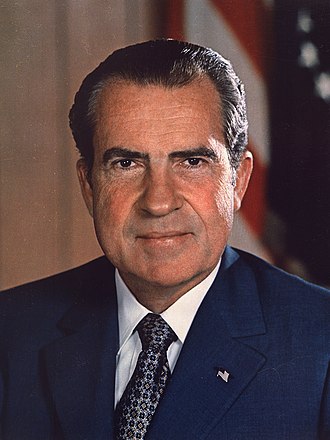
Richard M. Nixon served as the 37th President of the United States from January 1969 until his resignation in August 1974. In February 1971, he ordered the installation of a secret voice-activated taping system in the White House to preserve a historical record of his administration. Until the system's existence was revealed and dismantled in July 1973, the tapes captured Nixon directing major foreign policy initiatives, such as the opening to China, as well as his central role in the Watergate cover-up.
What Nixon talks about on the tapes
White House operations 4,718Presidential scheduling 2,225Public relations 1,784Presidential schedule 1,782Vietnam War 1,693Logistics 1,650Manolo Sanchez 1,626White House communications 1,400White House administration 1,399Presidential communication 1,243Henry Kissinger 1,191Foreign Policy 1,183
Conversations (21,010)
— Page 193 of 211President Nixon and Press Secretary Ronald Ziegler discuss the political fallout of the Watergate scandal and coordinate a strategy to distance the White House from John Dean. Ziegler recounts a meeting with Senate investigators Sam Dash and Fred Thompson, during which he emphasized that the administration placed misplaced trust in Dean’s false assurances regarding his internal investigations. The pair strategizes on potential media leaks to discredit Dean and considers how to counter his potential public testimony before the Ervin Committee to protect the President's reputation.
President Nixon initiates a brief administrative call to the White House operator to facilitate a connection with his Press Secretary, Ronald L. Ziegler. The interaction serves solely as a logistical request to place a telephone call to Ziegler. No substantive policy discussions or decisions are recorded during this brief exchange.
President Nixon and Ronald L. Ziegler discuss a strategic counterattack against the mounting political damage caused by the Watergate scandal. They agree on the necessity of waiting for the right moment to shift the public narrative, concluding that the administration should allow critics to overplay their hand before launching a coordinated defense. The discussion identifies key figures to manage the response, emphasizes the importance of confirming Elliot Richardson, and explores potential ways to leak information to regain control of the political momentum.
President Nixon and H.R. Haldeman spoke to prepare for Haldeman's upcoming Grand Jury appearance related to the Watergate scandal. The two discussed strategies for navigating testimony, emphasizing that their focus had been on managing the political fallout rather than participating in illegal activities or a cover-up. Nixon reaffirmed his ownership of all presidential papers, including Haldeman's personal notes and logs, as a means to shield sensitive internal documentation from investigators.
President Nixon met with his aide, Stephen B. Bull, to review and finalize the President's daily schedule. The primary focus of the discussion was the planning and coordination of an upcoming White House staff meeting. The session concluded with Bull departing to facilitate the execution of these administrative arrangements.
President Nixon met with his personal aide, Stephen B. Bull, to conduct a routine review and coordination of the President's daily schedule. The discussion focused on managing upcoming appointments and administrative logistics within the Oval Office. No major policy decisions were recorded during this brief administrative briefing.
President Nixon met with an unidentified individual to discuss his morning schedule and upcoming staff engagements. The brief meeting centered on preparations for a White House staff session held in the Roosevelt Room. The discussion concluded when the guest departed shortly before 8:37 am.
President Nixon held a brief morning meeting in the Oval Office with an unidentified individual. The interaction consisted of a standard greeting and an invitation, concluding shortly thereafter. No substantive policy discussions or administrative decisions were captured during this brief exchange.
President Nixon met with an unidentified individual in the Oval Office to discuss administrative logistics and daily scheduling matters. The conversation focused primarily on the appointment calendar of Press Secretary Ronald L. Ziegler. No major policy decisions or significant developments were recorded during this brief encounter.
President Nixon met with his aide Stephen B. Bull to coordinate his daily schedule and manage personnel availability. The discussion focused on upcoming meetings with key staff members, specifically Alexander M. Haig, Jr. and Ronald L. Ziegler. This interaction served to organize the President’s administrative priorities during a period of heightened internal pressure.
President Nixon and Press Secretary Ronald Ziegler met to coordinate public messaging and defense strategies amidst the intensifying Watergate scandal. The discussion focused on addressing allegations involving John Dean, managing potential leaks of presidential papers, and clarifying Nixon's involvement in the handling of the Daniel Ellsberg break-in investigation. The President emphasized a firm stance on protecting executive privilege while instructing Ziegler to coordinate with Assistant Attorney General Henry Petersen to ensure the public record accurately reflected Nixon's cooperation with the Justice Department.
President Nixon met with an unidentified individual to facilitate the exchange of physical materials, likely documents or personal effects. The brief encounter focused on the distribution of specific items that the individual required before departing the Oval Office. No substantive policy discussions were recorded during this short administrative interaction.
President Nixon met with Ronald Ziegler and Alexander Haig to coordinate a strategy for responding to the unfolding Watergate crisis, specifically focusing on managing John Dean’s potential revelations and impending Senate committee hearings. The group discussed utilizing executive privilege to protect presidential papers and staff notes while simultaneously orchestrating a public relations counterattack to challenge the media narrative. They also explored legal tactics to delay Senate proceedings by highlighting potential jeopardy to the rights of defendants like H.R. Haldeman and John Mitchell.
President Nixon met with Stephen B. Bull to coordinate preparations and logistics for an upcoming address to a GOP fundraiser. The discussion focused on scheduling, media coverage, and the involvement of key political figures, including George H.W. Bush, William E. Brock III, and Robert Michel. The brief session served to align staff on the messaging and presentation strategy for the event.
President Nixon met with Press Secretary Ronald Ziegler to coordinate the White House's public relations strategy regarding the escalating Watergate scandal. The discussion focused on managing the fallout from the resignations of H.R. Haldeman and John Ehrlichman, as well as formulating a response to allegations made by John Dean. Nixon and Ziegler also strategized on how to discuss the integrity of the justice system during upcoming public appearances without appearing defensive or allowing the scandal to paralyze the government.
President Nixon met with an unidentified individual to coordinate the logistics for a forthcoming meeting with Senator William E. Brock, III, Robert H. Michel, George H. W. Bush, and David K. Wilson. The discussion focused on administrative details, including the handling of a briefing paper and arrangements for a photograph to be taken by White House photographer Oliver F. Atkins. The parties agreed to limit the duration of the subsequent scheduled meeting to approximately five or ten minutes.
President Nixon met with George H.W. Bush, William Brock, Robert Michel, and other Republican allies to discuss party fundraising challenges in the wake of the Watergate scandal and urgent legislative efforts to maintain funding for U.S. military operations in Cambodia. The group addressed the financial difficulties faced by the Republican National Committee, specifically exploring the potential transfer of funds from the Committee to Re-elect the President to support GOP candidates. Nixon emphasized the importance of distancing the party from the Watergate fallout and urged his allies to remain focused on upcoming congressional votes despite political distractions.
President Nixon met with his personal valet, Manolo Sanchez, in the Old Executive Office Building to review the President’s daily schedule. The brief discussion focused primarily on administrative arrangements regarding the President’s upcoming lunch and nap periods. No significant political or policy decisions were reached during this interaction.
President Nixon and Alexander Haig met to discuss administrative staffing, legal strategies regarding the Watergate scandal, and the political climate surrounding U.S. military operations in Cambodia. The pair evaluated the potential selection of a special counsel to handle ongoing investigations and assessed the likelihood of a difficult vote in the House of Representatives regarding war funding. Throughout the conversation, Nixon emphasized the need for his staff to maintain morale and adopt a more combative stance in defending his administration's policies.
President Nixon interacts with a White House operator to facilitate a telephonic connection. This brief exchange serves as a logistical bridge to connect the President with another party for further discussion. No substantive policy matters or major decisions are addressed during this brief administrative call.
President Nixon and Alexander Haig discussed the selection of a special prosecutor to address the ongoing investigation into the Watergate scandal. The two evaluated the potential appointment of former California Governor Edmund G. “Pat” Brown, weighing his Democratic background, name recognition, and experience as a district attorney. Nixon aimed to ensure the investigation would be conducted fairly without unduly harming individuals involved, ultimately looking to influence Elliot Richardson's final selection.
President Nixon speaks with the White House operator to facilitate an outgoing call. The President initiates the request to connect with Press Secretary Ronald L. Ziegler. No further substantive discussion occurs during this brief administrative exchange.
President Nixon and Press Secretary Ronald Ziegler reviewed Ziegler's recent press briefing regarding the Watergate scandal, specifically focusing on the administration's legal claim to White House documents held by John Dean, H.R. Haldeman, and John Ehrlichman. Ziegler briefed the President on his defense of Nixon's role in the Daniel Ellsberg case and his efforts to publicly highlight pro-administration support via telegram counts and recent polling data. The two concluded that the briefing was successful in maintaining a firm stance and effectively demonstrating public support for the President's continuation in office.
President Nixon and Press Secretary Ronald L. Ziegler held a brief, cryptically recorded meeting concerning the handling of sensitive documents. The conversation focuses on ensuring that certain papers are organized and verified as unrelated to the President's personal involvement. The interaction concludes with instructions to deactivate the recording equipment, highlighting the administration's cautious approach to document management during the height of the Watergate investigations.
President Nixon met with an unidentified individual in his Old Executive Office Building suite to discuss matters that remain classified or redacted. Due to the limited nature of the record, the specific substance of their exchange is not preserved beyond a brief notation regarding refreshments. No significant policy decisions or actionable directives can be discerned from the available documentation.
President Nixon met with his personal aide, Manolo Sanchez, in the Old Executive Office Building to discuss administrative details regarding the President's daily schedule. The two men also coordinated logistics concerning refreshments for the office. The interaction was brief and focused on routine personal and professional support tasks.
President Richard Nixon met with his personal valet, Manolo Sanchez, in the Old Executive Office Building. The discussion focused on administrative matters related to the President's daily schedule. No significant policy decisions or substantial political developments were recorded during this brief encounter.
President Nixon initiates a request through the White House operator to place a telephone call to Press Secretary Ronald L. Ziegler. The brief interaction serves as a logistical bridge to facilitate direct communication with his senior staffer. No further substantive policy discussions occur during this exchange.
President Nixon held a brief administrative interaction with a White House operator. The discussion served as a logistical bridge to facilitate an additional telephone call. No substantive policy or political matters were addressed during this short exchange.
President Nixon consulted with Press Secretary Ronald L. Ziegler to verify the status of current news developments and confirm an upcoming meeting. Ziegler indicated that there were no major breaking stories, effectively coordinating the transition for an afternoon briefing with Alexander M. Haig, Jr. The brief exchange served primarily to synchronize the President's schedule and ensure communication readiness with his senior staff.
President Nixon and Press Secretary Ronald L. Ziegler held a brief, procedural exchange to verify the status of specific notes or briefing materials. The conversation focused on coordination regarding time-sensitive information, with Ziegler confirming his availability. No significant policy decisions were reached during this short interaction.
President Nixon met with Alexander Haig and Ronald Ziegler to develop a strategic response to the Watergate scandal, specifically focusing on the selection of a special prosecutor and the management of executive privilege. The participants discussed concerns regarding the Ervin Committee hearings, the potential release of sensitive White House documents and presidential papers, and the need to coordinate a unified legal defense. They ultimately emphasized a strategy of limiting cooperation with congressional investigations while prioritizing the judicial process to manage public perception and defend the administration.
President Nixon and Stephen B. Bull met briefly to discuss the management of the President's upcoming schedule and the logistics of delivering personal items, including a potential substitution involving Pat Nixon. The discussion centered on coordinating various administrative events, such as the swearing-in of Michael P. Balzano, Jr. and meetings with key economic advisors like George Shultz. The pair also finalized plans for upcoming Congressional sessions and staff consultations throughout the remainder of the week.
President Nixon directs the White House operator to place an outgoing call to Stephen B. Bull, who served as a personal aide to the President. This brief communication serves solely as a logistical request to initiate a telephone connection. No further policy or administrative matters are discussed during this exchange.
President Nixon consulted with a White House operator to facilitate a telephonic connection. This brief interaction served administrative purposes to initiate communication with another party. No further substantive policy or strategic discussions occurred during this brief exchange.
President Nixon consulted with his aide, Stephen B. Bull, to coordinate a haircut appointment. The two men agreed to schedule the White House barber for 5:00 pm that afternoon. This brief exchange served solely to finalize the President's personal grooming arrangements for the day.
President Nixon met briefly with his personal aide, Stephen B. Bull, to discuss the status of an item referred to as "the spider." The conversation, though extremely cryptic and truncated, reflects the President's emphasis on maintaining operational continuity within the White House staff. No specific actions or further details were clarified in this exchange.
President Nixon held a private meeting with an unidentified individual in the Old Executive Office Building. Due to the lack of a surviving transcript or detailed record, the specific substance of the discussions remains unknown to historical researchers. The interaction concluded without any publicly documented decisions or actionable outcomes.
President Nixon met with Thomas Hart to discuss personal and administrative scheduling, including arrangements for the President's barber, Milton Pitts. During the conversation, Nixon inquired about the current health status of Pitts. The discussion also touched upon the status of H. R. Haldeman following his recent departure from the White House staff.
President Nixon met with Stephen B. Bull to coordinate his upcoming schedule and manage key political engagements. They discussed a planned meeting with Hugh Scott and Leslie C. Arends, incorporating recommendations from Alexander M. Haig, Jr. regarding the briefing's duration and structure. The conversation focused on logistical preparations for this high-level session and an impending Cabinet meeting.
President Nixon initiates a request to speak with his Press Secretary, Ronald L. Ziegler. The call serves as a brief logistical communication facilitated by the White House operator to connect the President with his primary spokesperson. No further policy discussion or substantive developments occur during this brief exchange.
President Nixon uses the White House operator to facilitate a telephonic connection to Rob Taylor. The exchange serves exclusively as an administrative request to initiate this specific communication. No further policy or substantive discussion occurs during this brief interaction.
President Nixon and Press Secretary Ronald Ziegler discuss the legal status of documents seized from John Dean and the administration's strategy for addressing the Watergate scandal. Ziegler reports on a conversation with Newsweek's Henry Truitt, noting that the press is beginning to view Dean's actions as self-serving and that the administration should avoid an abrupt counterattack. Additionally, the two touch upon the progress of the special prosecutor search and Nixon’s desire to reassure Henry Kissinger regarding political pressures from his Harvard colleagues.
President Nixon and Press Secretary Ronald Ziegler discuss strategic responses to ongoing political investigations and the media's manipulation of leaked materials. Nixon expresses frustration over the tactics used by political adversaries to build narratives through the selective release of information, while emphasizing the need for patience before attempting to discredit them. The two also touch upon the necessity of reassuring Henry Kissinger, who is expected to return from travel the following day, amidst the prevailing atmosphere of political instability.
President Nixon met with his personal valet, Manolo Sanchez, in the Old Executive Office Building to discuss administrative details regarding the President's schedule. Their conversation focused on logistical arrangements for the President's upcoming activities, specifically coordinating time for rest and office organization. The interaction served as a brief administrative update to facilitate the President's personal routine.
President Nixon met with his valet, Manolo Sanchez, to discuss personal administrative matters concerning his daily schedule and sleep habits. The conversation focused on the logistics of the President’s alarm clock and setting appropriate times for his rest. The brief exchange reflects the routine coordination between Nixon and his personal staff regarding the President's sleep duration and daily time management.
President Nixon and Alexander Haig met to discuss the status of a pending judicial ruling regarding security protocols and the handling of sensitive documents, specifically the decision to leave a binder box unopened. Haig also provided an update on his efforts to improve staff relations and organizational progress. The discussion concluded with a transition toward addressing the President's immediate schedule.
President Nixon met with his personal valet, Manolo Sanchez, in the Old Executive Office Building to discuss personal matters and administrative logistics. The brief interaction included a reference to Alexander M. Haig, Jr. regarding the President’s upcoming schedule. No significant policy decisions were recorded during this informal engagement.
President Nixon met with an unidentified individual in the Old Executive Office Building to briefly discuss scheduling matters. The interaction was limited in duration, concluding with the visitor departing the office shortly after arrival. No substantive policy discussions or major administrative decisions were recorded during this brief exchange.
President Nixon held an brief, unrecorded-substance meeting with unidentified individuals in his Old Executive Office Building suite. While the transcript remains undefined, the interaction occurred during a period of intense scrutiny regarding the Watergate scandal. No policy decisions or actionable directives can be discerned from the available documentation.
President Nixon met with Alexander Haig, H. R. Haldeman, J. Fred Buzhardt, and others to strategize on the growing Watergate crisis, specifically focusing on the legal and political risks posed by Haldeman's personal notes. The group discussed the potential for these documents to be subpoenaed and the tension surrounding the use of executive privilege to protect them from grand jury scrutiny. Nixon emphasized his desire to gain control over these papers to avoid damaging misinterpretations and directed Buzhardt to serve as the primary legal counsel tasked with assessing the documents and managing the White House's defense strategy.
Alexander Haig and H. R. Haldeman coordinate to manage internal conflicts between their respective legal teams regarding the handling of sensitive Watergate-related documents. They discuss a potentially damaging document involving a March 26, 1973, phone call from John Dean, which Haldeman asserts is protected by executive privilege and unrelated to his private conversations with the President. To resolve the friction, they decide to remove Leonard Garment from the process and establish direct communication between J. Fred Buzhardt, Jr., and Haldeman’s legal counsel to ensure a unified strategy.
Rose Mary Woods called President Nixon to express her pride and provide positive feedback regarding his recent speech at the New Majority dinner. She reported that prominent guests, including Bill and Alice Marriott, were deeply moved by his address despite the mounting political pressure Nixon faced. The President dismissed concerns regarding rumors of resignation or impeachment circulating among Congressmen, attributing the negativity to the limitations of his legislative liaison staff.
Alexander Haig updates President Nixon on the positive public reception of the President's speech at the New Majority Dinner, while both men dismiss concerns regarding resignation and impeachment. Nixon emphasizes his firm stance on executive privilege, explicitly directing that no ground be yielded on the release of written documents. To manage the ongoing Watergate fallout, Nixon instructs Haig to sideline Leonard Garment and coordinate efforts through J. Fred Buzhardt, who is tasked with working closely with H.R. Haldeman and Senator John C. Stennis.
President Nixon met with Vice President Agnew and his Cabinet to discuss the ongoing impact of the Watergate scandal on the administration, personnel changes, and the need to maintain governmental stability. Key topics included the appointment of a special prosecutor, the selection of Elliot Richardson, and the importance of professional coordination between the White House and Cabinet departments to ensure the administration's 1972 election mandate remained the primary focus. Nixon emphasized the necessity of improving Congressional relations and maintaining morale within the bureaucracy despite the political distractions caused by the Ervin Committee hearings.
President Nixon and Alexander Haig met to strategize on the administration's response to the escalating Watergate crisis, focusing on managing public perception and protecting White House documents. They discussed the legal handling of materials belonging to H.R. Haldeman, Charles Colson, and John Ehrlichman, as well as the importance of maintaining a unified front to counter allegations of presidential involvement. Additionally, the pair evaluated personnel matters, including the confirmation of Elliot Richardson as Attorney General and the potential for a counter-offensive by leveraging information on previous administrations' abuses of power.
President Nixon met with an unidentified individual in the Oval Office to briefly coordinate his daily schedule. The primary focus of the discussion concerned the President's upcoming meetings with Congressional leaders. The encounter concluded quickly, serving as a brief administrative update on the President's legislative outreach agenda.
President Nixon met with his valet, Manolo Sanchez, in the Oval Office to address domestic needs. The primary purpose of the brief interaction was to arrange for refreshments, specifically discussing the number of coffees to be served. No significant political or policy decisions were reached during this exchange.
President Nixon met with Republican congressional leaders and key aides to discuss strategies for managing the fallout from the Watergate scandal and controlling the political narrative. The group focused on coordinating a response to the upcoming Senate Ervin Committee hearings, specifically addressing the risks posed by potential testimony from grand jury witnesses, and explored launching a bipartisan "blue ribbon" commission on campaign finance reform to seize the legislative initiative. Additionally, the President reviewed pending administrative appointments, including the nomination of Elliot Richardson as Attorney General and the selection of William Colby to lead the CIA, while emphasizing the importance of maintaining consistent, public support from Republican allies.
President Nixon met with his aide Stephen B. Bull to coordinate the President's schedule and finalize preparations for the recording of audio messages. The discussion focused on logistics for the upcoming taping session and the status of an expected visitor. Nixon directed Bull to facilitate the necessary arrangements to ensure the recordings proceeded as planned.
President Nixon met with an unidentified individual to finalize preparations for recording an official audio message. The participants reviewed necessary documentation and confirmed the readiness of the technical equipment required for the production. Following these brief logistical arrangements, the meeting concluded to allow the recording session to proceed.
President Nixon held a brief, ten-minute meeting in the Oval Office with an unidentified individual. Due to the lack of an available transcript or administrative record, the specific subject matter and any resulting directives remain undocumented. The encounter concluded without further clarification regarding the nature of the President's private discussions.
President Nixon met with his aide Stephen B. Bull to coordinate administrative logistics regarding his daily schedule. The primary focus of the brief discussion involved arranging appointments with key staff members H. R. Haldeman and Alexander M. Haig, Jr. Bull acknowledged the instructions and confirmed he would facilitate the requested outreach to these officials.
President Nixon met with Alexander Haig and Ronald Ziegler to coordinate White House messaging regarding administrative reorganization and the ongoing fallout from the Watergate scandal. The participants discussed strategies to project a positive image, including how to brief the press on the advisory roles of presidential counselors and the formation of cabinet committees. They also addressed the legal implications of the John Dean situation, specifically aiming to emphasize reports that lacked evidence linking the President to the scandal while preparing for upcoming Congressional hearings.
President Nixon met with his aide Stephen B. Bull in the Oval Office to conduct a review of the President's upcoming daily schedule. The two men discussed logistical arrangements and the management of the President's time. No other policy matters or significant executive decisions were recorded during this brief administrative session.
President Nixon met with his personal valet, Manolo Sanchez, in the Oval Office to receive refreshments. During this brief encounter, the President adjusted his plans regarding a previously mentioned call from his daughter, Lisa. The interaction was limited to routine personal services and internal scheduling matters.
President Nixon held a brief, nine-minute meeting in the Oval Office with an unidentified male visitor. Aside from a brief reference to refreshments, the specific substance of the discussion remains unrecorded and unavailable in the archival transcript. Consequently, no significant policy decisions or actionable outcomes can be determined from this interaction.
President Nixon and H. R. Haldeman met to discuss strategic planning regarding the ongoing Watergate scandal, focusing heavily on legal defense preparations and the upcoming Senate hearings. They evaluated the status of John Dean’s potential testimony, the management of legal fees for White House staff through the Committee to Re-Elect the President, and the importance of maintaining a consistent public stance regarding White House involvement. Additionally, the two discussed post-administration employment prospects for Haldeman and John Ehrlichman, emphasizing the necessity of securing continued security clearances and access to files for historical documentation.
President Nixon met with an unknown individual to coordinate logistical arrangements for an upcoming swearing-in ceremony. The discussion focused on the involvement of the press, the potential participation of Press Secretary Ronald L. Ziegler, and the necessary preparation of a Bible for the event. The conversation concluded with the President finalizing the administrative sequence for the ceremony.
President Nixon met with Michael P. Balzano and a group of his family and associates in the Oval Office to conduct a ceremonial swearing-in for Balzano. The brief interaction included photo opportunities with the press and the presentation of commemorative gifts, such as presidential cufflinks and pins. The conversation centered on the logistical arrangements for the ceremony and expressions of pride regarding Balzano's new leadership role.
President Nixon met briefly with an unidentified individual in the Oval Office to provide instructions regarding a specific, unspecified person. The dialogue consists solely of the President's command to "take him," indicating a directive for action. The meeting concluded within minutes, leaving the identity of the parties and the nature of the assignment ambiguous.
President Nixon met with Gene Taylor, Dewey J. Short, and William E. Timmons to discuss strategies for maintaining public and political support amidst the growing Watergate scandal. Participants emphasized the administration's policy achievements, such as ending the Vietnam War and the military draft, while contrasting these successes against Democratic political tactics. The conversation served as a morale-boosting session where allies reaffirmed their loyalty and discussed the necessity of framing the President's legacy within a broader, more positive context.
President Nixon met with an unknown individual in the Oval Office to facilitate a request initiated by Press Secretary Ronald L. Ziegler. The conversation was brief and focused on the arrival of Ron Sanders for an appointment with the President. No further policy or administrative developments were recorded during this short interaction.
President Nixon met with an unidentified individual to discuss briefing preparations for Press Secretary Ronald L. Ziegler. The conversation focused on managing potential questions and answers during upcoming media engagements. No further substantive details regarding policy or strategy were recorded due to the brevity and indistinct nature of the exchange.
President Nixon met with an unidentified individual in the Oval Office to discuss logistical arrangements regarding the President’s personal schedule and the handling of a briefcase. The primary action item involved the transfer of this briefcase to the Executive Office Building. The meeting concluded shortly after these administrative instructions were conveyed.
President Nixon and Alexander Haig met to strategize on the Watergate crisis, specifically discussing the selection of a Special Prosecutor and managing the administration's legal and public relations response. They evaluated potential candidates, including Warren E. Hearnes, and considered how to neutralize political pressure from the Ervin Committee and critics. Nixon emphasized the importance of maintaining a firm stance on executive privilege and directed staff to accelerate work on campaign finance reform to shift public narrative.
President Nixon met with his personal aide Manolo Sanchez and appointments secretary Stephen B. Bull to discuss personal scheduling and administrative matters. The conversation touched upon the President's need for rest, recent correspondence, and potential upcoming engagements involving figures such as William P. Rogers and John C. Slemp. The meeting concluded with logistics regarding the President’s daily agenda and family-related updates.
President Nixon initiates a brief telephone call through the White House operator to request a conversation with Alexander M. Haig, Jr. The exchange serves as a standard administrative request to facilitate communication between the President and his Chief of Staff. No further substantive policy matters are addressed during this brief connection.
President Nixon and his personal secretary, Rose Mary Woods, briefly coordinated their schedules during an encounter in the Old Executive Office Building. The dialogue primarily concerned Woods's availability and attendance at an upcoming reception. The interaction concluded with a mutual agreement to postpone or adjust their immediate plans to accommodate other obligations.
President Nixon met with his personal valet, Manolo Sanchez, in the Old Executive Office Building to discuss the President's immediate meal preferences. The brief exchange focused on administrative logistical support regarding Nixon's dining choices for the day. No substantive policy matters or major political decisions were recorded during this brief interaction.
President Nixon met with his personal valet, Manolo Sanchez, in the Old Executive Office Building for a brief, informal session. The conversation primarily concerned the delivery of refreshments to the President. No major policy developments or significant political decisions were recorded during this brief interaction.
President Nixon consulted with an unidentified individual regarding the potential recruitment of former Chief Justice Earl Warren to lead a commission investigating the Watergate scandal. The discussion focused on leveraging Secretary of State William P. Rogers' personal relationship with Warren to secure his chairmanship for the inquiry. Nixon viewed Warren's potential involvement as a strategic maneuver to restore public credibility and influence the framing of the President's upcoming public address on the matter.
President Nixon met with his personal valet, Manolo Sanchez, to discuss upcoming scheduling requirements and personal needs. The conversation focused on logistical arrangements for a potential meeting aboard the Sequoia with Secretary of State William P. Rogers and Alexander M. Haig, Jr. Additionally, Nixon emphasized his need for rest and refreshment, prioritizing a brief period of sleep to prepare for his subsequent professional duties.
President Nixon met with an unidentified individual in the Old Executive Office Building to discuss administrative matters regarding his daily schedule. The conversation focused on identifying key personnel operating behind the scenes of the administration. No specific decisions or further actions were documented in the available records regarding this brief consultation.
President Nixon held a meeting with an unidentified individual in the Old Executive Office Building to discuss matters that remain undocumented in the existing transcript. The conversation serves as a historical record of an private engagement during a period of heightened scrutiny surrounding the White House. Due to the lack of available dialogue, no specific decisions, topics, or action items can be identified.
President Nixon met with his valet, Manolo Sanchez, in the Old Executive Office Building to discuss administrative details regarding the President's personal schedule. The brief interaction focused primarily on managing daily logistics, specifically instructions regarding morning wake-up calls. No major policy decisions were reached during this routine exchange concerning the President's domestic staff arrangements.
President Richard Nixon met with his valet, Manolo Sanchez, in the Old Executive Office Building. The primary purpose of this meeting was for the President to observe a scheduled period of rest. No substantive policy discussions were recorded during this brief administrative interaction.
President Nixon met with his personal valet, Manolo Sanchez, to discuss his daily schedule and personal needs. The conversation focused on the logistics of the President's lunch period and his desire to extend his designated nap time. Nixon expressed clear dissatisfaction with previous scheduling attempts and insisted on adjustments to his rest duration.
President Nixon met with his personal valet, Manolo Sanchez, to discuss the President's daily schedule and his recent sleep habits. The conversation primarily focused on the limited duration of Nixon's rest, with Sanchez providing updates regarding the time and logistical arrangements for the afternoon. No major policy decisions were made during this brief administrative check-in.
President Nixon spoke briefly with a White House operator to facilitate a telephonic connection. This interaction served purely as an administrative step to initiate an outgoing call. No substantive policy discussions or significant decisions occurred during this brief exchange.
President Nixon and Alexander Haig discussed the status of a potential commission to address Watergate, focusing on William P. Rogers's effort to recruit Earl Warren for the role despite their adversarial relationship. They also reviewed news of indictments against Maurice Stans and John Mitchell regarding the Robert Vesco case, viewing the legal proceedings as a sign that the justice system was functioning. Additionally, Haig provided a brief status update on Elliot Richardson’s ongoing testimony and efforts to influence upcoming personnel appointments.
President Nixon and Alexander Haig held a brief, informal meeting to coordinate the logistics of moving personal or office items, specifically referencing an urn and supplies. They briefly touched upon the status of various tasks and expressed mutual disdain for an unnamed individual involved in the transition process. No significant policy decisions were reached, as the conversation served primarily to confirm the status of ongoing domestic arrangements.
President Nixon directs the White House operator to connect him with Press Secretary Ronald L. Ziegler. The brief interaction serves as an administrative request to facilitate a direct communication line with his primary spokesperson. This reflects the President's ongoing coordination with his staff during a period of high political pressure.
President Nixon consulted with the White House operator to facilitate a change in his telecommunications environment. He issued a specific request for the operator to terminate a video feed or television transmission. No further business or substantive policy discussions were conducted during this brief administrative interaction.
President Nixon and Press Secretary Ronald Ziegler discuss media strategy in the wake of the indictments of John Mitchell and Maurice Stans in the Robert Vesco case. They review the positive press reception of Nixon’s recent New Majority Dinner speech and assess the ongoing political fallout surrounding John W. Dean III. The President directs Ziegler to continue a messaging campaign highlighting administration stability and instructs him to leak a narrative suggesting potential trouble with the upcoming summit to enhance the impact of its eventual announcement.
President Nixon and Press Secretary Ronald Ziegler discussed public perception of the administration during the ongoing Watergate fallout, specifically regarding the recent appearances of John Mitchell and Maurice Stans. Nixon expressed a desire to frame these events as evidence of proactive accountability while cautioning against being swayed by negative media narratives. The two also touched upon diplomatic strategy, specifically determining how to handle public messaging regarding upcoming summit announcements.
President Nixon initiates a request to speak with Secretary of State William P. Rogers through the White House operator. This brief administrative interaction serves solely to facilitate a high-level diplomatic communication. No further policy discussions or substantive developments occur during this exchange.
President Nixon consulted with a White House operator to facilitate an outgoing telephone connection. The brief exchange served as a logistical step to reach an unidentified party, marking a routine administrative task within the President's daily communications. No substantive policy discussions or major decisions occurred during this brief interaction.
President Nixon and Secretary of State William P. Rogers discuss the administration's strategy to navigate the Watergate crisis, specifically exploring the potential appointment of former Chief Justice Earl Warren to lead an independent commission. The two men also review personnel matters, with Nixon confirming his intent to appoint Alexander Haig to a permanent White House role and expressing confidence in the appointments of James Schlesinger and William Colby. Additionally, the President emphasizes his desire to improve information flow to Rogers and maintain stable governance to bolster public morale.
President Nixon and Secretary of State William P. Rogers discuss potential appointments and personnel strategies intended to demonstrate administrative stability during a period of political turmoil. The conversation touches upon the selection of a career official to fill a specific position, emphasizing the need to move forward with staffing despite external pressures. Additionally, Nixon prepares Rogers for an upcoming briefing with Henry Kissinger regarding recent diplomatic developments following Kissinger's return from Russia.