Nixon, Richard M. (President)
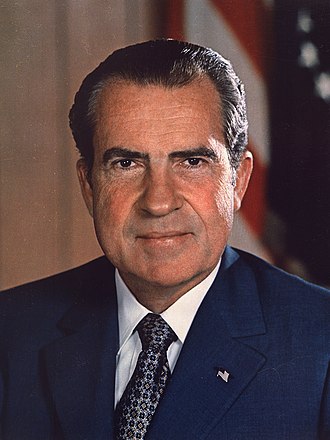
Richard M. Nixon served as the 37th President of the United States from January 1969 until his resignation in August 1974. In February 1971, he ordered the installation of a secret voice-activated taping system in the White House to preserve a historical record of his administration. Until the system's existence was revealed and dismantled in July 1973, the tapes captured Nixon directing major foreign policy initiatives, such as the opening to China, as well as his central role in the Watergate cover-up.
What Nixon talks about on the tapes
White House operations 4,718Presidential scheduling 2,225Public relations 1,784Presidential schedule 1,782Vietnam War 1,693Logistics 1,650Manolo Sanchez 1,626White House communications 1,400White House administration 1,399Presidential communication 1,243Henry Kissinger 1,191Foreign Policy 1,183
Conversations (21,010)
— Page 198 of 211President Nixon met with Bangladeshi representatives Mustafizur Rahman Siddiqui and Hossain Ali to discuss U.S.-Bangladesh relations and ongoing regional tensions following the 1971 conflict. The conversation focused on the repatriation of prisoners of war and civilians between Bangladesh and Pakistan, as well as the potential for war crimes trials. Nixon expressed a desire for a peaceful resolution in South Asia and directed the delegation to coordinate further with General Brent Scowcroft and the State Department's South Asia experts.
President Nixon and Alexander Haig met to discuss managing the escalating fallout from the Watergate scandal, specifically focusing on reports linking White House staff to negative stories about Thomas Eagleton. They reviewed personnel moves, including relocating Lawrence Higby and Tod Hullin to the Old Executive Office Building to protect them from public scrutiny. Nixon explored the potential for a national security-focused speech regarding the Huston Plan and requested a thorough Department of Justice investigation into suspicious claims involving a doctor's letter and alleged government interference.
President Nixon met with Mrs. Cleo Noel and Mrs. G. Curtis Moore, the widows of two American diplomats killed by terrorists in Sudan, to offer his condolences and government support. The discussion covered the administration's efforts to combat international terrorism through United Nations sanctions and the challenges of navigating complex Middle Eastern geopolitical tensions. The President also expressed his personal commitment to pursuing a more peaceful world, framed as the objective for which their husbands gave their lives, and provided gifts for their families.
President Nixon met briefly with an unidentified visitor in the Oval Office amidst ongoing discussions regarding an incoming call from Alexander M. Haig, Jr. The dialogue remains ambiguous due to the fragmented nature of the recording, which captures logistical remarks about the visitor's departure and a brief mention of a wedding. No substantive policy decisions or political actions were recorded during this short encounter.
President Nixon and Alexander Haig consult regarding a suspicious letter sent to Haig from New York, which the President dismisses as a "phony" crank communication. The two speculate that the letter may be part of a deliberate setup designed to manipulate or implicate individuals involved in the Watergate scandal. Nixon ultimately instructs Haig to handle the matter as he sees fit, deferring to his Chief of Staff's judgment on how to dispose of the document.
President Nixon met with an unknown man and woman in the Oval Office to discuss his scheduling and potential meetings with Donald D. Clancy. The brief discussion primarily focused on administrative calendar management rather than policy matters. No major decisions were recorded during the short duration of the meeting.
President Nixon met with Congressman Donald D. Clancy, artisan Chester Cornett, and the Donovan family to accept a hand-carved chair presented to him as a gesture of admiration. The President engaged with the family and the photographer to arrange for commemorative photos to be shared with the guests. During the brief interaction, Nixon discussed his ongoing diplomatic efforts, including upcoming meetings with representatives from the Soviet Union and the People’s Republic of China, expressing a desire to secure a peaceful world for the younger generation.
President Nixon held a brief one-minute meeting in the Oval Office with an unidentified individual to coordinate his immediate schedule. The conversation focused on the President's upcoming engagement with Ralph J. Perk in the Cabinet Room. No further substantive policy discussions were recorded during this brief encounter.
President Nixon met with Cleveland Mayor Ralph J. Perk and other officials to discuss federal assistance for Cleveland's unemployment issues and political strategy for Perk’s upcoming re-election campaign. Nixon pledged administrative support regarding revenue sharing and funding, while Perk sought assistance in navigating local political hurdles and managing relations with the Cleveland press. Despite the distraction of the Watergate scandal, the participants emphasized the administration's continued focus on domestic programs and economic stability as key pillars for maintaining the support of the 1972 'New Majority.'
President Nixon met with Alexander M. Haig, Jr. and Ronald L. Ziegler to coordinate the White House's defense and messaging strategy regarding the escalating Watergate scandal. The discussion focused on discrediting the 'hoax' nature of allegations against the President, preparing affidavits to clarify national security activities, and countering potential testimony from John W. Dean III. Nixon emphasized the need to stand by staff members caught in the investigation while maintaining a firm, unified front against the press and the Ervin Committee.
President Nixon initiated a call through the White House operator to connect with Press Secretary Ronald L. Ziegler. The conversation served as a brief administrative bridge intended to facilitate direct communication between the President and his primary spokesperson. No substantive policy discussions or decisions occurred during this brief exchange.
President Nixon met with his valet, Manolo Sanchez, in the Old Executive Office Building to attend to personal and administrative matters. The brief discussion focused on the President’s daily schedule and the status of items being returned to the upstairs residence. The exchange concluded with logistical coordination regarding household maintenance, specifically involving flooring.
President Nixon instructed Marjorie Acker to compile a representative sample of incoming mail regarding the Watergate scandal to circulate among his senior staff. The President directed that this material be forwarded to Alexander Haig under the guise of Acker's own initiative to boost staff morale and provide context on public sentiment. By sharing these communications, Nixon aimed to ensure his senior advisors remained informed of the prevailing political climate while distancing himself from the distribution process.
President Nixon consulted with a White House operator to facilitate a telephone connection. The brief interaction focused exclusively on the administrative mechanics of placing a specific call. No substantive policy matters or political developments were addressed during this short operational exchange.
President Nixon and Press Secretary Ronald L. Ziegler coordinated an upcoming telephone conversation with journalist Howard K. Smith to express appreciation for Smith's recent editorial coverage. Nixon specifically sought to thank Smith for his balanced commentary regarding the history of national security wiretapping, which drew comparisons to the Roosevelt administration. They agreed that while the President remains open to speaking with Smith, such contact should be deferred until the active grand jury processes have concluded.
President Nixon and Press Secretary Ronald Ziegler discuss the necessity of contacting Howard Smith to convey the President's personal gratitude. The brief exchange focuses on coordinating this outreach, with Nixon emphasizing his appreciation for Smith's past actions. Ziegler is tasked with facilitating this communication to ensure the sentiment is properly relayed.
President Nixon instructed the White House operator to connect him with Press Secretary Ronald L. Ziegler. The call served as an administrative request to facilitate communication between the President and his senior staff. No further discussion occurred during this brief exchange as the operator acted on the President's directive.
President Nixon consulted with a White House operator to facilitate an outgoing call. This brief interaction served administrative purposes to connect the President with another party for undisclosed business. No substantial policy or political discussions were recorded during this connection request.
President Nixon directed Press Secretary Ronald Ziegler to expedite research into the medical history of Senator Thomas F. Eagleton, specifically regarding potential psychiatric treatment in New York. Expressing frustration with the pace of the investigation, Nixon questioned the staffing of the research operation and insisted on immediate verification of the facts. Ziegler confirmed that the Allin group was currently handling the assignment.
President Nixon and Press Secretary Ronald Ziegler discuss the urgent need to verify if specific past news reports were covered by New York media outlets. Expressing frustration over the current pace of research, Nixon mandates an immediate staff check to confirm these details. The brief exchange highlights the administration's defensive efforts to manage historical records and media narratives amid mounting political pressure.
President Nixon instructed the White House operator to place a telephone call to Press Secretary Ronald L. Ziegler. The brief interaction served as a logistical bridge to facilitate direct communication between the President and his top spokesperson. No further policy or substantive matters were discussed during this brief exchange.
President Nixon and Alexander Haig discuss concerns regarding an unsolicited letter sent to Haig by an unidentified doctor in New York, specifically questioning the potential motivations and implications of such correspondence. The President expresses deep suspicion toward John W. Dean III, suggesting that Dean may be capable of manipulative or damaging behavior. Nixon emphasizes the need for absolute discretion and precision in how the administration handles these external communications to mitigate further political risk.
President Nixon directs his personal secretary, Rose Mary Woods, to instruct Secret Service agent Jack Brennan to conduct an immediate, high-priority investigation into threats against the President. Nixon demands a 24-hour turnaround on a comprehensive report detailing historical threats, including prank correspondence and specific incidents dating back to the start of his administration. The objective of this directive is to gather concrete statistical data regarding security risks to bolster the President’s protective posture.
President Nixon met with his personal valet, Manolo Sanchez, to discuss logistics regarding his upcoming schedule and personal engagements. The conversation focused on planning travel or leisure activities, including potential plans involving his close friend Bebe Rebozo. The interaction centers on routine administrative arrangements rather than substantive policy matters.
President Nixon met with his valet, Manolo Sanchez, in the Old Executive Office Building. The brief interaction was limited to the provision of refreshments. No substantive political or policy discussions were recorded during this brief encounter.
President Nixon consulted with the White House operator to place an outgoing telephone call. The interaction primarily served the administrative purpose of facilitating communication through the White House switchboard. No substantive policy matters or political developments were discussed during this brief exchange.
President Nixon and Ronald Ziegler discussed efforts to verify the medical history of Thomas F. Eagleton, specifically investigating potential records at Barnes Hospital and the Mayo Clinic. Ziegler confirmed that the administration had no involvement in the medical record searches, aiming to reassure J. Fred Buzhardt, Jr., who was concerned about possible leaks or exposure. Nixon instructed Ziegler to immediately relay these findings to Buzhardt to resolve his concerns.
President Nixon and Press Secretary Ronald Ziegler briefly discussed the status of ongoing investigative inquiries regarding specific individuals, including someone referred to as Frank. Nixon emphasized the importance of maintaining discretion and instructed Ziegler to ensure that these individuals remain detached from further communication. The exchange highlights the administration's heightened sensitivity to leaks and unauthorized contacts during the escalating Watergate crisis.
President Nixon initiates a telephone call through the White House operator to reach his legal counsel, J. Fred Buzhardt, Jr. The brief exchange serves as a logistical bridge to connect the President with his attorney amidst the unfolding Watergate investigations. No substantive policy matters are discussed, as the interaction is limited to facilitating this official communication.
President Nixon and Alexander Haig discuss the strategic public release of information regarding Senator Thomas Eagleton’s medical history at the Barnes Hospital and the Mayo Clinic. Nixon directs Haig to ensure Henry Petersen pursues the investigation immediately to shape public perception. The two also touch upon the career status and potential culpability of Richard Helms, with Nixon expressing a desire to support him while distancing him from wrongdoing.
President Nixon initiated a brief interaction with the White House operator to place an outgoing telephone call. He requested to be connected to an individual identified as Mr. Rensselaer. The exchange served strictly as a logistical coordination to facilitate official communication.
President Nixon consulted with J. Fred Buzhardt regarding the collection of affidavits from various officials to document that the Huston Plan was never fully implemented. Nixon emphasized the urgency of gathering these testimonies to prepare a defense strategy, while also discussing media efforts to highlight how upcoming Ervin Committee hearings might jeopardize ongoing legal trials. Finally, the President and Ronald Ziegler discussed countering allegations regarding a past political opponent's medical history, with Nixon demanding that negative information about the source of these rumors be leaked to the press to discredit the accuser.
President Nixon met with J. Fred Buzhardt, Jr. and Ronald L. Ziegler to develop a public relations strategy for countering the mounting pressure of the Watergate investigation. The President focused on shifting the narrative by emphasizing past threats against his family and administration, drawing parallels between current political opposition and historical radical movements. Nixon instructed his aides to compile data on violent demonstrations and security leaks to build a 'White Paper' or potential speech that would frame his actions as necessary for national security and the protection of society.
President Nixon initiates a routine telephone connection through the White House operator to speak with First Lady Pat Nixon. The call serves as a brief personal communication between the President and his wife. No substantive policy matters or administrative developments are discussed during this brief exchange.
President Nixon met with Stephen B. Bull to coordinate his upcoming schedule and handle logistics for several pending engagements. The discussion focused on arrangements for meetings with Henry Kissinger and Charles Rebozo, as well as the President’s participation in activities involving the White House Fellows. Nixon finalized the planning for a reception for the Fellows and confirmed his attendance at the associated events.
President Nixon held a brief, routine interaction with a White House operator to facilitate a telephonic connection. This administrative exchange served as a logistical step in managing the President's ongoing communications. No substantive policy discussions or significant political developments occurred during this brief contact.
President Richard Nixon and First Lady Pat Nixon discussed plans for the President to take a brief break from his official duties. The primary purpose of the call was to coordinate a dinner engagement with their daughter, Julie Nixon Eisenhower. The President agreed to the outing, pending his ability to leave the White House later that evening.
President Richard Nixon and First Lady Pat Nixon held a brief meeting in the Old Executive Office Building to discuss personal plans for the evening. The conversation concluded with the President approving the First Lady's proposal to go out for the night. The exchange was strictly informal and did not involve any matters of state or policy.
President Nixon requested that the White House operator connect him to Alexander M. Haig, Jr. via channel 8. This brief exchange served solely as a logistical step to facilitate direct communication with his Chief of Staff. No further substantive policy matters were discussed during this specific connection process.
President Nixon consulted with the White House operator to facilitate an outgoing call. This brief interaction served as a logistical step to connect the President with another party. No substantive policy discussions or administrative decisions occurred during this brief exchange.
President Nixon consulted with Alexander Haig regarding his afternoon schedule, specifically his plan to visit Julie Nixon Eisenhower. Haig provided an update on Henry Kissinger’s optimistic report regarding ongoing diplomatic efforts. The two agreed to meet immediately afterward to discuss guidance for the President’s upcoming speech.
President Nixon and Alexander Haig briefly confer to coordinate a forthcoming speech and review a report. The discussion focuses on the administration's messaging strategy, with Nixon seeking Haig's input on the substance of his planned public remarks. The exchange serves as a preliminary touchpoint to prepare for the President's immediate agenda.
President Nixon met with his personal secretary, Rose Mary Woods, to coordinate the logistics surrounding the arrival of his close confidant, Charles G. “Bebe” Rebozo. The brief discussion focused on managing the President's schedule to accommodate Rebozo’s visit. No further policy or strategic developments were addressed during this transitionary exchange.
Rose Mary Woods and President Nixon coordinate the arrival logistics for Charles G. “Bebe” Rebozo. They discuss his anticipated landing time at the airport and his expected arrival at the White House. The President explicitly instructs that Rebozo be transported to Julie Nixon Eisenhower’s residence upon his arrival.
President Nixon and Alexander Haig met to discuss defensive strategies regarding the ongoing Watergate investigation, including managing leaks and potential legal exposure. The President focused on reframing the Watergate scandal within the context of national security and foreign policy achievements to counter domestic critics. Additionally, they reviewed personnel concerns, including the status of FBI leadership and the potential implications of the grand jury investigation involving Vice President Spiro Agnew.
President Nixon initiates a brief telephone call to the White House operator to be connected with J. Fred Buzhardt, Jr. The purpose of the call is to establish contact with his legal counsel for ongoing administrative or legal matters. No further substantive discussion occurs during this short exchange as the President waits for the connection to be completed.
President Nixon and J. Fred Buzhardt discussed the status of their investigation into the 1970 "Huston Plan" ahead of potential scrutiny by the Ervin Committee. Buzhardt reported that records and staff recollections indicate the plan was a contingency study that was effectively abandoned following objections from J. Edgar Hoover. Nixon emphasized the importance of gathering documentary evidence and contextualizing the plan within the intense civil unrest of the era, such as the Kent State protests and threats against his administration. The two agreed on a strategy to document that the proposal never proceeded to implementation, intending to use this narrative to defend the administration’s actions.
President Nixon requested that the White House operator connect him with Alexander M. Haig, Jr. via telephone. This brief interaction served solely as a procedural step to facilitate communication with his Chief of Staff. No further substantive discussion occurred during this specific exchange.
President Nixon and Alexander Haig discussed the negative public perception surrounding the opening days of the Ervin Committee hearings and the ongoing witness testimony. They reviewed the progress of J. Fred Buzhardt’s document preparations, setting a goal to have materials finalized by Sunday. Additionally, Haig provided an update on Elliot Richardson’s confirmation process and they coordinated the agenda for an upcoming Cabinet meeting intended to boost administration morale.
President Nixon instructed the White House operator to connect him with J. Fred Buzhardt, Jr., who was serving as Special Counsel to the President at the time. This brief interaction served as a logistical step to facilitate direct communication with legal counsel amid the escalating Watergate investigation. No further substantive discussion was captured beyond the request to initiate the call.
President Nixon and J. Fred Buzhardt, Jr. discuss the ongoing gathering of affidavits and records related to the Huston Plan in preparation for potential defense strategies. The conversation also addresses the recent performance of witnesses before the Ervin Committee, with Nixon dismissing the committee's effectiveness and encouraging Buzhardt to focus on legal preparations rather than media coverage. Buzhardt reports on the status of various individuals, including Tom C. Huston and William C. Sullivan, who are assisting in the documentation process.
President Nixon initiates a call through the White House operator to reach Press Secretary Ronald L. Ziegler. The conversation serves as a brief logistical bridge to establish direct communication with his primary spokesperson during the escalating Watergate crisis. No substantive policy discussions or decisions are recorded in this short exchange.
President Nixon and Ronald Ziegler discussed strategies for managing the fallout of the Watergate scandal and the Ervin Committee hearings. They emphasized the importance of maintaining a cold, objective assessment of the political landscape and public perception to preserve the administration's base of support. Nixon directed Ziegler to ensure staff changes were finalized immediately and stressed the need for a calculated, unified response to the ongoing pressures from key figures like John Dean.
President Nixon contacted the White House operator to place an outgoing call to Press Secretary Ronald L. Ziegler. The brief interaction served as a logistical attempt to connect the President with his communications staff. No substantive policy matters or major developments were addressed during this short exchange.
President Nixon and Ronald Ziegler discussed the White House's strategy for navigating the ongoing Watergate scandal, emphasizing the need for a cold, calculated approach to defend the institution of the presidency rather than reacting to daily media developments. They reviewed a briefing held earlier that evening with Alexander Haig and J. Fred Buzhardt, Jr., affirming that staff should focus on their core responsibilities rather than self-interest or minor distractions like John Dean's media appearances. The President reiterated his commitment to standing his ground, noting that they must continue to mobilize political support while effectively managing the aftermath of removing H.R. Haldeman and John Ehrlichman from the payroll.
President Nixon met with an unidentified individual in the Oval Office to conduct business regarding his official daily schedule. The discussion primarily focused on logistical planning and the arrangement of the President's upcoming appointments. No further details regarding specific decisions or policy matters are available due to the lack of a transcript.
President Nixon met with an unidentified individual in the Oval Office to coordinate logistics and preparations for an upcoming Cabinet meeting. The discussion focused primarily on administrative scheduling and the necessary arrangements for the session. No further substantive policy matters or major decisions were recorded during this brief interaction.
President Nixon met with his Vice President, Cabinet members, and senior staff to receive departmental updates and reinforce the administration's policy goals. The discussion spanned a wide array of topics, including minority recruitment, the status of the Watergate special prosecutor search, energy policy, and the administration's foreign policy record. Nixon emphasized the importance of maintaining a strong national defense and a unified front against political challenges while encouraging his team to continue their work with confidence.
President Nixon and Stephen B. Bull reviewed the presidential schedule, specifically coordinating upcoming meetings and potential phone calls related to the Soviet summit. They discussed the current whereabouts and activities of staff members, including Alexander M. Haig, Jr. and Robert H. Finch. The President also requested a meeting with Press Secretary Ronald L. Ziegler prior to his scheduled press briefing to ensure message alignment.
President Nixon met with his aide Stephen B. Bull to verify the operational status of the White House taping system. Following a brief confirmation that the recording equipment was functioning, the two men addressed urgent logistical matters regarding the President’s schedule and the presence of Press Secretary Ronald Ziegler. The meeting concluded quickly after these administrative checks and an acknowledgement of an unspecified emergency.
President Nixon and Stephen B. Bull reviewed the President’s scheduling commitments regarding Senator Edward W. Brooke. The discussion centered on rescheduling a medallion presentation and coordinating Brooke’s attendance at various speaking engagements and a dinner honoring Prisoners of War (POWs). Nixon emphasized the importance of managing these invitations to ensure ongoing engagement with the Senator.
President Nixon and Robert Finch met to discuss the administration's response to the Watergate scandal and various political maneuvers. Nixon dismissed allegations that he had pressured the CIA to cover up the break-in, framing the scandal as a politically motivated attack by his opponents, and he sought Finch's reassurance that he should continue to govern rather than resign. The conversation also touched upon future political plans for Finch, including potential gubernatorial or Senate runs, and broader concerns regarding the national economy and public confusion over energy policy.
President Nixon met with Alexander Haig and Ronald Ziegler to develop a rigorous "battle plan" for addressing the expanding Watergate scandal and ongoing investigations. The participants strategized on how to manage the release of sensitive White House records, including memoranda of conversation and materials related to the Huston Plan and CIA involvement. A primary focus was establishing a unified defense against accusations involving John Dean, H.R. Haldeman, and John Ehrlichman, while firmly asserting executive privilege over presidential papers.
President Nixon met with an unidentified male visitor in the Oval Office to discuss scheduling matters, specifically concerning an upcoming meeting with Edmund Casey. The brief conversation focused on logistical arrangements, including the anticipated arrival of guests and the projected length of the session with Casey. No further substantive policy discussions were recorded during this ten-minute interval.
President Richard Nixon met with his personal valet, Manolo Sanchez, in the Oval Office to attend to personal matters. The brief interaction, which occurred during a period of high political stress for the administration, focused on the provision of refreshments. No significant policy decisions or official business were recorded during this brief service-oriented encounter.
President Nixon met briefly with an unidentified male visitor in the Oval Office to address his daily administrative schedule. The discussion primarily facilitated logistics regarding upcoming appointments with Phillip V. Sanchez and Anne L. Armstrong. The meeting concluded quickly, with the visitor departing before the President’s subsequent scheduled engagements.
President Nixon met with Phillip V. Sanchez and Anne L. Armstrong to commemorate Sanchez's appointment as the U.S. Ambassador to Honduras. During the brief session, which included a photo opportunity, the participants discussed the transition from Sanchez’s former role at the Office of Economic Opportunity and the positive impact this new diplomatic assignment would have on his family. The President offered his well wishes for the move, emphasizing the professional and personal significance of the upcoming ambassadorship.
President Nixon held a brief, unscheduled meeting with an unidentified individual in the Oval Office to address logistical concerns regarding his daily agenda. The discussion focused on finalizing the President's immediate schedule and resolving outstanding administrative tasks. The encounter concluded abruptly as the participant departed immediately following the exchange.
President Nixon met with Dr. Edmund C. Casey and other officials to debrief on a recent medical delegation visit to the People's Republic of China. The discussion focused on Chinese medical innovations, particularly the use of acupuncture for anesthesia in surgeries and dental procedures, as well as the structure of their national health insurance and paramedic-based care delivery systems. Nixon expressed strong support for continued scientific and medical exchanges, emphasizing the importance of removing barriers to international communication to advance global health outcomes.
President Nixon and Alexander Haig met to discuss strategic responses to mounting political pressure from the Watergate scandal and ongoing Senate committee investigations. They evaluated the potential benefits of releasing specific documents, including General Vernon Walters’s memoranda, to preemptively control the narrative regarding the President's directives to the FBI and CIA. The two considered whether a proactive, public disclosure—framed as an effort to protect institutional integrity rather than a cover-up—might mitigate long-term damage or potential impeachment proceedings.
President Nixon held a brief, five-minute meeting with an unidentified individual in the Old Executive Office Building. Although the specific transcript remains undefined and the contents of the dialogue are unrecorded, the encounter was categorized as a discussion regarding the President's daily schedule. No significant policy decisions or actionable items were captured in the available documentation for this brief interaction.
President Nixon met with his aide Stephen B. Bull to finalize logistical details regarding his upcoming visit to Norfolk, Virginia, and his subsequent travel to Camp David. The discussion centered on coordinating transportation arrangements, including helicopter flight times and Secret Service protocols. Additionally, the President briefly touched upon matters concerning his personal secretary, Rose Mary Woods.
President Nixon and H.R. Haldeman discuss the escalating Watergate crisis and the necessity of formulating a proactive White House defense to avoid impeachment. The pair reviews the potential release of information regarding the "plumbers" unit, the Huston Plan, and CIA involvement in the investigation, specifically focusing on the need for full disclosure to mitigate negative public perception. Nixon and Haldeman also deliberate on the strategic merits of producing specific notes and affidavits to address allegations of obstruction of justice, weighing the risks of resignation against the possibility of fighting a formal impeachment process.
President Nixon, Alexander Haig, and Ronald Ziegler met to strategize a public "full disclosure" initiative aimed at managing the fallout from the Watergate scandal and countering potential impeachment efforts. The participants discussed the timing and content of a proposed televised speech and a accompanying "White Paper," focusing on explaining the Huston Plan, national security wiretaps, and the rationale for previous efforts to limit FBI investigations. Nixon emphasized the necessity of framing these actions within a national security context while asserting his ownership over presidential memoranda and internal records to prevent them from becoming ammunition for political adversaries.
President Richard Nixon met with his personal valet, Manolo Sanchez, in the Old Executive Office Building. The brief interaction focused on the provision of refreshments for the President. No further policy or administrative developments were recorded during this brief encounter.
President Nixon met briefly with his personal aide, Stephen B. Bull, to coordinate his upcoming schedule. The discussion focused on finalizing arrangements for an appointment involving Alexander M. Haig, Jr. set for the following Monday. The interaction concluded immediately after these logistical details were addressed.
President Nixon met with his personal valet, Manolo Sanchez, in the Old Executive Office Building to discuss logistics regarding his upcoming travel schedule. The brief conversation focused on the management of the President's personal belongings, specifically the handling of a raincoat. No major policy decisions were made during this exchange, as the dialogue was limited to minor administrative arrangements.
President Nixon met with his valet, Manolo Sanchez, in the Old Executive Office Building to coordinate upcoming administrative and personal arrangements. The discussion touched upon the President’s schedule, specifically regarding potential outings on the Sequoia with associates like Bebe Rebozo and H.R. Haldeman. Additionally, Nixon addressed pending speech materials intended for John K. Andrews, Jr. to ensure the continued management of his executive communications.
President Nixon met with Alexander M. Haig, Jr. to discuss internal administrative matters amidst the escalating pressure of the Watergate investigation. While the transcript remains largely unintelligible, the meeting reflects the ongoing reliance on Haig for managing White House operations and personnel during a critical period of staff turnover. No definitive policy decisions were recorded during this brief exchange.
President Nixon and Alexander M. Haig, Jr. met to coordinate the White House strategy regarding the escalating Watergate investigation. The discussion focused on framing the administration's response within the context of national security to maintain public and institutional support. This session reflects the urgent efforts of top officials to manage political fallout and define a defensive narrative for the executive branch.
President Nixon and H. R. Haldeman met to coordinate their strategy for responding to the Watergate scandal, specifically focusing on the President's upcoming speech and the issuance of a 'White Paper' to address public disclosures. They discussed the legal risks surrounding John Dean, John Mitchell, and their own involvement, while emphasizing the necessity of maintaining a firm, confident public image to combat political enemies. The President and Haldeman reiterated their commitment to remain in office, rejecting the notion of resignation while preparing for intense scrutiny from the Ervin Committee.
President Nixon initiates a brief telephone call through the White House operator to contact Stephen B. Bull. The President identifies the recipient by the codename 'Steamboat' to facilitate the connection. This interaction serves as a functional request to bridge communication between the President and his aide.
President Nixon met with Alexander M. Haig, Jr. in the Old Executive Office Building to coordinate scheduling and internal communications. The brief interaction focused on the President's previous discussion with H. R. Haldeman and the logistical management of Haig's agenda. No substantive policy decisions were reached during this short preliminary exchange.
President Nixon met with his valet, Manolo Sanchez, to discuss personal logistical arrangements and scheduling details. The brief exchange focused on coordination regarding an upcoming trip involving Charles G. “Bebe” Rebozo and the presidential yacht, the Sequoia. No substantive policy matters were addressed, as the conversation served primarily to confirm travel plans and the President's immediate movements.
President Nixon met with unidentified individuals to discuss upcoming scheduling matters, specifically referencing the First Lady, Thelma C. “Pat” Nixon, and Chief of Staff Alexander M. Haig, Jr. The discussion centered on logistical coordination and the President’s agenda for the period. No specific decisions or substantive policy actions were finalized during this brief recorded segment.
President Nixon speaks briefly with a White House operator to facilitate a phone connection. The exchange serves as a routine administrative request to place an outgoing call. No substantive policy matters or political discussions take place during this short interaction.
President Nixon met with his personal aide, Manolo Sanchez, to coordinate logistics for an upcoming departure. The discussion focused on scheduling details regarding a potential meeting with Charles G. “Bebe” Rebozo. The President finalized the anticipated timeline for his exit from the office.
President Nixon and aide Stephen B. Bull coordinate the President's upcoming travel logistics and the dissemination of an approved speech. They finalize plans to depart from the Ellipse the following day and defer a final decision on whether to proceed to Camp David until their return to Andrews Air Force Base. Additionally, Nixon instructs Bull to release the approved speech copy to the press.
President Nixon and Stephen B. Bull briefly coordinated the timing of an upcoming speech and addressed scheduling logistics. They agreed to delay a decision regarding a future appointment until the following day. The conversation focused on ensuring these operational plans aligned with the president's agenda.
President Nixon and Alexander Haig met to strategize the White House response to the escalating Watergate scandal, specifically focusing on the necessity of total disclosure and the preparation of a definitive 'White Paper.' The conversation centered on protecting the President from allegations by framing the events as a national security issue orchestrated by subordinates without his authorization. Nixon and Haig evaluated the merits of a formal speech versus the White Paper to address public perception and provide a cohesive defense against potential impeachment proceedings.
President Nixon met with his close friend Charles G. "Bebe" Rebozo and valet Manolo Sanchez for an informal social encounter in the Old Executive Office Building. The brief exchange, which lasted less than a minute, consisted primarily of casual greetings and lighthearted remarks. No significant policy discussions or administrative decisions occurred before the recording was terminated.
President Nixon and Alexander Haig discussed strategy for responding to the Watergate scandal, specifically focusing on the creation of a 'white paper' to address allegations regarding national security, the Huston Plan, and wiretapping. They agreed that a comprehensive written document would be more effective than a high-stakes televised presidential address, which Nixon feared would appear defensive or suggest guilt. Furthermore, they reviewed the status of personnel issues, including the pressure on William Ruckelshaus and the anticipated appointment of Archibald Cox as Special Prosecutor.
President Nixon initiates a brief telephone call through the White House operator to contact Alexander M. Haig, Jr. The purpose of the exchange is solely to facilitate this communication, as the President requests to be connected with Haig. No further substantive discussion or decision-making occurs during this brief interaction.
President Nixon and Alexander Haig discuss the strategic timing of a potential presidential televised address amidst the escalating Watergate scandal and upcoming Ervin Committee hearings. Nixon expresses concern that frequent appearances would diminish his authority, arguing that he should wait until indictments are finalized to provide a definitive, once-and-for-all statement. The two men agree to prioritize the release of a White Paper to establish the facts and provide supporters with a coherent narrative, while also debating whether Haig or Press Secretary Ron Ziegler should lead the briefings to maximize credibility.
President Nixon and Stephen B. Bull reviewed the draft of a speech for an upcoming Armed Forces Day ceremony, focusing on revisions to a poker analogy and the inclusion of specific language regarding Article 20 of the Vietnam Peace Agreement. The discussion also covered logistical arrangements for the President’s travel, including potential helicopter transport from Andrews Air Force Base and weather considerations for the outing. They concluded by confirming the schedule for the President’s upcoming trip to Camp David and his travel plans with Bebe Rebozo.
President Nixon, Alexander Haig, and Alexander Butterfield met to strategize the White House response to the escalating Watergate scandal, focusing on the upcoming Ervin Committee hearings and potential impeachment proceedings. Nixon expressed a desire to present a 'White Paper' to Congressional leaders to clarify the administration's position and distance himself from the scandal, rather than addressing the public on prime-time television. They also discussed the status of CIA involvement, potential testimony from Richard Helms and Vernon Walters, and the need for a unified defense against political opponents.
President Nixon and Rose Mary Woods discussed the administration's defensive strategy regarding the unfolding Watergate scandal, specifically focusing on the recent televised testimony of James W. McCord. The two strategized on how to counter negative media narratives, address the erratic public behavior of Martha Mitchell, and organize a group of loyal political allies to fight back against congressional and public criticism. Nixon emphasized his resolve not to quit, while Woods suggested aggressively questioning McCord's credibility and past associations to protect the President and John Mitchell.
President Nixon met with unidentified individuals in the Oval Office to address administrative or logistical matters. The brief encounter focused on the physical arrangement of office furniture, specifically concerning the seating. No substantive policy or political discussions were recorded during this session.
President Nixon met with Ronald Ziegler and Alexander Haig to strategize the White House response to the Watergate scandal, specifically focusing on the preparation of a forthcoming White Paper and the management of sensitive documents. The participants discussed the potential impact of Lieutenant General Vernon Walters’s testimony, the handling of executive privilege regarding presidential conversations, and the necessity of preventing staff members from surrendering their notes to congressional investigators. Nixon emphasized the importance of maintaining presidential authority and public morale, ultimately deciding that the White House must remain unified and proactive while avoiding premature television speeches or concessions.
President Nixon met with his personal aide Stephen B. Bull to coordinate logistical details regarding his daily schedule and upcoming movements. The discussion focused on managing the President's personal briefcase and finalizing travel or meeting arrangements involving First Lady Pat Nixon and Alexander M. Haig, Jr. Bull received specific instructions to ensure that the timing of these transitions was handled carefully and without undue haste.