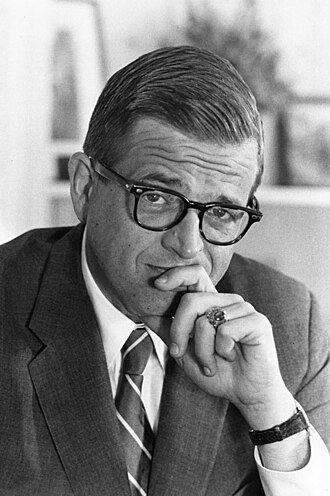
Colson, Charles W.
Charles W. Colson served as Special Counsel to the President from November 1969 to March 1973, and concurrently as the Director of the Office of Public Liaison from July 1970 to March 1973. During the White House taping period, Colson acted as Richard Nixon's ruthless political point man and "hatchet man," compiling the infamous "Enemies List" in 1971 and helping establish the White House Plumbers to discredit political opponents. He held both positions until his resignation in March 1973, when he transitioned out of the administration to return to private law practice just before the Watergate scandal fully erupted.
What Colson talks about on the tapes
Public relations 235Political strategy 233Vietnam War 191Economic policy 116George McGovern 97Media relations 901972 Presidential Campaign 82Public opinion 67Watergate 631972 election 60Congressional relations 59Press relations 58
Conversations (865)
— Page 6 of 9Charles W. Colson initiated a telephone call through the White House operator to speak with an unidentified party. Due to the lack of available transcripts or audio clarity, the specific subject matter and any resulting directives remain undocumented. The exchange stands as an archival record of Colson’s communications during the period immediately following the Watergate break-in.
H. R. Haldeman coordinated with the White House operator to initiate a telephone conversation with Charles W. Colson. Although the recording is largely unintelligible and lacks a formal transcript, the interaction represents a routine administrative effort by the Chief of Staff to establish direct communication with his special counsel. No specific policy developments or substantive decisions are discernible from the available record of this brief exchange.
President Nixon and Charles Colson discuss strategies for the upcoming press conference, focusing on maintaining a calm demeanor while sidelining political controversies. They analyze recent negative media coverage of the Democratic Party's internal divisions and assess Senator George McGovern's political vulnerabilities, particularly his comments on the Vietnam POW issue and the potential for a third-party challenge from George Wallace. Additionally, they discuss the status of Republican prosecutors in New Jersey and coordinate efforts to bolster the 'Democrats for Nixon' campaign organization.
President Nixon and Charles Colson discuss administration messaging regarding the Vietnam War, specifically minimizing public concern over naval and air forces in Thailand while focusing on the withdrawal of ground troops. The two also address political damage control in New Jersey and the President’s strategy for handling press conferences by avoiding partisan combat. Nixon expresses confidence regarding pending negotiations and the potential for a resolution before the July 4th holiday.
President Nixon met with Charles Colson and Henry Kissinger to coordinate administration messaging and policy strategy. The discussion focused on preparing for an upcoming press conference, specifically regarding Vietnam negotiations, potential troop withdrawal announcements, and the current posture of North Vietnamese negotiators. The participants also consulted polling data and analysis from George Shultz concerning the political impact of economic price controls, particularly among the farming community.
President Nixon, H. R. Haldeman, and Charles Colson met to evaluate the President’s recent press conference performance and discuss broader strategies for countering perceived media bias. The participants scrutinized press hostility toward the administration, specifically analyzing how to manage factual errors in reporting and mobilize an organized response to unfavorable coverage. They also assessed the political implications of George McGovern's campaign statements and debated the effectiveness of past communication styles compared to those of previous administrations.
President Nixon met with Charles Colson, Stephen Bull, and Alexander Butterfield to discuss press relations, pending legislation, and the political fallout of the Watergate break-in. They reviewed strategies for managing the media's coverage of the administration and the Vice President, while also discussing the tactical benefits of leaking information about the RNC files to shape public perception. Additionally, the President reviewed his legislative agenda, ultimately deciding to sign the Social Security bill while considering vetoes on various veterans' bills to manage the federal budget.
President Nixon met with maritime industry leaders and labor union representatives to discuss the status and future of the U.S. shipbuilding and maritime sector. The discussion centered on recent productivity gains, the importance of ship construction for national security and economic competitiveness, and the administration's goals for increasing employment and shipyard output. Nixon emphasized the necessity of a strong, modernized Merchant Marine to maintain U.S. standing in a competitive global market.
President Nixon met with Charles Colson, Ronald Ziegler, Caspar Weinberger, and others to strategize on administration policy, political messaging, and pending legislation. The conversation focused on managing the political optics of Social Security increases and federal budget cuts, as well as coordinating a firm stance on Vietnam peace negotiations and prisoners of war. Nixon directed his team to emphasize that any increased federal spending must be balanced by tax increases, and he instructed staff to challenge negative media coverage, particularly regarding Vietnam and administrative integrity.
President Nixon and Charles W. Colson engaged in a lengthy telephone consultation to discuss sensitive political strategy and administration priorities. While specific transcript details remain unavailable, the discussion served as a private forum for the President to coordinate executive messaging and internal policy oversight with his special counsel. The exchange reinforces the close working relationship between the two men during a critical period of the 1972 election cycle.
President Richard M. Nixon and Charles W. Colson engaged in a lengthy telephone consultation regarding undisclosed matters. Due to the withdrawal of the recorded content for security or personal reasons, no specific administrative decisions or thematic details are accessible. The interaction remains archived as a restricted record within the White House taping system.
President Nixon and Charles Colson met in the Oval Office to discuss political strategy and administrative matters. The conversation focused on internal White House dynamics and the management of sensitive personnel issues. While a specific portion of the discussion remains classified, the meeting reflects the ongoing coordination between Nixon and his special counsel regarding executive priorities during the 1972 election cycle.
President Nixon held consultations with Philadelphia Mayor Frank Rizzo, Charles Colson, and Alexander Haig to discuss political strategy and upcoming events. Nixon praised Rizzo’s recent public performance and sought his counsel regarding the political risks of involving Frank Sinatra in an upcoming state event for the Italian Prime Minister. The participants evaluated the potential fallout regarding Sinatra’s rumored associations and considered the optics of his inclusion in a high-profile Kennedy Center performance.
President Nixon met with Charles Colson and other staff members to navigate the ongoing political fallout from the Watergate break-in, specifically focusing on the legal jeopardy of figures like Jeb Magruder and E. Howard Hunt. Beyond the scandal, the participants discussed scheduling entertainment for a visit by Italian Prime Minister Giulio Andreotti, strategic press relations, and potential labor support from the Teamsters. Nixon emphasized maintaining a posture of confidence while directing staff to manage media interactions carefully to avoid appearing defensive.
President Nixon and Charles W. Colson engaged in a telephonic consultation to discuss sensitive political strategy and White House operations. While specific details remain obscured due to the lack of an available transcript, the dialogue reflects an ongoing exchange regarding administrative priorities and internal management. This interaction serves as a record of high-level advisory communication between the President and one of his closest political aides during a pivotal summer in his presidency.
President Nixon and Charles Colson discuss campaign strategy, focusing on the shifting positions of their political opponents and the media's coverage of these developments. They evaluate the potential impact of middle-income tax proposals on the election and coordinate the release of daily promotional or campaign material. The conversation concludes with an emphasis on maintaining a consistent and aggressive public relations narrative.
President Nixon, assisted by Charles Colson and Marjorie Acker, verified the status of correspondence intended for Margaretta “Happy” Rockefeller. The participants confirmed that no letter had yet been sent to Mrs. Rockefeller. This brief administrative check ensured the President was accurately informed regarding the pending status of this specific communication.
President Nixon met with Charles Colson to manage White House correspondence and coordinate political strategy regarding the 1972 election. The discussion covered administrative matters, including a condolence call to Margaretta Rockefeller, and shifted to tactical planning regarding labor union support. They specifically analyzed George McGovern's political rhetoric regarding 'power brokers' and reaffirmed Nixon's strategy for maintaining relations with labor leaders like George Meany.
Charles W. Colson and Jay Lovestone engaged in a brief telephone consultation regarding sensitive, non-public matters. Due to the withdrawal of the primary transcript content as personal/returnable material, the specific strategic objectives or political topics discussed remain restricted. The interaction highlights the ongoing communication between the White House and external political or labor affiliates during the 1972 period.
President Richard Nixon and special counsel Charles Colson held a brief telephone discussion to review political strategy and internal administration matters. The conversation focused on ongoing operational concerns and potential actions required to address political challenges facing the White House. No specific, conclusive outcomes were recorded for this exchange beyond the continued coordination between the two men on sensitive political objectives.
President Nixon and Charles Colson discuss scheduling a meeting with an unnamed associate, weighing the merits of a breakfast appointment versus a more informal evening boat ride. The conversation briefly touches on political strategy regarding potential public hostility from younger demographics, as well as vague references to analytical reports and press-related activities. The exchange concludes with logistical coordination regarding upcoming meetings and the status of ongoing political analysis.
President Nixon met with H.R. Haldeman, Charles Colson, and Henry Kissinger to discuss sensitive political and national security matters, specifically the ongoing Watergate investigation and Vietnam peace negotiations. The group reviewed the potential for indictments involving Jeb Stuart Magruder and examined the strategic handling of federal investigations to protect the White House from entanglement. Additionally, the President and Kissinger discussed managing domestic opposition to the war, coordinating press strategy, and preparing for an upcoming meeting with congressional leaders regarding Vietnam.
President Nixon and Charles Colson spoke via telephone to discuss unidentified matters concerning administration operations. As no transcript is available for this recording, the specific subjects addressed remain unknown to researchers. The conversation serves as a record of direct communication between the President and his special counsel during a period of high-level political activity.
President Nixon met with his Cabinet and senior staff to discuss strategies for achieving a balanced federal budget by 1975, emphasizing the necessity of immediate spending cuts and potential vetoes of congressional legislation to curb inflation. Budget Director George Shultz outlined the administration’s plan to issue "ceiling letters" to agency heads to enforce strict fiscal guidelines and reduce government deficits. The participants also reviewed recent positive economic indicators, including growth in the Gross National Product and declining unemployment, while noting that the public generally views government spending as a primary driver of inflation.
President Nixon and Charles Colson discuss strategies for the 1972 campaign, focusing specifically on the organization and launch of the 'Democrats for Nixon' effort led by John B. Connally. They review potential high-profile Democratic defectors, assess the economic landscape, and analyze the vulnerabilities of George McGovern, particularly regarding his temperament, defense policies, and stance on social issues like marijuana. The conversation highlights the administration's intent to utilize surrogates and aggressive political maneuvering to maintain the President's lead in the polls and prevent McGovern from building momentum.
President Nixon and Charles Colson strategized on campaign tactics for the 1972 election, focusing on leveraging Democratic defections and managing the political momentum of their opponents. They discussed various public relations issues, including unfavorable press coverage and the potential political influence of figures like Bobby Fischer. The conversation concluded with a focus on maintaining campaign pressure and effectively timing their counter-narratives to prevent the opposition from gaining significant momentum.
President Nixon and Charles W. Colson discussed the launch of the "Democrats for Nixon" organization, strategizing on how to leverage former Democratic Treasury Secretary John B. Connally to peel away traditional Democratic support from George McGovern. They reviewed upcoming media appearances by Connally and other candidates, agreeing to emphasize the theme of "loyal Democrats" as a means to differentiate their opposition from the McGovern platform. Additionally, the conversation touched upon the administration's political strategy regarding labor unions, polling data trends, and the necessity of forcing Republican candidates to formally request their opponents' positions on McGovern to create a negative wedge issue.
President Nixon and Charles Colson discuss their frustration with media bias and the perceived weakness of White House staff and legislative leaders. They transition to a strategic assessment of labor legislation, specifically focusing on managing political relations with senators and union leaders like George Meany. Nixon emphasizes that cabinet officials must take direct responsibility for legislative negotiations rather than delegating to lower-level staff, ultimately concluding that they should abandon current stalled efforts in favor of a new legislative approach.
President Nixon and Charles Colson discuss political strategy and public perception regarding the administration's leadership and the rank-and-file electorate. The conversation centers on navigating political optics and managing potential public scrutiny of the administration's actions. The two agree to reconvene the following day to further refine their approach to these sensitive political matters.
President Nixon and Charles W. Colson reviewed recent television appearances by John B. Connally and George S. McGovern, discussing the efficacy of their respective political messages. Nixon praised Connally’s performance while expressing frustration over McGovern's policy stances, particularly regarding Vietnam, Thailand, and the Detroit busing case. The two also strategized on labor union endorsements and voter outreach, specifically emphasizing the importance of registering non-college youth to solidify support within the "silent majority."
President Nixon dictates a memorandum addressed to John B. Connally with a copy directed to Charles W. Colson during a gathering at Camp David. The interaction serves as a formal administrative record for the President to formalize instructions or strategic directives to his advisors. Following the dictation, the conversation transitions into a brief period of personal, non-archived discussion.
President Nixon and Charles Colson held a lengthy telephone consultation regarding ongoing administration political strategy and potential internal concerns. While the specific transcript is unavailable, the discussion focused on managing the current political climate and refining the White House's approach to sensitive administrative matters. No definitive outcomes are recorded due to the lack of available documentation for this session.
President Nixon met with H. R. Haldeman, Charles Colson, and members of Colson's staff to discuss administrative communications strategy, the role of cabinet members in defending policy, and political outreach. The discussion focused on using cabinet officials as effective surrogates to promote conservative judicial appointments and defend administration policies to specific audiences, such as law enforcement groups. Additionally, the President touched upon concerns regarding rising food prices and the necessity of cultivating aggressive, action-oriented leadership within the State and Defense departments.
President Nixon and Charles Colson discussed the morale and management of the White House communications staff, specifically regarding potential meetings with Kenneth Clawson’s group. Colson explained that he excluded Clawson’s team from a recent session to keep the meeting size manageable and to avoid offending Herb Klein. They agreed that the administration should meet with staff in specialized project groups to ensure productivity while maintaining sensitive internal hierarchies and professional relations.
President Nixon and Charles Colson discuss the political necessity of engaging a specific advocacy group to ensure they remain aligned with the administration. Nixon directs Colson to invite the group's representative to the White House for a brief meeting to prevent them from feeling alienated. The President emphasizes managing these relationships to maintain support for specific projects, concluding that a personal outreach is the most effective approach to avoid future friction.
President Nixon and Charles Colson spoke via telephone to discuss ongoing political strategies and administration business. While the specific details of the conversation were not recorded in a transcript, the call reflects the frequent communication between the President and his special counsel regarding White House operations. No definitive policy shifts were documented, but the exchange serves as evidence of Colson's role in the President's daily strategic coordination.
President Nixon met with his senior advisors to discuss political strategy for the 1972 campaign, specifically focusing on the emerging controversy regarding Democratic vice-presidential nominee Thomas F. Eagleton. Nixon directed his staff to maintain a public stance of non-interference, aiming to exploit the contrast between his own steady governance and the perceived instability within the McGovern campaign. The group also evaluated administrative management, press relations, and the scheduling of various diplomatic and political engagements.
President Nixon met with H.R. Haldeman, Charles Colson, and Ronald Ziegler to coordinate the administration's political strategy regarding the 1972 presidential campaign. The discussion focused on distancing the President from campaign chair Clark MacGregor’s unauthorized public comments concerning Senator Thomas Eagleton's medical history. Additionally, the group strategized on leveraging Senator George McGovern’s controversial stances on foreign aid to Greece and national defense as political wedges to secure support from key voting blocs.
Charles W. Colson contacted the White House operator to facilitate a connection to his own office staff. During the subsequent brief exchange with an unidentified staff member, Colson issued a specific, though underspecified, request for action. The conversation served primarily as an administrative bridge to manage internal communications.
President Nixon and Charles Colson held a lengthy telephone consultation to discuss sensitive political strategy and administration priorities. While specific transcript details are unavailable, the conversation served as a high-level briefing between the President and his special counsel regarding ongoing domestic policy or political developments. This exchange highlights the close, informal advisory relationship between Nixon and Colson during a critical period of the 1972 election year.
President Nixon held a series of brief, disconnected meetings and calls with Alexander P. Butterfield, Charles W. Colson, and Henry A. Kissinger. The discussions centered on internal scheduling logistics, including a request for a meeting between the President and Senator Hugh Scott. The participants coordinated administrative items related to the President's upcoming agenda.
President Nixon and Charles Colson spoke briefly to coordinate the President's upcoming schedule. The primary focus of the discussion was confirming a future meeting between the two men. This brief interaction served to facilitate the logistics of their ongoing political communications.
President Nixon met with Charles W. Colson to discuss the administration's public relations strategy regarding a specific news story involving Kenneth W. Clawson and John A. Scali. The President instructed Colson to investigate the details of this story to preempt potential complications. Manolo Sanchez joined the meeting briefly at its conclusion as the President managed his scheduling obligations.
President Nixon met with Charles Colson, Kenneth Clawson, and John Scali to assess media coverage of his administration's foreign policy and the ongoing presidential campaign. The discussion focused on how international developments, such as the situation in Thailand and broader Cold War dynamics, impacted public and press perception of the President versus his opponent, George McGovern. Additionally, Nixon directed his staff to monitor media relations more closely and advised that Vice President Spiro Agnew should exercise more rhetorical discipline to maintain his political effectiveness.
President Nixon calls Charles W. Colson to offer personal encouragement after Colson expresses distress over a critical newspaper column by Thomas W. Braden. Nixon advises Colson to ignore media criticism, framing it as a predictable tactic by opponents intended to provoke a reactionary response. He encourages Colson to maintain a thick skin and treat such attacks as badges of honor rather than letting them cause personal frustration.
President Nixon met with Charles W. Colson to offer personal encouragement following negative media coverage and political criticism. Nixon advised Colson to remain resilient, framing media attacks as a tactical attempt to induce fear and undermine the administration's resolve. He urged Colson to ignore editorial criticism and maintain a combative posture toward their political adversaries.
President Nixon and Charles Colson spoke via telephone while the President was at Camp David to discuss sensitive political and administrative matters. Although the majority of the conversation remains restricted, the discussion centered on high-level strategy regarding the management of ongoing domestic issues. No definitive actions or decisions were explicitly transcribed due to the withdrawn status of the primary content.
President Richard Nixon met with Special Counsel Charles Colson at Camp David to discuss ongoing political strategies and administrative matters. Although a formal transcript is unavailable, the meeting focused on managing personnel and internal White House objectives during the 1972 election cycle. The discussion served to align the administration's political agenda and refine operational priorities for the executive branch.
President Nixon and Charles W. Colson coordinate a brief meeting regarding Colson’s current activities. Colson confirms he is waiting to convene with the Detroit Committee following an earlier session in the Roosevelt Room. The President directs Colson to report to him shortly to discuss the matter.
President Nixon and Charles Colson met briefly in the Oval Office to coordinate the handling of recording equipment and administrative materials. The interaction focused on the physical placement of documents or tapes, likely related to the maintenance of the White House taping system. No major policy decisions were made during this exchange, which functioned primarily as a logistical check-in.
President Nixon met with his economic advisors and key staff, including George Shultz, Caspar Weinberger, Herbert Stein, H.R. Haldeman, and John Ehrlichman, to refine the administration's public relations strategy regarding the economy ahead of the 1972 election. The group evaluated the political impact of inflation, unemployment, and food prices, concluding that the public primarily associated rising food costs with processors and middlemen rather than the administration. Nixon directed his team to avoid getting bogged down in minor press interviews and instead focus their efforts on high-impact television appearances and providing economic talking points for political surrogates to utilize in their campaigns.
President Nixon and Charles Colson spoke via telephone to discuss undisclosed matters, as the primary content of the conversation remains restricted under withdrawal guidelines. Due to the lack of available transcript details, the specific political objectives or decisions reached during this exchange cannot be confirmed. The interaction is cataloged as part of the White House internal communication records for that period.
President Nixon met with special counsel Charles Colson to discuss sensitive political strategy and potential damage control efforts regarding the ongoing investigation into the Watergate break-in. The pair explored tactics to manage public perception and insulate the administration from fallout during the 1972 election cycle. Their discussion focused on assessing the vulnerabilities of the White House position and coordinating countermeasures to limit political damage.
President Nixon, H. R. Haldeman, and Charles Colson met to discuss campaign strategy, press relations, and economic policy ahead of the 1972 election. They evaluated tactics for addressing inflation and debated how to effectively frame political messaging, including the potential to leverage questions about campaign finance and foreign funding against George McGovern. Additionally, the President expressed frustration with campaign official Clark MacGregor's public criticisms of the staff, leading the group to discuss the necessity of maintaining discipline and secretly recording interviews for future protection.
President Nixon met with H.R. Haldeman and other staff to review the status of the Watergate investigation, focusing on maintaining the secrecy of White House involvement and managing the legal exposure of committee officials. The participants discussed grand jury strategies, the handling of potential indictments for figures like Jeb Stuart Magruder, and efforts to discredit political opponents by tying them to Howard Hughes. They concluded that while the scandal was a "powder keg," they had successfully minimized the immediate damage and expected to avoid trial-related repercussions until after the upcoming election.
President Richard Nixon and special counsel Charles Colson held a telephonic consultation to discuss ongoing administrative priorities and political strategy. Given the lack of a transcript for this specific exchange, the exact nature of their deliberations remains undocumented, though such interactions typically concerned reelection efforts or sensitive policy matters. No definitive outcomes or action items were recorded in the available archival descriptions.
President Nixon and Charles Colson discuss the political fallout following the removal of Thomas Eagleton from the Democratic ticket and its potential impact on the upcoming election. The conversation touches on the reactions of key political figures, including George Meany, Lawrence O'Brien, and Edward Kennedy, while evaluating how these developments might affect the electoral landscape. They further analyze news coverage and the shifting dynamics of the political climate in the suburbs.
President Nixon and Charles W. Colson engaged in a brief telephone consultation regarding administrative and political matters. The dialogue focused on organizational strategy and the handling of ongoing domestic issues facing the administration. No definitive policy shifts were finalized, though the exchange served as a tactical check-in between the President and his advisor.
President Nixon and Charles Colson discuss strategies for presidential gift-giving, specifically focusing on the feasibility of customizing music boxes with the presidential seal to distribute to notable individuals. They also address logistical matters, including the placement of a painting of the President's dog, King Timahoe, and the President's upcoming schedule. The conversation reflects administrative efforts to manage White House promotional items and office decor in consultation with Rose Mary Woods and Manolo Sanchez.
President Nixon and Charles Colson met to discuss administrative personnel assignments for a forthcoming Sequoia cruise and to analyze current economic conditions. They evaluated the political impact of rising food prices on housewives and considered various policy options regarding price controls and staples. Additionally, the President reviewed economic data, specifically examining recent revisions to business indicators and unemployment figures to better gauge the health of the economy.
President Nixon met with H.R. Haldeman, Charles Colson, and Henry Kissinger to coordinate administration strategy regarding the 1972 reelection campaign, foreign policy outreach, and logistical planning for upcoming domestic travel. The group discussed utilizing surrogate outreach to build bipartisan support for the Strategic Arms Limitation Treaty (SALT) and managing the President's visits to flood-stricken areas in Wilkes-Barre and Elmira to highlight disaster relief legislation. Additionally, Nixon emphasized the need for aggressive political tactics—specifically the use of derogatory campaign literature linking opponents to George McGovern—and reviewed economic data concerning food prices and inflation with his staff.
President Nixon, along with advisors Kissinger, Haldeman, Ehrlichman, and Colson, discussed several key issues. They addressed concerns about the Strategic Arms Limitation Treaty (SALT) and potential congressional amendments, particularly from Senator Jackson, and debated strategies for managing these reservations with the Soviets. The conversation also delved into economic matters, focusing on rising food prices, the potential for a price freeze on hides and other goods, and the political implications of these economic trends. Additionally, the group touched upon the Arthur Bremer assassination attempt and its potential political fallout, as well as the upcoming presidential schedule involving youth and women leaders.
President Nixon and Charles W. Colson engaged in a brief telephone conversation that was subsequently withheld from the public record. Due to the withdrawal of the content, no specific policy decisions, political strategies, or substantive topics are discernable from the available documentation. The interaction remains a restricted item within the White House taping archives.
President Richard M. Nixon met with special counsel Charles W. Colson in the Oval Office for a brief discussion. The brief interaction, which remains largely undocumented due to the lack of a transcript and the withdrawal of an item, pertains to administrative or political matters being handled by the White House during the 1972 campaign season. No definitive policy outcomes or specific actions are identifiable from the available record of this brief meeting.
Charles W. Colson contacted the White House operator to facilitate an outgoing call from his office. The interaction was brief, serving strictly as a logistical request to establish a connection with another party. No substantive policy discussions or political developments occurred during this exchange.
Charles W. Colson contacted his staff member, Holly Holm, to coordinate the monitoring of wire service reports prior to his arrival at the office. The primary objective of this exchange was to track potential breaking news, specifically regarding a possible press conference by George S. McGovern. Colson confirmed his intent to stay informed on these developments before transitioning to his next location.
President Nixon met with Charles W. Colson and Patrick J. Buchanan to discuss political strategy and administrative coordination during the 1972 reelection campaign. The participants reviewed Colson’s recent interactions with political analyst Richard M. Scammon and analyzed the President’s earlier meeting with youth representatives from the Committee for the Reelection of the President. The dialogue focused on campaign outreach efforts and assessments of the current political landscape.
President Nixon, Charles Colson, and Stephen Bull discussed the administration's record on unemployment, comparing figures from 1969 to 1972 and considering its relationship to the Vietnam War. They also touched upon public relations strategies, mentioning Clark MacGregor and George McGovern, and reviewed upcoming scheduling matters, including a meeting with Pat Nixon. The conversation also briefly referenced poll data from Gallup and Harris.
President Nixon met with Charles W. Colson to review materials and discuss John B. Connally’s recent schedule and activities. The conversation touched upon political optics and the momentum of ongoing initiatives. Alexander P. Butterfield briefly joined the meeting toward its conclusion before the participants departed.
President Nixon and Charles Colson spoke briefly to coordinate a meeting. The primary purpose of the telephone call was to facilitate scheduling for a subsequent in-person discussion between the two men. No substantive policy matters or tactical decisions were reached during this short exchange.
President Nixon and Charles Colson held a brief, informal check-in to confirm their respective locations and availability. The conversation served primarily as a logistical verification to facilitate subsequent communication. No substantive policy matters or tactical decisions were addressed during this exchange.
President Nixon consulted with Charles W. Colson and other staff regarding the coordination of an upcoming external announcement. The discussion focused on scheduling logistical arrangements and determining the necessity of the President's personal attendance at a meeting. Ultimately, the President directed staff to facilitate a call to Clark Hill to clarify these requirements and adjust his availability accordingly.
President Nixon and Charles Colson discuss using the IRS to target political opponents, specifically identifying the organization Common Cause as a potential subject for investigation. Nixon expresses frustration with bureaucratic inertia, urging Colson to pursue a more aggressive strategy by auditing Democratic-aligned groups in retaliation for similar tactics used against the administration. The conversation further addresses political maneuvers involving the Veterans of Foreign Wars and criticism directed at George McGovern.
President Nixon and Charles Colson discuss the political weaponization of the Internal Revenue Service against Democratic opponents. Nixon directs Colson to intensify pressure on the IRS to aggressively target their political rivals. This exchange highlights the administration's ongoing efforts to use federal agencies as instruments of political retaliation.
President Nixon met with Charles W. Colson at Camp David to dictate a memorandum for follow-up action. While the specific contents of the discussion were withdrawn for security or personal reasons, the meeting served as a direct tasking session between the President and his special counsel. The primary objective was the transmission of administrative or political directives recorded via the Hard Wire system.
President Nixon met with Charles Colson and H. R. Haldeman at Camp David to dictate a memorandum outlining specific strategic directives. The participants focused on administrative priorities and internal management tasks, though the specific substance remains classified due to withdrawn material. No further actions or developments were recorded as the session centered on the formalization of these presidential instructions.
President Nixon and Charles Colson strategized on how to politically weaponize former Attorney General Ramsey Clark’s recent criticisms of the administration’s Vietnam policies. They viewed Clark’s public opposition as hypocritical given his own role in escalating the conflict, and planned to use these remarks to shock the public. As a follow-up action, they agreed to task John Mitchell with pressuring George McGovern to either address or repudiate Clark’s controversial statements.
President Richard M. Nixon and Special Counsel Charles W. Colson met at Camp David to discuss sensitive political strategy and personnel matters. The dialogue centered on upcoming administrative actions and the management of ongoing political concerns regarding the administration's public image. While specific details remain restricted, the meeting served to coordinate executive maneuvers ahead of the 1972 election cycle.
President Nixon and Charles Colson discuss strategies to undermine the credibility of Democratic vice-presidential nominee Sargent Shriver regarding his shifting position on the Vietnamization policy. The pair coordinates plans for Secretary of Defense Melvin Laird to attack Shriver’s record during upcoming platform committee testimony and emphasizes highlighting the administration's success in ending the draft. Additionally, they discuss press coverage of the Watergate lawsuit, expressing a dismissive attitude toward ongoing negative reporting by the Washington press.
President Nixon and Charles Colson discuss campaign messaging strategy, specifically focusing on the administration’s credibility and the successful transition to an all-volunteer military. They emphasize leveraging the reduction of draftees and the withdrawal of troops from Vietnam as key accomplishments to highlight during the reelection campaign. Nixon underscores the importance of publicizing these defense-related achievements to bolster his political standing against opponents.
President Nixon and Charles W. Colson discussed the need to improve public relations support for Frank C. Carlucci regarding disaster relief efforts in Pennsylvania. The conversation shifted to political strategy, specifically managing Secretary of Defense Melvin Laird’s public comments on the all-volunteer army and Vietnam policy to avoid credibility issues. Nixon directed Colson to control the timing of these announcements, favoring a mid-September rollout, while also coordinating a response to political attacks from George McGovern and Democratic figures like W. Averell Harriman and Cyrus R. Vance.
President Nixon and Charles Colson discuss public relations strategies regarding Office of Management and Budget official Frank Carlucci and the necessity of proactively managing media narratives. The two emphasize the importance of providing robust PR support for administration officials to counter accusations and maintain credibility. They agree on a cautious, strategic approach to releasing information to ensure that public charges are effectively addressed without prematurely spoiling their messaging.
President Nixon met with Pierre Rinfret, Charles Colson, and John Connally to strategize on economic messaging and political maneuvering regarding the upcoming International Monetary Fund meeting and the credibility of Sargent Shriver. The participants discussed framing international trade partners as fierce competitors to appeal to American laborers and business interests. Additionally, Nixon and Connally explored ways to undermine Shriver's credibility by investigating past Vietnam negotiations from the Johnson administration and potentially eliciting public statements from former officials to counter his criticisms.
President Nixon met with Charles Colson, Stephen Bull, and Samuel and Mrs. Winer to conduct a brief photo session intended to rectify a previous camera malfunction. Beyond the photography, the participants discussed the involvement of the U.S. Jaycees in the 1972 Republican National Convention and the implementation of a voter participation program. The meeting concluded with the presentation of presidential gifts to the Winers before they departed.
President Nixon, Charles Colson, and Henry Kissinger discuss George McGovern's recent interview, in which the Democratic candidate advocated for a communist-dominated coalition government in South Vietnam. The participants express disbelief at McGovern's political strategy, labeling his comments as extreme and amateurish, while predicting that such rhetoric will alienate voters. Nixon encourages Colson to bolster Kissinger's morale following recent public attacks, viewing the opposition's focus on his aides as a sign of desperation.
President Nixon met with Charles Colson and Henry Kissinger at Camp David to conduct a detailed review and refinement of his upcoming acceptance speech. The discussion focused on sharpening the address's rhetoric regarding defense spending, the necessity of negotiating from a position of strength, and contrasting the administration's vision against the platform of George McGovern. Additionally, the participants deliberated on the inclusion of the 'peace dividend' concept and agreed to excise certain segments to ensure the speech maintained a strong, patriotic, and positive tone.
President Nixon met with Henry Kissinger, H.R. Haldeman, and other staff to coordinate the administration's response to the murders of Israeli athletes at the Munich Olympics, prioritizing public diplomacy and private US support for Israel. The participants also strategized on the 1972 presidential campaign, focusing on delegating attacks against George McGovern to surrogates while emphasizing positive administration accomplishments. Finally, the group discussed ongoing foreign policy objectives, including Kissinger’s upcoming trip to Moscow and potential Vietnam peace negotiation tactics to ensure favorable optics for the election.
President Nixon and Charles Colson met to discuss political strategy and media relations, focusing on negative coverage from journalists such as Max Frankel and the perceived philosophical leanings of the New York Times. The discussion also addressed political maneuvering regarding R. Sargent Shriver and George McGovern. Additionally, they reviewed intelligence concerning North Vietnamese efforts to support guerrilla operations and hijacking activities during the ongoing conflict in Vietnam.
Charles W. Colson hosted an informal briefing for a visiting tour group within the Cabinet Room of the White House. During the session, Colson provided the visitors with a tour of the facility, highlighting specific landmarks such as the Secretary of Commerce’s chair, the President’s chair, and the proximity to the Rose Garden. This meeting served as a public relations function to engage constituents and provide an inside look at the executive workspace.
President Nixon and Charles Colson met to discuss strategies for managing public relations and campaign messaging in light of recent international and domestic developments. The conversation focused on mitigating the political impact of negative news stories surrounding John B. Connally and leveraging the ongoing Middle East conflict—specifically the aftermath of the Munich Olympic attack—to influence voter sentiment. Nixon directed Colson to organize a coordinated defense of Connally by key allies and underscored the importance of suppressing unfavorable press coverage to maintain political momentum.
President Nixon met with George Shultz, Arthur Burns, and John Ehrlichman to discuss economic strategy, focusing on tax reform and property tax relief. The group evaluated the political risks of pursuing tax changes before the election, debating how to frame their proposals without being perceived as increasing taxes. Additionally, the President and H. R. Haldeman discussed administrative logistics, including the potential for a cruise on the Sequoia to discuss strategy and the implementation of Secret Service protection for Senator Edward Kennedy.
President Nixon and Charles Colson met to discuss campaign strategy and political messaging for the upcoming 1972 election. They reviewed polling data, economic issues, and strategies to counter George McGovern, while also addressing ongoing concerns regarding Watergate and the Vietnam War. A key outcome included the President instructing his speechwriters to develop more effective, aggressive responses to political attacks and allegations of a 'cover-up.'
President Nixon and Charles Colson discuss campaign strategies, specifically emphasizing the necessity for Cabinet members and the administration to proactively attack George McGovern's positions rather than defending against media criticism. The conversation touches upon the political impact of the grain deal, the perceived shift in atmosphere on university campuses, and the potential electoral benefit of highlighting controversies surrounding black athletes at the Olympics. Additionally, the pair evaluates the political risks of presidential outreach to Olympic figures like Mark Spitz versus the established support of Bobby Fischer.
President Nixon and Charles Colson met at Camp David to discuss potential public remarks and White House outreach strategies. The conversation focused on evaluating the political risks of specific public statements and managing external invitations. They concluded by coordinating logistics for a future meeting and reviewing ongoing administrative tasks.
President Nixon met with labor leader Joseph T. DeSilva, Willie J. Usery, Jr., and Charles W. Colson to discuss labor support for his reelection campaign and economic policies. DeSilva offered his personal endorsement, critiquing current union leadership while advocating for wage stabilization and increased job opportunities over welfare. The participants examined strategies for securing support among working-class voters and the political landscape regarding Nixon's administration.
President Nixon and Charles Colson met to strategize on the 1972 presidential campaign, with a primary focus on countering negative press regarding the Watergate break-in and shifting the political conversation toward foreign policy and Vietnam. They discussed aggressive tactics to damage Democratic opponent George McGovern's credibility, including questioning his handling of campaign finances and his stance on the US-Soviet grain deal. Nixon instructed his team to emphasize a "new majority" theme and utilize leaks or disclosures to force McGovern onto the defensive, drawing parallels to past political scandals to minimize the administration's own vulnerabilities.
President Nixon met with H.R. Haldeman, Charles Colson, and other staff members to discuss political campaign strategy, personnel changes within the State Department and the administration, and the ongoing fallout from the Watergate break-in. The group explored potential responses to Democratic criticisms and lawsuits, specifically weighing the merits of appointing an independent, bipartisan commission led by former Supreme Court Justices to review the federal investigation. This strategy was intended to neutralize charges of a 'whitewash' and demonstrate that the administration was conducting an exhaustive, unbiased inquiry into the scandal.
President Nixon met with H.R. Haldeman, Charles Colson, and later Ronald Ziegler to discuss campaign strategy, press relations, and the political fallout of the Watergate scandal. The group evaluated the President’s recent public appearances in Pennsylvania, analyzed negative media coverage, and strategized on how to influence networks—specifically targeting CBS—to provide more favorable coverage. Additionally, they reviewed potential indictments related to Watergate and discussed the necessity of coordinating financial disclosure statements for the President and Vice President Agnew to contrast with their political opponents.
President Nixon met with Charles Colson, H.R. Haldeman, and Stephen Bull to coordinate aggressive legal and public relations strategies regarding the Watergate scandal, including the use of counter-suits and depositions against the Democratic National Committee. The participants discussed establishing a commission to preemptively control the investigation's narrative, while also strategizing media management to shift focus away from Watergate. Toward the end of the meeting, the President shifted focus to personal matters, specifically discussing architectural renovations and the modernization of kitchens and private quarters in the White House.
President Nixon and Charles W. Colson discussed 1972 re-election strategy, specifically focusing on framing the contest as a referendum on voter trust and confidence. They evaluated the performance of Agriculture Secretary Earl L. Butz in defending the administration against George McGovern's accusations regarding the Soviet grain deal. Nixon and Colson concluded that McGovern’s perceived lack of sincerity and consistency would ultimately alienate voters, leading them to prioritize a campaign strategy centered on the President's perceived stability over reactive partisan attacks.