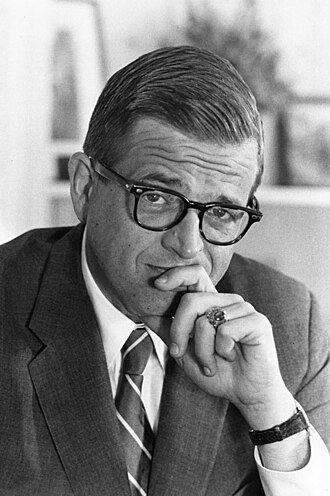
Colson, Charles W.
Charles W. Colson served as Special Counsel to the President from November 1969 to March 1973, and concurrently as the Director of the Office of Public Liaison from July 1970 to March 1973. During the White House taping period, Colson acted as Richard Nixon's ruthless political point man and "hatchet man," compiling the infamous "Enemies List" in 1971 and helping establish the White House Plumbers to discredit political opponents. He held both positions until his resignation in March 1973, when he transitioned out of the administration to return to private law practice just before the Watergate scandal fully erupted.
What Colson talks about on the tapes
Public relations 235Political strategy 233Vietnam War 191Economic policy 116George McGovern 97Media relations 901972 Presidential Campaign 82Public opinion 67Watergate 631972 election 60Congressional relations 59Press relations 58
Conversations (865)
— Page 7 of 9President Nixon and Charles Colson briefly discuss the political implications of public outbursts, specifically referencing an individual named Lutz. Nixon posits that such negative displays can ironically serve the administration's interests by highlighting the dissatisfaction of opponents in contrast to the public's general perception that the country is doing well. The conversation remains speculative and concludes without any formal policy directives or significant operational decisions.
President Nixon and Charles W. Colson engage in a detailed strategic assessment of the 1972 presidential campaign, focusing on the perceived weaknesses and political challenges facing George McGovern. They analyze McGovern’s campaign mechanics, including his struggles with endorsements, media coverage, and the influence of Ted Kennedy, while contrasting these with Nixon’s own electoral strategies. The conversation serves as an analytical exercise to identify vulnerabilities in the Democratic platform and to optimize the effectiveness of the Nixon reelection effort.
President Nixon met with special counsel Charles Colson at Camp David to strategize on political affairs during the 1972 reelection campaign. The two men discussed tactics for managing political fallout and addressing ongoing pressures facing the administration. While specific details of their deliberation remain shielded by the withdrawal of one segment of the record, the discussion reflects the high-level coordination between the President and his key political aide during a critical phase of the campaign.
President Nixon and Charles Colson met to strategize on public relations and campaign management during the 1972 election cycle. The conversation focused on countering critical media coverage from outlets like CBS and The Washington Post, including potential challenges to the latter's television license, and managing the political fallout from Watergate-related hearings. They also discussed administration efforts to discredit opponent George McGovern and the campaign's surrogate communication strategy.
President Nixon and his advisors met to coordinate upcoming foreign policy announcements, specifically focusing on the timing of SALT II, maritime agreements, and trade deals with the Soviet Union to maximize domestic political impact. The President instructed H.R. Haldeman to identify and fire any staff members responsible for leaking CIA documents, while also assessing potential personnel changes for his second term. Additionally, Henry Kissinger briefed the President on ongoing secret peace negotiations with North Vietnam, discussing the scheduling of talks to avoid undermining the President's public appearances.
President Nixon met with Charles Colson to discuss political strategy regarding the upcoming election and media relations. The conversation covered attacks on Senator George McGovern’s economic policies, the administration's efforts to influence CBS News coverage, and complaints regarding *The Washington Post*. Colson reported on his interactions with media executives and provided updates on political maneuvering against the opposition.
President Nixon and Charles Colson discussed campaign strategy for the 1972 election, focusing primarily on undermining George McGovern’s attempts to make the Watergate scandal a central campaign issue. Colson advised that the administration should temporarily ignore McGovern’s accusations to allow him to overplay his hand, noting that McGovern’s increasingly aggressive public persona was hurting his standing with voters. The two also reviewed polling data and coordinated surrogate messaging, deciding to pivot their own attacks toward McGovern’s vulnerable positions on wage and price controls.
President Nixon and Charles Colson discuss general living arrangements and the ongoing political implications of the Watergate investigation. The conversation centers on strategic messaging regarding potential "whitewash" accusations against the administration. Nixon and Colson deliberate on the timing and public framing of their response to these allegations, ultimately leaning toward a sustained public push rather than a brief rebuttal.
President Nixon met with Charles W. Colson to refine campaign strategies for the 1972 election, focusing heavily on shifting public attention toward issues that disadvantaged Democratic challenger George McGovern. They discussed exploiting McGovern’s positions on grain exports and wage controls, while also coordinating labor outreach through figures like George Meany. Additionally, they assessed the political fallout of the ongoing Watergate investigation, with Nixon expressing a desire to maintain distance from the controversy and manage public perception via friendly media channels.
President Nixon met with Charles Colson, John Ehrlichman, and Henry Kissinger to refine the 1972 reelection campaign strategy. The participants prioritized keeping the focus on national security and foreign policy while framing George McGovern's shifting positions as evidence of poor character and lack of trustworthiness. They also discussed attacking the financial disclosures of the Kennedy family and McGovern’s campaign to create a political liability for their opponents, while Nixon instructed his staff to focus on positive foreign policy outreach with international leaders.
President Nixon and Charles W. Colson discussed political strategy for the 1972 campaign, focusing specifically on how to counter Democratic nominee George S. McGovern. They analyzed McGovern's vulnerabilities regarding his defense budget proposals and his position on amnesty for Vietnam War draft evaders. The President directed Colson to emphasize that deserters must 'pay the penalty' for their actions, regardless of the war's conclusion, to effectively attack McGovern's credibility with the public.
President Nixon and Charles Colson discuss the political necessity of maintaining a hardline stance against Vietnam War draft evaders and deserters. They agree on the importance of demanding that these individuals face legal penalties for their actions, even after the war concludes. The conversation focuses on leveraging this rhetoric as a strategy to enforce patriotic standards and public accountability.
President Nixon and Charles Colson discuss strategies to neutralize political controversies regarding the administration's Soviet grain deals and ongoing 1972 campaign developments. They agree to expedite an FBI report to clear any suspicions of scandal while emphasizing the economic benefits of grain sales to farmers. Additionally, they discuss the campaign performance of George McGovern, noting with satisfaction the negative confrontations he has faced during plant visits, particularly regarding his stance on amnesty and Vietnam policy.
President Nixon met with Charles Colson and H.R. Haldeman to coordinate political strategy and manage negative press coverage during the 1972 election campaign. The participants discussed handling sensitive issues, including the recent break-in at Dr. John Lungren's office to recover Nixon's medical files, the political fallout of George McGovern's Vietnam stance, and public relations maneuvers involving grain sales and tax policies. The group emphasized the need to preemptively frame controversial stories to avoid the appearance of a cover-up and considered ways to leverage McGovern's campaign weaknesses.
President Nixon and Charles Colson discuss a Washington Star column by Crosby S. Noyes that draws a favorable comparison between the Watergate scandal and the Daniel Ellsberg case. They aim to shift the public narrative by challenging George McGovern to explain his support for Ellsberg’s theft of government documents in the context of his Watergate criticism. Nixon and Colson also speculate that McGovern’s recent silence on the Watergate affair stems from unfavorable polling data and potential concerns regarding Democratic political misconduct.
President Nixon met with H.R. Haldeman and Charles Colson to coordinate logistics for an upcoming trip to Texas and to assess the 1972 presidential campaign. The discussion centered on countering George McGovern's focus on the Vietnam War through favorable economic data and foreign policy achievements, such as upcoming arms control agreements. Additionally, Nixon directed his staff to maintain a firm stance regarding Jewish political groups and Soviet trade relations, dismissing the need to condition trade deals on political pandering.
President Nixon and Charles Colson strategized on how to leverage the 1972 campaign issues of amnesty and drug policy to contrast the administration's stance with that of George McGovern. They discussed painting McGovern as 'soft' on marijuana legalization and desertion, specifically coordinating efforts to emphasize that deserters must face penalties for their actions. The President approved ongoing efforts to keep these topics in the public discourse, including support for legislative proposals regarding citizenship revocation for those who fled the country.
President Nixon and Charles Colson discuss campaign strategies to challenge George McGovern’s positions on amnesty for Vietnam War draft evaders and the legalization of marijuana. Nixon emphasizes the need for a unified administration stance that advocates for strict penalties and the potential revocation of citizenship for those who fled the country. By framing these issues as moral and legal imperatives, the two aim to pressure McGovern into an unpopular position that will alienate moderate voters.
President Nixon and Charles Colson discussed campaign strategy and the perceived weaknesses of George McGovern's candidacy, focusing on the effectiveness of highlighting "gut issues" like amnesty, busing, and the President's veto of the clean water bill. They analyzed polling data from Macomb County, Michigan, which suggested Nixon was making significant inroads with traditionally Democratic voters, and reaffirmed the campaign's decision to avoid becoming distracted by peripheral issues like Watergate or the Soviet wheat deal. Ultimately, the two agreed that maintaining a clear, firm stance on divisive policy issues would continue to consolidate Nixon's support among the "silent majority" despite any polling volatility.
President Nixon and Charles Colson discussed campaign strategy and public perception ahead of the 1972 election, focusing on the political advantages of maintaining a firm stance against amnesty for Vietnam War draft evaders. They also strategized on how to frame the administration’s response to Larry O'Brien’s complaints about network airtime by emphasizing that network decisions are independent. Additionally, Nixon highlighted the importance of appealing to blue-collar voters and the "silent majority" through decisive executive actions, such as his planned veto of a water bill, while dismissing the long-term electoral impact of minor controversies like Watergate.
President Nixon met with Charles W. Colson and Stephen B. Bull to coordinate logistics for a scheduled meeting with labor leader Thomas W. “Teddy” Gleason. The discussion centered on the arrangements for the Oval Office gathering and an accompanying photograph session with Oliver F. Atkins. The meeting concluded shortly before the scheduled engagement with Gleason took place.
President Nixon met with International Longshoremen's Association (ILA) leaders Thomas W. Gleason and John Bowers, along with White House staff, to discuss labor support for his policies and upcoming trade agreements with the Soviet Union. The discussion centered on the maritime industry, the potential economic benefits of increased trade, and the President's commitment to national defense and maintaining an open-door policy with labor unions. Nixon successfully sought to solidify the ILA's backing for his administration's diplomatic strategy, while addressing union concerns regarding foreign competition and the release of prisoners of war.
President Nixon met with Charles Colson and Stephen Bull to discuss political messaging for his 1972 reelection campaign and the staffing philosophy of his administration. Nixon critiqued the language used in upcoming public statements regarding immigration and terrorism, insisting on avoiding divisive racial and religious categorizations. Furthermore, the President emphasized the need to surround himself with tougher, more street-smart advisors—particularly from the labor movement—who are not easily influenced by the liberal media or elite intellectual circles.
Charles W. Colson and W. Richard Howard discuss the stalled release of a critical political statement targeting George S. McGovern, which was intended to be issued by Clark MacGregor and Robert J. Dole. Colson expresses frustration that MacGregor has failed to authorize the statement due to his preoccupation with upcoming debate preparations. Ultimately, Colson instructs Howard to involve Alexander Haig to push the release forward before the 6:00 p.m. deadline.
President Nixon met with Charles Colson and Patrick Buchanan to discuss electoral strategy and campaign messaging for the 1972 election. They focused on building a coalition among working-class voters by emphasizing shared values and the importance of work, while simultaneously crafting efforts to distance Democratic opponent George McGovern from radical anti-war demonstrators. Additionally, the participants touched on upcoming judicial appointments and the political management of the Watergate scandal as a campaign issue.
President Nixon met with H.R. Haldeman and Charles Colson to discuss political strategy for the 1972 election, focusing specifically on managing campaign demonstrations and public perception. They analyzed the effectiveness of local Republican efforts to frame protest activities—such as those targeting Nixon’s California trip—as direct operations of the George McGovern campaign. Additionally, the group reviewed the support of business and labor sectors, dismissed critical press coverage regarding aerospace industry ties, and assessed how the President’s international diplomatic visits to the Soviet Union and China continued to bolster his public image.
President Nixon, H. R. Haldeman, Charles Colson, and Alexander Butterfield met to coordinate campaign strategy, focusing on press relations, counter-messaging against George McGovern, and the political fallout of the US-Soviet grain deal. They discussed using surrogates to attack McGovern on issues like defense spending and welfare, while strategizing on how to handle the media's coverage of the administration and the Watergate scandal. Additionally, the President reviewed his upcoming campaign schedule, emphasizing the importance of motorcades and targeted appearances in key battleground states to project strength and efficiency.
President Nixon, Charles Colson, and other staff members met to discuss strategies for the 1972 reelection campaign, focusing heavily on undermining Democratic challenger George McGovern. The group analyzed unfavorable polling data and coordinated the use of media surrogates, including popular athletes and sportscasters, to attack McGovern’s credibility and policy positions. Additionally, Nixon directed staff to maintain a firm stance against critical news organizations like The Washington Post and The New York Times, while discussing tactical responses to upcoming political debates.
President Nixon and Charles Colson reviewed 1972 reelection campaign strategy, focusing heavily on mobilizing blue-collar and ethnic support through union leaders. The two analyzed various polling data from sources like Gallup and Harris to gauge George McGovern's standing and the impact of the Thomas Eagleton affair. They also discussed regional political shifts, particularly in Rhode Island, and expressed concern regarding media bias and the specific cultural issues fueling anti-McGovern sentiment.
President Nixon and Charles Colson met at Camp David to discuss political strategy and administrative coordination ahead of the 1972 election. The dialogue focused on managing campaign messaging and addressing specific political liabilities facing the administration. While the available recording is incomplete, the discussion underscores the ongoing efforts by the President and his special counsel to exert control over executive branch operations during the final stretch of the campaign.
President Nixon and Charles Colson review favorable polling data and the stagnant state of George McGovern's campaign as the 1972 election approaches. They discuss the effectiveness of advertising strategies targeting Democratic voters, specifically focusing on welfare and amnesty issues. The conversation concludes with an assessment of the campaign's momentum and coordination with H.R. Haldeman regarding regional ad placements.
President Nixon met with special counsel Charles W. Colson at Camp David to discuss sensitive administrative or political matters. Given the withdrawal of an item from the official record, the discussion likely touched upon confidential strategy or personnel issues pertinent to the 1972 re-election campaign. The brief nature of the interaction suggests a targeted consultation rather than a wide-ranging policy review.
President Nixon and Charles Colson reviewed campaign strategy and addressed aggressive corruption allegations leveled against the administration by Democratic opponent George McGovern in a recent speech to UPI editors. The discussion included potential responses to McGovern's criticisms, specifically concerning the Vietnam War and the administration's treatment of the press. Additionally, the two reviewed pending domestic legislative priorities, including concerns regarding the federal water bill and the fiscal impact of proposed Social Security tax increases.
President Nixon and Charles Colson evaluated the evening news coverage provided by major television networks, specifically focusing on the biased reporting regarding Vice President Spiro Agnew and Democratic challenger George McGovern. Colson critiqued the perceived hostility of CBS toward the administration while highlighting the relative coverage of news editors and networks. The conversation also touched upon the political implications of AFL-CIO polling in Connecticut and included mention of a meeting with Andrei Gromyko at Camp David.
President Nixon met with special counsel Charles Colson at Camp David to discuss sensitive political or administrative matters. While the primary substance of the conversation remains restricted due to a withdrawn item, the meeting reflects the ongoing high-level coordination between the President and his aide regarding critical White House strategy. No specific actions or public policy outcomes were recorded for this brief encounter.
President Nixon met with Charles Colson, Henry Kissinger, and John Ehrlichman to coordinate the administration's political strategy against George McGovern's campaign. The discussion centered on countering McGovern’s accusations of moral corruption by projecting strength and avoiding defensive maneuvers, while also managing media relations and planning responses to legislative challenges. Key decisions included maintaining a firm stance on welfare reform legislation to avoid appearing inconsistent and preparing a strategic public response to potential developments in Vietnam peace negotiations.
President Nixon met with his personal valet, Manolo Sanchez, and special counsel Charles W. Colson at the Aspen Lodge to discuss administrative matters and the President's upcoming schedule. While the specific substance of the dialogue remains unrecorded, the meeting served as an opportunity for Nixon to coordinate logistical details and staffing issues during his stay at Camp David. The session concluded with Sanchez departing the study while Nixon continued his deliberations with Colson.
President Nixon and Charles Colson discussed political strategy for the 1972 campaign, focusing on the President's public image and the management of domestic issues. They evaluated the political impact of George McGovern's campaign, specifically agreeing to encourage and amplify McGovern's recent focus on corruption charges, which they believed would alienate voters. The conversation also covered tactical legislative developments regarding welfare and Social Security, as well as plans to use deceptive tactics to exploit internal divisions between R. Sargent Shriver and labor leader George Meany.
President Nixon and Charles Colson discuss campaign strategy, specifically focusing on messaging against their political opponents and defining the administration's stance on key social issues like welfare, busing, and amnesty. They review positive polling data from Southern California and strategize on how to manage media narratives regarding the Vietnam peace plan and potential legislative vetoes. The conversation concludes with a directive to mobilize letter-writing campaigns to solidify public support for the administration's aggressive political rhetoric.
President Nixon met with a large group of reporters and staff in the Oval Office to conduct a press conference, followed by a private debriefing with his senior aides, including H.R. Haldeman, John Ehrlichman, and Charles Colson. During the public session, Nixon addressed current events such as the 1972 campaign, the status of the Vietnam peace negotiations, allegations regarding the U.S.-Soviet grain deal, and his stance against a 1973 tax increase. Following the departure of the press, the President and his advisors discussed the effectiveness of his performance, particularly the benefit of using his responses as recorded campaign material, and strategized on future scheduling and media messaging.
President Nixon met with Charles Colson and H.R. Haldeman to refine his re-election campaign strategy, focusing on framing key policy contrasts between himself and George McGovern. They discussed utilizing specific "winning" issues, such as amnesty, welfare, marijuana, national defense, and Vietnam, to paint McGovern as radical and out of touch with the American public. The group also evaluated the effectiveness of recent television advertisements, discussed upcoming campaign appearances, and assessed poll data to sharpen their outreach to key demographics.
President Nixon met with political pollster Samuel Lubell and aide Charles Colson to discuss shifting national public opinion and underlying voter trends leading into the 1972 election. They analyzed how voters form attachments to candidates based on personal interests and explored why the "Eastern Establishment" media consistently failed to grasp the changing political mood regarding issues like welfare, the Vietnam War, and the work ethic. The discussion served as a strategic intelligence-gathering session for the President to refine his understanding of the electorate's psychology and defense of his administrative policies.
President Nixon and Charles Colson discuss strategies for the 1972 reelection campaign, focusing heavily on managing press relations and exploiting George McGovern's perceived vulnerabilities. Nixon emphasizes the dominance of television in shaping public opinion, while Colson outlines plans to cultivate labor leader George Meany to solidify support among blue-collar Democrats. They further evaluate the effectiveness of hardline campaign issues, specifically amnesty and economic policy, agreeing to prioritize these themes to maintain their voter base leading into the final weeks of the election.
President Nixon met with his senior advisors, including H. R. Haldeman and Charles Colson, to evaluate the media coverage and political impact of his recent press conference. They discussed the generally hostile tone of the press, analyzed the effectiveness of various messaging strategies regarding the 1972 campaign, and debated the strategic merits of holding in-office versus East Room press conferences. The group also coordinated a response to George McGovern’s recent foreign policy speech, planning for Secretary of State William P. Rogers to deliver a rebuttal.
President Nixon, Charles Colson, and H.R. Haldeman met to coordinate political messaging strategies regarding George McGovern's foreign policy critiques and Black community outreach. The discussion focused on characterizing McGovern's stances on the People's Republic of China and India as destabilizing to international relations, specifically regarding the Soviet Union and Japan. Additionally, the participants reviewed draft speech materials and discussed administrative efforts to counter McGovern’s Vietnam War proposals.
Charles W. Colson coordinated with White House staff, including Joan Hall and Susan Lallathin, to gather and verify the latest polling data while President Nixon and H. R. Haldeman consulted in the background. The discussion focused on confirming specific poll figures for Nixon and his opponent, George McGovern, along with the associated point spread. Colson ultimately directed staff to finalize the report and deliver the typed results to his office.
President Nixon met with Henry Kissinger, Charles Colson, and other staff to review favorable polling data and strategize for the final stages of the 1972 presidential campaign against George McGovern. The participants discussed leveraging specific "gut issues," such as amnesty for draft dodgers, busing, and law and order, to frame McGovern as an extreme candidate. Nixon directed his team to sharpen their messaging on economic issues—specifically taxes, prices, and welfare—while coordinating with cabinet surrogates to amplify these critiques in the media.
President Nixon and Charles Colson discussed campaign strategy, specifically criticizing the lack of aggressive television advertising regarding Vietnam, the amnesty issue, and prisoners of war. Nixon expressed frustration with the Committee to Re-elect the President (CRP) for failing to target George McGovern’s vulnerability on these topics, insisting that McGovern’s policies amounted to a sellout to communists. Colson agreed to pressure campaign staff to produce new advertisements and ensure that upcoming public appearances by administration officials hit these issues hard to keep McGovern on the defensive.
President Nixon and Charles Colson discuss their frustration with the campaign's current advertising strategy, specifically the lack of aggressive television commercials addressing Vietnam, amnesty, and POW issues. Nixon expresses deep dissatisfaction with campaign staffers and advertising consultants who, he believes, are too liberal or timid to attack the opposition effectively on these topics. He directs Colson to immediately force the development of hard-hitting ads that frame the opposition's platform as a 'sell-out to the communists' to gain an advantage ahead of expected campaign activity from the other side.
President Nixon and Charles Colson discuss the success of Nixon’s recent radio address on federal spending and the strategic advantages of using radio to bypass television media and speak directly to voters on key issues. They coordinate further radio broadcasts to target specific demographics, including farmers and supporters of private schools, while maintaining an offensive stance against George McGovern. Additionally, they discuss ongoing campaign tactics, including the dissemination of rumors regarding polling data to disrupt the McGovern camp and the need to aggressively frame McGovern’s positions on Vietnam and welfare as dangerous to the national interest.
President Nixon and Charles Colson strategize on the effective use of radio broadcasts to bypass the press and directly address voters with populist, wedge-issue messaging. Nixon emphasizes a campaign strategy focused on attacking his opponent's record on welfare, taxes, and Vietnam, while intentionally disregarding criticism from intellectuals and the media. The pair decides to prepare a series of radio speeches targeting specific voter concerns, such as agricultural policy and aid to private schools, to shift the national narrative toward the President's platform.
Charles W. Colson directs his assistant, Joan Hall, to expedite the delivery of the latest Louis P. Harris public opinion poll to Julie Nixon Eisenhower. Colson instructs Hall to emphasize that the President personally requested the materials be sent to his daughter immediately. This task highlights the administration's active efforts to share polling data with family members for political or personal review.
President Nixon met with Charles Colson and H.R. Haldeman to coordinate a strategic response to aggressive campaign attacks from George McGovern and his supporters. The participants discussed ways to frame McGovern’s rhetoric as extreme and defamatory while countering allegations of corruption directed at the administration, including the U.S.-Soviet grain deal. Nixon directed his team to compile a factual record of these attacks to expose what he viewed as the hypocrisy and inappropriate tactics of the opposition.
President Nixon and Charles Colson held a brief evening telephone call to touch base on their respective schedules and current whereabouts. The conversation served primarily as a check-in to confirm the President's recent dinner engagement had concluded without interruption. No major policy decisions or significant executive actions were recorded during this brief exchange.
President Nixon met with H.R. Haldeman, Charles Colson, and other staff members to discuss campaign strategy, press relations, and the management of sensitive domestic and foreign policy issues. The President emphasized a need to focus on core ideological issues such as patriotism, morality, and the work ethic, while criticizing his staff's reliance on overly objective or "liberal" analyses that missed the underlying concerns of key voting blocs like Catholic and blue-collar ethnics. The group also addressed the ongoing Vietnam negotiations, with Nixon warning against public displays of anxiety and instructing staff to maintain a firm, disciplined stance regarding media coverage and political messaging.
President Nixon and Charles Colson met to discuss campaign strategy for the 1972 election, focusing heavily on methods to discredit Democratic opponent George McGovern. They evaluated the political impact of Vietnam War peace settlement prospects, economic concerns like inflation, and social issues such as amnesty and abortion to appeal to specific voting blocs, including Catholics and labor unions. Furthermore, the discussion covered the administration's defensive stance regarding early reports of Watergate-related campaign sabotage and the need for a more aggressive posture in press relations.
President Nixon and Charles W. Colson discussed political strategy for the 1972 election, focusing heavily on countering George McGovern's recent foreign policy speech regarding the Vietnam War. Nixon instructed Colson to mobilize labor leaders and other allies to attack McGovern's proposals as a "sellout" to communists, specifically criticizing his stance on amnesty for draft evaders and the potential deployment of Sargent Shriver to Hanoi. Additionally, the pair celebrated a recent victory in the House of Representatives regarding a federal spending ceiling, with Nixon emphasizing the importance of framing the issue as a fight against high taxes to gain leverage over the Senate.
President Nixon and Charles Colson discuss legislative strategy regarding tax and spending bills, focusing on framing the issue as a fight against high taxes to secure necessary votes. The conversation shifts significantly to a political attack on Sargent Shriver, whom Nixon criticizes for his stance on Vietnam, POWs, and amnesty. Nixon instructs Colson to aggressively challenge Shriver's credibility, aiming to frame his positions as a betrayal of American service members and a surrender to communist interests.
President Nixon and Charles Colson discuss a strategic counter-offensive against George McGovern following his recent foreign policy speech. They plan to challenge McGovern's platform by highlighting his inaccuracies regarding North Vietnamese forces and his perceived naivety on national security issues like POWs and amnesty. The two agree to mobilize administration officials, including Melvin Laird and William Rogers, to discredit McGovern's qualifications and frame his rhetoric as a dangerous proposal for surrender.
President Nixon and Charles Colson discuss strategies to publicly discredit a political opponent, specifically by framing his positions on Vietnam as naive, fraudulent, and indicative of an unfitness for the presidency. The two strategize on using John Connally to counter the opponent's messaging and discuss the necessity of securing prime-time television coverage regardless of cost. Nixon emphasizes the importance of highlighting the opponent’s perceived support for the enemy and his failure to condemn communist aggression during sensitive negotiations.
In this extensive meeting, President Nixon consulted with staff and advisors—including Charles Colson, H. R. Haldeman, Henry Kissinger, and Alexander Haig—to discuss political strategy for the 1972 campaign and the status of Vietnam peace negotiations. The President reviewed public reaction to his recent Atlanta trip and explored campaign themes centering on morality, social issues, and the perceived permissiveness of his opponent, George McGovern. Concurrently, Kissinger briefed the President on the intricacies of ongoing peace talks, specifically addressing the difficult diplomatic challenge of managing South Vietnamese President Nguyen Van Thieu's resistance to a potential ceasefire agreement. The conversation reflects the administration's dual focus on securing a reelection victory while attempting to finalize a 'peace with honor' in Vietnam.
President Nixon met with Ronald Ziegler and Charles Colson to discuss press relations, the 1972 campaign, and strategies for neutralizing political attacks regarding the Watergate scandal. The participants expressed frustration with perceived media double standards and reviewed plans to prepare a 'white paper' documenting Democratic campaign improprieties to mirror those alleged against the Republicans. Additionally, they analyzed George McGovern's recent political comments on troop commitments and discussed the effectiveness of internal polling data in mitigating the impact of Watergate coverage.
President Nixon and Charles Colson met to discuss campaign strategy, media relations, and their ongoing antagonism toward the press and political opponents. The conversation focused on discrediting Democratic tactics and the perceived bias of major news outlets like The Washington Post and The New York Times, which Nixon deemed hostile to his administration. They also evaluated the political impact of George McGovern's campaign, the Vietnam War, and potential economic issues, while strategizing on how to manipulate media coverage and public perception ahead of the upcoming election.
President Nixon met with his senior advisors to discuss 1972 campaign strategies, including countering Democratic attacks on corruption and addressing negative press coverage. The participants evaluated legislative priorities, specifically the potential vetoes of the welfare reform bill (H.R. 1) and the water pollution control bill, while navigating the timing of Congressional adjournment. Finally, Nixon discussed the recent Washington, D.C. jail takeover, requesting an assessment of potential prison reforms and the feasibility of incorporating D.C. facilities into the federal prison system.
President Nixon and Charles W. Colson discussed a strategy to counter media narratives by highlighting the violence directed against the Nixon campaign. They reviewed a list of documented attacks on campaign headquarters and acts of intimidation by anti-war protesters to contrast these events with allegations of campaign pranks. Nixon directed Colson to have Bob Dole and Clark MacGregor confront the press regarding their perceived double standard in reporting these incidents.
In this meeting, President Nixon met with Charles Colson, Manolo Sanchez, and John Ehrlichman to discuss political strategy and campaign messaging for the 1972 election. The discussion centered on managing legislative issues, such as potential vetoes of social spending bills, and neutralizing corruption allegations related to the Watergate scandal. Participants also reviewed the effectiveness of campaign rhetoric against George McGovern, focusing on his foreign policy positions and the authenticity of anti-war statements, while strategizing on how to appeal to specific labor and ethnic constituencies.
President Nixon and Charles Colson discussed political strategy regarding the 1972 presidential campaign, specifically focusing on how to neutralize negative press coverage surrounding the Watergate scandal. Nixon expressed satisfaction that the ongoing Congressional session kept him in Washington, allowing him to position himself as a fiscal guardian through veto battles. They finalized plans for a non-political revenue-sharing signing ceremony in Philadelphia to demonstrate presidential leadership and maintain public support. Both men agreed that the administration's policy accomplishments were overshadowing opposition attacks and that voters remained largely unmoved by Watergate-related allegations.
President Nixon and Charles Colson discuss negative press coverage in The Washington Post and The New York Times, concluding that the administration should remain unfazed by the reporting. They explore political strategies regarding an expected congressional override of a water bill veto, specifically proposing that Republicans avoid a quorum to prevent the vote. Finally, Nixon outlines plans for a non-political appearance in Philadelphia to sign a bill, intending to showcase support from governors and local allies while avoiding the optics of a standard motorcade.
President Nixon and Charles Colson reviewed the media reception of the President's recent address on drug abuse. Colson reassured Nixon that wire service reports were favorable, characterizing the speech as projecting a necessary hard-line stance against crime. Despite Colson’s positive assessment, Nixon expressed personal frustration and self-doubt regarding his performance during the delivery of the speech.
President Nixon and Charles Colson discuss their practices regarding the handling of sensitive White House recordings. They touch upon the preference for reviewing written transcripts over listening to audio documentation. This brief exchange reflects the administrative approach to managing the internal records of the Nixon presidency.
President Nixon initiated this brief communication to summon Charles W. Colson for an immediate in-person meeting. The call served as a logistical arrangement to facilitate a direct consultation between the President and his special counsel. No substantive policy matters were discussed during this request, which functioned solely to coordinate the staff member's arrival at the Oval Office.
President Nixon met with Charles Colson and other staff members to discuss political messaging and public relations strategies regarding the 1972 presidential campaign. Key topics included the administration's response to the Watergate scandal, the ongoing Vietnam War, and framing Senator George McGovern's platform as out of touch with the American mainstream. The participants focused on coordinating media responses and leveraging the influence of allies like John Connally to bolster the President's position on national security and economic issues.
President Nixon consulted with Charles W. Colson to facilitate a telephone call to Teamsters leader Frank E. Fitzsimmons. The discussion focused on confirming Fitzsimmons's current location in Washington and establishing his nickname prior to the President connecting with him. This brief exchange served primarily as logistical coordination to finalize the President's schedule for the afternoon.
President Nixon and Charles Colson reviewed the highly positive network television coverage of the President's appearance earlier that day before the National League of Families of American Prisoners and Missing in Southeast Asia. They agreed that the footage, which highlighted Nixon's emotional connection to the families and his firm stance against amnesty for draft evaders, was a significant political success that contrasted sharply with the more strident and negative campaign coverage of George McGovern. Furthermore, the two discussed campaign strategy, concluding that Clark MacGregor’s effective counter-attacks regarding political smear charges successfully neutralized allegations against the Nixon campaign in the public eye.
President Nixon and Charles Colson met to discuss campaign strategy for the upcoming election, focusing heavily on undermining Democratic challenger George McGovern. They evaluated the political impact of various social and economic issues, including amnesty, taxation, and aid to parochial schools, while strategizing on how to best frame the President's policy positions and vetoes to the public. The discussion also included logistical considerations regarding the messaging of campaign surrogates and the management of regional media reports.
President Nixon and Charles Colson discuss strategies for managing public perception regarding the ongoing congressional session, the federal budget, and the threat of tax increases. The conversation highlights the administration's plan to use upcoming presidential vetoes and meetings with budget advisors—Caspar Weinberger, George Shultz, and John Ehrlichman—to emphasize fiscal responsibility. Additionally, they reflect on the political efficacy of the President's recent rhetoric regarding amnesty and the treatment of prisoners of war, noting strong positive feedback from labor leader George Meany.
President Nixon and Charles Colson discuss legislative strategy and political messaging shortly before a meeting with Congressional leaders. Nixon expresses frustration with the current Congress, labeling it irresponsible, and outlines a plan to actively veto pending appropriation bills to demonstrate strength. They further evaluate campaign themes, specifically emphasizing the effectiveness of a firm stance against amnesty as a wedge issue to differentiate Nixon from his political opponents.
President Nixon and Charles Colson discuss campaign strategy in the final weeks before the 1972 election, emphasizing the need to focus on emotional, cultural issues like amnesty, abortion, and welfare rather than abstract policy such as revenue sharing. They contrast their view of national character with George McGovern’s platform, agreeing that the campaign should aggressively exploit McGovern's vulnerabilities on Vietnam and taxation. Nixon also reviews his upcoming travel and media schedule, prioritizing television appearances that highlight labor and veterans' support to solidify his political narrative.
President Nixon and Charles Colson discuss campaign strategy and political messaging in preparation for upcoming travel to Kentucky and Ohio. The conversation touches upon their antagonistic relationship with intellectuals and university faculty, with the President emphasizing the need for aggressive political maneuvering. They conclude by coordinating logistical details for the President's scheduled travel appearances.
President Nixon met with key leaders from the maritime industry, including Paul Hall, Thomas Gleason, and Paul Richardson, to formalize their support for his 1972 reelection campaign. The participants discussed the industry's appreciation for administration policies, specifically regarding the development of the Merchant Marine and the role of sea power in national defense. Nixon leveraged this support to contrast his pragmatic geopolitical strategy—including his engagement with China and the Soviet Union—against the perceived naivete of his political opponents. The meeting concluded with the President presenting commemorative gifts to the attendees as a gesture of appreciation for their organized grassroots efforts.
President Nixon met with H.R. Haldeman and Charles Colson to discuss a broad range of post-election administrative reorganization, including plans to require resignations from all Cabinet members and political appointees to consolidate control. The conversation also covered the ongoing Watergate scandal, focusing on leaks from the FBI and concerns regarding public perception of the administration. Additionally, the participants strategized on campaign messaging for the final weeks before the 1972 election, prioritizing issues like Vietnam and welfare while downplaying domestic policy distractions.
President Nixon, H. R. Haldeman, Charles Colson, and John Ehrlichman coordinated logistics for upcoming administrative meetings. The participants finalized the scheduling of a briefing at the White House followed by a retreat at Camp David. The discussion concluded with the President authorizing Haldeman to proceed with the arrangements for these high-level sessions.
President Richard Nixon and Charles Colson met to discuss campaign strategy and the prevailing political landscape leading up to the 1972 election. They analyzed the building of a new voter coalition targeting ethnic groups and the middle class, contrasting their approach with the Democratic base. Additionally, the two reflected on public perceptions of the Vietnam War, the role of the media, and the psychological motivations of professional classes—such as teachers and journalists—who frequently critiqued the administration.
President Richard Nixon met with Charles W. Colson to evaluate campaign strategy in the final weeks before the 1972 election. The discussion focused on countering recent allegations made by George McGovern regarding the Watergate scandal and assessing the political impact of ongoing Vietnam peace negotiations. The two reviewed campaign tactics and public perception, ultimately deciding to maintain a focus on the President's official duties while downplaying the opposition's attacks.
President Nixon and Charles Colson discussed political campaign strategies and the effectiveness of their messaging against George McGovern's supporters. They reviewed recent public appearances, specifically praising Vice President Spiro Agnew’s stance on amnesty and reflecting on Nixon’s own successful use of a wreath-laying ceremony in New York to counter hecklers. The conversation focused on the political potency of contrasting amnesty for draft resisters with honoring those who served in the military.
President Nixon met with Charles W. Colson to refine the administration's political strategy regarding the 1972 presidential campaign and Vietnam War negotiations. They discussed intensifying attacks on George McGovern's policy inconsistencies and campaign ethics, while planning the release of a financial analysis highlighting the costs of McGovern’s proposed policies. Additionally, the President reviewed upcoming public relations efforts, including messaging for a Veterans Day event and the use of audio recordings to solidify public support for his administration's Vietnam policy.
President Nixon met with his senior advisors and campaign staff to coordinate strategy for the final weeks of the 1972 presidential election, focusing heavily on the political ramifications of ongoing Vietnam peace negotiations. The President expressed a firm commitment to securing a durable peace that ensured the survival of South Vietnam, while advisors discussed how to counter George McGovern’s criticisms regarding the war and economic issues. The conversation also covered campaign media tactics, including radio and television appearances, and touched upon concerns regarding press coverage of Watergate-related controversies like the Segretti activities.
President Nixon and Charles Colson met to discuss campaign strategy and the political fallout surrounding the ongoing Watergate scandal and press coverage. They focused on discrediting George McGovern by highlighting his proposed defense budget cuts, alleged radical associations, and questionable campaign financial practices. Nixon and Colson also reviewed tactics for mobilizing blue-collar voters and affirmed their commitment to an aggressive, negative advertising strategy to maintain their momentum in the final stages of the election.
Charles W. Colson coordinates with his office staff to analyze recent public opinion data regarding the Watergate scandal. The discussion focuses on determining the political affiliations—specifically whether they are supporters of George McGovern, President Nixon, or undecided—of individuals raising the issue in polls. Colson directs his staff to verify these demographic details to better gauge the electoral impact of the controversy.
President Nixon met with Charles Colson and Henry Kissinger to strategize for the final weeks of the 1972 presidential campaign. They analyzed polling data, discussed managing political attacks regarding the Watergate scandal, and evaluated aggressive media relations strategies. A significant portion of the discussion focused on the Vietnam peace negotiations, specifically the status of ceasefire talks and the political implications of South Vietnamese President Thieu’s cooperation before the election.
President Nixon and Charles Colson discuss the overwhelmingly positive public and media reaction to the latest Vietnam peace settlement progress, agreeing that the timing and nature of the announcement successfully shifted national attention away from the Watergate scandal. They evaluate the performance of Henry Kissinger, who handled the briefing, and confirm that the narrative of "peace with honor" has neutralized Senator George McGovern's campaign momentum. The conversation concludes with plans to maintain campaign pressure through negative advertising and ongoing outreach to key labor and Catholic leaders to solidify electoral support.
President Nixon and Charles Colson coordinated efforts to gauge public sentiment regarding potential Vietnam peace negotiations through various polling contacts. Colson engaged with Dick Howard to analyze recent poll data from Albert Sindlinger while simultaneously arranging a briefing with pollster Louis Harris. These actions underscore the administration's focus on monitoring domestic reactions to foreign policy developments in the final stages of the 1972 election campaign.
President Nixon met with Charles Colson, H.R. Haldeman, and Henry Kissinger to strategize for the final weeks of the 1972 presidential campaign. The discussion centered on monitoring polling data, countering George McGovern’s platform—particularly regarding Vietnam—and maintaining a strong public image of "peace with honor." Nixon emphasized the importance of aggressive political messaging, including the use of surrogates and media tactics to neutralize negative press and emphasize the administration's foreign policy achievements.
President Nixon met with Charles W. Colson to analyze 1972 presidential campaign strategy in light of favorable polling data and the political implications of Vietnam negotiations. The discussion focused on framing the election as a clear choice between the administration's foreign policy achievements and George McGovern's perceived radicalism. The pair discussed coordinating media messaging, including potential television advertisements and the use of favorable polling trends, to solidify the President's landslide lead before concluding the meeting with a brief scheduling update from Stephen B. Bull.
President Nixon met with Senator Robert J. Dole and Charles W. Colson to devise campaign strategies for the final stretch of the 1972 presidential election. The discussion focused on countering George McGovern's campaign, managing the fallout from anti-war protests and hecklers, and framing the Vietnam peace negotiations as a victory for peace with honor rather than surrender. Additionally, the participants addressed public perception regarding the Watergate break-in, attempting to minimize its political impact by characterizing it as a misguided security operation.
President Nixon met with a delegation of Spanish-speaking campaign surrogates and administration officials to discuss Hispanic representation in the federal government and political outreach efforts for the 1972 election. Emphasizing his commitment to merit-based recruitment, Nixon urged the attendees to inspire Hispanic youth by demonstrating that progress is achievable through participation in the existing system. The participants shared their experiences regarding the administration's impact on their communities, specifically highlighting successes in urban mass transportation and economic advancement, while reinforcing their support for the President’s reelection.
President Nixon met with key advisors, including H.R. Haldeman, Henry Kissinger, and Charles Colson, to coordinate political messaging and media strategy in the final stretch of the 1972 presidential campaign. The discussion centered on countering recent CBS news reports regarding Watergate, managing public expectations for a Vietnam peace settlement, and finalizing the President’s radio speech schedule. Nixon emphasized the importance of aggressive, disciplined political messaging, instructing his team to ensure that surrogates and administration officials remained unified in their efforts to contrast his administration's position with George McGovern's campaign platforms.
President Nixon and Charles Colson discuss campaign strategy in the final stretch of the 1972 election, focusing on leveraging recent public opinion polls and exploiting George McGovern's controversial comments regarding the election results. They evaluate the political benefits of highlighting the President’s recent rhetoric on national unity compared to McGovern's perceived lack of sportsmanship. Additionally, Colson updates the President on his plans to pursue a libel lawsuit against the Washington Post, and the two discuss maintaining leverage over CBS regarding coverage and interview requests.
Charles W. Colson contacted the White House operator to facilitate a telephone connection with White House Counsel John W. Dean, III. The call serves as a brief administrative request to establish communication between two key administration officials. No substantive policy or political discussions occurred during this exchange.
Charles W. Colson coordinates with the White House operator to facilitate a follow-up conversation with John W. Dean, III. The brief exchange serves as a logistical arrangement to reach Dean upon his imminent arrival at the office. Colson ultimately decides to initiate the call himself once Dean is settled in ten minutes.