Romney, George W.
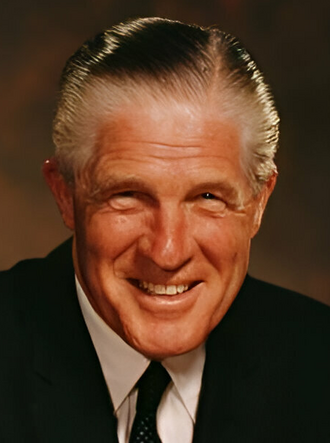
George W. Romney served as the Secretary of Housing and Urban Development (HUD) from the beginning of the Nixon administration in January 1969 until January 1973. During the White House taping period, Romney pushed for ambitious housing production and suburban desegregation efforts, though his initiatives were frequently thwarted by the president. Frustrated by these ideological differences and bureaucratic constraints, Romney resigned from the cabinet at the end of Nixon's first term, departing midway through the taping system's operation.
President Nixon and his Cabinet met to discuss the ongoing military operations in Indochina and the development of the administration's national health reform agenda. Regarding the war, officials reviewed the progress of South Vietnamese incursions into Laos and Cambodia, noting that the strategy was successfully disrupting enemy supply lines while shifting the burden of ground operations away from American forces. The conversation then transitioned to a detailed proposal from Secretary of Health, Education, and Welfare Elliot Richardson regarding healthcare reform, with the group debating the costs, tax implications, and administrative feasibility of implementing Health Maintenance Organizations (HMOs) and national health insurance standards.
President Nixon met with his Cabinet and key staff to discuss the status of the administration's revenue sharing legislative agenda and receive briefings on various international developments. Administration officials reported on their outreach efforts to build public and Congressional support for revenue sharing while addressing opposition from labor and minority groups. Additionally, Cabinet members provided updates on their recent foreign travels, emphasizing the geopolitical successes of the Nixon Doctrine in Southeast Asia and the strengthening of international cooperation on transportation and environmental safety.
President Nixon met with a group of dairy industry representatives to discuss economic concerns regarding milk price supports and industry productivity. The participants, including legal and industry advisors, argued that current production trends were not indicative of a permanent surge and that an increase in price support was necessary for the survival of family-owned dairy farms. Nixon expressed interest in their self-help strategies and the goal of maintaining the economic viability of rural communities while weighing the inflationary risks of price adjustments.
President Nixon met with members of the Congressional Black Caucus to receive a comprehensive position paper detailing grievances and policy recommendations regarding employment, housing, civil rights, and foreign policy. The Caucus representatives urged the administration to prioritize federal job creation, release frozen urban development funds, and address systemic issues within the criminal justice and military systems. Nixon acknowledged the significance of the meeting as a constructive starting point, promising that his staff would facilitate ongoing communication and proper consideration of the Caucus’s specific proposals.
President Nixon and his Cabinet met to discuss the ongoing challenge of inflation and rising construction costs, focusing on the administration's strategic options for economic stabilization. Dr. Paul McCracken reviewed current inflationary trends and labor market data, outlining a spectrum of potential responses ranging from maintaining current fiscal policies and targeted interventions to implementing more aggressive measures like wage and price controls. The meeting served as a forum to evaluate the efficacy of various regulatory mechanisms, such as the National Commission on Productivity and the suspension of the Davis-Bacon Act, while weighing the political and practical risks of further government intervention in the economy.
President Nixon and a wide-ranging group of Cabinet members, advisors, and Congressional representatives met to discuss the growing national energy crisis and the necessity of transitioning to nuclear power. AEC Chairman Glenn Seaborg and other experts detailed the technological, environmental, and economic advantages of the liquid metal fast breeder reactor, emphasizing its ability to maximize fuel efficiency and provide long-term, pollution-free energy. The participants concluded that a strong national commitment, including significant federal funding and industry collaboration, is essential to accelerate the development of demonstration reactors and ensure future energy independence.
President Nixon met with Secretary of Transportation John A. Volpe and others to discuss administrative strategies, including suburban housing integration, the status of the 'Operation Breakthrough' housing program, and federal reorganization efforts. Volpe expressed a desire for greater inclusion of Cabinet members in the decision-making process and offered suggestions for improving morale among federal civil servants through more frequent direct engagement with the President. The participants also touched on foreign policy concerns regarding Latin American politics and the potential for a visit by Volpe to Italy to gauge regional conditions.
President Nixon met with his Cabinet and key staff to coordinate legislative strategies and manage domestic policy agendas. The discussion focused on securing passage for welfare reform and other administration priorities by engaging directly with congressional leadership and balancing competing interests within the labor market. Participants assessed the challenges of mobilizing support among both Democrats and Republicans and emphasized the necessity of persistent lobbying and effective communication with legislative committees.
President Nixon and his Cabinet met to receive a briefing on international affairs and domestic policy, with a focus on Secretary of State William P. Rogers' recent diplomatic travels to the Middle East and the feasibility of desalinization technology. Rogers reported on his efforts to stabilize the Middle East through ceasefire maintenance and discussed the geopolitical concerns of various regional leaders. Dr. Edward E. David Jr. and other experts presented a detailed plan to advance domestic water desalinization and nuclear power capabilities, with the President calling for a major, accelerated federal effort to ensure American technological leadership. The meeting concluded with a brief status report from Treasury Secretary David M. Kennedy regarding the current international monetary situation and the fluctuations of the dollar.
President Nixon met with his Cabinet and key advisors to announce a major breakthrough in Strategic Arms Limitation Talks (SALT) with the Soviet Union, culminating in a joint statement to be released simultaneously in both nations. The agreement establishes a framework to prioritize limiting anti-ballistic missile (ABM) systems while pursuing parallel measures for offensive weapons. Nixon emphasized that the breakthrough was achieved by maintaining a strong U.S. defense posture, and he urged his administration to avoid public speculation or detailed commentary that could complicate sensitive ongoing negotiations.
President Nixon met with the Executive Board of the National Association of Home Builders (NAHB), along with Secretary of HUD George Romney and other administration officials, to discuss the economic health of the housing industry. The primary focus of the discussion was the impact of rising interest rates, inflation, and federal regulations on housing production and middle-class affordability. The participants addressed potential legislative reforms to labor relations and the construction industry, while the President emphasized the administration's commitment to stabilizing the economy and monitoring wage and price trends to support industry growth.
President Nixon, Vice President Agnew, and a large group of Cabinet members and senior staff met to establish a strategic framework for domestic policy, budget planning for the 1973 fiscal year, and the development of the 1972 Republican legislative and election platform. Participants reviewed polling data regarding national, community, and family concerns, noting that the economy, inflation, and unemployment are primary public priorities while other issues like pollution and consumerism are often driven by media visibility. The President and attendees emphasized the need for better communication to receive credit for administration accomplishments, focusing on a limited number of 'gut issues' rather than overextending on too many programs. Ultimately, the group discussed the necessity of coordinating policy initiatives and messaging to ensure visible progress on key economic and social concerns ahead of the 1972 election.
President Nixon met with H. R. Haldeman and various officials to discuss urgent administration challenges, specifically the unauthorized publication of the Pentagon Papers and strategies to combat press leaks and political criticism. The conversation transitioned into a broader policy meeting with representatives from the National Association of Real Estate Boards regarding the President's revenue sharing initiatives, housing market stabilization, and rising construction costs. Nixon emphasized the importance of aligning administration rhetoric on taxes and housing to bolster support among key stakeholders.
President Nixon met with Vice President Agnew and his Cabinet to discuss the administration's foreign policy objectives and the state of the national economy. Agnew briefed the attendees on his recent international tour, highlighting the global reception of the Nixon Doctrine and the challenges posed by the Arab-Israeli conflict, East Pakistan, and the increasing Soviet and Chinese presence in various regions. Nixon and his advisers subsequently addressed the economic outlook, emphasizing the need for an aggressive, unified defense of administration policies regarding inflation and unemployment, while dismissing the viability of permanent wage and price controls. Finally, the President mandated a strict reduction in government personnel and grade-level escalation to improve budget management across executive departments.
President Nixon met with the Cabinet Committee on Opportunities for the Spanish Speaking (CCOSS), led by Dr. Henry M. Ramirez, to discuss increasing Hispanic representation and employment within the federal government. Emphasizing that the administration must proactively identify and promote talent rather than waiting for external political pressure, the President linked the development of human resources to the broader necessity of maintaining American economic competitiveness against global rivals like Japan and Western Europe. Nixon formally charged cabinet members to improve departmental hiring practices and mandated regular progress reports to ensure accountability in expanding opportunities for Hispanic Americans.
President Nixon met with his economic advisors and cabinet members to weigh the political and economic implications of raising FHA interest rate ceilings. The participants debated whether to maintain the current 7% rate with increased subsidies or raise it to 7.75% to reflect market realities, ultimately deciding to hold the current rate for 60 days while utilizing the 'tandem plan' and other legislative avenues to support housing starts. Additionally, the President instructed his team to aggressively manage their public narrative regarding the economy, specifically directing them to challenge the press and administration critics by focusing on positive economic indicators and the President's personal involvement in fiscal policy.
President Nixon and HUD Secretary George Romney discussed the administration's newly announced, bold economic program, commonly known as the New Economic Policy. Romney expressed strong support for the measures, including the ninety-day wage and price freeze, while Nixon clarified the mechanics of rent and dividend controls. The two men also addressed the potential public reaction to these policies and the administration's efforts to regain control over international monetary issues. Nixon concluded by instructing Romney to raise any remaining questions or concerns during the upcoming Cabinet meeting.
President Nixon convened a large meeting with Vice President Agnew and his Cabinet to discuss the national economy and the "New Economic Policy" he had announced the previous day. Key topics included the wage-price freeze, import surcharges, tax relief, budget cuts, and the convertibility of the dollar. The administration sought Cabinet support for these initiatives and discussed their potential impact on international trade and domestic employment.
President Nixon met with the Cost of Living Council to assess the implementation and public reception of the 90-day wage-price freeze initiated on August 15, 1971. The council members, including John Connally, George Shultz, and Arthur Burns, reported on the effectiveness of enforcement efforts, current compliance levels, and the complexities of handling exemption requests. The discussion shifted toward strategic planning for Phase II, emphasizing the need for sustainable economic policies, public leadership, and the critical role of securing support from business and labor leaders before the freeze's conclusion.
President Nixon, Pat Nixon, and the Cabinet met with their spouses to discuss the implementation and public perception of the administration’s New Economic Policy. Secretary of the Treasury John Connally led a comprehensive briefing on the wage-price freeze, tax reforms, and international monetary adjustments aimed at curbing inflation. The discussion emphasized the necessity of these economic measures for restoring national growth, managing federal expenditures, and building public and congressional support for the administration's program.
President Nixon, Vice President Agnew, and members of his Cabinet met to coordinate a unified administration strategy ahead of critical International Monetary Fund (IMF) meetings and ongoing global trade negotiations. The discussion emphasized the necessity of maintaining the recently imposed 10% import surcharge and a firm bargaining stance to address the nation's economic balance of payments and reshape the international monetary system. Nixon and his advisors agreed that while foreign partners would likely criticize U.S. policy, maintaining domestic political support and correcting long-standing trade imbalances remained the administration's primary objective.
President Nixon met with his Cabinet and key staff members to review the administration’s domestic and foreign policy priorities, primarily focusing on the economic transition to 'Phase II' and the announcement of a 1972 Soviet summit. Officials discussed the successful implementation of the wage-price freeze and the strategy for securing organized labor's cooperation on the newly formed Pay Board and Price Commission to curb inflation. Additionally, the President addressed the importance of linking economic policy to job growth through his pending tax proposals, while Secretary of State Rogers and the President emphasized that international diplomatic overtures toward the Soviet Union and China were part of a cohesive, long-term strategy for global peace.
President Nixon met with his Cabinet Committee on Executive Reorganization to coordinate strategy for the administration's departmental restructuring proposals. The discussion focused on overcoming bureaucratic resistance, navigating complex Congressional committee jurisdictions, and addressing concerns regarding constituency-based programs like the Rural Electrification Administration. To advance these reforms, Nixon directed his Cabinet members to personally engage with key Congressional leaders and exert stricter control over their respective bureaucracies to ensure support for the legislative agenda.
President Nixon and the Cost of Living Council convened to discuss the efficacy of the administration's economic stabilization program, specifically the transition from Phase I to Phase II. Participants evaluated the success of existing price and wage controls and addressed the future of the Pay Board and Price Commission ahead of the 1972 calendar year. The meeting concluded with a formal vote to adopt an amendment to 'Option 2' regarding economic policy adjustments.
President Nixon met with his Cabinet officers to discuss a variety of domestic and international issues, including transportation leadership, government funding through a continuing resolution, and the cultivation of opium poppies in Turkey. The conversation also touched upon administrative transitions, such as the departure of Secretary of Agriculture Clifford Hardin, and strategies for managing the national economy and price controls. Nixon emphasized the importance of maintaining clear leadership and coordination across departments to ensure the success of his domestic policy initiatives.
President Nixon initiated a holiday phone call to George and Lenore Romney to exchange Christmas greetings and commend the recent television special featuring Julie Nixon Eisenhower. Beyond personal pleasantries, the discussion touched on the President's upcoming travel schedule to Florida to meet with Willy Brandt. Nixon also expressed appreciation for Romney's recent work on housing issues, prompting an agreement for Romney to coordinate a follow-up meeting with John Ehrlichman.
President Nixon met with George Romney, John Ehrlichman, and John Whitaker to discuss the administration's new "Operation TACLE" initiative, a national growth policy designed to address urban and rural decay through decentralized, competitive consortia. The President and Romney also addressed sensitive political matters, including the upcoming departures of cabinet members Maurice Stans and John Mitchell, as well as the need for coordination between Secretary of State William Rogers and National Security Advisor Henry Kissinger. Nixon emphasized his desire for Romney to remain in the cabinet while encouraging him to maintain a low-profile approach to sensitive housing issues during an election year.
President Nixon met with his Vice President and Cabinet to discuss the state of the U.S. economy, the administration's fiscal policy, and the upcoming 1973 budget. Key areas of focus included interpreting unemployment data—specifically the impact of new entrants to the workforce—and managing inflation through Phase II price and wage controls. Nixon urged his department heads to aggressively implement approved spending programs to stimulate the economy, while simultaneously directing them to more effectively communicate and promote the administration's economic achievements and social policy investments to the public.
President Nixon initiated this call to thank Secretary of Housing and Urban Development George Romney for his supportive reaction to the President's recent televised speech regarding Vietnam. Romney expressed his approval of Nixon’s decision to disclose previously secret peace negotiations, noting that the transparency provided national reassurance. The conversation concluded with Nixon affirming his commitment to the diplomatic strategy despite anticipated initial rejections from the North Vietnamese.
President Nixon met with George Shultz, John Connally, and other advisors to assess the administration's economic policy and strategy regarding the Federal Reserve. The participants discussed the money supply (M-1 and M-2), the lack of currency convertibility as a strategic advantage, and the necessity of pressuring the banking community to increase lending. Additionally, they reviewed potential personnel appointments to the Council of Economic Advisers and the Federal Reserve Board, specifically focusing on the goal of ensuring more favorable policy alignment with the White House.
President Nixon met with his Cabinet and senior staff to debrief them on the results and implications of his recent diplomatic trip to the People's Republic of China. The President emphasized that the primary success of the visit was the establishment of a new communication channel between the two nations, which he argued was essential for managing long-term stability and reducing the potential for future conflict. Nixon shared his impressions of Chinese leadership, particularly his discussions with Chou En-lai, noting the stark ideological differences while highlighting common strategic interests, such as peace in the Pacific and balancing influence against the Soviet Union. The discussion concluded with a focus on how this opening could be leveraged to reshape international relations and manage regional tensions across Asia.
President Nixon held an Oval Office meeting with Peter G. Peterson, his family, and members of the Cabinet to commemorate Peterson's recent Senate confirmation. The event served primarily as a formal ceremony for the administration of the oath of office and a subsequent photograph session with White House photographer Ollie Atkins. The interaction concluded with informal social conversation regarding Camp David and scheduling logistics.
President Nixon and HUD Secretary George Romney met to discuss the administration's urban policies and the potential for a non-partisan "Citizens for America" movement to address fundamental national issues. Romney, drawing on his experiences in Michigan, proposed a structure for building public consensus on housing, racial equity, and the "real city" concept, while acknowledging the political challenges of dealing with controversial topics in an election year. Nixon expressed support for Romney’s vision and the necessity of such advocacy, though both men agreed that any such initiative would need to remain independent of the upcoming presidential campaign.
President Nixon met with members of the Cost of Living Council and other key economic advisors to assess the efficacy of Phase II wage and price controls. The discussion focused on controlling inflation, managing food prices, and navigating political pressures from organized labor and Congress. Participants evaluated the impact of economic policies on the public interest and discussed strategies for future price stability across various sectors.
President Nixon met with Vice President Agnew, Cabinet members, and senior staff to discuss the administration's recent escalation in Vietnam, specifically the blockade of North Vietnamese ports. The President articulated his rationale for the decision and sought unified support from his team to manage potential congressional and public opposition. He emphasized the necessity of leadership during difficult times and urged his Cabinet to present a cohesive front in defending the policy to the public.
President Nixon met with his Cabinet and key staff to discuss the upcoming departure of Secretary of the Treasury John B. Connally and to address broader administration matters. The discussion covered the timing of administrative changes, the transition of economic policy responsibilities to George Shultz, and the status of ongoing federal investigations following the recent shooting of George C. Wallace. Connally reflected on his tenure as Treasury Secretary and his future plans, while the President reaffirmed his commitment to his current economic program and leadership agenda.
President Nixon met with a large group of broadcast industry executives and administration officials to discuss regulatory and legislative challenges facing the industry. Key topics included the burden of proof in license renewal processes, the impact of Federal Communications Commission (FCC) and Federal Trade Commission (FTC) regulations on operations, and concerns regarding network news bias. The discussion focused on seeking potential legislative solutions to protect broadcasters from costly legal challenges and to stabilize the regulatory environment for private enterprise.
President Nixon met with his Cabinet and senior staff to discuss strategies for achieving a balanced federal budget by 1975, emphasizing the necessity of immediate spending cuts and potential vetoes of congressional legislation to curb inflation. Budget Director George Shultz outlined the administration’s plan to issue "ceiling letters" to agency heads to enforce strict fiscal guidelines and reduce government deficits. The participants also reviewed recent positive economic indicators, including growth in the Gross National Product and declining unemployment, while noting that the public generally views government spending as a primary driver of inflation.
President Nixon met with HUD Secretary George Romney and other officials to discuss the federal disaster relief efforts in Wilkes-Barre, Pennsylvania, following devastating flooding. They evaluated the effectiveness of current recovery operations, addressed coordination problems among federal agencies, and debated the potential appointment of a dedicated federal disaster director, with William Scranton and Frank Carlucci suggested as candidates. Amidst these discussions, Romney expressed his frustration over declining influence within the administration and his desire to resign, prompting the President to counsel him on a graceful departure that would avoid damaging the 1972 re-election campaign.
President Nixon met with the Cost of Living Council to review the administration’s economic performance and coordinate strategy regarding inflation, labor relations, and food prices ahead of the 1972 election. Council members, including George Shultz and Donald Rumsfeld, discussed measures to protect Social Security recipients from illegal rent increases and highlighted the relative success of U.S. wage and price controls compared to foreign nations. The President directed his team to maintain an affirmative, disciplined public messaging campaign, emphasizing that the U.S. was achieving growth and reduced inflation without the reliance on wartime spending seen in the 1960s.
President Nixon met with Secretary of Housing and Urban Development (HUD) George Romney and John Ehrlichman to discuss Romney’s impending departure from the administration and his post-government career plans. They reviewed potential leadership roles for Romney in the private sector, focusing on his interest in merging the Urban Coalition and the National Center for Volunteer Action to create a new, non-partisan "think tank" for community development. The participants also discussed the structural reorganization of HUD for Nixon’s second term, emphasizing decentralization and the necessity of finding a suitable successor to maintain momentum on domestic policy goals.