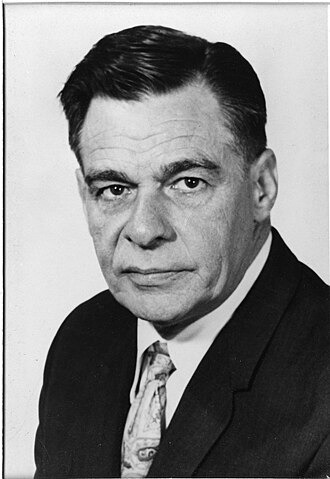
Petersen, Henry E.
Henry E. Petersen was a career Justice Department official who played a central role in the early stages of the Watergate investigation. During the Nixon administration, he served as Deputy Assistant Attorney General for the Criminal Division from January 1969 until January 1972, when he was promoted to Assistant Attorney General for the Criminal Division. In this latter role, which he held through the remainder of the taping period and until his resignation in December 1974, Petersen directed the initial federal probe into the Watergate break-in and frequently briefed President Nixon on the investigation's progress, drawing later scrutiny for sharing inside information with the White House.
President Nixon met with United States Attorneys and Justice and Treasury Department officials to emphasize that drug enforcement was the administration's top priority. He urged the attorneys to prioritize the aggressive prosecution of drug peddlers and pushers while improving their public relations efforts to demonstrate the federal government's commitment to the cause. The President encouraged these officials to coordinate more effectively with local law enforcement and to reassure their respective constituencies that the administration was actively tackling the national drug problem.
President Nixon and Republican congressional leaders met to discuss the administration's legislative agenda, specifically focusing on the "New Federalism" approach to governance. The President emphasized shifting decision-making power from the federal bureaucracy to local and state authorities through programs like the Better Communities Act and the Responsive Government Act. Additionally, the conversation addressed a robust crime-fighting package, including proposed federal death penalty statutes and mandatory sentences for major drug traffickers, while positioning these initiatives as essential to restoring national law and order.
Richard G. Kleindienst and Assistant Attorney General Henry E. Petersen coordinated a brief, urgent meeting to be held at Kleindienst's office. The conversation focused on logistics for Petersen’s arrival, including instructions for him to use a private elevator and a secure entrance. No substantive policy matters were discussed, as the call was exclusively intended to facilitate a private, immediate administrative consultation.
Assistant Attorney General Henry E. Petersen contacted the White House operator to place an outgoing call, with President Richard M. Nixon audible in the background. The interaction primarily served to facilitate a connection for the President, reflecting the ongoing administrative logistics during the height of the Watergate investigation. No substantive policy discussions or decisions are recorded in this brief bridge call.
Assistant Attorney General Henry Petersen confers with prosecutors Earl Silbert and Charles Shaffer regarding the ongoing Watergate investigation and the credibility of key witnesses. The participants evaluate conflicting accounts from John Dean and Gordon Strachan, specifically focusing on the involvement of H.R. Haldeman and John Ehrlichman in managing hush money and obstructing the investigation. The conversation concludes with administrative arrangements for an in-person meeting at Petersen’s home to further coordinate their legal strategy.
President Nixon and Assistant Attorney General Henry Petersen discussed the status of negotiations with John Dean, who refused to enter a plea unless H.R. Haldeman and John Ehrlichman were also prosecuted. Petersen briefed the President on Dean’s attempt to communicate via a note and his potential desire to meet with Ehrlichman. To resolve the matter, Nixon authorized a direct meeting with Dean to demand the full truth and agreed to pressure G. Gordon Liddy to cooperate by signaling that the President expected complete disclosure.
President Nixon and Assistant Attorney General Henry E. Petersen discuss the need to ensure full cooperation and transparency from individuals involved in the Watergate investigation, specifically G. Gordon Liddy. Nixon directs Petersen to convey that the President wants all parties to testify truthfully and rejects the notion that Liddy’s silence is due to presidential influence or protection. Petersen agrees to contact Liddy’s legal counsel immediately to emphasize that the President expects full disclosure from everyone involved.
President Nixon and Assistant Attorney General Henry Petersen discussed securing the cooperation of G. Gordon Liddy’s attorney, Peter Maroulis, regarding the Watergate investigation. Emphasizing a desire for full disclosure, Nixon directed Petersen to instruct Maroulis that his client must reveal everything he knows about the scandal. The President preferred that Petersen handle the communication personally to maintain professional distance, though he remained willing to meet with the attorney directly if the initial effort failed to produce the desired result.
President Nixon consulted with Assistant Attorney General Henry E. Petersen regarding the strategic timing for the resignations of John Dean, H.R. Haldeman, and John Ehrlichman amid the deepening Watergate investigation. Petersen advised the President to delay these resignations to avoid interfering with ongoing prosecutorial efforts and to ensure that potential testimony could be woven into a coherent legal narrative. The two also discussed the status of various witnesses, including Jeb Stuart Magruder, and the importance of coordinating their actions to maintain control over the evolving situation.
President Nixon met with Assistant Attorney General Henry Petersen to coordinate the ongoing Watergate investigation and manage the political fallout. The discussion focused on securing a plea deal for Jeb Stuart Magruder and navigating the potential resignations of John Dean, H.R. Haldeman, and John Ehrlichman. Nixon and Petersen strategized on how the President should publicly characterize his personal inquiry into the matter to ensure the investigation appeared to be under control without prematurely triggering resignations or jeopardizing future prosecutions.
President Nixon and Assistant Attorney General Henry E. Petersen discussed ongoing developments in the Watergate investigation, specifically focusing on the testimonies of key figures like Frederick LaRue, John Dean, and H.R. Haldeman. They reviewed the logistical and legal challenges of naming top aides as unindicted co-conspirators and the potential implications of Judge Sirica’s likely courtroom interrogations. Petersen updated the President on negotiations for immunity and cooperation, while Nixon expressed frustration regarding information Dean failed to disclose to him previously.
President Nixon met with Assistant Attorney General Henry E. Petersen to discuss the ongoing investigation into the Watergate scandal and its potential impact on his administration. The two focused on the necessity of managing the investigation's pace and gathering sufficient facts to justify legal proceedings. Nixon emphasized the importance of staying informed on developments and coordinating communication to avoid jeopardizing the integrity of the prosecution.
President Nixon met with Assistant Attorney General Henry Petersen to discuss the accelerating Watergate investigation, specifically focusing on the status of John Dean, H.R. Haldeman, John Ehrlichman, and Jeb Magruder. They deliberated on the potential for upcoming indictments, the legal complexities of naming unindicted co-conspirators, and the strategic risks associated with granting immunity to key figures. Nixon emphasized his desire to distance himself from the legal process while maintaining control over the political fallout, ultimately finalizing a policy that any staff member formally indicted or credibly implicated in public proceedings would be required to resign or take an indefinite leave of absence.
President Nixon and Assistant Attorney General Henry E. Petersen confer to discuss the ongoing status of the Watergate investigation, specifically focusing on grand jury leaks, the legal status of key figures like Jeb Stuart Magruder and John W. Dean, III, and concerns regarding the Ervin Committee's access to FBI interview files. The conversation highlights the administration's efforts to manage public comments via Ron Ziegler while maintaining judicial neutrality, as well as the urgency of securing a commitment from Magruder to prevent premature committee interference. Petersen emphasizes the need to tie down testimony before negotiating with Senator Ervin, while Nixon reaffirms his intent to handle high-profile individuals consistently while avoiding accusations of a cover-up.
President Nixon met with Assistant Attorney General Henry E. Petersen to discuss the ongoing Watergate investigation and the challenge of managing leaks from the U.S. Attorney's office. The conversation focused on the credibility of key figures like John Dean, Jeb Stuart Magruder, and Gordon C. Strachan, as well as the legal difficulties of pursuing conspiracy charges against H.R. Haldeman and John Ehrlichman. Nixon emphasized that any potential immunity deals or further investigative steps must be grounded in corroborated testimony rather than conflicting accounts, while reinforcing his assertion that the White House had cooperated fully with the investigation.
President Nixon and Assistant Attorney General Henry E. Petersen discuss the logistical challenges and procedural status of the ongoing Watergate grand jury investigation. Nixon encourages accelerating the investigation while Petersen explains the complexities of witness coordination and ongoing negotiations with John W. Dean III. The two also address the status of Jeb Stuart Magruder’s resignation from the Commerce Department and Nixon’s insistence that his administration must provide full cooperation with the prosecutors.
President Nixon met with Assistant Attorney General Henry E. Petersen to discuss the ongoing investigation into the Watergate scandal and legal concerns surrounding White House Counsel John Dean. Nixon urged Petersen to accelerate the investigation to counter negative public leaks and emphasized the need to distinguish between Dean’s official work product and his potential personal liability as an activist. The President reiterated that he would not grant executive privilege regarding Dean’s activities, except for private presidential communications, while expressing his intent to maintain distance from the investigation to allow Petersen full operational independence.
President Nixon met with Stephen B. Bull and Ronald L. Ziegler to reorganize his upcoming schedule, specifically focusing on balancing social obligations and streamlining presidential events. Separately, discussions with Henry E. Petersen and briefings from Ziegler addressed the growing Watergate crisis, centering on the potential resignations of top aides H.R. Haldeman and John Ehrlichman. Advisers like Bryce Harlow and John Connally emphasized the need for the President to act decisively to separate the administration from the scandal while maintaining the stability of the presidency.
President Nixon and Assistant Attorney General Henry E. Petersen arranged an evening meeting at the White House to discuss ongoing Watergate investigations. Nixon expressed significant frustration regarding grand jury leaks, pressuring Petersen to administer lie detector tests to the prosecution team to identify the source. The two also discussed the resignation of Jeb Stuart Magruder and the management of public messaging regarding various White House staff members implicated in the scandal.
President Nixon and Henry E. Petersen met to discuss the ongoing Watergate investigation, focusing heavily on John Dean's attempts to secure immunity and his potential testimony regarding a cover-up. Nixon expressed deep concern over being blackmailed by participants like Dean and reaffirmed his desire for a full investigation while asserting his own lack of prior knowledge regarding illegal activities. The two also addressed the handling of the Ellsberg break-in, the destruction of sensitive documents by L. Patrick Gray, and the necessity of managing political contributions and potential indictments without compromising the presidency.
In this extensive series of meetings and phone calls, President Nixon consults with H. R. Haldeman, John Ehrlichman, Richard Kleindienst, and Henry Petersen to manage the worsening political and legal fallout of the Watergate scandal. The participants deliberate on how to handle the impending revelations concerning the destruction of sensitive documents by FBI Director L. Patrick Gray, which had been previously held in the White House. Faced with intense media scrutiny and the potential for staff resignations, Nixon weighs the risks of maintaining his current team against the necessity of distancing his administration from criminal liability, ultimately deciding to project a posture of responsibility while preparing to weather further disclosures.
President Nixon and Acting Assistant Attorney General Henry Petersen discussed the political fallout surrounding FBI Director L. Patrick Gray’s admission that he destroyed documents related to E. Howard Hunt. The two men coordinated the timing of Gray's expected resignation and the subsequent appointment of an interim successor to minimize public damage. Additionally, they reviewed legal strategies regarding John Dean, H.R. Haldeman, and John Ehrlichman, focusing on the necessity of obtaining plea deals to secure evidence and avoid potential blackmail attempts during the ongoing Watergate investigation.
President Nixon and Assistant Attorney General Henry Petersen discuss the legal and political implications of testimony regarding L. Patrick Gray III and potential orders to destroy documents. They focus on the fallout surrounding John Ehrlichman and John Dean, specifically addressing the optics of Gray’s possible resignation and the necessity of managing conflicting narratives. Ultimately, they decide to exercise caution and avoid taking immediate action to force Gray out, acknowledging the need to verify details before proceeding.
President Nixon consulted with Attorney General Richard Kleindienst and Assistant Attorney General Henry Petersen regarding the potential fallout from reports that acting FBI Director L. Patrick Gray destroyed sensitive documents provided to him by John Dean. The group discussed how Gray should handle media inquiries and his upcoming grand jury testimony, ultimately agreeing that Gray should not resign in response to press reports but should instead wait to address the matter before the grand jury. Nixon expressed strong opposition to granting immunity to Dean, whom he blamed for the ongoing leaks and misinformation regarding the administration's involvement in the Watergate cover-up.
President Nixon and Assistant Attorney General Henry E. Petersen discuss the escalating legal complications surrounding the Watergate scandal, specifically focusing on the disclosure of materials related to the Daniel Ellsberg case and the Fielding burglary. Petersen provides updates on the FBI's efforts to interview key figures such as John Dean and John Ehrlichman, while noting the constraints of grand jury secrecy on the information he can share with the President. The conversation highlights the administration's struggle to manage staff departures, the stalled negotiations with John Dean, and the mounting pressure for those involved to cooperate with ongoing investigations.
President Richard Nixon met with Assistant Attorney General Henry E. Petersen to discuss the ongoing investigation into the Watergate scandal and the status of potential evidence. The conversation centers on the President's frustration regarding uncorroborated information and his desire to control the investigative process to avoid political damage. Nixon emphasizes the need to manage the flow of information as the situation escalates, ultimately expressing concern over the implications of incriminating details surfacing.
President Nixon met with Assistant Attorney General Henry E. Petersen to address alarming reports from journalists Seymour Hersh and Bob Woodward that John Dean had implicated the President to Watergate prosecutors. Nixon expressed deep concern over these rumors and pressed Petersen to confirm whether the prosecutors had received such statements, specifically regarding the March 21, 1973, conversation concerning E. Howard Hunt’s demands. Petersen agreed to immediately contact the lead prosecutors to verify the information and reiterated his stance that his office lacked a mandate to investigate the presidency, asserting that such authority resided only with the House of Representatives.
President Nixon met with Assistant Attorney General Henry Petersen to discuss the ongoing Watergate investigation, specifically focusing on managing the legal fallout regarding White House staffers John Dean, H.R. Haldeman, and John Ehrlichman. Nixon sought to coordinate the investigation's pace to minimize political damage while pressuring Petersen to ensure that prosecutors pursue the truth aggressively without unfairly implicating the presidency. The conversation centered on the potential for staff resignations or leaves of absence, the credibility of witnesses like Dean, and concerns regarding leaks and threats of blackmail involving White House involvement in the cover-up.
President Nixon and Assistant Attorney General Henry Petersen discussed the ongoing Watergate investigation, specifically focusing on the potential granting of immunity to John Dean and the administration's need to maintain credibility. Nixon reiterated his decision not to meet with Dean, deferring all prosecutorial discretion regarding immunity and plea bargaining to Petersen to ensure an unbiased pursuit of the truth. Additionally, they reviewed the status of the Ellsberg trial and explored the possibility of appointing a respected outsider, such as John McCloy, to oversee key decisions alongside Justice Department officials to alleviate public concerns.
President Nixon consulted with Assistant Attorney General Henry E. Petersen regarding the legal status of potential immunity for John Dean, specifically inquiring whether preliminary discussions between prosecutors and Dean's legal counsel had created "immunity by estoppel." Nixon expressed concern that Dean might invoke the Fifth Amendment during upcoming legal proceedings in New York, clarifying that he would not permit any White House staffer on leave to maintain their position if they refused to testify freely. Petersen confirmed that no formal or estoppel-based immunity had been granted, and he was tasked with providing the President with an update on Dean's status and testimony plans on the following Monday.
President Nixon met with Henry E. Petersen to discuss the ongoing Watergate investigation, the appointment of a special prosecutor, and the administration's continued cooperation with the Justice Department. Nixon emphasized his desire for transparency and his frustration with the perceived leaks and the handling of the Daniel Ellsberg case, specifically regarding the unauthorized entry into his psychiatrist's office. The two also addressed concerns about the impact of the Ervin Committee's televised hearings on the ability of key figures like John Mitchell to receive a fair trial.