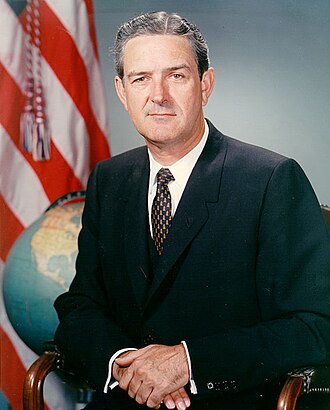
Connally, John B.
John B. Connally was a conservative Democratic politician and former Governor of Texas who became a close confidant of President Richard Nixon. During the taping period, he served as Secretary of the Treasury from February 1971 to June 1972, where he spearheaded the 'Nixon shock' economic policies before stepping down to lead the 'Democrats for Nixon' reelection effort. He also served two stints on the President's Foreign Intelligence Advisory Board and briefly returned to the White House as a Special Advisor to the President from May to July 1973 to assist during the growing Watergate crisis.
President Nixon met with his senior advisors to coordinate campaign strategy for his re-election, specifically addressing the tone of his upcoming acceptance speech and public appearances. The group discussed countering Senator George McGovern's policies, particularly regarding Vietnam and welfare, while also devising a public relations strategy to address the ongoing Watergate investigation. Nixon emphasized the need for a strong, combative campaign posture that avoids defensive positioning and effectively utilizes his cabinet members to attack political opponents.
President Nixon met with Pierre Rinfret, Charles Colson, and John Connally to strategize on economic messaging and political maneuvering regarding the upcoming International Monetary Fund meeting and the credibility of Sargent Shriver. The participants discussed framing international trade partners as fierce competitors to appeal to American laborers and business interests. Additionally, Nixon and Connally explored ways to undermine Shriver's credibility by investigating past Vietnam negotiations from the Johnson administration and potentially eliciting public statements from former officials to counter his criticisms.
President Nixon met with H.R. Haldeman, John Connally, and other staff members to discuss political messaging and administrative strategy ahead of the 1972 election. The group coordinated the President's upcoming speech to the International Monetary Fund and formulated a specific rebuttal to George McGovern's tax proposals by emphasizing the administration's own record of tax relief. Additionally, the President discussed potentially recruiting Eugene McCarthy for a federal role and reviewed the political benefits of ongoing Soviet and Japanese grain and trade deals.
President Nixon met with H.R. Haldeman and John Connally to discuss political strategy, campaign media coverage, and administrative matters. They reviewed a sensitive political intelligence report regarding a potential issue in Fort Wayne, with Nixon emphasizing the need for discretion and strict containment of the information. Additionally, the President discussed his desire for a concise daily political news summary and agreed with Connally’s assessment that the administration should avoid outlining specific second-term programs to prevent providing political opponents with targets to attack.
President Nixon met with George Shultz, John Ehrlichman, and others to discuss international economic policy ahead of an upcoming International Monetary Fund (IMF) meeting. Shultz presented a systematic plan for currency convertibility and reserve management, which Nixon approved for use in his upcoming IMF address. The conversation also covered the potential for wage and price control adjustments following the 1972 election and finalized the decision to provide Secret Service protection for Senator Edward M. Kennedy based on specific threats.
President Nixon met with his economic advisors and staff to plan the logistics of an upcoming revenue-sharing bill signing ceremony and to discuss future tax policy and budget strategies. The President emphasized the need for political carefulness regarding tax reform, expressing a strong desire to avoid any perception of a tax increase while seeking ways to provide property tax relief for senior citizens. The participants debated the merits of various tax proposals, including minimum tax adjustments and simplification measures, ultimately focusing on balancing fiscal responsibility with the administration's political objectives leading up to the 1972 election.
President Nixon held a series of meetings and calls with H.R. Haldeman, John Connally, and Alexander Haig to coordinate 1972 presidential campaign strategy and discuss pressing foreign policy issues. The discussions focused on finalizing campaign speeches and messaging, reviewing the military situation in Vietnam, and monitoring diplomatic developments regarding U.S.-Soviet relations. Additionally, the participants addressed the political fallout from a recent grain sale to the Soviet Union and investigated suspicious reports of potential electronic surveillance at the Democratic National Committee headquarters.
President Nixon and John B. Connally held a brief, informal meeting in the Oval Office to discuss personal items and current events. The conversation primarily centered on a watch featuring the presidential seal and brief remarks concerning the 1972 election. No substantive policy decisions were made during this exchange.
President Nixon met with key advisors and political allies to strategize on the 1972 presidential campaign, the legislative handling of the Office of Economic Opportunity (OEO) bill, and security concerns regarding Henry Kissinger. The group discussed the political advisability of vetoing the OEO and water bills, emphasizing fiscal responsibility, and explored campaign messaging tactics, including the use of "mini-documentaries" highlighting the President's foreign policy achievements. A significant development was the focus on producing television spots that frame the President's leadership as nonpartisan and statesmanlike, contrasting his record with that of Senator George McGovern.
President Nixon and John B. Connally discussed their respective health statuses and logistical challenges during a telephone conversation. Connally provided updates on his recovery from a sinus infection, his upcoming travel schedule, and the personal difficulties of relocating his household. The two also addressed the rescheduling of a television appearance, which Connally coordinated with staff to ensure proper planning.
President Nixon and John B. Connally engage in a brief, informal check-in regarding their respective health and current scheduling commitments. The two discuss the wisdom of postponing public appearances to recover from illness and coordinate upcoming travel plans, including a scheduled event in Atlanta. The conversation serves primarily as a personal wellness check rather than a substantive policy briefing.
President Nixon, H.R. Haldeman, and John Connally met to strategize on campaign fundraising and address the growing political fallout from the Watergate scandal. The participants discussed methods for securing large donations from high-profile contributors and analyzed the potential impact of Connally’s forthcoming foreign policy broadcast. Additionally, Nixon sought to distance the White House from the Segretti-led sabotage operations and Watergate, while framing the upcoming election as a critical opportunity to repudiate the values of the "Eastern Establishment" and liberal media.
President Nixon met with H.R. Haldeman, John Connally, and other advisors to discuss campaign messaging, the effectiveness of recent political television broadcasts, and the President's upcoming schedule. The group evaluated the impact of Nixon’s defense and foreign policy messaging, deciding to forgo the release of a new tax plan to avoid unnecessary controversy. Nixon and his team also strategized on the handling of upcoming legislative vetoes, particularly a water bill, while weighing the benefits of presidential travel versus remaining in Washington to maintain a 'presidential' public image.
President Nixon met with his senior advisors and campaign staff to coordinate strategy for the final weeks of the 1972 presidential election, focusing heavily on the political ramifications of ongoing Vietnam peace negotiations. The President expressed a firm commitment to securing a durable peace that ensured the survival of South Vietnam, while advisors discussed how to counter George McGovern’s criticisms regarding the war and economic issues. The conversation also covered campaign media tactics, including radio and television appearances, and touched upon concerns regarding press coverage of Watergate-related controversies like the Segretti activities.
President Nixon, H. R. Haldeman, and John Connally met to assess the political fallout from a forthcoming Washington Post story concerning secret campaign funds and Watergate-related disbursements. The discussion centered on allegations that Haldeman authorized payments from these funds to individuals such as G. Gordon Liddy and E. Howard Hunt, based on grand jury testimony from Hugh Sloan. The participants evaluated the potential impact of this press coverage and the threat posed by leaks from the grand jury and federal investigations.
President Nixon met with Charles Colson, H.R. Haldeman, and later John Connally to discuss the breakdown of Vietnam peace negotiations and the potential for a presidential television address. Nixon expressed skepticism toward Henry Kissinger’s recommendation to use a TV appearance to shift blame for the impasse onto North Vietnam and to rally public support for continued military action. The participants also consulted on administrative personnel changes for the second term, including the departures of Peter Peterson and Donald Rumsfeld, and Connally explored strategies for building a political coalition beyond the traditional Republican base.
President Nixon met with H. R. Haldeman, Robert Dole, and various staff members to discuss political appointments, including the selection of George H. W. Bush as the new Republican National Committee Chairman and the departure of Robert Dole. The group also evaluated strategies for a second-term administration reorganization, emphasizing the need for loyal, creative personnel and improved administrative control over the bureaucracy. A significant portion of the discussion focused on managing the public relations fallout of the Watergate scandal and Segretti's campaign sabotage operations, with the President weighing whether to issue a statement to distance the White House from these controversies.
H. R. Haldeman briefed John B. Connally on the selection of George H. W. Bush as the new Republican National Committee chairman to replace Robert Dole. Connally expressed frustration with DNC chair Robert Strauss over criticisms regarding his support for Nixon, further discussing the potential for Southern Democrats to realign politically. Finally, they coordinated the logistics of Connally's upcoming diplomatic trip to Saudi Arabia, with Haldeman agreeing to notify King Faisal of the visit.
John B. Connally and Richard Keaton discuss the failure of their efforts to obtain assurances from the Department of Justice regarding the Gulf and Western Industries antitrust case. Keaton reports that a DOJ official, identified as Crawford, refused to offer any legal representations or influence the Federal Trade Commission's position, citing a lack of information and time. Connally concludes that the government is unwilling to reach an agreement and instructs Keaton to brief Charles Bluhdorn before he meets with him personally to determine their next steps.
President Nixon met with John B. Connally to discuss the growing severity of the U.S. energy crisis and its implications for national security and trade policy. Connally argued that the crisis—driven by supply shortages, rising prices, and foreign control of oil—requires a bold, centralized federal response, including the creation of an energy resources corporation and potential government intervention in overseas oil reserves. They further explored how this energy strategy could be leveraged to address broader trade deficits, particularly regarding Japan, and provide the President with stronger legislative authority to manage international market competition.
President Nixon met with John B. Connally to discuss domestic and international economic strategies, particularly focusing on trade and energy policies. The two analyzed the U.S. competitive position against Japan and Canada, and debated potential protectionist measures and the role of American corporations. Nixon also sought Connally's counsel on staffing key diplomatic positions and navigating political strategy, including Connally's potential switch to the Republican Party following the death of Lyndon B. Johnson.
President Nixon and John B. Connally discuss potential career paths for former Attorney General Richard G. Kleindienst, emphasizing the benefits of joining a stable, prestigious law firm over solo practice. The conversation transitions to domestic politics, with Nixon expressing support for his ongoing budget cuts and fiscal policies despite pressure from special interest groups and the media. Finally, the two address international affairs, including the potential for deeper U.S. association with Caribbean nations like Jamaica, the release of American prisoners in the People's Republic of China, and planning for Connally's upcoming international travel.
President Nixon met with John B. Connally to discuss the administration's upcoming energy message, economic strategy, and the intensifying Watergate scandal. They assessed the political implications of the energy proposals, debated the effectiveness of selective price controls on inflation, and explored strategies for the White House staff to navigate the growing congressional investigations. A significant focus of the conversation involved potential legal and public relations responses to the scandal, including how key staff members like H.R. Haldeman should manage their testimony to mitigate political fallout.
John B. Connally informs President Nixon of his intent to hold a press conference to formally announce his party affiliation change to the Republican Party. Nixon praises Connally's courage and aligns their shared political resolve against ongoing adversity. The two also briefly acknowledge positive public feedback regarding the President's recent televised address concerning the Watergate scandal.
President Nixon met with John B. Connally to discuss the favorable public reception following the President’s recent televised address regarding the Watergate scandal. The exchange served as a brief morale-boosting session, with Nixon commending Connally for his loyalty and steadfast support during a period of intense political pressure. No substantive policy decisions were made, as the interaction focused primarily on personal rapport and mutual encouragement.
President Nixon met with Vice President Agnew and his Cabinet to discuss the ongoing impact of the Watergate scandal on the administration, personnel changes, and the need to maintain governmental stability. Key topics included the appointment of a special prosecutor, the selection of Elliot Richardson, and the importance of professional coordination between the White House and Cabinet departments to ensure the administration's 1972 election mandate remained the primary focus. Nixon emphasized the necessity of improving Congressional relations and maintaining morale within the bureaucracy despite the political distractions caused by the Ervin Committee hearings.
President Nixon and John B. Connally met to discuss upcoming administration challenges, specifically focusing on the President's public relations strategy, necessary personnel changes, and impending foreign policy milestones, including the Soviet summit. Nixon expressed his determination to press forward with major international initiatives, such as nuclear non-proliferation and Middle East negotiations, despite the political turmoil caused by the Watergate scandal. Connally advised the President on restructuring White House operations, including potential staffing changes in the press office and cabinet, and recommended that Nixon adopt a more aggressive, resilient posture to regain public confidence.
President Nixon and Vice President Agnew met with the Cabinet and senior staff to discuss major foreign and domestic policy priorities and internal administration management. The discussion centered on upcoming diplomatic summits with Leonid Brezhnev and Georges Pompidou, negotiations with North Vietnam regarding the ceasefire, and economic challenges including inflation and energy policy. Additionally, General Alexander Haig briefed the Cabinet on the administration's efforts to stabilize internal governance, improve relations with Congress, and manage the ongoing political fallout from the Watergate scandal.
President Nixon met with his economic advisors and staff to discuss growing concerns over inflation, the stock market, and the public's perception of the economy. The group analyzed the potential effectiveness of various measures, including a possible excise tax on gasoline, an investment tax credit, and a compulsory savings plan, while considering the political challenges of implementing such a package with Congress. Ultimately, the President decided against immediate, piecemeal action, opting instead to have his advisors develop a comprehensive economic package for review at a follow-up meeting.
President Nixon met with his economic advisors and John Connally to evaluate potential policy responses to the national economy, specifically focusing on the impact of food prices and the potential implementation of an export freeze. The group debated the efficacy of a 60-day price freeze versus alternative measures to curb inflation and addressed the political risks associated with such interventions. Additionally, Nixon and Connally discussed Connally's ongoing advisory role, navigating the potential for public speculation regarding his conflict of interest and the administration's need to maintain a strong, proactive image amid the escalating Watergate scandal.
President Nixon met with his Cabinet and key legislative leaders to discuss the restructuring of domestic policy operations, the appointment of Clarence M. Kelley as FBI Director, and strategies for improving congressional cooperation. Nixon emphasized a team-based approach to policy formulation, delegating significant oversight to Mel Laird, and urged Cabinet members to actively engage with Congress to pass the administration's legislative agenda. The discussion also addressed the administration's response to inflation, the importance of maintaining public morale amidst the Watergate crisis, and the necessity of presenting a unified, forward-looking policy front to the American people.
President Nixon and John B. Connally discussed the urgent need for a comprehensive national economic policy to combat severe inflation characterized by rising wholesale prices. Connally advised the President that the current piecemeal approach was inadequate, recommending a 60-day price freeze followed by mandatory controls, along with potential tax surcharges and credit restrictions to cool the overheated economy. The participants agreed that a bold, decisive action was necessary, and Connally committed to presenting these proposals to economic advisors to prepare for a formal announcement by the President.
President Nixon met with Alexander Haig to discuss personnel and political strategy regarding Watergate, specifically focusing on the role of Attorney General Elliot Richardson. Following this, Nixon convened with John Connally, George Shultz, Herbert Stein, and John Dunlop to debate the administration's economic response to mounting Congressional pressure for a wage and price freeze. The group evaluated various options, ultimately deciding on a strategy that balanced political necessity with the risks of economic uncertainty, while preparing for a follow-up consultation with labor and management leaders.
President Nixon met with his senior economic advisors and staff to deliberate on a strategy for stabilizing the national economy, specifically focusing on a proposed 60-day price freeze on food and gasoline. The discussion covered the implementation of Phase IV economic controls, the necessity of securing congressional support for trade and spending measures, and the political challenges of potential vetoes on agricultural and minimum wage legislation. Nixon emphasized the importance of public education regarding his administration's economic goals and requested that his cabinet members and advisors actively advocate for these policies to build public and congressional confidence.
President Nixon, Soviet General Secretary Leonid Brezhnev, and key members of their diplomatic and economic teams met to discuss the expansion of U.S.-Soviet trade and the challenges of integrating two distinct economic systems. The conversation focused on large-scale, long-term projects in the energy sector—specifically oil and gas—and the necessity of institutionalizing economic cooperation through trade missions and working groups. Participants acknowledged that while political will is high, practical implementation requires navigating complex issues of financing, pricing, and administrative differences between American private enterprise and the Soviet state-controlled economy.
President Nixon met with his economic advisors and Cabinet members to debate the design of 'Phase IV' of his economic program, focusing on the appropriate speed for removing wage and price controls. The discussion centered on balancing the political need to curb inflation with the economic necessity of incentivizing production, particularly in the agricultural sector, where export controls and price ceilings had created supply shortages. The President and his team also addressed the critical need for a balanced federal budget to bolster business confidence, ultimately agreeing on the necessity of a tough, credible policy to stabilize the economy.
President Nixon met with Vice President Agnew and his Cabinet to discuss the transition from the current wage and price freeze to a "Phase IV" economic policy. The President emphasized the need to balance controlling inflation with maintaining domestic production, while acknowledging the political difficulty of removing controls due to congressional and public pressure. Key developments included the administration's resolve to move toward a free-market economy as quickly as possible, coupled with a renewed commitment to fiscal austerity and a balanced federal budget to bolster economic confidence.
President Nixon met with John B. Connally to discuss the administration's economic strategy, specifically regarding price and export controls on meat and agricultural products. They explored the political necessity of maintaining certain controls temporarily while emphasizing the importance of long-term economic prosperity and strengthening the U.S. dollar through increased agricultural exports. The discussion also shifted to the impact of the Watergate scandal, with Nixon expressing frustration over press coverage of his personal finances and the political distraction caused by ongoing congressional investigations.