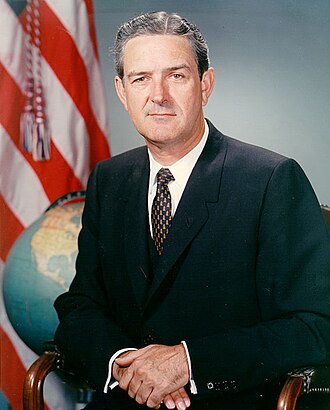
Connally, John B.
John B. Connally was a conservative Democratic politician and former Governor of Texas who became a close confidant of President Richard Nixon. During the taping period, he served as Secretary of the Treasury from February 1971 to June 1972, where he spearheaded the 'Nixon shock' economic policies before stepping down to lead the 'Democrats for Nixon' reelection effort. He also served two stints on the President's Foreign Intelligence Advisory Board and briefly returned to the White House as a Special Advisor to the President from May to July 1973 to assist during the growing Watergate crisis.
President Nixon and John Connally discuss the logistics of an upcoming trip, specifically timing their travel and public engagement to accommodate a press briefing. They coordinate the sequence of events, focusing on how to effectively address the media after thanking their associates. The brief exchange concludes with Connally noting a critical, high-priority matter that requires the President's attention.
President Nixon and John Connally discuss the positive public reception of a recently negotiated international monetary agreement and plan Connally's upcoming travel schedule. They also address concerns raised by economist Milton Friedman regarding the money supply, with Nixon urging Connally to leverage his influence over Federal Reserve Chairman Arthur Burns to ensure appropriate policy adjustments. They decide to schedule a formal Quadriad meeting to discuss these monetary issues further.
President Richard Nixon initiated this brief call to John B. Connally to exchange Christmas greetings and express personal appreciation for their professional partnership over the past year. The two men discussed Connally's holiday plans, including his intention to remain away from Washington until after the New Year. Nixon jokingly assured Connally that he would ensure nothing "blows up" at the White House during his absence.
President Nixon consulted with Treasury Secretary John B. Connally regarding the legislative strategy for his upcoming State of the Union address, specifically focusing on the public presentation of a potential value-added tax. They agreed that the administration should avoid committing to specific new legislation, instead framing the address as a period of consolidation following previous major domestic and international policy initiatives. Additionally, the President recommended his personal osteopath to Connally to help treat an ongoing back injury.
President Nixon and John B. Connally discuss legislative strategy regarding the administration's upcoming agenda, focusing on preempting political opposition in Congress. They evaluate a plan to delay new legislative proposals by emphasizing that the administration is still studying the issues while urging Congress to prioritize previously submitted reforms like revenue sharing and welfare. Nixon and Connally agree that this approach allows them to maintain flexibility while avoiding unnecessary political friction on the Hill.
President Nixon and John B. Connally discussed a range of administrative and economic concerns, including a warning to keep Herbert Stein's public statements aligned with the administration's economic control strategy. They agreed that the Cabinet committee should focus on increasing the competitiveness of U.S. products rather than dwelling on potential failures or labor disputes. Additionally, Nixon requested that Connally develop a proposal for a national youth service program, which would provide non-military alternatives for civilian service at local, state, or federal levels.
President Nixon and John B. Connally discussed the Dallas Cowboys' recent Super Bowl victory and their impressive all-around performance. The conversation centered on analyzing the team's strengths, including the contributions of Coach Tom Landry and specific players. Nixon confirmed that he had personally called Coach Landry to offer his congratulations on the win.
President Nixon met with H. R. Haldeman and various staff members, including Henry Kissinger and John Connally, to manage media relations, cabinet appointments, and urgent foreign policy challenges. A significant portion of the discussion addressed leaks regarding the Anderson Papers and the unauthorized disclosure of information by Yeoman Charles Radford, with the President expressing frustration over the administration's perceived passivity. Furthermore, Nixon and his aides evaluated the ongoing tensions between Secretary of State William Rogers and National Security Advisor Henry Kissinger, while finalizing the transition of Peter G. Peterson into the Commerce Department to bolster economic policy control. Throughout the meeting, the President emphasized the need to maintain strict operational control over sensitive negotiations and prepare for the upcoming state of the union address.
H. R. Haldeman coordinates with John B. Connally to schedule a meeting with President Nixon for that afternoon. Connally expresses flexibility in his schedule, offering to postpone or cancel existing internal appointments, including a courtesy call with the Yugoslav ambassador. The two finalize the meeting time for 4:00 p.m. at the President’s convenience.
President Nixon and John B. Connally discuss the final draft of the upcoming State of the Union address, which H.R. Haldeman is delivering to Connally for review. Nixon seeks Connally's feedback on the speech's tone and strategy, particularly regarding its defense against political attacks from Democrats and the inclusion of specific economic and policy points. The conversation also briefly touches on political optics related to the oil industry and the status of potential political rivals.
President Nixon met with his staff and Treasury Secretary John Connally to coordinate administrative messaging, discuss upcoming speeches, and refine international economic policy. A significant portion of the discussion focused on political strategy for the 1972 election year, with Connally advising the President to adopt a more aggressive, "fighting" posture rather than strictly maintaining a "professional" presidential image. Additionally, the participants deliberated on restructuring roles within the White House, specifically regarding Pete Peterson and Peter Flanigan, to centralize economic and trade authority under the Treasury Department.
President Nixon and H.R. Haldeman reviewed drafts of upcoming major addresses, specifically the President's Vietnam peace plan speech and his State of the Union address. The discussion focused on refining the tone, structure, and factual presentation of these speeches, with particular emphasis on how to communicate the complexity of secret peace negotiations and the necessity of the Vietnamization policy to the American public. They also coordinated logistical details for a forthcoming White House dinner and discussed personnel management within the administration, including the roles of John Connally and Peter Flanigan.
President Nixon met with Arthur Burns and John Connally to coordinate economic policy and public messaging ahead of the State of the Union and the upcoming budget message. The discussion focused on establishing a federal spending ceiling, managing inflation, and potential leadership changes within the Pay Board, including the possible recruitment of Arthur Goldberg. The group also addressed the challenges of wage and price controls, specifically concerning the decontrol of small businesses and the administration's political narrative regarding economic recovery.
President Nixon, H.R. Haldeman, and John Connally met to discuss 1972 political strategy, the President's upcoming schedule, and the administration's internal power dynamics. A central focus was addressing the professional friction between Henry Kissinger and William Rogers by drafting a formal directive to ensure the President remained fully informed on sensitive foreign policy matters, including negotiations with China, the Soviet Union, and the Middle East. Additionally, the participants evaluated 1972 election campaign tactics, polling data, and plans to manage public perceptions of the President, including strategies for handling potential political attacks from the Kennedy camp.
President Nixon directed John Connally to coordinate with Arthur Burns regarding the strategic release and public relations management of the upcoming federal budget message. They discussed leaking information to the Sunday papers to build anticipation, aiming to maximize political impact by framing the initiative as a proposal under consideration. Connally agreed to manage the messaging with Burns to ensure the President could finalize and announce the decision during the official budget release.
President Nixon consulted with John B. Connally regarding the final draft of his upcoming State of the Union speech, specifically requesting feedback on its tone and style. Nixon characterized the speech as conciliatory in response to recent political attacks from figures like Ted Kennedy and Fred Harris, while noting that a broader administration strategy would handle partisan criticisms. Connally agreed with the approach of letting Congressional allies, such as Hugh Scott and Gerald Ford, counter attacks while the President maintained a more elevated posture.
President Nixon and Secretary of the Treasury John B. Connally reviewed the draft of the upcoming State of the Union speech to refine its tone and specific phraseology. Connally provided editorial feedback, including the suggestion to include Canada alongside European nations and Japan when discussing monetary agreements. The pair also discussed the speech's low-key tone, specifically regarding campus unrest and foreign policy, agreeing that the language struck an appropriately subtle and effective balance.
President Nixon met with his Vice President and Cabinet to discuss the state of the U.S. economy, the administration's fiscal policy, and the upcoming 1973 budget. Key areas of focus included interpreting unemployment data—specifically the impact of new entrants to the workforce—and managing inflation through Phase II price and wage controls. Nixon urged his department heads to aggressively implement approved spending programs to stimulate the economy, while simultaneously directing them to more effectively communicate and promote the administration's economic achievements and social policy investments to the public.
President Nixon and John B. Connally discuss the administration’s upcoming speech on Vietnam, with Nixon arranging to have Henry Kissinger or William Safire deliver a draft to Connally for review. The two men also evaluate the positive reception of Connally’s recent speeches targeting labor and business leaders. Additionally, they deliberate on legislative strategy regarding aid to parochial schools and exchange pleasantries regarding a gift purchased by the Cabinet for Nixon’s San Clemente residence.
President Nixon and John B. Connally discuss preparations for an upcoming speech, emphasizing the importance of diligent preparation over off-the-cuff remarks. The conversation briefly touches upon political acquaintances and logistical concerns regarding school closures before transitioning into personal topics, including a gift for the President's San Clemente home and travel plans involving fishing in the Bahamas. No major policy decisions were reached, as the meeting served largely to coordinate schedules and manage social pleasantries.
President Nixon consulted John B. Connally regarding the search for a new U.S. Ambassador to West Germany after William P. Clements, Jr. declined the position. Nixon inquired about Richard M. Paget, seeking Connally's assessment of his temperament, professional background, and suitability for the diplomatic post. Connally expressed confidence in Paget's abilities and agreed to contact him to gauge his interest in the appointment.
President Nixon met with John Connally and key economic advisors Arthur Burns, George Shultz, and Herbert Stein to conduct an extensive review of the U.S. economy, including unemployment data, retail sales, and the federal budget. The participants discussed strategies to accelerate federal spending to stimulate growth, concerns regarding the lack of confidence among international financial institutions, and the delicate nature of ongoing trade negotiations with Europe, Japan, and Canada. Nixon directed his team to prioritize the rapid deployment of authorized funds and ordered a follow-up analysis on identifying the specific demographics of the unemployed.
President Nixon met with George Shultz, John Connally, and other advisors to assess the administration's economic policy and strategy regarding the Federal Reserve. The participants discussed the money supply (M-1 and M-2), the lack of currency convertibility as a strategic advantage, and the necessity of pressuring the banking community to increase lending. Additionally, they reviewed potential personnel appointments to the Council of Economic Advisers and the Federal Reserve Board, specifically focusing on the goal of ensuring more favorable policy alignment with the White House.
President Nixon and Secretary of the Treasury John B. Connally discussed strategic U.S. positions regarding international monetary policy, specifically maintaining firm control over dollar convertibility despite dissent from Federal Reserve Chairman Arthur Burns. They coordinated plans to exert economic pressure on Canada in trade negotiations to signal strength to Japan and Europe, with Nixon suggesting he might postpone a meeting with Prime Minister Pierre Trudeau to show dissatisfaction. Additionally, Connally briefed the President on India's financial aid to Bangladesh, prompting a plan to challenge National Security Advisor Henry Kissinger on U.S. foreign aid priorities during their next meeting.
President Nixon met with Alexander P. Butterfield, John B. Connally, and various aides to manage administrative matters, sign official documents, and coordinate the President’s daily schedule. The participants discussed staffing appointments, including the potential liaison role of J. Willard Marriott and the selection of personnel for government positions. Additionally, the group reviewed upcoming meetings involving Charles W. Colson and H.R. Haldeman at Camp David to facilitate future policy planning.
President Nixon and John Connally discuss the success of Connally’s recent speech in Richmond, which drew significant crowds and positive reception by emphasizing populist, anti-bureaucratic themes. The conversation shifts to economic strategy, specifically the Administration's desire to encourage bank lending and address bankers' fears regarding Federal Reserve monetary policy and inflation. Additionally, they coordinate on staffing, including the appointment of Peter G. Peterson and the recruitment of new talent for administrative posts.
President Nixon held a phone conversation with John and Nellie Connally to exchange get-well wishes following a flu outbreak that affected both the Connallys and several guests at a recent White House dinner. The President and John Connally discussed current economic conditions, specifically the strength of the stock market and the appointment of Marina von N. Whitman to the Price Commission. Additionally, Nixon recounted a protest incident at the dinner involving a member of the Ray Conniff Singers who spoke out against the Vietnam War, and the two finalized plans to reschedule their upcoming trip to Texas to later in the spring.
President Nixon met with H. R. Haldeman and John Connally to strategize on domestic political messaging, potential 1972 election tactics, and managing the economy. The discussion covered the political necessity of targeting Democratic economic messaging regarding the 'rich versus the poor,' and the importance of using Republican surrogates to counter criticisms. Additionally, the President and Connally discussed the potential for organizing private, high-level outreach to congressional members and key staff, while planning for future presidential retreats to facilitate private planning away from media scrutiny.
President Nixon convened this meeting of the National Security Council to assess the potential for a major North Vietnamese military offensive and to coordinate U.S. support for South Vietnam. The participants, including Henry Kissinger, Melvin Laird, and Admiral Thomas Moorer, discussed enemy troop movements, the effectiveness of Vietnamization, and the need for enhanced military authorities for field commanders. Nixon directed the council to provide robust support while ensuring that South Vietnamese forces receive the primary public credit, emphasizing that the U.S. must remain committed to a successful outcome despite domestic political pressures.
President Nixon met with John Connally, Robert McNamara, and Henry Kissinger to discuss the volatile political and economic situation on the Asian subcontinent, focusing on the aftermath of the India-Pakistan War, the instability in Bangladesh, and the need for a nuanced U.S. aid and diplomatic strategy. The conversation emphasized the importance of quiet diplomacy to stabilize the region and counter Soviet influence, while also touching upon domestic economic concerns, potential trade bill strategies, and upcoming travel itineraries. The participants agreed on the necessity of maintaining a balanced approach toward India and Pakistan as the administration prepares for the President's diplomatic initiatives.
President Nixon and John B. Connally discuss the aftermath of the President’s recent trip to the People's Republic of China, specifically focusing on the overwhelming public relations success and media domination surrounding the visit. Nixon characterizes his negotiations with Chinese leaders Mao Tse-tung and Chou En-lai as firm and pragmatic. They also address technical failures in the airport sound system during the President's return, leading Nixon to offer a summary of his remarks for an upcoming cabinet meeting.
President Nixon met with his Cabinet and senior staff to debrief them on the results and implications of his recent diplomatic trip to the People's Republic of China. The President emphasized that the primary success of the visit was the establishment of a new communication channel between the two nations, which he argued was essential for managing long-term stability and reducing the potential for future conflict. Nixon shared his impressions of Chinese leadership, particularly his discussions with Chou En-lai, noting the stark ideological differences while highlighting common strategic interests, such as peace in the Pacific and balancing influence against the Soviet Union. The discussion concluded with a focus on how this opening could be leveraged to reshape international relations and manage regional tensions across Asia.
President Nixon held an Oval Office meeting with Peter G. Peterson, his family, and members of the Cabinet to commemorate Peterson's recent Senate confirmation. The event served primarily as a formal ceremony for the administration of the oath of office and a subsequent photograph session with White House photographer Ollie Atkins. The interaction concluded with informal social conversation regarding Camp David and scheduling logistics.
President Nixon and John Connally met to assess the national economic outlook and discuss the 1972 presidential campaign. Connally emphasized that despite some public anxiety regarding inflation and meat prices, the administration should remain steady rather than reactive, noting that key indicators like stock market performance and machine tool orders signaled improvement. They also analyzed the Democratic field, concluding that Edmund Muskie's campaign was effectively over, while anticipating that Edward Kennedy might emerge as the eventual challenger despite the political risks surrounding Chappaquiddick. The conversation underscored a strategic preference for maintaining a calm, confident administrative posture heading into the election year.
President Nixon met with the Cabinet Committee on Education and the Council of Black Appointees to discuss the final report of the President’s Commission on School Finance. Participants examined the challenges of educational equity, focusing on funding disparities between urban and rural districts, the role of federal and state responsibilities, and the contentious issues of busing and support for non-public schools. The President expressed appreciation for the committee's research, and the discussion concluded with a commitment to further reviewing the commission's recommendations for legislative and policy implementation.
President Nixon met with John Connally, George Shultz, and Herbert Stein to coordinate administration strategy on key economic policy issues, particularly rising concerns over Social Security, the federal budget deficit, and minimum wage legislation. The group discussed maintaining a hard-line stance against excessive spending increases, including a potential 20% Social Security hike that they viewed as inflationary, while also preparing contingency plans to address a possible longshoremen's strike. Nixon emphasized the necessity of a unified administration position that favors economic discipline and reaffirmed his refusal to return to currency convertibility.
President Nixon met with John Connally and John Ehrlichman to discuss high-level domestic and international economic policy, as well as political strategy regarding the ITT antitrust case and upcoming social policy decisions. Connally proposed radical ideas to address international monetary instability and domestic crime, including the possibility of a total currency exchange to catch tax evaders and criminals, and the implementation of strict controls on capital outflows. The participants also coordinated a messaging strategy for the ITT controversy, advocating for a more aggressive public posture, and reviewed pending decisions on Social Security and Medicare to balance budgetary concerns against political implications.
President Nixon met with John B. Connally, Elliot L. Richardson, Arthur S. Flemming, George P. Shultz, and John D. Ehrlichman to strategize on the administration's position regarding pending Social Security and Medicare legislation, specifically House Resolution 1 (HR 1). The group evaluated various fiscal alternatives to manage benefit increases and wage base adjustments without exacerbating inflation or creating an adverse impact on the 1973 federal budget. The discussion centered on balancing the political necessity of supporting the elderly with the economic imperative of maintaining fiscal responsibility, with participants weighing the potential for a presidential veto against the possibility of working with congressional leaders like Wilbur Mills to moderate the bill's provisions.
President Nixon met with his Cabinet Committee on Education and a group of prominent private attorneys to develop a legislative and constitutional strategy for addressing federal court-ordered school busing. The participants debated the merits of proposing a temporary moratorium on new busing orders while Congress pursued longer-term, systemic solutions focused on improving educational quality. The meeting resulted in a consensus to refine these legislative proposals and maintain strict confidentiality regarding the involvement of the private counsel to protect the administration's political and legal standing.
President Nixon hosted a signing ceremony in the Cabinet Room with key congressional leaders, administration officials, and representatives from international financial institutions to formalize contributions to the Inter-American Development Bank, the Asian Development Bank, and the International Development Association. The brief gathering served as an official expression of gratitude to the legislative and international participants involved in securing these development funds. The session concluded shortly after the signing, affirming the administration’s commitment to multilateral economic assistance.
President Nixon and John B. Connally discussed the need for greater presidential control over conflicting economic statements issued by the Council of Economic Advisors and the State Department. The pair specifically addressed concerns regarding currency controls, international monetary policy, and recent press statements made by Herbert Stein, Marina von N. Whitman, and Nathaniel Samuels. Connally briefed the President on his upcoming speech to the Foreign Policy Council in New York, aiming to align the administration's public position on economic and trade issues.
President Nixon and members of the National Security Council met to evaluate strategic options for the ongoing Strategic Arms Limitation Talks (SALT), focusing on ABM site deployments and the potential inclusion of submarine-launched ballistic missiles (SLBMs). Nixon emphasized the political necessity of securing an agreement that prevents Soviet strategic superiority, while participants debated the relative merits of "hard-site" defense versus current safeguard proposals and the impact of these negotiations on Congressional support. The discussion underscored a shared concern regarding the erosion of U.S. bargaining leverage and established a firm directive to pursue an agreement based on the principle of strategic equivalency.
President Nixon met with the Cabinet Committee on International Narcotics Control to evaluate the administration's progress and strategies in combating the global drug trade. The participants discussed international trafficking routes, the effectiveness of law enforcement efforts in countries like Turkey and Southeast Asia, and the need for improved coordination between federal agencies. The meeting served to reinforce the priority of drug interdiction and treatment programs while addressing inter-agency conflicts that hindered unified action.
President Nixon and John B. Connally held a wide-ranging discussion to coordinate political messaging and strategy regarding the upcoming presidential election. They focused on managing negative press, particularly concerning the ITT scandal and rising food prices, while solidifying their stance on domestic policy issues such as Social Security and environmental regulations. Nixon emphasized the necessity of standing firm on these policies rather than reacting to every fluctuation in public sentiment or media criticism.
President Nixon consulted with John B. Connally to confirm his ally's support for a hardline stance against drug permissiveness. Nixon expressed strong opposition to policies involving the legalization or distribution of heroin and marijuana. Connally affirmed his agreement with the President’s position, reinforcing Nixon's intent to promote these views in an upcoming public address.
President Nixon met with his senior advisors and cabinet members to finalize strategy for an upcoming press conference and address recent developments regarding the Pay Board. The discussion focused on responding to the withdrawal of AFL-CIO leadership from the Pay Board, managing public perception of inflation and economic policy, and formulating official stances on contentious social issues including busing, abortion, marijuana legalization, and Social Security increases. The group debated the optimal timing and format for the President to announce the administration's economic adjustments to ensure maximum impact and clarity while minimizing political vulnerability.
President Nixon and his senior advisors, including John Ehrlichman, H.R. Haldeman, and John Connally, met to formulate an aggressive administrative response to the resignation of George Meany and other labor leaders from the Pay Board. The group discussed the timing and format of a public statement intended to demonstrate decisive presidential action and secure political leverage against Democratic opponents. They also debated potential replacements for the labor positions, reviewed strategies for handling the national economy, and coordinated the President's upcoming press conference to ensure it effectively overshadowed current controversies like the IT&T investigation.
President Nixon met with members of the Cost of Living Council and other key economic advisors to assess the efficacy of Phase II wage and price controls. The discussion focused on controlling inflation, managing food prices, and navigating political pressures from organized labor and Congress. Participants evaluated the impact of economic policies on the public interest and discussed strategies for future price stability across various sectors.
John B. Connally, George P. Shultz, Donald H. Rumsfeld, and Richard B. Cheney met to discuss economic stabilization policies and the operational status of key administrative bodies. The participants reviewed the activities of the Price Commission and the Cost of Living Council, including ongoing hearings and the impact of price controls on specific commodities like steer hides. The discussion also addressed the economic distribution of price increases between farmers and other industry stakeholders, as well as the administrative coordination between the Pay Board and various government agencies.
President Nixon met with John Connally and H.R. Haldeman to discuss strategies for managing the national economy, specifically regarding inflation, trade deficits, and potential tax reform initiatives in response to Democratic criticism. The group also addressed the ongoing ITT controversy and the confirmation hearings for Richard Kleindienst, debating whether to force a Senate vote or have Kleindienst withdraw his nomination to preempt further political damage. The President and his advisors expressed deep concern over the lack of strong leadership within the Republican Party and discussed the necessity of adopting a more aggressive political posture to counter Democratic messaging ahead of the upcoming primaries.
President Nixon met with a large group of cabinet members and advisors to discuss a wide-ranging agenda of domestic economic policy, including international trade strategies, energy infrastructure, and tax reform. The participants reviewed the implementation of commercial trade policies with the Soviet Union, analyzed the political and budget implications of environmental regulations, and addressed the status of the Productivity Commission. Nixon emphasized the need for his team to act as aggressive advocates for pro-business policies and job creation in the lead-up to the 1972 election. The meeting concluded with a review of potential Federal Reserve appointments and a discussion on managing public perception regarding inflation and food prices.
President Nixon consults John B. Connally regarding the selection of a new member for the Federal Reserve Board of Governors, where they agree to appoint a younger candidate to ensure longevity and malleability under Arthur Burns. Additionally, the two discuss a controversial civil suit filed by the U.S. government against Price Daniel involving Tidelands rights. Nixon expresses frustration that a government attorney involved in previous Tidelands litigation is responsible for the new brief and suggests the matter needs immediate intervention.
President Nixon met with H.R. Haldeman, John Connally, John Ehrlichman, Henry Kissinger, and other staff to coordinate administration strategy on several fronts. Key discussions included efforts to quash a Department of Justice fishing rights lawsuit against Texas, the management of congressional briefings on Vietnam and domestic issues, and tactical adjustments for the upcoming election campaign. Nixon emphasized the need for more persuasive, memorable speechwriting and directed his team to adopt a more aggressive, "hard-hitting" political posture against Democrats on issues like busing and food prices.
President Nixon and John Connally met to discuss the administration's aggressive response to the North Vietnamese invasion, including the strategic use of bombing and the potential for a naval blockade. Amidst this foreign policy crisis, they reviewed Connally’s planned departure from his position as Secretary of the Treasury and discussed his successor, with George Shultz emerging as the preferred choice. The conversation further explored domestic economic policy, including plans for austerity budgets and welfare reform, as well as the political necessity of maintaining a strong, decisive image for the upcoming 1972 election.
President Nixon and John B. Connally discussed the recent death of J. Edgar Hoover, including the President's upcoming eulogy and concerns regarding Lyndon B. Johnson's health if he were to attend the funeral. The conversation touched upon the successful reception of the President's recent trip to Texas and various administrative gestures, such as thank-you correspondence and offers of White House hospitality to associates. Finally, Nixon requested Connally's private political counsel regarding the upcoming U.S.-Soviet summit, tasking H.R. Haldeman with facilitating the consultation.
President Nixon and John B. Connally discuss the recent death of FBI Director J. Edgar Hoover and the logistics surrounding his upcoming funeral and eulogy. They also touch upon personal matters involving Connally’s family and a gift Nixon intends to display in the Oval Office. The brief exchange concludes with the President noting his ongoing work regarding policies toward the Soviet Union.
President Nixon met with his senior advisors, including H. R. Haldeman and Henry Kissinger, to navigate the intensifying North Vietnamese offensive and its implications for the upcoming Soviet Summit. The group deliberated on military strategies—including the possibility of a naval blockade—and analyzed the political risks of cancelling the summit versus the need to maintain a firm negotiating stance. A key action item involved coordinating with John Connally to assess the administration's response to these crises, while also addressing concerns regarding domestic political fallout, press coverage, and security preparations for the upcoming national political conventions.
H. R. Haldeman coordinated a post-funeral meeting between himself, President Nixon, Henry Kissinger, and John Connally. The discussion centered on scheduling a time to convene immediately following the funeral of J. Edgar Hoover. Connally agreed to the proposed meeting, and the parties finalized plans to connect upon returning from the services.
President Nixon, Henry Kissinger, and H. R. Haldeman coordinated to secure an immediate meeting with John B. Connally at the Executive Office Building. The discussion touched upon military historical precedents, including the Battle of Verdun and the tactical legacies of commanders like Pétain, as they prepared for Connally's arrival. Haldeman ultimately contacted Connally to confirm the President's request for a face-to-face consultation.
In this meeting, President Nixon confers with Henry Kissinger, H. R. Haldeman, John Connally, and Admiral Thomas Moorer to finalize plans for a military escalation in Vietnam. Frustrated by previous constraints, Nixon decides to implement a naval blockade of North Vietnam and launch intensive air strikes against key strategic targets, including rail yards, power plants, and oil supplies. Nixon emphasizes the necessity of this decisive action to prevent a U.S. defeat, secure the release of prisoners of war, and force a ceasefire, while explicitly directing Moorer to maintain the chain of command directly to him and bypass Secretary of Defense Melvin Laird. The group also discusses the potential cancellation of the upcoming Soviet summit as a consequence of these actions and addresses the possible replacement of General Creighton Abrams in theater.
Alexander P. Butterfield facilitated a telephone connection between Henry Kissinger and President Nixon, who was consulting with John B. Connally. The group discussed the logistics of handling an incoming call from Deputy Secretary of State Kenneth Rush. The President ultimately decided to defer speaking with Rush until a later time.
President Nixon met with his senior advisors and military officials to coordinate an aggressive military response to the North Vietnamese offensive. The discussion centered on implementing a naval blockade of North Vietnam and intensifying air strikes, with Nixon emphasizing the necessity of a decisive victory to protect American prestige and prevent a communist takeover in Southeast Asia. The President also consulted with his staff on the strategic messaging for a forthcoming public announcement, weighing the psychological impact of a blockade against traditional bombing campaigns.
President Nixon convened his National Security Council to weigh critical military options regarding the ongoing North Vietnamese offensive and the potential collapse of South Vietnamese forces. Key participants, including Henry Kissinger, Melvin Laird, and John Connally, debated the strategic risks of maintaining the status quo versus implementing a naval blockade and intensified air strikes on North Vietnam. While acknowledging the potential for a diplomatic crisis and the likely cancellation of the upcoming Moscow summit, the President and his advisors emphasized the necessity of demonstrating resolve to protect U.S. credibility and avoid a catastrophic military defeat. Ultimately, the discussion centered on whether a more aggressive military posture could provide the leverage required to salvage the situation in South Vietnam and secure the release of American prisoners of war.
President Nixon met with Vice President Agnew, Cabinet members, and senior staff to discuss the administration's recent escalation in Vietnam, specifically the blockade of North Vietnamese ports. The President articulated his rationale for the decision and sought unified support from his team to manage potential congressional and public opposition. He emphasized the necessity of leadership during difficult times and urged his Cabinet to present a cohesive front in defending the policy to the public.
President Nixon met with Henry Kissinger, John Connally, and H. R. Haldeman to finalize the decision to initiate a naval blockade and increased bombing campaign against North Vietnam. Despite dissenting opinions from Secretary of State William Rogers and Secretary of Defense Melvin Laird, the President, strongly supported by Connally, determined that the operation was necessary to prevent a collapse in South Vietnam and to preserve American credibility. The group discussed the political risks, including the potential cancellation of the upcoming Soviet summit, and coordinated the logistics for notifying key cabinet members and Congressional leaders before the President's public announcement.
President Nixon met with John Connally to discuss the favorable public reaction to the President's recent decision to implement a naval blockade and intensified bombing in North Vietnam. The two men criticized the lack of support from within the administration, specifically targeting William P. Rogers and Melvin R. Laird, while emphasizing the necessity of bold leadership to maintain national strength and electoral viability. They also discussed plans to systematically replace disloyal bureaucrats across federal agencies and the judiciary, viewing the upcoming election as a crucial opportunity to run against a fragmented and radicalized Democratic Party.
President Nixon met with John B. Connally and Stephen B. Bull to discuss the transition of the Treasury Secretary position from Connally to George P. Shultz, including plans for an upcoming cabinet announcement. The conversation also covered international affairs, specifically the blockade of North Vietnam and negotiations with the Soviet Union, as well as the President’s desire for tighter controls on the political and professional appointments of Jewish individuals within his administration. Additionally, Nixon and Connally explored future post-resignation roles for Connally, including diplomatic missions to Latin America and an appointment to the President's Foreign Intelligence Advisory Board (PFIAB).
President Nixon met with George Shultz and later John Connally to finalize Shultz's appointment as the new Secretary of the Treasury, replacing the outgoing Connally. The discussion covered the upcoming formal announcement and cabinet meeting, the transition of responsibilities, and the need for a firm economic strategy regarding the budget and international monetary policy. Additionally, they reviewed potential leadership changes, specifically the appointment of Caspar Weinberger to head the Office of Management and Budget, while briefly noting the continued domestic support for the President’s Vietnam War policies.
Following the assassination attempt on Governor George Wallace, President Nixon and John Connally discussed the political fallout and the immediate need to provide enhanced Secret Service protection to other presidential candidates, specifically Senator Edward M. Kennedy and Representative Shirley Chisholm. The participants deliberated on how to frame these security measures publicly while bypassing legal obstacles that previously barred the Secret Service from covering non-candidates. During the discussion, Connally recounted his personal experience surviving the John F. Kennedy assassination, providing a grim context for the ongoing concern over the safety of political figures.
President Nixon, H.R. Haldeman, John Connally, and Eugene Rossides discussed the immediate expansion of Secret Service protection for presidential candidates following the assassination attempt on George Wallace. The group specifically evaluated the security needs of Edward M. Kennedy and Shirley Chisholm, while dismissing candidates deemed inactive. Nixon ordered that protection details be prepared for both Kennedy and Chisholm, pending further investigation into the status of other potential candidates.
John B. Connally calls Senator Edward M. Kennedy on behalf of President Nixon to offer him full Secret Service protection following the recent shooting of George Wallace. Connally emphasizes that the President considers Kennedy highly vulnerable and insists on providing security regardless of legal interpretations regarding candidate status. The two agree to begin with temporary arrangements while coordinating with Secret Service leadership, with Connally urging Kennedy to accept the protection for his own safety.
Following the assassination attempt on Governor George Wallace, President Nixon and John Connally directed Treasury official Eugene Rossides to immediately assign Secret Service protection to various presidential candidates. Connally coordinated the dispatch of agents to Edward Kennedy and Shirley Chisholm, while also instructing Rossides to provide a reduced security detail for other candidates like Wilbur Mills and Patsy Mink. The participants further discussed the status of other candidates' travel plans and the logistics for releasing official statements regarding these expanded protective measures.
Following the assassination attempt on Governor George Wallace, President Nixon and his aides, including H. R. Haldeman and Charles Colson, discussed strategies to manipulate public perception of the assailant's political affiliations. They explicitly directed staff to leak a story portraying the gunman as a supporter of Democratic candidates George McGovern and Edward Kennedy to associate the act with the political left. Additionally, the President reviewed the security implications for his own public appearances and coordinated with John Connally regarding future travel assignments.
President Nixon consulted with John and Nellie Connally regarding the political fallout from the assassination attempt on George Wallace and the timing of pending public announcements. The discussion also addressed the logistical planning and security concerns surrounding the Connallys' upcoming diplomatic tour of Latin America. Additionally, the parties reviewed recent administrative matters, including the President's attendance at a Blue Room reception and an evaluation of Eugene Rossides' performance.
President Nixon met with his Cabinet and key staff to discuss the upcoming departure of Secretary of the Treasury John B. Connally and to address broader administration matters. The discussion covered the timing of administrative changes, the transition of economic policy responsibilities to George Shultz, and the status of ongoing federal investigations following the recent shooting of George C. Wallace. Connally reflected on his tenure as Treasury Secretary and his future plans, while the President reaffirmed his commitment to his current economic program and leadership agenda.
President Nixon and John B. Connally discuss the logistics of Connally's upcoming diplomatic trip to Latin America, which is intended to counter regional influence while Nixon visits the Soviet Union. The two also coordinate the transition of the Treasury Department leadership, planning a joint walk to the department to announce George P. Shultz as the successor to the resigning Connally. Additionally, they touch upon recent international diplomatic missions, including Henry Kissinger's trip to the People's Republic of China and William P. Rogers' NATO engagement.
President Nixon met with H. R. Haldeman, John Connally, George Shultz, Caspar Weinberger, and Ronald Ziegler to coordinate the logistics and press strategy surrounding Connally's resignation as Secretary of the Treasury. The participants discussed handling media inquiries regarding Connally's potential political future, including questions about the Vice Presidency and the Democratic National Convention. Following the discussion, the group planned a walk to the Treasury Department to introduce Shultz to the staff and address the transition publicly.
President Nixon and John Connally discussed political strategy for the 1972 election, focusing on the performances of George Wallace, Hubert Humphrey, and George McGovern in recent primaries. Nixon advised Connally’s brother to focus his campaign on the single issue of busing to gain electoral traction. The two also addressed personnel transitions within the Treasury Department, specifically emphasizing the importance of George Shultz retaining key staff like James W. Donley, and reviewed upcoming diplomatic travel plans for Connally.
President Nixon met with H.R. Haldeman and John B. Connally to coordinate strategy for the upcoming U.S.-Soviet summit and to organize a diplomatic trip for Connally to South America and potentially other regions. The participants discussed managing the President's public image, strategies to discredit the press, and the logistics of personnel attending the Moscow trip. Additionally, Nixon directed Connally to begin planning his international travel, emphasizing the strategic importance of his mission following the President's return from the Soviet Union.
President Nixon and John B. Connally discuss the logistics and itinerary for Connally's upcoming three-week overseas trip to South America, Australia, and New Zealand. The President instructs Connally to travel via a presidential aircraft with a small staff and emphasizes the importance of keeping planning restricted to a select few to avoid bureaucratic interference. Additionally, they discuss the transition of Treasury responsibilities to George P. Shultz, with Nixon confirming that Shultz will assume the same high-level portfolios and economic authorities previously held by Connally.
President Nixon met with John B. Connally and Stephen B. Bull to provide instructions and background context for an upcoming international trip undertaken by Connally. The President dictated a memorandum outlining the mission's central theme, which focused on the shifting global balance of economic and political power among the U.S., Western Europe, the Soviet Union, China, and Japan. Nixon also shared personal reflections on his past travels to various nations to assist Connally in his engagements with foreign leaders.
President Nixon and John B. Connally held a brief, informal meeting in the Oval Office to coordinate their respective schedules. The discussion touched upon the President’s recent reception of diplomatic credentials and logistical arrangements for Connally’s upcoming trip to Camp David. The brief exchange concluded as both parties prepared to depart for other scheduled engagements.
President Nixon praises John B. Connally for his skillful performance in a recent television interview, specifically commending his ability to handle aggressive questioning and his effective communication of administration policy. They review Connally's framing of key issues, including the international monetary situation, the Vietnam War, and economic strategy. The conversation concludes with a brief discussion regarding a potential outreach call to a political contact to assist the President's agenda.
President Nixon calls John B. Connally to praise his recent appearance on "Meet the Press," specifically commending his adept handling of hostile questioning regarding the economy, the Vietnam War, and the Smithsonian Agreement. The two discuss political strategy, including how to frame the administration’s position against opponent George McGovern, and briefly touch on the effectiveness of Connally's appearance and wardrobe. Finally, Nixon decides to pursue political assistance from George Smathers and requests the name of Connally's tailor to commission a similar pinstripe suit.
President Nixon dictates a memorandum addressed to John B. Connally with a copy directed to Charles W. Colson during a gathering at Camp David. The interaction serves as a formal administrative record for the President to formalize instructions or strategic directives to his advisors. Following the dictation, the conversation transitions into a brief period of personal, non-archived discussion.
President Nixon and John B. Connally met to discuss a variety of political and strategic issues, including international oil interests, legal investigations involving Jake Jacobsen, and the upcoming 1972 presidential election. Nixon dismissed concerns regarding the Watergate scandal, framing it as the work of lower-level committee members rather than the administration, while emphasizing his intention to focus on presidential duties rather than immediate, aggressive campaign whistle-stopping. The pair further discussed key campaign themes, contrasting Nixon's conservative judicial and fiscal philosophies with the policies of his opponent, George McGovern, whom they labeled a threat to national defense and economic stability.
President Nixon met with John B. Connally in the Old Executive Office Building for the specific purpose of dictating a formal memorandum. This brief exchange served to record executive instructions or observations, which were further addressed in a subsequent recorded segment. The interaction highlights the administrative workflow between the President and his advisor regarding official documentation.
President Nixon and John B. Connally discussed strategies regarding Lyndon B. Johnson’s potential involvement in the 1972 presidential campaign. The conversation focused on securing Johnson's neutrality and exploring his resistance to endorsing George McGovern, despite pressure from the Democratic ticket. Nixon emphasized his desire to leverage Johnson’s influence and perceived personal grievances against the McGovern camp to bolster the 'Democrats for Nixon' initiative.
President Nixon, John Connally, and H.R. Haldeman met to discuss political strategy for the 1972 campaign, focusing on managing relations with Lyndon B. Johnson, George McGovern, and key demographic groups. The discussion covered the use of national defense spokespeople like John S.D. Eisenhower, methods for handling sensitive presidential dictations to prevent leaks, and the need for more persuasive, 'catchy' messaging in press materials. Nixon also emphasized the importance of maintaining strict control over staff activities and ensuring that all political communication remains aligned with his campaign's strategic goals.
This recorded session includes a substantive meeting between President Nixon, H.R. Haldeman, Ronald Ziegler, and others regarding the 1972 presidential campaign and potential political messaging. Key discussions focused on the health of Democratic vice-presidential nominee Thomas Eagleton, the Republican response strategy, and assessments of Cabinet members like George Shultz. Following this, the President held a ceremonial meeting that included photographs, the display of White House state gifts, and casual conversation with visitors.
President Nixon and John B. Connally discussed political strategy regarding Governor George Wallace, focusing on incorporating elements of his platform into the Republican campaign. They agreed to offer Wallace a national security briefing via Alexander Haig and planned to have campaign officials like Clark MacGregor or John Rhodes publicly acknowledge Wallace's contributions to national debate. Additionally, they decided to have Ed Morgan discreetly share the party's busing plank with Wallace's camp to foster potential alignment.
President Nixon directed the White House operator to place a telephone call to Congressman Joe D. Waggonner, Jr. of Louisiana. John B. Connally was present with the President during the request. The primary objective was to facilitate direct communication with Waggonner regarding legislative or political business.
President Nixon met with John Connally and H.R. Haldeman to discuss political maneuvering regarding the 1972 campaign, specifically focusing on Senate races and the handling of potential legal liabilities. They strategized on how to convince Republican candidates in Arkansas to withdraw to support powerful Democratic incumbents like John McClellan, who were seen as potential allies. Additionally, the participants addressed the imminent indictment of Jake Jacobsen, debating whether political influence could delay the process to protect Connally's interests and the "Democrats for Nixon" initiative.
President Nixon facilitates a brief phone call between Congressman Joe D. Waggonner, Jr. and John B. Connally to foster communication between the two men. Following introductory pleasantries, the conversation transitions into a casual, lighthearted exchange regarding the perceived differences in manners between the wealthy and the poor. No substantive political developments or policy decisions are documented in this portion of the recording.
President Nixon and H. R. Haldeman engaged in an extensive series of consultations regarding staffing and political strategy for the 1972 re-election campaign. Key discussions focused on absorbing George Wallace's political organization into the Nixon campaign, managing Cabinet-level appointments like those for the Secretary of the Army, and addressing specific policy issues including food price inflation, school busing, and environmental legislation. The President also reviewed strategies for leveraging administrative power to influence corporate contracts and pressured staff to develop immediate, high-visibility economic actions to address public concerns before the Republican National Convention.
President Richard Nixon and John B. Connally held a brief telephone conversation following an initial exchange of greetings. While the majority of the recorded session consists of a withdrawn segment containing personal material, the discussion reflects ongoing informal consultation between the President and his close political advisor. No substantive policy decisions or action items were documented in the accessible portion of the transcript.
President Nixon and John B. Connally met briefly to coordinate their schedules and logistics. The conversation primarily served to confirm that Connally had successfully traveled into town for the engagement. No substantive policy or political decisions were recorded during this short exchange.
President Nixon spoke with John B. Connally following the latter's return from a diplomatic mission abroad. The discussion remained brief and informal, primarily serving to exchange greetings after Connally’s travels. No substantive policy decisions or strategic objectives were recorded in this segment of the conversation.
President Richard Nixon met with John B. Connally for a brief exchange in the Old Executive Office Building. The recording is incomplete and consists primarily of introductory greetings, providing no substantial policy discussions or administrative decisions. Consequently, the meeting remains a fragmented, non-substantive record of a private interaction between the two men.
President Nixon and John B. Connally met to discuss ongoing political maneuvers regarding the Arkansas senatorial election. They specifically addressed strategies to convince a candidate—Winthrop Rockefeller—to withdraw from the race to benefit Senator John L. McClellan. To facilitate this, the President and Connally decided to involve Henry Kissinger in diplomatic outreach to David Rockefeller to exert influence on the candidate.