Nixon, Richard M. (President)
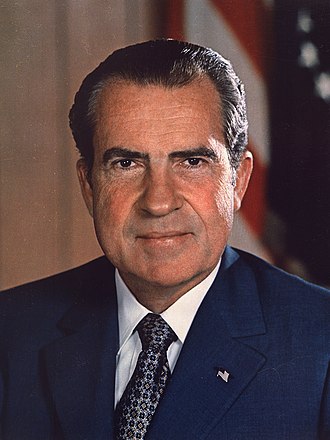
Richard M. Nixon served as the 37th President of the United States from January 1969 until his resignation in August 1974. In February 1971, he ordered the installation of a secret voice-activated taping system in the White House to preserve a historical record of his administration. Until the system's existence was revealed and dismantled in July 1973, the tapes captured Nixon directing major foreign policy initiatives, such as the opening to China, as well as his central role in the Watergate cover-up.
What Nixon talks about on the tapes
White House operations 4,718Presidential scheduling 2,225Public relations 1,784Presidential schedule 1,782Vietnam War 1,693Logistics 1,650Manolo Sanchez 1,626White House communications 1,400White House administration 1,399Presidential communication 1,243Henry Kissinger 1,191Foreign Policy 1,183
Conversations (21,010)
— Page 22 of 211President Nixon and an unidentified associate discuss the logistics of responding to correspondence and a forthcoming phone call involving a third party. The participants clarify the nature of a previous invitation and confirm that the President will reach out to the individual in question. This brief exchange serves to coordinate administrative follow-up regarding the President’s ongoing communications.
President Nixon and Alexander P. Butterfield met to coordinate the President’s upcoming schedule and administrative appointments. The discussion focused on managing the activities and potential interactions of Judge Homer Ferguson, including his involvement with the President’s Foreign Intelligence Advisory Board (PFIAB). They also touched upon scheduling considerations regarding Nelson A. Rockefeller.
President Nixon held a brief, informal meeting in the Oval Office with an unidentified individual to discuss scheduling matters. The conversation specifically addressed the upcoming agenda regarding Nelson A. Rockefeller. The exchange concluded quickly, lasting approximately one minute.
President Nixon initiates a brief communication through the White House operator to be connected to an external party. The operator acknowledges the request to place the call, which serves as a routine administrative task for the President. No substantive policy discussions or decisions occur during this brief exchange.
President Nixon and Press Secretary Ronald Ziegler discuss the optics and scheduling of an upcoming meeting with New York Governor Nelson Rockefeller. They deliberate on whether to permit photographic coverage of the meeting to project an image of positive federal-state relations, ultimately aiming to influence New York political perceptions. The President confirms the meeting will take place in the Oval Office rather than the EEOB to focus the conversation on topics such as revenue-sharing.
President Nixon and Press Secretary Ronald Ziegler briefly coordinate a meeting with Governor Nelson Rockefeller to discuss federal-state relations. They specifically weigh the optics of allowing photography during the session to document the administration's engagement with state leadership. Ziegler agrees to consult Rockefeller on his preference for the photo opportunity before finalizing the logistics.
President Nixon met with New York Governor Nelson Rockefeller to discuss a variety of domestic policy issues, most notably the implementation of federal revenue sharing and strategies to address New York's fiscal challenges. They explored the potential for a Hoover-type commission to examine municipal corruption and inefficiency, and coordinated on the President's upcoming travel plans, including a trip to Rochester. Additionally, the conversation touched upon managing political optics regarding diplomatic visits by foreign leaders and the legislative hurdles for revenue-sharing bills in Congress.
President Nixon and the President’s Foreign Intelligence Advisory Board (PFIAB) met to discuss global foreign policy strategy, with a focus on shifting relationships with the People's Republic of China, the Soviet Union, and Taiwan. The discussion centered on the necessity of intelligence capabilities to navigate future arms agreements and maintain regional stability in the Pacific following the eventual conclusion of the Vietnam War. The participants also reviewed the effectiveness and accelerated timelines of current U.S. intelligence programs under the President’s leadership.
President Nixon and Alexander Butterfield met to coordinate the logistics and guest list for an upcoming state dinner honoring West German Chancellor Willy Brandt. Nixon expressed frustration with the size and formality of previous diplomatic dinners, insisting on a larger guest list of approximately 80 people to minimize his personal interaction with attendees. The President directed Butterfield to streamline the event's physical arrangements to ensure a static, less demanding environment for himself.
President Nixon and Henry Kissinger met to discuss the logistics and political implications of Vice President Spiro Agnew's upcoming foreign trip, focusing on concerns that Agnew's planned stop in Greece would become an emotional focal point for his critics. The conversation also covered broader foreign policy objectives, including sensitive negotiations regarding China, Vietnam, and the Soviet Union, while managing the President's personal schedule and image. Nixon ultimately directed Kissinger to coordinate a breakfast meeting to finalize Agnew's itinerary, emphasizing the need to steer the Vice President away from controversial stops while maintaining discretion regarding ongoing geopolitical initiatives.
President Nixon initiates a brief telephone call through the White House operator to contact Judge Homer Ferguson. The primary purpose of the communication is to place a direct connection to the judge. No further policy discussions or significant substantive developments occurred during this brief request for a connection.
Judge Homer Ferguson initiated this call to commend President Nixon on his recent press conference and discuss the judicial appointment of Judge Cobbs in Virginia. Ferguson confirmed his willingness to continue serving as a senior judge until a successor is appointed and agreed to contact Attorney General John Mitchell to facilitate the personnel transition. The conversation concluded with Ferguson expressing his continued desire for active administration work and his personal apprehension toward full retirement.
President Nixon instructed the White House operator to connect him with H.R. “Bob” Haldeman. The primary purpose of this brief call was to facilitate communication with his Chief of Staff. No further substantive discussion took place in this recording.
President Nixon met with his valet, Manolo Sanchez, in the Oval Office to coordinate logistics regarding the President's immediate schedule. The brief interaction served to facilitate the President's departure from the office. No substantive policy discussions or significant political decisions were recorded during this transition.
President Nixon directs H. R. Haldeman to coordinate the appointment of Bryce N. Harlow to a delegation accompanying Vice President Spiro Agnew. The President intends for Harlow to act as a confidant and informal advisor to Agnew during the trip. Haldeman agrees to the plan and commits to contacting Harlow, along with Senators Hugh Scott and Gale W. McGee, to organize the details.
President Nixon contacted the White House operator to place a personal telephone call to his private secretary, Rose Mary Woods. The brief exchange served solely as a logistical request to facilitate communication with a key staff member. No policy matters or substantive political issues were addressed during this brief administrative interaction.
President Nixon and his personal secretary, Rose Mary Woods, coordinate the revision of a speech drafted for a dedication ceremony scheduled the following day. Finding the original text provided by staff to be excessively long and dull, Nixon instructs Woods to truncate the draft while retaining its opening and closing sections. Woods agrees to finalize the condensed version within thirty minutes so that Press Secretary Ron Ziegler can review it before the President’s 8:30 a.m. breakfast meeting with Vice President Spiro Agnew.
President Nixon initiated a brief telephone call through the White House operator to request a conversation with National Security Advisor Henry Kissinger. This interaction served solely as a logistical bridge to connect the President with his primary foreign policy advisor. No substantive policy discussions took place during this brief operator-assisted exchange.
President Nixon contacted the White House operator to facilitate urgent communications with his senior staff. He requested that the operator connect him with John D. Ehrlichman while also inquiring about the current whereabouts of Henry A. Kissinger. The operator confirmed these requests and initiated the process to locate both individuals for the President.
President Nixon and John Ehrlichman discuss economic strategy and legislative planning following Ehrlichman's meeting with John Connally and Peter Peterson. A key proposal involves extracting public service job provisions from H.R. 1 to create a separate, expedited bill that demonstrates proactive governance in response to potential vetoes. They also evaluate public relations strategies regarding unemployment statistics and express caution about a planned Congressional presentation by Peterson regarding import quotas, fearing it may commit the administration to unintended economic policies.
President Nixon and Henry Kissinger discuss managing labor leader Jay Lovestone regarding grain export licenses to avoid congressional pressure. Additionally, they review reports from Cambodia, with Kissinger expressing concern over the veracity of General Creighton Abrams and his staff regarding recent military failures. Nixon and Kissinger acknowledge frustrations with the command's performance but decide against making drastic leadership changes at that time.
President Nixon met with Henry Kissinger to discuss the Vietnam War, particularly the military situation in the Mekong Delta and the political challenges posed by the McGovern-Hatfield amendment. They strategized on foreign policy, specifically the ongoing Berlin negotiations, the pursuit of a U.S.-Soviet summit, and potential future initiatives involving the People's Republic of China. Later, the President consulted with John Ehrlichman and Virginia Governor Linwood Holton regarding domestic school integration, emphasizing the importance of legal compliance in the South without public confrontation, and addressed various scheduling and administrative matters.
President Nixon contacted the White House operator to place a personal telephone call to Adele Rogers, the wife of Secretary of State William P. Rogers. The communication served as a brief administrative request to facilitate the connection. No substantive policy discussions occurred during this brief operator-assisted exchange.
President Nixon met with the Executive Board of the National Association of Home Builders (NAHB), along with Secretary of HUD George Romney and other administration officials, to discuss the economic health of the housing industry. The primary focus of the discussion was the impact of rising interest rates, inflation, and federal regulations on housing production and middle-class affordability. The participants addressed potential legislative reforms to labor relations and the construction industry, while the President emphasized the administration's commitment to stabilizing the economy and monitoring wage and price trends to support industry growth.
President Nixon instructed the White House operator to facilitate two distinct communications regarding his scheduling and political outreach efforts. He directed the operator to reach journalist Adela Rogers St. Johns at Cornell University and requested a call be placed to Teamsters Union President Frank E. Fitzsimmons. The exchange served as a routine administrative coordination to establish contact with these two figures.
President Nixon held a brief consultation with H.R. Haldeman regarding military buildup before speaking with Frank E. Fitzsimmons to congratulate him on his election as president of the Teamsters Union. Nixon declined an invitation to address the upcoming Teamsters convention in July due to confidential travel commitments, though he hinted at their significance. To maintain the relationship, the President committed to attending a future Teamsters Executive Board meeting, offering to coordinate his schedule with the union leadership.
President Nixon coordinated with the White House operator regarding a call with Adele Rogers, who was currently attending an assembly on the White House grounds. The President indicated there was no immediate urgency and instructed the operator to have Mrs. Rogers call him whenever it became convenient. This brief exchange served to facilitate scheduling for a subsequent conversation between the two parties.
President Nixon telephoned Adele Rogers to commend her for hosting a successful diplomatic reception for Tricia Nixon and Edward R.F. Cox. The President praised Rogers' remarks at the event and explained his decision to keep a low profile to ensure the diplomats remained the primary focus. Rogers reciprocated the praise, noting that the attendees were delighted by the opportunity to meet the young couple.
President Nixon contacted the White House operator to request a connection to his personal secretary, Rose Mary Woods. The brief exchange served as a procedural request to facilitate communication with a key staff member. No policy matters or substantive political discussions occurred during this brief administrative call.
President Nixon met with Alexander P. Butterfield to coordinate administrative scheduling and later consulted with John D. Ehrlichman regarding the appointment of a new General Counsel for the Department of Labor. Nixon expressed a desire to appoint someone aligned with the administration to gain political credit with business leaders, while also vetting the candidate to avoid the confirmation difficulties associated with G. Harrold Carswell. The discussion shifted to labor relations, with Nixon expressing frustration toward business executives who criticized his stance on unions despite his efforts to manage congressional action like the Davis-Bacon Act.
President Nixon met with John Ehrlichman and George Shultz to manage various administrative and political priorities, including the appointment of Dr. Jerome Jaffe to lead a new government drug abuse program and strategies for labor-related political initiatives. The participants discussed the rollout of housing integration policies, the status of revenue-sharing legislation, and preparations for an upcoming Domestic Council meeting. Furthermore, the group reviewed economic performance, specifically consumer confidence and inflation, while debating the efficacy of potential wage and price controls.
President Nixon and his aide Stephen B. Bull met briefly to coordinate administrative logistics regarding the President's daily schedule. The primary focus of the session was a photo opportunity involving William D. Brewer. The meeting concluded immediately following these scheduling arrangements.
President Nixon met with Ambassador William D. Brewer and W. Marshall Wright in the Oval Office to discuss diplomatic matters and exchange gifts intended for the Prime Minister of Mauritius. The conversation covered Mauritius's economic reliance on sugar, its tourism potential, and the logistical challenges facing the island nation. Additionally, the President and Brewer shared personal anecdotes regarding their respective backgrounds in the Foreign Service and education.
President Nixon met with Alexander Butterfield and Rose Mary Woods to coordinate logistical arrangements for upcoming events and personal scheduling. The discussion focused on securing a suitable venue for a reception involving the Peter G. Peterson group and clarifying the President's protocol and time commitments for a meeting with the American Committee on Italian Migration. Additionally, the participants reviewed the maintenance and use of the Tayloe House and discussed potential dinner reservations for the President and First Lady.
President Nixon met with H.R. Haldeman and other staff to review administrative, political, and foreign policy matters, including the handling of foreign cables and the management of cabinet officers. The President emphasized his desire to delegate decision-making authority to cabinet secretaries to minimize his personal involvement in routine disputes and to streamline government operations. Additionally, they discussed strategies for dealing with the press, the importance of maintaining loyalty from political allies, and the specific goal of ending federal funding for the Corporation for Public Broadcasting.
President Nixon met with an unidentified individual to discuss a request concerning Treasury Secretary John B. Connally. The discussion centered on an unspecified document intended to address pressing short-term problems facing the administration. The conversation concluded with the President acknowledging the presented material and the proposed course of action.
President Nixon and Henry Kissinger met to follow up on a previous discussion with labor leader Jay Lovestone regarding foreign policy strategy. The conversation specifically addressed the complexities of managing long-term versus short-term grain export policies and the ongoing status of the Vietnam War. They weighed the implications of current casualty rates and bombing campaigns as part of their broader evaluation of the administration's military and trade objectives.
President Nixon met with his personal valet, Manolo Sanchez, in the Old Executive Office Building to review the President’s daily schedule. The discussion served to coordinate upcoming logistical arrangements for the President's personal and official engagements. No major policy decisions were recorded during this brief administrative interaction.
President Nixon met with his valet, Manolo Sanchez, in the Old Executive Office Building for an informal discussion. The conversation centered on routine matters, specifically focusing on the President's upcoming schedule and local weather conditions. No significant policy decisions or administrative actions were recorded during this brief encounter.
President Nixon consulted with the White House operator to discuss his current schedule. The conversation focused on managing the President's upcoming commitments and logistical planning. No specific policy decisions were reached during this brief administrative exchange.
President Nixon met with an unidentified individual in his Old Executive Office Building suite to discuss logistical matters. The President specifically requested the presence of his valet, Manolo Sanchez, during the brief interaction. No substantial policy or political developments occurred beyond this administrative inquiry.
President Nixon and his personal secretary, Rose Mary Woods, met to address administrative matters regarding a draft of a dedication speech. The discussion focused on coordinating the details and necessary revisions for the document. This brief consultation facilitated the refinement of the President’s upcoming public remarks.
President Nixon met with his personal valet, Manolo Sanchez, in the Old Executive Office Building. The brief interaction focused on a specific request made by the President to his aide. No further policy or political discussions were recorded during this segment.
President Richard Nixon and his personal secretary, Rose Mary Woods, discussed scheduling and logistical arrangements for upcoming social engagements and wedding-related events. Their conversation focused on coordinating the President's personal calendar, including a photo session, a dinner at the F Street Club, and various planned activities for wedding guests throughout the week. The dialogue served to finalize the President's itinerary and clarify the sequence of events leading up to his scheduled discussion with First Lady Pat Nixon.
President Nixon initiates a brief telephone call through the White House operator to contact General James D. “Don” Hughes. The exchange serves solely as a connection request to facilitate communication with the General. No substantive policy discussions occur during this brief administrative interaction.
President Nixon and his personal secretary, Rose Mary Woods, coordinate logistics for an upcoming event or appearance, specifically weighing the suitability of a library location versus alternative sites. They discuss concerns regarding crowd sizes and potential timing conflicts, ultimately deciding to prioritize indoor arrangements due to the heat. The conversation concludes with Woods confirming she will inform First Lady Pat Nixon of the final planning adjustments.
President Nixon held a brief, unscheduled communication with a White House operator in the Old Executive Office Building. The recording functions as a routine administrative log entry, though the specific nature of the request remains undocumented. No substantive policy discussions or executive decisions were captured during this short exchange.
President Nixon instructed General James D. Hughes to make a concerted effort to ensure Secretary of the Treasury John B. Connally utilized the Sequoia presidential yacht and Camp David facilities. Nixon emphasized that he wanted Connally to receive preferential access to these amenities compared to other officials. Hughes acknowledged the directive and thanked the President for a recent phone call to his wife, Bette.
President Nixon met with his military aide, Major General James D. Hughes, to coordinate logistics regarding the use of the presidential yacht, the Sequoia. Nixon explicitly directed that the vessel be made available to a specific unnamed individual, emphasizing that this person should receive preferential treatment over others. The conversation served to formalize scheduling arrangements and ensure the guest felt prioritized.
President Nixon contacted the White House operator to request a telephone connection with his aide, Stephen B. Bull. This brief administrative interaction served as a routing request to facilitate direct communication with a member of the President's staff. No substantive policy matters were discussed during this brief exchange.
President Nixon contacted the White House operator to facilitate an outgoing call. The brief interaction serves primarily as a logistical step for the President to reach another party. No substantive policy discussions or significant historical developments occurred during this brief exchange.
President Nixon and Stephen B. Bull coordinated adjustments to the afternoon schedule, specifically regarding upcoming meetings with Henry Kissinger, Peter G. Peterson, and Caspar W. Weinberger. Nixon directed Bull to inform Kissinger and Peterson that their meeting would be delayed by approximately five to ten minutes to accommodate other calls. Bull confirmed he would handle these scheduling logistics and ensure the attendees were prepared for the revised timing.
President Nixon instructed his aide, Stephen B. Bull, to notify Henry Kissinger and Peter G. Peterson that he would be slightly delayed for an upcoming meeting. The President requested that Bull manage his schedule while he addressed a few pending telephone calls. This brief interaction served to reorganize the President's immediate agenda and handle administrative logistics regarding his appointments.
President Nixon contacted the White House operator to facilitate a direct connection to his personal secretary, Rose Mary Woods. The brief exchange served as an administrative request to initiate communication with a key member of his staff. No further substantive policy discussions occurred during this brief telephonic interaction.
President Nixon initiated a brief communication with the White House operator from his office in the Old Executive Office Building. The purpose of this short interaction was to facilitate an outgoing call or request administrative assistance. No further substantive policy matters or decisions were recorded during this brief technical exchange.
President Nixon and his personal secretary, Rose Mary Woods, discuss the logistical challenges of scheduling tailoring appointments and addressing quality concerns regarding the work of Benjamin Freeman. The conversation focuses on coordinating future clothing needs for the President, including specific requests for lightweight suits, tuxedos, and outerwear to be prepared for upcoming television appearances and public events. Nixon tasks Woods with consulting production experts William H. Carruthers and Paul W. Keyes regarding wardrobe aesthetics to ensure optimal presentation on camera.
President Nixon and his personal secretary, Rose Mary Woods, discuss the logistical and stylistic considerations of procuring new suits for the President. The conversation touches upon the quality of previous tailoring and the desire for a lighter-colored garment for upcoming appearances. They ultimately coordinate a meeting for Wednesday to review a selection of suit options.
President Nixon directs the White House operator to connect him with his personal secretary, Rose Mary Woods. The brief exchange serves as a logistical communication to initiate a private consultation or request assistance from his long-time aide. No substantive policy matters were discussed during this brief telephone connection.
President Nixon and his personal secretary, Rose Mary Woods, coordinate the guest list and logistical arrangements for a dinner scheduled for that evening. They discuss the inclusion of key staff members, specifically Leonard Garment and Raymond K. Price Jr., while also addressing the need to consult with First Lady Pat Nixon regarding the final guest invitations. The call serves as a brief planning session to finalize the evening's social agenda.
President Nixon and his personal secretary, Rose Mary Woods, held a brief, informal meeting to coordinate their personal schedules for the evening. They discussed adjusting the time of a planned engagement from 7:00 pm to 6:30 pm to better accommodate the President's availability. No substantive policy matters were addressed, as the conversation focused exclusively on logistical arrangements.
President Nixon initiated a brief telephone connection via the White House operator. No specific request or task was recorded during the exchange, leaving the purpose of the call unidentified. The interaction concluded without any substantive discussion or action items.
President Nixon and Henry Kissinger met to briefly coordinate their schedules and address administrative matters. They specifically discussed a memo regarding textile policy authored by Peter G. Peterson. The two men aimed to synchronize their upcoming movements and finalize their approach to the pending textile issues.
President Nixon met with his personal valet, Manolo Sanchez, in the Old Executive Office Building to coordinate the transfer of an item. The primary objective of the encounter was the delivery of an unknown object to the President's personal secretary, Rose Mary Woods. No significant policy discussions occurred during this brief administrative exchange.
President Nixon consulted with Alexander P. Butterfield and Stephen B. Bull regarding the logistics of an upcoming appearance before a group of visitors. The discussion focused on coordinating the President's brief two-minute remarks with the scheduled tour of the White House. Rose Mary Woods also joined the brief meeting, which centered on ensuring the group could efficiently transition from the President's address to their tour.
President Nixon instructed the White House operator to locate his personal secretary, Rose Mary Woods, who was en route to visit the First Lady. He requested that she contact him immediately upon receiving his message. This brief exchange served as a coordination effort to facilitate a direct follow-up call with Woods.
President Nixon contacted the White House operator to place a personal telephone call to his private secretary, Rose Mary Woods. This brief communication served solely as a logistical request to connect the President with his administrative staff. No substantive policy matters or political discussions were addressed during this interaction.
President Nixon instructed the White House operator to facilitate communication with Rose Mary Woods. He requested that she call him following her departure to see First Lady Pat Nixon. The brief interaction focused solely on coordinating this specific contact.
President Nixon met with Peter G. Peterson and Henry Kissinger to discuss the sensitive diplomatic implications of the upcoming Okinawa reversion, specifically addressing the Senkaku Islands sovereignty dispute and its potential impact on relations with Taiwan and Japan. To mitigate backlash from Nationalist China regarding the reversion, the group decided to offer Taiwan a low-profile, long-term commitment to provide military equipment, with formal discussions postponed until August to avoid public friction with Congress. Additionally, Peterson briefed the President on a planned bipartisan Congressional session aimed at presenting the Administration's long-term economic and technological strategies, with a particular focus on fostering innovation through unconventional, high-level scientific talent and better integrating R&D with national goals.
President Nixon and Alexander P. Butterfield discussed logistical arrangements for an upcoming bipartisan congressional briefing, focusing on venue constraints and the exclusion of Blair House due to its current unavailability. Nixon mandated a streamlined approach for the associated reception, explicitly restricting the event to drinks only and prohibiting the serving of hors d'oeuvres. Additionally, the pair confirmed that Arthur F. Burns would be included on the guest list for an upcoming dinner honoring Willy Brandt.
President Nixon met with Alexander P. Butterfield and Stephen B. Bull to finalize arrangements for a scheduled photo session. Butterfield confirmed that the necessary preparations had been completed and that the staging area had been relocated to the White House library. Nixon acknowledged the update and signaled his readiness to proceed with the appointment.
President Nixon and H.R. Haldeman reviewed internal administration polling data to assess public opinion on various policy issues, including the Vietnam War, SALT talks, marijuana legalization, and economic priorities. They discussed the disparity between public awareness of administration initiatives and the actual results of these polls, with the President cautioning against overestimating the public's grasp of complex foreign policy details. Following the review, Nixon instructed his staff to pause further polling efforts to avoid excessive internal focus on shifting approval numbers.
President Nixon consulted with his personal secretary, Rose Mary Woods, to verify the religious affiliation of Senator Henry “Scoop” Jackson. Nixon requested this information to confirm whether Jackson was Catholic or Protestant, likely for political or strategic vetting purposes. Woods indicated she believed Jackson was Protestant but agreed to investigate further to provide a definitive answer.
President Nixon held a brief, informal meeting with unidentified individuals in the Oval Office. The conversation contains minimal intelligible dialogue, consisting mostly of background noise and brief, indistinct directives. Due to the lack of clear content, no substantive policy decisions or actionable items were identified from this exchange.
President Nixon held a brief morning meeting in the Oval Office with unidentified individuals to coordinate his official schedule. The discussion focused on administrative planning and the prioritization of upcoming events for the President's daily agenda. No specific policy decisions were recorded during this session.
President Nixon summoned his personal aide, Stephen B. Bull, to the Oval Office for a brief morning meeting. The primary purpose of the discussion was the President's urgent request to locate and bring in John D. Ehrlichman. Following the directive, the meeting concluded shortly thereafter as Bull departed to carry out the instruction.
President Nixon met with John Ehrlichman to critique a draft of a major housing policy statement, specifically directing that the document be shortened and purged of moralistic language and unclear legal interpretations regarding housing referendums. Nixon emphasized the need to project a stronger, more precise stance that resonates with voters who support neighborhood exclusivity. Following Ehrlichman's departure, Nixon consulted briefly with Henry Kissinger regarding administrative messaging, including the release of casualty figures to demonstrate the success of presidential policies.
President Nixon, Henry Kissinger, and John Ehrlichman discussed administrative coordination, including the editing of a housing statement and managing Amtrak-related scheduling concerns. Kissinger briefed the President on the administration's defensive strategy regarding Senator W. Stuart Symington’s presentation on Laos, focusing on efforts to counter negative press coverage. The conversation concluded with instructions to use record-low Vietnam casualty figures for public relations purposes and the decision to reschedule Secretary of Defense Melvin Laird’s upcoming Asia trip to avoid complicating sensitive diplomatic initiatives.
President Nixon initiated a request for the White House operator to connect him with Dwight L. Chapin. This brief administrative exchange served as the precursor to a subsequent conversation between the President and his Deputy Assistant. The call was purely functional, facilitating the connection between Nixon and his staff member.
President Nixon, Vice President Agnew, and a large group of Cabinet members and senior staff met to establish a strategic framework for domestic policy, budget planning for the 1973 fiscal year, and the development of the 1972 Republican legislative and election platform. Participants reviewed polling data regarding national, community, and family concerns, noting that the economy, inflation, and unemployment are primary public priorities while other issues like pollution and consumerism are often driven by media visibility. The President and attendees emphasized the need for better communication to receive credit for administration accomplishments, focusing on a limited number of 'gut issues' rather than overextending on too many programs. Ultimately, the group discussed the necessity of coordinating policy initiatives and messaging to ensure visible progress on key economic and social concerns ahead of the 1972 election.
President Nixon met with his personal aide, Stephen B. Bull, in the Oval Office to discuss administrative scheduling matters. The interaction was brief, lasting only a moment before the two exited the office together. No substantive policy decisions were recorded during this brief encounter.
President Nixon initiates a brief, informal request for the presence of several key administration figures, including John D. Ehrlichman, Caspar Weinberger, and John N. Mitchell. The conversation is fragmentary and focuses on coordinating their immediate arrival at the Oval Office. No major policy decisions or substantive strategic discussions are recorded during this short exchange.
President Nixon consulted with a White House operator to facilitate a communication connection. The brief exchange served as a logistical step to initiate a telephone call. No substantive policy discussions or administrative decisions occurred during this brief interaction.
President Nixon met with his senior staff and Caspar Weinberger to develop a political and economic strategy centered on job creation and tax policy. The discussion focused on leveraging construction projects to stimulate the economy, addressing the regressive nature of property taxes, and crafting a messaging strategy that emphasizes the President's leadership and strength. Nixon directed his team to prioritize projects that provide immediate employment and instructed them to present these efforts as a decisive counter-argument to the spending agendas proposed by Congress.
President Nixon consulted with Dwight L. Chapin to ensure that commemorative certificates were being distributed to the various groups involved in his recent travel, including musical ensembles and police departments. Chapin confirmed that the administrative staff was actively handling these requests for both the Tulsa and West Point visits. The President emphasized the importance of these routine acknowledgments as a public relations tool for the White House.
President Nixon initiates a call to the White House operator to facilitate a conversation with Curtis W. Tarr, the Director of the Selective Service System. The interaction serves as a brief administrative bridge intended to connect the President with personnel involved in draft-related matters. No substantive policy discussions occur during this exchange, as its sole purpose is the establishment of the telephonic connection.
President Nixon called Selective Service Director Curtis W. Tarr to commend his composed handling of an incident where protesters confronted him. Nixon praised Tarr’s vigorous and dignified reaction to the agitators, dismissing the demonstrators as exhibitionists. The conversation served as a gesture of executive support to reassure Tarr following the public, albeit unpleasant, confrontation.
President Nixon contacted the White House operator to request a telephone connection with his aide, Stephen B. Bull. This brief administrative interaction served as a routine communication task to facilitate a direct conversation between the President and a member of his staff. No further substantive discussion or policy matters were addressed during this exchange.
President Nixon met with the Amtrak Board of Directors to discuss the corporation's early operational challenges, strategic planning, and its goal of reviving passenger rail service. The conversation focused on the necessity of improving service quality, boosting ridership, and competing with other travel modes by fostering a culture of professional service. The President emphasized the political importance of simplifying government messaging and prioritizing job creation, while the Board members highlighted their progress in labor negotiations and route rationalization.
President Nixon met with key advisors and economist Milton Friedman to discuss administrative scheduling, the current economic climate, and potential policy adjustments ahead of the 1972 election. A primary focus was the ongoing struggle to balance inflation and unemployment, with Friedman cautioning against reactive policy shifts and emphasizing the need for stability in the money supply. Nixon expressed concern over the volatility of Federal Reserve Chairman Arthur Burns and sought advice on managing economic expectations while avoiding the political pitfalls of wage and price controls.
President Nixon met with Secretary of Transportation John A. Volpe and aide Stephen B. Bull to coordinate logistics for an upcoming event involving Congressman Peter W. Rodino, Jr. The discussion centered on the personal nature of the meeting and the potential attendance of a political candidate named Tomas. The participants briefly reviewed scheduling details before concluding the encounter to prepare for the subsequent public interaction.
President Nixon met with Secretary of Transportation John A. Volpe to discuss ongoing challenges facing the railroad industry. During the brief exchange, Volpe outlined his intent to personally inspect railroad operations and address systemic inefficiencies. The two leaders agreed to continue monitoring the situation and coordinate further efforts to resolve these logistical problems.
President Nixon held a brief, informal meeting in the Oval Office with Phoenix Mayor John W. Driggs, his wife, several of his sons, and Jon M. Huntsman. The conversation focused on social pleasantries, family history, and the presentation of a Phoenix centennial coin to the President, as well as an exchange of gifts. Before the group departed for a White House tour, Nixon offered brief words of encouragement to the mayor regarding his political efforts and upcoming testimony.
President Nixon met with his aide Stephen B. Bull in the Oval Office to briefly review and coordinate the President's upcoming daily schedule. The participants engaged in a short, procedural exchange regarding administrative logistics. No significant policy decisions were recorded during this brief encounter.
President Nixon, H. R. Haldeman, and Rose Mary Woods met to discuss logistics for an upcoming event involving California guests, alongside personal staffing concerns and household management. The conversation transitioned into a strategic review of the administration's public image, with Nixon expressing frustration over his Cabinet’s lack of focus and the administration's failure to gain political credit for its foreign and domestic policy accomplishments. Nixon and Haldeman concluded by emphasizing the need to adopt a more aggressive leadership posture, particularly by identifying and confronting political adversaries, to better resonate with the public.
President Nixon consulted with his aide, Stephen B. Bull, to confirm the scheduled arrival of his barber at the White House. During the brief telephone exchange, the President finalized the appointment time for 2:40 pm. This interaction reflects the routine administrative coordination required to manage the President’s personal schedule.
President Nixon contacted the White House operator to request a connection to his personal secretary, Rose Mary Woods. The brief exchange served as a routine administrative request to facilitate communication with a key staff member. No substantive policy discussions or major decisions occurred during this brief interaction.
President Nixon, Rose Mary Woods, and Stephen B. Bull met to coordinate the logistics and guest list for upcoming social engagements, specifically involving Jack and Helene Drown. The discussion focused on managing Helene Drown’s potential attendance at First Lady Pat Nixon’s scheduled trip to Rochester, New York, due to concerns regarding social etiquette and media exposure. Rose Mary Woods took action items to coordinate these schedules and handle communications with Bebe Rebozo to ensure the President maintained necessary time for rest.
President Nixon met with executives from NBC and other network representatives to discuss the administration's concerns regarding the television industry, specifically focusing on cable television, regulatory oversight, and perceived media bias. The conversation covered the economic challenges posed by cable television, the implications of FCC "equal time" rules on political programming, and the role of advertising in shaping public perception. Nixon emphasized his belief in the importance of maintaining a competitive, private-sector broadcasting system while urging network leaders to ensure fairness and professionalism in their news coverage.
President Nixon summoned Stephen B. Bull to the Oval Office to request the immediate presence of special counsel Charles W. Colson. The brief exchange served as an administrative directive to facilitate a high-level meeting between the President and Colson. Bull departed shortly thereafter to execute the President's instructions.
President Nixon, Charles Colson, and H. R. Haldeman discuss the President’s recent meeting with NBC executives, focusing on the media's perceived liberal bias and the effectiveness of Nixon’s confrontational yet calm demeanor. The participants analyze the executives' reactions to Nixon's challenges regarding press coverage and his refusal to be intimidated by journalistic hostility. Additionally, they discuss media strategy, including the potential for using economic data to counter negative reporting, the management of public broadcasting, and efforts to secure equal time for administration viewpoints.