Nixon, Richard M. (President)
Richard M. Nixon served as the 37th President of the United States from January 1969 until his resignation in August 1974. In February 1971, he ordered the installation of a secret voice-activated taping system in the White House to preserve a historical record of his administration. Until the system's existence was revealed and dismantled in July 1973, the tapes captured Nixon directing major foreign policy initiatives, such as the opening to China, as well as his central role in the Watergate cover-up.
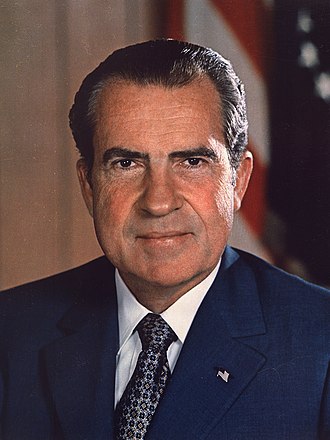
What Nixon talks about on the tapes
White House operations 4,718Presidential scheduling 2,225Public relations 1,784Presidential schedule 1,782Vietnam War 1,693Logistics 1,650Manolo Sanchez 1,626White House communications 1,400White House administration 1,399Presidential communication 1,243Henry Kissinger 1,191Foreign Policy 1,183
Conversations (21,010)
— Page 26 of 211President Nixon directs the White House operator to place a follow-up telephone call to Lucy A. Winchester. This brief administrative interaction serves as a logistical bridge to reach his Social Secretary for further communication. The conversation concludes with the operator acknowledging the request to initiate the connection.
President Nixon consulted with a White House operator to facilitate outgoing telephonic communications from his office in the Old Executive Office Building. These brief interactions served as administrative exchanges to connect the President with other parties. No substantive policy discussions or major decisions occurred during these recorded instances.
President Nixon attempted to reach Lucy A. Winchester via the White House operator. After the operator informed him that Winchester did not answer the call, the President instructed the operator to discontinue the attempt. No further action was taken regarding this communication.
President Nixon held a brief, informal check-in with the White House operator to facilitate a communication connection. The exchange served as a logistical bridge to initiate a subsequent telephone call with another party. No substantive policy or political matters were discussed during this brief administrative interaction.
President Nixon met with a bipartisan group of Congressional leaders and administration officials to propose a centralized federal office for coordinating drug abuse prevention and treatment strategies. The discussion highlighted the urgency of addressing drug addiction, particularly among servicemen in Vietnam and youth in the United States, by shifting from a fragmented, multi-agency approach to a unified, performance-based model. Participants debated the integration of law enforcement, research, and treatment programs, with an emphasis on establishing flexible, community-based solutions and securing Congressional support for new enabling legislation.
President Nixon and H.R. Haldeman met to coordinate the administration's public relations strategy regarding the recent publication of the Pentagon Papers. Nixon emphasized that the White House should focus exclusively on the fact that the documents involved previous Democratic administrations rather than his own, framing the leak as a broader national security threat rather than a partisan issue. The President directed staff to push this narrative through House allies and press secretary Ron Ziegler while insisting on a bold, aggressive stance against the New York Times.
President Nixon met with his National Security Council to discuss strategy for Mutual and Balanced Force Reduction (MBFR) negotiations with the Soviet Union, emphasizing the importance of verification and maintaining allied unity. The President and his advisors examined how to use these potential force reductions to counter domestic congressional pressure for unilateral troop withdrawals. Additionally, the group addressed the ongoing crisis surrounding the publication of the Pentagon Papers, with Nixon expressing a need to strengthen penalties for leaking classified information and to defend the executive branch's ability to maintain secure communications.
President Nixon met with Alexander P. Butterfield to review and finalize the President’s daily schedule. During this brief encounter, the two discussed preparations for an upcoming drug policy message. The session concluded with the President signing administrative documents.
President Nixon held a brief, informal encounter with an unidentified woman in the Oval Office. The participants discussed the location of Dwight L. Chapin and an individual named Jaden. The exchange concluded quickly without addressing any significant policy or administrative developments.
President Nixon and Dwight L. Chapin met to coordinate administrative logistics, including staffing roles for Stephen B. Bull and Lucy A. Winchester, as well as gift arrangements for the Tricia Nixon wedding. The discussion primarily focused on analyzing the timing and release strategies of public opinion polls, specifically comparing White House phone polls with Gallup poll cycles. They concluded by reconciling the timing of recent polling efforts with the President’s travel schedule to ensure optimal public relations impact.
President Richard M. Nixon met briefly with his personal valet, Manolo Sanchez, in the Oval Office. The exchange was limited to a brief greeting, and no substantive policy discussions or significant administrative decisions were recorded during this brief interaction. The meeting served as a routine personal engagement between the President and his staff member.
President Nixon and H.R. Haldeman met to coordinate the administration's response to the publication of the Pentagon Papers and to refine the messaging for the President's upcoming anti-drug initiative. Nixon emphasized the need for a unified strategy that frames the security breach as an assault on the government and shifts focus toward the failures of previous Democratic administrations. The President also discussed refining polling techniques to better gauge public opinion on key issues like housing and racial integration, while expressing frustration with his speechwriters' inability to produce concise, punchy rhetoric.
President Nixon met with staff members Stephen B. Bull and Manolo Sanchez to review the selection and pricing of gift compacts. The participants evaluated the cost and quality of available inventory to determine which items were suitable for presidential use. Nixon ultimately instructed the staff to bring him a less expensive model from the available options.
President Nixon met with Lucy A. Winchester and Stephen B. Bull to coordinate the distribution of mementos to White House staff and support personnel who assisted with the recent presidential wedding. The President emphasized recognizing those who performed extra duties, including gardeners, florists, caterers, and musicians, by providing gifts such as tie bars and compacts. Winchester was tasked with collaborating with Rex Scouten to finalize the recipient lists, ensuring that all staff members who contributed beyond their regular roles were acknowledged for their service.
President Nixon held a brief meeting in the Oval Office with an unidentified individual. The primary purpose of the encounter was for the President to request the presence of Press Secretary Ronald L. Ziegler. No further substantive policy matters were recorded during this brief exchange.
President Nixon and Ronald Ziegler coordinated the messaging for an upcoming public announcement regarding national drug policy. Nixon emphasized the need for aggressive rhetoric, specifically testing phrases like "Public Enemy Number One" and a "new total offensive" to frame the administration’s stance. They discussed avoiding military terminology associated with the Vietnam War while maintaining a "no-nonsense" approach that balances firmness toward drug traffickers with compassion for addicts.
President Nixon and Press Secretary Ronald L. Ziegler met in the Oval Office to coordinate the President's upcoming official schedule. This brief consultation served to align administrative priorities and logistical planning for presidential engagements. No major policy developments were recorded, as the discussion focused strictly on internal scheduling matters.
President Nixon met with his staff and businessman Donald McI. Kendall to coordinate administration messaging, discuss drug policy, and review foreign relations. The group focused on refining the President's public rhetoric regarding federal drug enforcement efforts, with Nixon expressing frustration with current speechwriting and emphasizing the need for a more decisive, impactful message. Kendall provided an extensive briefing on international affairs, specifically regarding Greece, Iran, Egypt, and Japan, advocating for a pragmatic trade policy that prioritizes American economic interests over traditional foreign aid paradigms.
President Nixon met with his aide Stephen B. Bull in the Oval Office to briefly coordinate administrative logistics and scheduling. The discussion focused on preparations for an upcoming meeting with Christian de Guigne III. The conversation primarily served as a check-in regarding the President's immediate agenda and the readiness of his support team.
President Nixon held a brief, informal meeting with Alexander P. Butterfield and guests Christian de Guigne III and IV to exchange gifts and engage in light social conversation. The discussion covered the security challenges associated with potential presidential travel, including a proposed visit to Bohemian Grove, and touched upon regional politics and professional Bay Area sports, specifically the performance of Vida Blue and the San Francisco Giants. The meeting concluded after the presentation of commemorative gifts featuring the presidential seal.
President Nixon met with his aide Stephen B. Bull in the Oval Office to coordinate administrative arrangements. The brief interaction focused on scheduling details regarding Senator John L. McClellan. No significant policy decisions were reached, as the meeting served primarily as a logistics check for the President’s calendar.
President Nixon met with Senator John L. McClellan and Clark MacGregor to accept a ceremonial Bowie knife and exchange gifts before shifting the discussion to the recent leak of the Pentagon Papers. Nixon and his guests analyzed the implications of the unauthorized disclosure, comparing the publication of the classified documents by the press to the illegal sale of stolen property. They expressed frustration over the media's defense of the act as protected speech, framing the situation instead as a dangerous institutional threat that necessitated government censorship.
President Nixon met with his aide Stephen B. Bull in the Oval Office to conduct a brief administrative review of the President's daily schedule. The primary focus of the discussion was the upcoming appointment with Congressman Wendell Wyatt. No further policy matters were addressed before the meeting concluded immediately.
President Nixon met with Representative Wendell Wyatt and Clark MacGregor to discuss regional economic concerns, specifically the housing and employment crises affecting Oregon, Washington, and the Seattle area. The conversation transitioned to foreign policy, where Wyatt praised the President's diplomatic efforts toward the People's Republic of China, noting concerns raised by Japanese officials during a recent U.S.-Japan parliamentary conference. Nixon emphasized the strategic necessity of ending China's isolation for long-term global stability and arms control, while maintaining U.S. commitments to Taiwan. The brief meeting concluded with the presentation of gifts to the visitors.
President Nixon and George Shultz met to discuss legislative strategy regarding the Public Service Employment Bill, weighing the political risks of a veto against the potential for negotiating a compromise on manpower reform and revenue sharing. They analyzed the current state of the economy, specifically noting that second-quarter GNP growth was lower than anticipated but likely to be revised upward as income outpaced output. Additionally, they coordinated plans for upcoming budget meetings at Camp David and outlined travel arrangements for Shultz to address state advisory committees regarding the administration's economic policy.
President Nixon requested that the White House operator connect him with special counsel Charles W. Colson. This brief administrative interaction served as an initiation of communication between the President and a key advisor. No further substantive discussion was recorded during this segment of the tape.
President Nixon consulted with his personal aide, Manolo Sanchez, and his secretary, Rose Mary Woods, regarding historical data or record-keeping. The brief interaction focused on retrieving specific statistics from the previous year. No significant policy decisions were recorded during this brief administrative inquiry.
President Nixon contacted the White House operator to request a connection to his personal secretary, Rose Mary Woods. The brief exchange served as an administrative bridge to facilitate direct communication with his staff. No further substantive policy matters were discussed during this brief connection.
President Richard M. Nixon and his personal secretary, Rose Mary Woods, engaged in a brief telephone conversation regarding personal matters. The discussion centered on administrative or private logistical arrangements as indicated by the withdrawal of the content for personal reasons. No significant policy decisions or official government actions were recorded during this exchange.
President Nixon initiates a request for the White House operator to connect him with Charles W. Colson. This brief communication serves as a logistical bridge to facilitate a direct consultation between the President and his special counsel. No further substantive discussion occurs during this exchange.
President Nixon consulted with the White House operator to facilitate an outgoing call. The brief exchange focused exclusively on establishing a connection with a desired party. No further substantive policy matters or executive decisions were addressed during this interaction.
President Nixon and Charles Colson discuss the administration's political strategy regarding the New York Times' recent publication of the Pentagon Papers. Nixon instructs Colson to frame the controversy as a criminal issue by repeatedly labeling the leak as 'knowingly publishing stolen goods' that endanger national security, rather than a debate over press freedom. They emphasize the need to shift public perception by highlighting that the documents reflect the policies of the Kennedy and Johnson administrations, effectively distancing the Nixon White House from the scandal while attempting to discredit the Times as a political enemy.
President Nixon and Charles Colson discuss strategies to discredit the New York Times for publishing the Pentagon Papers, framing the newspaper's actions as the criminal act of knowingly publishing stolen government documents. Nixon directs Colson to aggressively disseminate this narrative to members of Congress, the press, and the public to shift focus away from the war and onto the legal and security implications of the leaks. Furthermore, Nixon emphasizes the need to frame the documents as a reflection of Kennedy and Johnson-era mismanagement rather than a current administration cover-up.
President Nixon instructed the White House operator to place an outgoing call to his special counsel, Charles W. Colson. The brief exchange served as a routine administrative request to facilitate direct communication between the President and a key staff member. No further substantive discussion occurred before the line was connected.
President Nixon met with his aide, Stephen B. Bull, to provide instructions regarding Press Secretary Ronald L. Ziegler. The President directed Bull to ensure Ziegler was not interrupted or called away while at lunch. This brief exchange served to manage the President's immediate scheduling priorities regarding his communications staff.
President Nixon met with his staff to orchestrate a coordinated public relations and legal counter-offensive against the New York Times regarding the publication of the Pentagon Papers, framing the leak as the trafficking of stolen goods and an act of providing aid and comfort to the enemy. He subsequently consulted with Senator Barry Goldwater and Clark MacGregor to discuss congressional support for the administration's stance on the war and security, while exploring ways to leverage Goldwater’s influence to shift the narrative. The meeting concluded with a broader review of foreign policy strategies, including relations with China, the Soviet Union, and the status of the U.S. aircraft industry.
President Nixon, Henry Kissinger, and Manolo Sanchez met briefly in the Oval Office to share refreshments. Following Sanchez’s departure, Nixon and Kissinger engaged in a short, fragmented discussion regarding an unspecified matter the President expressed an urgent desire to address. The conversation concluded with the President instructing an individual to leave the area.
President Nixon met with H.R. Haldeman, John Ehrlichman, and Henry Kissinger to coordinate an aggressive administration response to the New York Times' publication of the Pentagon Papers. Nixon emphasized the need to frame the issue as a defense of the integrity of the presidency and the necessity of maintaining national security, rather than merely litigating the court case. The group discussed strategies to pressure the press, leak information regarding Daniel Ellsberg, and discredit the previous administrations of Johnson and Kennedy regarding their Vietnam policy.
H. R. Haldeman coordinates with the White House operator to facilitate a phone connection with Charles W. Colson. President Nixon is present in the background as the arrangements for the call are made. This administrative interaction serves as the preliminary step to establish direct communication with Colson regarding undisclosed executive business.
President Nixon contacted the White House operator to facilitate an outgoing call to special counsel Charles W. Colson. This brief administrative interaction served as the necessary connection process for the President to reach his aide. No further substantive discussion took place during this exchange.
President Nixon met with his personal valet, Manolo Sanchez, to discuss the communication of a specific public message or policy position. While the brief transcript segment suggests a focus on the necessity of conveying a clear, firm directive, the majority of the recording remains obscured by a personal withdrawal. No significant policy decisions were recorded during this abbreviated exchange.
President Nixon, Rose Mary Woods, Ronald Ziegler, and Charles Colson met to discuss press management, presidential scheduling, and the unfolding controversy surrounding the Pentagon Papers. A central focus was Nixon's insistence that former President Lyndon B. Johnson must publicly defend his administration's role in the Vietnam War, with Nixon stating he could no longer carry the political burden of defending Johnson if Johnson remained silent. Furthermore, Nixon directed his staff to exclude *The New York Times* from press access and briefings, citing his deep frustration with the publication.
President Nixon and Charles Colson discussed the urgent need for former President Lyndon B. Johnson to publicly defend his administration regarding the leaked Pentagon Papers. Nixon expressed frustration that he was bearing the political burden of defending Johnson against critics and threatened to stop doing so unless Johnson held a press conference to clarify the record. Additionally, the pair discussed potential strategies to undermine the New York Times, including a proposed Teamsters strike against the newspaper and the tactical release of damaging information concerning the death of Ngo Dinh Diem.
President Nixon initiates a brief telephone call to the White House operator to be connected with special counsel Charles W. Colson. The interaction serves solely as a logistical request to facilitate communication with a key staff member. No policy discussions or substantive developments occur during this brief exchange.
President Richard Nixon met with his personal valet, Manolo Sanchez, in the Old Executive Office Building. Due to the withdrawal of the substantive portion of the recording as personal information, no specific policy or administrative matters were documented. The meeting concluded shortly thereafter with Sanchez exiting the office.
President Nixon instructed Charles Colson to deliver an ultimatum to former President Lyndon B. Johnson regarding the ongoing controversy surrounding the Pentagon Papers. Nixon informed Colson that he would only publicly defend Johnson during an upcoming press engagement in Rochester if Johnson concurrently committed to defending himself during his own scheduled press conference. Colson agreed to relay this demand immediately via Bryce Harlow to ensure Nixon received an answer by that evening.
President Nixon met with an unidentified individual, during which the conversation centered on arranging a meeting with White House Chief of Staff H. R. Haldeman. Due to the limited and unclear nature of the transcript, no substantive policy decisions or further details regarding the purpose of the engagement were captured. The brief interaction focused primarily on the logistical coordination of this requested access to Haldeman.
President Nixon and Charles Colson briefly discussed the implementation of an undisclosed project, with the President emphasizing the need for a direct ultimatum to ensure progress. Nixon confirmed that he had already initiated the necessary actions and demanded clarity regarding the project's execution. Colson acknowledged the President's instructions, signaling his understanding of the urgent directive.
President Nixon initiates a call to the White House operator to be connected with his National Security Advisor, Henry Kissinger. The interaction serves as a brief logistical request to facilitate direct communication with Kissinger. No substantive policy discussions occur during this short exchange.
President Nixon met with his personal valet, Manolo Sanchez, at the Old Executive Office Building. Given the absence of a transcript and the brief duration of the recorded segment, the discussion remains undocumented and restricted. No substantive policy decisions or historical actions were captured during this exchange.
President Nixon and Henry Kissinger discuss strategies for managing the public fallout from the Pentagon Papers leak, specifically focusing on the need for former President Lyndon B. Johnson to publicly defend his administration. Nixon expresses frustration that his administration is bearing the political burden alone and directs Kissinger to contact Walt Rostow to pressure Johnson into holding a press conference. Kissinger advises shifting the focus toward defending the integrity of the presidency and the illegality of the document theft rather than focusing solely on Johnson's personal defense.
President Richard M. Nixon met with his Deputy Assistant Alexander P. Butterfield in the Old Executive Office Building to review administrative details. The primary focus of the discussion concerned the scheduling arrangements for an individual identified only as John. This brief consultation reflects the routine operational management of the President's calendar handled by his staff.
President Nixon met with his personal valet, Manolo Sanchez, in the Old Executive Office Building for a brief, informal interaction. The exchange consisted of routine directives regarding movement and space within the office environment. No substantive policy matters or major historical developments were recorded during this brief encounter.
President Richard Nixon met with his personal valet, Manolo Sanchez, in the Old Executive Office Building. The conversation, which was limited to a very brief exchange, was classified as a personal returnable item. No substantive policy matters or official administrative decisions were recorded.
President Richard M. Nixon met with his personal valet, Manolo Sanchez, in the Old Executive Office Building for a brief, informal encounter. The session consisted of a short, four-second exchange that was subsequently withdrawn from public release for being of a personal nature. No significant policy discussions or administrative decisions were recorded during this brief interaction.
President Nixon met with his personal valet, Manolo Sanchez, in the Old Executive Office Building to handle a brief, routine matter. The short interaction primarily facilitated an administrative request for the President to speak with Charles Colson. No substantive policy discussions occurred during this brief exchange.
President Nixon instructed the White House operator to place a call to Congressman Gerald R. Ford. This brief exchange served as a logistical step to initiate direct communication between the President and the House Minority Leader. No further substantive discussion took place during this specific segment of the recording.
President Nixon consulted with the White House operator to coordinate urgent communications with key political allies. The operator facilitated a transition to Charles Colson, who was joined by Bryce Harlow, while also arranging a callback from Congressman Gerald Ford. This effort suggests a high-level coordination of legislative or political strategy involving senior staff and congressional leadership.
President Nixon and Charles Colson discuss efforts to coordinate outreach to former President Lyndon B. Johnson and Walt W. Rostow, facilitated by Bryce Harlow. The primary objective is to deliver a specific message to Johnson, but the team encounters delays in reaching him. They decide to wait until the following morning to establish direct contact, ensuring the message is delivered by someone with the appropriate standing.
President Nixon and Representative Gerald R. Ford discuss recent legislative successes, noting the importance of these victories in demonstrating national strength to North Vietnam. The two also address the administration's aggressive stance against drug trafficking and the political controversy surrounding the New York Times' publication of the Pentagon Papers. Nixon instructs Ford to personally thank Congressman F. Edward Hébert for his role in the legislative wins while advising a cautious, hands-off approach regarding the media's handling of the classified documents.
President Nixon instructed the White House operator to place a telephone call to Congressman F. Edward Hébert of Louisiana. The brief interaction focused solely on establishing the connection to the congressman's office. No substantive political discussions occurred during this exchange.
President Nixon calls Congressman F. Edward Hébert to congratulate him on the House's decisive legislative victory regarding funding for the Antiballistic Missile (ABM) system and the B-1 bomber. The conversation shifts to the ongoing controversy surrounding the publication of the Pentagon Papers by The New York Times, which Nixon characterizes as an attack on the presidency. Nixon expresses his determination to pursue legal action against Daniel Ellsberg and his associates, asserting that those responsible for leaking the classified documents must be sent to jail.
President Nixon and Henry Kissinger discussed strategies regarding the fallout of the Pentagon Papers, specifically focusing on the potential for a public statement from former President Lyndon B. Johnson. Kissinger confirmed that Walt W. Rostow and William J. Jordan were drafting a statement for Johnson, though he expressed reservations about Nixon aligning himself too closely with the former administration on this issue. They agreed to defer a final decision until the next day’s staff meeting, where they would review the draft and provide a formal recommendation to the President.
President Nixon instructed the White House operator to place a telephone call to Press Secretary Ronald L. Ziegler. This brief administrative interaction was solely intended to establish communication with a key staff member. No further substantive policy matters or tactical decisions were addressed during this short exchange.
President Nixon initiated a brief administrative call through the White House operator to determine the whereabouts of Press Secretary Ronald L. Ziegler. The President specifically requested that the operator connect him with Chief of Staff H.R. Haldeman to assist in locating Ziegler. No substantive policy matters were discussed during this short logistical exchange.
President Nixon and H.R. Haldeman discuss the administration’s strategy for responding to the unauthorized publication of the Pentagon Papers. Nixon expresses reluctance to issue a formal televised statement, fearing that a prepared, legalistic speech would be ineffective and draw excessive attention to the issue. He decides to review a draft from John Ehrlichman the following morning, ultimately favoring either a simple written statement or a brief, unscripted address to avoid appearing overly focused on technical legalisms.
President Nixon and H. R. Haldeman met to discuss the presentation and delivery strategy for an upcoming presidential statement, incorporating advice from Egil Krogh. The discussion touched upon the President’s preference for a low-key approach while reviewing recent media coverage and the evening news cycle. Additionally, the pair coordinated scheduling matters, including an upcoming meeting with Charles Colson and logistical arrangements for visitors.
President Nixon met with his valet, Manolo Sanchez, in the Old Executive Office Building to discuss personal matters. The conversation primarily concerned the President's schedule and the preparation of refreshments for the evening. No major policy decisions were reached during this brief, informal interaction.
President Nixon consulted with an aide regarding the drafting of a message concerning senior citizens, emphasizing the need for brevity and a condensed, impactful format. The discussion focused on addressing the impact of rising property taxes on older homeowners and the potential integration of revenue sharing as a policy solution. Additionally, Nixon considered including a section on the role of seniors in volunteer activities and the possibility of referencing the administration’s anti-drug efforts within the document.
President Nixon met with an unknown individual to review and finalize revisions for a message concerning senior citizens. The discussion focused on streamlining the draft by incorporating specific sections on property tax legislation while maintaining a concise overall length. Nixon ultimately decided against adding further content, concluding that the current document was already sufficiently comprehensive.
President Nixon met with Alexander P. Butterfield in the Oval Office to receive and review an item delivered by National Security Advisor Henry Kissinger. The brief two-minute session served as a logistical exchange of sensitive materials. No further details regarding the nature of the document or subsequent actions were recorded during this interaction.
President Nixon, H.R. Haldeman, and Alexander Butterfield met to coordinate the administration's strategic response to the publication of the Pentagon Papers. The President decided to avoid immediate personal public statements to steer clear of ongoing judicial proceedings, opting instead to have National Security Advisor Henry Kissinger attack the media and the leaks through background briefings. The group concluded that they should shift the political narrative by highlighting the documents' inclusion of actions by previous Democratic administrations while emphasizing that the release of classified information threatens national security and ongoing delicate diplomatic negotiations.
President Nixon met with Senegalese President Léopold Sédar Senghor to discuss the geopolitical landscape in Africa, specifically the threats posed by Chinese and Soviet communist influence. Senghor emphasized Senegal's commitment to Western-aligned development and his belief in a pluralistic future where African nations contribute to a global civilization. The leaders also addressed economic development priorities, including agricultural infrastructure, fishing rights, and the importance of U.S. investment in the region.
John Ehrlichman and Clark MacGregor coordinate the President’s urgent delivery of documents to Congress, acting on advice from Gerald Ford that a prompt response is of the highest importance. The participants discuss scheduling a breakfast meeting to facilitate this transfer and consider expanding the guest list to include key congressional leadership, such as Mike Mansfield and Carl Albert. They conclude by confirming the logistical arrangements to ensure the President’s actions are handled effectively without negative press or legislative friction.
President Nixon contacted the White House operator to facilitate an outgoing call to Press Secretary Ronald L. Ziegler. The brief interaction served as a logistical bridge to connect the President with his primary spokesperson. No substantive policy discussions or decisions occurred during this administrative exchange.
President Richard Nixon met with his personal valet, Manolo Sanchez, in the Oval Office to engage in brief, informal conversation. The dialogue primarily concerned Sanchez's personal surprise and reactions regarding the current environment or specific events within the White House. No substantive policy decisions or official government actions were recorded during this brief exchange.
President Nixon and Alexander P. Butterfield met to coordinate the President's daily schedule, specifically addressing requested meetings with Henry Kissinger and John Ehrlichman. Nixon instructed Butterfield to prioritize urgent matters with Kissinger while deferring non-essential requests to the following day. The brief discussion concluded with the President deciding to review briefing materials before receiving Ehrlichman.
President Nixon met with H.R. Haldeman, Henry Kissinger, and John Ehrlichman to coordinate the administration's multifaceted response to the unauthorized publication of the Pentagon Papers. The discussion focused on managing public perception through declassification strategies, navigating legislative challenges like the Mansfield amendment, and addressing legal actions against the New York Times. Additionally, the participants reviewed international diplomatic efforts, including upcoming negotiations with the Soviet Union and China, while also discussing the logistics of a meeting with business leaders and outreach to Senator Allen Ellender regarding Radio Free Europe.
President Nixon met with his senior advisors and Cabinet members to discuss managing the political and legal fallout of the Pentagon Papers release. The group strategized how to handle demands for document declassification and congressional access without appearing to capitulate to leakers or damaging the ongoing criminal prosecution of the New York Times. Nixon decided to distance himself from direct negotiations with congressional leaders, opting instead to have Secretaries Laird and Rogers manage the process through administrative channels, while firmly limiting the scope of declassification to prevent broader security compromises.
President Nixon met with an unidentified individual in the Oval Office to address a specific request regarding Manolo Sanchez. The brief encounter lasted less than four minutes and focused exclusively on administrative or personal arrangements concerning the President's valet. No further details regarding the nature of the request were recorded.
President Nixon met with Stephen B. Bull in the Oval Office to coordinate his daily schedule. The primary purpose of the meeting was to arrange an upcoming appointment with Frank J. Shakespeare. Following this brief administrative review, Bull departed the office.
President Nixon met with an unidentified individual to discuss scheduling matters involving H.R. Haldeman and Frank Shakespeare. During the brief exchange, the President cryptically referred to a pressing issue as a "bear," suggesting a developing situation requiring administrative attention. The meeting concluded quickly, with instructions provided to relay this urgent information to Haldeman.
President Nixon met with USIA Director Frank Shakespeare, H.R. Haldeman, and others to review Shakespeare's recent fact-finding trip to Southeast Asia. Shakespeare assessed regional attitudes toward Communist China, the Nixon Doctrine, and the emergence of Japan as a major economic and potential military power. He also criticized the current State Department handling of various ambassadors and communication centers, specifically advocating for more strategic management of personnel and institutions like Radio Free Europe and Radio Liberty.
President Nixon and Vice President Agnew met with a group of Appalachian governors and key administration advisors to discuss the legislative strategy for extending the Appalachian Regional Commission (ARC) and managing regional political concerns. The discussion shifted toward the administration's aggressive response to the leaking of the Pentagon Papers, which Nixon characterized as a threat to national security and a move by political opponents to damage his administration. Nixon and Agnew coordinated on the narrative for Agnew's upcoming international trip, with the President tasking his team with countering domestic criticism and emphasizing the administration's commitment to ending the Vietnam War through established diplomatic channels.
President Nixon and Stephen B. Bull briefly conferred in the Oval Office to coordinate the President's upcoming meeting with Attorney General John N. Mitchell. The discussion focused on logistics, specifically determining which staff members, including H.R. Haldeman and John D. Ehrlichman, should be present for the session. Nixon ultimately decided to admit the Attorney General to initiate the scheduled deliberations.
President Nixon met with his senior advisors to strategize on managing the political fallout from the release of the Pentagon Papers and the Senate's recent passage of the non-binding Mansfield amendment regarding troop withdrawals. The President decided to counter the growing legislative pressure by emphasizing that the amendment was inconsistent with ongoing diplomatic efforts to secure a ceasefire and prisoner of war (POW) releases, while also directing his team to frame the document leak as a breach of national security perpetrated by the previous Democratic administrations. Additionally, the participants discussed the ongoing legal battle against the New York Times and the Washington Post, weighing the public relations benefits of pursuing the case through the Supreme Court versus allowing the matter to be resolved through congressional inquiry.
President Nixon and Press Secretary Ronald Ziegler discuss media coverage strategies regarding Vietnam, the successful House passage of H.R. 1, and the ongoing legal battles over the Pentagon Papers. Nixon emphasizes the importance of framing the Pentagon Papers issue around the mishandling of top-secret documents to garner public support and protect national security. The two also coordinate efforts to generate press coverage for a story involving the British government through State Department spokesperson Robert J. McCloskey.
President Nixon contacted the White House operator to place an urgent call to National Security Advisor Henry A. Kissinger. This administrative interaction served as a logistical bridge to facilitate a direct line of communication between the President and his top foreign policy aide. No further details regarding the substance of the intended discussion were recorded.
President Nixon and Henry Kissinger discussed political strategies for managing the fallout from the Pentagon Papers leak and ongoing opposition to the Vietnam War. They analyzed the political vulnerabilities of Democratic figures like Ted Kennedy and agreed that the administration should adopt a combative public stance to discredit critics. Nixon suggested that Vice President Spiro Agnew deliver a forceful speech to rally support and coordinate this effort through Patrick Buchanan.
President Nixon met with his aide Stephen B. Bull to coordinate administrative details regarding his upcoming schedule. The discussion focused on the availability and travel arrangements for Henry Kissinger and Rose Mary Woods. This brief consultation primarily served to manage logistics for the President's planned trip to Chicago.
President Nixon instructed the White House operator to place a telephone call to Senate Majority Leader Mike Mansfield. This request was part of the President's efforts to facilitate communication with key legislative leadership. The brief exchange served as a routine administrative action to initiate high-level coordination with the Senate.
President Nixon met with H. R. Haldeman, John Ehrlichman, and Henry Kissinger to strategize their public and political response to the leak of the Pentagon Papers and the ongoing Vietnam peace negotiations. Nixon emphasized a desire to appear dignified while shifting the burden of declassification to Congress, simultaneously plotting to expose the perceived duplicity of previous Democratic administrations. The President signaled a tough stance against Senate interference, warning that if negotiations with North Vietnam were derailed, he would prioritize a military escalation over a fixed withdrawal date.
President Nixon consulted with Mary Jane Delbalzo, secretary to Senator Mike Mansfield, to coordinate a potential presidential visit to Montana. Nixon requested that the Senator’s staff communicate with H.R. Haldeman to finalize the logistics, timing, and nature of the event, which was likely a dedication ceremony. This coordination was intended to align the Montana trip with the President’s broader upcoming travel schedule throughout the Western United States, which included dedications for various infrastructure projects.
John Ehrlichman, speaking on behalf of President Nixon, contacted Speaker of the House Carl Albert to relay details from the President's recent breakfast meeting with Senator Mike Mansfield regarding the Vietnam War. The administration offered to provide Congress with 47 volumes of Vietnam reports and a 1965 Tonkin Gulf study, which remained classified while undergoing a declassification review by Secretary of Defense Melvin Laird. The participants discussed the logistical challenges of secure document storage and the necessity for joint congressional leadership to determine the appropriate distribution and oversight of these sensitive materials.
John Ehrlichman and Clark MacGregor coordinate the logistics of delivering sensitive documents from the President to Congressional leadership. The conversation addresses confusion regarding communication with Speaker Carl Albert and Vice President Spiro Agnew, as the administration prepares to bypass traditional procedures. Ehrlichman instructs MacGregor to exclude the Vice President from the distribution process, emphasizing that the delivery to Mike Mansfield and joint leadership is an extraordinary procedure.
President Nixon and his senior advisors and business leaders convened to formalize a national strategy for increasing veteran employment, emphasizing the need for businesses to provide veterans with a hiring advantage. The discussion included strategies for managing the fallout from the recently leaked Pentagon Papers, with Nixon directing his team to resist congressional hearings on war conduct while ensuring the documents were securely channeled to responsible leadership. Nixon also expressed a desire to keep the focus of the controversy on the previous administrations and away from current operations, tasking officials with maintaining a unified, firm stance against political opportunists.
President Nixon, First Lady Pat Nixon, and domestic policy advisor John Ehrlichman participated in a brief telephone exchange. The discussion was entirely withdrawn for personal privacy reasons, indicating the content did not pertain to substantive administrative or policy-related developments. Consequently, no specific official actions or decisions were recorded as part of this brief communication.
President Nixon initiates a call to the White House operator to be connected with Congressman F. Edward Hébert. The brief exchange serves as a logistical bridge to facilitate a direct conversation between the President and the Representative. No substantive policy matters are discussed, as the interaction is limited to the placement of the call.
President Nixon instructed the White House operator to place urgent telephone calls to several members of Congress, including Pierre S. DuPont, Charles S. Gubser, and Garry E. Brown. Additionally, the President inquired about the status of locating Congressman A. Burton to facilitate further communication. This administrative exchange served to coordinate Nixon's direct outreach to legislative officials for undisclosed purposes.
President Nixon met with H. R. Haldeman and Charles Colson to develop a political strategy for responding to the Pentagon Papers, aiming to shift public attention away from the administration and toward the failures of the Kennedy and Johnson administrations. Nixon emphasized the importance of maintaining a calm, presidential demeanor while delegating aggressive attacks against the Democratic field, particularly targeting Edward Kennedy and Edmund Muskie, to subordinates and allies. The group also discussed using upcoming policy initiatives and economic indicators to bolster confidence, while Nixon directed his staff to demand significant financial contributions from potential ambassadorial appointees to secure necessary party funding.