Nixon, Richard M. (President)
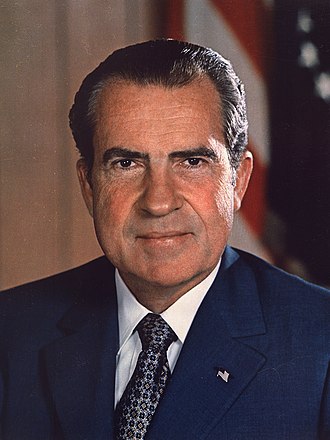
Richard M. Nixon served as the 37th President of the United States from January 1969 until his resignation in August 1974. In February 1971, he ordered the installation of a secret voice-activated taping system in the White House to preserve a historical record of his administration. Until the system's existence was revealed and dismantled in July 1973, the tapes captured Nixon directing major foreign policy initiatives, such as the opening to China, as well as his central role in the Watergate cover-up.
What Nixon talks about on the tapes
White House operations 4,718Presidential scheduling 2,225Public relations 1,784Presidential schedule 1,782Vietnam War 1,693Logistics 1,650Manolo Sanchez 1,626White House communications 1,400White House administration 1,399Presidential communication 1,243Henry Kissinger 1,191Foreign Policy 1,183
Conversations (21,010)
— Page 25 of 211President Nixon initiates a brief communication through the White House operator to facilitate a connection to another party. The exchange serves as a logistical bridge to manage the President's internal switchboard operations. No substantive policy matters or major decisions are recorded during this short administrative interaction.
President Nixon consults with John Mitchell and Henry Kissinger regarding the legal response to the New York Times' publication of classified documents. The participants agree to take a low-key, formal approach by putting the newspaper on legal notice while simultaneously initiating a covert investigation to identify the leakers. Nixon secures support for this stance by leveraging Henry Kissinger's report that former President Lyndon Johnson would publicly back actions taken to defend the integrity of government against such security breaches.
President Nixon, John Mitchell, and Henry Kissinger met to discuss the administration's response to the unauthorized publication of the Pentagon Papers and its potential impact on ongoing peace negotiations. The participants emphasized the need to defend government integrity against the leak while strategizing how to prevent political rhetoric from undermining the North Vietnamese incentive to negotiate. Additionally, Kissinger briefed the President on his upcoming Asia trip, highlighting the diplomatic importance of the China initiative and the necessity of maintaining operational secrecy during his travels.
President Nixon contacted the White House operator to be connected with First Lady Thelma C. “Pat” Nixon. The interaction served as a brief administrative request to facilitate a private telephone call between the President and his wife. No substantive political or policy matters were discussed during this brief exchange.
President Richard Nixon and First Lady Pat Nixon engaged in a brief telephone conversation. The discussion was personal in nature, as indicated by its status as a withdrawn personal item. No substantive policy matters or administrative decisions were recorded or disclosed from this exchange.
President Richard Nixon and First Lady Pat Nixon discussed recent media coverage, specifically focusing on a magazine cover feature and public reception. The pair exchanged observations regarding the quality of photographs and the broader impact of televised media compared to print. The brief exchange served as an informal check-in on their respective public impressions and upcoming schedule commitments.
President Nixon initiated a brief telephone request to the White House operator to be connected with his close confidant, Charles G. “Bebe” Rebozo. The interaction served strictly as a logistical bridge to facilitate this private communication. No substantive policy matters or further actions were discussed during this brief exchange.
President Nixon instructed the White House operator to connect him with his daughter, Tricia Nixon Cox. The brief exchange served as a routine administrative request to facilitate a personal telephone call. No policy or substantive government matters were discussed during this interaction.
President Nixon initiates a brief interaction with the White House operator to facilitate a telephone connection. The exchange serves primarily as a logistical step for the President to reach another party. No substantive policy discussions or significant political developments occur during this brief administrative request.
President Nixon initiates a brief administrative communication with the White House operator from his office in the Old Executive Office Building. The recording captures only the logistical coordination typical of placing a telephone call. No substantive policy discussions or significant political developments are present in this segment.
President Richard Nixon engaged in a brief personal telephone conversation with his daughter, Tricia Nixon Cox. The recording consists almost entirely of redacted segments classified as personal and returnable, providing no substantive insight into political or administrative affairs. Consequently, there are no policy decisions or official action items resulting from this brief exchange.
President Nixon and his daughter, Tricia Nixon Cox, engage in a brief, informal check-in regarding recent media coverage and personal scheduling. The discussion touches upon positive feedback concerning television appearances and mentions an upcoming meeting with an ambassador. The exchange concludes with a brief mention of future plans involving travel to San Diego.
President Richard Nixon spoke with his close associate Charles G. “Bebe” Rebozo in a brief telephone conversation. The entire substantive portion of the call was designated as personal and subsequently withdrawn from public release. Consequently, there is no record of discussed topics, policy decisions, or specific developments available for historical analysis.
President Nixon and his close associate Bebe Rebozo discuss logistics for an upcoming personal trip, specifically canceling planned travel to Maine in favor of visiting Rebozo's home in Florida. Nixon outlines a plan to inform First Lady Pat Nixon of the change after confirming her schedule. The two also briefly touch upon the positive public reception of a recent wedding, noting its non-controversial nature.
President Nixon contacted the White House operator to facilitate a telephone connection with his Chief of Staff, H.R. Haldeman. This brief interaction served as a logistical bridge to initiate a separate, substantive discussion between the President and his top aide. No policy matters or further developments occurred during this specific administrative exchange.
President Nixon initiates a brief, informal communication with the White House operator from his office in the Old Executive Office Building. The exchange serves primarily as a logistical check of the telecommunications system. No substantive policy discussions or significant administrative decisions occur during this short recorded interaction.
President Nixon and H. R. Haldeman discuss a strategy to pressure NBC into rebroadcasting the coverage of Tricia Nixon Cox's wedding during prime time. The President suggests mobilizing key administration figures like Charles Colson and influential corporate allies to lobby the network through letters and direct outreach from major advertisers. Nixon frames this as a positive public relations effort, specifically requesting that Colson coordinate the campaign to ensure the rebroadcast occurs by the following week.
President Nixon and H. R. Haldeman discuss a strategic plan to exert pressure on the television networks by leveraging the influence of major corporate advertisers. Nixon proposes focusing on a single network to create a high-profile confrontation, aiming to manipulate media coverage through economic coercion. The brief exchange reflects the administration's ongoing efforts to challenge and undermine perceived hostile media outlets.
President Nixon met with Republican Congressional leaders to discuss the administration’s new, multi-pronged national strategy for combating drug abuse, emphasizing a shift toward treatment, rehabilitation, and the creation of a centralized Special Action Office. During the discussion, Nixon and his team outlined plans for increased interdiction, expanded military detoxification programs, and a firm, non-permissive stance against the legalization of marijuana. Furthermore, the participants addressed the political climate surrounding the Vietnam War, with Nixon urging support against anti-war amendments and arguing that congressional deadlines for withdrawal would undermine sensitive ongoing negotiations.
President Nixon met with Alexander P. Butterfield and Stephen B. Bull in the Oval Office to coordinate his daily schedule. The primary focus of the discussion involved administrative planning for upcoming meetings with Kenneth B. Keating and Arthur K. Watson. The brief interaction served as a routine logistical briefing to manage the President’s agenda for the day.
President Nixon and H. R. Haldeman met to coordinate the President's upcoming schedule and prioritize preparation time for an important meeting with West German Chancellor Willy Brandt. They evaluated the necessity of a meeting with Arthur K. Watson and discussed timing adjustments for an event involving the Association of Real Estate Boards. Ultimately, the two agreed to postpone the Watson meeting to ensure Nixon had sufficient time to review briefing materials for his diplomatic engagements.
President Nixon met with his aide Stephen B. Bull to coordinate the scheduling of upcoming meetings with congressional leadership. The discussion focused on logistical planning to ensure the President could consult with these key figures in the immediate future. No major policy decisions were made during this brief session, which served primarily to facilitate the President's administrative calendar.
President Nixon met with H. R. Haldeman and various officials to discuss urgent administration challenges, specifically the unauthorized publication of the Pentagon Papers and strategies to combat press leaks and political criticism. The conversation transitioned into a broader policy meeting with representatives from the National Association of Real Estate Boards regarding the President's revenue sharing initiatives, housing market stabilization, and rising construction costs. Nixon emphasized the importance of aligning administration rhetoric on taxes and housing to bolster support among key stakeholders.
President Nixon, Henry Kissinger, and Ron Ziegler met to coordinate the administration's public relations and legal strategy regarding the leaking of the Pentagon Papers and pending Vietnam legislation. The President emphasized a firm stance against the New York Times' publication of classified documents, framing the administration's legal injunction as a necessary defense of government integrity rather than a partisan effort to shield previous administrations. They also discussed managing congressional support for Vietnam policy and the importance of maintaining strict secrecy around sensitive diplomatic negotiations, including ongoing back-channel communications with China and the Soviet Union.
President Nixon met with his aide Stephen B. Bull to coordinate logistical preparations for the upcoming arrival of West German Chancellor Willy Brandt. The brief discussion centered on necessary arrangements for the diplomatic visit. No further substantive policy decisions were recorded during this short administrative interaction.
President Nixon and West German Chancellor Willy Brandt met in the Oval Office to coordinate their respective diplomatic strategies regarding the Soviet Union, Berlin, and European security. The two leaders emphasized the importance of maintaining a unified stance on Berlin negotiations and the potential ratification of treaties, while navigating the delicate balance of maintaining U.S. troop presence and European defense burden-sharing. They also discussed broader geopolitical challenges, including the rise of Japan, relations with the People’s Republic of China, and the ongoing crisis between India and Pakistan, reaffirming their commitment to close cooperation and open channels of communication.
President Nixon and Press Secretary Ronald Ziegler met to prepare for an upcoming press conference by reviewing potential inquiries regarding the President's meeting with West German Chancellor Willy Brandt. The discussion centered on foreign policy and economic issues, including Berlin negotiations, Mutual and Balanced Force Reduction (MBFR), NATO relations, and international monetary policy. Nixon commended Secretary of State William P. Rogers for his briefing work, and Ziegler concluded the session to prepare for his own press briefing.
President Nixon and Henry Kissinger met to coordinate strategy regarding sensitive international negotiations, including Strategic Arms Limitation Talks (SALT), relations with the People's Republic of China, and the ongoing war in Vietnam. They discussed managing diplomatic obstacles, such as the potential for an undesirable five-power conference, while Kissinger prepared for upcoming meetings with Soviet ambassador Anatoliy Dobrynin. Furthermore, the two prioritized maintaining strict control over sensitive records to circumvent potential leaks from the State and Defense Department bureaucracies, which Nixon explicitly stated he no longer trusted.
President Nixon met with his personal valet, Manolo Sanchez, in the Oval Office to coordinate logistics for the President's daily schedule. The primary focus of the brief interaction was to confirm arrangements regarding the timing and details of the President's lunch. No significant policy decisions were recorded during this brief administrative check-in.
President Nixon and H. R. Haldeman discussed a wide range of administrative and public relations strategies, including managing press coverage for upcoming presidential trips and dealing with the political fallout of the Pentagon Papers. The President emphasized his desire to treat the Pentagon Papers leak as a breach of national security and directed his staff to maintain a policy of refusing to comment on the previous administration's actions. Additionally, they reviewed personnel matters, such as the resignation of Robert C. Hill and a request from Donald L. Jackson, and finalized plans to improve media outreach regarding Vietnam troop withdrawals.
President Nixon met with Alexander P. Butterfield for a brief one-minute session in the Oval Office. Given the extremely limited duration and lack of available documentation, the meeting likely served as a routine administrative check-in or the delivery of immediate correspondence. No substantive policy discussions were recorded during this brief interaction.
President Nixon met briefly with an unidentified woman in the Oval Office regarding an administrative request for Charles W. Colson. The interaction was limited in scope, concluding quickly after the visitor made her request. No further policy decisions or significant developments were recorded during this short exchange.
President Nixon, Charles Colson, and H.R. Haldeman met to discuss administration strategies regarding the unauthorized publication of the Pentagon Papers and ongoing political maneuvering. They resolved to take a hard-line stance on the New York Times by framing the leak as a reckless breach of national security, while emphasizing that the issue was a "family quarrel" belonging to the previous administration. Additionally, the participants reviewed the status of various Democratic presidential contenders—including Ted Kennedy, Hubert Humphrey, and Henry "Scoop" Jackson—and analyzed potential tactics to exploit their weaknesses and internal party divisions.
President Nixon, Henry Kissinger, and Soviet Ambassador Anatoliy Dobrynin met to discuss a Soviet proposal for a Five Powers nuclear conference and broader bilateral relations. The participants prioritized maintaining confidential diplomatic channels to foster progress on critical issues such as SALT and the status of Berlin. Nixon emphasized that substantive results on these matters are more significant than public rhetoric and underscored the necessity of managing tensions in volatile regions like the Middle East to avoid unintended escalation.
President Nixon and Henry Kissinger met to discuss high-level foreign policy developments, including ongoing diplomatic channels with the Soviet Union and the PRC, while expressing frustration over the persistent challenges posed by the press and political establishment. The conversation focused heavily on the recent publication of the Pentagon Papers, which both men viewed as a direct attack on the integrity of the presidency rather than just the previous administration. In response to these perceived threats, Nixon and Kissinger strategized on how to manage media access and tighten administrative controls to prevent further unauthorized leaks.
President Nixon met with Arthur K. Watson, U.S. Ambassador to France, and Col. Richard T. Kennedy to discuss sensitive foreign policy matters, including a controversial proposed loan involving Algerian oil and the administration's firm stance against expropriation without adequate compensation. Nixon expressed strong disapproval of the State Department's handling of the deal and directed his staff to ensure that no U.S. policy encourages foreign entities to seize assets without fair payment. The participants also touched upon the negative impact of recent leaks, such as the Pentagon Papers, and addressed administrative and funding matters related to the U.S. embassy in France.
President Nixon met with John Mitchell, John Ehrlichman, and Ronald Ziegler to discuss the administration's aggressive response to the New York Times' publication of the Pentagon Papers. Nixon characterized the leak as an attack on the presidency and a national security crisis, demanding that his staff sever all contact with the Times and pursue legal action against the newspaper and individuals like Daniel Ellsberg. The participants strategized on framing the documents as the "Kennedy-Johnson Papers" to shift blame to previous administrations while emphasizing the necessity of protecting classified information.
President Nixon met with his aide Stephen B. Bull to coordinate upcoming appointments with Kenneth B. Keating and Henry A. Kissinger. Following Bull's departure, Manolo Sanchez joined the President to discuss the ongoing fallout from the publication of the Pentagon Papers in The New York Times. The brief exchange focused on administrative scheduling and the immediate impact of the security leak.
President Nixon met with H.R. Haldeman and other staff members to discuss administration strategy regarding the publication of the Pentagon Papers and internal scheduling matters. The participants focused on framing the controversy as a "family quarrel" between the Kennedy-Johnson administrations and emphasizing the threat to national security, while coordinating a legal and public relations response. They also evaluated upcoming press conference strategy, including the potential for audience overexposure and the merits of adjusting prime-time scheduling.
President Nixon met with Ambassador Kenneth Keating and Henry Kissinger to discuss the evolving political climate in India following Indira Gandhi’s decisive election victory, as well as the escalating humanitarian crisis in East Pakistan. The group explored strategies for the President's upcoming meeting with the Indian Foreign Minister, specifically focusing on providing economic assistance to alleviate the refugee burden while avoiding direct entanglement in the internal conflict between India and Pakistan. Additionally, Nixon and Kissinger addressed the national security implications of the leaked Pentagon Papers, expressing deep frustration with the New York Times and the broader intellectual establishment, while reviewing progress on sensitive diplomatic channels with China and the Soviet Union.
President Nixon instructed the White House operator to place an outgoing call to Charles W. Colson. This brief interaction served as a logistical bridge to facilitate a direct communication between the President and his Special Counsel. The request for this specific connection signifies an intent to discuss current administration matters with Colson.
President Nixon contacted the White House operator to facilitate an outgoing call to Congressman Gerald R. Ford. This brief administrative interaction served as the necessary logistical step to connect the President with the House Minority Leader for a subsequent discussion. No further policy or substantive matters were addressed during this specific exchange.
President Nixon and H. R. Haldeman discuss the administration's strategic response to the publication of the Pentagon Papers, focusing on mobilizing editorial support to counter the New York Times. Nixon emphasizes the need to frame the unauthorized disclosure of secret documents as a violation of law and suggests leveraging William P. Rogers to spearhead this public messaging campaign. The pair also touches on an upcoming congressional vote and the status of Vietnam peace negotiations regarding the release of prisoners of war.
President Nixon held a brief administrative interaction with a White House operator to facilitate an outgoing call. The discussion served as a logistical bridge to connect the President with another party for official business. No substantive policy matters or decisions were recorded during this brief exchange.
President Nixon initiated a brief exchange with the White House operator to facilitate an outgoing call. No substantive policy matters or political developments were addressed during this short interaction. The conversation serves primarily as a logistical link to connect the President to another party.
President Nixon and Charles W. Colson discussed strategies to generate public and political backlash against the New York Times following its publication of the Pentagon Papers. Nixon directed Colson to mobilize support from constituent groups like veterans and labor unions, while encouraging congressional allies to publicly condemn the leaks as a threat to national security and government integrity. The conversation focused on framing the issue not as a debate over the public's right to know, but as a dangerous act of disloyalty that compromised classified contingency plans and empowered the nation's enemies.
President Nixon and Charles Colson discuss strategies to counter the publication of the Pentagon Papers by the New York Times. Nixon asserts that the newspaper's actions jeopardize national security and represent an attempt to place the press above the law. To combat the "right to know" narrative, Nixon directs Colson to mobilize congressional allies to publicly frame the leaks as a disloyal threat to the integrity of government.
President Nixon consulted with the White House operator to locate Congressman Gerald R. Ford for a scheduled communication. Upon learning that Ford had recently departed his office, the President decided to postpone the conversation until the following day. Instead, Nixon instructed the operator to attempt to reach Congressman Leslie C. Arends.
President Nixon requested assistance from the White House operator to place an outgoing telephone call. The interaction functioned as a routine administrative task to facilitate the President's communication needs during his time in the Executive Office Building. No further substantive policy matters or decisions were recorded during this brief logistical exchange.
President Nixon consulted the White House operator to confirm the whereabouts of Congressman Leslie C. Arends. The operator informed the President that Arends was attending a party aboard the presidential yacht, the Sequoia. Nixon acknowledged the information, effectively closing the inquiry.
President Nixon initiates a request for the White House operator to connect him with John D. Ehrlichman. This brief administrative exchange serves as the logistical precursor to a direct consultation between the President and his Assistant for Domestic Affairs. No further substantive policy matters were discussed during this brief connection attempt.
President Nixon initiates a brief, informal communication with the White House operator to facilitate the completion of a personal errand. The exchange is characterized by its brevity and personal tone, concluding with a mutual expression of affection. No policy decisions or substantive political matters were addressed during this interaction.
President Nixon requested that the White House operator locate Attorney General John Mitchell. This brief administrative exchange was initiated to facilitate communication following the departure of John Ehrlichman from the White House. The call served as a logistical step to coordinate direct contact between the President and the Attorney General.
President Nixon held a brief administrative interaction with a White House operator in his office at the Old Executive Office Building. The engagement served as a routine communication task, though the absence of a transcript prevents specific identification of the subjects addressed. This meeting functioned as a standard coordination effort between the President and the White House telecommunications staff.
President Nixon and Attorney General John Mitchell discuss the administration's strategic response to the publication of the Pentagon Papers. Mitchell confirms that Secretary of State William Rogers has agreed to issue a public statement, which will be vetted by the White House to ensure it employs strong, evocative language regarding national security breaches. The pair express their determination to sway public opinion against the media's actions and discuss the appointment of Judge Murray Gurfein to handle the case.
President Nixon and Attorney General John Mitchell discuss strategies to manipulate public perception regarding a security breach, specifically emphasizing the need to manufacture a narrative that links the incident to a church. The participants focus on orchestrating a leak or public disclosure to discredit their opponents rather than merely pursuing a standard legal or technical investigation. Nixon commends Mitchell’s tactical approach, signaling approval for these deceptive information operations.
President Nixon directs the White House operator to place an outgoing telephone call to Secretary of State William P. Rogers. This brief exchange serves strictly as an administrative precursor to a high-level discussion between the President and his Secretary of State. No substantive policy matters are addressed during this initial connection.
President Nixon initiates a brief telephone call to the White House operator to request a direct connection with Alexander P. Butterfield. The interaction serves solely as a logistical bridge to facilitate communication with a key administrative staffer. No substantive policy matters or broader topics were addressed during this short exchange.
President Nixon held a brief, informal exchange with a White House operator. The conversation consisted of routine pleasantries and light social dialogue. No official policy decisions or substantive matters of state were addressed during this interaction.
President Nixon and Secretary of State William P. Rogers discuss the administration's strategic response to the publication of the Pentagon Papers, specifically praising Rogers' recent press statement regarding the breach of foreign diplomatic security. The two men agree to reframe the documents as the "Kennedy-Johnson papers" to shift focus away from the current administration. Additionally, they discuss an upcoming meeting with West German Chancellor Willy Brandt and express concerns regarding the judicial handling of the temporary injunction against the New York Times by Judge Murray I. Gurfein.
President Nixon and Secretary of State William P. Rogers held a brief consultation regarding the administration's ongoing diplomatic strategy in Vietnam. The discussion touched upon the dissemination of information and the President's upcoming public presentation concerning the conflict. Nixon expressed a desire to personally reflect on these developments while acknowledging the complexities involved in managing current foreign policy perceptions.
President Nixon instructed Alexander P. Butterfield to contact Senator John Sherman Cooper regarding the attendance of Ambassador Kenneth Keating at a White House dinner. Nixon aimed to coordinate Keating's presence at the dinner alongside Cooper, despite Cooper already hosting an event for Keating that same evening. Butterfield was tasked with inviting Cooper to bring Keating to the White House dinner, ensuring the invitation did not appear to be an intrusion on Cooper's existing social engagement.
President Nixon directs Alexander P. Butterfield to contact Senator John Sherman Cooper regarding a social invitation for a woman named Katie. The President explicitly instructs Butterfield to ensure Cooper knows that the President was aware of the situation and that Katie is included in the invitation. This brief interaction serves as a routine coordination of White House social communications.
President Nixon initiates a request for the White House operator to connect him with his personal secretary, Rose Mary Woods. The brief administrative exchange serves as a logistical bridge to facilitate direct communication between the President and his long-time aide. No substantive policy discussions occur during this brief operator-assisted connection.
President Nixon met with H. R. Haldeman, John Ehrlichman, and others to strategize on managing various administration challenges, specifically the public relations fallout from the Pentagon Papers leak and the need to improve the effectiveness of White House social functions. The President directed staff to create a structured plan for Cabinet members and senior officials to engage more effectively with guests at White House dinners to maximize political and personal influence. Regarding the Pentagon Papers, the group discussed separating the legal issue of government secrecy from the political debate over the origins of the Vietnam War, and they considered shifting the public focus toward the perceived failures of previous Democratic administrations. Additionally, they reviewed domestic policy updates, including farm policy publicity and potential labor-related nominations.
President Nixon met with H.R. Haldeman, Henry Kissinger, and other key advisors to formulate the administration's strategic response to the unauthorized publication of the Pentagon Papers. The President emphasized a firm, unified messaging approach that distinguishes between the protection of classified national security information and the political culpability of the previous administrations, while also directing staff to maintain strict discipline regarding press access. Furthermore, the meeting addressed pressing foreign and domestic policy matters, including the need for a bipartisan response to the drug crisis, the management of relations with West German Chancellor Willy Brandt, and the long-term support strategy for South Vietnam.
President Richard Nixon met with Alexander P. Butterfield in the Oval Office to conduct a brief review of the President's schedule. The discussion remained informal and focused on administrative coordination. No major policy decisions were recorded during this brief exchange.
President Nixon met with Ambassador E. Ross Adair and his wife to discuss the Ambassador's upcoming assignment to Ethiopia and broader foreign policy concerns. The President emphasized the critical importance of succession planning for aging leaders like Emperor Haile Selassie and Francisco Franco to ensure stability and avoid future revolutionary upheaval. Additionally, they reviewed diplomatic logistics regarding a potential visit by the Ethiopian Crown Prince and the challenges of managing small, unstable nations within the context of American foreign policy.
President Nixon met with Herbert G. Klein, Stanley S. Scott, and Oliver Atkins to welcome Scott to the White House staff and discuss the administration's minority appointment strategy. Nixon emphasized his desire to integrate qualified African Americans and women into high-level positions across various sectors, such as the judiciary and federal commissions, rather than limiting them to civil rights-focused roles. The President expressed his commitment to a 'color-blind' hiring approach and encouraged Scott to remain resilient in his new, challenging position.
President Nixon met with Herbert G. Klein, Ronald L. Ziegler, and a large delegation from the White House News Photographers Association (WHNPA) to commemorate the organization's anniversary. The group presented the President with ceremonial bookends crafted from historic U.S. Capitol bricks and discussed the vital role of photography in documenting history. During the exchange, Nixon expressed his personal preference for visual imagery over written text and briefly engaged with the photographers regarding the technical aspects of camera use.
President Nixon and Press Secretary Ronald Ziegler strategized on how to frame the White House's public response to the New York Times' publication of the Pentagon Papers. They agreed to shift the narrative from the suppression of information to the criminal nature of the leak and its potential threat to national security, particularly regarding sensitive diplomatic negotiations like SALT and MBFR. Nixon emphasized the necessity of prosecuting Daniel Ellsberg to establish a deterrent against future security breaches and directed Ziegler to portray the press as reckless and implicate the previous Democratic administrations in the origins of the Vietnam War.
President Nixon met with H. R. Haldeman and Alexander Butterfield to finalize details regarding his upcoming meeting with Indian Foreign Minister Swaran Singh, specifically confirming the list of diplomatic participants including Henry Kissinger and Kenneth Keating. The group also coordinated logistics for a visit by the Rural Electrification Youth group, discussing the President’s potential participation in greeting them on the South Lawn. Nixon weighed his scheduling constraints against the public relations value of interacting with the visiting youth group.
President Nixon, H. R. Haldeman, and Stephen B. Bull coordinated a surprise appearance by the President to address a group of women touring the White House. The participants discussed the logistics of the 'drop-by' and the content of the remarks Nixon would provide to the group. The meeting concluded with preparations to integrate the unscheduled greeting into the President's ongoing public relations agenda.
President Nixon and H.R. Haldeman reviewed the administration's political strategy, focusing on the benefits of impromptu presidential appearances versus scheduled events to maximize press coverage and mitigate protests. They discussed scheduling for upcoming trips to the Midwest and California, specifically emphasizing the need for the President to have a period of rest while framing the time away as focused on federal budget reviews. The conversation also touched upon managing public relations regarding partisan attacks from Democrats, the use of media documentaries to shape the President's image, and the coordination of the July 4th holiday period.
President Nixon met with an unidentified individual in the Oval Office to conduct private business. Due to the lack of a transcript and the presence of withdrawn material, the specific substance of the discussion remains undocumented. The session was brief, concluding before 2:58 pm.
President Nixon met with Indian Foreign Minister Swaran Singh, Ambassador Lakshmi Kant Jha, Ambassador Kenneth B. Keating, and Joseph J. Sisco to discuss the escalating refugee crisis in East Pakistan and the broader India-Pakistan conflict. While acknowledging the humanitarian urgency and pledging $70 million in U.S. financial aid, Nixon emphasized the necessity of "quiet diplomacy" over public pressure to influence Pakistani leadership toward a political solution. The discussion underscored Nixon's efforts to prevent an armed conflict and his frustration with other nations that offered rhetorical support without matching financial contributions.
President Nixon met with his personal aide, Stephen B. Bull, to coordinate logistics regarding the return of National Security Advisor Henry Kissinger. The brief discussion centered on managing Kissinger's arrival schedule and related administrative arrangements. No further policy developments were recorded during this short encounter.
In this meeting, President Nixon met with administration officials and businessman Charles Bluhdorn to discuss foreign policy concerns, specifically the implications of the Sugar Act and the treatment of U.S.-friendly nations in Latin America. Bluhdorn, representing Gulf and Western, lobbied the President to protect the Dominican Republic's sugar quotas, arguing that the administration should favor loyal allies over countries that engage in the expropriation of American assets. Nixon expressed strong support for rewarding friendly nations, criticizing the State Department's perceived leniency toward countries like Peru, Bolivia, and Chile, and directed his staff to pursue a more assertive policy in Congress regarding trade quotas and investment protections.
President Nixon met briefly with aides Stephen B. Bull and Alexander P. Butterfield to address administrative matters regarding the President’s daily schedule. The participants coordinated the transfer of specific documents or items for the President's review. The meeting concluded quickly as the President and his staff prepared to depart the Oval Office.
President Nixon met with John M. O'Neill and other representatives of Vietnam Veterans for a Just Peace to discuss the political challenges of the Vietnam War and efforts to counter anti-war sentiment led by figures like John Kerry. Nixon expressed his appreciation for the group's public support, framing the conflict as a test of national resolve and criticizing the media and 'Eastern establishment' for their lack of patriotism. The conversation emphasized the necessity of staying the course to avoid the geopolitical consequences of abandonment, with Nixon invoking the legacy of Munich to argue for presidential leadership over public opinion polls.
President Nixon contacted his personal secretary, Rose Mary Woods, to inquire about the availability of specific historical documents, specifically Whittaker Chambers’ book *Witness* and transcripts from the Alger Hiss hearings. The President sought to locate these items within the White House, prompting Woods to investigate their current whereabouts. The brief exchange concluded with uncertainty regarding whether the materials remained in her possession or had been moved elsewhere.
President Nixon met with H. R. Haldeman and key staff members to discuss administration strategy regarding the unauthorized publication of the Pentagon Papers and the public messaging for a new drug policy. Regarding the Pentagon Papers, the participants analyzed the shifting public and press sentiment, with Nixon deciding to withhold a formal presidential statement for the moment while exploring potential leaks concerning the Kennedy administration. Simultaneously, they deliberated the format for a drug policy announcement, ultimately rejecting a request for prime-time television in favor of a concise, high-impact radio or press room statement to emphasize the administration's proactive stance. The President also evaluated political polling data and coordination efforts within the Domestic Council to ensure that upcoming legislative and public initiatives were effectively managed.
President Nixon requested that the White House operator connect him to his personal secretary, Lucy A. Winchester. The brief exchange served as an administrative request to facilitate direct communication with his staff. No substantive policy matters or further developments were addressed during this short connection attempt.
President Nixon requested that the White House operator connect him to Press Secretary Ronald L. Ziegler. The conversation served as a brief administrative bridge to facilitate direct communication with his primary spokesperson. No further substantive policy matters were discussed during this brief request.
President Nixon and Press Secretary Ronald Ziegler reviewed public and media reaction to the ongoing publication of the Pentagon Papers, specifically focusing on the performance of New York Times publisher Arthur O. Sulzberger and commentary by Maxwell Taylor and Howard K. Smith. Ziegler briefed the President on potential administration strategies, including comparing the current leak to historical precedents regarding the declassification of intelligence, such as the World War II Japanese fleet movements. The two agreed to maintain their current course of action and wait for further assessments before determining additional responses.
President Nixon consulted with the White House operator to facilitate communication with First Lady Pat Nixon and to locate Lucy Winchester. The operator reported an inability to reach Winchester at home, prompting the President to request continued efforts to contact her over the following ten minutes. This brief exchange highlights the administrative logistics involved in managing the President’s personal and professional correspondence.
President Nixon and First Lady Pat Nixon discussed an attempt to reach Lucy Winchester, the White House Social Secretary, to provide her with specific instructions. The President confirmed that initial efforts to contact her at home were unsuccessful and that he had directed staff to track her down. The brief exchange focused on coordinating this communication and ensuring the First Lady would be updated once contact was established.
President Nixon initiates a call to the White House operator to be connected with John D. Ehrlichman. The primary purpose of the communication is to facilitate a discussion between the President and his Assistant for Domestic Affairs. No further policy-related dialogue occurs within this brief segment of the recording.
President Nixon consulted with his valet, Manolo Sanchez, regarding logistical arrangements for an upcoming engagement on the President's schedule. Sanchez provided input on the travel itinerary, ultimately advising the President to attend despite initial reservations. Nixon accepted the recommendation, leading to a final decision to proceed with the planned appearance.
President Nixon met with his personal valet, Manolo Sanchez, in the Old Executive Office Building for a brief private exchange. Given the extremely short duration of the recorded segment and the lack of substantive transcript content, the conversation appears to be limited to routine personal matters or requests. No major policy decisions or administrative developments resulted from this interaction.
President Nixon met with his personal valet, Manolo Sanchez, in the Old Executive Office Building to coordinate the President's upcoming schedule. The brief discussion functioned as a logistical check-in to ensure necessary arrangements were prepared. No substantive policy matters were addressed during this interaction.
President Nixon utilized this session to dictate correspondence to Leonard H. Goldenson of ABC and William S. Paley of CBS regarding recent wedding coverage. The letters specifically highlighted the roles of Charles W. Colson and White House staff, while also touching upon the New York Times. These communications served as a formal acknowledgment of the network executives' cooperation with the administration.
President Nixon met with his personal valet, Manolo Sanchez, to discuss logistical arrangements regarding the President’s upcoming schedule. During the brief interaction, the President coordinated appointments involving Rose Mary Woods and Joseph Taylor. No major policy decisions were reached, as the discussion focused primarily on administrative oversight and personal staffing matters.
President Nixon met with his personal valet, Manolo Sanchez, to discuss logistical arrangements and the President's upcoming schedule. The conversation focused on the specific movements and placement of an unidentified individual within the executive offices. No major policy decisions were made, as the dialogue remained limited to routine administrative and personal coordination.
President Nixon initiates a brief interaction with the White House operator from his office in the Old Executive Office Building. The recording captures an informal, fleeting exchange that lacks substantive policy discussion or administrative decision-making. No meaningful developments occur during this brief communication.
President Nixon and John Ehrlichman discuss the legal strategy regarding the New York Times' publication of the Pentagon Papers and the potential risks of initiating a grand jury investigation. They express concern over the possibility of an adverse court ruling during the temporary restraining order period and the optics of halting a grand jury process prematurely. Consequently, they decide to coordinate with Attorney General John Mitchell to assess the timing of the legal proceedings while allowing the FBI investigation into the source of the leak to continue vigorously.
President Nixon and John Ehrlichman discuss the status of a grand jury investigation and the implications of potential delays. Nixon seeks clarification on Attorney General John Mitchell's position regarding the scheduling of legal proceedings. The participants emphasize the need for coordinated oversight, with Nixon asserting his intent to maintain control and personally verify the status of the situation.
President Nixon initiates a request for the White House operator to connect him with his personal secretary, Rose Mary Woods. This brief administrative interaction reflects the President's standard procedure for managing his internal communications. The call concludes upon the operator's confirmation to place the connection.
President Richard M. Nixon spoke with his personal secretary, Rose Mary Woods, during a brief evening telephone call. The conversation consisted entirely of material classified as personal and returnable, resulting in the full withdrawal of the recording from the public archive. No official business or substantive policy decisions were documented in the transcript.
President Nixon met with his personal secretary, Rose Mary Woods, for an informal end-of-day discussion in the Old Executive Office Building. The conversation primarily served as a brief personal check-in between the two regarding the day's events and logistical matters. No major policy decisions or significant administrative actions were recorded during this short exchange.