Dobrynin, Anatoliy F.
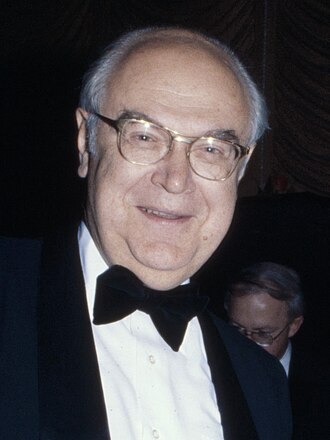
Anatoliy F. Dobrynin served as the Soviet Ambassador to the United States throughout the entirety of the Nixon administration. During the White House taping period from February 1971 to July 1973, he was a crucial figure in establishing a confidential "backchannel" with National Security Advisor Henry Kissinger. Through these private communications, Dobrynin played a central role in negotiating the SALT I agreement, the Anti-Ballistic Missile (ABM) Treaty, and laying the groundwork for the historic 1972 Moscow Summit that ushered in the era of détente.
President Nixon, Henry Kissinger, and Soviet Ambassador Anatoliy Dobrynin met to discuss a Soviet proposal for a Five Powers nuclear conference and broader bilateral relations. The participants prioritized maintaining confidential diplomatic channels to foster progress on critical issues such as SALT and the status of Berlin. Nixon emphasized that substantive results on these matters are more significant than public rhetoric and underscored the necessity of managing tensions in volatile regions like the Middle East to avoid unintended escalation.
President Nixon met with H.R. Haldeman, Henry Kissinger, and Representative F. Edward Hébert to discuss legislative strategy, public relations, and foreign affairs. The primary focus was navigating a Congressional resolution on the Vietnam War, with Nixon instructing Hébert to resist firm withdrawal deadlines while attempting to tie any potential concessions to a ceasefire and prisoner exchange. Additionally, the participants reviewed press leaks involving the Supreme Court, planned the President’s upcoming July 3rd appearance, and coordinated a personal response to the tragic deaths of three Soviet cosmonauts.
President Nixon, supported by Henry Kissinger, held a telephone conversation with Soviet Ambassador Anatoliy Dobrynin to express his personal condolences following the tragic deaths of Soviet cosmonauts. Nixon emphasized his genuine empathy by sharing a personal anecdote about receiving the news from his daughter, Julie, and drew parallels to the loss of American astronauts in the Apollo 1 fire. The call served to bolster diplomatic relations by conveying a heartfelt, non-routine message of solidarity between the two spacefaring nations.
President Nixon and Soviet Ambassador Anatoliy Dobrynin spoke to follow up on the President's previous condolence call regarding the deaths of three Soviet cosmonauts. Dobrynin formally conveyed the gratitude of Soviet leaders Leonid Brezhnev, Aleksei Kosygin, and Nikolai Podgorny for the sympathy expressed by Nixon and his family. The exchange served as a diplomatic gesture of goodwill, with both parties acknowledging the importance of mutual respect during the pursuit of space exploration.
President Nixon met briefly with Soviet Ambassador Anatoliy Dobrynin to acknowledge and express appreciation for a thoughtful message sent by the ambassador. The exchange served primarily as a diplomatic courtesy, confirming the receipt of the wire and emphasizing the positive personal sentiments shared by Dobrynin and his family. No substantive policy negotiations or strategic directives were recorded during this brief encounter.
President Nixon met with Soviet Foreign Minister Andrei Gromyko and other officials to discuss the state of U.S.-Soviet bilateral relations, focusing on arms control, trade, and regional conflicts. The conversation addressed the status of the Berlin Agreement, progress on Strategic Arms Limitation Talks (SALT), and the need for diplomatic coordination regarding the Middle East and South Asia. Both sides emphasized the importance of maintaining direct, private channels of communication to manage tensions and facilitate future progress toward a potential summit meeting.
Henry Kissinger contacted Soviet Ambassador Anatoliy Dobrynin to urge the Soviet government to pressure North Vietnam toward constructive peace negotiations before they launched a potential military offensive. Kissinger emphasized that while the U.S. remained willing to negotiate, including a possible meeting in Moscow, any new North Vietnamese military escalation would trigger a severe American response. The two agreed to meet for lunch on Friday to further discuss these diplomatic efforts and the status of ongoing communication channels.
President Nixon and Henry Kissinger discussed the logistical arrangements for upcoming U.S.-USSR relations, including a meeting between First Lady Pat Nixon and Mrs. Anatoliy Dobrynin, and the coordination of the President's planned Moscow summit. A significant portion of the conversation focused on the North Vietnamese offensive and the administration's strategic response, which included aggressive surveillance of Soviet ships and the potential use of naval mines. Kissinger and Nixon evaluated the geopolitical stakes of the Vietnam conflict, framing it as a critical test of U.S. credibility that could influence future Soviet actions in the Middle East and the viability of the Berlin treaties.
Henry A. Kissinger and Soviet Ambassador Anatoliy F. Dobrynin coordinated logistics for a tea meeting between First Lady Pat Nixon and Irini Dobrynin. The two confirmed the scheduled time for 4:30 p.m. the following day at the White House. Kissinger provided instructions for Mrs. Dobrynin to enter through the diplomatic entrance, noting that the gesture was highly appreciated by the President and the First Lady.
Henry Kissinger and Soviet Ambassador Anatoliy Dobrynin coordinated a meeting between President Nixon and the Soviet Trade Minister to address commercial matters. The two officials confirmed the logistics for the upcoming discussion, specifying that Dobrynin would accompany the Minister to the White House. Kissinger also instructed Dobrynin to keep certain discussed principles confidential while permitting them to be reported internally within the Soviet government.
President Nixon met with Soviet Minister of Foreign Trade Nikolai Patolichev, Ambassador Anatoliy Dobrynin, and senior U.S. officials to discuss the expansion of U.S.-Soviet economic and trade relations ahead of the upcoming Moscow summit. Patolichev outlined Soviet interest in obtaining credit for large-scale projects and Most Favored Nation (MFN) status, while Nixon emphasized his desire to transcend specific technical hurdles to establish a historic, long-term economic partnership between the two superpowers. The meeting served to reaffirm high-level commitments to future cooperation, with Nixon signaling his willingness to use his executive authority to reach significant agreements with General Secretary Leonid Brezhnev.
President Nixon, Soviet Ambassador Anatoliy Dobrynin, and National Security Advisor Henry Kissinger met at Camp David to conduct high-level diplomatic discussions shortly before the 1972 Moscow Summit. The meeting served as a final preparation phase to address outstanding bilateral issues and stabilize U.S.-Soviet relations ahead of the President's upcoming state visit. Although the specific dialogue remains largely inaccessible due to recording gaps, the session functioned as a critical venue for managing the strategic agenda between the two superpowers.
President Nixon, Soviet Ambassador Anatoliy Dobrynin, and Alexander Haig met to discuss logistical preparations for a forthcoming signing ceremony and to manage the diplomatic fallout from Egypt’s recent expulsion of Soviet military advisers. Nixon sought to reassure Dobrynin that the U.S. had no foreknowledge of or involvement in the Egyptian decision, emphasizing his commitment to preserving U.S.-Soviet relations ahead of the 1972 election. The President stressed his desire for transparency and requested that Dobrynin trust his personal commitment to honor existing bilateral agreements despite bureaucratic pressures.
President Nixon hosted a signing ceremony in the Oval Office for the U.S.-Soviet Union Joint Commission on Science and Technology, formalizing a "Record of Discussions" to implement bilateral cooperation. Attendees, including Dr. Edward E. David, Jr. and Soviet Ambassador Anatoliy F. Dobrynin, highlighted the shift in diplomatic relations from confrontation to negotiation and cooperation. The participants emphasized that this agreement, which establishes six primary areas for research collaboration, serves the interests of both nations and the broader international community.
President Nixon met with John Ehrlichman and Henry Kissinger to refine the guest list and agenda for an upcoming Cabinet dinner, emphasizing the need to limit attendance to substantive advisors while managing political optics. Following these domestic discussions, the President and Kissinger reviewed ongoing foreign policy challenges, specifically exploring options for Vietnam peace negotiations and strategies to handle potential trade agreements with Japan. Nixon expressed a desire for a firm, principled approach to the Vietnam conflict, explicitly rejecting weak concessions and directing staff to maintain strict confidentiality regarding the sensitive status of these negotiations.
President Nixon met with Soviet Health Minister Boris V. Petrovsky, Ambassador Anatoliy F. Dobrynin, and Secretary of Health, Education, and Welfare Elliot L. Richardson to discuss international cooperation in medical research. The participants highlighted the importance of collaborative initiatives regarding cancer, cardiovascular diseases, and infectious diseases as a non-controversial bridge for broader U.S.-Soviet relations. The discussion also touched upon the health of Soviet leadership, the benefits of mandatory vacation policies for officials, and the potential for shared medical advancements to benefit humanity.
President Nixon met with Soviet Foreign Minister Andrei Gromyko and other high-ranking officials to review the state of U.S.-Soviet relations following the May 1972 Moscow summit. The discussion focused on progress in arms control, including the scheduling of upcoming SALT II talks, and the complexities of achieving peace in the Middle East and Vietnam. Nixon emphasized the constraints imposed by the ongoing U.S. election cycle, while both sides reaffirmed their commitment to maintaining the strategic course established during the Moscow summit despite lingering regional tensions.
President Nixon met with Soviet Minister of Merchant Marine Timofey B. Guzhenko and Ambassador Anatoliy F. Dobrynin to discuss the resolution of a difficult maritime agreement between the two nations. Nixon emphasized the broader diplomatic importance of the deal, framing it as a constructive step toward improved political relations and greater cooperation at sea. The discussion also included social exchanges regarding the recent positive reception of Julie Nixon Eisenhower aboard a Soviet ship in Baltimore and invitations for the President's family to travel to the Soviet Union.
President Nixon met with Soviet Minister of Foreign Trade Nikolai Patolichev, Ambassador Anatoliy Dobrynin, and senior U.S. officials to finalize and sign a major bilateral trade agreement. The discussion emphasized the importance of strengthening U.S.-Soviet economic ties, including the role of the Export-Import Bank and Most Favored Nation status, as a foundational element of long-term diplomatic relations. Following the departure of the Soviet delegation, the President consulted with his staff regarding the sensitive, ongoing negotiations to end the Vietnam War and secure a cease-fire.
President Nixon met with Soviet Ambassador Anatoliy Dobrynin and Soviet scientist Mstislav Keldysh to discuss the expansion of U.S.-Soviet cooperation in non-military sectors, including science, health, space, and trade. The participants emphasized that fostering these positive collaborative ties was essential for building a lasting peace beyond mere arms control agreements like SALT I. Nixon also highlighted his intent to further develop these relationships and pursue productive diplomatic engagements, including a potential visit to the Soviet Union, during his anticipated second term.
President Nixon and H. R. Haldeman met to discuss personnel changes for the second term, administrative reorganization, and strategies for managing the press and Congress. They reviewed the status of Vietnam peace negotiations, specifically focusing on the President's firm stance against North Vietnamese compromises regarding the Demilitarized Zone. The conversation also touched on the ongoing Watergate fallout and the need to maintain a strong, confident public posture while finalizing key staff appointments.
President Nixon and Ambassador Anatoliy Dobrynin engaged in a diplomatic call to address a final sticking point in the Vietnam peace negotiations regarding the status of the Demilitarized Zone (DMZ). Nixon expressed his firm insistence on returning to previously agreed-upon language, emphasizing that this resolution was essential to removing an irritant from U.S.-Soviet relations and enabling future cooperation. Accompanied by Alexander Haig, Nixon requested that Dobrynin convey this position to Moscow and Hanoi, resulting in a decision to coordinate a follow-up meeting to finalize technical details.
President Nixon met with Henry Kissinger and Soviet Ambassador Anatoliy Dobrynin to finalize arrangements for Leonid Brezhnev’s upcoming visit to the United States. The participants discussed the summit's itinerary, including social events at San Clemente and Camp David, while emphasizing the importance of a successful outcome to solidify US-USSR relations. They also addressed major policy objectives, specifically negotiating a binding agreement on the prevention of nuclear war and managing strategic arms limitations.
President Nixon met with Soviet officials, led by Vadim A. Trapeznikov, and U.S. representatives to discuss the expansion of scientific and technological cooperation between the United States and the USSR. The participants emphasized moving beyond symbolic gestures to focus on substantive, practical research that would benefit both nations, specifically highlighting joint efforts in medicine and environmental protection. Nixon affirmed his commitment to these exchanges as a foundational element for future peace and stability, while Trapeznikov provided details on his ongoing tour of American industrial and agricultural sites.
President Nixon met with Soviet Minister of Culture Yekaterina Furtseva, Ambassador Anatoliy Dobrynin, and Henry Kissinger to discuss the state of US-USSR cultural exchanges and diplomatic relations. The participants exchanged gifts, including a Russian painting for the President, and reflected on the improved climate of cooperation between the two nations since 1959. Nixon emphasized that strengthening US-Soviet relations remains a primary goal of his presidency, expressing mutual respect for the leadership of Leonid Brezhnev and Aleksei Kosygin.
President Nixon and Ambassador Anatoliy Dobrynin discuss final logistical and security arrangements for Soviet leader Leonid Brezhnev’s upcoming visit to the United States. They coordinate the travel schedule to San Clemente, emphasizing the need for privacy and informal, high-level policy discussions at both Casa Pacifica and Camp David. Additionally, they finalize plans for the signing of agreements regarding nuclear war prevention and establish a protocol for press appearances intended to symbolize a cooperative "spirit" of diplomacy.
President Nixon met with Soviet General Secretary Leonid Brezhnev in the Oval Office to discuss the strengthening of U.S.-Soviet relations following their historic 1972 Moscow summit. The conversation centered on the necessity of building personal trust and confidence between the two leaders to facilitate long-term peace and cooperation, moving beyond historical Cold War tensions. Both leaders committed to a regular schedule of future summits and discussed the importance of expanding economic and cultural ties to solidify a new, stable era of superpower diplomacy.
President Nixon and General Secretary Leonid Brezhnev met in the Oval Office to conduct high-level diplomatic discussions during Brezhnev's state visit to the United States. The participants focused on strengthening bilateral relations, with extensive dialogue regarding the expansion of economic and trade ties, including potential large-scale energy cooperation and agricultural trade. They also addressed pressing international issues, such as the situation in the Middle East, the implementation of the Paris Accords regarding Vietnam, and preparations for a forthcoming nuclear agreement.
President Nixon, Soviet General Secretary Leonid Brezhnev, and key members of their diplomatic and economic teams met to discuss the expansion of U.S.-Soviet trade and the challenges of integrating two distinct economic systems. The conversation focused on large-scale, long-term projects in the energy sector—specifically oil and gas—and the necessity of institutionalizing economic cooperation through trade missions and working groups. Participants acknowledged that while political will is high, practical implementation requires navigating complex issues of financing, pricing, and administrative differences between American private enterprise and the Soviet state-controlled economy.