Burns, Arthur F.
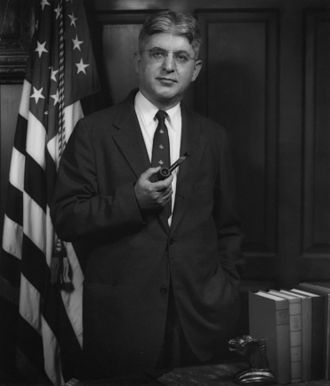
Arthur F. Burns was a prominent economist who initially served as Counselor to the President starting in January 1969, advising Richard Nixon on domestic and economic issues. He stepped down from this advisory role in November 1969 to prepare for his new appointment as Chairman of the Federal Reserve, a position he assumed in February 1970. Throughout the White House taping period (February 1971 – July 1973), Burns led the central bank and frequently conferred with Nixon regarding monetary policy, inflation, and the administration's wage and price controls.
President Nixon met with members of his economic team—the "Quadriad" of George Shultz, Paul McCracken, Arthur Burns, and John Connally—to refine the administration's strategy for managing the national economy. The discussion focused on persistent inflation, unemployment in the aerospace and technical sectors, and the potential use of federal authority to curb wage and price increases, particularly within the construction industry via the Davis-Bacon Act. The President emphasized the need for a unified approach to instill public confidence and ensure long-term economic stability, cautioning his team that the political viability of a conservative economic agenda depended on their collective success.
President Nixon met with his key economic advisors—John Connally, Arthur Burns, George Shultz, and Paul McCracken—to discuss urgent financial matters and the administration's public messaging strategy. The conversation covered the potential failure of the Lockheed-Rolls-Royce deal, the stability of the DuPont brokerage firm, and rising pressure to increase milk price supports for political leverage. Throughout the meeting, Nixon emphasized the need for internal discipline, a unified public stance on economic policy, and the projection of confidence to stabilize the markets and improve public perception.
President Nixon met with Federal Reserve Chairman Arthur F. Burns to discuss the state of the national economy and manage public perception of their working relationship. Nixon emphasized the importance of maintaining a united front to avoid fueling media speculation regarding potential policy disagreements, while Burns outlined his concerns over a looming international monetary crisis and interest rate strategies. The two agreed to maintain close, private coordination on economic policy while keeping their options open regarding further fiscal stimulus until April economic data became available.
President Nixon consulted with Federal Reserve Chairman Arthur F. Burns regarding a recent cabinet briefing on international economic policy delivered by Peter G. Peterson. Nixon tasked Burns with reviewing the briefing materials and requested an independent analysis of how antiquated U.S. antitrust laws affect the competitiveness of domestic industries, particularly the struggling aviation sector, against state-subsidized foreign entities. Following the discussion, Peterson joined the call to coordinate a time for Burns to review the presentation materials and further discuss these economic strategies.
President Nixon met with Arthur Burns, Henry Kissinger, and Peter Peterson to strategize on economic policy, focusing on the Council on International Economic Policy (CIEP) and the need for long-range economic planning to combat foreign competition. Nixon instructed his advisors to present Peterson's economic briefings to a broad audience—including Cabinet members, congressional leaders, and business executives—while emphasizing the necessity of a bipartisan approach to trade and anti-trust reform. Additionally, the President and Kissinger reviewed the current status of the Vietnam War, reaffirming their commitment to Vietnamization and total withdrawal while deliberately avoiding a fixed terminal date to maintain leverage in ongoing negotiations.
President Nixon met with H. R. Haldeman to discuss political strategy for the Anti-Ballistic Missile (ABM) vote, emphasizing the need to avoid early deals and keep the administration's position firm until the final vote. Following the swearing-in of William J. Casey as SEC Chairman, Nixon conferred with his staff and Arthur F. Burns on domestic economic management, public relations, and the importance of projecting a more passionate and committed image to the public. Finally, Nixon met with Dr. Rainer Barzel of the German Christian Democratic Union to discuss the status of Berlin negotiations and the political implications of Willy Brandt's Ostpolitik, during which Nixon reaffirmed the United States' commitment to maintaining a federal presence in Berlin.
President Nixon, John Ehrlichman, and Arthur Burns held this discussion to coordinate economic strategy and review the administration's political management of upcoming challenges. They focused on strengthening the partnership between Burns and John Connally, particularly regarding balance-of-payments policies, interest rates, and the political handling of potential steel industry inflation. Nixon also sought Burns’ perspective on international concerns, including the Berlin negotiations and German political stability, before Burns departed for a diplomatic trip to Europe.
President Nixon convened an extensive afternoon meeting in the Oval Office with his key economic advisors, including George Shultz, John Connally, Arthur Burns, and Paul Volcker, to deliberate on pressing fiscal and monetary policy issues. The discussion focused on addressing the nation's ongoing economic instability, involving high-level strategy sessions with administration officials and cabinet members. These deliberations were critical in shaping the Nixon administration's approach to inflation and international monetary concerns, ultimately informing the direction of domestic economic policy.
President Nixon and Federal Reserve Chairman Arthur F. Burns discussed the escalating international monetary crisis and the need for the administration to formalize a concrete policy strategy. Nixon pushed Burns, Paul Volcker, and Paul McCracken to develop a proactive plan rather than continuing to delay action, despite Burns' preference for postponing significant changes until later in the year. The President directed Burns to coordinate with Treasury Secretary John B. Connally regarding their ongoing communication with foreign officials.
President Nixon met with Herbert Stein, George Shultz, John Connally, and Arthur Burns to discuss the state of the U.S. economy, specifically focusing on inflation, sluggish recovery, and steel industry negotiations. The group debated the potential risks of government intervention, including wage-price freezes, while also planning a strategy to better communicate budget deficits and fiscal policy to the American public. Additionally, Nixon emphasized the need for a unified administration voice on economic policy ahead of upcoming international monetary conferences, urging his team to maintain a confident and assertive posture regarding U.S. domestic economic strength.
President Nixon met with his key economic advisors—John Connally, George Shultz, Paul McCracken, and Arthur Burns—to assess the sluggish state of the economy and deliberate on potential government interventions. The discussion centered on rising inflation, the psychological impact of economic news, high interest rates, and the growing public frustration regarding wage costs. The group debated the timing and feasibility of implementing wage and price controls, ultimately reaching a consensus to maintain a defensive posture while preparing to apply pressure on the steel industry and other key sectors to curb inflationary expectations.
President Nixon met with Treasury Secretary John Connally and Federal Reserve Chairman Arthur Burns to address growing public confusion and political friction caused by conflicting economic signals from the administration. The President emphasized the need for a unified public stance on economic policy, specifically urging Burns to avoid statements that undermine official administration decisions, despite Burns' insistence on his duty to provide independent, candid testimony as an economist. The meeting resulted in a tentative agreement for Burns to clarify in future congressional testimony that his views represent his own, rather than the administration's, while Connally committed to better coordinating the administration's economic messaging.
President Nixon and Federal Reserve Chairman Arthur Burns discuss the immediate aftermath of the announcement of the wage-price freeze, expressing relief that the plan remained secret during its development at Camp David. The two leaders strategize on managing international monetary policy, with Nixon tasking Burns to maintain close control over Paul Volcker and Dewey Daane to ensure alignment with administration objectives. Finally, they plan to secure political support from Representative Wilbur Mills by offering him full credit for the initiative to ensure the program's success.
President Nixon convened a large meeting with Vice President Agnew and his Cabinet to discuss the national economy and the "New Economic Policy" he had announced the previous day. Key topics included the wage-price freeze, import surcharges, tax relief, budget cuts, and the convertibility of the dollar. The administration sought Cabinet support for these initiatives and discussed their potential impact on international trade and domestic employment.
President Nixon convened a meeting with Vice President Agnew and a bipartisan group of Congressional leaders to discuss the national economy and his administration's "New Economic Policy." Key topics included the wage-price freeze, investment tax credits, the international monetary situation, and an import surcharge. The discussion focused on the necessity of Congressional cooperation for implementing these measures and their potential impact on inflation, trade, and specific industries like automobiles.
President Nixon met with key labor leaders and administration officials to solicit input on the development of 'Phase II' of his economic program, following the conclusion of the initial 90-day wage and price freeze. The discussion centered on transitioning to a more permanent, yet flexible, mechanism for controlling inflation while maintaining the principles of collective bargaining and a free-market system. The participants debated the merits of tripartite boards—modeled after the War Labor Board—versus government-imposed mandates, with labor leaders emphasizing the need for voluntary compliance and equitable standards. Nixon concluded by establishing an October 1 deadline for the group to submit their formal views, underscoring the necessity of labor-management cooperation for the program's success.
President Nixon met with the Cost of Living Council to assess the implementation and public reception of the 90-day wage-price freeze initiated on August 15, 1971. The council members, including John Connally, George Shultz, and Arthur Burns, reported on the effectiveness of enforcement efforts, current compliance levels, and the complexities of handling exemption requests. The discussion shifted toward strategic planning for Phase II, emphasizing the need for sustainable economic policies, public leadership, and the critical role of securing support from business and labor leaders before the freeze's conclusion.
President Nixon met with John Connally and Arthur Burns to strategize on U.S. economic policy and international negotiations regarding the global monetary system and trade. The President emphasized that while he would rely on the technical expertise of his advisors, his primary goal was to project strength and prioritize American national interests ahead of the 1972 election. Nixon instructed Connally and Burns to resist the influence of the established bureaucracy and to maintain a firm, unified front when bargaining with foreign leaders over currency revaluation and import surcharges.
President Nixon met with John Mitchell and Arthur Burns to discuss a range of sensitive political and economic issues, including potential Supreme Court appointments following Justice John Harlan's resignation and the administration's international economic strategy. The participants evaluated the challenges of currency realignment, the gold standard, and U.S. negotiating positions ahead of upcoming international meetings with central bankers and finance ministers. Additionally, they addressed the implementation of the administration's post-freeze 'Phase II' economic policies and the importance of securing labor cooperation to maintain public support for these initiatives.
President Nixon, Vice President Agnew, and members of his Cabinet met to coordinate a unified administration strategy ahead of critical International Monetary Fund (IMF) meetings and ongoing global trade negotiations. The discussion emphasized the necessity of maintaining the recently imposed 10% import surcharge and a firm bargaining stance to address the nation's economic balance of payments and reshape the international monetary system. Nixon and his advisors agreed that while foreign partners would likely criticize U.S. policy, maintaining domestic political support and correcting long-standing trade imbalances remained the administration's primary objective.
President Nixon met with John B. Connally and Arthur F. Burns to establish a unified administration strategy for upcoming international economic negotiations. The President decided to avoid a formal speech to the International Monetary Fund, tasking Connally with presenting the administration's position while he focused on informal outreach to foreign delegates. They discussed the tactical use of the U.S. import surcharge, the potential for a transitional currency float, and the need to de-emphasize gold prices to maintain a firm negotiating stance against European and Japanese interests.
President Nixon met with Treasury Secretary John Connally, Federal Reserve Chairman Arthur Burns, and IMF Managing Director Pierre-Paul Schweitzer to discuss the evolving international economic landscape and the U.S. role within it. The discussion centered on balancing U.S. domestic economic policies, such as the 'Phase II' measures and import surcharges, with the need to maintain global leadership and monetary stability. The participants addressed the political and economic challenges of transitioning from the post-World War II order to a new system that accounts for the rising influence of nations like Japan and West Germany, while emphasizing the importance of cooperation and burden-sharing in international monetary affairs.
In a wide-ranging series of discussions, President Nixon consults with H. R. Haldeman, Daniel P. Moynihan, John N. Mitchell, and Arthur F. Burns on domestic political strategy and the management of sensitive public narratives. Key topics include the limits of social policy, the political implications of intelligence testing, and defensive tactics against hostile press coverage involving Charles Rebozo and Ramona Banuelos. The President explicitly directs Mitchell to use Immigration and Naturalization Service (INS) enforcement powers against political adversaries, specifically targeting the Los Angeles Times and various Democratic-aligned interests to neutralize criticism.
President Nixon and Federal Reserve Chairman Arthur Burns discuss the communication strategy and implementation details for Phase II of the administration's economic program. They coordinate on messaging regarding interest rates and dividends, with Nixon emphasizing that Burns' involvement is essential to provide the necessary moral authority and impact. They further agree on the necessity of requesting standby controls from Congress to preempt political pressure from legislators like Wright Patman and John McClellan.
President Nixon met with his economic advisors (the "Quadriad") and Henry Kissinger to discuss international monetary policy, trade negotiations, and the upcoming Asian trip for John B. Connally. The group addressed the urgency of trade concessions, the complexities of gold convertibility, and the need to manage currency realignments while maintaining a firm U.S. negotiating position. Nixon provided specific instructions for Connally’s itinerary, emphasizing the need to reassure allies in Japan, Thailand, and Indonesia of U.S. commitment while avoiding being sidelined by State Department staff during sensitive private discussions.
President Nixon and Federal Reserve Chairman Arthur F. Burns met to discuss the national economy, international monetary policy, and upcoming personnel appointments to the Federal Reserve Board. The conversation focused on managing economic indicators, navigating liquidity concerns, and coordinating with Henry Kissinger on international financial diplomacy. They also strategized on handling labor relations and potential wage-price policy announcements, while Burns presented candidates for upcoming Board vacancies.
Charles W. Colson attempted to reach Federal Reserve Chairman Arthur F. Burns to relay positive feedback regarding the market's response to Burns' recent policy announcement. Upon learning that Burns was attending a Cost of Living Council meeting, Colson left a message with Burns' office praising the Chairman's dividend decision. Colson noted that the market's 14-point rise was attributed to the statement, and he requested that this enthusiasm be conveyed to Burns as he prepared a supportive memorandum for President Nixon.
President Nixon met with his senior staff and economic advisors to manage the ongoing national economic stabilization program, focusing specifically on the Pay Board's negotiations and the administration's messaging strategy. Amidst concerns regarding the money supply and Federal Reserve policy, Nixon dictated a firm memorandum to Arthur Burns, stressing the electoral importance of economic expansion and the dangers of restrictive monetary policy. The President also discussed diplomatic and personnel matters, including upcoming meetings with world leaders, media relations, and potential staffing changes within public broadcasting and the executive branch.
President Nixon and Federal Reserve Chairman Arthur F. Burns held a brief check-in following the President’s return from a trip to Chicago. The two men exchanged brief pleasantries and confirmed the receipt of previously discussed information. The conversation concluded with Nixon expressing his intention to address the pending matter in the near future.
President Nixon and the Cost of Living Council convened to discuss the efficacy of the administration's economic stabilization program, specifically the transition from Phase I to Phase II. Participants evaluated the success of existing price and wage controls and addressed the future of the Pay Board and Price Commission ahead of the 1972 calendar year. The meeting concluded with a formal vote to adopt an amendment to 'Option 2' regarding economic policy adjustments.
President Nixon met with John Connally and Arthur Burns to coordinate administration strategy regarding upcoming international monetary negotiations and the President's scheduled diplomatic visits. The group discussed tactics for currency realignment and the potential for a managed devaluation of the dollar, balancing these global economic concerns with domestic political considerations. Additionally, the President and his advisors addressed the Federal Reserve's independence and communication failures regarding stock market policy, seeking to align messaging while maintaining public confidence in the administration's economic management.
President Nixon met with Treasury Secretary John B. Connally and Federal Reserve Chairman Arthur F. Burns to discuss economic policy and the administrative schedules of key advisors. Henry Kissinger and George P. Shultz also joined the consultation to address matters of national policy. The discussion focused on coordinating economic objectives and personnel management during a period of transition.
President Nixon and Federal Reserve Chairman Arthur F. Burns discussed the Federal Reserve's reduction of the discount rate to 4.5% to signal a more aggressive stance on economic expansion. Burns urged the President to appoint a new Federal Reserve board member to resolve regulatory deadlocks, while Nixon promised to prioritize the matter after his upcoming meeting with French President Georges Pompidou. The two also discussed the need for future consultations regarding concerns that the Pay Board and Price Commission’s current policies were hindering economic recovery.
President Nixon met with H.R. Haldeman, Henry Kissinger, George Shultz, and Arthur Burns to coordinate key administrative priorities, including the upcoming presidential trip to the People's Republic of China, ongoing defense budget negotiations, and personnel appointment procedures. A primary focus was establishing stricter internal control over government leaks—specifically regarding Yeoman Charles Radford—and reaffirming the President's authority over Federal Reserve Board appointments. The participants also discussed the President's recent television documentary, strategies for managing the money supply to address economic concerns, and the administration's stance on federal pay raises.
President Nixon hosted a swearing-in ceremony in the Oval Office for John E. Sheehan as a member of the Board of Governors of the Federal Reserve System. The event was attended by Sheehan’s family, Federal Reserve Chairman Arthur F. Burns, various governors, and several U.S. Senators, including John Sherman Cooper. Following the formal oath and a photographic session, the President engaged in a private discussion with Senator Cooper regarding the political landscape, including U.S. foreign policy toward the Vietnam War, upcoming trips to China and the Soviet Union, and international conflicts.
President Nixon met with Arthur Burns and John Connally to coordinate economic policy and public messaging ahead of the State of the Union and the upcoming budget message. The discussion focused on establishing a federal spending ceiling, managing inflation, and potential leadership changes within the Pay Board, including the possible recruitment of Arthur Goldberg. The group also addressed the challenges of wage and price controls, specifically concerning the decontrol of small businesses and the administration's political narrative regarding economic recovery.
President Nixon met with John Connally and key economic advisors Arthur Burns, George Shultz, and Herbert Stein to conduct an extensive review of the U.S. economy, including unemployment data, retail sales, and the federal budget. The participants discussed strategies to accelerate federal spending to stimulate growth, concerns regarding the lack of confidence among international financial institutions, and the delicate nature of ongoing trade negotiations with Europe, Japan, and Canada. Nixon directed his team to prioritize the rapid deployment of authorized funds and ordered a follow-up analysis on identifying the specific demographics of the unemployed.
President Nixon, John Ehrlichman, and Arthur Burns met to discuss a wide-ranging agenda including the President's upcoming trip to the People's Republic of China, domestic economic management, and the politics of school busing. Nixon emphasized the necessity of tracking federal budget expenditures more strictly to stimulate the economy, demanding weekly status reports from his Cabinet officers. The participants also explored strategies to address tax withholding concerns and discussed potential ambassadorial appointments. Finally, Nixon and Burns aligned their opposition to forced busing, framing it as detrimental to both neighborhood stability and quality education.
President Nixon met with members of the Cost of Living Council and other key economic advisors to assess the efficacy of Phase II wage and price controls. The discussion focused on controlling inflation, managing food prices, and navigating political pressures from organized labor and Congress. Participants evaluated the impact of economic policies on the public interest and discussed strategies for future price stability across various sectors.
President Nixon met with a large group of cabinet members and advisors to discuss a wide-ranging agenda of domestic economic policy, including international trade strategies, energy infrastructure, and tax reform. The participants reviewed the implementation of commercial trade policies with the Soviet Union, analyzed the political and budget implications of environmental regulations, and addressed the status of the Productivity Commission. Nixon emphasized the need for his team to act as aggressive advocates for pro-business policies and job creation in the lead-up to the 1972 election. The meeting concluded with a review of potential Federal Reserve appointments and a discussion on managing public perception regarding inflation and food prices.
President Nixon met with his senior advisors and staff to strategize on managing public opinion and political messaging following his recent decision to blockade and mine North Vietnamese ports. The discussion centered on utilizing favorable polling data, countering media criticism, and coordinating consistent rhetoric among administration officials and Republican allies. Nixon also made key decisions to restrict access to government facilities like the Sequoia and Camp David, while rejecting a proposal to meet with liberal Republican senators to avoid being put in a politically compromising position.
President Nixon met with his economic advisors, including George P. Shultz, Arthur F. Burns, Caspar Weinberger, and Herbert Stein, to review the status of the U.S. economy, specifically focusing on inflation, unemployment rates, and price stability. The discussion covered the political implications of economic indicators ahead of the 1972 election, particularly regarding potential campaign issues against George McGovern, and touched upon international currency problems and foreign policy matters involving Latin America. The group debated the efficacy of various economic interventions, including wage and price controls and potential actions to address rising meat prices, while weighing the impact of these policies on business and public perception.
President Nixon, Henry Kissinger, and Arthur Burns coordinated the scheduling of a meeting between the President and Soviet Minister of Health Boris V. Petrovsky. The discussion focused on aligning the arrival of the Soviet official from Los Angeles with the President's upcoming departure for Camp David. Kissinger ultimately confirmed that a 15-minute window would be secured for the meeting on Wednesday before Petrovsky's scheduled return to the Soviet Union.
President Nixon met with the Cost of Living Council to review the performance of his administration's economic stabilization program, including successes in lowering inflation and fostering rapid economic growth. The discussion emphasized the necessity of maintaining fiscal discipline through a proposed $250 billion federal spending ceiling to prevent future inflationary pressure. Participants also addressed specific challenges, particularly rising food prices and the potential impact of government spending on tax rates, while strategizing on how to communicate these economic gains to the public ahead of the election.
President Nixon met with Rose Mary Woods and Arthur F. Burns to review administrative tasks and scheduling matters in the Oval Office. The participants discussed the President's previous engagement with the Donald McI. Kendall family and processed various documents requiring presidential signature. The brief meeting concluded following the arrival of Alexander P. Butterfield.
President Nixon met with his economic advisors Arthur Burns and George Shultz, later joined by John Ehrlichman, to deliberate on fiscal policy and political messaging during the 1972 election season. The discussion centered on establishing a federal spending ceiling, managing the national debt, and formulating a strategy to counter Democratic candidate George McGovern's tax proposals. Nixon and his team specifically sought to differentiate their economic stance from their opponent by framing their own initiatives as "tax reform" while avoiding any perception of a general tax increase.
President Nixon hosted a group of Republican candidates and officials for a photograph session, followed by a policy discussion with key economic advisors including George P. Shultz, Arthur F. Burns, and John D. Ehrlichman. The latter portion of the meeting focused on 1972 presidential campaign strategy, specifically addressing George McGovern’s recent public statements and potential outreach to George Meany. Participants also reviewed proposals regarding tax reform and broader economic policy in the context of the upcoming election.
President Nixon met with George Shultz, Arthur Burns, and John Ehrlichman to discuss economic strategy, focusing on tax reform and property tax relief. The group evaluated the political risks of pursuing tax changes before the election, debating how to frame their proposals without being perceived as increasing taxes. Additionally, the President and H. R. Haldeman discussed administrative logistics, including the potential for a cruise on the Sequoia to discuss strategy and the implementation of Secret Service protection for Senator Edward Kennedy.
President Nixon met with his economic advisors and staff to plan the logistics of an upcoming revenue-sharing bill signing ceremony and to discuss future tax policy and budget strategies. The President emphasized the need for political carefulness regarding tax reform, expressing a strong desire to avoid any perception of a tax increase while seeking ways to provide property tax relief for senior citizens. The participants debated the merits of various tax proposals, including minimum tax adjustments and simplification measures, ultimately focusing on balancing fiscal responsibility with the administration's political objectives leading up to the 1972 election.
President Nixon met with the Cost of Living Council to review the administration’s economic performance and coordinate strategy regarding inflation, labor relations, and food prices ahead of the 1972 election. Council members, including George Shultz and Donald Rumsfeld, discussed measures to protect Social Security recipients from illegal rent increases and highlighted the relative success of U.S. wage and price controls compared to foreign nations. The President directed his team to maintain an affirmative, disciplined public messaging campaign, emphasizing that the U.S. was achieving growth and reduced inflation without the reliance on wartime spending seen in the 1960s.
President Nixon and Federal Reserve Chairman Arthur F. Burns met to discuss the international reception of U.S. economic policies, the challenges of managing money supply and interest rates, and the broader contrast between American and British labor discipline. The discussion also covered potential future travel itineraries for Burns to countries including Indonesia and Japan, as well as coordination regarding an upcoming meeting with British Foreign Secretary Sir Alec Douglas-Home. Stephen B. Bull joined briefly to assist with scheduling logistics for the President and Burns.
President Nixon met with his economic advisors and staff, including George Shultz, Arthur Burns, and Caspar Weinberger, to coordinate administration messaging and planning for the post-election period. The discussion focused on maintaining a firm stance on congressional spending, specifically concerning upcoming vetoes of water and education legislation, and establishing a strategy for economic policy, including the transition of wage and price controls. Nixon emphasized the need for long-term domestic initiatives and urged his team to use the post-election period for deep reflection and strategic planning rather than immediate political reaction.
President Nixon met with Arthur Burns and George Shultz to coordinate the administration's economic response to a worsening international monetary crisis and trade deficit. The group finalized plans for a 6.5% dollar devaluation and discussed strategies to secure trade revaluation agreements with Japan and European partners. Additionally, they reviewed talking points for upcoming congressional testimonies, emphasized the need for continued wage and price control efforts, and addressed the potential bankruptcy of a railroad company.
President Nixon met with his economic advisors—including George Shultz, Arthur Burns, and Paul Volcker—to discuss the state of the domestic economy, concerns regarding inflation, and the ongoing volatility in international monetary markets. The participants debated the merits of federal intervention in currency exchange rates versus allowing a transition to a more flexible floating regime. Nixon emphasized that any economic strategy must account for his broader foreign policy objectives and the need to maintain strong political relationships with European allies, ultimately tasking Henry Kissinger to join the group to further weigh these options.
President Nixon met with his economic advisors and cabinet members to discuss how to manage persistent inflation and public frustration with the economy following the recent passage of the Economic Stabilization Act. Arthur Burns and others proposed various policy adjustments, including a potential return to some Phase 2-style controls like pre-notification, while Roy Ash and Herbert Stein argued for staying the course with Phase 3 to avoid further distorting the market. Ultimately, the administration emphasized the importance of fiscal restraint and maintaining a consistent long-term strategy rather than implementing impulsive or overly restrictive controls that could trigger a recession.
President Nixon met with his economic advisors, including George Shultz, Arthur Burns, and Roy Ash, to discuss the administration's ongoing struggle with inflation and the potential implementation of Phase III economic stabilization measures. The participants analyzed the political and psychological impact of price controls, the efficacy of pre-notification requirements for major corporations, and the necessity of maintaining public confidence amid rising prices. Nixon emphasized the importance of fiscal discipline, particularly regarding the federal budget, while rejecting broad, disruptive price freezes in favor of targeted economic management.
President Nixon met with Vice President Agnew and his key economic advisors to assess the national economy, focusing on rising inflation and the status of the Phase III wage and price control program. The group evaluated the success of recent industrial wage settlements, particularly in the meatpacking industry, and discussed the potential necessity of fiscal and monetary restraint to avoid a future recession. The President and his team ultimately decided against implementing a new price freeze while considering the political feasibility of a variable investment tax credit with Congressional leaders.
President Nixon met with his economic advisors and staff to discuss growing concerns over inflation, the stock market, and the public's perception of the economy. The group analyzed the potential effectiveness of various measures, including a possible excise tax on gasoline, an investment tax credit, and a compulsory savings plan, while considering the political challenges of implementing such a package with Congress. Ultimately, the President decided against immediate, piecemeal action, opting instead to have his advisors develop a comprehensive economic package for review at a follow-up meeting.
President Nixon met with his economic advisors and Cabinet members to debate the design of 'Phase IV' of his economic program, focusing on the appropriate speed for removing wage and price controls. The discussion centered on balancing the political need to curb inflation with the economic necessity of incentivizing production, particularly in the agricultural sector, where export controls and price ceilings had created supply shortages. The President and his team also addressed the critical need for a balanced federal budget to bolster business confidence, ultimately agreeing on the necessity of a tough, credible policy to stabilize the economy.