Nixon, Richard M. (President)
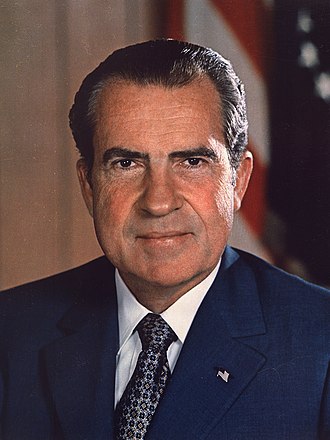
Richard M. Nixon served as the 37th President of the United States from January 1969 until his resignation in August 1974. In February 1971, he ordered the installation of a secret voice-activated taping system in the White House to preserve a historical record of his administration. Until the system's existence was revealed and dismantled in July 1973, the tapes captured Nixon directing major foreign policy initiatives, such as the opening to China, as well as his central role in the Watergate cover-up.
What Nixon talks about on the tapes
White House operations 4,718Presidential scheduling 2,225Public relations 1,784Presidential schedule 1,782Vietnam War 1,693Logistics 1,650Manolo Sanchez 1,626White House communications 1,400White House administration 1,399Presidential communication 1,243Henry Kissinger 1,191Foreign Policy 1,183
Conversations (21,010)
— Page 11 of 211President Nixon instructed the White House operator to place a telephone call to White House Counsel John W. Dean, III. This brief exchange served exclusively as a logistical step to connect the President with his legal advisor. No substantive policy matters or decisions were discussed during this initial administrative interaction.
President Nixon directs John Dean to ensure that local police and authorities take no action against anti-war veterans demonstrating in Washington, D.C. Nixon emphasizes a strategy of inaction, instructing Dean to stall any decision-making through meetings while allowing the protesters to continue their activities undisturbed. This directive reflects the President's desire to avoid confrontation and potential negative optics pending a resolution from the Supreme Court.
President Nixon directs the White House operator to place a telephone call to Charles W. Colson. This brief interaction serves as a routine administrative request to facilitate communication between the President and his special counsel. No further substantive discussion occurs during this short exchange.
President Nixon met with his personal valet, Manolo Sanchez, to coordinate the logistics of the President's upcoming afternoon schedule. The two briefly discussed the timing for a future appointment, ensuring alignment on the day's agenda. Additionally, the President made a brief, ambiguous remark regarding feedback he had received from an unidentified group concerning his personal well-being.
President Nixon speaks briefly with a White House operator to discuss feedback regarding his public remarks or recent behavior. The President expresses mild curiosity regarding how a group of individuals, whom he refers to as the "hard-ass," became aware of his actions and expressed their approval. No further policy actions or significant administrative decisions resulted from this short exchange.
President Nixon and Charles Colson discuss positive labor feedback regarding the President's recent welfare stance and his outreach efforts toward construction union leaders. They identify the public's frustration with welfare recipients as a politically potent theme and decide to distribute a revised, anecdote-heavy version of the President's speech to key legislative allies. Additionally, they discuss exploiting the political vulnerability of several Democratic presidential hopefuls—including Muskie, Kennedy, and Humphrey—who avoided voting on the Ribicoff amendment regarding school busing.
President Nixon and Charles Colson discuss strategies for managing public perception regarding anti-war protests and the welfare system. The President expresses concern over the political optics of demonstrators occupying the National Mall and emphasizes the need to leverage support from conservative factions. Nixon instructs Colson to monitor current legislative developments and mobilize political allies to take a firm stand on these divisive issues.
President Nixon directed the White House operator to place a telephone call to journalist John A. Scali. This brief interaction served as the administrative bridge to initiate communication with Scali regarding undisclosed matters. No further substantive discussion took place during this exchange beyond the request to connect the two parties.
President Nixon met with an unidentified individual to review his upcoming official schedule. The brief discussion focused on planning and coordinating the President's immediate agenda and commitments. No specific policy decisions were recorded during this window of administrative oversight.
President Nixon and Henry Kissinger discuss strategies for managing the upcoming U.S. visit of the People's Republic of China ping pong team to ensure the event is handled with appropriate subtlety and control. Nixon directs Kissinger to coordinate with John Scali to oversee the logistics and press engagement, specifically intending to keep the State Department from dominating the initiative. The President emphasizes the need for a discreet, well-managed approach to avoid domestic political pitfalls while managing delicate diplomatic outreach.
President Nixon consulted with the White House operator to facilitate an outgoing call. This brief interaction served the administrative purpose of connecting the President to an external party. No significant policy discussions occurred during this exchange.
President Nixon consulted with John A. Scali regarding the sensitive management of an upcoming visit by a Chinese athletic team to the United States. Emphasizing the need for subtlety, the President instructed Scali to coordinate with Henry Kissinger and William T. Gossett to ensure the visit was controlled, low-key, and aligned with diplomatic protocol. Nixon stressed the importance of timely execution to maximize the impact of the initiative while maintaining a balance between visible government oversight and avoiding excessive press scrutiny.
President Nixon and John A. Scali discussed the sensitive logistical and protocol-related preparations for an upcoming visit by an athletic team, likely related to the diplomatic opening with the People's Republic of China. Nixon emphasized the need for discretion to avoid excessive press scrutiny and political backlash, mandating that the visit be handled strictly and exclusively through the White House rather than standard government channels. The President directed Scali to coordinate with Henry Kissinger and William Gossett to ensure the visit proceeded promptly and effectively while maintaining diplomatic decorum.
President Nixon met with his personal valet, Manolo Sanchez, in the Old Executive Office Building to discuss the President's daily schedule. The brief interaction focused on logistical coordination and administrative movements for the President's upcoming activities. No substantive policy decisions were recorded during this short meeting, which concluded shortly before 3:08 pm.
President Nixon met with his personal valet, Manolo Sanchez, in the Old Executive Office Building to discuss personal scheduling and logistics. The brief interaction focused on the President's upcoming commitments and arrangements for the remainder of the day. No substantive policy decisions were reached during this administrative check-in.
President Richard Nixon met with his personal valet, Manolo Sanchez, in the Executive Office Building for a brief private consultation. The discussion served as an opportunity for the President to provide specific instructions to his long-time aide. Although no transcript is available to confirm the precise subject matter, the brief encounter underscores the routine administrative and personal coordination maintained between Nixon and his immediate domestic staff.
President Richard Nixon met with his personal valet, Manolo Sanchez, to coordinate scheduling and administrative matters. The brief discussion focused on managing the President's immediate agenda and transitions between meetings. No major policy decisions were reached, as the dialogue remained limited to routine logistical arrangements.
President Richard Nixon met with his longtime valet, Manolo Sanchez, in the Old Executive Office Building. While no transcript is available to document the specific substance of their exchange, the meeting serves as an example of the frequent, informal interactions between the President and his personal staff. The conversation concludes with Sanchez departing the office shortly after the brief encounter began.
President Nixon met with his personal valet, Manolo Sanchez, in the Old Executive Office Building for a brief administrative interaction. The conversation was limited in duration and, due to the presence of a withdrawn segment, lacks a public record of substantive policy discussion. No specific directives or significant historical actions were recorded during this brief encounter.
President Nixon met with his personal aide, Stephen B. Bull, in the Oval Office to address administrative or logistical matters. The interaction consisted of routine brief exchanges, resulting in no major policy developments or recorded substantive discussions. The meeting concluded quickly after a brief check-in between the President and his staff.
President Nixon met with his economic and policy advisors to refine his upcoming energy message to Congress, focusing specifically on promoting the breeder reactor program as a centerpiece to generate public excitement. The participants discussed the geopolitical implications of energy negotiations with Canada, the potential for deregulating natural gas pricing to address fuel shortages, and strategies for managing Congressional relations, particularly with Representative Chet Holifield regarding government reorganization. Nixon directed his team to prioritize the breeder reactor project while navigating political sensitivities surrounding government appointments and the scheduling of future administration initiatives.
President Nixon met with H.R. Haldeman, John Mitchell, and other administration officials to coordinate political strategy regarding ongoing anti-war demonstrations and personnel appointments. The group discussed ensuring peaceful compliance with court orders concerning protestors, while Mitchell provided an update on staffing, including plans to recruit Ken Rush and Vernon Walters for key administration roles. Nixon also instructed Mitchell to delay antitrust litigation against television networks to avoid negative political fallout following the Pentagon Papers controversy, while maintaining his overall goal of aggressively challenging the media establishment.
President Nixon instructed the White House operator to place a telephone call to Senator William B. Saxbe. This brief exchange served as an administrative bridge to initiate direct communication between the President and the Senator. No further substantive policy matters were discussed during this specific connection.
President Nixon calls Senator William B. Saxbe to express appreciation for Saxbe's recent televised comments regarding his ten-day fact-finding mission to Southeast Asia. The discussion centers on the complex situation in Laos, with Nixon emphasizing the presence of North Vietnamese and Chinese troops and highlighting the historical context established by W. Averell Harriman. Nixon directs Saxbe to provide a comprehensive debriefing to Henry Kissinger regarding his observations and the performance of Ambassador G. McMurtrie Godley.
President Nixon and Henry Kissinger discussed a Tass report regarding Sino-Soviet tensions and the strategic implications for U.S. foreign policy. Kissinger shared an unsolicited, optimistic appraisal from Sir Robert Thompson, who argued that recent military operations in Laos had crippled North Vietnamese offensive capabilities through 1972 and highlighted the professional improvement of South Vietnamese forces. Additionally, the two reviewed concerns regarding potential troop withdrawals of Korean forces in Vietnam and noted a positive trend in declining casualty reports.
President Nixon met with Henry Kissinger, H. R. Haldeman, and other staff members to discuss administration messaging regarding the China initiative and the ongoing anti-war protests in Washington, D.C. The President expressed frustration over not receiving proper credit for his foreign policy initiatives and directed his team to ensure the public understands these efforts are directed by him rather than the State Department. Regarding the protests, Nixon instructed his team to maintain a posture of 'cool respect,' avoid direct confrontation, and leverage public sentiment against the demonstrators to reinforce his broader philosophy of personal responsibility and national character.
President Nixon met with Gerald Ford, John Byrnes, Elliot Richardson, and other key administration officials to develop a strategy for the administration's health insurance bill. The discussion focused on the political and economic risks of placing the financial burden of the plan on small business owners and marginal employers. To address these concerns and counter potential Democratic opposition led by Edward Kennedy and Wilbur Mills, the group decided to introduce a bill that signals the administration's awareness of the economic impact on small businesses while keeping options open for committee modifications.
President Nixon and Treasury Secretary John Connally discussed economic stability, the potential federal bailout of Lockheed, and various Cabinet personnel changes. They examined strategies to restore public confidence in the economy and assessed the leadership vacuum within Congress. Additionally, the President and Connally evaluated potential candidates for Cabinet and agency roles, emphasizing the need for effective 'salesmanship' and public relations skills in promoting the Administration's agenda.
President Nixon met with H. R. Haldeman, Ronald Ziegler, and other staff members to discuss political messaging, upcoming public appearances, and strategies for managing the administration's image. Key topics included the President's stance on welfare and a guaranteed annual income, the handling of Vietnam War protestors, and the ongoing antitrust case involving ITT. The President also emphasized his desire to aggressively challenge the media and the political opposition, while planning for an upcoming meeting with Secretary of State William P. Rogers.
President Nixon met with Secretary of State William Rogers and H. R. Haldeman to finalize the agenda and strategy for Rogers's upcoming diplomatic trip to the Middle East, which included stops in London, Paris, Ankara, Saudi Arabia, Egypt, and Israel. The participants discussed the need for the U.S. to maintain a balance of power while managing difficult negotiations between Israel and Egypt, particularly regarding the Suez Canal. Additionally, the President pressed Rogers to address the Turkish heroin trade during his visit and reviewed the political fallout concerning Vice President Agnew's recent remarks on China policy and the ongoing anti-war protests in Washington.
President Nixon contacted the White House operator to place an outgoing call to his Chief of Staff, H.R. Haldeman. This brief interaction served solely as a logistical bridge to facilitate direct communication with his top advisor. No substantive policy discussions or decisions occurred during this exchange.
President Nixon and H.R. Haldeman discuss the political liability of White House-sponsored youth conferences, which they agree have been infiltrated by radical, anti-capitalist activists. The President expresses frustration with Stephen Hess's management of these events and concludes that future conferences, such as those for the elderly, should be held outside of Washington, D.C., to limit media exposure and ensure better administrative control. Additionally, they assess the progress of upcoming anti-war protests, aiming to highlight low attendance numbers to discredit the organizers and manage the optics of the demonstrations.
President Nixon initiates a brief telephone request to the White House operator to be connected with Charles W. Colson. The interaction serves as a functional administrative call to facilitate a direct line of communication between the President and his special counsel. No further substantive discussion occurs during this exchange.
President Nixon and Charles Colson discuss strategies to discredit anti-war veterans' protests by emphasizing the presence of radical elements and the lack of authentic veteran status among participants. They review the success of congressional allies in publicizing pro-administration views, express frustration with Senator Charles Mathias, and praise the recent political alignment of Senator William Saxbe. Additionally, they discuss upcoming negative press regarding Senator Edmund Muskie and analyze the political implications of current anti-war demonstrations in Washington.
Treasury Secretary John B. Connally updated President Nixon on his immediate public criticism of Chase National Bank for raising its prime rate from 5.25% to 5.5%. Connally informed the President that he tasked Charles E. Walker with pressuring Western banks to resist following this rate hike. President Nixon expressed full support for Connally’s strategy to discourage further increases by major financial institutions.
President Nixon met with H.R. Haldeman, Henry Kissinger, and Alexander Butterfield to discuss a variety of domestic and foreign policy concerns, including managing public messaging and controlling high-level political interactions. The President expressed frustration with the press's coverage of Vietnam Veterans Against the War and sought to limit the political visibility of figures like Senator Mike Mansfield regarding potential diplomatic outreach to China. Additionally, the group addressed the need for more reliable spokespeople for the administration's Vietnam policy and considered leadership changes within the military and NSC to better promote the President's agenda.
President Nixon met with Arthur S. Flemming, John B. Martin, Elliot L. Richardson, and Leonard Garment to discuss preparations for the upcoming White House Conference on Aging. The President emphasized his desire to foster greater intergenerational connection and respect for the elderly, suggesting that the administration's volunteer initiatives should prioritize mobilizing retired citizens while also encouraging youth to engage with and assist older populations. Participants addressed political sensitivities regarding recent administrative transfers of programs for the elderly and agreed to coordinate closely on the conference agenda to ensure it effectively reflects the administration's commitment to the quality of life for aging Americans.
President Nixon consulted with the White House operator to secure the contact information for John A. Mulcahy. The primary objective of the call was to locate Mulcahy, who was believed to be in Delray Beach, Florida. This brief exchange served as a logistical step to facilitate a subsequent communication between the President and Mulcahy.
President Nixon consulted with the White House operator to facilitate a telephonic connection. This brief interaction served as a logistical bridge to initiate a separate call, though the substance of the intended conversation remains unrecorded or non-existent in this segment. The exchange reflects routine administrative coordination necessary for presidential communications.
President Nixon and John A. "Jack" Mulcahy spoke briefly to exchange personal pleasantries regarding Mulcahy’s health and the upcoming wedding of Tricia Nixon Cox. The conversation shifted to political matters, with Mulcahy expressing support for the President’s handling of ongoing anti-war veteran demonstrations in Washington. Nixon reaffirmed his commitment to maintaining his current policy stance, dismissing the protesters as a small minority whose activities would eventually run their course.
President Nixon met with John A. “Jack” Mulcahy in the Oval Office for a brief, informal discussion. The conversation remains largely restricted due to the withdrawal of personal material, leaving only a short segment available for research. No significant policy decisions or administrative actions were recorded in the accessible portion of the transcript.
President Nixon met with H.R. Haldeman, William Safire, and Rose Mary Woods to address political strategy and administrative matters. They discussed potential public criticism regarding the President's use of military aircraft, the handling of political campaign funds, and the framing of his upcoming Chamber of Commerce speech concerning welfare reform and work ethics. Additionally, the President and his staff reviewed personnel decisions for government agencies, including the CIA and the Department of Justice, and Woods briefed the President on her media appearances and scheduling arrangements.
President Nixon met with his personal aide, Stephen B. Bull, to coordinate the logistics and timing of his upcoming meeting with National Security Advisor Henry A. Kissinger. The discussion focused on managing the President's schedule and ensuring the efficient flow of high-level briefings. Bull concluded the session by departing the Oval Office to facilitate these administrative arrangements.
President Nixon and Henry Kissinger met to discuss personnel issues, including the reassignment of Ambassador Edward M. Korry, and to coordinate upcoming announcements regarding the Strategic Arms Limitation Talks (SALT) and a potential summit with the Soviet Union. The conversation shifted to a broad analysis of the Vietnam War, with both men expressing frustration toward the media and political critics who they believed were working to undermine the administration’s strategy of Vietnamization. Nixon and Kissinger also strategized on a forthcoming diplomatic initiative in Paris, agreeing that Kissinger should adopt a firm posture and hint at the potential use of severe measures if North Vietnam refused to negotiate in good faith.
President Nixon met with his aide Stephen B. Bull to discuss logistical arrangements for an upcoming public engagement involving a two-year-old deaf child. The conversation centered on the child's communication abilities and potential interactions during the meeting. The President specifically considered how to facilitate a comfortable environment for the child while managing the broader constraints of his daily schedule.
President Nixon met with representatives from the Council for Hearing and Speech, including Michael Newton, the campaign's poster child, to discuss the "Better Hearing and Speech Month" initiative. The gathering served as a public relations event to highlight the work of the council and recognize the accomplishments of hearing-impaired children. During the session, the President presented official mementos, including cufflinks and View-Masters, and pledged his administration's continued support for the organization's advocacy efforts.
President Nixon met with Manolo Sanchez and Stephen B. Bull to review personal photographs and discuss the President's upcoming schedule. The conversation focused on the visual quality of recent pictures and the logistical timing of a requested meeting with John H. Buchanan, Jr. regarding the Alabama Medal of Honor Society. Following these brief administrative updates, both Sanchez and Bull departed the Oval Office.
President Nixon met with a delegation from Alabama, including Representative John H. Buchanan, Jr. and others, to discuss a formal invitation for the President to visit Birmingham for the city's centennial and a gathering of Congressional Medal of Honor recipients. The delegation expressed strong support for the President’s national defense and Vietnam policies, while Nixon acknowledged their bipartisan cooperation on critical legislative issues. Nixon expressed interest in the visit and promised to attempt to accommodate the request within his busy schedule.
Stephen B. Bull briefed President Nixon regarding the presence of Henry C. Cashen II's parents and his wife, Leslie, at the White House. The brief exchange served to alert the President to these visitors during the afternoon schedule. No further policy or administrative actions were recorded during this brief encounter.
President Nixon met with Henry C. Cashen, II, his family, and associates for a brief social visit in the Oval Office. The President used the meeting to commend Henry Cashen’s job performance within the administration. The session primarily focused on casual conversation, the taking of a commemorative photograph, and the presentation of gifts, including presidential cuff links.
President Nixon met with his aide Stephen B. Bull to coordinate administrative logistics regarding Henry Kissinger. The discussion focused on confirming Kissinger’s current whereabouts and adjusting the President's daily schedule to accommodate a brief meeting with him. No major policy decisions were made, as the exchange was limited to managing the timing of appointments.
President Nixon and Henry Kissinger discussed the administration's strategic position on the Vietnam War amidst mounting domestic political opposition and a perceived national malaise. They analyzed the historical parallels of leadership challenges faced by Thomas Jefferson and Woodrow Wilson while critiquing the role of the intellectual and academic communities in shaping national values. Ultimately, the two affirmed their resolve to maintain a firm policy stance and continue the fight against political adversaries despite the persistent pressure from the press and anti-war critics.
President Nixon initiates a call to the White House operator to facilitate a communication with Senator Robert A. Taft, Jr. The brief exchange serves as a logistical step to connect the President with the Senator for a subsequent discussion. No substantive policy matters are addressed in this short administrative interaction.
President Nixon directs the White House operator to place a phone call to an individual identified as 'Tiger Tap.' The brief exchange serves as a routine administrative request to facilitate a direct line of communication for the President. No further substantive policy matters or decisions are discussed during this short interaction.
President Nixon instructed the White House operator to facilitate two specific communications while managing his schedule. He requested that the operator reach Senator Robert A. Taft, Jr. at his current location in Hot Springs and initiated a follow-up call to Herbert R. “Chief” Rainwater, the head of the Veterans of Foreign Wars (VFW). This brief exchange served as an administrative directive to coordinate these outreach efforts.
President Nixon instructed the White House operator to place a telephone call to Ray Bartlett. The President specifically requested that the operator determine Bartlett's availability before facilitating the conversation. This interaction reflects the administrative process Nixon used to manage his personal and professional communications.
President Nixon met with his personal valet, Manolo Sanchez, in the Oval Office to request tea. This brief interaction served as a routine administrative or service-related exchange between the President and his staff member. No significant policy discussions or major decisions were recorded during this meeting.
President Nixon consulted with the White House operator to coordinate outreach to Robert A. Taft, Jr. and Herbert R. Rainwater. Upon learning that Taft was unavailable due to being on a golf course, Nixon decided not to leave a message and opted to delay the contact. The operator continued efforts to connect the President with Rainwater as part of his ongoing communication schedule.
President Nixon and H.R. Haldeman discussed political strategies in response to recent public opinion polls and negative media coverage regarding the Vietnam War, demonstrations, and the administration's policy initiatives. They analyzed the electoral impact of the administration's China initiative, explored public relations tactics for the Cabinet, and considered the timing of a future presidential press conference to regain control of the political narrative. The conversation also touched on personnel matters, including a potential ambassadorship for John A. Volpe and the administrative reorganization of the United Nations staff.
President Nixon and Veterans of Foreign Wars leader Herbert R. Rainwater discuss public perception of anti-war demonstrations, agreeing that the media is providing biased coverage and failing to grant equal time to veteran perspectives. The two men also address political tensions involving Senator Vance Hartke's stance on veterans' legislation, with Nixon encouraging Rainwater to continue applying public pressure on the Senator. Additionally, Rainwater proposes a strategic framework for prisoner-of-war exchanges and troop withdrawals intended to pressure the North Vietnamese government, which Nixon agrees to review.
President Nixon initiated a brief telephone communication through the White House operator. The conversation did not progress beyond the operator's initial greeting and acknowledgment. Consequently, no specific business, requests, or administrative decisions were conducted during this interaction.
President Nixon consulted with H.R. Haldeman regarding political strategy, specifically focusing on government reorganization and managing public perception through media engagement and the mobilization of pro-administration veterans. The discussion shifted to foreign affairs when Henry Kissinger joined to report on recent negotiations with Soviet Ambassador Anatoliy Dobrynin concerning the Strategic Arms Limitation Talks (SALT) and plans for a summit meeting. They finalized a plan to handle the SALT negotiations through private assurances rather than immediate public disclosure, while avoiding premature commitments regarding the status of Berlin.
President Nixon met with Secretary of Transportation John A. Volpe and others to discuss administrative strategies, including suburban housing integration, the status of the 'Operation Breakthrough' housing program, and federal reorganization efforts. Volpe expressed a desire for greater inclusion of Cabinet members in the decision-making process and offered suggestions for improving morale among federal civil servants through more frequent direct engagement with the President. The participants also touched on foreign policy concerns regarding Latin American politics and the potential for a visit by Volpe to Italy to gauge regional conditions.
President Nixon met with his personal valet, Manolo Sanchez, in the Oval Office for a brief, routine exchange. The recording captures only a three-second segment, providing no substantive dialogue or evidence of policy-related discussion. Consequently, no significant developments or administrative actions were documented during this short encounter.
President Nixon met with his aide Stephen B. Bull to review and organize his upcoming schedule. The primary focus of the brief morning discussion was to coordinate the logistics for an appointment with National Security Advisor Henry A. Kissinger. No other substantive policy matters were recorded during this session.
President Nixon and Stephen B. Bull met to coordinate the scheduling of an upcoming appointment with Henry Kissinger. The discussion focused on adjusting the timing of Kissinger’s breakfast meeting to ensure he could meet with the President shortly thereafter. No further policy matters were addressed, as the exchange was limited to managing the President's morning calendar.
President Nixon dictates a series of administrative tasks to H.R. Haldeman, focusing on infrastructure improvements to Washington, D.C. area buildings and potential renaming of the National Airport to honor Dwight D. Eisenhower. The President explores ways to rename the airport without requiring formal legislation, though he remains open to lobbying Congress if necessary. Additionally, Nixon discusses arrangements for future White House worship services, specifically requesting outreach to Billy Graham regarding the inclusion of diverse, conservative-leaning ministers.
President Nixon met with H.R. Haldeman and later Ronald Ziegler to discuss public relations strategies in response to recent anti-war demonstrations in Washington, D.C. They debated how the administration should publicly address the protests, balancing the need to remain firm against the demonstrators while acknowledging the overall peaceful nature of the events. Additionally, they coordinated talking points for Ziegler's upcoming press conference, focusing on foreign policy initiatives, including Secretary of State William P. Rogers' trip to the Middle East and potential future outreach to the People's Republic of China.
President Nixon and Stephen B. Bull met to finalize logistical details regarding the President’s daily schedule. The discussion primarily addressed upcoming engagements, specifically a meeting with John G. Gorton and a planned trip to Constitution Hall. H.R. Haldeman’s involvement in these arrangements was also noted to ensure proper coordination.
President Nixon held a brief, six-minute meeting in the Oval Office with an unidentified male visitor. Due to the lack of audible dialogue or documentation in the transcript, the specific subject matter and any potential outcomes of this interaction remain unknown. No clear policy decisions or action items were captured during this brief encounter.
President Nixon met with H. R. Haldeman and Henry Kissinger to discuss public relations strategies, domestic protest management, and potential diplomatic maneuvers regarding the Vietnam War. Following recent anti-war demonstrations, Nixon and his advisors debated aggressive military responses and the need to present a new, 'novel' peace proposal through negotiator David K. E. Bruce to preempt Congressional pressure and maintain support among POW families. The conversation also touched upon the administration's stance on Strategic Arms Limitation Talks (SALT), with Nixon emphasizing a firm approach toward Soviet negotiations.
President Nixon met with Cathy “Mim” Frazier, a young constituent from Michigan serving as a poster child, alongside her family, Senator Robert P. Griffin, and David Laro. The meeting served as a ceremonial event involving a photo session, a presentation of White House gifts, and an autograph signing. The brief interaction concluded with logistical arrangements for the guests to receive a tour of the White House and informal discussion regarding upcoming reelection efforts.
President Nixon met with a Tennessee delegation led by Senator Howard H. Baker, Jr., which included local officials and artist Gordon Wetmore. The conversation centered on Tennessee state politics, specifically the legislative agenda of Governor Winfield Dunn, and included lighthearted social interaction and photo opportunities. The group also discussed various administrative schedules and upcoming cultural events, such as a performance by the Ohio State Fair Youth Choir.
President Nixon and Stephen B. Bull met to coordinate a brief appearance by the Ohio State Fair Youth Choir in the Oval Office. Bull reviewed the logistical details and presented a certificate for the President to award the group. The discussion centered on the scheduling of the performance and the formal recognition of the choir members, who represented a specific Ohio congressional district.
President Nixon and his aide Stephen B. Bull met to coordinate logistical arrangements for the President’s upcoming schedule. The discussion centered on timing a barber appointment and managing the presentation of diplomatic credentials for representatives from Kuwait and Guinea. Nixon emphasized the need to avoid scheduling these commitments too close to other major events, ultimately deciding to move the barber appointment to the following day.
President Nixon met with H.R. Haldeman to coordinate the administration's public relations strategy, focusing on domestic outreach to farm organizations and refining the President's public speaking style. The discussion covered scheduling for upcoming presidential appearances, the logistics of a trip to the Lyndon B. Johnson Library, and the planning of future press conferences. Additionally, the President and Haldeman addressed personnel matters, including potential promotions for White House staff and the management of cabinet department publicity.
President Nixon met with his aide, Stephen B. Bull, in the Oval Office to discuss administrative logistics and the presidential schedule. The conversation focused on upcoming arrangements regarding National Security Advisor Henry A. Kissinger. This brief interaction served as a coordination session for the President's ongoing executive agenda.
President Nixon met with his aide Stephen B. Bull to review logistical arrangements and administrative planning. The discussion focused primarily on coordinating the schedules of Henry Kissinger and Alexander M. Haig, Jr. relative to the President's own calendar. No major policy shifts were recorded, as the meeting served to streamline executive scheduling and personnel availability.
President Nixon met with an unidentified individual to coordinate the handling of an unspecified issue by Press Secretary Ronald L. Ziegler. The conversation focuses on evaluating Ziegler's capacity to manage the situation effectively. The exchange concludes with a brief transition toward involving Ziegler in the matter.
President Nixon met with his aide Stephen B. Bull in the Oval Office to discuss administrative logistics and scheduling. The conversation focused specifically on the upcoming agenda for Press Secretary Ronald L. Ziegler. No major policy decisions were recorded, as the meeting served primarily as a brief coordination of the President's staff activities.
President Nixon consulted with Dwight L. Chapin regarding a potential trip to California for the upcoming weekend. The President intended to coordinate the logistics of this visit with H.R. Haldeman and Bebe Rebozo. Chapin deferred his response, agreeing to provide the President with a definitive answer the following day.
In this Oval Office meeting, President Nixon consulted with his advisors regarding the administration's ongoing strategies for Vietnam, domestic antitrust enforcement, and economic policy. The President discussed the status of peace negotiations with Henry Kissinger, emphasizing the need for public relations maneuvers concerning prisoners of war (POWs) and a time-certain troop withdrawal, while concurrently utilizing military pressure. Additionally, Nixon directed his staff to maintain political secrecy regarding antitrust cases involving ITT and the television networks, and he reviewed welfare reform and revenue sharing progress with George Shultz.
President Nixon met with leaders of the American Farm Bureau Federation, including William J. Kuhfuss and Roger Fleming, along with White House staff, to address tensions between the administration and the farm community. The discussion focused on agricultural trade policy, legislative challenges in a Democrat-controlled Congress, and the perceived failure of the administration to reduce farmer dependency on government programs. Nixon pledged closer communication through his staff and identified several legislative priorities, including farm labor relations and strengthening farmers' negotiating power, to foster a more cooperative political alliance.
President Nixon met with Australian Prime Minister John G. Gorton and General Alexander M. Haig, Jr. to discuss geopolitical relations, the Vietnam War, and the management of international racial and religious conflicts. The conversation covered Australia's role in Southeast Asia, the treatment of POWs, and the broader historical responsibilities of Western powers in maintaining global stability. Nixon also reaffirmed his support for trade, specifically regarding Australian beef imports, and presented Gorton with a commemorative gift before the meeting's conclusion.
President Nixon met with his personal aide, Manolo Sanchez, to coordinate the logistics for a family dinner involving First Lady Pat Nixon and Julie Nixon Eisenhower. The discussion focused on determining the venue for the meal, with the President ultimately deciding to move the gathering indoors after assessing concerns regarding the evening's cool weather. Sanchez was tasked with relaying the updated plans and the 6:45 p.m. start time to the participants.
President Nixon met with Senator Russell Long, administration officials, and congressional representatives to strategize on the advancement of the President’s welfare and health care legislation. The discussion focused on overcoming opposition to the administration's health bill, particularly the competing proposal from Senator Edward Kennedy, while emphasizing the need for congressional education and potential compromises to secure passage. Additionally, the President and Senator Long discussed refining welfare reform, specifically focusing on work incentives, child support enforcement, and addressing public concerns regarding welfare dependency.
President Nixon met with his aide Stephen B. Bull to review logistical details regarding the President's daily schedule. The discussion centered on the timing of meetings with Henry Kissinger and a recent delegation of Senators. Nixon acknowledged that the length of the Senate session had exceeded his initial expectations, requiring adjustments to his departure plans.
President Nixon, H.R. Haldeman, and Henry Kissinger discussed the political fallout and public optics of anti-war protests occurring at the U.S. Capitol, which were causing significant disturbances for members of Congress. Nixon expressed satisfaction with the Senate's reaction to the protesters, specifically citing supportive comments from Senator Russell Long, and analyzed how these demonstrations might alienate the public. The participants deliberated on strategies for managing upcoming protests in Washington, D.C., ultimately deciding to prioritize law enforcement arrests to maintain order while cautioning against overreaching for new federal legislation at that time.
President Nixon initiates a brief telephone call through the White House operator to contact his Chief of Staff, H.R. Haldeman. This interaction serves purely as a functional administrative request to bridge the President with his key advisor. No substantive policy matters or political discussions occur during this brief exchange.
President Nixon consulted with the White House operator to facilitate communication with his senior staff. He requested that the operator connect him with John D. Ehrlichman and arrange a follow-up call once H.R. Haldeman reached his residence. The exchange served primarily as an administrative coordination effort to re-establish contact with key advisors after hours.
President Nixon and John Ehrlichman discuss the administration's response to organized anti-war protests scheduled to block traffic in Washington, D.C. They conclude that the situation should be managed by local police rather than federal troops or injunctions, agreeing that the President should adopt a firm public stance during his upcoming press conference. Additionally, Ehrlichman confirms that Treasury Secretary John Connally is handling opposition from business executive Fred Borch regarding administration policy, and they finalize plans for the upcoming Cabinet meeting.
President Nixon directed the White House operator to place a telephone call to his close friend and confidant, Charles G. “Bebe” Rebozo, who was in Florida at the time. The brief exchange served purely administrative purposes to establish a line of communication with Rebozo. No substantive policy matters or further developments were discussed during this brief connection.
President Nixon initiates a phone call to connect with Senator James L. Buckley. The brief interaction serves primarily as a logistical request for the White House operator to facilitate communication with the Senator. No further discussion is captured on the recording.
President Nixon and H. R. Haldeman discuss the scheduling of the President's upcoming travel and the need to manage public expectations regarding his return to Washington to avoid the appearance of responding to political pressure from anti-war protests. They evaluate the ongoing demonstrations, expressing frustration with media coverage and emphasizing the necessity for government departments to maintain a hard line against protesters. Haldeman notes that intelligence gathering, assisted by informants within the activist groups, will provide a clearer picture of potential disruptions by early next week.
President Nixon directs the White House operator to contact Senator James L. Buckley. The operator locates Buckley at a Chamber of Commerce dinner held at the Sheraton Park Hotel. Nixon confirms his desire to reach the Senator at that specific venue.
President Nixon calls Senator James L. Buckley to commend him for his firm handling of disruptive protestors in the Senate gallery earlier that day. The two discuss the challenges of maintaining order in the Senate and the necessity of drawing a firm line against spectacle-making demonstrators. Nixon encourages Buckley to continue his stance, emphasizing that while confrontations should be avoided, the legislative business must remain uninterrupted.
President Nixon consulted with the White House operator to determine the whereabouts of his close friend and confidant, Charles G. “Bebe” Rebozo. After being informed that security agents were actively attempting to locate him, the President directed the operator to try reaching Rebozo again in approximately one hour. This brief exchange highlights the administrative logistics involved in the President's personal communication efforts.
President Richard M. Nixon met with his personal valet, Manolo Sanchez, in the Oval Office to discuss logistical details regarding the President's upcoming schedule. The conversation focused on coordination and administrative arrangements for the President's personal and professional agenda. No significant policy decisions were recorded during this brief administrative interaction.
President Nixon consulted with Henry Kissinger regarding the administration's strategic response to congressional efforts to curtail executive war powers. The discussion focused on formulating a firm stance against the Javits resolution, which sought to limit the President's authority over military engagements. Nixon directed Kissinger to ensure that representatives from the State and Defense Departments testify in direct opposition to these legislative restrictions.
President Nixon directs John Ehrlichman to initiate a comprehensive review of federal housing project allocations to ensure administration supporters receive appropriate consideration. Nixon expresses frustration that project funding has been disproportionately awarded to Democrats and dissident Republicans instead of loyal allies like Congressman Elford Cederberg. This directive mandates a systematic vetting process for future project drafts to strengthen political patronage before the upcoming campaign season.