Nixon, Richard M. (President)
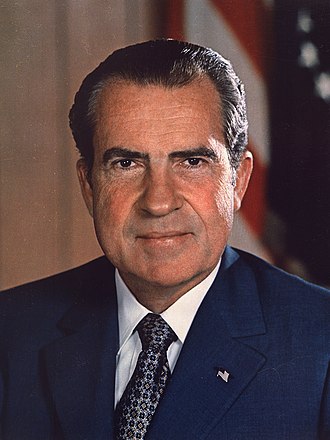
Richard M. Nixon served as the 37th President of the United States from January 1969 until his resignation in August 1974. In February 1971, he ordered the installation of a secret voice-activated taping system in the White House to preserve a historical record of his administration. Until the system's existence was revealed and dismantled in July 1973, the tapes captured Nixon directing major foreign policy initiatives, such as the opening to China, as well as his central role in the Watergate cover-up.
What Nixon talks about on the tapes
White House operations 4,718Presidential scheduling 2,225Public relations 1,784Presidential schedule 1,782Vietnam War 1,693Logistics 1,650Manolo Sanchez 1,626White House communications 1,400White House administration 1,399Presidential communication 1,243Henry Kissinger 1,191Foreign Policy 1,183
Conversations (21,010)
— Page 127 of 211President Richard Nixon and his daughter, Julie Nixon Eisenhower, met informally at the Aspen Lodge in Camp David. While the specific substance of their discussion remains classified or contained within withdrawn segments, the meeting reflects the President's personal interactions with family during his tenure. No administrative actions or policy decisions were recorded as a result of this brief engagement.
President Nixon dictates a memorandum to Chief of Staff H.R. Haldeman while at Camp David. The primary objective of the recording is to formalize administrative instructions or directives for Haldeman's immediate attention. Due to the withdrawal of the content, no specific policy topics or action items are publicly available.
President Nixon met with his daughter, Julie Nixon Eisenhower, for a private discussion at the Aspen Lodge study at Camp David. Given that the entirety of the recorded dialogue was designated as a personal, returnable item, no official content or substantive policy decisions are available for the historical record. The conversation remains restricted due to its private family nature.
President Nixon contacted the Camp David operator to facilitate a telephone connection with his Chief of Staff, H.R. Haldeman. This brief administrative interaction served as an operational bridge to coordinate communication with a key advisor. No substantive policy matters were discussed during this exchange.
President Nixon contacted the Camp David operator to inquire about the whereabouts of H.R. Haldeman and to request a telephone connection. Upon learning that Haldeman was attending church and would not be available until 12:30, the President directed the operator to connect him with Stephen B. Bull instead. This exchange reflects the administrative coordination required to maintain presidential communications while at the Camp David retreat.
President Richard Nixon initiated a brief communication with the Camp David operator from the Aspen Lodge study. The interaction served as a routine administrative request to facilitate telephone connectivity while the President was in residence. No policy matters or significant executive decisions were recorded during this brief exchange.
President Nixon consulted with the Camp David operator regarding the status of staff members Stephen B. Bull and H.R. Haldeman. After learning that Bull was temporarily unavailable via radio, the President decided to abort his attempt to reach him. Additionally, Nixon directed the operator to cancel a scheduled call to Haldeman, indicating he would initiate contact himself at a later time.
President Nixon contacted the Camp David operator to arrange direct telephone communications with military personnel at the retreat. He specifically requested to be connected with Commander Craig S. Campbell and Lieutenant Colonel William L. Golden, the resident military aide. The conversation served as a brief administrative coordination to facilitate these military briefings.
President Nixon communicated with the Camp David operator from the Aspen Lodge to coordinate logistics or facilitate telecommunications. As this recording captures a brief administrative exchange rather than a policy discussion, no substantive political or national security decisions were made. The interaction reflects the routine technical maintenance of the President's secure communication lines during his stay at the retreat.
President Nixon held a brief, informal exchange with a Camp David switchboard operator while working in the Aspen Lodge. The dialogue reflects a momentary interpersonal interaction regarding the operator's workflow or performance. No substantive policy matters or executive decisions were addressed during this short communication.
President Nixon communicated with a Camp David operator from the Aspen Lodge study to facilitate a telephone connection. The brief exchange served as a routine administrative request for external communication. No substantive policy matters or major developments were recorded during this brief technical interaction.
President Nixon consulted with Lt. Col. William L. Golden regarding the logistics of his upcoming trip to an Italian festival picnic. They discussed the President’s departure schedule, his transportation preference for returning to either Camp David or the White House, and whether Pat Nixon or Julie Nixon Eisenhower would be in attendance. Nixon also verified the status of his prepared remarks for the event, tasking himself to check his briefcase for the necessary materials.
President Nixon consulted with Lt. Col. William L. Golden regarding intelligence or operational updates concerning a movement scheduled for that day. The discussion remained brief and inconclusive, as Golden reported a lack of incoming information or briefing materials. Nixon requested follow-up updates should any relevant background documentation or reports become available.
President Nixon contacted the Camp David operator to facilitate an outgoing call to White House special counsel Charles W. Colson. This brief communication served solely as a logistical request to establish a line of connection. No substantive policy matters or political strategies were discussed during this brief exchange.
President Richard Nixon met with his longtime valet, Manolo Sanchez, at the Aspen Lodge study at Camp David. The conversation, which lasted 34 seconds and was subsequently withdrawn from public record, involved personal matters between the President and his personal staff member. No policy decisions or administrative actions were documented in the surviving record of this encounter.
President Nixon initiated a brief communication with the Camp David operator from the Aspen Lodge study. The interaction served as a routine administrative coordination between the President and the facility's support staff. No substantive policy discussions or significant political decisions were recorded during this brief exchange.
President Nixon and Charles Colson discussed campaign strategy for the 1972 election, focusing primarily on undermining George McGovern’s attempts to make the Watergate scandal a central campaign issue. Colson advised that the administration should temporarily ignore McGovern’s accusations to allow him to overplay his hand, noting that McGovern’s increasingly aggressive public persona was hurting his standing with voters. The two also reviewed polling data and coordinated surrogate messaging, deciding to pivot their own attacks toward McGovern’s vulnerable positions on wage and price controls.
President Nixon and Charles Colson discuss general living arrangements and the ongoing political implications of the Watergate investigation. The conversation centers on strategic messaging regarding potential "whitewash" accusations against the administration. Nixon and Colson deliberate on the timing and public framing of their response to these allegations, ultimately leaning toward a sustained public push rather than a brief rebuttal.
President Nixon met with an unknown woman in the Oval Office to facilitate the delivery of a memorandum addressed to Chief of Staff H.R. Haldeman. The brief exchange focused on the distribution and handling of this sensitive document. No further policy discussions or significant political developments were recorded during this interaction.
President Nixon and Alexander Butterfield met to finalize the logistics and agenda for an upcoming breakfast meeting with Congressional leaders, including Gerald Ford and Hugh Scott. The President emphasized that the meeting should focus on potential vetoes for legislation exceeding the budget, while cautioning that administration officials must not prematurely disclose final executive decisions to the legislators. Additionally, Nixon approved a ceremonial book presentation involving author Frank van der Linden to be scheduled during the week.
President Nixon and Press Secretary Ronald L. Ziegler held a brief meeting to coordinate the President's upcoming address to the International Narcotics Control Conference. The discussion focused on logistical details regarding the involvement of Rose Mary Woods and the official release of the speech. No further substantive policy actions were recorded during this brief administrative exchange.
President Nixon met with Stephen B. Bull to coordinate logistical arrangements for an upcoming trip to Los Angeles. The discussion focused on managing press interactions and synchronizing plans with H.R. Haldeman. Bull was tasked with facilitating travel requirements and communication protocols for the President's departure.
President Nixon and H. R. Haldeman briefly discussed media coverage of the previous day's Fall Italian Festival and reviewed television reporting of the event. The conversation addressed the president's dissatisfaction with the timing of broadcast segments and touched upon an administrative memorandum regarding presidential scheduling. Nixon acknowledged receipt of the memo and finalized the discussion before Haldeman departed the Oval Office.
President Nixon and H.R. Haldeman discussed political messaging and campaign strategy for the 1972 election, focusing on how to appeal to suburban voters and the Italian-American community by emphasizing values like hard work, family, and religion. They also reviewed agricultural messaging, with Nixon instructing Haldeman to have Earl Butz aggressively defend the administration's grain deals and attack George McGovern's policies. Finally, the President directed a shift in campaign optics, specifically requesting a reduction in public appearances with Black individuals to better align with the administration's political base.
President Nixon met with Ronald Ziegler and Stephen B. Bull to coordinate a Rose Garden event involving Miss America winners Terry Ann Meeuwson and Laurie Lee Schaefer. The discussion focused on the logistics of the contestants' tour, the management of their appearance, and the involvement of their chaperones. The meeting served to finalize details for the President’s scheduled interaction with the titleholders.
President Nixon met with Miss America 1973 Terry Ann Meeuwsen, pageant officials, and White House staff for a courtesy visit and formal photograph session in the Oval Office. During the meeting, the President discussed various White House memorabilia, including presidential seals, gifts from foreign heads of state, and needlepoint work by Julie Nixon Eisenhower. The conversation also touched upon the activities of Tricia Nixon Cox and concluded with a brief exchange regarding the administration's position on prisoners of war.
President Nixon and Press Secretary Ronald Ziegler discussed the strategic messaging for the President's recent address at the Conference on International Narcotics Control. They focused on characterizing the influx of foreign narcotics as a national security threat equivalent to an armed invasion. The President emphasized the importance of utilizing this analogy to justify tying foreign aid to international drug control cooperation.
President Nixon met with representatives from veterans' organizations, including Jack O. Hicks, John J. Keller, and William F. Rhatican, primarily for a photo session and an informal discussion regarding veteran support. During the meeting, Nixon emphasized his administration's commitment to disabled veterans and discussed his personal history with veterans' groups dating back to his 1946 congressional campaign. The conversation also touched upon recent flooding in Pennsylvania and the President's upcoming meeting with Representative William M. Colmer regarding a memorial for the Seabees.
President Nixon met with his aide Stephen B. Bull to review logistical arrangements for upcoming presidential photo opportunities, including meetings with Representatives David N. Henderson and William M. Colmer. The discussion focused on addressing overcrowding and spatial concerns encountered during recent events, such as the Italian Fall Festival. Bull was tasked with managing these logistical challenges to ensure more efficient management of future photograph sessions.
President Nixon met with Representative David N. Henderson and John E. Nidecker to discuss political support, North Carolina’s electoral climate, and judicial philosophy. The conversation covered a range of domestic issues, including law enforcement policies, the judicial system's role in public safety, and recent legislative efforts regarding military labor. The meeting concluded with an informal exchange and the presentation of presidential cufflinks to the Congressman.
President Nixon met with Stephen B. Bull to coordinate the President's upcoming daily schedule. The discussion centered on appointments with Representative William M. Colmer and two retired admirals, Walter M. Enger and George Ryder. Bull finalized the details for these meetings before departing the Oval Office.
President Nixon met with Representative William M. Colmer and several other guests, including Admiral Wallis M. Enger and George Ryder, to honor the U.S. Naval Construction Battalions (Seabees) and sign a House Joint Resolution in their recognition. Following a photo session, the conversation turned to political strategy regarding pending anti-busing legislation and a private relief bill sponsored by Colmer. The discussion concluded with a focus on the 1972 election campaign, specifically regarding Republican prospects in Mississippi and plans for a campaign event featuring Gerald Ford and members of the Nixon family.
President Nixon met with Representatives John Kyl and Don H. Clausen, along with White House staff, to conduct a ceremonial photo session and discuss the signing of H.R. 13089, a bill related to the National Forest Program. The participants engaged in informal conversation regarding the President's recent visit to China, the planting of redwood trees, and the logistical delivery of regional gifts like pears and wine to the White House. The meeting concluded with brief discussions on the health and status of various members of Congress involved in water-related legislation.
President Nixon met with his aide Stephen B. Bull to review and organize his daily schedule. The discussion focused on coordinating a bill-signing session, a briefing on environmental issues with John C. Whitaker, and a photo opportunity with Republican women surrogates. The primary objective of the meeting was to ensure the President was prepared to execute these administrative and public relations tasks.
President Nixon and Stephen B. Bull coordinated logistics for an upcoming appearance involving Republican women surrogates in the Roosevelt Room. The discussion focused on the distribution of pins for the attendees and arrangements for individual photograph sessions with White House photographer Ollie Atkins. These planning details served to manage the President’s public relations schedule for the event.
President Nixon instructed the White House operator to connect him with the husband of the Thai military attaché, whose wife had recently been assaulted in Washington, D.C. The President sought to personally reach out regarding the incident, demonstrating concern for the diplomatic implication of the crime. During the request, he also sought to consult with aide H.R. Haldeman regarding the matter.
President Nixon instructed the White House operator to place an outgoing call to Senator Henry M. "Scoop" Jackson. The brief exchange served as a logistical coordination to facilitate direct communication between the President and the Senator. No further substantive policy matters were discussed during this request.
President Nixon met with Captain Surayute Nivasabute to express his and the First Lady’s personal sympathy regarding the recent assault of the Captain’s wife in Washington, D.C. Nixon offered the full support of the White House for any necessary medical or related assistance. He also requested that the Captain relay these well wishes and the news of the President's personal interest to the Thai ambassador.
President Nixon met with Alexander P. Butterfield to coordinate a forthcoming luncheon with congressional leadership, including Hugh Scott, Robert Griffin, Leslie Arends, and Gerald Ford. The discussion centered on managing the political implications of the ongoing General John Lavelle hearings and determining which administration officials, such as Alexander Haig or Henry Kissinger, should attend to address them. Nixon directed staff to assess whether legislative leaders required additional administration presence to navigate the potential political fallout from the hearings.
President Nixon and Senator Henry M. Jackson met to discuss legislative strategy regarding U.S.-Soviet relations and the pursuit of a supersonic transport (SST) program. The two leaders strategized on how to manage the House Foreign Affairs Committee to ensure support for SALT Phase II and potential Mutual and Balanced Force Reductions (MBFR). Additionally, Nixon solicited Jackson's long-term cooperation in finding a way to revive the American SST project following the 1972 election, arguing that current staff attitudes and the abandonment of the project were strategically shortsighted.
President Nixon instructed the White House operator to place an outgoing call to William E. Timmons, his Assistant for Legislative Affairs. The primary purpose of the communication was to establish contact with Timmons to discuss pressing legislative matters. No further dialogue was recorded beyond this brief administrative request.
President Nixon held a brief meeting with his personal valet, Manolo Sanchez, in the Oval Office. The interaction lasted less than a minute and included a short segment of audio restricted for personal privacy. No substantial policy discussions or administrative decisions were recorded during this brief encounter.
President Nixon and William E. Timmons strategized on how to secure congressional support for the Jackson Amendment, emphasizing its necessity for strengthening the administration's position in the upcoming Phase II of the Strategic Arms Limitation Talks (SALT). Nixon expressed his full backing for the amendment and directed Timmons to arrange a meeting with key committee members, including Representatives Thomas E. Morgan and William S. Mailliard, to personally advocate for the administration's policy goals. The President aimed to leverage this direct engagement to ensure the amendment's success within the House-Senate conference.
President Nixon and John Ehrlichman discussed political strategy regarding welfare reform legislation, specifically focusing on the administration's messaging and the potential fallout of failing to pass a bill before Congress adjourns. Nixon expressed skepticism toward the current congressional prospects and directed Ehrlichman to coordinate a public relations strategy and handle communications with legislative leadership. They also touched upon scheduling concerns related to upcoming meetings with Elliot Richardson and potential political risks associated with ongoing hearings, such as the General John D. Lavelle case.
President Nixon met with Alexander Butterfield and Stephen Bull to coordinate logistics for an upcoming congressional leaders breakfast. The participants discussed the guest list, specifically determining that Henry Kissinger should lead the discussion on military appropriations. Additionally, they evaluated the suitability of the Oval Office versus the Executive Office Building for future meetings based on scheduling and the atmosphere for the President's upcoming appointments.
President Nixon met with his aide Stephen B. Bull to coordinate administrative logistics regarding Henry A. Kissinger’s upcoming schedule. The conversation focused on the precision of travel arrangements and the necessity of maintaining operational security for Kissinger's movements. No further major policy decisions were recorded during this brief administrative exchange.
President Nixon met with his personal valet, Manolo Sanchez, in the Old Executive Office Building. The brief interaction, lasting twenty-two seconds, was classified as a personal returnable item rather than a matter of official policy or administration business. No substantive political or administrative developments occurred during this brief exchange.
President Nixon met with his valet, Manolo Sanchez, to coordinate the afternoon's schedule and logistical arrangements for his upcoming meetings. Nixon clarified his transit plans between the Old Executive Office Building and the Oval Office to accommodate appointments at 3:00 p.m. and 4:00 p.m. Following these instructions, the President directed Sanchez to summon Mr. Corsi to the office.
President Nixon met with Charles W. Colson to refine campaign strategies for the 1972 election, focusing heavily on shifting public attention toward issues that disadvantaged Democratic challenger George McGovern. They discussed exploiting McGovern’s positions on grain exports and wage controls, while also coordinating labor outreach through figures like George Meany. Additionally, they assessed the political fallout of the ongoing Watergate investigation, with Nixon expressing a desire to maintain distance from the controversy and manage public perception via friendly media channels.
President Nixon met with his administration officials, including Elliot Richardson and John Ehrlichman, to discuss the political feasibility of passing welfare reform (H.R. 1) before the 1972 election. Given the lack of time and the potential for a hostile or obstructionist legislative environment, the participants concluded that passing a comprehensive welfare bill was unlikely and that aggressive pressure on Congress would be counterproductive. Nixon decided that the administration should maintain its formal support for H.R. 1 while simultaneously pivoting to a strategy of aiming for a decisive election mandate, intending to reintroduce the reform package in the next Congress under more favorable conditions.
President Nixon met with John Ehrlichman to review an extensive legislative agenda in preparation for a meeting with Congressional leaders. The discussion focused on controversial bills, specifically the Office of Economic Opportunity (OEO) and water pollution legislation, where Nixon weighed the political risks of a veto against the executive necessity of maintaining control over mandatory spending. Nixon expressed a firm reluctance to approve language that locked in funding for programs he intended to cut, leading to deliberations on potential legal strategies for withholding funds or utilizing vetoes to preserve executive discretion.
President Nixon met with Ronald Ziegler and Stephen Bull to finalize administrative details regarding his upcoming schedule and a personal letter to Mrs. Theodore Bennahum. The President emphasized strict ground rules for a forthcoming interview with author Theodore H. White, stipulating that the discussion was to be used exclusively for White's book and prohibited from appearing in media outlets like Time or Life before the election. Additionally, the group coordinated timing adjustments for a subsequent meeting with a senator to ensure the President's schedule remained fluid and uninterrupted.
President Nixon met with author Theodore H. White to discuss his political career, the upcoming 1972 election, and his administration's major policy initiatives. Nixon reviewed his success in opening relations with China and the Soviet Union while outlining his strategy for securing a strong electoral mandate to drive future domestic reforms. He emphasized that a decisive victory would enable him to overcome congressional opposition and implement pragmatic, efficient changes in government reorganization and national policy.
President Nixon met with political journalist Theodore H. White to discuss the administration's political philosophy and the President's vision for a potential second term. The conversation covered a wide range of topics, including foreign policy objectives, the necessity of returning to traditional American values, and the state of the 1972 campaign. Nixon expressed his desire to establish a lasting structure of peace and indicated a willingness to provide White with detailed insights into his diplomatic initiatives, specifically the historic visit to the People's Republic of China, for use in White's ongoing book project.
President Nixon met with Theodore H. White, William Brock, and Kenneth Rietz to discuss the administration's political image, domestic policy achievements, and strategy for a potential second term. The participants analyzed how to effectively convey the President's record on issues like China, foreign policy, and drug control to the public. Additionally, Nixon and H.R. Haldeman strategized a major post-election Cabinet reorganization, emphasizing the need to replace existing secretaries with loyal agents who would strictly implement White House policy and control their respective departments.
President Nixon met briefly with Alexander P. Butterfield to discuss adjustments to the President's schedule. The conversation was administrative in nature, focusing on managing the President's appointments as prepared by Raymond K. Price, Jr. The exchange concluded quickly without further elaboration on the specific content of the scheduling changes.
President Nixon met briefly with Alexander P. Butterfield to discuss adjustments to the President's schedule. The interaction served as a quick update regarding upcoming appointments or logistical arrangements. The meeting concluded immediately after the brief exchange.
President Richard M. Nixon met with his longtime valet, Manolo Sanchez, in his Old Executive Office Building suite for a brief, private discussion. Due to the lack of a transcript and the immediate withdrawal of the recording for personal reasons, the specific substance of their exchange remains restricted. No substantive policy developments or administrative actions were documented during this short meeting.
President Nixon met with his personal valet, Manolo Sanchez, in the Old Executive Office Building for a brief discussion. The conversation remains restricted due to personal content, as indicated by the withdrawal of the recorded material from the public record. No substantive policy decisions or administrative actions were documented during this short interaction.
President Nixon met with Polish Foreign Minister Stefan Olszowski, Witold Trampczynski, and U.S. officials to discuss strengthening bilateral trade, scientific cooperation, and Poland's role in European security. The conversation touched upon the upcoming 1972 U.S. election, with the Polish delegation expressing support for Nixon's reelection. Additionally, the participants discussed Olszowski's recent, difficult negotiations with North Vietnamese representatives and the potential impact of the U.S. election results on the Vietnam peace process.
President Nixon met with his aide, Stephen B. Bull, to review and finalize the details of his upcoming schedule. The conversation focused on coordination for a planned meeting with Secretary of State William P. Rogers and George H.W. Bush. Additionally, the participants discussed matters pertaining to National Security Advisor Henry A. Kissinger.
President Nixon met with George H.W. Bush, William Rogers, and Henry Kissinger to coordinate strategy regarding upcoming United Nations General Assembly issues, specifically focusing on international terrorism, the grain deal with the Soviet Union, and Soviet-Jewish emigration. They discussed the complexities of managing foreign policy while considering domestic political ramifications ahead of the 1972 election. The participants also reviewed security protocols for diplomats in Washington and coordinated the President’s upcoming diplomatic schedule with various international leaders.
President Nixon contacted the White House operator to facilitate a telephone connection to Prescott S. Bush. The brief exchange served as an administrative request to place a direct call to the former senator. No substantive policy matters were discussed during this initial operator-assisted outreach.
President Nixon met with his aide Stephen B. Bull to discuss an upcoming engagement with Marion Scully, a woman associated with the site of the President's 1970 helicopter landing in Timahoe, Ireland. The conversation focused on her current activities in Connecticut and the protocol for acknowledging her visit. Nixon sought to determine the appropriate response or gift, specifically considering a White House pin for the interaction.
President Nixon met with his personal valet, Manolo Sanchez, to facilitate logistical arrangements for his upcoming schedule. The discussion centered on coordinating a photo session with Marion Scully, which also included the President's dog, King Timahoe. Following these brief administrative preparations, the two men exited the Oval Office together.
President Nixon met with Marion Scully to discuss her background, her work in occupational therapy, and her family's connection to Ireland. The meeting included a brief photo opportunity on the Oval Office patio involving Henry Kissinger, the President’s Irish setter, King Timahoe, and handler Manolo Sanchez. The session concluded with the President presenting commemorative gifts, including Presidential seal pins and cufflinks, to Scully and her family members.
President Richard Nixon called Prescott S. Bush to offer well wishes and encouragement as Bush prepared for an upcoming surgery. The conversation touched briefly on the U.N. General Assembly and Nixon's recent discussion with George H.W. Bush regarding his father's health. The exchange focused primarily on providing personal support to a long-time friend and political ally during his recovery.
President Nixon consulted with his aide, Stephen B. Bull, to facilitate a personal telephone call to former Senator Prescott S. Bush. The brief interaction served as a logistical arrangement for the President to reach out to the elder Bush. No substantive policy discussions occurred during this transition period.
President Nixon held a brief, informal meeting with his longtime friend and political ally Prescott S. Bush to offer encouragement before Bush’s upcoming surgery. The conversation centered on expressing mutual well-wishes and reflecting on their shared history of personal and political battles. No policy decisions were made during the interaction, as it functioned primarily as a gesture of support during a health crisis.
President Nixon and Alexander P. Butterfield met to finalize the logistical arrangements for a formal dinner honoring Secretary of the Treasury George P. Shultz. They reviewed the guest list of approximately 60 attendees, which included various government officials and former Treasury Secretaries who were slated to provide toasts. The President requested a briefing folder to review the event's schedule and the planned sequence of remarks before the dinner.
President Nixon met with H.R. Haldeman to discuss political strategy for the 1972 reelection campaign, focusing on neutralizing controversies surrounding the Department of Agriculture's grain deal and potential attacks regarding federal campaign funding. The participants addressed the need for a firm, unified administration stance against amnesty for Vietnam War draft evaders and evaluated the effectiveness of using campaign advertisements to highlight this issue. Additionally, they reviewed the status of John Connally's schedule and coordinated instructions for William Safire regarding the tone and length of an upcoming International Monetary Fund speech.
President Nixon met with his aide Stephen B. Bull in the Oval Office to briefly review the President's upcoming schedule. The discussion centered on administrative coordination regarding specific documents and the status of meetings. The conversation concluded quickly with the primary objective being the management of the President's immediate calendar and logistical preparations.
President Nixon met with Representative O. Clark Fisher and aide John E. Nidecker to exchange pleasantries and engage in a brief photo opportunity. The discussion focused on historical reflections regarding the 80th Congress, the President's past labor committee experiences, and updates on former Representative James P. Richards. The meeting concluded with Nixon presenting commemorative presidential cuff links and a pin to his guests.
President Nixon met with his aide, Stephen B. Bull, to coordinate adjustments to his daily schedule. The primary focus of the brief discussion was the inclusion of the Reserve Officers Association and Brig. Gen. Robert D. Upp. The meeting served as a logistical update to ensure the President's upcoming appointments were accurately reflected in his official calendar.
President Nixon met with representatives of the Reserve Officers Association to discuss national defense policy and the importance of fostering public respect for military personnel, particularly regarding the transition to an all-volunteer force. The group expressed strong support for the Administration's military policies, including the mining of Haiphong harbor, and discussed the broader political landscape of the 1972 campaign. The meeting concluded with the President presenting commemorative gifts to the attendees and a brief discussion regarding the President's upcoming schedule.
President Nixon met with Henry Kissinger and Stephen B. Bull to coordinate the National Security Advisor's upcoming schedule. The discussion focused on managing the logistical arrangements and priorities for Kissinger's ongoing activities. This meeting served to align the administrative support provided by Bull with the President’s strategic agenda regarding Kissinger's travel and engagements.
President Nixon met with his personal valet, Manolo Sanchez, to discuss logistical arrangements regarding the President’s schedule. The conversation focused on the President's upcoming activities in the Executive Office Building and a specific request concerning his briefcase. The interaction served as a brief administrative coordination to ensure the President was prepared for his movement to the EOB.
President Nixon and Henry Kissinger met to discuss several pressing foreign policy matters and campaign issues ahead of the 1972 election. They reviewed the status of U.S.-Soviet trade negotiations, the war in Vietnam, and the political implications of handling both the media and opposition figures like George McGovern. Kissinger provided updates on his upcoming diplomatic schedule, including meetings with Yitzhak Rabin and North Vietnamese officials, while both men expressed frustration with the liberal press and certain elements of the American Jewish community regarding their administration's foreign policy objectives.
President Nixon contacted the White House operator to facilitate a telephone call to his daughter, Julie Nixon Eisenhower. The operator promptly acknowledged the request and initiated the connection. No further substantive policy or administrative matters were discussed during this brief exchange.
President Nixon initiated a phone call to his daughter, Julie Nixon Eisenhower, but was informed by the White House operator that she was currently out shopping. Upon learning she was expected to return shortly, the President decided to postpone the call. No further substantive matters were discussed, and no action items were established beyond the President's intent to reconnect later.
President Nixon consulted with the White House operator to facilitate an outgoing call. This brief interaction served an administrative purpose, functioning as a routine request to connect the President with a specific party. No substantive policy discussions or policy-related decisions were recorded during this brief exchange.
President Nixon consulted with the White House operator to facilitate an outgoing call. The brief exchange focused on establishing a connection with an unnamed individual, resulting in the President’s instruction for the operator to return the call later. No substantive policy discussions occurred during this administrative interaction.
President Richard Nixon met with his valet, Manolo Sanchez, in the Old Executive Office Building to handle personal matters. The majority of the interaction, lasting 39 seconds, was classified as a personal returnable item and excluded from the public record. No substantive policy discussions or administrative decisions were documented during this brief encounter.
President Richard Nixon met with his personal valet, Manolo Sanchez, in the Old Executive Office Building. The brief interaction, lasting only nine seconds of recorded audio, involved personal matters that remain classified or withheld. No significant policy decisions or governmental actions were documented in the available record for this encounter.
President Nixon met with his valet, Manolo Sanchez, in the Old Executive Office Building to discuss administrative matters, including a specific request involving Charles W. Colson. During this time, the President also engaged in a brief, separate telephone call with an unidentified party. The conversation served as a routine coordination of presidential staff needs and internal communications.
President Nixon and H.R. Haldeman reviewed upcoming scheduling commitments, including a strategy meeting at Camp David and a planned event at the F St. Club. Nixon emphasized limiting the attendance of Domestic Council staff at the Camp David session to maintain a focus on future policy projections. They also coordinated logistical details regarding Caspar Weinberger's participation and Nixon’s subsequent trip to Texas with Senator John Tower.
President Nixon met with Charles Colson, John Ehrlichman, and Henry Kissinger to refine the 1972 reelection campaign strategy. The participants prioritized keeping the focus on national security and foreign policy while framing George McGovern's shifting positions as evidence of poor character and lack of trustworthiness. They also discussed attacking the financial disclosures of the Kennedy family and McGovern’s campaign to create a political liability for their opponents, while Nixon instructed his staff to focus on positive foreign policy outreach with international leaders.
President Nixon and John Ehrlichman consulted on the viability of sustaining a presidential veto regarding Office of Economic Opportunity (OEO) legislation. They assessed the reluctance of congressional leaders like Gerald Ford and Hugh Scott to support the veto, noting Ford's specific preoccupation with a Civil Air Patrol program in his district. Nixon directed Ehrlichman to consult with William Timmons for a more definitive assessment of the legislative prospects before moving forward.
President Nixon and John Ehrlichman discussed the precarious vote count required to sustain a potential presidential veto of the Office of Economic Opportunity (OEO) legislation currently before Congress. Ehrlichman relayed input from William Timmons, who expressed uncertainty regarding the vote count for the conference report compared to previous versions of the bill. The two decided to investigate whether the administration could delay the veto decision until the following day to better assess their legislative standing.
President Nixon contacted the White House operator to facilitate a telephone call to his daughter, Julie Nixon Eisenhower. The brief exchange served as an administrative request to establish a private line of communication. No further policy or political matters were discussed during this brief connection.
President Nixon held a brief transition meeting with Zosimo T. Monzon before relocating to his office in the Old Executive Office Building. The exchange served primarily as a logistical check-in regarding the President's immediate movements and schedule. No substantive policy matters were discussed during this brief transition.
President Nixon held a brief administrative interaction with the White House operator to facilitate an outgoing telephone connection. This exchange served purely as a routine logistical step to connect the President with another party. No substantive policy discussions or policy-related decisions were recorded during this brief communication.
President Nixon met with his aide Stephen B. Bull to review and coordinate the upcoming travel schedule for John D. Ehrlichman. The discussion centered specifically on logistical arrangements for Ehrlichman's trip to New York. The brief exchange served as a routine administrative check to ensure the President and his staff remained aligned on senior personnel movements.
President Nixon held a brief telephone conversation with his daughter, Julie Nixon Eisenhower. Due to the withdrawal of the recording's content as a personal item, the specific details of the discussion remain unavailable for public review. The exchange serves as an example of the personal communications captured within the White House taping system.
President Nixon held a brief one-minute meeting with his daughter, Julie Nixon Eisenhower, in the Oval Office. Due to the lack of an available transcript and the notation of a withdrawn item, the specific substance of their discussion remains classified or redacted. No administrative decisions or policy actions were recorded during this brief encounter.
President Nixon met with Stephen Bull and Alexander Butterfield to review administrative scheduling, legislative priorities, and security concerns. The discussion focused on coordinating a signing ceremony for the veterans' survivor benefits bill and managing the President’s travel itinerary, including upcoming events in Texas. Additionally, the participants addressed the strain on Secret Service resources regarding the protection of foreign officials and high-profile individuals.
President Nixon met with Rose Mary Woods, Stephen Bull, and H. R. Haldeman to address a wide range of administrative, political, and security concerns. Key topics included the legislative strategy for the Office of Economic Opportunity (OEO) bill, security precautions for Henry Kissinger, and political maneuverings related to the 1972 presidential campaign. Additionally, the participants discussed various psychic predictions from Jeane Dixon, potential threats to the Jewish community, and routine correspondence regarding presidential memorabilia and gift offers.
President Nixon met with key advisors and political allies to strategize on the 1972 presidential campaign, the legislative handling of the Office of Economic Opportunity (OEO) bill, and security concerns regarding Henry Kissinger. The group discussed the political advisability of vetoing the OEO and water bills, emphasizing fiscal responsibility, and explored campaign messaging tactics, including the use of "mini-documentaries" highlighting the President's foreign policy achievements. A significant development was the focus on producing television spots that frame the President's leadership as nonpartisan and statesmanlike, contrasting his record with that of Senator George McGovern.
President Nixon held an informal meeting in the Oval Office with custodial staff members. The encounter consisted primarily of routine interactions, though the majority of the recorded duration remains restricted as non-historical, returnable material. No substantive policy discussions or administrative decisions were documented in the available record.
President Nixon and H.R. Haldeman evaluated the political fallout of the Watergate scandal, specifically assessing its impact on public opinion polling. Haldeman suggested that the issue had largely faded from public consciousness, asserting that the indictments failed to generate significant traction. The pair compared the declining relevance of Watergate to the contemporary political damage caused by the administration's controversial grain deal.