Nixon, Richard M. (President)
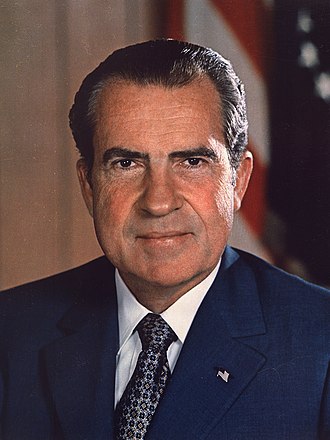
Richard M. Nixon served as the 37th President of the United States from January 1969 until his resignation in August 1974. In February 1971, he ordered the installation of a secret voice-activated taping system in the White House to preserve a historical record of his administration. Until the system's existence was revealed and dismantled in July 1973, the tapes captured Nixon directing major foreign policy initiatives, such as the opening to China, as well as his central role in the Watergate cover-up.
What Nixon talks about on the tapes
White House operations 4,718Presidential scheduling 2,225Public relations 1,784Presidential schedule 1,782Vietnam War 1,693Logistics 1,650Manolo Sanchez 1,626White House communications 1,400White House administration 1,399Presidential communication 1,243Henry Kissinger 1,191Foreign Policy 1,183
Conversations (21,010)
— Page 187 of 211President Nixon initiates a request for the White House operator to connect him with his Chief of Staff, H. R. Haldeman. This brief administrative interaction serves as the logistical precursor to a private consultation between the two men. The call reflects the ongoing reliance on White House operators to facilitate direct communication with key advisors during the height of the Watergate crisis.
President Nixon consulted with a White House operator to facilitate an outgoing communication. This brief interaction served administrative purposes to connect the President with another party. No substantive policy matters or political developments were discussed during this short exchange.
President Nixon and H. R. Haldeman discuss the deteriorating legal and political situation surrounding the Watergate investigation, specifically focusing on John Dean's recent behavior and potential to implicate senior White House staff. They address reports of undisclosed evidence—specifically cartons of material removed from E. Howard Hunt's safe—and analyze the risks of public statements by the White House. To manage the crisis, Nixon decides to address his Cabinet the following day by emphasizing a commitment to a transparent investigation without offering specific endorsements of individual aides, while opting to retreat to Camp David to avoid media scrutiny during the Easter weekend.
President Nixon and H.R. Haldeman discuss the management of developing Watergate-related narratives and the handling of sensitive materials allegedly removed from the White House. The conversation focuses on legal strategy and the risks associated with public stories, ultimately advising that they allow the narrative to play out without direct intervention. The exchange highlights the administration's efforts to contain damaging information while navigating uncertainty regarding the actions of their legal team and associates.
President Nixon instructed the White House operator to facilitate a telephone connection with John D. Ehrlichman. The President requested to be notified as soon as Ehrlichman became available to speak, approximately 40 minutes later. This exchange served as a logistical arrangement to ensure a direct communication line between the President and his advisor.
President Nixon initiates a call via the White House operator to discuss administrative logistics or secure communications. The conversation focuses on establishing a direct line of contact during evening hours in the Old Executive Office Building. This interaction reflects the President's ongoing efforts to maintain controlled oversight of internal communications during a period of intense political pressure.
President Nixon and H. R. Haldeman met to coordinate their strategy for navigating the escalating Watergate scandal and the mounting pressure from ongoing investigations. They discussed the complexities of potential hush money payments, attempting to frame them as legitimate legal defense aid while distancing themselves from the unauthorized activities of subordinates like John Dean and Jeb Magruder. The President expressed a desire to develop a public narrative to address the controversy, emphasizing that he had been misled by false reports from his own staff.
President Nixon met with his Cabinet and key staff to coordinate messaging and strategy on pressing administration priorities, specifically energy policy, economic inflation, and the ongoing Watergate investigations. Nixon urged his officials to actively support the administration's legislative agenda, particularly in the face of rising economic concerns and energy supply challenges. He emphasized the necessity of a unified, firm stance against political pressure, framing the current crises as manageable problems rather than catastrophic failures. Additionally, Nixon underscored his commitment to a thorough investigation into Watergate, stressing the need to maintain public order and confidence while the legal process unfolded.
President Nixon met with an unidentified individual in the Oval Office to discuss matters related to the President's schedule. Due to the lack of available transcripts, the specific details regarding the agenda or any resulting actions remain unclear. This brief interaction concludes without documented evidence of formal policy decisions or major developments.
President Nixon held an Oval Office meeting with an unidentified male visitor to review the President’s daily schedule. The discussion focused on logistical planning and the upcoming agenda for the Chief Executive. No further details regarding specific topics or outcomes are preserved due to the lack of available transcripts.
President Nixon met with George H. W. Bush to discuss the transition of Robert Finch out of his current role and into a potential Senate candidacy, as well as coordination efforts regarding Ronald Reagan and California gubernatorial politics. The conversation subsequently pivoted to the Watergate scandal and its impact on the administration's relationship with Congress. Nixon emphasized the necessity of handling ongoing investigations through the Grand Jury process rather than congressional committees, while they addressed the potential legal exposure of campaign staff members like Kenneth Rietz and Jeb Magruder.
President Nixon met with an unidentified individual to discuss scheduling matters concerning National Security Advisor Henry A. Kissinger. The brief dialogue centered on the coordination of Kissinger’s upcoming engagements and communications. No definitive policy decisions were reached during this short administrative interaction.
President Nixon and H.R. Haldeman discuss the deteriorating political situation surrounding the Watergate scandal and the mounting pressure on the White House to provide accountability. They assess the reliability of various witnesses and the potential for John Dean and Jeb Magruder to shift blame toward higher-level officials, including Haldeman. The two men also evaluate potential legal and public relations strategies, specifically focusing on how to maintain a credible posture regarding national security while managing the risk of further disclosures.
President Nixon initiates a call to be connected with Assistant Attorney General Henry E. Petersen. The brief exchange serves as a procedural request to facilitate a direct line of communication between the President and Petersen. No substantive policy matters were discussed during this initial operator interaction.
President Nixon met with an unidentified individual in the Oval Office to coordinate his official daily schedule. The brief discussion primarily focused on planning for an upcoming engagement involving National Security Advisor Henry Kissinger. No further details regarding the substance of the meeting were preserved in the recording.
President Nixon instructed the White House operator to place a telephone call to Assistant Attorney General Henry Peterson. The request served as a direct communication link to the Justice Department during the escalation of the Watergate scandal. No further substantive discussion occurred during this brief administrative exchange.
President Nixon met with an unidentified individual to coordinate his immediate schedule and manage logistical delays. The discussion centered on an upcoming meeting with National Security Advisor Henry Kissinger and the necessity of handling a pending telephone call. The conversation concluded with Nixon emphasizing the need for the staff to prioritize these scheduling adjustments.
President Nixon met with Stephen B. Bull in the Oval Office to discuss administrative logistics regarding the President’s personal schedule and the management of his briefcase. The discussion centered on the handling of specific folders and the removal of sensitive materials from his briefcase. The interaction concluded with the President emphasizing the need for Bull's presence at an upcoming presentation.
President Nixon and Assistant Attorney General Henry E. Petersen discuss the logistical challenges and procedural status of the ongoing Watergate grand jury investigation. Nixon encourages accelerating the investigation while Petersen explains the complexities of witness coordination and ongoing negotiations with John W. Dean III. The two also address the status of Jeb Stuart Magruder’s resignation from the Commerce Department and Nixon’s insistence that his administration must provide full cooperation with the prosecutors.
President Nixon met with Assistant Attorney General Henry E. Petersen to discuss the ongoing investigation into the Watergate scandal and legal concerns surrounding White House Counsel John Dean. Nixon urged Petersen to accelerate the investigation to counter negative public leaks and emphasized the need to distinguish between Dean’s official work product and his potential personal liability as an activist. The President reiterated that he would not grant executive privilege regarding Dean’s activities, except for private presidential communications, while expressing his intent to maintain distance from the investigation to allow Petersen full operational independence.
President Nixon met briefly with an unidentified individual in the Oval Office to coordinate his official schedule. The conversation focused on the President's upcoming engagements, with specific attention directed toward arranging a meeting with National Security Advisor Henry A. Kissinger. No further details regarding the discussion or final decisions are available due to the lack of a transcript.
President Richard Nixon met with his personal valet, Manolo Sanchez, in the Oval Office to receive refreshments. The interaction was brief and perfunctory, serving solely as a routine domestic service encounter. No substantive policy matters or political developments were discussed during the short meeting.
President Nixon and Henry Kissinger met to discuss international affairs and the unfolding Watergate crisis. The pair reviewed Kissinger’s upcoming speaking engagements, European trip preparations, and contingency military options for Vietnam, including potential bombing campaigns. Regarding Watergate, they deliberated on the political necessity of maintaining a unified administration response, the potential departures of high-level staff like H.R. Haldeman and John Ehrlichman, and the challenge of managing the crisis while preserving the presidency. Nixon emphasized his commitment to a thorough internal investigation, framing it as a standard of integrity superior to previous administrations.
President Nixon initiates a brief request to the White House operator to place a telephone call to his advisor, Patrick J. Buchanan. The conversation serves solely as a procedural instruction to establish a connection with Buchanan. No further discussion or policy matters are addressed during this brief exchange.
President Nixon contacted the White House operator to facilitate an outgoing call. The brief exchange served as a routine administrative request to connect the President with an external party. No substantive policy matters or major political developments were recorded during this short connection.
President Nixon consulted with Pat Buchanan regarding the administration's response to the intensifying Watergate scandal, which they characterized as a 'hell week.' Buchanan confirmed he had submitted written recommendations to Press Secretary Ron Ziegler concerning a necessary public relations strategy to manage the political fallout and damaging leaks. The two also briefly discussed the unfortunate involvement of John Mitchell as he prepared for his grand jury appearance.
President Nixon and Secretary of Labor Peter J. Brennan met briefly to discuss the administration's ongoing struggle with the intensifying Watergate scandal and the negative impact of unauthorized leaks. Nixon emphasized the necessity of surviving the political crisis and outlined the need for a more coherent public relations strategy to protect innocent staff members from unfair allegations. The two men also confirmed that Brennan had submitted his policy recommendations for upcoming initiatives.
President Nixon met with his top aides, John Ehrlichman and H. R. Haldeman, to coordinate his immediate schedule and manage the administrative flow of the Oval Office. The brief discussion focused on reviewing upcoming meeting requests and prioritizing the President's availability amidst the mounting pressures of the administration. No major policy decisions were recorded during this brief administrative check-in.
President Nixon held a brief, eight-minute meeting in the Oval Office with an unidentified individual. While no transcript exists to detail the specific content of their discussion, the encounter involved the exchange of physical items, specifically a briefcase and a book. No further administrative or political context regarding the nature of this interaction has been preserved.
In this meeting, President Nixon, H.R. Haldeman, and John Ehrlichman discuss the intensifying Watergate investigation and the shifting legal strategies of John Dean, who had recently changed attorneys. The participants focus on insulating the White House from culpability, with Haldeman and Ehrlichman detailing their lack of direct involvement and asserting that Dean had acted as an impediment to their previous efforts to produce a full report on the scandal. Additionally, they discuss the growing political risks regarding administrative oversight and the danger of accepting broad responsibility for campaign actions.
President Nixon and Richard A. Moore discussed the narrative surrounding the La Costa meeting, focusing on framing the President's directives regarding Donald Segretti as legitimate attempts to formulate political strategy rather than obstruction. They reviewed the involvement of key figures including John Mitchell, John Dean, H.R. Haldeman, and John Ehrlichman, particularly regarding the distribution of funds to Watergate defendants. Nixon sought to clarify and distance his inner circle from potential legal culpability by emphasizing that his subordinates did not knowingly participate in illegal activities.
President Nixon initiates a brief telephone request through the White House operator to reach Press Secretary Ronald L. Ziegler. The call serves as a logistical bridge to establish communication with his primary spokesperson during a period of intense scrutiny. No substantive policy discussions occur, as the exchange is limited to the successful facilitation of the connection.
President Nixon and Press Secretary Ronald Ziegler discussed the potential publication of damaging press stories, specifically addressing a rumor involving Herbert Klein and Art Buchwald that was ultimately retracted. The conversation shifted to a Washington Star article concerning internal conflicts between John Ehrlichman and Clark MacGregor regarding the Committee to Re-elect the President's (CRP) investigation of itself. Nixon directed Ziegler to coordinate with Bryce Harlow to secure a briefing on the situation before the President's upcoming morning meeting.
President Nixon initiates a call to the White House operator to be connected with Assistant Attorney General Henry E. Petersen. This interaction serves as the preliminary step for the President to facilitate a direct conversation with the official managing the Watergate investigation. The call concludes immediately after the request for the connection is made.
President Nixon held a brief morning meeting with his personal valet, Manolo Sanchez, in the Oval Office. The exchange primarily consisted of routine greetings and personal pleasantries. No significant policy discussions, strategic decisions, or administrative actions were recorded during this brief encounter.
President Nixon initiates a call through the White House operator to contact Henry Peterson. This brief interaction serves as a logistical bridge to connect the President with the Assistant Attorney General. No substantive policy discussions occur during this exchange, as the dialogue is limited to the procedural request for the connection.
A White House operator coordinates with President Nixon to facilitate an urgent communication with Assistant Attorney General Henry E. Petersen. The President seeks to confirm Petersen’s current availability, as he is expected to initiate a call to the White House within minutes. This brief exchange serves to prepare the President for a critical, time-sensitive discussion regarding ongoing legal or investigative matters.
President Nixon instructed the White House operator to relay a message to Assistant Attorney General Henry E. Petersen regarding a scheduled call. He requested that the operator inform Petersen of a temporary delay, noting that he would initiate the follow-up conversation in approximately 30 minutes. This communication served as a brief administrative coordination to manage his schedule while dealing with the Justice Department.
President Nixon held a brief exchange with the White House operator to facilitate a telephonic connection. This interaction functioned as an administrative bridge to initiate further official communication. No substantive policy discussions or decisions were recorded during this brief connectivity check.
President Nixon coordinated his morning schedule with an aide, confirming the immediate availability of his barber. He further requested a brief delay to accommodate an incoming telephone call before meeting with H.R. Haldeman and John Ehrlichman. Instructions were issued to have these advisors arrive at the Executive Office Building 15 minutes ahead of their scheduled appointment.
President Nixon instructed the White House operator to postpone his upcoming call with Peter Peterson because he needed to step out of the office for a short duration. He requested that the operator reconnect him in approximately 30 minutes to resume his scheduled communications. This brief exchange served to manage the President's immediate administrative agenda and handle the timing of his telephone traffic.
President Nixon met with Stephen B. Bull and Ronald L. Ziegler to reorganize his upcoming schedule, specifically focusing on balancing social obligations and streamlining presidential events. Separately, discussions with Henry E. Petersen and briefings from Ziegler addressed the growing Watergate crisis, centering on the potential resignations of top aides H.R. Haldeman and John Ehrlichman. Advisers like Bryce Harlow and John Connally emphasized the need for the President to act decisively to separate the administration from the scandal while maintaining the stability of the presidency.
President Nixon and Assistant Attorney General Henry E. Petersen arranged an evening meeting at the White House to discuss ongoing Watergate investigations. Nixon expressed significant frustration regarding grand jury leaks, pressuring Petersen to administer lie detector tests to the prosecution team to identify the source. The two also discussed the resignation of Jeb Stuart Magruder and the management of public messaging regarding various White House staff members implicated in the scandal.
President Nixon met with an unidentified individual in the Oval Office to coordinate logistics for a brief gathering involving three officers. The participants arranged for coffee service and specific seating configurations for the upcoming meeting. The interaction was limited to these administrative preparations before the visitor departed.
President Nixon met with attorneys John J. Wilson and Frank H. Strickler to discuss legal strategies regarding H.R. Haldeman and John Ehrlichman in the context of the unfolding Watergate scandal. The participants debated the potential impact of indictments, the legal risks associated with hush money payments to defendants, and the potential testimony of John Dean. They also explored the possibility of Haldeman and Ehrlichman resigning to protect the presidency, weighing the timing of such actions against the desire to maintain public confidence and operational continuity.
President Nixon held a brief, informal meeting in the Oval Office with his personal valet, Manolo Sanchez, and an unidentified individual. The interaction consisted primarily of social greetings and brief pleasantries rather than substantive policy discussions or administrative action items. The participants departed the office shortly after the exchange concluded.
President Nixon and Press Secretary Ronald Ziegler consulted on managing the media narrative regarding the Watergate scandal, specifically addressing the potential implications for H.R. Haldeman and John Ehrlichman. They discussed John Connally’s perspective on the situation and emphasized a strategy of denying presidential involvement in any cover-up. The pair coordinated talking points for an upcoming press briefing to clarify the President’s role in initiating an internal investigation and to distance his administration from the unfolding legal issues.
President Nixon summoned H. R. Haldeman and John Ehrlichman to his office following the departure of his legal counsel. The brief meeting served to coordinate staff presence in the wake of ongoing legal developments. No further substantive details were recorded before the conversation was terminated.
President Nixon met with his personal valet, Manolo Sanchez, to coordinate routine personal requests and administrative tasks within the Old Executive Office Building. The conversation primarily focused on securing tobacco supplies and organizing a food order for the President and his top aides, John D. Ehrlichman and H. R. Haldeman. This brief interaction reflects the daily support operations required to maintain the President’s workflow and personal comfort.
John D. Ehrlichman initiates a telephone call to the White House operator to facilitate a connection with Geoffrey C. Shepard. The conversation serves primarily as a logistical administrative step to establish communication between Ehrlichman and Shepard. No substantive policy matters or decisions are discussed during this brief exchange.
H. R. Haldeman, President Nixon, and John Ehrlichman coordinate a call to Stephen B. Bull regarding the tracking of public concerns. The conversation focuses on systematically categorizing incoming inquiries from viewers to better analyze the most prominent domestic policy issues. This initiative reflects the administration's effort to monitor and quantify public sentiment on major national topics during a period of significant political pressure.
H. R. Haldeman, with President Nixon and John Ehrlichman present, directed Stephen Bull to urgently secure and transport recordings from the March 10–23, 1973 period. Haldeman instructed Bull to gather all relevant material and ensure it was placed in a secure container for delivery. Additionally, Bull was tasked with procuring a simple, functional playback device capable of handling the tapes, emphasizing the need for immediate action.
H. R. Haldeman coordinates with President Nixon, John Ehrlichman, and Stephen Bull regarding the logistical handling and delivery of sensitive materials. The discussion centers on the administrative preparation and movement of tapes, highlighting the internal anxiety surrounding their arrival and custody. Haldeman provides specific instructions to Bull to ensure the materials are secured once they are received.
In this extensive meeting, President Nixon, H. R. Haldeman, and John Ehrlichman deliberate over the escalating Watergate crisis and the potential political and legal fallout for their administration. The participants assess the risks associated with various strategies, including whether to resign, take leaves of absence, or maintain a defensive posture while awaiting the findings of the prosecutor. They express significant concern over the cooperation of John Dean, the threat of potential blackmail, and the urgent need to manage press perceptions to protect the presidency from irreparable damage.
President Nixon and Stephen B. Bull briefly coordinated the President's schedule regarding an upcoming meeting with Attorney General Richard G. Kleindienst. Nixon instructed Bull to arrange a telephone call with Kleindienst to confirm that the meeting would proceed as planned. This interaction served to facilitate the administrative logistics required for the President's engagement with the Verification Panel.
President Nixon held a brief telephone communication with a White House operator. The recording consists of a standard administrative exchange regarding phone connectivity. Due to the fragmented nature of the archival recording, no substantive political discussions or policy decisions were captured.
President Nixon met with his personal valet, Manolo Sanchez, in the Old Executive Office Building to discuss administrative matters regarding the President's daily schedule. The brief interaction served to coordinate logistics and personal arrangements for the President's upcoming obligations. No significant policy decisions were recorded during this encounter.
President Nixon and H. R. Haldeman discuss the status of a review process regarding existing White House tape recordings. The primary focus of the brief exchange is to determine if the review has commenced and to press for the delivery of available materials or information derived from those tapes. This dialogue highlights the administration's ongoing internal efforts to manage and assess the sensitive audio documentation as scrutiny over the White House tapes intensified.
President Nixon held a meeting with an unidentified individual in the Old Executive Office Building to discuss administrative and logistical matters. The discussion centered on the scheduling of the President's appointments and the maintenance of his workspace. No major policy developments occurred during this brief encounter, which focused primarily on routine office operations and cleaning services.
President Nixon met with his personal valet, Manolo Sanchez, in the Old Executive Office Building to discuss personal logistics. The conversation was limited to the coordination of a food order for the President. No other policy matters or administrative developments were recorded during this brief interaction.
President Nixon met with his personal valet, Manolo Sanchez, in the Old Executive Office Building to discuss administrative details regarding Sanchez's work schedule. The brief interaction focused on personal staffing logistics rather than substantive policy matters. No major political decisions or significant policy developments were recorded during this session.
President Nixon requested that the White House operator place a telephone call to Attorney General Richard G. Kleindienst. This brief exchange served as a procedural request to facilitate communication between the President and his chief law enforcement officer. No further substantive policy matters were discussed during this specific interaction.
Attorney General Richard G. Kleindienst urgently requested an immediate meeting with President Nixon to discuss the legal implications of John W. Dean III’s recent statements to prosecutor Earl J. Silbert regarding the Daniel Ellsberg case. Kleindienst emphasized that the gravity of the situation required prompt action and legal consultation. The President instructed Kleindienst to report to the White House alone to address the matter.
President Nixon and Attorney General Richard G. Kleindienst exchanged brief pleasantries while coordinating an immediate in-person meeting. The conversation served primarily as a logistics check to confirm that Kleindienst was en route to the President's office. No substantive policy matters or legal issues were addressed during this short exchange.
President Nixon met with his personal aide, Manolo Sanchez, to discuss mundane logistics, including a food order and coordination of his evening schedule. The conversation centered on finalizing plans for dinner with his daughters, Julie Nixon Eisenhower and Tricia Nixon Cox. The President confirmed his intention to move forward with the engagement despite his busy agenda.
President Nixon met with Stephen B. Bull in the Old Executive Office Building to coordinate the logistics of Richard G. Kleindienst’s arrival. The discussion centered on the necessary arrangements to ensure the President could meet with the Attorney General. Bull was tasked with managing the specific requirements for Kleindienst's entrance to the office.
President Nixon and Henry Kissinger met to coordinate their upcoming schedules and address pressing diplomatic priorities. The brief discussion focused on finalizing arrangements for an important, forthcoming meeting between the two leaders. No specific policy decisions were recorded during this brief exchange, which functioned primarily as a logistical check-in regarding the President’s calendar.
President Nixon and Attorney General Richard Kleindienst met to discuss the legal and political fallout surrounding the discovery that E. Howard Hunt and G. Gordon Liddy had burglarized the office of Daniel Ellsberg’s psychiatrist. Kleindienst, citing advice from Assistant Attorney General Henry Petersen and Judge Roger Robb, urged the President to immediately disclose this information to the judge overseeing the Ellsberg trial to avoid a cover-up scandal. Nixon expressed deep frustration with John Dean, whom he viewed as self-serving and potentially willing to blackmail the administration to secure personal immunity, and agreed that the Justice Department must follow the legal protocol of disclosure to preserve the integrity of the presidency.
President Nixon held a brief, informal meeting with an unidentified individual in the Executive Office Building. The dialogue appears to be conversational in nature, touching upon individuals from the past. No specific policy decisions or significant administrative actions were recorded during this short exchange.
President Nixon met with his personal valet, Manolo Sanchez, in the Old Executive Office Building to discuss administrative matters. The brief interaction focused on providing instructions regarding the removal and organization of personal items. No further details regarding the substance of these tasks were recorded.
President Nixon and Lawrence M. Higby met to coordinate the President's upcoming schedule and administrative logistics. Their discussion centered on planning a meeting with Henry E. Petersen and managing the timing of H.R. Haldeman’s appointments. This brief session functioned primarily as a scheduling review to streamline the President's immediate agenda.
President Nixon and Lawrence M. Higby spoke briefly to coordinate the President's upcoming schedule. Higby provided a status update regarding a meeting with an unidentified individual, informing the President that the participant would arrive in approximately ten minutes. This communication served to manage the timing and logistical flow of Nixon's late afternoon appointments.
President Nixon and Lawrence M. Higby held a brief meeting in the Old Executive Office Building that lasted only one minute. The transcript for this interaction remains undefined, providing no substantive record of the topics discussed or specific administrative decisions made. Consequently, this brief encounter offers no actionable historical insight into the President’s agenda at the time.
President Nixon and H. R. Haldeman briefly coordinate a meeting to discuss an incoming call from Mr. Holloman. The two confirm their availability and agree to convene at the White House immediately following the call. This interaction serves as a logistical arrangement to facilitate further private communication regarding ongoing matters.
H. R. Haldeman and President Nixon coordinate a brief, in-person meeting in the President's office. The exchange serves primarily as a logistical check-in to confirm the President's availability. No substantive policy matters or specific action items were discussed during this short administrative call.
President Nixon and H. R. Haldeman review a transcript of a March 21, 1973, meeting with John Dean to analyze their potential legal exposure regarding the Watergate scandal. The participants discuss the ongoing pressure from E. Howard Hunt for hush money, the potential for obstruction of justice charges, and the risks associated with various cover-up strategies. They deliberate over the feasibility of raising cash for legal fees while attempting to distance the President from the illicit activities and illegal payments described by Dean.
President Nixon and Henry E. Petersen met to discuss the ongoing Watergate investigation, focusing heavily on John Dean's attempts to secure immunity and his potential testimony regarding a cover-up. Nixon expressed deep concern over being blackmailed by participants like Dean and reaffirmed his desire for a full investigation while asserting his own lack of prior knowledge regarding illegal activities. The two also addressed the handling of the Ellsberg break-in, the destruction of sensitive documents by L. Patrick Gray, and the necessity of managing political contributions and potential indictments without compromising the presidency.
President Nixon held a brief, one-minute meeting with an unidentified individual in the Executive Office Building. Due to the lack of a surviving transcript or detailed log, the specific subject matter and any resulting actions remain historically inaccessible. The conversation serves as an example of the frequent, undocumented interactions captured by the White House taping system.
President Nixon met with his aide, Stephen B. Bull, to coordinate his upcoming schedule and handle administrative logistics. They reviewed plans for meetings regarding tax policy and economic stabilization with officials such as George P. Shultz and John T. Dunlop. Additionally, the pair discussed preparations for various events, including a reception for White House secretaries and legislative concerns involving Otto E. Passman.
President Nixon instructed the White House operator to connect him with John D. Ehrlichman. The President requested that the operator contact him again once Ehrlichman returned home. This administrative exchange facilitated an urgent communication between the President and his top domestic policy advisor during the height of the Watergate investigation.
President Nixon contacted the White House operator to place a personal telephone call to H.R. Haldeman. The President requested that the operator connect him with Haldeman once the Chief of Staff arrived at his home. This brief exchange served as a logistical arrangement to facilitate direct communication between the two men.
President Nixon consulted with the White House operator to facilitate an outgoing call. This interaction served a purely administrative function, initiating a telephonic connection for the President from his office in the Old Executive Office Building. No further substantive policy matters or executive decisions were recorded during this brief logistical exchange.
President Richard Nixon met with his valet, Manolo Sanchez, in the Old Executive Office Building to handle personal matters. The discussion centered on the provision of refreshments for the President. No major policy or political developments occurred during this brief interaction.
President Nixon held a brief, unscheduled meeting with an unidentified individual in his Old Executive Office Building workspace. The discussion took place during a window of approximately five minutes, though the specific subject matter and the identity of the participant remain unrecorded. No documentation or transcript exists to clarify the nature of this encounter or any resulting administrative actions.
President Nixon consulted with a White House operator to facilitate an outgoing telephone connection. This brief interaction served administrative purposes to establish a line for the President's official communication. No significant policy discussions or substantive developments occurred during this brief exchange.
President Nixon and H.R. Haldeman discuss legal strategies regarding the Watergate and Ellsberg investigations, focusing on the potential threat posed by John Dean's testimony. They coordinate their plan to have Haldeman and John Ehrlichman testify before the grand jury as a preemptive, positive step to demonstrate cooperation with judicial institutions. Nixon emphasizes the need for his aides to stand firm, expressing skepticism about the likelihood of impeachment based solely on Dean’s allegations while dismissing the immediate need for high-level staff resignations.
President Richard Nixon and H.R. Haldeman met in the Old Executive Office Building for a brief administrative exchange. The recording reflects highly fragmented and incoherent dialogue that lacks substantive policy discussion or identifiable decision-making. The interaction serves as an example of the often disjointed nature of the recorded White House tapes during this period.
President Nixon and John Ehrlichman discuss the handling of sensitive materials related to the Watergate investigation and the break-in at the office of Daniel Ellsberg’s psychiatrist. The two officials debate the tactical implications of disclosing information regarding the involvement of the Watergate burglars in the psychiatrist's office, specifically weighing whether to withhold or voluntarily turn over documentation to federal prosecutors. Nixon ultimately concludes that disclosure is inevitable given the current climate, leading them to prioritize managing the fallout of these revelations.
President Nixon and John D. Ehrlichman engaged in a brief, two-minute exchange following a previous discussion. The conversation focused on the President returning a call to Ehrlichman regarding ongoing administrative concerns. No substantive policy or political developments were recorded during this short follow-up interaction.
President Nixon initiates a request for the White House operator to connect him with Attorney General Richard G. Kleindienst. The brief exchange serves as a logistical bridge to facilitate direct communication between the President and the Attorney General. No substantive policy matters are discussed during this specific connection process.
President Nixon met with his personal valet, Manolo Sanchez, in the Executive Office Building to discuss administrative matters concerning the President's personal schedule. The brief conversation primarily focused on logistics regarding food and beverage arrangements for the President. No major policy decisions were made during this routine interaction.
President Nixon directs Attorney General Richard G. Kleindienst to ensure that the prosecutor and judge in the Daniel Ellsberg case understand the extreme sensitivity of the underlying national security investigation. Nixon emphasizes that information regarding these sensitive sources and methods should be handled with restraint to prevent public exposure. This directive seeks to protect classified intelligence gathering operations by framing the scope of the legal proceedings accordingly.
President Nixon met with Attorney General Richard G. Kleindienst to briefly discuss urgent matters, though the brevity and lack of a full transcript obscure the specific nature of their exchange. This encounter occurred during the height of the Watergate investigation, suggesting the discussion centered on legal strategies or the mounting political pressure facing the administration. No concrete decisions were recorded, leaving the ultimate purpose of this brief consultation a matter of historical speculation.
President Nixon communicated with a White House operator to facilitate an outgoing call. Due to the lack of intelligible content in the transcript, no further substantive policy or administrative discussions were recorded during this brief exchange. The recording serves primarily as a procedural log of the President's telephonic activity.
President Nixon and John Ehrlichman discuss their strategy to mitigate the damage from John Dean’s potential testimony and disclosures regarding White House involvement in sensitive investigations, including the Ellsberg break-in. Nixon informs Ehrlichman that he has instructed officials to categorize the information as a national security matter to prevent public exposure and counter what they perceive as blackmail attempts by Dean. The two discuss the legal necessity of distancing Ehrlichman's defense from H.R. Haldeman’s, while planning a defensive narrative that emphasizes a lack of prior knowledge regarding illegal activities.
President Nixon consulted with a White House operator to facilitate an outgoing telephone connection. This brief administrative interaction served as a logistical bridge to initiate a separate communication. No substantive policy discussions or major strategic decisions occurred during this brief exchange.
John Ehrlichman meets with President Nixon to discuss his impending departure from the administration amidst the mounting pressures of the Watergate investigation. Ehrlichman updates the President on his communications regarding his professional future and legal exposure, specifically addressing the risks of being drawn into public testimony or project leadership roles. The conversation centers on navigating potential prosecutorial scrutiny and the strategic necessity of Ehrlichman stepping down from his official duties.
President Nixon contacted the White House operator to place an outgoing telephone call. The brief exchange focused solely on the mechanics of connecting the President to a requested party. No substantive policy discussions or administrative decisions occurred during this brief telephonic interaction.
President Nixon and H.R. Haldeman discuss the potential threat posed by John Dean, specifically speculating on whether Dean may have surreptitiously recorded past conversations with the President. The participants assess Dean’s credibility as a witness and strategize how to manage the political and legal fallout of his allegations. Ultimately, they decide to maintain a firm stance, focusing on the difficulty Dean will face in proving his claims while questioning his motivations.
President Richard Nixon and H. R. Haldeman discuss the handling and disposal of personal materials and correspondence. Their dialogue centers on the potential legal or public relations implications of these items being contested, specifically concerning the President’s word against others. The exchange concludes with a focus on organizing or destroying these records to ensure they do not become a liability.