Nixon, Richard M. (President)
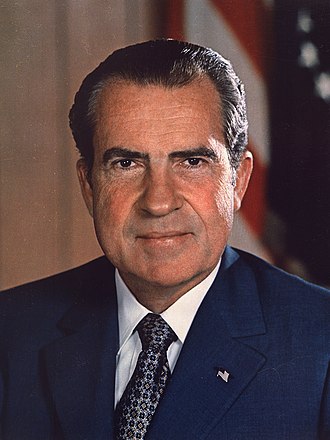
Richard M. Nixon served as the 37th President of the United States from January 1969 until his resignation in August 1974. In February 1971, he ordered the installation of a secret voice-activated taping system in the White House to preserve a historical record of his administration. Until the system's existence was revealed and dismantled in July 1973, the tapes captured Nixon directing major foreign policy initiatives, such as the opening to China, as well as his central role in the Watergate cover-up.
What Nixon talks about on the tapes
White House operations 4,718Presidential scheduling 2,225Public relations 1,784Presidential schedule 1,782Vietnam War 1,693Logistics 1,650Manolo Sanchez 1,626White House communications 1,400White House administration 1,399Presidential communication 1,243Henry Kissinger 1,191Foreign Policy 1,183
Conversations (21,010)
— Page 203 of 211President Nixon initiates a brief, informal communication with the White House operator to request medical relief. The President specifically asks for medication to alleviate a headache. This interaction serves as a routine administrative request rather than a substantive discussion of policy or political matters.
President Nixon contacted Alexander M. Haig, Jr. to request an immediate, in-person meeting at the White House. The President indicated that he had specific materials or matters he needed to address with Haig directly. Haig acknowledged the request and agreed to head over to the President's location to discuss these urgent items.
President Nixon met briefly with Alexander M. Haig, Jr. to coordinate an unscheduled visit or briefing. The discussion served as a logistical arrangement for Haig to meet with the President in his office immediately following a short break. No substantive policy matters were recorded during this brief administrative exchange.
President Nixon and Alexander Haig met to strategize their public relations and legal defense regarding the ongoing Watergate scandal. The discussion focused on coordinating a 'game plan' to mitigate political damage, including managing sensitive information about FBI wiretaps and comparing the administration's actions to past practices under the Kennedy and Johnson presidencies. The participants also addressed the potential risks posed by John Dean's testimony, discussed necessary personnel changes at the FBI, and planned to leverage forthcoming documents to challenge their political opponents.
President Nixon contacted the White House operator to facilitate a telephone connection. The primary purpose of the brief interaction was for the President to request a call be placed to Stephen B. Bull. No further substantive policy discussions occurred during this brief exchange.
President Nixon reviewed a portion of a previously recorded conversation involving White House Counsel John W. Dean, III. The session functioned as a review of specific evidence potentially related to the ongoing Watergate investigation. Nixon listened to segments of the tape before concluding the playback, emphasizing his intent to isolate the implications of Dean’s recorded statements.
President Nixon reviewed a recording of a previous meeting with John W. Dean III while meeting with an unidentified individual in the Old Executive Office Building. The conversation primarily involved evaluating the content and potential impact of the taped discussion with Dean. The President and the visitor discussed strategies for managing the information contained within these recordings and deliberated on how to approach its public or internal handling.
President Nixon spent this session reviewing specific segments of previously recorded White House conversations, including discussions involving John W. Dean, III and Henry A. Kissinger. During the same period, Nixon engaged in an brief telephone conversation with Richard G. Kleindienst concerning a meeting and potential testimony. The President utilized this time to selectively audit past internal records and coordinate administrative matters during the ongoing investigation.
President Nixon consulted with a White House operator to facilitate an outgoing telephone communication. This brief interaction served administrative purposes to initiate a call from the President’s office in the Old Executive Office Building. No substantive policy matters or major political decisions were recorded during this connection.
President Nixon reviewed a portion of a previously recorded meeting he held with White House Counsel John W. Dean, III on February 28, 1973. This review process served as a preparation for upcoming inquiries into the Watergate scandal. The President listened to the playback of the earlier conversation, which had previously been documented for the Watergate Special Prosecution Force.
President Nixon coordinates with Stephen B. Bull to obtain additional White House recordings for his ongoing personal review of the tapes. Bull confirms his readiness to deliver the materials, prompting the President to arrange an immediate follow-up meeting. This exchange reflects the administration's active internal effort to manage and process the recordings during the escalating Watergate investigations.
President Nixon met with aide Stephen B. Bull to coordinate logistical arrangements for an upcoming social event. The brief exchange centered on preparations for a gathering, referred to as a "bash." No substantive policy or political decisions were made during this short interaction.
President Nixon and aide Stephen B. Bull meet to discuss the technical operation and maintenance of the White House taping system. The discussion focuses on the physical location of recording equipment, the procedure for daily tape rotation, and an assessment of existing tape segments from April. Nixon gives instructions regarding the management of these recordings and tasking Bull with oversight of the system's ongoing operations.
President Nixon contacted the White House operator to facilitate a telephone connection with his aide, Stephen B. Bull. The brief exchange served as an administrative request to bridge communication between the President and his staff member. No further substantive policy matters were discussed during this brief operational call.
President Nixon met with Stephen B. Bull to review and discuss specific White House tape recordings, including historical conversations involving John W. Dean III. The discussion focused on past intelligence activities, specifically allegations of J. Edgar Hoover’s surveillance of journalists, political figures, and the press. The President and Bull addressed the handling of sensitive documents and the potential political implications of these records becoming public during the ongoing Watergate-related inquiries.
President Nixon consulted with a White House operator to facilitate an outgoing telephone connection. This brief interaction served administrative purposes to establish a line for the President. No substantive policy discussions or policy decisions were recorded during this exchange.
President Nixon directs Stephen B. Bull to prioritize organizing a chronology of his meetings and telephone conversations from March 1973 over the previously requested April 16th materials. Nixon tasks Bull with coordinating directly with H. R. Haldeman to secure the necessary records, suggesting that Haldeman or Ronald Ziegler should possess the relevant documentation. This directive highlights the administration's urgent efforts to compile a comprehensive record of the President's interactions with John W. Dean III amidst the ongoing Watergate investigations.
President Nixon and aide Stephen B. Bull coordinate the organization and review of specific administrative or historical records, specifically referencing a cutoff date of March 1st. Nixon directs Bull to consult with Bob Holman to identify and retrieve material relevant to this timeframe. The exchange underscores an effort to sort and track documentation, though the precise nature of the materials remains implicit.
President Nixon initiates a brief telephone exchange with the White House operator to request a call be placed to his personal aide, Stephen B. Bull. He specifically asks for the operator to connect him via the 'Speedball' circuit, a specialized internal communications line. No further substantive policy matters are discussed during this short administrative interaction.
President Nixon held a brief, routine communication with the White House operator to place an outgoing call. The interaction was limited to basic telephonic logistics and contained no substantive policy discussions. No further administrative or political developments occurred during this brief exchange.
President Nixon consulted with his aide, Stephen B. Bull, to verify the duration and nature of his April 16, 1973, meetings with John W. Dean III. The two men confirmed that Nixon held a 40-minute morning session and a 30-minute afternoon session with Dean. Nixon decided to have the relevant recordings sent to him for personal review as part of his ongoing examination of the Watergate-related tapes.
President Nixon met with his aide Stephen B. Bull to coordinate the scheduling and preparation of upcoming presidential meetings. Nixon reviewed his calendar to ensure efficiency, specifically instructing Bull to arrange his meetings for the 16th. The brief exchange focused on verifying the number and nature of these appointments to prevent wasted time.
President Nixon initiates a request through the White House operator to be connected with Press Secretary Ronald L. Ziegler. The brief interaction serves as an administrative bridge to facilitate direct communication with his primary spokesperson. No substantive policy matters are discussed, as the call functions solely to establish a phone link.
President Nixon and Press Secretary Ronald Ziegler discussed the administration's strategy for managing the ongoing Watergate investigation and related press inquiries. The pair reviewed the status of documents detailing Nixon's past meetings with John W. Dean III, with Nixon emphasizing that these discussions did not involve a cover-up until March 21, 1973. Additionally, they coordinated the public messaging regarding Henry Kissinger's upcoming trip to Paris and the administration’s efforts to counter negative media narratives and political attacks.
President Nixon consulted with the White House operator to facilitate an outgoing call. This brief interaction served solely to initiate a telephonic connection for the President. No substantive policy discussions or administrative decisions occurred during this exchange.
President Nixon and Press Secretary Ronald Ziegler met to discuss the preparation of a timeline concerning past meetings and activities, specifically focusing on potential interactions involving L. Patrick Gray. They reviewed internal records to determine the validity of claims regarding sensitive issues, including FBI leaks and presidential conversations. The primary objective was to establish a defensive narrative by narrowing the scope of relevant events to the month of March, effectively dismissing potential concerns from preceding months.
President Nixon initiates a brief telephone exchange with the White House operator to request a connection to Stephen B. Bull. This administrative call serves as the mechanism to facilitate communication between the President and his personal aide. No further policy or substantive matters are discussed during the brief interaction.
President Nixon consulted with the White House operator to facilitate a telephone connection. The brief exchange focused primarily on the logistics of placing a call, with the President specifically referencing a past date, April 13th, during the coordination. No substantive policy discussions or administrative decisions were recorded in this brief operational interaction.
President Nixon consulted with Stephen B. Bull to coordinate and compile a detailed chronology of his past meetings and interactions with John W. Dean III. The President directed Bull to gather records specifically pertaining to March 1973, prioritizing in-person meetings over telephone logs to aid in his personal review of events. Nixon intended to spend the afternoon examining these files to reconcile his own recollection with the official administrative records.
President Nixon directs his aide, Stephen B. Bull, to locate specific historical files or documents, specifically expressing interest in materials dating from the 16th. Nixon emphasizes the importance of these records, requesting that Bull organize them for review to assist in his ongoing arguments. The conversation concludes with Nixon instructing Bull to gather the relevant information so he can address the contents directly.
President Nixon contacted the White House operator to facilitate a telephone connection with Alexander M. Haig, Jr. The brief exchange served as a routine administrative request to reach the White House Chief of Staff. No substantive policy discussions occurred during this operator-assisted call.
President Nixon met with his valet, Manolo Sanchez, in the Old Executive Office Building for a brief informal interaction. The discussion centered on the President's personal dietary preferences following a late breakfast. No significant policy decisions or administrative actions were recorded during this short encounter.
President Nixon consulted with a White House operator to facilitate an outgoing telephone connection. The brief exchange served as a routine procedural step to initiate a call to an unidentified party. No substantive policy discussions or significant political developments occurred during this brief administrative interaction.
President Nixon and Alexander Haig discuss the progress of J. Fred Buzhardt's examination of John Dean's files, specifically looking for evidence related to the Watergate scandal. Haig reports that Buzhardt has found nothing incriminating in the files, leading the President to speculate that Dean may have removed materials or that the collection is unexpectedly clean. The President reaffirms his commitment to personally reviewing the White House tapes to continue the investigation despite the significant time investment required.
President Nixon and Alexander Haig held a brief discussion regarding the status of a specific individual, likely a source or operative, and the retrieval of sensitive files. The President questioned Haig on whether the individual had been successfully contacted and if they had yet discovered any pertinent information. The exchange concludes with Haig confirming the individual’s current lack of progress in the ongoing inquiry.
President Nixon contacted the White House operator to facilitate a telephone connection with his aide, Stephen B. Bull. This brief administrative interaction served as a logistical step to reach a member of the President's personal staff. No substantive policy matters were discussed during this request.
President Nixon met with his personal aide, Manolo Sanchez, in the Old Executive Office Building for a brief, informal discussion. The dialogue focused on minor logistical or maintenance matters within the office space. No significant policy decisions or administrative actions were recorded during this interaction.
President Nixon met with his personal valet, Manolo Sanchez, in the Old Executive Office Building. The brief interaction focused on the President's commitment to his workspace and his desire to demonstrate his ongoing work ethic. No significant policy decisions were recorded during this encounter.
President Nixon consulted with the White House operator to facilitate a telephone connection. The brief interaction focused solely on administrative communication logistics. No substantive policy matters or political discussions were recorded during this brief exchange.
President Nixon held a brief meeting in the Old Executive Office Building to review his daily schedule. The discussion involved an unidentified individual and focused on the logistics and planning of his upcoming presidential commitments. No further details regarding specific agenda items or policy decisions were captured due to the lack of a transcript.
President Nixon and aide Stephen B. Bull coordinate the retrieval and organization of specific White House tape recordings for the President's personal review. Nixon emphasizes the urgent need for materials from March 1973, specifically the March 6th meeting, to facilitate his immediate review process. Bull outlines the logistical difficulties of gathering tapes from an off-site safe, while the two agree to move the playback equipment to an office adjacent to the President to improve efficiency.
President Nixon and aide Stephen B. Bull discussed the ongoing process of reviewing and organizing White House tape logs. The President expressed an urgent need to examine specific logs from March 1973, particularly those dated March 6, to facilitate his review process. Nixon instructed Bull to prioritize these materials and deliver them for his immediate inspection.
President Nixon and Stephen B. Bull met to coordinate the administrative process of reviewing and organizing White House tape recordings and associated logs. The discussion focused on establishing physical workspace arrangements for staff members to manage these sensitive materials. This meeting served as a practical step in the ongoing efforts to inventory and categorize presidential recordings, specifically referencing logs from March 1973.
President Nixon spent this time reviewing and playing back recordings of his earlier meetings with John W. Dean, III, as part of his ongoing efforts to manage the fallout from the Watergate scandal. The session served as a private evaluation of past statements and evidence, reflecting the President's preoccupation with how his former staff members were navigating their cooperation with authorities. Nixon focused on the implications of these recorded conversations for his legal and political standing, carefully weighing how to frame his past actions and handle the mounting pressure from witnesses.
President Nixon and his aide, Stephen B. Bull, met to discuss the technical operation and listening quality of the White House recording equipment. The participants evaluated the duration of recent tape segments and troubleshooting methods, such as the use of earphones, to improve the audibility of the recordings. This discussion highlights the administrative focus on maintaining the internal taping system during a period of intense scrutiny.
President Nixon and Stephen B. Bull met to coordinate the review and management of White House tape recordings. The discussion focused on the logistics of auditing these tapes, specifically regarding recordings of the President's meetings with John W. Dean III and the involvement of H.R. Haldeman. They reviewed the length and content of pending recordings to assess the presence of additional staff members and determine the scope of necessary documentation.
President Nixon and aide Stephen B. Bull met in the Old Executive Office Building to discuss administrative or recording-related logistics. The discussion centered on technical aspects of the White House taping system, specifically concerning the editing or omission of certain material. No major policy decisions were reached, as the brief exchange focused on operational procedures regarding recorded content.
President Nixon and his aide Stephen B. Bull convened in the Old Executive Office Building to review and organize administrative documentation. The discussion focused on managing records and scheduling logistics, specifically referencing the timeline of earlier meetings involving John Dean and other staff members. Bull was tasked with handling these organizational matters and preparing the necessary materials as requested by the President.
President Nixon held an undocumented meeting with an unidentified individual in his Old Executive Office Building office. The nature of the discussion remains opaque due to the absence of a substantial transcript record, though the meeting was significant enough to be processed by the Watergate Special Prosecution Force. No specific policy decisions or action items can be verified from the limited archival documentation available.
President Nixon and Stephen B. Bull met to discuss administrative preparations for an upcoming press conference. The conversation specifically addressed the review of briefing materials and the handling of sensitive logistical arrangements. The discussion touched upon representing the U.S. Consulate and the financial implications associated with these specific service obligations.
President Nixon and his aide Stephen B. Bull met to coordinate administrative logistics and scheduling, including the President's upcoming meeting with Henry Kissinger. The discussion involved the management of the President's daily agenda and the status of specific clerical or office tasks that remained incomplete. Bull confirmed the President's availability to remain in the office until 8:00 pm to facilitate the completion of these pending duties.
President Nixon held an undocumented meeting with an unidentified individual in the Old Executive Office Building. While the specific nature of the discussion remains unrecorded in available transcripts, the meeting occurred during the height of the Watergate scandal investigations. No definitive decisions or concrete action items were captured in the available records for this session.
President Nixon and Henry Kissinger met to coordinate their upcoming schedules and confirm logistical arrangements for an engagement the following day. The brief exchange focused on finalizing the timing of their future meetings to ensure they had sufficient time to discuss ongoing policy matters. No major policy decisions were reached, as the conversation served primarily as an administrative touchpoint between the President and his National Security Advisor.
President Nixon and aide Stephen B. Bull met to coordinate the review, editing, and preparation of White House tape recordings. The discussion focused on managing the logistics of selecting and transcribing specific conversations from March and April 1973 for official review. Nixon instructed Bull to finalize the processing of these tapes so the President could personally listen to the recordings.
President Nixon and Alexander Haig discuss updates on economic policy planning and the ongoing Watergate investigation. Haig reports that J. Fred Buzhardt, Jr. has thoroughly searched John Dean's files and found no evidence of documentation, leading them to believe Dean is bluffing or being manipulated by his legal counsel. Meanwhile, Nixon details his personal review of the White House tapes, noting that he is methodically analyzing his past meetings with Dean to understand the extent of staff involvement and potential cover-up efforts.
President Nixon and Alexander Haig met to discuss ongoing administrative tasks and the review of documentation related to Watergate-era investigations. The conversation reflects the President's preoccupation with the mounting volume of material and the difficulty of identifying potential involvement or culpability within the administration. They ultimately resolved to proceed with the laborious process of analyzing these records to better understand the scope of the events in question.
President Nixon met with his aide Stephen B. Bull to discuss the ongoing review and processing of White House tape recordings. The conversation specifically addressed the nature of Bull’s support and involvement in the tape review process. No specific operational decisions were recorded in the available transcript fragment, though the meeting underscores the administrative management of the tapes during the scrutiny of the Watergate investigation.
President Nixon and Stephen B. Bull met to coordinate the ongoing transcription of sensitive White House tape recordings. The discussion focused on establishing a systematic process for reviewing specific recordings from March, with particular emphasis on identifying content involving the President. They assigned responsibility for transcribing various segments to ensure comprehensive documentation of the requested materials.
President Nixon met with an unidentified individual in the Old Executive Office Building to conduct private business. Due to the lack of available transcriptions or historical records regarding the substance of the discussion, the specific topics and outcomes remain undocumented. This recording serves as an archival artifact of the President's daily schedule during the period of the Watergate investigation.
President Nixon met with his personal valet, Manolo Sanchez, in the Old Executive Office Building to discuss administrative tasks and scheduling. The conversation focused on the President requesting that Sanchez complete a specific task and allocate an additional hour for his agenda. No significant political developments or policy decisions resulted from this brief, routine interaction.
President Nixon met with Stephen B. Bull and Ronald L. Ziegler to conduct an administrative review and audit of the White House taping system. The participants addressed technical difficulties regarding missing or improperly recorded segments, including calls from Camp David. The discussion also touched upon high-stakes political concerns, including the ongoing Watergate investigation, the role of John W. Dean, and potential legal threats posed by the Ervin Committee and Special Prosecutor Archibald Cox.
President Nixon met with his staff, including Ronald Ziegler and Stephen Bull, to conduct an intensive review of White House tape recordings and documentation related to the Watergate scandal. The discussion focused on evaluating their legal and political exposure, specifically regarding conversations with John Dean, the management of the Ervin Committee hearings, and the potential for public embarrassment. The participants debated strategies for responding to investigations and managing the testimony of key figures like Archibald Cox, ultimately emphasizing the necessity of maintaining their narrative and preparing for further legal scrutiny.
President Nixon and Stephen Bull met to review and assess specific White House tape recordings from mid-March 1973. The discussion focused on verifying the duration and content of key conversations involving figures such as Richard A. Moore, John Dean, H.R. Haldeman, and John Ehrlichman. Nixon expressed dissatisfaction with the state of the recordings, noting that the review process was not yielding the expected results.
President Nixon met with his personal valet, Manolo Sanchez, to discuss the President's personal schedule and logistical arrangements for his evening routine. The brief interaction focused on Nixon’s plans to eat and complete a workout session in the Old Executive Office Building. The conversation concluded with the two men coordinating the use of equipment, specifically a new pole.
President Nixon met with his personal aide, Stephen B. Bull, in the Old Executive Office Building to review correspondence. The discussion centered on a specific letter, described as a bronze-colored document, that had been brought to the President's attention. Bull assisted Nixon in locating and inspecting the item during the brief exchange.
President Nixon met with an unidentified individual in the Old Executive Office Building to discuss unspecified matters. While the full scope of the conversation remains obscured by the lack of a detailed transcript, the brief exchange reflects the ongoing private consultations conducted during the President's second term. No specific policy decisions or significant developments were recorded in the available documentation for this session.
President Nixon, Stephen Bull, and Ronald Ziegler met to organize and clarify recollections of specific meetings and reports dating back to March 1973. The discussion centered on identifying the contents and accuracy of records regarding White House meetings, particularly concerning a rejected report and potential leaks. Nixon instructed his staff to verify these accounts and finalize their recollections to ensure a consistent administrative record.
President Nixon met with his personal valet, Manolo Sanchez, in the Old Executive Office Building. While official records note the meeting took place, the provided transcript contains no substantive discussion regarding policy or administration. Consequently, no specific developments, decisions, or action items can be extracted from this recording.
President Nixon met with an unidentified individual in the Old Executive Office Building to discuss matters that remain obscured due to the lack of a substantial recorded transcript. The brief exchange includes cryptic references to a "little bottle," though the context of the conversation and any resulting administrative actions or decisions are currently indeterminate based on the available documentation.
President Nixon met with aide Stephen B. Bull in the Old Executive Office Building to discuss the operational status and planned technical upgrades of the White House taping system. The two briefly addressed the functionality of the recording equipment and exchanged comments regarding personnel tasks and ongoing administrative checks. This interaction confirms the President's active involvement in overseeing the maintenance and quality of his internal recording infrastructure.
President Nixon and Stephen B. Bull discussed the handling of a statement intended for release by John Dean regarding the Senate Judiciary Committee, then chaired by Senator James Eastland. The discussion touched upon the review of specific mission-related documents and coordination with Press Secretary Ron Ziegler. They concluded by agreeing to follow up on the status of these materials and Dean's statement the following day.
President Nixon met with his longtime personal valet, Manolo Sanchez, and an unidentified individual in the Old Executive Office Building. The brief interaction involved administrative requests or light duties, as suggested by the President's casual directive. No substantive policy discussions or significant political developments occurred during this recording segment.
President Nixon held a private meeting in the Old Executive Office Building with an unidentified male visitor. While the specific substance of the discussion remains undocumented due to the lack of a transcript, the interaction occurred during a period of heightened scrutiny surrounding the Watergate investigation. The meeting concluded when the individual departed the office shortly before 8:40 pm.
President Nixon and Ronald Ziegler meet to discuss the narrative regarding the Watergate scandal, specifically aiming to debunk allegations of a White House cover-up. The President asserts that past meetings concerning Watergate were focused on legal strategies, such as separation of powers, rather than illicit activities. Nixon expresses frustration with John Dean’s perceived incompetence and seeks to establish a timeline of events to counter accusations of wrongdoing.
President Richard Nixon met with his longtime personal valet, Manolo Sanchez, at the Old Executive Office Building. The brief interaction consisted of casual pleasantries as the two parted ways for the evening. No substantive policy matters or administrative decisions were addressed during this exchange.
President Nixon and aide Stephen B. Bull reviewed technical discrepancies in the White House taping system's log entries and meter readings. The discussion focused on reconciling meter segments with actual elapsed time to determine whether specific logs corresponded to genuine recorded conversations. Nixon directed Bull to verify the data to ensure the accuracy of the recorded documentation.
President Nixon met with his personal valet, Manolo Sanchez, in the Old Executive Office Building. The brief interaction consisted of a routine exchange of pleasantries and professional service. No significant policy decisions or substantive political developments occurred during this meeting.
President Nixon and aide Stephen B. Bull met to address technical issues and gaps in the White House taping system. Nixon expressed frustration over malfunctioning recording equipment and specifically requested that Bull locate and provide access to recordings from March 16 and March 20. The President emphasized the priority of retrieving these specific tapes, signaling his intent to personally listen to the recordings for review.
President Nixon and his aide, Stephen B. Bull, met to organize, review, and verify a collection of audio recordings. The discussion centered on identifying specific segments and verifying the chronological order of the tapes, with Bull reporting on his extensive review process. The two men worked to clarify the status of various recorded sessions to ensure they were correctly cataloged.
President Nixon and Alexander Haig discuss the successful recruitment of Melvin Laird to the White House staff and strategies for managing John Connally's potential departure and future role. Haig provides an update on his recent meetings, noting that the administration is preparing to announce several major initiatives concerning Vietnam, energy, and the economy, as well as a new FBI director. Additionally, Nixon and Haig address the ongoing Watergate investigation, with the President reporting that his review of recordings has convinced him that allegations involving John Dean are fraudulent.
President Nixon and Alexander Haig met briefly to discuss administrative personnel, travel arrangements, and the status of ongoing internal investigations. The conversation centers on staff management, including the travel policies for certain individuals, and an assessment of tape recordings related to internal probes. The pair also acknowledged the confirmation of Elliot Richardson as Attorney General as a significant positive development for the administration.
President Nixon and Stephen B. Bull discussed the logistical demands and administrative workload involved in reviewing materials or preparing for public-facing obligations. They assessed the time investment required for these tasks, with Bull providing an estimate of the President's daily hours spent on such duties. The exchange reflects the mounting pressure of administrative burdens during this period of the Nixon presidency.
President Nixon and Stephen B. Bull met to discuss scheduling concerns and the administrative management of the President's time. The conversation focused on the practical limitations of the current workload, specifically referencing a memorandum regarding Bull’s schedule and a request involving Richard A. Moore. The interaction centered on the President's desire to optimize his professional commitments against the reality of an overwhelming schedule.
President Nixon instructed the White House operator to place an outgoing telephone call to H.R. "Bob" Haldeman. The exchange served as a logistical step to facilitate direct communication between the President and his former Chief of Staff. No further substantive policy matters were discussed during this brief administrative request.
President Nixon and H.R. Haldeman discuss their exhaustive review of White House tapes and documents in an effort to discredit John Dean's testimony regarding the Watergate cover-up. Haldeman reports that a search of Dean's files revealed no corroborating memoranda or records, supporting their belief that Dean is bluffing about the scope of White House involvement. The two men agree on a strategy to allow Dean to continue making public claims, anticipating that his lack of evidence will eventually expose the falsehood of his allegations.
President Nixon initiates a request through the White House operator to place an outgoing call to former Chief of Staff H. R. Haldeman. The exchange serves as a brief logistical communication to establish contact with Haldeman. No further substantive policy matters or decisions are discussed during this short interaction.
President Nixon and H. R. Haldeman discuss the strategic need to preempt an upcoming event or disclosure scheduled for the 21st. The participants express mutual interest in controlling the narrative to gain a tactical advantage, with Haldeman noting he has developed potential plans that he intends to refine further. Their brief exchange emphasizes a desire to neutralize a perceived political threat.
President Nixon instructed the White House operator to connect him with Press Secretary Ronald Ziegler once Ziegler concluded a current telephone call with H. R. Haldeman. This administrative interaction highlights the President's efforts to coordinate communications with key advisors during the ongoing Watergate-related pressures. No policy decisions were made, as the exchange focused solely on facilitating a direct follow-up conversation.
President Nixon and Press Secretary Ronald Ziegler discuss strategy regarding the handling of presidential papers and the ongoing Watergate investigations. Nixon instructs Ziegler to coordinate with J. Fred Buzhardt and Leonard Garment to frame the refusal of document access in a more positive light, while maintaining an uncompromising stance against subpoenas. The two also agree to wait for internal conflicts within the Senate committee and the office of Special Prosecutor Archibald Cox to unfold before deciding on further public relations tactics.
President Nixon instructed the White House operator to place an urgent call to National Security Advisor Henry A. Kissinger. This brief administrative interaction was initiated solely to facilitate direct communication between the President and his advisor. No further substantive policy discussions occurred during this exchange.
President Nixon and Henry Kissinger coordinated their messaging strategy for upcoming diplomatic briefings, including a June 5 press briefing and a June 7 meeting with bipartisan Congressional leaders. The two discussed the significant diplomatic implications of a prompt, joint invitation from Mao Zedong and Chou En-lai regarding a potential visit to the United States. Furthermore, they reviewed the status of Vietnam peace negotiations in Paris and expressed optimism that public sentiment regarding the Watergate scandal was beginning to shift in their favor.
President Nixon and Alexander Haig met to strategize the administration's public response to ongoing Watergate controversies, focusing on Senator Hugh Scott’s planned statement regarding wiretap statistics. The discussion also addressed staff management issues, specifically John Connally’s future role and concerns regarding internal communication failures surrounding John Dean’s recent statements. Nixon emphasized the need for better legal coordination and expressed frustration with press coverage and the perceived incompetence of his press team in managing damaging narratives.
President Nixon met with Vice President Agnew and Republican congressional leadership to solidify legislative strategy and enhance communication between the White House and Capitol Hill. Key discussions included Henry Kissinger’s briefing on recent negotiations in Iceland regarding the 'Year of Europe' and the progress of the Vietnam Peace Accord. The group also addressed the need for improved coordination on pending legislation, political appointments, and the management of vetoes to maintain party unity in the face of domestic challenges.
President Nixon contacted the White House operator to facilitate an urgent telephone connection. The primary purpose of the brief exchange was to request a call to Alexander M. Haig, Jr. No other substantive policy or political matters were addressed during this interaction.
President Nixon consulted with a White House operator to facilitate an outgoing telephone connection. This brief interaction served administrative purposes, as the President utilized the operator to reach a third party. No substantive policy discussions or political decisions were recorded during this brief exchange.
President Nixon and Alexander Haig discuss public relations strategies regarding the Watergate scandal, specifically emphasizing the need to frame the ongoing investigations as a politically motivated attack on the presidency. They evaluate the effectiveness of Gerald Warren's press briefings and coordinate on the legal nuances of executive privilege and the Brady rule in relation to evidence disclosure. Additionally, the President clarifies the use of government transportation by Julie Nixon Eisenhower, dismissing concerns by highlighting Secret Service security mandates and cost efficiencies.
President Nixon and Alexander Haig discuss internal administrative management and the broader political strategy regarding ongoing investigations. The President emphasizes the importance of avoiding unnecessary confrontations and instructs Haig to ensure White House staff refrain from answering legal questions during press briefings. They also touch upon the political nature of the opposition's efforts to target the presidency and the complications surrounding executive privilege and document disclosure.
President Nixon instructed the White House operator to facilitate a telephone call with Charles W. Colson. The President specified that he did not wish to speak with Colson if he was in a public setting such as a restaurant lunch. The conversation concluded with the operator confirming the directive to have Colson return the President's call.
President Nixon consulted with a White House operator regarding the logistical management of a public communication or announcement. The brief exchange focused on the timing and coordination required to initiate a public launch. No specific policy decisions were reached, as the discussion remained centered on operational procedures for external outreach.
President Nixon consulted with Charles W. Colson regarding strategy for an upcoming televised interview with journalist Howard K. Smith. The two men aimed to frame the Watergate investigations as an unfair, partisan effort to unfairly target the President through unsubstantiated hearsay. Nixon emphasized his proactive role in seeking the truth and his cooperation with investigations, while Colson agreed to emphasize the President's innocence and discredit John Dean for seeking immunity.