Nixon, Richard M. (President)
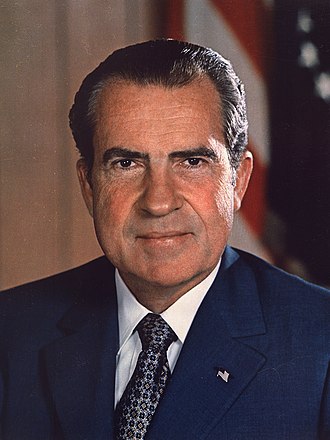
Richard M. Nixon served as the 37th President of the United States from January 1969 until his resignation in August 1974. In February 1971, he ordered the installation of a secret voice-activated taping system in the White House to preserve a historical record of his administration. Until the system's existence was revealed and dismantled in July 1973, the tapes captured Nixon directing major foreign policy initiatives, such as the opening to China, as well as his central role in the Watergate cover-up.
What Nixon talks about on the tapes
White House operations 4,718Presidential scheduling 2,225Public relations 1,784Presidential schedule 1,782Vietnam War 1,693Logistics 1,650Manolo Sanchez 1,626White House communications 1,400White House administration 1,399Presidential communication 1,243Henry Kissinger 1,191Foreign Policy 1,183
Conversations (21,010)
— Page 202 of 211President Nixon initiated a brief interaction with the White House operator to facilitate an outgoing call. The conversation serves primarily as a logistical exchange to connect the President with another party. No substantive policy discussions or significant administrative decisions were recorded during this brief administrative task.
President Richard M. Nixon held a brief, one-minute meeting with Thomas Hart in the Old Executive Office Building. Due to the lack of an available transcript or recording content, the specific topics discussed remain undocumented. Consequently, no substantive policy decisions or action items can be attributed to this exchange.
President Nixon initiates a request through the White House operator to be connected with Stephen B. Bull. This brief administrative interaction serves to facilitate direct communication between the President and his aide. No further policy or substantive matters are addressed during this brief exchange.
President Nixon consulted with a White House operator to facilitate a telephonic connection. This brief interaction served as a logistical bridge to initiate a separate call, linking the President to another party. No substantive policy discussions or policy decisions were recorded during this brief administrative exchange.
President Nixon instructed his aide, Stephen B. Bull, to revise the arrangements for an upcoming meeting with a delegation of journalists from the People's Republic of China. Nixon explicitly rejected a planned question-and-answer session in the Cabinet Room, favoring a brief, structured event in the Oval Office instead. The President directed that the visit be limited to a welcoming statement, a photo opportunity, and a quick departure to avoid informal dialogue or media scrutiny. He also requested that his barber appointment be scheduled for 3:30 pm.
President Nixon met with his aide Stephen B. Bull to discuss administrative arrangements and preferences regarding potential meetings. Nixon explicitly rejected a proposed format involving sitting down for a question-and-answer session, preferring a more informal or limited interaction. The conversation reflects the President's firm refusal to engage in specific procedural requests despite Bull's attempts to discuss them.
President Nixon, H.R. Haldeman, and Ronald Ziegler met to coordinate their strategy regarding ongoing investigations into the Watergate scandal and press relations. The participants discussed the potential risks of grand jury appearances, the challenges posed by the Special Prosecutor, and the necessity of maintaining a firm, combative stance against public accusations. Additionally, they reviewed concerns regarding the security and eventual disposition of the White House taping system and legal defense strategies for key staff members.
President Nixon met with Henry Kissinger and a delegation of journalists from the People's Republic of China to discuss the ongoing normalization of relations between the two nations. Emphasizing the importance of mutual communication, Nixon highlighted the role of the press in fostering understanding and reaffirmed his commitment to building a constructive relationship with Chinese leadership. During the visit, the President presented the delegation with commemorative pens and expressed his personal desire to visit China again during his second term.
President Nixon prepares for a meeting with General Higgins, who is en route from the State Department, to discuss scheduling matters involving Alexander M. Haig, Jr. The President indicates that the administration is awaiting a collective response from a committee. This brief coordination underscores the internal logistical planning occurring within the executive branch during this period.
President Nixon held a brief, preliminary meeting in the Oval Office to coordinate the arrival of key economic advisors, including George P. Shultz, Roy L. Ash, John B. Connally, and Arthur F. Burns. The interaction focused on confirming the attendance of these officials for a subsequent gathering. The meeting concluded quickly as the President waited for the remainder of the group to assemble.
President Nixon met with his economic advisors and staff to discuss growing concerns over inflation, the stock market, and the public's perception of the economy. The group analyzed the potential effectiveness of various measures, including a possible excise tax on gasoline, an investment tax credit, and a compulsory savings plan, while considering the political challenges of implementing such a package with Congress. Ultimately, the President decided against immediate, piecemeal action, opting instead to have his advisors develop a comprehensive economic package for review at a follow-up meeting.
President Nixon and Stephen B. Bull met to discuss the management of sensitive documents and the handling of specific files. The exchange centered on ensuring particular records were properly filed or moved, while briefly touching upon administrative concerns involving staff performance or conduct. The brief dialogue reflects the President's preoccupation with document control and the oversight of personnel matters.
President Nixon contacted the White House operator to issue a specific administrative request regarding his personal staff. He directed that Manolo Sanchez be summoned to the Lincoln Sitting Room. This brief communication focused solely on arranging this meeting with his aide.
President Nixon and Alexander Haig discuss ongoing personnel changes within the administration, specifically regarding the planned departure of Secretary of State William P. Rogers and the recruitment of Melvin R. Laird for a senior White House role. Haig confirms that Rogers prefers to delay the announcement of his exit to avoid complications related to the Watergate scandal. Meanwhile, the two coordinate a strategy to persuade Laird to accept a position as a domestic policy advisor, scheduling a meeting at Camp David to finalize the offer with support from Bryce Harlow.
President Nixon met with his aide Stephen B. Bull to coordinate logistical preparations for an upcoming diplomatic trip to Iceland. The discussion focused on reviewing essential background materials, summaries, and scheduling details for meetings with Icelandic officials and French President Georges Pompidou. This briefing served to organize the President’s itinerary and documentation needs ahead of his international travel.
President Nixon met with an unidentified individual to facilitate the reproduction of specific personal documentation. The discussion centered on copying a letter, with the President noting its significance as a contribution from his father. The interaction concluded with clear instructions regarding the handling and filing of these materials.
President Nixon met with his aide, Stephen B. Bull, to receive briefings and administrative materials required for his daily agenda. The discussion focused on coordinating upcoming tasks and organizing communications involving Press Secretary Ronald L. Ziegler. This interaction served primarily as a routine administrative briefing to ensure the President was prepared for his scheduled responsibilities.
President Nixon held a brief morning meeting in the Oval Office with an unidentified individual. Due to the lack of a transcript or descriptive records, the specific subject matter, policy discussions, or actionable decisions resulting from this engagement remain unknown. This interaction serves as a placeholder within the administrative record of the President's daily schedule.
President Nixon met with an unidentified individual to coordinate the arrival of Press Secretary Ronald L. Ziegler. The brief discussion centered on securing Ziegler's presence for a scheduled staff meeting. No substantive policy matters were recorded, as the dialogue focused primarily on administrative logistics.
President Nixon met with his personal aide, Manolo Sanchez, in the Oval Office to request specific writing instruments. The brief interaction centered on the President's preference for a particular type of pen. No significant policy discussions occurred during this exchange.
President Nixon met with Ronald Ziegler and Henry Kissinger to discuss press strategy, ongoing Watergate inquiries, and the management of presidential papers, before transitioning to a formal meeting with Huang Chen and Chi Ch’ao Chu of the People's Republic of China. During the session with the Chinese representatives, the President reaffirmed his commitment to strengthening US-PRC relations, emphasizing mutual sovereignty and strategic cooperation. Nixon also sought to assure the Chinese leadership that his upcoming summit with Leonid Brezhnev would not be detrimental to PRC interests, and he solicited their assistance in facilitating a peace agreement in Cambodia.
President Nixon and Henry Kissinger discuss plans to counter Watergate-related criticism by leaking records of extensive wiretapping conducted during the Kennedy and Johnson administrations. Nixon asserts that Bobby Kennedy ordered significantly more illegal wiretaps than the Nixon administration and intends to publish the names of those surveilled to expose political hypocrisy. Additionally, the pair briefly reviews the positive international press reception regarding the President’s recent foreign policy initiatives, including the Shanghai communique and Soviet relations.
President Nixon contacted the Camp David operator to facilitate an urgent telephone call to Alexander M. Haig, Jr. The brief exchange served purely administrative purposes to connect the President with his Chief of Staff. No substantive policy discussions took place during this recorded interaction.
President Nixon and Alexander Haig discuss a public relations strategy to control the narrative regarding historical government wiretaps of newsmen. Nixon instructs Haig to orchestrate a methodical, staged release of this information to make the disclosure appear deliberate and formal rather than spontaneous. The President emphasizes the need to secure specific names and data from Secret Service Director James J. Rowley, threatening his position if he fails to produce the files quickly, in order to use the information to intimidate political opponents and critics.
President Nixon contacted the Camp David operator to request that Manolo Sanchez bring vanilla to his location. This brief communication served a purely logistical purpose regarding the President's personal requests while at the retreat. No policy matters or significant administrative decisions were discussed during the exchange.
President Nixon instructed his personal valet, Manolo Sanchez, to proceed with a scheduled movie showing at Camp David without waiting for his immediate arrival. The President indicated that he intended to join the screening briefly but noted that he might retire for the evening early. No significant political or policy matters were addressed during this brief exchange.
President Nixon coordinated administrative communications while stationed at Camp David, requesting that the operator facilitate a return call from Press Secretary Ronald Ziegler upon his arrival at the White House. Additionally, the President initiated a request to speak with his daughter, Tricia Nixon Cox. This brief exchange reflects the ongoing management of internal staff scheduling and personal communications during the President's time away from the Oval Office.
President Nixon and his daughter, Tricia Nixon Cox, discussed the success of his recent diplomatic trip to Iceland and its role in advancing his "Year of Europe" policy, specifically noting productive meetings with French President Georges Pompidou. The conversation contrasted this international progress with the ongoing distractions of the Watergate scandal, which Nixon lamented dominated domestic press coverage. Tricia encouraged her father to maintain high-profile engagements, such as the upcoming visit by Soviet leader Leonid Brezhnev, to help shift public focus away from Watergate and alleviate political pressure.
President Nixon and Press Secretary Ronald Ziegler discussed the positive media reception of Nixon’s recent trip to France and the administration's strategy regarding ongoing Watergate coverage. The conversation focused on a plan to counter political pressure by releasing data on FBI wiretaps authorized during the Kennedy and Johnson administrations to create a defensive narrative. Nixon emphasized the importance of aggressive tactics, instructing Ziegler to coordinate with Alexander Haig to formalize the release of this information and identify the names of any targeted newsmen.
President Nixon contacted the Camp David operator to facilitate a telephone connection with H. R. “Bob” Haldeman. The exchange was strictly administrative, serving solely as a request to initiate communication with his former Chief of Staff. No further substantive policy matters or discussions were captured during this brief operational interaction.
President Nixon and H. R. Haldeman discuss the political fallout and public perception of recent televised testimony regarding the Watergate scandal. Haldeman reviews his own recent testimony and that of John Ehrlichman, emphasizing their use of categorical denials and strategic framing of national security concerns to distance the President from the cover-up. They assess the tactics of the Ervin Committee, potential immunity for witnesses like John Dean, and the ongoing efforts by special prosecutor Archibald Cox to manage the investigation.
President Nixon contacted the Camp David operator to facilitate an urgent telephone call to National Security Advisor Henry Kissinger. This brief administrative interaction served as a logistical bridge to connect the President with his primary foreign policy advisor. No substantive policy matters were discussed during this brief request.
President Nixon and Henry Kissinger discuss the favorable reception of Nixon's recent trip to Iceland, viewing it as a strategic success that elevates his stature and serves as a vital distraction from the ongoing Watergate scandal. Kissinger reports that the international press coverage is improving and that he plans to conduct background briefings to solidify the trip's accomplishments, particularly regarding the 'Year of Europe.' Meanwhile, Nixon characterizes the Watergate hearings as a partisan political fight and expresses confidence that the administration has weathered the worst of the fallout following the departures of H.R. Haldeman and John Ehrlichman. Additionally, the pair coordinates a media strategy for the upcoming announcement of a Vietnam agreement, ensuring they maximize positive publicity through simultaneous briefings with Congressional leaders.
President Nixon contacted the Camp David operator to facilitate an outgoing telephone call to his former chief of staff, H. R. Haldeman. This brief administrative interaction served as the necessary logistical step to connect the President with his former aide. No further policy or strategic matters were discussed during this specific exchange.
President Nixon and H. R. Haldeman briefly coordinate a potential outreach or follow-up with Hobart “Hobe” Lewis. Haldeman notes that Lewis is unavailable until the following evening, leading the President to suggest that Lewis contact him directly by telephone once he returns. No further immediate actions were required beyond this scheduling arrangement.
President Nixon contacted the Camp David operator to facilitate a telephone connection with his Chief of Staff, Alexander M. Haig, Jr. The brief exchange served as a routine administrative request to initiate communication between the President and his top aide. No substantive policy discussions took place during this brief operator-assisted call.
President Nixon and Alexander Haig met to coordinate White House strategy regarding ongoing political scandals, including the Watergate investigation and the Ervin Committee hearings. They discussed organizational changes to improve staff efficiency, the management of upcoming bipartisan congressional briefings, and efforts to uncover past wiretap records involving Robert F. Kennedy. Additionally, they strategized on how to counter potential indictments against top aides and discussed ways to dissuade political figures from publicly suggesting the President testify before the Senate committee.
President Nixon contacted the Camp David operator to request a return call from Press Secretary Ronald L. Ziegler. The operator informed the President that Ziegler was currently in a meeting with General Alexander M. Haig, Jr. Nixon directed the operator to notify Ziegler’s secretary so that the Press Secretary could contact him immediately upon the conclusion of that meeting.
President Nixon contacted the Camp David operator to initiate a telephone call to Charles W. Colson. This brief communication served solely as a logistical request to facilitate direct contact with a key political advisor. No substantive policy matters or further details were discussed during this exchange.
President Nixon instructed the Camp David operator to cease attempts to reach Charles W. Colson after the operator reported an inability to connect with him at his home or office. Nixon determined that further outreach was unnecessary at the time and opted to abandon the call for the moment. This brief exchange reflects the administrative management of the President's personal communications while he was working from Camp David.
President Nixon contacted the Camp David operator to facilitate a telephone connection with his Press Secretary, Ronald L. Ziegler. The brief exchange served as a routine administrative request to initiate official communication. No other substantive policy matters or decisions were discussed during this interaction.
President Nixon and Ronald Ziegler discuss a communications strategy to counter negative press coverage and leaks regarding the Watergate scandal. They evaluate the timing for releasing information about past wiretap records, hoping to identify potentially damaging precedents involving Robert F. Kennedy to deflect from current criticisms. The President affirms a 'moderate profile' strategy, agreeing with Ziegler that they should stop responding to individual leaks and instead rely on previous official denials, while also coordinating with congressional allies like Edward Gurney to challenge the Ervin Committee's proceedings.
President Nixon contacted the Camp David operator to facilitate a telephone connection with his Press Secretary, Ronald L. Ziegler. The brief exchange served as a routine administrative request to initiate official communication. No other substantive topics or policy discussions were addressed during this short operational call.
President Nixon and Ronald Ziegler discussed the White House response to recent press leaks, likely emanating from prosecutors and the Ervin Committee, which alleged that John W. Dean had numerous meetings with the President regarding the Watergate cover-up. Nixon firmly denied the timeline of these allegations, asserting that his meetings with Dean regarding the cover-up did not begin until March 21, 1973. To address the situation, the participants planned to coordinate a strategy with White House staff, including Leonard Garment and J. Fred Buzhardt, and considered having Haldeman, Ehrlichman, and Colson issue public statements to defend the President's record.
President Nixon contacted the Camp David operator to facilitate a telephone connection with H. R. “Bob” Haldeman. The brief exchange served as a logistical request to initiate communication with the former White House Chief of Staff. No further substantive policy matters were discussed during this brief administrative interaction.
President Nixon received a brief status update from the Camp David operator regarding the current location of H. R. Haldeman. The operator informed the President that Haldeman had recently departed for church services. No further business was conducted during this brief administrative exchange.
President Nixon contacted the Camp David operator to initiate a telephone call to his former special counsel, Charles W. Colson. This brief administrative interaction served as a logistical step to facilitate communication between the President and Colson. No further discussion or substantive policy deliberations occurred during this short exchange.
President Nixon and Charles Colson discussed their strategy for countering damaging allegations made by John Dean, who had recently claimed to the press and prosecutors that Nixon was aware of the Watergate cover-up as early as early 1973. Both men dismissed Dean's claims as an attempt to leverage a deal for immunity, citing his lack of evidence and the President's preoccupation with foreign policy matters like Vietnam during that period. Nixon decided to move forward with exclusive interviews with Howard K. Smith and The New York Times to personally address the accusations and challenge the media's framing of the story.
President Nixon contacted the Camp David operator to facilitate an outgoing telephone call. The brief administrative exchange focused on reaching Press Secretary Ronald L. Ziegler. No further substantive policy matters were discussed during this connection.
President Nixon and Ronald Ziegler discussed strategies for managing public and legal fallout following allegations from John W. Dean regarding the President's prior knowledge of the Watergate cover-up. They reviewed the timeline of Nixon's meetings with Dean to verify facts and establish a consistent defense, while weighing whether to utilize third-party surrogates to challenge Dean's credibility. The conversation concluded that the administration should avoid immediate direct confrontation with the press or Dean until they were fully prepared to neutralize his testimony or potential immunity bid.
President Nixon initiated a brief communication with the Camp David operator to request a telephone connection with H.R. Haldeman. This administrative interaction highlights the routine logistical coordination required for the President to conduct official business while stationed at the retreat. No further substantive policy matters were discussed during this brief exchange.
President Nixon and H.R. Haldeman discuss the escalating Watergate-related leaks and allegations stemming from John Dean and his legal team, which they characterize as a public campaign to build immunity. The two focus on establishing a factual chronology of their past meetings with Dean to counter media narratives, specifically addressing allegations involving hush money and clemency. Nixon and Haldeman agree to prioritize a consistent, truthful defense while avoiding reactive public denials, with Haldeman tasked to document a formal timeline of events to prepare for future public scrutiny.
President Nixon contacted the Camp David operator to facilitate a telephone connection with his Press Secretary, Ronald L. Ziegler. The brief exchange served as a routine administrative request to initiate official communication. No other substantive policy matters or critical developments were addressed during this short interaction.
President Nixon and Press Secretary Ronald Ziegler discuss the White House's public relations strategy regarding the escalating Watergate scandal and the ongoing efforts of John W. Dean III to leverage information for immunity. The President instructs his staff to avoid getting bogged down in daily rebuttals of Dean’s allegations, preferring to focus on substantive administration business and scheduled public appearances to project stability. Nixon directs H. R. Haldeman to compile a comprehensive chronology of events to clarify the President's lack of involvement in questionable activities, while Ziegler confirms the administration’s plan to delay public responses to avoid providing Dean with information that he could use in his testimony.
President Nixon initiated a brief administrative contact with the Camp David operator to request a telephone connection. The primary purpose of the communication was to facilitate a conversation with White House Chief of Staff Alexander M. Haig, Jr. No substantive policy discussions occurred during this exchange.
President Nixon and Alexander Haig discuss the administration's strategic response to ongoing Watergate allegations and the public's waning interest in the scandal. They agree to refrain from a direct White House rebuttal to John Dean's claims, favoring instead a focus on positive policy achievements, such as new economic initiatives and key personnel appointments, to project stability. Nixon expresses confidence that the administration has moved past the threat of impeachment or resignation and emphasizes that maintaining a busy, productive agenda is the best way to ensure political survival.
President Nixon contacted the Camp David operator to facilitate an outgoing call. The primary purpose of this brief communication was to request a connection to H.R. "Bob" Haldeman. No further substantive policy matters or official developments were addressed during this short exchange.
President Nixon and H.R. Haldeman coordinated a meeting to discuss the reconstruction of a Watergate event chronology. After briefly discussing weather conditions and a hand injury sustained by Haldeman, the two agreed to meet at 4:15 p.m. to review these sensitive materials. They ultimately decided to convene in the Lincoln Room to ensure the conversation regarding the timeline remained secure.
President Nixon initiates a brief request for the White House operator to connect him with Press Secretary Ronald L. Ziegler. The conversation serves strictly as an administrative directive to establish communication with his staff. No further substantive policy matters or tactical decisions are recorded during this exchange.
President Nixon and Ronald Ziegler discussed strategies to counter allegations made by former White House counsel John W. Dean regarding the Watergate cover-up. They focused on discrediting Dean's credibility through planted media columns, preparing a speech for Vice President Agnew, and providing information to Congressional allies like Hugh Scott. Nixon adamantly refuted specific claims about the number of meetings and alleged orders, while they planned to have Alexander Haig secure and review Dean's files to assess his activities. Additionally, the pair coordinated a shift in Ziegler’s public role and communications responsibilities to mitigate the political impact of the ongoing scandal.
President Nixon initiates a routine request to the White House operator to be connected with Press Secretary Ronald L. Ziegler. The brief communication serves solely as a logistical directive to facilitate a telephone call between the President and his senior aide. No further substantive policy matters or decisions are discussed during this administrative exchange.
President Nixon directs Press Secretary Ronald Ziegler to coordinate with Richard Moore regarding the details of past meetings involving John Dean. Nixon emphasizes that Moore’s participation in these discussions will serve to refute allegations that Dean was ordered to execute a cover-up. Ziegler confirms that he and J. Fred Buzhardt will meet with Moore to thoroughly review the record and establish a consistent narrative.
President Nixon contacted the White House operator to facilitate an urgent communication with Alexander M. Haig, Jr. The brief exchange served exclusively as a procedural request to place a telephone call to the White House Chief of Staff. No further substantive policy or political discussions occurred during this brief operator-assisted connection.
President Nixon received a brief update from the White House operator regarding the status of Alexander M. Haig, Jr., who was currently returning home. The operator offered to reach out to Haig at a restaurant, but the President declined the request. The exchange concluded without any further action or significant policy decisions.
President Nixon initiates a brief telephone request through the White House operator to be connected with Charles W. Colson. The call serves as a logistical bridge to facilitate direct communication with his former special counsel. No substantive policy matters or further developments are discussed during this brief exchange.
President Nixon received a brief update from the White House operator regarding a failed attempt to reach Charles W. Colson by telephone. The operator confirmed that Colson was not answering in his room, though she had left a message for him. No further substantive discussion or action was taken during this brief exchange.
President Nixon contacted the White House operator to facilitate a telephone connection with Press Secretary Ronald L. Ziegler. The conversation was strictly administrative, serving solely as a request to initiate communication with a key staff member. No further policy or strategic matters were discussed during this brief exchange.
President Nixon and Ronald Ziegler discussed concerns regarding John W. Dean’s unauthorized access to and potential copying of sensitive presidential files. Nixon directed Ziegler to secure copies of all of Dean’s files and notes pertaining to their meetings from February 27, 1973, onward. Emphasizing his ownership of the documents, the President insisted that these materials be provided directly to him to prevent them from reaching other staffers like J. Fred Buzhardt or Leonard Garment.
President Nixon initiates a request through the White House operator to be connected with his Chief of Staff, Alexander M. Haig, Jr. The brief communication serves strictly as an administrative request to facilitate a direct telephone conversation between the two men. No substantive policy matters or tactical decisions were discussed during this exchange.
President Nixon and Alexander Haig discuss the ongoing efforts to secure an appointment for Melvin Laird, noting Laird’s reluctance and the administration's use of political leverage, including the potential influence of John Connally. The conversation then shifts to the Watergate scandal, specifically regarding John Dean's notes on his meetings with the President. Nixon expresses a desire to secure and personally review these notes to assess the extent of Dean's allegations and plan a strategic response, including potential involvement from Hugh Scott.
President Nixon contacted the White House operator to coordinate a phone call with his close friend, Charles G. “Bebe” Rebozo. The operator informed the President that Rebozo was currently in transit to Florida, prompting Nixon to request that Rebozo contact him upon his arrival. The brief exchange served purely as a scheduling coordination between the President and his associate.
President Nixon and his close associate Bebe Rebozo spoke briefly to confirm Rebozo's safe arrival home following a weekend visit. The conversation included casual updates regarding the President’s time spent with Tricia Nixon Cox and Edward Cox. They concluded the call by expressing mutual anticipation for the President's upcoming trip to Rebozo's vacation home.
President Nixon initiates a brief administrative request to the White House operator to place an outgoing call to Press Secretary Ronald L. Ziegler. The interaction serves solely as a connection request to facilitate communication with a key staff member. No further substantive policy matters or tactical discussions are addressed during this brief exchange.
President Nixon and Press Secretary Ronald Ziegler discuss strategies to counter John W. Dean III’s allegations regarding a Watergate cover-up and his efforts to seek immunity. The President expresses skepticism about Dean’s work habits and record-keeping, while emphasizing that past discussions regarding executive privilege were matters of constitutional principle rather than criminal activity. To prepare a defense, Nixon directs Ziegler and Alexander Haig to examine Dean’s files to better understand the nature of the materials he may have removed or copied.
President Nixon initiated a brief telephone request through the White House operator to be connected with Press Secretary Ronald L. Ziegler. The conversation was purely administrative, serving as a directive to re-establish contact with Ziegler. No substantive policy matters or further developments were discussed during this short exchange.
President Nixon and Ronald Ziegler discussed the motivations behind John W. Dean III's recent actions regarding the Watergate investigation. Ziegler posited that Dean’s behavior was less about personal animosity toward the President and more a product of strategic pressure applied by his legal counsel for defense purposes. Nixon remained skeptical of this assessment, questioning whether Dean’s actions were inherently malicious.
President Nixon, Alexander Haig, and Ronald Ziegler met to discuss the mounting political pressure surrounding the Watergate scandal, specifically focusing on the allegations made by John Dean. They reviewed the status of evidence, including Dean’s personal records and meeting logs, and discussed the necessity of obtaining the original documents to challenge the veracity of Dean's claims. The President emphasized his desire to clarify the timeline of his interactions with Dean and directed staff to secure relevant files immediately to prepare a coherent White House response.
President Nixon and Alexander Haig held a brief telephone conversation to coordinate an urgent, in-person meeting regarding the handling of sensitive materials. The discussion specifically concerned the status of John W. Dean III’s files as they related to the ongoing Watergate investigation. The call concluded with the President directing Haig to come to his office immediately to finalize their strategy.
President Nixon and Alexander Haig met briefly in the Old Executive Office Building for a short, informal consultation. The dialogue was minimal and lacks substantial policy substance, serving primarily as a brief check-in between the President and his Chief of Staff. No significant decisions or action items were recorded during this one-minute interaction.
President Nixon and Alexander Haig coordinated efforts to manage internal documentation related to the Watergate scandal, specifically focusing on John W. Dean III’s files. Nixon instructed Haig to ensure J. Fred Buzhardt provided access to the original documents to facilitate a comprehensive review of the ongoing investigation. The conversation concluded with Haig arranging a follow-up meeting with Stephen B. Bull to further address these administrative requirements.
President Nixon and Alexander Haig met to strategize a defense against John Dean’s potential allegations by securing and auditing White House materials. Haig recommended that the President personally review relevant White House tapes to determine exactly what information Dean might possess and how to counteract his claims. The discussion also addressed the physical security of Dean’s files, with plans for J. Fred Buzhardt to examine the materials and retrieve personal papers.
President Nixon contacted the White House operator to facilitate a telephone connection with Stephen B. Bull. The brief communication served strictly as a procedural request to initiate this specific call. No policy matters or further developments were discussed during this exchange.
President Nixon consulted with a White House operator in his Old Executive Office Building suite to facilitate a telephonic communication. The brief exchange served as a logistical step to connect the President with another party, as evidenced by the redirection of the call to a subsequent recorded conversation. No substantive policy discussions occurred during this brief administrative interaction.
President Nixon directs Stephen B. Bull to promptly deliver and set up equipment required for the President to review White House tapes related to the Watergate scandal. Nixon expresses urgency, requesting that Bull also provide Ronald L. Ziegler’s activity log to assist in navigating the recordings. This exchange reflects the President’s systematic effort to audit the tapes and manage the information contained within them.
President Nixon consults with his aide Stephen B. Bull regarding the logistical setup of an audio playback system in his office. Expressing frustration over the burden of reviewing lengthy recordings, Nixon insists that the equipment be positioned to facilitate an efficient listening process. The conversation concludes with a brief reference to managing the specific daily logs and chronological sequences of the tapes requiring the President’s attention.
President Nixon contacted the White House operator to facilitate a telephone connection with Stephen B. Bull. This brief exchange served as a logistical request to initiate communication with a member of the President's staff. No substantive policy or political matters were discussed during this brief administrative interaction.
President Nixon and Alexander Haig discussed the administration's economic policy strategy, specifically critiquing current proposals for being insufficiently prepared for a formal briefing. Nixon expressed strong opposition to implementing a price freeze or a gas tax, directing Haig to remove these items from the economic package and separate energy issues from the broader policy plan. Additionally, the pair touched upon the President's schedule and the status of J. Fred Buzhardt's ongoing review of John Dean's Watergate-related files.
President Nixon consulted with a White House operator regarding the status or procurement of eight gold rings. The brief exchange focuses on this specific item, serving as a directive or follow-up related to the President's personal or official acquisitions. No further substantive policy matters were addressed during this short interaction.
President Nixon and Stephen Bull coordinate the retrieval of specific White House tape recordings from February 27, February 28, and March 1, 1973, for the President’s urgent review. Nixon emphasizes the need for strict secrecy, directing Bull to ensure the material is handled by as few people as possible. Additionally, the two finalize adjustments to the President's schedule, moving an economic meeting to the following day to accommodate the review process.
President Nixon and Stephen B. Bull discuss the procurement and review of specific administrative materials and audio recordings. Nixon emphasizes his preference for receiving these documents in bulk to expedite the review process and tasks Bull with coordinating their delivery. Additionally, the pair updates the President's schedule, rescheduling an economic meeting and adding a meeting with Siemens to the following day's itinerary.
President Nixon met with Alexander Haig to discuss personnel matters regarding Melvin Laird and to set firm parameters for an upcoming economic meeting. Nixon directed Haig to ensure the economic team finalized a plan that excluded both a wage-price freeze and a gas tax. Furthermore, the President ordered that all energy-related proposals be separated from the primary economic package to prevent policy overlap.
President Nixon met with Stephen B. Bull to review recordings of his February 1973 conversations with John Dean, focusing on technical aspects of tape playback and transcript preparation. During the session, the President listened to portions of the tapes and engaged in a wide-ranging discussion regarding the Watergate investigation, executive privilege, and the Ervin Committee's activities. Nixon also explored historical precedents for FBI surveillance and wiretapping during the Kennedy administration to contextualize his own challenges regarding federal investigations and political pressure.
President Nixon contacted the White House operator to facilitate a telephone connection with his aide, Stephen B. Bull. This brief exchange served exclusively as a procedural request to initiate communication with a member of the President's staff. No substantive policy discussions or further developments occurred during this brief operator-assisted call.
President Nixon reviewed recordings of past meetings with John W. Dean, III, as part of an ongoing process to assess the legal and political ramifications of the Watergate scandal. The discussion reflects the administration's preoccupation with investigations, sentencing expectations, and the management of sensitive information regarding various associates. Nixon expressed a desire to distance himself from specific controversial matters while navigating the potential legal risks posed by the ongoing inquiries.
President Nixon consulted with a White House operator to facilitate a telephonic connection. This brief interaction served administrative and communication purposes, typical of the President’s routine efforts to place outgoing calls. No substantive policy discussions or significant political developments occurred during this brief exchange.
A White House operator informs President Nixon that Mr. Boland is currently en route to the Oval Office for a scheduled meeting. This brief administrative notification serves to alert the President of the impending arrival of his visitor. No further substantive details regarding the purpose or outcome of the meeting are discussed during this call.
President Nixon met with his aide Stephen B. Bull to discuss the review, management, and long-term disposition of the White House taping system. The discussion focused on the practical logistics of reviewing recordings for historical value and sensitivity, including concerns regarding national security and the necessity of maintaining strict secrecy. The participants also addressed the operational oversight provided by the United States Secret Service and the quality of the audio recordings captured during the system's activation.
President Nixon and Stephen B. Bull met to review and organize the White House taping system, specifically addressing the management, technical quality, and cataloging of recorded conversations. The discussion focused on logistical concerns, including the identification of specific tape segments, the potential for audio enhancement, and the overall security and disposition of the recordings. This meeting reflects the administration's efforts to assess the scope and integrity of the archives amidst increasing scrutiny regarding the tapes.
President Nixon initiates a request through the White House operator to place an urgent call to Alexander M. Haig, Jr. This brief administrative interaction serves as a logistical bridge to facilitate direct communication between the President and his Chief of Staff. No further policy or substantive matters were discussed during this brief exchange.
President Nixon met in the Old Executive Office Building to review audio recordings of his previous discussions with John W. Dean, III. The primary focus of this session was to examine specific interactions related to the 1968 bugging incidents and the involvement of the Federal Bureau of Investigation. By reviewing these tapes, the President sought to manage the narrative surrounding the unfolding Watergate scandal and coordinate his administration's position regarding the ongoing investigations.