Haldeman, H. R. ("Bob")
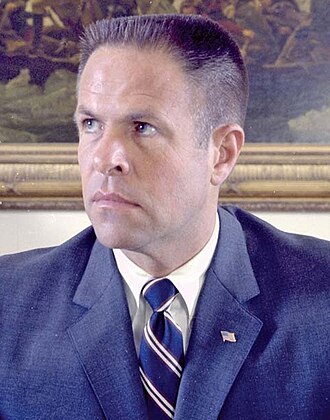
H. R. ("Bob") Haldeman served as President Richard Nixon's White House Chief of Staff from January 1969 until his resignation in April 1973. Acting as Nixon's primary gatekeeper and closest aide, Haldeman was a central figure during the White House taping period and is featured prominently in hundreds of recorded conversations. His tenure ended abruptly when he was forced to resign due to his deep involvement in the Watergate cover-up, most notably captured directing the obstruction of justice on the infamous "Smoking Gun" tape.
What Haldeman talks about on the tapes
Public relations 579Vietnam War 411Political strategy 286Foreign Policy 234Presidential scheduling 209Economic policy 202Henry Kissinger 195Congressional relations 176Press relations 161Watergate 159White House operations 151White House administration 145
Conversations (2,364)
— Page 17 of 24President Nixon, along with advisors Kissinger, Haldeman, Ehrlichman, and Colson, discussed several key issues. They addressed concerns about the Strategic Arms Limitation Treaty (SALT) and potential congressional amendments, particularly from Senator Jackson, and debated strategies for managing these reservations with the Soviets. The conversation also delved into economic matters, focusing on rising food prices, the potential for a price freeze on hides and other goods, and the political implications of these economic trends. Additionally, the group touched upon the Arthur Bremer assassination attempt and its potential political fallout, as well as the upcoming presidential schedule involving youth and women leaders.
President Nixon and H.R. Haldeman reviewed preparations for an upcoming meeting with various youth program representatives, including discussions on dress codes and the composition of the group. Nixon also coordinated logistics for a personal trip to the Thomas B. McCabe, Jr. residence with Manolo Sanchez and Tricia Nixon Cox. The interaction concluded with brief administrative arrangements and informal social exchanges.
President Nixon and H. R. Haldeman met to discuss political strategy and administration initiatives, including the transition to a post-Vietnam economy and foreign policy successes. Much of the conversation focused on managing the political fallout from the Watergate scandal, specifically addressing the legal and public relations implications of the Dwayne Andreas campaign contribution and potential testimony from Jeb Stuart Magruder. Nixon and Haldeman also reviewed the President's upcoming schedule, including the Republican National Convention and strategies for handling media questions regarding Vietnam and campaign finances.
President Nixon and H. R. Haldeman discussed strategies to bolster the administration's outreach to Polish-American groups, specifically leveraging Secretary of State William P. Rogers's credibility with this demographic. Nixon directed that Rogers coordinate a meeting with John Cardinal Krol, involving Assistant Secretary for Europe Walter J. Stoessel, Jr., to foster positive relations. The President also emphasized that these efforts should be publicized through the Polish press and college media to maximize political impact, tasking Haldeman with coordinating the plan with Charles Colson.
President Nixon met with Charles Colson and H. R. Haldeman at Camp David to dictate a memorandum outlining specific strategic directives. The participants focused on administrative priorities and internal management tasks, though the specific substance remains classified due to withdrawn material. No further actions or developments were recorded as the session centered on the formalization of these presidential instructions.
President Nixon and H.R. Haldeman discuss the drafting and tone of a forthcoming speech in Detroit, focusing on the importance of neighborhood schools. Nixon intends to frame his opposition to forced busing through personal anecdotes about his own schooling, emphasizing the school's role as a community center rather than delivering a purely aggressive attack. He requests that speechwriter Raymond K. Price, Jr. draft the address with a subtle but clear stance on the issue to ensure the administration's position is understood without further exacerbating public divisions.
President Nixon and H.R. Haldeman discuss the drafting of a speech centered on the importance of neighborhood schools and opposition to forced busing. Nixon advocates for a subtle, personal tone that frames neighborhood schools as vital community hubs while acknowledging differing opinions on the issue. He suggests that advisor Ray Price draft the remarks to express this position without appearing overly aggressive, while ensuring the President's firm stance against busing remains unambiguous.
President Nixon met with key staff members, including H. R. Haldeman, John Ehrlichman, and Henry Kissinger, to coordinate administration messaging and political strategy ahead of the Republican National Convention. The discussion focused on managing media relations, attacking political opponent George McGovern—specifically regarding his potential appointment of Ramsey Clark as FBI director—and handling the resignation of Sargent Shriver. The President also reviewed progress on revenue sharing legislation, the administration's stance on busing, and ongoing diplomatic efforts concerning Vietnam and U.S.-Soviet relations.
President Nixon and H. R. Haldeman discuss media strategy and public relations efforts regarding the administration’s political opposition. They evaluate recent statements by William P. Rogers, particularly his criticisms of Sargent Shriver and Ramsey Clark, while planning to have John Mitchell address the FBI-related issues to achieve greater impact than an alternative spokesperson. Additionally, the pair briefly reviews the positive performance of the stock market, which saw a significant point increase that day.
President Nixon and H.R. Haldeman discuss the media reception of recent political messaging and the strategic necessity of repetitive public attacks regarding the FBI investigation. They specifically evaluate the political optics of Roger [likely William P. Rogers] and the potential involvement of Clark MacGregor in managing these narratives. The conversation emphasizes the importance of controlling the public discourse by consistently reinforcing key talking points to ensure they gain sufficient traction.
President Nixon met with Donald and Mrs. Donald McI. Kendall to dictate a personal letter reflecting on his relationship with their family. Following this, he dictated a memorandum to H. R. Haldeman regarding a collection of eulogies. The discussion focused on drafting an introduction for the collection concerning Dwight D. Eisenhower, specifically highlighting the formal shift in their professional relationship after Nixon's inauguration. Nixon directed Haldeman to incorporate these anecdotes into the text and decided against further inquiry into Eisenhower's final conversations.
In this recording, President Nixon dictates a series of memoranda to H. R. Haldeman regarding various administrative and political matters, including scheduling logistics and personnel concerns at HUD. The President outlines a strategy to challenge George McGovern’s call for debates by highlighting McGovern's past contradictory stance on presidential debates during the 1964 election. Additionally, Nixon instructs Haldeman to develop a media narrative emphasizing his personal commitment to unscheduled, direct public contact as a safer and more effective alternative to the guarded approach taken by his predecessor, Lyndon B. Johnson.
President Nixon and H. R. Haldeman coordinated logistical arrangements for their departure from Camp David, focusing on managing press exposure by staggering helicopter flights for staff and family. They also discussed the impending resignation of HUD Secretary George Romney, with Nixon criticizing Romney’s handling of the situation and instructing Haldeman to have John Ehrlichman contact him for further guidance on the matter. The conversation reflects the President's desire to minimize negative media coverage while managing personnel issues similar to the prior departure of Wally Hickel.
President Nixon and H.R. Haldeman discuss the logistical arrangements for transporting staff and family members, specifically his children David and Julie, via helicopter from Camp David. The conversation addresses the protocol for managing the press presence during these departures to ensure order. Additionally, the pair briefly touches upon the need to caution an associate, referred to as John, regarding the behavior of an undisciplined individual named George.
President Nixon met with his senior advisors to coordinate campaign strategy for his re-election, specifically addressing the tone of his upcoming acceptance speech and public appearances. The group discussed countering Senator George McGovern's policies, particularly regarding Vietnam and welfare, while also devising a public relations strategy to address the ongoing Watergate investigation. Nixon emphasized the need for a strong, combative campaign posture that avoids defensive positioning and effectively utilizes his cabinet members to attack political opponents.
President Nixon held an Oval Office meeting with key staff members and guests, including First Lady Pat Nixon, H.R. Haldeman, John Ehrlichman, and John Dean. While the majority of the discussion is classified as a withdrawn item, the session focused on administrative scheduling matters involving John Ehrlichman. The meeting concluded after approximately 23 minutes with the departure of Alexander P. Butterfield and his associates.
President Nixon met with H. R. Haldeman and Daniel P. Moynihan to discuss the conceptual framework for his potential second term. The conversation centered on the necessity of integrating foreign and domestic policy into a coherent "mosaic" to restore order and establish a long-term world view. They also addressed the challenges of recruiting intellectual personnel, the importance of merit-based appointments over demographic quotas, and the strategic need to articulate a new, broadly appealing Republican philosophy.
President Nixon, H.R. Haldeman, and Daniel P. Moynihan gathered in the Oval Office to discuss the intellectual composition of the administration and the strategic landscape of the 1972 presidential campaign. Moynihan argued that the current election presented a stark ideological divide compared to previous bipartisan cycles, positioning Nixon as a moderate unifier for a majority of Americans against the extremism of his opponents. The participants also touched upon administrative personnel challenges, the role of intellectuals in government, and briefly addressed the burgeoning Watergate controversy with dismissive humor.
President Nixon dictated a memorandum to H.R. Haldeman regarding political strategy surrounding the Vietnam peace negotiations. The discussion focused on undermining the credibility of Sargent Shriver by highlighting that he was intentionally excluded from past Paris negotiations by Lyndon B. Johnson. Nixon further strategized to use John Connally’s perspectives to amplify criticisms of Shriver’s public rhetoric and alignment with former officials like Dean Rusk, William Averell Harriman, and Cyrus Vance.
President Nixon and H. R. Haldeman consulted briefly to coordinate the agenda for their upcoming meeting. The primary focus of the discussion centered on preparations for the President’s acceptance speech at the upcoming Republican National Convention. This exchange served as a logistical bridge to ensure both parties were aligned on the strategic priorities ahead of the event.
President Nixon and H. R. Haldeman briefly conferred regarding the status of staff member Pat Buchanan's current work assignments. The President inquired whether Buchanan had been adequately utilized, leading to a discussion about his ongoing responsibilities related to speechwriting. Haldeman confirmed Buchanan's focus on speech-related projects, and the two agreed to touch base again later that evening.
President Nixon and H.R. Haldeman met to coordinate political strategy, focusing on discrediting Sargent Shriver's claims regarding Vietnam peace negotiations by questioning his honesty and knowledge of the process. They also discussed administrative business, including the signing of a federal firefighters' bill and the planning of the President’s upcoming acceptance speech. Finally, the group reviewed the timing of impending Watergate-related indictments in relation to the Republican National Convention to minimize political fallout.
President Nixon met with his personal aide Manolo Sanchez and Chief of Staff H.R. Haldeman at Camp David to discuss the organization and handling of sensitive materials for a private file. The primary objective of the session focused on administrative oversight regarding confidential documentation. The meeting concluded with instructions for the departure of Sanchez and Haldeman before the evening of August 15.
President Nixon dictated a memorandum to H. R. Haldeman outlining a strategic public relations counter-attack against George McGovern during the 1972 campaign. The discussion centered on exploiting McGovern’s past supportive comments regarding Ramsey Clark to portray the Senator as sympathetic to communists and critical of American interests. Nixon directed the administration to coordinate with speakers, newspaper editors, and conservative groups to amplify these criticisms and highlight the contrast between McGovern’s positions and the legacy of J. Edgar Hoover.
President Richard Nixon and H. R. Haldeman engaged in a brief telephone discussion while at Camp David. As the content of this conversation was withdrawn from the archival record, the specific topics and actionable decisions remain classified or unavailable for historical review. The exchange reflects the routine consultation between the President and his Chief of Staff during this period of the administration.
President Richard Nixon met with H. R. Haldeman at the Aspen Lodge to discuss internal administrative matters and sensitive White House business. The brief consultation served to align the President and his Chief of Staff on ongoing strategic priorities during their stay at Camp David. Although the specific details remain restricted, the dialogue focused on high-level executive management and the coordination of the administration's current agenda.
President Nixon and H. R. Haldeman discussed their intense dissatisfaction with a recent, aggressive press interview of First Lady Pat Nixon, which the President characterized as an unfair 'inquisition.' Consequently, Nixon ordered the immediate cancellation of a planned interview between National Security Advisor Henry Kissinger and CBS correspondent Marvin Kalb, vowing to shift future media opportunities to other networks to punish CBS. The two also coordinated the President’s potential attendance at an upcoming Olympic team reception at the White House while reviewing security concerns regarding the event.
President Nixon and H. R. Haldeman discuss a hostile interview conducted by a reporter with Pat Nixon, expressing significant anger over the nature of the questions. Incensed by the perceived bias and personal attacks, the President orders Haldeman to instruct Ron Ziegler to cancel an upcoming CBS appearance by the reporter. Nixon further expresses his intent to retaliate against CBS by restricting their access in favor of other networks.
President Nixon and H. R. Haldeman discuss an upcoming interview given by First Lady Pat Nixon to reporter Marya McLaughlin. Nixon requests that Press Secretary Ron Ziegler review the transcript of the interview to provide a professional evaluation. The pair also touches upon Julie Nixon Eisenhower’s critical reaction to the nature of the questions posed to her mother during the session.
President Nixon and H. R. Haldeman met at Camp David to coordinate administrative and logistical tasks regarding White House staff. The discussion centered on the President's request for information related to Julia, a specific individual mentioned in the transcript. No broader policy decisions were reached during this brief exchange.
President Nixon and H. R. Haldeman consulted at Camp David regarding political messaging, scheduling adjustments, and the administration's response to Senator George McGovern's recent foreign policy controversies. They analyzed the political fallout of reports regarding Pierre Salinger's unauthorized meeting with North Vietnamese negotiators and discussed the strategic timing for criticizing McGovern’s approach to the Vietnam War. Ultimately, Nixon decided to delay a formal administration attack on McGovern to keep the focus on positive campaign themes during their upcoming convention, while directing his staff to gather further strategic input from key allies.
President Nixon and H.R. Haldeman discuss campaign strategy and the political fallout surrounding the Vietnam War as the 1972 election season intensifies. The two evaluate the risks of attacking political opponents, citing the negative precedent of the Muskie campaign, and weigh whether to highlight the war or maintain a more positive public posture. Ultimately, Nixon decides to delay a definitive response to opposition criticism until Henry Kissinger returns from negotiations to better assess the state of the conflict.
President Nixon and H. R. Haldeman discussed campaign strategy, focusing on utilizing John Connally to critique George McGovern's position on Vietnam. They determined that Connally, rather than the White House or Nixon himself, should deliver a measured, bipartisan-themed speech at a Veterans of Foreign Wars event to avoid a perceived political attack. The conversation also covered personnel moves, including a potential government post for Tom Johnson, and emphasized keeping the White House staff at arm's length from direct campaign rhetoric, while coordinating media access to favor cooperative journalists over CBS.
President Nixon and H. R. Haldeman discussed strategies for countering political attacks by characterizing the opposition's campaign as a "low-road" effort defined by smear and fear tactics. They deliberated on potential speakers for a speech promoting bipartisanship in foreign policy, ultimately favoring John Connally to deliver a message emphasizing that peace should not be treated as a partisan political issue. Additionally, Nixon instructed that White House spokespeople, including Ron Ziegler, should remain distanced from these public rebuttals to maintain an elevated, non-partisan posture.
President Nixon and H. R. Haldeman discuss the drafting of an upcoming American Legion speech, specifically requesting the inclusion of a Harry S. Truman quote to highlight a bipartisan commitment to national interests. The conversation then shifts to the administration's response to Pierre Salinger’s unauthorized visit to North Vietnam, which the President views as a dangerous interference in sensitive peace negotiations. Nixon directs Haldeman to coordinate with Alexander Haig and Ron Ziegler to publicly frame the incident as a serious matter that could jeopardize ongoing diplomatic efforts led by Henry Kissinger.
President Nixon and H. R. Haldeman discuss the drafting of an upcoming speech and the strategic framing of ongoing sensitive negotiations. Nixon emphasizes that external interference could jeopardize diplomatic progress and instructs Haldeman to consult with Alexander Haig rather than other subordinates on the matter. The pair also addresses public messaging and the importance of maintaining a controlled narrative to avoid negative editorial backlash.
President Nixon and H. R. Haldeman convened at Camp David to strategize on political messaging regarding George McGovern's campaign, specifically the potential diplomatic interference caused by McGovern's contacts with North Vietnamese officials. They reviewed Press Secretary Ron Ziegler’s public handling of the issue, commending his framing of the situation as a security risk given McGovern’s refusal to accept formal briefings on current peace negotiations. Additionally, the President praised Charles Colson for his keen identification of political vulnerabilities, including his timely focus on farm parity issues.
President Nixon and H.R. Haldeman met at Camp David to deliberate on the strategy, structure, and thematic content of the President's upcoming acceptance speech. They evaluated various drafts from speechwriters, contrasting the relative merits of reciting a list of administrative accomplishments versus presenting a broader ideological vision that contrasts Nixon’s "new majority" with the policies of George McGovern. The pair also discussed the political climate, including public polling data, the impact of crowd sizes at campaign events, and the political implications of their relationship with various demographic and intellectual groups.
President Nixon and H.R. Haldeman discuss the drafting of Nixon's forthcoming acceptance speech, focusing on how to frame his administration's accomplishments against George McGovern's platform. Nixon expresses frustration with staffer David Gergen's inconsistent tax cut data, instructing Haldeman to confirm that the administration has enacted the largest individual tax cuts in history to provide a strong counter-narrative to McGovern’s budget proposals. They also weigh whether to utilize staffers John K. Andrews, Jr. and Aram Bakshian to refine the speech, ultimately debating a shift away from a simple 'laundry list' of achievements in favor of a thematic contrast between their vision for the nation and McGovern’s perceived assault on core institutions.
President Nixon and H. R. Haldeman discuss the political messaging and economic data required for the administration's reelection platform. Nixon expresses frustration with technical, bureaucratic responses from his staff, specifically regarding tax cut figures, and directs Haldeman to assign someone with political intuition to verify if his administration truly provided the largest tax cuts in history. The conversation also touches upon the President's discomfort with self-congratulatory rhetoric, as he and Haldeman debate the effectiveness of campaign materials cataloging administration accomplishments.
President Nixon and H. R. Haldeman discuss the preparation of the President's upcoming acceptance speech, specifically evaluating the writing contributions of John K. Andrews, Jr. and Aram Bakshian. Nixon expresses concerns over the overly religious and "sappy" tone of Andrews's drafts, mandating that he adopt a sharper style similar to Bakshian's. The pair decides to have Andrews adjust his approach to meet Nixon's requirements, with plans for him to join the President's team around the time of Ronald Reagan's scheduled visit.
President Nixon and H. R. Haldeman briefly discussed the performance and professional shortcomings of an unidentified subordinate. Nixon expressed frustration with the individual's lack of precision and rigorous work ethic, ultimately determining that the person should be replaced. The pair agreed there was no immediate urgency to finalize the staff departure.
President Nixon met with Rose Mary Woods and H. R. Haldeman at Camp David to prepare for his upcoming presidential acceptance speech at the Republican National Convention. The President critiqued the pacing and political orientation of his speechwriting staff, specifically discussing the working relationship between Ray Price and John K. Andrews, Jr. Additionally, Nixon reviewed administrative matters, including staff performance, political appointments, and recent correspondence regarding his administration.
President Nixon and H.R. Haldeman discuss the drafting process for the President's upcoming speech to Congress following his Soviet Union trip. They evaluate the collaborative dynamic between speechwriters John K. Andrews, Jr. and Raymond K. Price, Jr., noting that Andrews provides speed while Price offers greater experience and polish. Nixon decides to have Andrews join him at Camp David first for initial work, with Price scheduled to arrive the following day to assist with final revisions and organization.
President Nixon and H. R. Haldeman coordinated the logistics for an upcoming in-person meeting at Camp David. The brief exchange served to finalize the President's schedule for the evening. No substantive policy matters were discussed as the conversation was strictly limited to operational planning.
President Nixon and H. R. Haldeman met at the Aspen Lodge at Camp David to conclude outstanding administrative or policy discussions. The brief exchange reflects a desire to finalize ongoing business before concluding their session. No specific policy decisions were reached, as the conversation served primarily as a transition to wrap up their agenda.
President Nixon and H.R. Haldeman met at Camp David to finalize the messaging and structure of the President's upcoming convention acceptance speech. They discussed the inclusion of specific themes, such as a "new American majority" and faith in the American system, while weighing the risks of appearing overly aggressive toward Democratic opponent George McGovern. The discussion also addressed the logistical management of staff and advisors at Camp David and the strategic benefit of maintaining high-level, statesman-like rhetoric to contrast with the Democratic platform.
President Nixon consulted with H. R. Haldeman regarding the incorporation of his personal views on education reform into his forthcoming acceptance speech. Expressing frustration with standard platform rhetoric and the influence of the National Education Association, Nixon instructed Haldeman to bypass the Domestic Council if necessary to ensure his specific ideas and critiques were integrated. He emphasized a need to re-examine the education system while including supportive remarks about individual teachers.
President Nixon instructed H. R. Haldeman to secure substantive, bold proposals for education reform to be integrated into administration policy. The President expressed a preference for sourcing these ideas from the Domestic Council or, if necessary, through consultation with Ken Cole. Haldeman acknowledged the directive, marking a push for the development of concrete educational initiatives.
President Nixon and H. R. Haldeman coordinated the content for the President’s upcoming acceptance speech, specifically regarding education and busing. Nixon requested that Daniel P. Moynihan draft a provocative 700-800 word segment on education that challenges the educational establishment while limiting the busing section to avoid excessive focus on the topic. The President emphasized a concise speech length and requested to review input from Billy Graham while directing staff to avoid preparing lengthy, unnecessary analyses.
President Nixon and H. R. Haldeman discuss the strategic framing of an upcoming speech, specifically focusing on balancing discourse on education and busing. Nixon aims to avoid appearing overly focused on busing to maintain broad national appeal while still addressing concerns relevant to the Michigan press. He directs Haldeman to prioritize brevity and substance, expressing a desire to avoid distractions and maintain efficient use of his time and intellectual focus.
President Nixon and H.R. Haldeman discuss the inclusion of the Tanya Savicheva story in the President's upcoming acceptance speech, debating whether it should be used following a similar presentation in a convention film. Nixon expresses frustration with his writing staff's desire to minimize the emotional impact of the story, arguing that the repetition of such narratives is essential for effective communication. Ultimately, Nixon decides to proceed with the inclusion of the story, dismissing concerns that its repetition would be poorly received by the public or the press.
President Nixon and H. R. Haldeman discuss the potential inclusion of the story of Tanya Savicheva, a victim of the Siege of Leningrad, in upcoming presidential communications. Nixon expresses frustration that his staff is overly focused on dry, analytical messaging and resists using emotional, human-interest narratives. The President questions whether his writing staff is capable of incorporating such poignant storytelling and directs Haldeman to assess whether any personnel on the team are capable of executing this rhetorical approach.
President Nixon directed H. R. Haldeman to ensure follow-up on an investigation involving Lawrence F. O'Brien, Jr. Nixon expressed concern that Treasury Secretary George P. Shultz might neglect the matter and emphasized the need for active oversight regarding the Internal Revenue Service's involvement. Haldeman committed to addressing the issue immediately following his recent consultation with John Ehrlichman.
President Nixon and H. R. Haldeman met briefly at Camp David to coordinate the status of an ongoing follow-up regarding Lawrence O'Brien. Nixon expressed a clear desire to ensure the matter was being handled diligently and cautioned against any lapse in progress. Haldeman confirmed the task was being tracked to ensure the administration maintained control over the situation.
President Nixon and H.R. Haldeman coordinated the logistics for a meeting with Henry Kissinger and Secretary of State William P. Rogers at Camp David. The discussion also focused on a tax investigation involving Lawrence F. O'Brien, Jr., specifically regarding payments O'Brien and his son received from Howard Hughes. Haldeman confirmed that O'Brien’s request for a postponement was denied and that administration officials, including Roger Barth, were actively reviewing O'Brien's financial records for political leverage.
President Nixon and H. R. Haldeman coordinate scheduling for upcoming meetings with Henry Kissinger and Secretary of State William Rogers. The discussion shifts to managing ongoing investigations, specifically involving Howard Hughes and the scrutiny of financial transactions and potential tax implications. They assess the legal and public relations strategy to ensure the administration remains insulated from these investigative matters.
President Nixon, H. R. Haldeman, and Henry Kissinger met at Camp David to strategize on political messaging and prepare for the upcoming Republican National Convention. The primary focus was refining the President's acceptance speech to ensure a strong, nonpartisan tone that highlighted administration accomplishments while contrasting them with the opposition. They also finalized the logistics of Kissinger’s attendance at the convention, aiming to utilize his high profile while managing potential media inquiries regarding sensitive foreign policy and Vietnam negotiations.
President Nixon and H. R. Haldeman met at Camp David to deliberate on the content, tone, and emotional impact of Nixon's upcoming 1972 acceptance speech. The discussion focused on refining the closing remarks, specifically debating the effectiveness of incorporating the story of Tanya Savicheva—a symbol of wartime suffering—to evoke a sense of global peace and national unity. The pair sought a narrative that contrasted Nixon’s vision for American leadership with that of his opponent, George McGovern, ultimately aiming for a message that would inspire the public while avoiding the perceived emotional voids in drafts provided by Raymond Price and others.
President Nixon and H. R. Haldeman met to review and refine the draft of the President's upcoming acceptance speech. The discussion focused on balancing a strong defense posture with the pursuit of international peace, specifically referencing the Tanya Savicheva story and various domestic programs. They also strategized on rhetorical structure and the integration of historical references, including past speeches and religious themes, to strengthen the speech's impact.
President Nixon and H. R. Haldeman consulted regarding revisions to the President’s forthcoming acceptance speech. Nixon confirmed that he had implemented specific structural changes to the text and requested that Haldeman review the updated version for final approval. The two agreed to meet at Laurel Cabin to facilitate the review process.
President Nixon and H. R. Haldeman briefly conferred at the Aspen Lodge to coordinate a recent suggestion regarding administrative or scheduling arrangements. The participants discussed the implementation of a shift in strategy or personnel placement, with Nixon confirming his approval of the adjustment. The conversation served as a quick check-in to ensure alignment on logistical modifications.
President Nixon and H. R. Haldeman convened in the Old Executive Office Building for a brief meeting. The vast majority of this session remains unavailable due to the withdrawal of personal or sensitive materials. Consequently, no substantive policy decisions or dialogue details are preserved in the public record for this interaction.
President Nixon and H. R. Haldeman convened in the Old Executive Office Building to conduct a brief administrative consultation. The discussion focused on internal White House management and the coordination of presidential priorities during the ongoing 1972 campaign season. No specific policy decisions were recorded during this brief five-minute interaction.
President Nixon and H. R. Haldeman engaged in an extensive review and refinement of the President's upcoming acceptance speech. The discussion focused on balancing the tone of the address, incorporating themes of peace and national leadership, and finalizing specific anecdotes, such as the story of Tanya Savicheva, to emphasize his foreign policy achievements. Additionally, they addressed campaign finance reporting issues involving Maurice Stans and the General Accounting Office, as well as strategies for highlighting the reduction in Vietnam casualty rates compared to the previous administration.
President Nixon and H. R. Haldeman met in the Old Executive Office Building to discuss administrative matters and potential staffing adjustments. The conversation focused on internal White House management and high-level personnel concerns. Due to the lack of an available transcript and the presence of a withdrawn segment, the specific directives resulting from this discussion remain classified or inaccessible.
President Nixon and H.R. Haldeman met to discuss strategies for the upcoming presidential acceptance speech, focusing on contrasting Nixon's platform with George McGovern's national defense positions. The participants evaluated the use of teleprompters in political delivery, analyzing McGovern’s technique compared to Nixon’s, while also processing a backlog of legislative bills. Additionally, the President reviewed the visual impact of wearing flag lapel pins during television appearances, ultimately deciding against their use due to visibility concerns.
President Nixon met with Henry Kissinger, H.R. Haldeman, and other staff to coordinate the administration's response to the murders of Israeli athletes at the Munich Olympics, prioritizing public diplomacy and private US support for Israel. The participants also strategized on the 1972 presidential campaign, focusing on delegating attacks against George McGovern to surrogates while emphasizing positive administration accomplishments. Finally, the group discussed ongoing foreign policy objectives, including Kissinger’s upcoming trip to Moscow and potential Vietnam peace negotiation tactics to ensure favorable optics for the election.
President Nixon met with H.R. Haldeman, John Connally, and other staff members to discuss political messaging and administrative strategy ahead of the 1972 election. The group coordinated the President's upcoming speech to the International Monetary Fund and formulated a specific rebuttal to George McGovern's tax proposals by emphasizing the administration's own record of tax relief. Additionally, the President discussed potentially recruiting Eugene McCarthy for a federal role and reviewed the political benefits of ongoing Soviet and Japanese grain and trade deals.
President Nixon met with H.R. Haldeman and John Connally to discuss political strategy, campaign media coverage, and administrative matters. They reviewed a sensitive political intelligence report regarding a potential issue in Fort Wayne, with Nixon emphasizing the need for discretion and strict containment of the information. Additionally, the President discussed his desire for a concise daily political news summary and agreed with Connally’s assessment that the administration should avoid outlining specific second-term programs to prevent providing political opponents with targets to attack.
President Nixon and H. R. Haldeman discussed logistics for a memorial service following the terrorist attack on Israeli athletes at the Munich Olympic Games. They coordinated the President’s attendance at a planned service, specifically addressing the timing and location requirements. The discussion focused on finalizing arrangements for a Catholic mass to be held at the U.S. Capitol.
President Nixon met with H.R. Haldeman and John Ehrlichman to discuss several political and administrative matters, including the handling of a recent terrorist attack at the Munich Olympics and public reaction to potential presidential appearances at related interfaith services. The group addressed strategies for undermining the organization Common Cause through tax investigations and political pressure. Additionally, Nixon directed the administration to provide Secret Service protection for Senator Edward Kennedy, while simultaneously tasking his aides with ensuring the detail gathered intelligence on Kennedy’s personal conduct and travel habits.
President Nixon met with H. R. Haldeman and later Ronald L. Ziegler to discuss campaign strategy, press relations, and upcoming economic messaging. The President expressed frustration with the administration's communication failures regarding tax policy, specifically the Value-Added Tax (VAT), and directed his staff to clarify that there would be no tax increases in his second term. Additionally, they reviewed recent polling data on the Vietnam War—which showed strengthening support for Nixon’s policies over George McGovern’s—and discussed how to frame upcoming press conferences to pivot toward attacking McGovern’s economic proposals.
President Nixon met with George Shultz, Arthur Burns, and John Ehrlichman to discuss economic strategy, focusing on tax reform and property tax relief. The group evaluated the political risks of pursuing tax changes before the election, debating how to frame their proposals without being perceived as increasing taxes. Additionally, the President and H. R. Haldeman discussed administrative logistics, including the potential for a cruise on the Sequoia to discuss strategy and the implementation of Secret Service protection for Senator Edward Kennedy.
President Nixon and H.R. Haldeman met to discuss ongoing political crises, including the Watergate investigation, the fallout from the Soviet grain deal, and the management of their 1972 reelection campaign. Nixon instructed Haldeman to develop a strategy for discrediting political opponents and hostile media figures, specifically tasking Charles Colson with building a loyalist 'Nixon-Washington establishment' after the election. The conversation also covered personnel shifts within the Executive Office, the management of Cabinet meetings, and the potential political impact of the murder of Israeli athletes at the Munich Olympics.
President Nixon and H.R. Haldeman briefly conferred to coordinate the President's upcoming schedule. The primary focus of the discussion was the planning and logistics for an impending meeting with Maurice H. Stans. No further policy decisions were recorded during this brief administrative exchange.
President Nixon met with H. R. Haldeman and Maurice Stans to evaluate the 1972 re-election campaign's status, discussing polling data, fundraising, and strategic responses to George McGovern. The participants reviewed campaign finance regulations, media advertising efforts, and the political impact of the Watergate scandal on the Washington establishment. Additionally, they coordinated the President's upcoming schedule, including the production of campaign-related audio recordings and outreach to business and labor leaders.
H. R. Haldeman engaged in a discussion with an unidentified individual regarding the political realignment of the United States. The conversation focused on strategic considerations and potential shifts in the national political landscape. No specific actions or definitive outcomes were recorded beyond the thematic exploration of this realignment.
H. R. Haldeman contacted the Camp David operator to facilitate a telephonic connection with his aide, Lawrence M. Higby. The brief interaction served exclusively as a logistical request to initiate this communication. No further policy or administrative matters were addressed during this exchange.
H. R. Haldeman coordinates with Lawrence M. Higby to retrieve specific political intelligence from the White House files while stationed at Camp David. The discussion focuses on securing a political report authored by Kevin Phillips for Haldeman's review. Higby confirms the request, establishing a task to locate and transport the document to the President's Chief of Staff.
President Nixon and H. R. Haldeman meet to discuss a wide-ranging agenda including reactions to the 1972 Munich Olympics, specifically the controversial U.S.-Soviet basketball game and athlete conduct regarding the national anthem. They transition to a detailed review of the ongoing Watergate investigation, focusing on media leaks, the potential identity of sources, and maintaining a firm public line denying White House involvement. The conversation concludes with discussions on administrative staff reductions, the management of presidential trips to disaster areas, and political strategy for managing congressional inquiries.
President Nixon met with H.R. Haldeman, Charles Colson, and other staff members to discuss political campaign strategy, personnel changes within the State Department and the administration, and the ongoing fallout from the Watergate break-in. The group explored potential responses to Democratic criticisms and lawsuits, specifically weighing the merits of appointing an independent, bipartisan commission led by former Supreme Court Justices to review the federal investigation. This strategy was intended to neutralize charges of a 'whitewash' and demonstrate that the administration was conducting an exhaustive, unbiased inquiry into the scandal.
President Nixon met with H.R. Haldeman, Charles Colson, and later Ronald Ziegler to discuss campaign strategy, press relations, and the political fallout of the Watergate scandal. The group evaluated the President’s recent public appearances in Pennsylvania, analyzed negative media coverage, and strategized on how to influence networks—specifically targeting CBS—to provide more favorable coverage. Additionally, they reviewed potential indictments related to Watergate and discussed the necessity of coordinating financial disclosure statements for the President and Vice President Agnew to contrast with their political opponents.
President Nixon met with Charles Colson, H.R. Haldeman, and Stephen Bull to coordinate aggressive legal and public relations strategies regarding the Watergate scandal, including the use of counter-suits and depositions against the Democratic National Committee. The participants discussed establishing a commission to preemptively control the investigation's narrative, while also strategizing media management to shift focus away from Watergate. Toward the end of the meeting, the President shifted focus to personal matters, specifically discussing architectural renovations and the modernization of kitchens and private quarters in the White House.
President Nixon met with H.R. Haldeman, Ronald Ziegler, and Zosimo Monzon to coordinate administration strategy, including preparations for a major foreign policy speech and the handling of the upcoming 1972 election campaign. The participants discussed media relations, the management of White House personnel and correspondence, and the security features of the presidential limousine. Additionally, the President reviewed his schedule regarding various events, including a potential meeting with Olympic swimmer Mark Spitz and observances for National Heritage Day.
President Nixon and H. R. Haldeman discussed strategic adjustments to the President's upcoming campaign itinerary to maximize media impact and crowd optics. Nixon proposed adding a stop at an Indianapolis monument to leverage his ties to the Midwest and secure favorable television coverage, weighing this against the scheduled event at Rio Grande High School. The two agreed to evaluate the trade-offs in national versus regional coverage to ensure a stronger public display of support compared to George McGovern.
President Nixon and H.R. Haldeman discuss the strategic potential of a campaign trip to Texas, framing it as an opportunity for the President to deliver a non-political address regarding urban issues. Nixon emphasizes the sentimental value of returning to his mother's home state to launch his campaign appearances while contrasting the anticipated Texas audience with crowds in the Midwest. Haldeman agrees to investigate the logistics of the trip following the President's suggestion.
President Nixon and H. R. Haldeman met at Camp David to discuss campaign strategy, potential administrative shake-ups for a second term, and the handling of the Watergate scandal. Nixon emphasized shifting his administration toward a more partisan, loyalist approach, specifically planning to remove political opponents from executive departments and the Foreign Service while rewarding loyal media outlets with exclusive access. They also strategized on utilizing John Connally to challenge George McGovern on foreign policy and national defense issues to strengthen the President's reelection platform.
President Nixon and H.R. Haldeman met to discuss a range of administrative and political issues, including the management of the Watergate scandal, the 1972 election campaign, and internal White House personnel matters. A significant portion of the conversation focused on coordinating foreign policy efforts between Secretary of State William P. Rogers and National Security Advisor Henry Kissinger, specifically regarding the handling of Jimmy Hoffa's trip to Hanoi and subsequent press strategies. Additionally, the pair addressed logistical planning for upcoming trips, including an excursion to Camp David, and strategized on media and advertising efforts for the President's reelection campaign.
President Nixon and H. R. Haldeman met briefly in the Old Executive Office Building to conduct private business. Given the absence of a transcript and the presence of a withdrawn segment, the discussion likely focused on sensitive administrative or political matters. No substantive policy developments were recorded during this brief exchange.
President Nixon and H.R. Haldeman reviewed the status of Vietnam peace negotiations and upcoming foreign policy engagements, including visits from Soviet Foreign Minister Andrei Gromyko and British Foreign Secretary Alec Douglas-Home. The discussion touched upon the congressional vote to end the war and the evolving media perception of Secretary of State William Rogers. Nixon and Haldeman further evaluated Henry Kissinger’s negotiation progress, contrasting his effectiveness with the perceived limitations of the State Department.
President Nixon held a series of meetings and calls with H.R. Haldeman, John Connally, and Alexander Haig to coordinate 1972 presidential campaign strategy and discuss pressing foreign policy issues. The discussions focused on finalizing campaign speeches and messaging, reviewing the military situation in Vietnam, and monitoring diplomatic developments regarding U.S.-Soviet relations. Additionally, the participants addressed the political fallout from a recent grain sale to the Soviet Union and investigated suspicious reports of potential electronic surveillance at the Democratic National Committee headquarters.
In this meeting, President Nixon and H.R. Haldeman, later joined by Peter Dailey and Ronald Ziegler, discussed campaign strategy for the 1972 election, focusing heavily on media advertising and the effectiveness of surrogates like John Connally and Spiro Agnew. The participants assessed the political impact of the Watergate scandal, with Nixon instructing staff to maintain a public stance of non-involvement while letting the Justice Department handle inquiries. Additionally, they reviewed scheduling for upcoming campaign appearances and evaluated the President's responses to domestic controversies, including the U.S. Olympic team's performance and various public relations opportunities.
President Nixon and H.R. Haldeman reviewed upcoming scheduling commitments, including a dinner for George Shultz and a State Department event. They discussed the political challenges of maintaining traditional social accessibility amidst the constraints of the presidency, with Nixon emphasizing that the nature of his office precludes returning to previous personal interactions. The pair also touched upon personnel matters, specifically regarding Emil Mosbacher’s duties and rewards, and confirmed a scheduled meeting with John Dean.
President Nixon met with H.R. Haldeman and John Dean to discuss the ongoing fallout and public perception of the Watergate investigation, emphasizing the need to keep the affair contained while criticizing potential political opponents. The participants assessed the progress of internal investigations and debated strategies for managing the Democratic National Committee's activities, including potential legislative and legal maneuvers. Nixon expressed a firm determination to reorganize the administration after the election, insisting that political loyalty and control over the federal bureaucracy would be prioritized to eliminate perceived incompetence and disloyalty within the ranks.
President Nixon met briefly with H. R. Haldeman to coordinate the schedule of National Security Advisor Henry Kissinger. This discussion was strictly limited to administrative planning regarding Kissinger’s upcoming itinerary. No other policy matters or significant executive decisions were recorded during this brief two-minute exchange.
President Nixon, H.R. Haldeman, and Ronald Ziegler met to coordinate logistics and media strategy surrounding Henry Kissinger’s recent diplomatic mission to the Soviet Union. The participants specifically discussed the staging and aesthetics for upcoming photography sessions, including lighting and outdoor locations to capture Kissinger’s meetings with the President and Secretary of State William Rogers. Nixon emphasized a desire for natural interaction, moving away from formal, static poses to highlight the significance of the diplomatic briefings.
President Nixon and his advisors met to coordinate upcoming foreign policy announcements, specifically focusing on the timing of SALT II, maritime agreements, and trade deals with the Soviet Union to maximize domestic political impact. The President instructed H.R. Haldeman to identify and fire any staff members responsible for leaking CIA documents, while also assessing potential personnel changes for his second term. Additionally, Henry Kissinger briefed the President on ongoing secret peace negotiations with North Vietnam, discussing the scheduling of talks to avoid undermining the President's public appearances.
President Nixon met with H.R. Haldeman, Henry Kissinger, and other staff to discuss the messaging for upcoming speeches, particularly regarding international narcotics control and the administration's broader foreign policy achievements. The participants reviewed the status of Vietnam peace negotiations, the implications of Watergate-related news coverage, and the political necessity of contrasting Nixon's record against George McGovern's platform. Furthermore, Nixon and Kissinger strategized on diplomatic maneuvers concerning the Middle East, specifically addressing Israeli military actions in Lebanon and the need to maintain strong U.S. influence in international affairs.
President Nixon and H. R. Haldeman briefly discussed media coverage of the previous day's Fall Italian Festival and reviewed television reporting of the event. The conversation addressed the president's dissatisfaction with the timing of broadcast segments and touched upon an administrative memorandum regarding presidential scheduling. Nixon acknowledged receipt of the memo and finalized the discussion before Haldeman departed the Oval Office.