Haldeman, H. R. ("Bob")
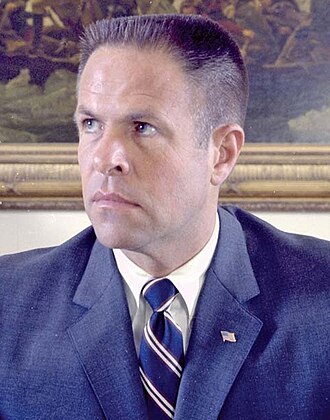
H. R. ("Bob") Haldeman served as President Richard Nixon's White House Chief of Staff from January 1969 until his resignation in April 1973. Acting as Nixon's primary gatekeeper and closest aide, Haldeman was a central figure during the White House taping period and is featured prominently in hundreds of recorded conversations. His tenure ended abruptly when he was forced to resign due to his deep involvement in the Watergate cover-up, most notably captured directing the obstruction of justice on the infamous "Smoking Gun" tape.
What Haldeman talks about on the tapes
Public relations 579Vietnam War 411Political strategy 286Foreign Policy 234Presidential scheduling 209Economic policy 202Henry Kissinger 195Congressional relations 176Press relations 161Watergate 159White House operations 151White House administration 145
Conversations (2,364)
— Page 18 of 24President Nixon and H.R. Haldeman discussed political messaging and campaign strategy for the 1972 election, focusing on how to appeal to suburban voters and the Italian-American community by emphasizing values like hard work, family, and religion. They also reviewed agricultural messaging, with Nixon instructing Haldeman to have Earl Butz aggressively defend the administration's grain deals and attack George McGovern's policies. Finally, the President directed a shift in campaign optics, specifically requesting a reduction in public appearances with Black individuals to better align with the administration's political base.
President Nixon met with Theodore H. White, William Brock, and Kenneth Rietz to discuss the administration's political image, domestic policy achievements, and strategy for a potential second term. The participants analyzed how to effectively convey the President's record on issues like China, foreign policy, and drug control to the public. Additionally, Nixon and H.R. Haldeman strategized a major post-election Cabinet reorganization, emphasizing the need to replace existing secretaries with loyal agents who would strictly implement White House policy and control their respective departments.
President Nixon met with H.R. Haldeman to discuss political strategy for the 1972 reelection campaign, focusing on neutralizing controversies surrounding the Department of Agriculture's grain deal and potential attacks regarding federal campaign funding. The participants addressed the need for a firm, unified administration stance against amnesty for Vietnam War draft evaders and evaluated the effectiveness of using campaign advertisements to highlight this issue. Additionally, they reviewed the status of John Connally's schedule and coordinated instructions for William Safire regarding the tone and length of an upcoming International Monetary Fund speech.
President Nixon and H.R. Haldeman reviewed upcoming scheduling commitments, including a strategy meeting at Camp David and a planned event at the F St. Club. Nixon emphasized limiting the attendance of Domestic Council staff at the Camp David session to maintain a focus on future policy projections. They also coordinated logistical details regarding Caspar Weinberger's participation and Nixon’s subsequent trip to Texas with Senator John Tower.
President Nixon met with Rose Mary Woods, Stephen Bull, and H. R. Haldeman to address a wide range of administrative, political, and security concerns. Key topics included the legislative strategy for the Office of Economic Opportunity (OEO) bill, security precautions for Henry Kissinger, and political maneuverings related to the 1972 presidential campaign. Additionally, the participants discussed various psychic predictions from Jeane Dixon, potential threats to the Jewish community, and routine correspondence regarding presidential memorabilia and gift offers.
President Nixon met with key advisors and political allies to strategize on the 1972 presidential campaign, the legislative handling of the Office of Economic Opportunity (OEO) bill, and security concerns regarding Henry Kissinger. The group discussed the political advisability of vetoing the OEO and water bills, emphasizing fiscal responsibility, and explored campaign messaging tactics, including the use of "mini-documentaries" highlighting the President's foreign policy achievements. A significant development was the focus on producing television spots that frame the President's leadership as nonpartisan and statesmanlike, contrasting his record with that of Senator George McGovern.
President Nixon and H.R. Haldeman evaluated the political fallout of the Watergate scandal, specifically assessing its impact on public opinion polling. Haldeman suggested that the issue had largely faded from public consciousness, asserting that the indictments failed to generate significant traction. The pair compared the declining relevance of Watergate to the contemporary political damage caused by the administration's controversial grain deal.
President Nixon met with H.R. Haldeman, Stephen B. Bull, and Manolo Sanchez to coordinate his upcoming campaign travel schedule and manage the timing of key administrative announcements. The discussion focused on synchronizing public appearances, such as the SALT agreement signing and various trade-related press conferences, with political outreach efforts in states like Texas. Nixon also criticized R. Sargent Shriver’s planned political activities in Texas, dismissing them as ineffective, while confirming the itinerary for his own upcoming trip involving local Democratic representatives.
President Nixon and H.R. Haldeman met to discuss various political and administrative matters, including the waning impact of the Vietnam War on the 1972 election, strategies for post-election personnel reorganization, and plans to build a stronger political establishment. They also discussed managing public perception regarding Nixon's foreign policy initiatives, specifically his visits to China and the Soviet Union, and explored the potential of using military leaders like Daniel "Chappie" James Jr. as political surrogates to reach white voters. Finally, the pair addressed a recent break-in at Dr. John Lungren's office concerning the President's medical records, deciding to treat the incident with transparency to neutralize any potential political fallout.
President Nixon and H.R. Haldeman discuss the political implications of a break-in at the office of Dr. John C. Lungren, the President's personal physician. They deliberate on how to leverage the incident for public relations purposes and draw strategic parallels between this intrusion and the ongoing Watergate scandal. The discussion emphasizes the need to control the narrative surrounding the break-in and ensure the story is disseminated effectively to the public.
President Nixon met with Charles Colson and H.R. Haldeman to coordinate political strategy and manage negative press coverage during the 1972 election campaign. The participants discussed handling sensitive issues, including the recent break-in at Dr. John Lungren's office to recover Nixon's medical files, the political fallout of George McGovern's Vietnam stance, and public relations maneuvers involving grain sales and tax policies. The group emphasized the need to preemptively frame controversial stories to avoid the appearance of a cover-up and considered ways to leverage McGovern's campaign weaknesses.
President Nixon and H.R. Haldeman discuss the urgent need to address the burglary of John C. Lungren’s office to avoid the appearance of a cover-up. They express concern that failing to report the incident promptly or waiting too long could lead to public suspicion regarding the administration's involvement or potential tampering with presidential files. Ultimately, Nixon directs Haldeman to obtain a quick report from FBI Director L. Patrick Gray III and insists that the matter must be disclosed immediately if it is to be handled properly.
President Nixon and H.R. Haldeman discuss the logistics of installing a small refrigerator in a White House closet for Tricia Nixon Cox. Haldeman confirms he has coordinated with Tricia and White House valet Manolo Sanchez regarding the specific location for the appliance. The two agree that the installation should proceed the following day, tasking Chief Usher Rex Scouten with the necessary carpentry work to prepare the space.
President Nixon met with H.R. Haldeman and Charles Colson to coordinate logistics for an upcoming trip to Texas and to assess the 1972 presidential campaign. The discussion centered on countering George McGovern's focus on the Vietnam War through favorable economic data and foreign policy achievements, such as upcoming arms control agreements. Additionally, Nixon directed his staff to maintain a firm stance regarding Jewish political groups and Soviet trade relations, dismissing the need to condition trade deals on political pandering.
President Nixon and H. R. Haldeman met to coordinate upcoming campaign communications, strategy for navigating anti-war demonstrations in California, and the analysis of recent public opinion polling. They discussed the administration's messaging on economic policy and the importance of ensuring press coverage through controlled releases of presidential statements and speeches. Additionally, they reviewed poll results concerning the Watergate scandal and various campaign issues, while strategizing on how to handle reports of break-ins at the office of Dr. John C. Lungren.
President Nixon, H.R. Haldeman, and Stephen Bull discussed personnel management and potential budget cuts for various government agencies. The President expressed a desire to significantly reduce the budgets of policy-creating agencies, such as the Arms Control and Disarmament Agency, by 50% through attrition rather than layoffs. They also touched upon personnel management within the White House itself, specifically regarding lower-level staff like stenographers and waiters, contrasting it with cuts at higher levels.
President Nixon and H. R. Haldeman met briefly to discuss the aftermath of the President's recent speech before the International Monetary Fund. The two men coordinated on strategies to manage public reception, specifically referencing the role of Treasury Secretary George P. Shultz and the influence of the New York Times. The discussion focused on maintaining a controlled pace regarding upcoming policy announcements to ensure favorable media coverage.
President Nixon and H. R. Haldeman discussed strategies to improve the quality and impact of presidential communication, specifically targeting the reduction of speech lengths to ensure messages are concise, memorable, and pithy. Nixon expressed frustration with the "mental laziness" of excessively long drafts produced by staff and established a strict 1,000 to 1,500-word limit for written remarks. They further decided to prioritize short radio addresses over frequent television appearances for routine administrative actions, such as veto messages, to effectively communicate policy decisions to the public.
President Nixon and H.R. Haldeman discussed whether Vice President Spiro Agnew should cancel a campaign appearance in Texas to return to Washington for a potential tie-breaking vote on the Brooke Amendment to the foreign aid bill. Although staff opinions were divided on the probability of a tie, Nixon expressed concern that Agnew would suffer significant political criticism if he were absent during a pivotal Senate vote. Ultimately, the President decided that Agnew should play it safe and return to the capital, while instructing staff to arrange a suitable substitute speaker for the Texas event.
President Nixon and H. R. Haldeman discussed the scheduling logistics for Vice President Spiro Agnew’s attendance at an upcoming Senate vote on the Edward W. Brooke amendment. They analyzed whether Agnew could balance a planned breakfast appearance in Texas with the necessary arrival time for the 2:00 p.m. vote in Washington. Haldeman committed to exploring whether the Vice President could reschedule his morning commitment to ensure his timely return for the legislative session.
President Nixon met with H.R. Haldeman and other aides to coordinate logistics for his upcoming trip to New York, specifically focusing on a sensitive meeting with Jewish leaders and potential risks regarding news leaks. The group discussed political campaign strategies, including the management of Vice President Agnew's schedule and the importance of monitoring congressional hearings related to Watergate and ITT. Additionally, Nixon expressed frustration with the lack of loyalty from political pundits and business executives who received administration support, deciding to restrict future personal favors to journalists and business figures.
President Nixon and H.R. Haldeman reviewed congressional strategy regarding a potential tie vote on an 'end the war' bill, speculating on the role of Vice President Agnew in breaking a deadlock. The discussion transitioned to the President's upcoming speech at the International Monetary Fund meeting, where they criticized the influence of Henry Kissinger and the establishment media, particularly journalist Marvin Kalb. Following Stephen Bull's entry, the group finalized scheduling details for meetings with labor leaders and a photo session with the British Ambassador.
President Nixon met with H.R. Haldeman and Charles Colson to discuss political strategy for the 1972 election, focusing specifically on managing campaign demonstrations and public perception. They analyzed the effectiveness of local Republican efforts to frame protest activities—such as those targeting Nixon’s California trip—as direct operations of the George McGovern campaign. Additionally, the group reviewed the support of business and labor sectors, dismissed critical press coverage regarding aerospace industry ties, and assessed how the President’s international diplomatic visits to the Soviet Union and China continued to bolster his public image.
President Nixon, Henry Kissinger, and Maurice Schumann met to coordinate diplomatic strategy regarding the Vietnam War and US-French relations. The discussion focused on the ongoing Paris Peace Talks, with Nixon and Kissinger emphasizing that they were approaching the limit of possible concessions before the upcoming presidential election. They expressed a desire to resolve the conflict to pivot the administration’s focus toward strengthening the Atlantic community and broader foreign policy goals in 1973. Additionally, they reviewed technical aspects of monetary policy and the potential for increased cooperation with France in facilitating a diplomatic breakthrough with North Vietnam.
President Nixon, H. R. Haldeman, Charles Colson, and Alexander Butterfield met to coordinate campaign strategy, focusing on press relations, counter-messaging against George McGovern, and the political fallout of the US-Soviet grain deal. They discussed using surrogates to attack McGovern on issues like defense spending and welfare, while strategizing on how to handle the media's coverage of the administration and the Watergate scandal. Additionally, the President reviewed his upcoming campaign schedule, emphasizing the importance of motorcades and targeted appearances in key battleground states to project strength and efficiency.
President Nixon met with his senior aides and advisors to discuss a broad range of political and foreign policy issues, including congressional strategy regarding a spending ceiling and potential budget vetoes. The group examined the political impact of the recent U.S.-Soviet grain deal and reviewed recent polling data ahead of the 1972 election. Additionally, Henry Kissinger and Alexander Haig provided an update on ongoing Vietnam peace negotiations and finalized plans for Haig's upcoming mission to Saigon to consult with President Nguyen Van Thieu.
President Nixon met with H.R. Haldeman, Manolo Sanchez, and Stephen B. Bull to discuss the aesthetics of the White House grounds. The group focused specifically on the appearance of the trees and flowers surrounding the property. No significant policy decisions were made during this brief observation of the exterior environment.
President Nixon, H.R. Haldeman, and Henry Kissinger discussed strategies to manage media coverage, influence corporate advertising toward conservative outlets, and address political campaign logistics ahead of the 1972 election. The group explored ways to leverage administrative influence to discourage White House staff from attending a Washington Post dedication event hosted by Katharine Graham. Finally, Kissinger briefed the President on a new message from the Democratic Republic of Vietnam, which emphasized that upcoming negotiations represent a critical juncture for either achieving a peace agreement or facing a prolonged conflict.
President Nixon met with H.R. Haldeman and Henry Kissinger to strategize for the upcoming 1972 election, discuss public relations regarding the Vietnam War and POW returns, and plan for an upcoming diplomatic visit from Soviet Foreign Minister Andrei Gromyko. Nixon emphasized a rigid media strategy for Kissinger, demanding that briefings remain focused on one topic at a time to avoid conflicting headlines. The participants also reviewed campaign materials, including imagery of anti-war demonstrations, and solidified logistical plans for Gromyko’s meetings at the White House and Camp David to discuss potential peace settlements and arms control agreements.
H. R. Haldeman coordinates with Raymond K. Price, Jr. to arrange a meeting at Camp David with President Nixon to discuss the content and strategy for an upcoming radio speech. They deliberate on logistical arrangements for travel, ultimately agreeing that Price will join a later flight alongside Edward C. Nixon. Price is instructed to coordinate further travel details with Alexander P. Butterfield.
President Nixon directed H.R. Haldeman to arrange a private meeting with John Connally and George Christian early the following week to discuss campaign plans and evaluations. Nixon emphasized his preference for a separate dialogue with Connally, requesting that the meeting be scheduled to avoid interfering with Connally's previously arranged taping sessions. The discussion also included a brief review of ongoing telephoning poll priorities across various key states.
President Nixon and H. R. Haldeman coordinate a future meeting with John Connally to discuss his personal plans and future political alignment. Nixon requests that this dialogue remain separate from other scheduled commitments to ensure Connally’s ongoing training remains unaffected. Haldeman is tasked with notifying Connally to arrange the session for early in the upcoming week.
President Nixon met with H. R. Haldeman and later John Ehrlichman to coordinate administrative scheduling and legislative strategy. The discussions covered logistics for diplomatic credential presentations, Pat Nixon’s appearances at upcoming events, and the status of John Connally. Additionally, the group debated legislative strategy regarding a debt limit and expenditure ceiling bill, specifically evaluating the effectiveness of White House congressional liaisons and the necessity of direct presidential engagement with legislative leaders.
President Nixon and H.R. Haldeman discussed strategies for managing press relations during the 1972 re-election campaign, specifically addressing concerns over media bias and unfavorable coverage. They evaluated the merits of holding an Oval Office press conference versus utilizing radio addresses to communicate directly with the public while avoiding the perceived pitfalls of traveling press events. The two men ultimately decided to prioritize scheduling a press conference for the coming week to preempt George McGovern's planned Vietnam speech and control the news cycle on issues like the campaign, foreign policy, and the Soviet grain deal.
President Nixon met with Ronald Ziegler and H.R. Haldeman to discuss strategies for managing negative press coverage regarding his campaign activities and perceived lack of public visibility. The participants analyzed how to address media inquiries about the President's schedule and his refusal to directly confront opponent George McGovern. To neutralize media pressure, Nixon decided to hold an in-office press conference to address a range of domestic and foreign policy topics while maintaining control over the narrative.
President Nixon met with H.R. Haldeman and other staff to review logistics for upcoming meetings with Soviet officials at Camp David and to finalize political strategies for the general election. The discussion covered the administration's stance on congressional relations, specifically rejecting a "gimmicky" proposal to write individual letters to members of Congress regarding debt limit legislation. Additionally, Nixon and Haldeman analyzed polling data—including public sentiment on the U.S.-Soviet grain deal and Vietnam POW issues—to gauge the effectiveness of their campaign messaging against Senator George McGovern.
President Richard Nixon met with H. R. Haldeman in the Old Executive Office Building to discuss confidential administrative or personal matters. The majority of the meeting's content remains restricted due to the withdrawal of the primary recording segment. Consequently, no substantive policy decisions or actionable directives are available for historical analysis from this specific transcript.
President Nixon and H. R. Haldeman consulted on campaign advertising strategy, specifically regarding a documentary film and television speech scheduled for October 4, 1972, which were to highlight domestic and foreign policy achievements. The pair also reviewed the President's public relations schedule, focusing on whether Nixon should host a reception for the National Newspaper Association. Ultimately, they decided to verify if the guest list overlapped with previous events and discussed having First Lady Pat Nixon attend as an alternative if the President's presence was redundant.
President Nixon and H. R. Haldeman discussed the logistics of an upcoming National Newspaper Association reception proposed by Herb Klein. Nixon expressed frustration over the potential redundancy of the event, noting his previous time-consuming engagements with similar organizations like the ASNE. He ultimately decided that First Lady Pat Nixon should attend the reception in his place to manage his schedule more efficiently.
H. R. Haldeman contacts the White House operator to facilitate a telephonic connection with Frederic V. Malek. This brief administrative interaction serves as a logistical bridge to initiate a formal conversation between the two officials. No substantive policy discussions or decisions occur during this brief exchange.
H. R. Haldeman and Frederic V. Malek engaged in a brief telephone consultation regarding administrative personnel matters. The discussion focused on internal staffing and organizational oversight within the Nixon administration. The segment remains restricted due to the withdrawal of personal or sensitive content.
President Nixon and H. R. Haldeman met to discuss administration strategies for handling media coverage, particularly regarding NBC and the Washington Post, and to review a project analyzing press bias and failed journalistic predictions. They evaluated the performance of specific reporters and judges, while considering political tactics for responding to the press and George McGovern's campaign. The conversation also touched upon logistical planning for the President's upcoming schedule, including decisions regarding press relations and his travel plans to Camp David and Florida.
President Nixon consults with Ronald Ziegler and H.R. Haldeman regarding a recent, ostensibly personal telephone call from journalist Walter Cronkite. Nixon clarifies his willingness to speak with Cronkite only if the matter is non-journalistic in nature. The brief discussion also touches upon logistical updates regarding operations at Camp David and the status of staff members.
President Nixon and H. R. Haldeman met at Camp David to discuss the President’s schedule, re-evaluating how to balance his time between the White House, Camp David, and Key Biscayne to maintain a consistent public presence. They analyzed polling data from Massachusetts regarding George McGovern’s policy proposals, deciding to intensify targeted television advertisements highlighting issues like welfare and marijuana legalization rather than having the President visit the state personally. The conversation also touched on press coverage of the administration, specifically regarding allegations of corruption, and the political implications of Vice President Agnew’s conservative public image.
President Nixon and H.R. Haldeman met at Camp David to coordinate the President's upcoming schedule, radio addresses, and political strategy against Senator George McGovern. They discussed managing media relations, specifically handling a request from Walter Cronkite for a televised presidential appearance, while ensuring the administration’s policy positions remained clear to the public. Additionally, they reviewed sensitive Vietnam negotiations, weighing Henry Kissinger’s progress in Paris against the strategic concerns of South Vietnamese President Nguyen Van Thieu and the potential for a post-election settlement.
President Nixon and H. R. Haldeman briefly conferred regarding logistical arrangements for their respective departures from Camp David. The discussion centered on Haldeman's preference to travel by car to expedite his return home, rather than traveling through town. The two confirmed their evening schedules without establishing any substantive policy or administrative actions.
President Nixon and H.R. Haldeman held a brief administrative coordination meeting to discuss scheduling arrangements. The conversation focused on determining travel logistics and timing preferences for an upcoming engagement. No major policy decisions were made, as the exchange was limited to confirming operational details regarding the President's itinerary.
President Nixon met with a large group of reporters and staff in the Oval Office to conduct a press conference, followed by a private debriefing with his senior aides, including H.R. Haldeman, John Ehrlichman, and Charles Colson. During the public session, Nixon addressed current events such as the 1972 campaign, the status of the Vietnam peace negotiations, allegations regarding the U.S.-Soviet grain deal, and his stance against a 1973 tax increase. Following the departure of the press, the President and his advisors discussed the effectiveness of his performance, particularly the benefit of using his responses as recorded campaign material, and strategized on future scheduling and media messaging.
President Nixon and H.R. Haldeman convened briefly in the Old Executive Office Building to coordinate scheduling. The primary purpose of the meeting was to facilitate a request for a follow-up appointment. No further substantive policy matters were discussed during this brief exchange.
President Nixon met with Charles Colson and H.R. Haldeman to refine his re-election campaign strategy, focusing on framing key policy contrasts between himself and George McGovern. They discussed utilizing specific "winning" issues, such as amnesty, welfare, marijuana, national defense, and Vietnam, to paint McGovern as radical and out of touch with the American public. The group also evaluated the effectiveness of recent television advertisements, discussed upcoming campaign appearances, and assessed poll data to sharpen their outreach to key demographics.
President Nixon, H. R. Haldeman, and Charles W. Colson discussed a damaging news story regarding the President's personal properties written by columnist Jack Anderson. The participants attempted to identify the source of the leaked information, specifically speculating whether it originated from the General Services Administration (GSA) or Secret Service agents. While no definitive source was confirmed, the discussion reflects the administration's heightened sensitivity to press leaks and internal security vulnerabilities during the 1972 election cycle.
President Nixon met with his senior staff and campaign advisors to assess his 1972 reelection strategy, focusing on framing the debate against George McGovern around key issues like Vietnam, welfare, busing, and national defense. The group discussed the necessity of moving from a defensive posture to an aggressive offense by highlighting the radical nature of McGovern's positions to the general public. Additionally, the President met with James Hodgson and other officials to review progress on veterans' benefits and education programs, confirming plans to maintain support among Vietnam-era veterans as part of the broader campaign effort.
President Nixon met with political pollster Samuel Lubell and aide Charles Colson to discuss shifting national public opinion and underlying voter trends leading into the 1972 election. They analyzed how voters form attachments to candidates based on personal interests and explored why the "Eastern Establishment" media consistently failed to grasp the changing political mood regarding issues like welfare, the Vietnam War, and the work ethic. The discussion served as a strategic intelligence-gathering session for the President to refine his understanding of the electorate's psychology and defense of his administrative policies.
President Nixon met with H. R. Haldeman and Alexander Butterfield to critique a draft of his upcoming radio address on federal spending and to sharpen its political tone. Nixon directed that Patrick Buchanan revise the speech to emphasize the necessity of vetoing congressional spending bills that exceed the budget, framing such opposition as a safeguard against future tax increases. The President underscored his commitment to preventing tax hikes throughout his potential second term and requested that the speech highlight the contrast between his fiscal discipline and the costly programs proposed by his political opponents.
President Nixon met with his senior advisors, including H. R. Haldeman and Charles Colson, to evaluate the media coverage and political impact of his recent press conference. They discussed the generally hostile tone of the press, analyzed the effectiveness of various messaging strategies regarding the 1972 campaign, and debated the strategic merits of holding in-office versus East Room press conferences. The group also coordinated a response to George McGovern’s recent foreign policy speech, planning for Secretary of State William P. Rogers to deliver a rebuttal.
President Nixon and H. R. Haldeman met to assess the effectiveness of the President's October 5 press conference and discuss general media relations strategy. They analyzed the public impact of Nixon's messaging regarding potential tax increases, fiscal policy, and John Ehrlichman’s previous statements. Ultimately, the two debated the utility of presidential press conferences, with Nixon expressing frustration over media interpretation while acknowledging the necessity of communicating policy points to the electorate.
President Nixon, Charles Colson, and H.R. Haldeman met to coordinate political messaging strategies regarding George McGovern's foreign policy critiques and Black community outreach. The discussion focused on characterizing McGovern's stances on the People's Republic of China and India as destabilizing to international relations, specifically regarding the Soviet Union and Japan. Additionally, the participants reviewed draft speech materials and discussed administrative efforts to counter McGovern’s Vietnam War proposals.
Charles W. Colson coordinated with White House staff, including Joan Hall and Susan Lallathin, to gather and verify the latest polling data while President Nixon and H. R. Haldeman consulted in the background. The discussion focused on confirming specific poll figures for Nixon and his opponent, George McGovern, along with the associated point spread. Colson ultimately directed staff to finalize the report and deliver the typed results to his office.
President Nixon and H.R. Haldeman discussed the strategic use of radio speeches to communicate directly with voters and counter criticism that the administration was avoiding policy substance. Nixon expressed satisfaction with the success of a recent radio address and directed his staff to prepare additional speeches on topics such as agricultural policy, welfare, and private school aid to contrast with George McGovern's campaign style. Additionally, they reviewed plans for television advertising, with Nixon authorizing the aggressive use of campaign spots highlighting McGovern’s positions on Vietnam and amnesty.
President Nixon and H.R. Haldeman discuss campaign strategy, focusing on utilizing radio speeches as a direct, substantive, and cost-effective method to reach voters and counter criticisms that the administration lacks a policy agenda. Nixon directs Haldeman to prepare specific radio addresses on farm exports, private school funding, and welfare to address targeted interest groups and provide a necessary, aggressive edge to his platform. Additionally, they coordinate on television advertising plans, emphasizing the need for hard-hitting commercials regarding Vietnam and amnesty to drive home key issues during the final weeks of the campaign.
In this meeting with H.R. Haldeman, Stephen Bull, and later Ronald Ziegler, President Nixon discussed a broad range of political and communications strategies for the 1972 re-election campaign. Key topics included coordinating messaging on Vietnam negotiations ahead of a press conference, countering negative media coverage regarding federal spending, and refining the President's public image through improved photographic and radio outreach. Additionally, the participants addressed personnel management for campaign economic rhetoric and logistical planning for upcoming speeches.
President Nixon met with Charles Colson and H.R. Haldeman to coordinate a strategic response to aggressive campaign attacks from George McGovern and his supporters. The participants discussed ways to frame McGovern’s rhetoric as extreme and defamatory while countering allegations of corruption directed at the administration, including the U.S.-Soviet grain deal. Nixon directed his team to compile a factual record of these attacks to expose what he viewed as the hypocrisy and inappropriate tactics of the opposition.
President Nixon and H. R. Haldeman met to review recent polling data regarding the President's approval ratings, the Vietnam War, and public perception of government corruption. Much of the discussion centered on the ongoing Vietnam peace negotiations, with Nixon emphasizing the necessity for Henry Kissinger to report directly to him before taking any further actions in Hanoi. Additionally, the pair coordinated political strategy regarding Secretary of State William P. Rogers's planned press conference and evaluated a request for a meeting with steel industry representatives.
President Nixon, Ronald Ziegler, and H.R. Haldeman met to coordinate media strategy regarding Nixon's selective support for Republican candidates and specific congressional Democrats. Ziegler briefed the President on his efforts to navigate press inquiries about the administration's stance on various Senate and House races, emphasizing a policy of neutrality rather than blanket endorsements. The participants discussed managing the President's public involvement in campaigns and maintaining a balanced approach toward incumbent allies and former cabinet members.
President Nixon met with H.R. Haldeman, Charles Colson, and other staff members to discuss campaign strategy, press relations, and the management of sensitive domestic and foreign policy issues. The President emphasized a need to focus on core ideological issues such as patriotism, morality, and the work ethic, while criticizing his staff's reliance on overly objective or "liberal" analyses that missed the underlying concerns of key voting blocs like Catholic and blue-collar ethnics. The group also addressed the ongoing Vietnam negotiations, with Nixon warning against public displays of anxiety and instructing staff to maintain a firm, disciplined stance regarding media coverage and political messaging.
President Nixon, H.R. Haldeman, and Rose Mary Woods met in the Oval Office to coordinate administrative matters and scheduling. During the meeting, Haldeman facilitated a request for a call to Jeb Stuart Magruder while Woods discussed details regarding the President's upcoming schedule and telegram correspondence. The interaction primarily served as an operational brief for managing staff communications and executive priorities.
President Richard Nixon met with Chief of Staff H.R. Haldeman in the Oval Office to discuss internal administrative matters. A portion of the meeting was classified as personal and withdrawn from the public record. No definitive policy decisions or broader political strategy developments were recorded in the available documentation for this brief exchange.
President Nixon met with H.R. Haldeman and key staff to streamline his schedule and refine his political messaging ahead of the 1972 election. They discussed cancelling several ceremonial events and meetings with ethnic leaders and senators to prioritize presidential time, while clarifying his firm opposition to busing legislation. Additionally, the group coordinated administration responses to ongoing Vietnam negotiations and planned a series of upcoming radio addresses focused on domestic issues and broad political philosophy.
President Nixon met with his staff, including Ronald Ziegler and H.R. Haldeman, to coordinate the logistics for an upcoming meeting and photograph session with Senate leaders regarding busing legislation. The participants focused on timing the session to ensure optimal media coverage and press accessibility. Additionally, the President managed routine administrative matters, including his personal schedule, correspondence with Congressmen, and a barber appointment.
President Nixon met with H. R. Haldeman, Rose Mary Woods, and Stephen B. Bull to coordinate administrative tasks and adjust his upcoming schedule. The participants finalized details regarding a meeting with Senate leaders and reviewed logistics for photo opportunities involving administration officials. They also managed various correspondence related to congressional candidates.
President Nixon and H.R. Haldeman reviewed the 1972 re-election campaign's media strategy, focusing on the effectiveness of negative advertisements targeting George McGovern's shifting positions on welfare, amnesty, and Vietnam. They discussed concerns regarding the tone of campaign commercials and logistical issues involving funding for the 'Democrats for Nixon' group led by John Connally. Additionally, the President briefly coordinated his administrative schedule, including upcoming meetings with Senate leaders regarding busing legislation and instructions for Henry Kissinger's reporting process.
President Nixon and H. R. Haldeman discuss the successful House passage of a spending ceiling, which passed with a larger-than-expected margin due to intensive lobbying by cabinet members and a decisive floor speech by Wilbur Mills. Following this victory, the two coordinate a strategy to pressure the Senate, scheduling a meeting with key senators for Thursday morning to push for a cloture vote. The conversation also touches on ongoing efforts by Charles Colson to capitalize on George McGovern's controversial statements regarding amnesty and foreign policy.
President Richard Nixon and H.R. Haldeman met briefly at Camp David to coordinate logistics for a scheduled event or policy briefing. The discussion focused on confirming a 9:00 a.m. start time to ensure participants had sufficient preparation. The pair concluded the brief exchange by confirming the necessity and value of the upcoming meeting.
President Richard Nixon and H.R. Haldeman met at Camp David to coordinate the President's upcoming travel schedule to the South and finalize logistics for the accompanying press pool. They also discussed strategies to leverage negative campaign themes against George McGovern, specifically targeting his positions on amnesty, the Vietnam War, and prisoners of war to sharpen the distinction between the candidates. Additionally, the pair reviewed recent civil unrest, including a hostage incident in Washington, D.C., and evaluated the effectiveness of the local police force.
President Nixon and H. R. Haldeman coordinate the arrival schedule and briefing protocol for Henry Kissinger following his Vietnam peace negotiations in Paris. They confirm that Kissinger should report to Secretary of State William P. Rogers immediately upon his return before meeting with the President. Nixon expresses confidence in the negotiations despite the lack of a clear breakthrough, opting to wait until Kissinger is refreshed to receive a full debriefing.
President Nixon and H.R. Haldeman coordinate the scheduling and briefing process for an incoming official to meet with Secretary of State William Rogers. The President emphasizes the necessity of the individual reporting to Rogers immediately to align their positions before a subsequent meeting with the President. This orchestration aims to ensure a unified strategy before any potential public engagement.
President Nixon and H.R. Haldeman coordinated the schedule for Henry Kissinger’s return to Washington to ensure their meetings were not disrupted by the President's travel to Atlanta. Nixon directed Haldeman to instruct Kissinger to delay his arrival until 5:00 p.m. so that they could meet privately with Secretary of State William P. Rogers. The plan further included a private dinner at the White House with Nixon, Kissinger, and Alexander Haig to discuss ongoing diplomatic matters.
President Nixon and H.R. Haldeman coordinated the logistics for an upcoming meeting with a high-level official, likely Henry Kissinger, to ensure his arrival did not coincide with the President's public appearance in Atlanta. Nixon emphasized the political importance of avoiding a conflicting schedule and decided to host a private, unannounced dinner with the official and Alexander Haig. The conversation focused on managing optics and securing a quiet opportunity for a substantive debriefing.
President Nixon and H.R. Haldeman discussed strategies for the 1972 reelection campaign, specifically focusing on how to manage campaign expenses and counter negative media coverage. They debated whether to launch an aggressive counterattack against the Democratic party and the press regarding perceived bias and alleged double standards in reporting, while acknowledging the need to maintain public order. Additionally, the President reviewed updates on Vietnam negotiations with Henry Kissinger and coordinated the upcoming schedule for Kissinger's return and subsequent meetings with Secretary of State William Rogers.
In this extensive meeting, President Nixon consulted with staff and advisors—including Charles Colson, H. R. Haldeman, Henry Kissinger, and Alexander Haig—to discuss political strategy for the 1972 campaign and the status of Vietnam peace negotiations. The President reviewed public reaction to his recent Atlanta trip and explored campaign themes centering on morality, social issues, and the perceived permissiveness of his opponent, George McGovern. Concurrently, Kissinger briefed the President on the intricacies of ongoing peace talks, specifically addressing the difficult diplomatic challenge of managing South Vietnamese President Nguyen Van Thieu's resistance to a potential ceasefire agreement. The conversation reflects the administration's dual focus on securing a reelection victory while attempting to finalize a 'peace with honor' in Vietnam.
President Nixon met with Raymond K. Price, Jr. and H.R. Haldeman to coordinate campaign strategy, public relations, and responses to various political scandals. The discussion touched on upcoming speeches, the effectiveness of political commercials, and the management of negative media coverage regarding Democratic challenger George McGovern. Additionally, the participants reviewed the unfolding legal risks associated with Watergate, including Grand Jury testimony and the potential exposure of White House staffers involved in campaign sabotage operations.
President Nixon, H.R. Haldeman, and Henry Kissinger met to discuss political strategy regarding the upcoming 1972 presidential election, focusing on countering George McGovern's attacks on the administration's Vietnam policy. The group analyzed the status of peace negotiations with North Vietnam and the potential for a breakthrough, while also addressing the delicate diplomatic management of South Vietnamese President Nguyen Van Thieu. Nixon directed Kissinger to maintain a firm stance with Thieu to ensure cooperation while preparing for an imminent trip to Saigon to solidify the path toward a potential cease-fire.
President Nixon and H. R. Haldeman met briefly in the Oval Office to coordinate their respective schedules. The discussion was limited to logistical arrangements and the synchronization of their daily agendas. No significant policy decisions or strategic actions were recorded during this short exchange.
President Nixon met with H.R. Haldeman and Ronald Ziegler to discuss administrative matters, including Oval Office furnishings, and casual commentary on the 1972 World Series. The conversation shifted to critical foreign policy updates regarding Henry Kissinger's ongoing Vietnam peace negotiations and the strategic timing of a potential ceasefire announcement before the 1972 election. Additionally, the group touched upon political campaign activities, specifically addressing allegations of "dirty tricks" linked to Charles Colson and the Committee to Re-elect the President regarding rival candidates Edmund Muskie and Henry Jackson.
President Nixon and H.R. Haldeman discuss the 1972 presidential campaign, focusing on Nixon's intense personal animosity toward George McGovern and his firm refusal to grant the Democratic nominee any post-election courtesies. The conversation touches upon perceived double standards in press coverage, grievances regarding the Democratic Party’s campaign tactics, and the ongoing complexities of Vietnam peace negotiations. Nixon expresses deep contempt for the opposition, dismissing the idea of diplomatic post-election gestures while emphasizing the strategic importance of securing a settlement in Vietnam before the election.
President Nixon met with H.R. Haldeman and John Ehrlichman to coordinate the end-of-session legislative strategy, including maneuvering around the debt ceiling and potential vetoes of the water bill. The group discussed the 1972 campaign, specifically criticizing Senator Charles Percy for his public antagonism toward the White House and strategizing on how to support primary opponents like Roman Pucinski. Additionally, they reviewed sensitive foreign policy developments regarding Vietnam negotiations and leaks, while also managing the President’s logistical schedule, including upcoming radio addresses and security protocols for telephone access.
President Nixon and Henry Kissinger met to strategize on ongoing Vietnam peace negotiations, specifically addressing the sensitive issue of prisoner release and the potential for post-settlement civilian violence. Nixon emphasized that despite his upcoming re-election, he lacked a mandate to continue the war and urged Kissinger to pressure South Vietnamese President Nguyen Van Thieu into accepting the proposed agreement. The President planned to offer Thieu significant long-term economic and military support, suggesting a high-profile meeting at the Western White House in San Clemente to project a unified front and secure Thieu's cooperation.
President Nixon met with H.R. Haldeman, John Ehrlichman, Raymond Price, and other staff members to coordinate his campaign messaging and media strategy for the final weeks of the 1972 election. The discussion centered on drafting a series of radio speeches covering foreign policy, economic issues, and social concerns, specifically addressing paternalism and property tax reform for the elderly. Nixon emphasized maintaining a non-partisan, uplifting tone in his speeches and decided against directly attacking George McGovern, opting instead to focus on his own "New American Majority" and the broader philosophy of his administration.
President Nixon and H.R. Haldeman met at Camp David to discuss the 1972 reelection campaign strategy, specifically focusing on the timing of a potential Vietnam War peace settlement. Nixon expressed concerns that a premature announcement could jeopardize his political standing, concluding that peace negotiations should remain independent of election-year pressures to avoid appearing politically motivated. The discussion also included a detailed review of various state-level polls and campaign operations, with both men expressing confidence in the President's significant lead over George McGovern.
President Nixon and H.R. Haldeman met at Camp David to discuss the fallout from the Watergate scandal, specifically reports regarding Donald Segretti's activities and his ties to Dwight Chapin. The President expressed frustration with the press and the perceived disloyalty of some White House staff, while finalizing a strategy to distance the White House from Segretti's actions by shifting the focus to the Committee for the Re-Election of the President (CRP). Additionally, the two reviewed the status of Vietnam peace negotiations, with Nixon rejecting Henry Kissinger's suggestions to delay progress for tactical election purposes or to travel to Hanoi prematurely.
H. R. Haldeman coordinates with Henry Kissinger to arrange a meeting or phone call regarding the President's latest directives on Vietnam peace negotiations. Kissinger proposes a strategic delay in his upcoming Saigon itinerary to manage President Nguyen Van Thieu’s compliance and secure additional time to finalize agreement texts and Soviet diplomatic engagement. They weigh the political implications of delaying a potential presidential speech from October 25 to October 31, ultimately agreeing to prioritize a phone consultation to accommodate Kissinger’s busy schedule.
President Nixon and H.R. Haldeman discussed strategies to mitigate negative press coverage regarding Herbert Kalmbach and campaign political activities appearing in the New York Times. They decided to adopt a defensive posture by directing John Connally to go on the offensive against dirty campaign tactics, while simultaneously coordinating a hardline response for Press Secretary Ronald Ziegler. Additionally, the pair briefly touched on Vietnam, dismissing recent public comments by Paul Warnke regarding the lack of a potential peace settlement.
President Nixon and H.R. Haldeman discussed strategies for managing the media's growing focus on the Watergate scandal and its potential links to White House staff, specifically Dwight Chapin and Donald Segretti. Nixon expressed indignation toward the 'Eastern Establishment' press, instructing the administration to pivot by attacking the media's double standards rather than responding to Democratic opponent George McGovern. They agreed to maintain a unified front, emphasizing the President's public condemnations of campaign disruptions while utilizing executive privilege to deflect inquiries regarding the scandal.
President Nixon and Henry Kissinger met to discuss high-stakes negotiations regarding Vietnam, including potential terms for a peace settlement, the role of South Vietnamese President Nguyen Van Thieu, and the strategic timing of public announcements. They evaluated the political risks of these negotiations—particularly regarding the upcoming election and public perception—while contemplating a secret diplomatic approach that might involve a private meeting with Thieu at Midway. Additionally, they coordinated Kissinger’s upcoming public appearance before the National League of Families of American Prisoners and Missing in Southeast Asia, aiming to bolster domestic support for the administration's 'peace with honor' policy without providing false hope or prematurely leaking the status of the ongoing talks.
President Nixon, H.R. Haldeman, and Henry Kissinger met to discuss managing presidential appearances and media strategy during the final weeks of the 1972 election campaign. They deliberated on whether the President or Kissinger should address the National League of Families of American Prisoners and Missing in Southeast Asia to avoid negative press perceptions. Additionally, Nixon decided to schedule a radio address on government philosophy for the upcoming Thursday, emphasizing that the administration should avoid the pressure of manufacturing daily news stories.
President Nixon and H.R. Haldeman coordinated the logistics for a scheduled appearance before the National League of Families of American Prisoners and Missing in Southeast Asia. Haldeman briefed the President on the informal, standing-room arrangement at the hotel and the plan for Henry Kissinger to address the group prior to Nixon’s arrival. They agreed that Nixon would replace the originally planned format to ensure a brief, efficient interaction with the attendees.
President Nixon and Henry Kissinger met to finalize the language for a forthcoming public statement regarding ongoing negotiations over the Vietnam War. They specifically discussed framing the administration's position to avoid creating false expectations while reaffirming commitment to critical conditions, including the release of POWs/MIAs and the protection of U.S. honor. Nixon confirmed his intention to state that the U.S. would not impose a specific government on South Vietnam, seeking to balance diplomatic caution with the preservation of allied interests.
President Nixon met with H.R. Haldeman and John Ehrlichman to coordinate administration strategy regarding the upcoming election and legislative agenda. The discussion focused on managing the political fallout of the Watergate scandal—specifically involving Donald Segretti—and planning aggressive media and press relations to ostracize outlets considered hostile to the White House. Additionally, the participants addressed the potential for significant budget cuts across federal departments and the President's firm stance against amnesty for draft evaders.
President Nixon met with Charles Colson and other staff members to discuss political messaging and public relations strategies regarding the 1972 presidential campaign. Key topics included the administration's response to the Watergate scandal, the ongoing Vietnam War, and framing Senator George McGovern's platform as out of touch with the American mainstream. The participants focused on coordinating media responses and leveraging the influence of allies like John Connally to bolster the President's position on national security and economic issues.
President Nixon and H.R. Haldeman met to review 1972 election polling data, discuss campaign strategy against George McGovern, and coordinate the administration's response to negative press coverage concerning campaign practices. They assessed the political impact of McGovern’s Vietnam peace proposals and determined that the President should distance himself from allegations of political sabotage by keeping the campaign focused on substantive issues like welfare and foreign policy. Additionally, they reviewed Vice President Spiro Agnew’s upcoming schedule and finalized plans for Agnew to represent the President at the Al Smith dinner.