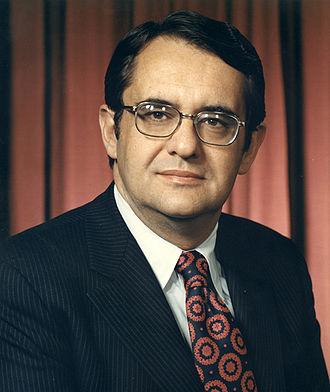
Peterson, Peter G.
Peter G. Peterson joined the Nixon administration in February 1971 as Assistant to the President for International Economic Affairs, where he helped lay the intellectual groundwork for Nixon's August 1971 decision to dismantle the Bretton Woods system. In February 1972, his role changed when he was appointed to the cabinet to replace Maurice Stans as Secretary of Commerce, a position he held until February 1973. Captured on the White House tapes during these critical economic shifts, Peterson was a central figure in shaping U.S. foreign economic policy and trade relations before departing the administration.
President Nixon met with his economic advisors and a group of Fortune magazine editors to discuss the state of the U.S. economy, specifically focusing on inflation, unemployment, and potential policy responses. The discussion covered the administration's skepticism toward broad, mandatory wage and price controls during peacetime while exploring alternative methods like regional bargaining and government-led productivity initiatives. Nixon emphasized the importance of executive branch coordination in economic policy, noting the need to balance fiscal responsibility with strategic support for struggling industries like aerospace and construction.
President Nixon met with his task force leaders and advisors to discuss the legislative strategy for the Task Force on International Development proposals and the challenges of securing Congressional support. Key participants included Rudolph Peterson, Peter Peterson, Clark MacGregor, and Henry Kissinger, who debated the jurisdictional split of foreign assistance programs between the State and Defense Departments. The group emphasized the need to integrate foreign aid with broader U.S. economic and trade policies, and Nixon tasked MacGregor with coordinating closely with Congressional leadership to ensure the proposals moved forward without significant delays.
President Nixon met with his key advisors to strategize on complex textile trade negotiations with Japan, focusing heavily on the complicating influence of Representative Wilbur Mills. The participants evaluated the viability of voluntary Japanese import controls versus potential restrictive domestic legislation. Nixon and his team sought to coordinate their administrative position to balance industry pressure, congressional involvement, and diplomatic relations with the Japanese government.
President Nixon met with Peter G. Peterson and other advisors to discuss international trade strategy, specifically regarding textile and footwear import negotiations with Japan, Italy, and Spain. Peterson briefed the President on the necessity of a stronger, more centralized economic leadership structure, including the role of the Council for International Economic Policy, to address balance of payments and currency exchange issues. The conversation also touched upon the implementation of an effective domestic industrial adjustment program and the organizational needs of federal volunteer agencies, with Nixon emphasizing the importance of utilizing strong leadership and personal political involvement to achieve these policy goals.
President Nixon and his Cabinet met to discuss the ongoing challenge of inflation and rising construction costs, focusing on the administration's strategic options for economic stabilization. Dr. Paul McCracken reviewed current inflationary trends and labor market data, outlining a spectrum of potential responses ranging from maintaining current fiscal policies and targeted interventions to implementing more aggressive measures like wage and price controls. The meeting served as a forum to evaluate the efficacy of various regulatory mechanisms, such as the National Commission on Productivity and the suspension of the Davis-Bacon Act, while weighing the political and practical risks of further government intervention in the economy.
President Nixon met with Peter G. Peterson to finalize the procedural strategy and organizational focus for an upcoming Council on International Economic Policy (CIEP) meeting. They discussed the President’s intent to position Peterson as his primary representative to streamline decision-making on sensitive trade issues, including textiles, agriculture, and footwear quotas. The discussion also addressed potential coordination efforts involving David M. Kennedy, Henry Kissinger, and other cabinet members to handle complex economic negotiations with foreign officials.
President Nixon and the Council on International Economic Policy (CIEP) met to review global economic trends, specifically focusing on the United States' competitive position regarding trade, technological exports, and shifting GNP shares among developed and developing nations. The participants discussed the challenges posed by Japanese industrial policies, the role of multinational corporations, and potential antitrust law reforms to better align with international business realities. The meeting served to define the CIEP’s procedural structure and establish priorities for future foreign economic initiatives, including trade legislation and adjustment assistance programs.
Secretary of State William P. Rogers and Peter G. Peterson met to discuss various diplomatic and domestic policy issues, including U.S. relations with Australia and New Zealand, military interests in Singapore, and the status of Vietnam policy. The discussion touched on the political challenges posed by the Vietnam War, including public reaction to the President's speeches, student demonstrations, and the broader generational gap affecting support for the administration. The participants also reviewed scheduling matters and the administrative reorganization of the Cabinet and National Security Council.
President Nixon met with Franco Mario Malfatti, President of the European Commission, and various U.S. officials to address rising protectionist tensions between the United States and the European Economic Community (EEC). The discussion focused on the necessity of reciprocal trade concessions, specifically identifying how minor, mutually beneficial adjustments—such as those regarding citrus and textiles—could alleviate domestic political pressures and prevent broader trade conflicts. Nixon emphasized the importance of finding practical solutions to avoid protectionism, while Malfatti discussed the EEC’s ongoing efforts toward economic integration and the logistical challenges posed by the community's potential expansion. To facilitate progress, the parties agreed to coordinate follow-up efforts, including an upcoming diplomatic mission by Ambassador David Kennedy to Europe and Asia.
President Nixon consulted with Federal Reserve Chairman Arthur F. Burns regarding a recent cabinet briefing on international economic policy delivered by Peter G. Peterson. Nixon tasked Burns with reviewing the briefing materials and requested an independent analysis of how antiquated U.S. antitrust laws affect the competitiveness of domestic industries, particularly the struggling aviation sector, against state-subsidized foreign entities. Following the discussion, Peterson joined the call to coordinate a time for Burns to review the presentation materials and further discuss these economic strategies.
President Nixon met with Arthur Burns, Henry Kissinger, and Peter Peterson to strategize on economic policy, focusing on the Council on International Economic Policy (CIEP) and the need for long-range economic planning to combat foreign competition. Nixon instructed his advisors to present Peterson's economic briefings to a broad audience—including Cabinet members, congressional leaders, and business executives—while emphasizing the necessity of a bipartisan approach to trade and anti-trust reform. Additionally, the President and Kissinger reviewed the current status of the Vietnam War, reaffirming their commitment to Vietnamization and total withdrawal while deliberately avoiding a fixed terminal date to maintain leverage in ongoing negotiations.
President Nixon met with H. R. Haldeman, Peter G. Peterson, and George P. Shultz to coordinate administration strategy regarding upcoming press conferences, the handling of planned anti-war demonstrations, and the launch of new international economic and foreign policy initiatives. The discussion emphasized a pivot toward economic competition as a cornerstone of U.S. foreign policy, specifically addressing relations with China and the restructuring of trade policy. Nixon directed his team to prioritize quiet, low-key implementation of administrative and civil rights goals to avoid political backlash and unnecessary public controversy.
President Nixon met with key staff and advisors, including H. R. Haldeman, Henry Kissinger, and Paul McCracken, to discuss administrative strategy, economic messaging, and foreign policy. The President emphasized the need for a more confident and assertive presentation of his administration's record, particularly concerning the economic recovery and Vietnam. They also addressed the strategic communication surrounding upcoming trade initiatives with China and the importance of Henry Cabot Lodge's potential visit to Vietnam to manage regional political stability. Throughout the meeting, Nixon underscored the necessity of maintaining a firm posture against political opposition while attempting to shape public perception regarding his initiatives.
President Nixon and Peter G. Peterson discussed the communication strategy for the administration's ongoing diplomatic initiative with the People's Republic of China. Nixon emphasized the importance of framing the outreach as a direct presidential initiative while cautioning Peterson to avoid creating the impression that the policy was designed to provoke the Soviet Union or exploit tensions. The President instructed Peterson to handle internal State Department opposition as 'deep background' information and to maintain an air of confidence when addressing critical media outlets regarding the Vietnam War.
President Nixon met with George Shultz and Peter Peterson to discuss personnel appointments and pressing foreign economic policy, specifically regarding trade negotiations with Japan and Southeast Asia. The group deliberated on the roles of various cabinet members, including David Kennedy and William Rogers, in coordinating trade strategy and managing the State Department's economic responsibilities. They also explored broader themes of U.S. economic competitiveness, the People's Republic of China initiative, and the necessity of preventing American isolationism in the post-Vietnam War era.
President Nixon met with his economic advisors and Henry Kissinger to strategize on managing mounting domestic and international pressures regarding textile, steel, and shoe import quotas. The discussion focused on leveraging diplomatic and economic inducements, such as trade initiatives and aid, to secure favorable voluntary restraint agreements with Japan, Taiwan, Hong Kong, and Korea. The participants concluded that a coordinated strategy involving high-level diplomatic outreach followed by technical negotiations was necessary to address industry concerns and prevent restrictive legislative action.
Peter G. Peterson, Bryce N. Harlow, and Richard H. Poff met to coordinate the agenda for an upcoming session with Republican Congressional leaders. The discussion focused on strategic messaging regarding government reorganization, 1972 appropriations, and specific policy objectives involving education, jobs, and health. The participants aimed to align the legislative schedule with the President’s goals, including briefings from Henry Kissinger and James Schlesinger.
President Nixon met with Vice President Agnew and Republican Congressional leaders to discuss the administration's legislative and economic agenda. The participants analyzed current economic indicators, including inflation and productivity, and evaluated the implementation of the Task Force for International Development's recommendations regarding foreign and military aid. Additionally, the group addressed the future of the military draft, focusing on pay increases and the transition toward an all-volunteer force while assessing potential legislative hurdles in Congress.
President Nixon met with Peter G. Peterson and Peter M. Flanigan to discuss a more aggressive U.S. economic and trade strategy, specifically targeting Japan's trade barriers and undervalued yen. The participants explored long-term economic planning, including the potential for protective measures in key industries like automobiles, while addressing the ongoing international monetary crisis and the relative strength of the dollar. The group decided to position Treasury Secretary John B. Connally as the primary administration spokesperson for these economic issues, with an emphasis on signaling a tougher stance to both domestic audiences and foreign governments.
President Nixon and his Cabinet met to receive a briefing on international affairs and domestic policy, with a focus on Secretary of State William P. Rogers' recent diplomatic travels to the Middle East and the feasibility of desalinization technology. Rogers reported on his efforts to stabilize the Middle East through ceasefire maintenance and discussed the geopolitical concerns of various regional leaders. Dr. Edward E. David Jr. and other experts presented a detailed plan to advance domestic water desalinization and nuclear power capabilities, with the President calling for a major, accelerated federal effort to ensure American technological leadership. The meeting concluded with a brief status report from Treasury Secretary David M. Kennedy regarding the current international monetary situation and the fluctuations of the dollar.
President Nixon met with David M. Kennedy and Peter G. Peterson to discuss international trade negotiations and domestic economic performance. The group reviewed the status of textile negotiations involving Japanese Minister Takeo Fukuda and analyzed updated first-quarter Gross National Product (GNP) figures. The participants noted that the upwardly revised GNP data, scheduled for public release that Friday, represented positive economic news for the administration.
In this meeting, President Nixon and Henry Kissinger discussed the delicate status of SALT negotiations, specifically weighing whether to press for further wording changes with the Soviets or accept the current draft to avoid diplomatic irritation and potential leaks. Following Kissinger's departure, Nixon met with John Ehrlichman, Peter Peterson, and James Roche to address the challenges facing the American automobile industry. The group focused on mitigating overly rigid safety and environmental regulations that threatened the industry's competitiveness against foreign imports, while exploring broader strategies to maintain America's technological and economic dominance in an increasingly globalized market.
President Nixon met with his Cabinet and Republican Congressional leaders to coordinate the administration's legislative agenda, specifically addressing the ongoing national railroad strike and the upcoming Congressional vote on the military draft. The discussion also focused on foreign policy, with Secretary of Defense Melvin Laird and Henry Kissinger providing briefings on the status of NATO, the credibility of U.S. military commitments in Europe, and the implications of recent Soviet statements regarding mutual force reductions. The President urged the Congressional leaders to maintain a firm stance against unilateral U.S. force withdrawals while emphasizing the need to handle these matters through stable, negotiated frameworks rather than disruptive legislative amendments.
President Nixon hosted a series of brief meetings in the Oval Office to recognize the service of several individuals, including Admiral R. C. Robinson, Jack T. Cole, and long-serving government employee Carson Howell, often presenting them with commemorative gifts. During these sessions, the President discussed his opposition to the legalization of marijuana and orchestrated various photo opportunities for his guests. Additionally, Nixon met with Catherine May Bedell and Peter G. Peterson to discuss her nomination to the U.S. Tariff Commission, emphasizing the need for her to work closely with his administration and maintain direct communication with his key advisors.
President Nixon met with John Ehrlichman, George Shultz, and Peter Peterson to strategize on national economic goals, focusing on research and development (R&D) and long-term industrial planning. The discussion centered on creating a cohesive framework to address U.S. competitiveness, particularly regarding trade and labor, and the potential for a new commission to oversee domestic technological breakthroughs like breeder reactors and desalinization. The participants also explored strategies to communicate these initiatives to the public and political leaders, aiming to frame them as vital for future job growth and national strength.
President Nixon met with Peter G. Peterson and Henry Kissinger to discuss the sensitive diplomatic implications of the upcoming Okinawa reversion, specifically addressing the Senkaku Islands sovereignty dispute and its potential impact on relations with Taiwan and Japan. To mitigate backlash from Nationalist China regarding the reversion, the group decided to offer Taiwan a low-profile, long-term commitment to provide military equipment, with formal discussions postponed until August to avoid public friction with Congress. Additionally, Peterson briefed the President on a planned bipartisan Congressional session aimed at presenting the Administration's long-term economic and technological strategies, with a particular focus on fostering innovation through unconventional, high-level scientific talent and better integrating R&D with national goals.
President Nixon, Vice President Agnew, and a large group of Cabinet members and senior staff met to establish a strategic framework for domestic policy, budget planning for the 1973 fiscal year, and the development of the 1972 Republican legislative and election platform. Participants reviewed polling data regarding national, community, and family concerns, noting that the economy, inflation, and unemployment are primary public priorities while other issues like pollution and consumerism are often driven by media visibility. The President and attendees emphasized the need for better communication to receive credit for administration accomplishments, focusing on a limited number of 'gut issues' rather than overextending on too many programs. Ultimately, the group discussed the necessity of coordinating policy initiatives and messaging to ensure visible progress on key economic and social concerns ahead of the 1972 election.
President Nixon met with Peter G. Peterson, Harry S. Dent, and Peter M. Flanigan to formulate a strategy for ongoing international textile trade negotiations. The participants discussed securing favorable import terms with Taiwan and Japan while navigating the political interference of Representative Wilbur D. Mills, who was reportedly pushing for a quota bill to bolster his own political ambitions. The group decided to pursue a conditional agreement that secures the best possible terms for the industry, followed by a coordinated effort to pressure domestic industry leaders into public and legislative support to avoid a politically damaging confrontation with Congress.
In this meeting, President Nixon met with administration officials and businessman Charles Bluhdorn to discuss foreign policy concerns, specifically the implications of the Sugar Act and the treatment of U.S.-friendly nations in Latin America. Bluhdorn, representing Gulf and Western, lobbied the President to protect the Dominican Republic's sugar quotas, arguing that the administration should favor loyal allies over countries that engage in the expropriation of American assets. Nixon expressed strong support for rewarding friendly nations, criticizing the State Department's perceived leniency toward countries like Peru, Bolivia, and Chile, and directed his staff to pursue a more assertive policy in Congress regarding trade quotas and investment protections.
President Nixon met with the Cabinet Committee on Economic Policy to address ongoing issues regarding internal leaks of economic strategy and the lack of a unified administration voice. He stressed the necessity of presenting a cohesive front to the public, designating Secretary of the Treasury John B. Connally as the primary spokesperson for economic policy. The President mandated that all advisors cease unauthorized contacts with the press and align their public statements with the official administration line to restore public trust and policy stability.
President Nixon met with Peter G. Peterson to discuss broad economic strategies, focusing on trade imbalances with Japan, long-range economic planning, and the need for a tougher, more assertive administrative posture. They addressed the potential for unilateral trade actions to address deficits and debated the utility of government-backed industrial R&D projects to foster job growth. Additionally, they reviewed international trade negotiations, the status of U.S.-Soviet economic relations, and the recruitment of personnel for economic policy roles.
President Nixon, H.R. Haldeman, and Peter G. Peterson met to discuss personnel appointments, including the potential recruitment of Marty Anderson, and strategic roles within the administration. The conversation focused on the internal structure of the White House, the need for a stronger, politically-minded economic team to support the administration, and the President's vision for long-term economic planning. Nixon explicitly requested that Peterson coordinate closely with John Connally and emphasized a long-term approach to economic policy over short-term political headlines.
President Nixon met with a bipartisan group of Senate leaders to frame the shifting geopolitical and economic landscape of the 1970s. Nixon highlighted the transition from a era of military confrontation to one of negotiation, emphasizing the necessity of integrating the People's Republic of China into the world community to prevent future instability. Following the President's overview, Peter G. Peterson delivered a briefing on the intensifying global economic challenge posed by the rapid industrial growth of nations like Japan and Germany. The meeting served as a strategic appeal for bipartisan support to ensure the United States remains competitive as military tensions subside and economic competition becomes the primary arena of international rivalry.
President Nixon and Peter G. Peterson met to discuss the deteriorating U.S. balance of payments and the potential for a bold, secret economic initiative to address rising unemployment and trade deficits. Peterson argued that traditional economic measures were insufficient and politically risky, instead proposing a temporary import surcharge and export rebate system to stimulate the economy. The President authorized Peterson to coordinate with John Connally, George Shultz, and Paul McCracken to develop a confidential plan, while emphasizing the need for absolute secrecy to prevent market instability.
President Nixon met with John Connally and Peter Peterson to strategize a bold, coordinated plan to address U.S. economic instability, specifically the trade deficit and the defense of the dollar. The participants discussed potential measures such as the cessation of gold convertibility, the floating of exchange rates, and the implementation of wage and price controls. They emphasized the need for strict confidentiality, the importance of maintaining Arthur Burns’ cooperation, and the political necessity of framing these actions as a display of strong, decisive leadership.
President Nixon held a series of meetings involving staff and administration officials to coordinate on several pressing domestic and economic policy matters. The participants discussed legislative strategy regarding the Lockheed Corporation, the political risks associated with school busing and desegregation litigation in Texas, and the appointment of William D. Eberle as the new Special Trade Representative. Nixon emphasized a transition toward prioritizing domestic interests in international trade negotiations and sought to align his team on messaging regarding the administration's stance on school integration compliance.
President Nixon convened a large meeting with Vice President Agnew and his Cabinet to discuss the national economy and the "New Economic Policy" he had announced the previous day. Key topics included the wage-price freeze, import surcharges, tax relief, budget cuts, and the convertibility of the dollar. The administration sought Cabinet support for these initiatives and discussed their potential impact on international trade and domestic employment.
President Nixon convened a meeting with Vice President Agnew and a bipartisan group of Congressional leaders to discuss the national economy and his administration's "New Economic Policy." Key topics included the wage-price freeze, investment tax credits, the international monetary situation, and an import surcharge. The discussion focused on the necessity of Congressional cooperation for implementing these measures and their potential impact on inflation, trade, and specific industries like automobiles.
President Nixon met with the Council on International Economic Policy (CIEP) and key economic advisors to discuss the administration's post-August 15 New Economic Policy (NEP) and future international trade strategy. Peter G. Peterson led a presentation analyzing the shortcomings of global liberal trading systems and the challenges posed by foreign competitors like Japan, while other officials addressed the domestic economic impact, labor relations, and the status of ongoing monetary negotiations. The President emphasized the need for a firm but diplomatic approach toward Japan and directed his team to maintain the offensive on domestic economic policy while keeping options flexible regarding international monetary reform.
President Nixon met with Peter G. Peterson, Albert L. Williams, and Isiah Frank to facilitate a brief photo opportunity with the press regarding the Williams Commission. The session served to highlight the commission's recent work through staged photography in the Oval Office. Following the brief media appearance, the group departed to continue their official discussions in the Cabinet Room.
President Nixon, Pat Nixon, and the Cabinet met with their spouses to discuss the implementation and public perception of the administration’s New Economic Policy. Secretary of the Treasury John Connally led a comprehensive briefing on the wage-price freeze, tax reforms, and international monetary adjustments aimed at curbing inflation. The discussion emphasized the necessity of these economic measures for restoring national growth, managing federal expenditures, and building public and congressional support for the administration's program.
President Nixon met with the members of the Commission on International Trade and Investment Policy, led by Chairman Albert L. Williams, to discuss the committee's recently completed report on global economic competition. The conversation focused on the necessity of re-evaluating U.S. trade, monetary, and labor policies in light of increased challenges from a revitalized Europe and a highly organized Japanese industrial sector. Nixon and the commission members explored strategies for restoring U.S. global competitiveness, including the role of investment tax credits, the impact of antitrust laws on industrial mergers, and the long-term implications of the August 1971 economic initiatives.
President Nixon, Vice President Agnew, and members of his Cabinet met to coordinate a unified administration strategy ahead of critical International Monetary Fund (IMF) meetings and ongoing global trade negotiations. The discussion emphasized the necessity of maintaining the recently imposed 10% import surcharge and a firm bargaining stance to address the nation's economic balance of payments and reshape the international monetary system. Nixon and his advisors agreed that while foreign partners would likely criticize U.S. policy, maintaining domestic political support and correcting long-standing trade imbalances remained the administration's primary objective.
President Nixon met with John Ehrlichman and CIA Director Richard Helms to discuss the President's access to sensitive, classified intelligence documents, specifically concerning past operations like the Bay of Pigs and the assassination of Ngo Dinh Diem. Nixon emphasized his need for full information regarding historical foreign policy and intelligence "dirty tricks" to prepare for upcoming diplomatic negotiations and to manage political exposure. Following this, Nixon met with David Kennedy, Henry Kissinger, and Peter Peterson to strategize on high-stakes textile trade negotiations with Japan, where they aimed to secure an agreement by applying pressure while maintaining the credibility of the U.S. position.
President Nixon met with his Cabinet and key staff members to review the administration’s domestic and foreign policy priorities, primarily focusing on the economic transition to 'Phase II' and the announcement of a 1972 Soviet summit. Officials discussed the successful implementation of the wage-price freeze and the strategy for securing organized labor's cooperation on the newly formed Pay Board and Price Commission to curb inflation. Additionally, the President addressed the importance of linking economic policy to job growth through his pending tax proposals, while Secretary of State Rogers and the President emphasized that international diplomatic overtures toward the Soviet Union and China were part of a cohesive, long-term strategy for global peace.
President Nixon and his advisors, including Henry Kissinger and Peter Peterson, discussed the political challenges surrounding the textile trade industry and the upcoming announcement of a new agreement. The conversation also touched upon the necessity of managing various personnel issues, including the potential resignation of a Supreme Court justice and growing concerns regarding the deteriorating leadership and internal stability of FBI Director J. Edgar Hoover. Nixon expressed frustration with staff members threatening resignation, ultimately asserting that he would prioritize decisive administrative control over such internal pressures.
President Nixon met with his economic advisors (the "Quadriad") and Henry Kissinger to discuss international monetary policy, trade negotiations, and the upcoming Asian trip for John B. Connally. The group addressed the urgency of trade concessions, the complexities of gold convertibility, and the need to manage currency realignments while maintaining a firm U.S. negotiating position. Nixon provided specific instructions for Connally’s itinerary, emphasizing the need to reassure allies in Japan, Thailand, and Indonesia of U.S. commitment while avoiding being sidelined by State Department staff during sensitive private discussions.
President Nixon, hosting Ghanaian Prime Minister Kofi A. Busia at the White House, requested that Alexander Haig arrange for Peter G. Peterson to join them for a meeting. Haig successfully contacted Peterson to facilitate this introduction. The call served primarily as a logistical coordination to include Peterson in the ongoing diplomatic discussion with the Ghanaian leader.
President Nixon met with Peter G. Peterson, George P. Shultz, John D. Ehrlichman, H. R. Haldeman, and Henry Kissinger to discuss personnel changes and key policy initiatives. The President offered Peterson the position of Secretary of Commerce, emphasizing the need for a combative and effective advocate to handle public relations and congressional outreach. The group also deliberated on the political risks of the President addressing the AFL-CIO, explored strategies for upcoming international monetary negotiations, and reviewed the status of Vietnam peace talks following a leak regarding troop withdrawal numbers.
Maurice Stans briefed President Nixon and Henry Kissinger on his recent 17-day trade exploration mission to the Soviet Union, Poland, and Sweden. Stans detailed positive, high-level discussions with Soviet Premier Alexei Kosygin regarding potential economic cooperation, including grain sales, industrial equipment credit, and the establishment of joint fact-finding groups. President Nixon directed Stans to maintain a low profile with the press to avoid prematurely committing to specific trade concessions while the administration maneuvers through ongoing geopolitical tensions in South Asia.
President Nixon met with a bipartisan group of Congressional leaders to brief them on his recent diplomatic discussions with French President Georges Pompidou and the status of U.S. international economic policy. The conversation focused on efforts to address the global monetary crisis, the necessity of realigning exchange rates to restore the competitive position of American goods, and the importance of burden-sharing among trade partners. Nixon highlighted the recent breakthrough in negotiations with France as a critical step toward stabilizing the international monetary system and advancing domestic economic goals like job creation and inflation control.
President Nixon met with Henry Ford II, Edwin D. Etherington, and others to discuss the funding, leadership, and programming of the National Center for Volunteer Action (NCVA), emphasizing the importance of private sector involvement to maintain the organization's credibility. Following their departure, Nixon met with Peter G. Peterson to strategize on trade legislation, specifically regarding the timing of gold price negotiations and the risks of protectionist measures in Congress. Nixon instructed the team to handle sensitive trade issues by utilizing an educational approach rather than risking legislative failures, while leveraging key aides to manage congressional and business expectations.
President Nixon met with his economic advisors and cabinet members to strategize the administration's approach to pending trade legislation and international monetary negotiations. A central focus was delaying the introduction of a trade bill until February to allow for ongoing negotiations with European and Japanese partners while avoiding negative links to the price of gold in Congressional hearings. The President emphasized the need for a long-term economic strategy and directed advisors to prepare a comprehensive plan for future trade expansion that would appease domestic protectionist concerns without committing to immediate, politically risky legislative action.
President Nixon met with Maurice Stans to discuss the formal announcement of Stans’s resignation from his cabinet position and his subsequent transition to a new political role. The participants reviewed the status of the economy and business policy, specifically addressing the Federal Trade Commission's actions toward cereal companies and the administration's relationship with the business community. Toward the conclusion of the meeting, Peter G. Peterson and Peter M. Flanigan joined the President to finalize the protocol and media strategy for the forthcoming personnel announcements.
President Nixon met with his Cabinet and senior staff to debrief them on the results and implications of his recent diplomatic trip to the People's Republic of China. The President emphasized that the primary success of the visit was the establishment of a new communication channel between the two nations, which he argued was essential for managing long-term stability and reducing the potential for future conflict. Nixon shared his impressions of Chinese leadership, particularly his discussions with Chou En-lai, noting the stark ideological differences while highlighting common strategic interests, such as peace in the Pacific and balancing influence against the Soviet Union. The discussion concluded with a focus on how this opening could be leveraged to reshape international relations and manage regional tensions across Asia.
President Nixon held an Oval Office meeting with Peter G. Peterson, his family, and members of the Cabinet to commemorate Peterson's recent Senate confirmation. The event served primarily as a formal ceremony for the administration of the oath of office and a subsequent photograph session with White House photographer Ollie Atkins. The interaction concluded with informal social conversation regarding Camp David and scheduling logistics.
President Nixon met with members of the Cost of Living Council and other key economic advisors to assess the efficacy of Phase II wage and price controls. The discussion focused on controlling inflation, managing food prices, and navigating political pressures from organized labor and Congress. Participants evaluated the impact of economic policies on the public interest and discussed strategies for future price stability across various sectors.
President Nixon met with a large group of cabinet members and advisors to discuss a wide-ranging agenda of domestic economic policy, including international trade strategies, energy infrastructure, and tax reform. The participants reviewed the implementation of commercial trade policies with the Soviet Union, analyzed the political and budget implications of environmental regulations, and addressed the status of the Productivity Commission. Nixon emphasized the need for his team to act as aggressive advocates for pro-business policies and job creation in the lead-up to the 1972 election. The meeting concluded with a review of potential Federal Reserve appointments and a discussion on managing public perception regarding inflation and food prices.
President Nixon met with Soviet Minister of Foreign Trade Nikolai Patolichev, Ambassador Anatoliy Dobrynin, and senior U.S. officials to discuss the expansion of U.S.-Soviet economic and trade relations ahead of the upcoming Moscow summit. Patolichev outlined Soviet interest in obtaining credit for large-scale projects and Most Favored Nation (MFN) status, while Nixon emphasized his desire to transcend specific technical hurdles to establish a historic, long-term economic partnership between the two superpowers. The meeting served to reaffirm high-level commitments to future cooperation, with Nixon signaling his willingness to use his executive authority to reach significant agreements with General Secretary Leonid Brezhnev.
President Nixon met with his Cabinet and key staff to discuss the upcoming departure of Secretary of the Treasury John B. Connally and to address broader administration matters. The discussion covered the timing of administrative changes, the transition of economic policy responsibilities to George Shultz, and the status of ongoing federal investigations following the recent shooting of George C. Wallace. Connally reflected on his tenure as Treasury Secretary and his future plans, while the President reaffirmed his commitment to his current economic program and leadership agenda.
President Nixon met with the Cost of Living Council to address surging food and meat prices, emphasizing the need to combat inflation without imposing direct price controls. The discussion focused on managing supply-side pressures, including reduced military food stockpiles and potential adjustments to meat import policies, while coordinating a "jawboning" strategy to encourage price restraint among industry leaders and labor unions. Nixon urged the council to publicly highlight the administration's commitment to fighting inflation while cautioning against speculating on a price freeze, which he warned would destabilize the market.
President Nixon met with maritime industry leaders and labor union representatives to discuss the status and future of the U.S. shipbuilding and maritime sector. The discussion centered on recent productivity gains, the importance of ship construction for national security and economic competitiveness, and the administration's goals for increasing employment and shipyard output. Nixon emphasized the necessity of a strong, modernized Merchant Marine to maintain U.S. standing in a competitive global market.
President Nixon met with the Cost of Living Council to review the performance of his administration's economic stabilization program, including successes in lowering inflation and fostering rapid economic growth. The discussion emphasized the necessity of maintaining fiscal discipline through a proposed $250 billion federal spending ceiling to prevent future inflationary pressure. Participants also addressed specific challenges, particularly rising food prices and the potential impact of government spending on tax rates, while strategizing on how to communicate these economic gains to the public ahead of the election.
President Nixon met with Henry Kissinger, Peter Flanigan, and Peter Peterson to discuss the status and strategic negotiation tactics for ongoing U.S.-Soviet trade agreements, including Lend-Lease settlements and potential gas deals. The participants analyzed how to leverage these economic discussions as bargaining chips while managing domestic political concerns, including the 1972 election and Congressional relations. Nixon directed the team to prepare concrete options for his review and emphasized that the administration should maintain a public appearance of optimism regarding the eventual conclusion of these agreements. Additionally, the group briefly touched upon trade interests involving Japan, Cuba-related maritime issues, and diplomatic gestures toward Poland.
President Nixon met with the Council on International Economic Policy and senior advisors to discuss U.S. trade relations with an expanding European Community. The group debated four strategic options ranging from maintaining the status quo to aggressive confrontation, with the President ultimately directing that the administration maintain a firm, "tough" stance while avoiding specific, provocative threats until after the upcoming election. Nixon emphasized that trade policy should not be viewed in isolation but as a component of a broader strategy concerning global power balances and U.S. national security commitments in Europe.
President Nixon met with the Cost of Living Council to review the administration’s economic performance and coordinate strategy regarding inflation, labor relations, and food prices ahead of the 1972 election. Council members, including George Shultz and Donald Rumsfeld, discussed measures to protect Social Security recipients from illegal rent increases and highlighted the relative success of U.S. wage and price controls compared to foreign nations. The President directed his team to maintain an affirmative, disciplined public messaging campaign, emphasizing that the U.S. was achieving growth and reduced inflation without the reliance on wartime spending seen in the 1960s.
President Nixon met with Soviet Minister of Merchant Marine Timofey B. Guzhenko and Ambassador Anatoliy F. Dobrynin to discuss the resolution of a difficult maritime agreement between the two nations. Nixon emphasized the broader diplomatic importance of the deal, framing it as a constructive step toward improved political relations and greater cooperation at sea. The discussion also included social exchanges regarding the recent positive reception of Julie Nixon Eisenhower aboard a Soviet ship in Baltimore and invitations for the President's family to travel to the Soviet Union.
President Nixon met with Soviet Minister of Foreign Trade Nikolai Patolichev, Ambassador Anatoliy Dobrynin, and senior U.S. officials to finalize and sign a major bilateral trade agreement. The discussion emphasized the importance of strengthening U.S.-Soviet economic ties, including the role of the Export-Import Bank and Most Favored Nation status, as a foundational element of long-term diplomatic relations. Following the departure of the Soviet delegation, the President consulted with his staff regarding the sensitive, ongoing negotiations to end the Vietnam War and secure a cease-fire.