Nixon, Richard M. (President)
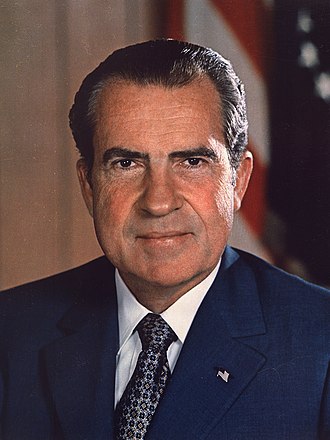
Richard M. Nixon served as the 37th President of the United States from January 1969 until his resignation in August 1974. In February 1971, he ordered the installation of a secret voice-activated taping system in the White House to preserve a historical record of his administration. Until the system's existence was revealed and dismantled in July 1973, the tapes captured Nixon directing major foreign policy initiatives, such as the opening to China, as well as his central role in the Watergate cover-up.
What Nixon talks about on the tapes
White House operations 4,718Presidential scheduling 2,225Public relations 1,784Presidential schedule 1,782Vietnam War 1,693Logistics 1,650Manolo Sanchez 1,626White House communications 1,400White House administration 1,399Presidential communication 1,243Henry Kissinger 1,191Foreign Policy 1,183
Conversations (21,010)
— Page 109 of 211President Nixon met with H. R. Haldeman, Alexander Butterfield, and Stephen Bull to coordinate administrative priorities, including the scheduling of upcoming Cabinet meetings and legislative strategies for revenue sharing and welfare reform. The discussion focused on managing congressional relations, particularly concerning Vietnam troop withdrawal amendments and the Foreign Affairs Committee, while also addressing concerns over potential political opposition from government interns and various staff salary structures. Nixon further reviewed his busy schedule, which included preparations for the state visit of Mexican President Luis Echeverria Alvarez and debriefings regarding recent diplomatic trips to the Soviet Union.
President Nixon, William P. Rogers, and Henry Kissinger met to coordinate a comprehensive foreign policy agenda, focusing heavily on the logistics of Secretary Rogers’s upcoming international tour and Congressional advocacy for the SALT I treaty. The participants discussed itinerary planning for Rogers's visits to Asia, the Middle East, and Europe, while simultaneously addressing personnel appointments and strategies to manage press and public perception. Additionally, the President engaged in outreach to Senator John L. McClellan to secure support for the defense budget and SALT-related military funding amidst potential opposition from other members of Congress.
President Nixon held a conference call with Secretary of State William P. Rogers and National Security Advisor Henry Kissinger to coordinate diplomatic or legislative strategy. Following this consultation, the President directed the White House operator to place a follow-up call to Senator John L. McClellan. This interaction suggests a high-level effort to align key administration officials and congressional leadership on sensitive policy matters.
President Nixon and Secretary of State William P. Rogers placed a joint congratulatory call to Senator John L. McClellan following his recent electoral victory. During the discussion, McClellan reflected on his successful campaign against organized labor efforts in his state while expressing a bipartisan commitment to cooperate with the administration. Both Nixon and Rogers emphasized their professional respect for the Senator and the importance of his continued service to the nation.
President Nixon and H. R. Haldeman met to discuss the controversial case of General John D. Lavelle. The conversation focused on the implications of the unauthorized air strikes conducted by Lavelle in North Vietnam and the resulting political fallout. They assessed how to manage the administration's response to the investigation and potential public perception surrounding the General's actions.
President Richard M. Nixon met with his longtime valet, Manolo Sanchez, in the Oval Office for a brief morning discussion. The interaction consisted primarily of personal matters, as evidenced by a segment designated as personal and returnable material. No official policy decisions or administrative actions were documented during this short encounter.
President Nixon and Henry Kissinger discussed a broad range of foreign policy and administrative issues, including Secretary of State William Rogers’s upcoming diplomatic travel and the political implications of the unauthorized air strikes conducted by General John D. Lavelle. The conversation touched upon the administration's strategic objectives regarding SALT ratification, legislative maneuvers involving Senator Henry M. Jackson and George McGovern, and the evolving dynamics with the Soviet Union and China. Kissinger also provided updates on personnel matters and public relations strategies to manage potential fallout from military and diplomatic developments.
President Nixon met with Alexander P. Butterfield, Rose Mary Woods, and Ronald L. Ziegler to coordinate administrative and diplomatic logistics. The primary focus involved planning a state dinner for Mexican President Luis Echeverría Álvarez, including guest list management, entertainment, and the participation of astronauts. Additionally, Nixon and Ziegler reviewed press briefing strategies regarding foreign policy, specifically covering Henry Kissinger’s upcoming trip to China, Soviet diplomatic activity, and the SALT negotiations.
President Nixon and H.R. Haldeman reviewed administrative press strategy, specifically focusing on John Ehrlichman's recent television appearance and the quality of media scrutiny. The pair coordinated upcoming public relations efforts, including briefing procedures for Henry Kissinger’s trip to the People’s Republic of China and the rollout of the Strategic Arms Limitation Treaty (SALT). Additionally, they consulted with Press Secretary Ronald Ziegler regarding the timing and content of potential future press conferences to address domestic policy and Vietnam.
President Nixon contacted the White House operator to facilitate an outgoing call to his special counsel, Charles W. Colson. The interaction served as a brief administrative coordination to establish communication with a key staff member. No further policy or substantive matters were discussed during this brief exchange.
President Nixon instructed the White House operator to relay a message to John regarding his refusal to appear on the television program *Issues and Answers*. Concerned about potential leaks or premature questioning, Nixon aimed to avoid discussing issues that were designated for formal testimony on the following Monday. He emphasized that the administration's official response should be reserved for that specific forum rather than Sunday morning media appearances.
President Nixon and Charles Colson strategized on campaign messaging and public relations ahead of the 1972 election. They discussed coordinating campaign appearances and speeches for administration officials, including William P. Rogers and Henry Kissinger, to emphasize foreign policy successes and contrast the administration's platform against George McGovern. Additionally, they analyzed electoral demographics, specifically focusing on the Jewish vote and the potential influence of Henry 'Scoop' Jackson on key states.
President Nixon and Charles Colson discussed strategic media appearances and speaking engagements for Secretary of State William Rogers. The President directed Colson to coordinate a schedule of prestigious public forums and evening talk shows for Rogers that would avoid sensitive political debates and conflict with the Democratic National Convention. Nixon emphasized the importance of controlling Rogers's public image and messaging, particularly regarding foreign policy and national defense, while ensuring he appeared in key electoral states.
President Nixon met with his aide Stephen B. Bull to coordinate administrative details regarding his schedule. The primary focus of the brief discussion was arranging a meeting between the President and Chief Justice Warren E. Burger. No further specific actions or policy decisions were documented during this short exchange.
President Nixon met with Chief Justice Warren E. Burger in the Oval Office to discuss the administrative and operational concerns of the Supreme Court, including court caseloads and legislative needs. The two explored potential future judicial appointments, strategies for addressing media criticism of the Court, and ideological shifts within the judiciary. Additionally, they reviewed international affairs, including Nixon's diplomatic opening to China, and analyzed the broader national political landscape heading into the 1972 election.
President Nixon met with his personal aide, Manolo Sanchez, and an unidentified woman to discuss mundane administrative and environmental matters. The brief encounter included a discussion regarding the current weather and a review of the President’s upcoming schedule. These proceedings primarily served to coordinate the President's engagement with Clark MacGregor.
President Nixon met with Clark MacGregor, Henry Kissinger, and H.R. Haldeman to finalize the strategy and logistics for a forthcoming Congressional briefing on the Strategic Arms Limitation Treaty (SALT). The group discussed the coordination of testimony between the State Department and the Department of Defense, the specific roles of Kissinger and Cabinet members, and the format for managing inquiries from key legislators such as J. William Fulbright. Additionally, the conversation addressed broader administration concerns, including political strategy regarding a black lung bill and the President's firm position on amnesty for Vietnam-era draft resisters.
President Nixon met with H.R. Haldeman, Clark MacGregor, Henry Kissinger, and others to discuss a wide-ranging agenda involving domestic policy, legislative strategy, and the President's public image. Key topics included the potential for presidential vetoes on various bills, the administration's stance on military amnesty, preparations for a press conference, and the logistics for an upcoming Congressional briefing on the Strategic Arms Limitation Treaty (SALT). The group also reviewed intellectual commentary on higher education and debated campaign finance matters, ultimately coordinating the administration's messaging and travel schedule.
President Nixon and his personal secretary, Rose Mary Woods, met to discuss administrative and logistical arrangements, including the placement and quality of items for the President's desk. The discussion also covered scheduling details for both the President and First Lady Pat Nixon, with specific references to travel plans involving associates such as John Mitchell, Bebe Rebozo, and Robert Abplanalp. Much of the conversation regarding specific itineraries and personnel assignments remains restricted due to personal privacy concerns.
President Nixon met briefly with his personal secretary, Rose Mary Woods, in the Oval Office to discuss his ongoing schedule. The meeting lasted only one minute, serving primarily as a logistical check-in regarding his appointments. No substantive policy matters or major decisions were recorded during this brief administrative interaction.
President Nixon met with Mexican President Luis Echeverria Alvarez, Henry Kissinger, and Alexander Haig to address bilateral tensions and the broader geopolitical stability of the Western Hemisphere. The primary bilateral issue discussed was the water salinity problem affecting the Colorado River, for which Nixon provided a personal commitment to reach a definitive, fair resolution by the end of the year. Beyond water rights, the participants discussed the threat of communist influence in Latin America, emphasizing the need for increased private investment and economic partnership to counter Soviet and Cuban-backed ideologies. The meeting underscored the shared necessity for stable economic development to prevent social unrest that could ultimately impact both nations.
President Nixon met with Stephen B. Bull to coordinate the scheduling and logistical arrangements for an upcoming visit from the Apollo 16 astronauts, John W. Young and Thomas K. Mattingly, III. The discussion focused on the sequence of events, including a photo opportunity, the presentation of gifts, and a press briefing. Bull confirmed the timeline for the astronauts' arrival and highlighted specific background details regarding the mission's technical challenges to prepare the President for the encounter.
President Nixon met with NASA astronauts Thomas K. Mattingly, III, John W. Young, and Charles M. Duke, along with NASA Administrator James C. Fletcher, to discuss the ongoing U.S. space program and its potential for international cooperation. The discussion focused on the strategic importance of the upcoming joint space mission with the Soviet Union, the role of space exploration in maintaining American national spirit, and the potential for sharing space shuttle technology with other nations. Nixon encouraged the astronauts to utilize Camp David for recreation and provided instructions regarding their recognition during a forthcoming state dinner for Mexican President Luis Echeverría.
President Nixon and Alexander Butterfield discuss logistics for an upcoming Cabinet meeting and associated photo opportunity. They finalize plans for the President to deliver remarks regarding his recent trip to the Soviet Union following the session. Nixon provides specific instructions on the arrangement of the group and dictates that official photographs be taken without the attendees present.
President Nixon consulted with his aide, Stephen B. Bull, to coordinate a potential lunch meeting with National Security Advisor Henry Kissinger. This brief interaction served to facilitate the scheduling of high-level diplomatic or policy discussions between the President and Kissinger. The primary action item was for Bull to verify Kissinger's availability for the proposed midday appointment.
President Nixon and Henry Kissinger met to review Kissinger's recent Congressional briefing on the Strategic Arms Limitation Talks (SALT). They discussed the positive reception from legislators, the administration's strategy for maintaining defense spending during negotiations, and the importance of asserting presidential leadership in foreign policy. Additionally, they reviewed global political developments, including the status of the Vietnam War and the upcoming 1972 election, while coordinating Kissinger’s travel schedule to the People’s Republic of China.
President Nixon met with his personal valet, Manolo Sanchez, in the Oval Office to address administrative or personal tasks regarding the President's immediate workspace. The brief discussion centered on organizing items within the office, specifically involving the removal or clearing of materials. No significant policy decisions were recorded during this brief logistical interaction.
President Richard M. Nixon met briefly with Alexander P. Butterfield in the Oval Office to facilitate the processing of administrative documents. The primary purpose of the meeting was for the President to review and sign various items requiring his formal authorization. Butterfield departed immediately after the President completed the necessary paperwork.
President Nixon met with an unidentified individual, subsequently joined by Press Secretary Ronald L. Ziegler, to coordinate administrative movements or public appearances. The discussion centered on locating a specific individual for a meeting during the lunch hour. No substantive policy decisions were recorded during this brief logistical exchange.
President Nixon met with an unidentified female visitor in the Oval Office to briefly coordinate scheduling for an upcoming afternoon meeting. The conversation appears to be a casual administrative exchange regarding the movements of Press Secretary Ronald L. Ziegler. No substantive policy matters or major political decisions were recorded during this brief interaction.
President Nixon held a brief, undocumented meeting with one or more unidentified individuals in the Oval Office. The surviving transcript fragment reveals only a colloquial remark in which the President declines a request or proposal, stating he will not "entertain" the individual. Due to the limited nature of the recording, no substantive policy decisions or meaningful administrative actions were captured.
President Nixon met with H. R. Haldeman, Stephen Bull, and Henry Kissinger to discuss a variety of domestic and administrative matters, including the President's upcoming schedule, staff performance, and campaign media strategies. They reviewed the administration's stance on busing policies, concerns regarding the environmental regulation of DDT, and the professional management of personnel. Additionally, the participants coordinated details for the posthumous presentation of the Medal of Freedom to the family of John Paul Vann and finalized logistics for a potential presidential trip to Walker's Cay.
President Nixon met with Saudi Prince Sultan ibn Abd al-Aziz, along with Secretary of Defense Melvin Laird and Alexander Haig, to solidify the strategic security partnership between the United States and Saudi Arabia. The discussion focused on regional stability, particularly the need for military cooperation between Saudi Arabia, Iran, and Kuwait to counter subversive threats from Iraq. The meeting concluded with a commitment to the ongoing Saudi military modernization program, including the F-5 aircraft contract and naval equipment, reinforcing a mutual desire for regional peace and security.
President Nixon met with his aide Stephen B. Bull to coordinate administrative matters and schedule updates. The discussion focused on Ronald Ziegler's upcoming press briefing and the scheduling of a meeting with John D. Ehrlichman to address the issue of busing. Following these logistical arrangements, the meeting concluded promptly.
President Nixon and his advisors, including H. R. Haldeman and Henry Kissinger, discussed public relations strategies, specifically focusing on the effective use of documentary-style media and the positive reception of astronauts on tour. The group evaluated the political benefits of their recent international initiatives, including the high-profile China announcement and strategic congressional briefings. Additionally, they reviewed recent diplomatic interactions with Mexican officials and analyzed the military situation in Vietnam, noting the resilience of South Vietnamese forces in defensive operations.
President Nixon and H. R. Haldeman met in the Oval Office to finalize logistical and ceremonial details for an upcoming State Dinner honoring Mexican President Luis Echeverría Álvarez. The discussion focused on complex seating arrangements, the management of invitation lists for various staff and guests, and the specific tone and structure of official toasts. Stephen B. Bull joined the session briefly as the President coordinated additional scheduling matters, including a meeting with John D. Ehrlichman.
President Nixon met with his senior staff, including John Ehrlichman and H.R. Haldeman, to discuss a wide-ranging agenda involving domestic policy, foreign affairs, and personnel management. Key domestic discussions focused on contentious issues such as federal busing orders in Detroit, education policy, and welfare reform, alongside strategies for revenue sharing. The participants also evaluated the quality and selection procedures for U.S. translators and ambassadorial appointments, while reflecting on historical foreign policy precedents and upcoming international diplomatic requirements.
President Nixon initiates a call to the White House operator to be connected with Governor William G. Milliken of Michigan. The primary purpose of this brief communication is to facilitate a direct conversation between the President and the Governor at his office in Lansing. No other substantive policy or political matters were discussed during this exchange.
President Nixon and Michigan Governor William G. Milliken discuss the political and legal implications of a court-ordered busing mandate in Detroit. Nixon advises Milliken to publicly emphasize the need for federal moratorium legislation to halt such court actions, arguing that congressional inaction is the primary barrier to preventing school district disruptions. The two men also discuss the limitations of existing Higher Education Act amendments and the political urgency created by anti-busing sentiment among Michigan voters.
President Nixon initiates a brief telephone request to the White House operator to be connected with CIA Director Richard Helms. This short exchange serves as the administrative bridge for a follow-up discussion between the President and the intelligence chief. No further substantive dialogue occurs during this specific recorded segment.
President Richard M. Nixon and aide Stephen B. Bull coordinated logistics for an upcoming cabinet meeting held in the Rose Garden. The discussion focused on finalizing the protocol for official photography, specifically arranging for cabinet members to pose for pictures on the Rose Garden steps before moving inside. Following these instructions, the two men exited the Oval Office to proceed with the scheduled event.
President Nixon met with his senior advisors and Cabinet members, including Elliot Richardson and Caspar Weinberger, to evaluate the legislative strategy for H.R. 1, the administration's welfare reform bill. The participants debated whether to maintain a firm stance on the original proposal or pursue a compromise with Senator Ribicoff to improve the chances of Senate passage before the Democratic National Convention. Nixon expressed concern that moving toward a compromise might blur the administration's policy distinctions from Democratic nominee George McGovern, while his advisors argued that failing to act could lead to the collapse of the legislation. Ultimately, the President deferred a final decision, requesting further analysis on the political and budgetary implications of the potential concessions.
President Nixon and Stephen B. Bull met to coordinate scheduling details regarding the President’s meeting with Mexican Secretary of Foreign Relations Emilio Rabasa Mishkin. The discussion focused on logistical arrangements for the encounter, including a potential photo opportunity on the South Lawn involving Ron Ziegler. Nixon approved the plan for the press to capture images of him with the Secretary following the meeting.
President Nixon met with Mexican President Luis Echeverria Alvarez to discuss strengthening U.S.-Mexican relations and establishing a more pragmatic, "new era" approach to Latin American policy. The leaders also addressed the persistent issue of water salinity in the Colorado River, with Nixon pledging a personal commitment to reaching a definitive, equitable solution before the end of the year. Additionally, Nixon provided Echeverria with insights into his recent diplomatic missions to the Soviet Union and the People's Republic of China, framing these interactions as essential "neo-realist" strategies for maintaining global stability and restraining communist aggression.
President Nixon briefed CIA Director Richard M. Helms on his recent meeting with Mexican President Luis Echeverría Álvarez ahead of the two men's scheduled appointment. Nixon instructed Helms to leverage the President's personal endorsement during their upcoming discussion and shared his recent intelligence assessment regarding Soviet and Chinese subversion. Furthermore, Nixon emphasized to Helms his commitment to concluding the Vietnam War correctly and maintaining a strong anti-aggression posture throughout the Western Hemisphere.
President Nixon met with staff and General Brent Scowcroft to finalize arrangements for a medal presentation ceremony honoring the late John Paul Vann. The discussion centered on managing potential press coverage and coordinating the participation of the Vann family members. Nixon explicitly directed staff to prevent a anticipated political gesture involving the presentation of a draft card by Vann’s son to ensure the event remained dignified and free of media-staged incidents.
President Nixon and Stephen B. Bull discussed final logistical arrangements for the funeral of John Paul Vann, focusing specifically on managing the conduct of Vann's son. Bull secured assurances that the son would refrain from making a potentially disruptive protest presentation during the event. The pair finalized plans for the President to honor the family and present a formal citation to the press following the services.
President Nixon hosted the family of John Paul Vann, a distinguished military and civilian advisor in Vietnam, to formally present the Presidential Medal of Freedom. During the meeting, which included key administration officials and journalist Joseph Alsop, the President lauded Vann’s dedication and selfless service, comparing his contributions to those of the Marquis de Lafayette. The event served to honor Vann's legacy following his recent death and to highlight his critical role in the efforts to secure South Vietnamese sovereignty.
President Nixon met with an unidentified individual in the Oval Office for a brief session lasting no more than three minutes. The discussion remains opaque due to the immediate withdrawal of the recording content as a personal, returnable item. Consequently, no substantive policy matters, decisions, or developments are documented for this exchange.
President Nixon and his advisors discussed the management of White House social events, specifically reviewing complaints about guest logistics and the President's personal exhaustion regarding formal dinners. The conversation also shifted to political strategy, including the President's public stance on school busing, the necessity of maintaining a clear administrative position, and upcoming strategies regarding the Democratic National Convention. Nixon and his staff further evaluated the potential of Elliot Richardson for high-level appointments while expressing concerns about the ideological unpredictability of the opposition.
President Nixon met with Alexander P. Butterfield to address administrative matters, specifically reviewing documents requiring the President's signature. The discussion focused on the President's upcoming schedule, notably the signing ceremony for the Higher Education Bill. They also evaluated potential veto options regarding the legislation, involving consultations with John D. Ehrlichman and Caspar W. Weinberger.
President Nixon met with an unidentified individual to coordinate his morning schedule and official engagements. The discussion centered on arrangements involving John D. Ehrlichman and the use of the Executive Office Building. The meeting concluded when both parties departed the Oval Office at 10:20 am.
President Nixon met briefly with his longtime personal valet, Manolo Sanchez, in the Old Executive Office Building. The primary purpose of this encounter was for Sanchez to deliver coffee to the President. The interaction was limited to this domestic request and lasted approximately twelve seconds.
President Nixon contacted the White House operator to facilitate an outgoing call to Edward L. Morgan. This brief communication served solely as a request to connect the President with a member of his administration. No substantive policy discussions or decisions occurred during this brief administrative exchange.
President Nixon and John Ehrlichman met to strategize on the administration’s legislative agenda, specifically focusing on a potential veto of an education bill to emphasize their opposition to school busing. They discussed the political risks and benefits of the veto, the ongoing Detroit desegregation case, and strategies for managing welfare reform and revenue sharing. Additionally, the President and Ehrlichman analyzed public relations tactics, expressing their shared desire to discredit the press and shift from traditional press conferences toward more controlled one-on-one media formats.
President Nixon updates CIA Director Richard Helms regarding a recent meeting with Mexican President Luis Echeverría. Nixon confirms that he has authorized a private discussion between Echeverría and Helms, intending to facilitate a high-level intelligence channel. The President also instructs Helms to brief the Mexican leader on U.S. foreign policy perspectives concerning the Soviet Union and China.
President Nixon held a brief, informal meeting with an unidentified individual, potentially a staff member or aide, to discuss routine personal and scheduling matters. The conversation centered on the participant's upcoming vacation plans and the need for him to take a break due to his recent demanding workload. No major policy decisions were reached, as the discussion remained limited to administrative logistics and personnel management.
President Nixon and H. R. Haldeman convened to discuss an upcoming meeting with John D. Ehrlichman regarding the higher education bill. The discussion focused on coordinating the administration's position and legislative strategy concerning the proposed education legislation. This interaction highlights the internal deliberation process leading up to high-level policy briefings during the 1972 term.
President Nixon met with an unknown staff member to discuss the logistical requirements for dictation equipment at his private retreat in Walker's Cay and aboard Air Force One. Nixon expressed dissatisfaction with the performance of existing hardware and instructed that smaller, more reliable portable units be prioritized for these non-permanent locations. This exchange reflects the President’s direct oversight regarding the technical support and operational preferences for his personal administrative workflow.
President Nixon and H. R. Haldeman met to review political strategy, upcoming schedule logistics, and public relations efforts for the 1972 reelection campaign. They discussed managing outreach to various demographics, including veterans and Polish-American leaders, as well as handling legislative issues such as the Vietnam resolution and the Higher Education Bill. Additionally, the pair addressed organizational concerns regarding campaign staffing, the necessity of maintaining a strong public image to project authority, and brief concerns regarding potential surveillance or political sabotage.
President Richard M. Nixon and his daughter, Tricia Nixon Cox, discussed scheduling arrangements for an upcoming dinner on Wednesday, June 21, 1972. The conversation focused on selecting entertainment for the evening, specifically evaluating options between a movie and a documentary. The exchange served to finalize the President's personal plans.
President Nixon instructed the White House operator to place an outgoing call to Senator Margaret Chase Smith. This brief administrative interaction served as a logistical step to facilitate direct communication between the President and the Senator. No further substantive details regarding the purpose or outcome of the conversation were recorded in this brief exchange.
President Nixon initiates a brief administrative communication with the White House operator to place an outgoing call. The interaction serves as a functional request to connect with another party, highlighting the standard logistical procedures used by the President to manage official correspondence. No substantive policy discussions or decisions are recorded in this brief exchange.
President Nixon called Senator Margaret Chase Smith to congratulate her on a narrow victory in her recent primary election. The two discussed her campaign strategies, expenditures, and the overall outlook for the 1972 Republican electoral prospects. Their conversation also touched upon the political landscape in Maine, including references to Edmund Muskie and the President's historical familiarity with the state.
President Nixon spoke with Senator Margaret Chase Smith to congratulate her on a significant primary victory in Maine. The discussion touched upon her low-budget campaign strategy and the political landscape in Maine following the exit of Edmund Muskie. Nixon expressed his desire to visit the state and urged Smith to focus on securing strong Republican candidates for upcoming congressional races.
President Nixon requested that the White House operator place a telephone call to Senator Hugh Scott. This administrative action was intended to facilitate direct communication between the President and the Senate Minority Leader. No further details regarding the purpose or outcome of the requested call were recorded.
President Nixon instructed the White House operator to place an outgoing call to Joseph Trerotola, a prominent labor leader and official with the International Brotherhood of Teamsters. This brief administrative exchange served solely to facilitate communication between the President and the union leader. No further substantive policy matters were discussed during this brief connection.
President Nixon met with an unidentified individual in his Old Executive Office Building suite for a brief, private encounter. The interaction was limited to the President declining an offer of refreshments. No other substantive political or administrative topics were recorded, and the meeting concluded shortly thereafter.
An unidentified individual met with President Nixon in the Old Executive Office Building to provide a briefing or report. The participants briefly coordinated a window of time for the discussion, with Nixon offering availability throughout the following hour. No specific policy details were captured in this fragment, as the interaction focused primarily on scheduling the presentation of the report.
President Nixon consulted with a White House operator to place an outgoing telephone call. The interaction served as a brief administrative bridge to facilitate the President's communications. No substantive policy matters or strategic developments were discussed during this brief exchange.
President Nixon consulted with a White House operator to facilitate an outgoing telephone connection. This brief interaction served administrative purposes to establish communication with an external party. No substantive policy matters or political developments were recorded during this brief connectivity exchange.
President Nixon and Senate Republican Leader Hugh Scott engage in a brief, informal check-in regarding Scott's recent health progress. The conversation touches upon the current political climate, including legislative strategies concerning Vietnam and broader foreign policy considerations. The two men also briefly discuss the strategic implications of ongoing arms negotiations and public perception of administration initiatives.
President Nixon met with Senate Minority Leader Hugh Scott to discuss concerns regarding proposed defense spending cuts and their impact on American foreign policy credibility, particularly in Vietnam. The two men addressed the political challenges of managing legislative opposition, with Nixon emphasizing the dangers of a 'death wish' mentality among critics who favored reduced military capabilities. Nixon encouraged Scott to use his judgment in navigating these legislative pressures to ensure national interests were protected during ongoing negotiations.
President Nixon met with Alexander Haig to assess the status of the Vietnam War, discuss legislative strategy, and review international relations with the Soviet Union and China. They focused on countering North Vietnamese public relations efforts in the U.S. press, managing congressional support for administration policies, and evaluating the military preparedness of South Vietnamese forces. Nixon ultimately decided against engaging with Senator J. William Fulbright, choosing instead to maintain a firm stance on foreign policy and arms control negotiations.
President Nixon held a brief telephone conversation with Joseph Trerotola to express his personal appreciation for Trerotola’s recent support. The President lauded Trerotola’s strength and affirmed his satisfaction with having him as an ally, specifically referencing a commitment made by Trerotola two days prior. The discussion served as a brief gesture of gratitude and political reinforcement.
President Nixon instructed the White House operator to place an outgoing call to Clark MacGregor. This brief administrative interaction served to facilitate communication between the President and the head of the Committee for the Re-Election of the President. No further substantive discussion was recorded during this exchange.
President Nixon consulted with the White House operator to determine the whereabouts of Clark MacGregor. The primary purpose of the brief inquiry was to facilitate a return call to MacGregor. No further substantive policy matters were addressed during this exchange.
President Nixon and Clark MacGregor consulted regarding legislative strategy and the administration’s response to ongoing congressional debates over Vietnam policy. The discussion touched upon the timing of legislative actions, the effectiveness of specific messaging proposed in a memorandum by Patrick J. Buchanan, and the political implications of compromise on war-related votes. Nixon emphasized a cautious approach, advising against certain public statements while evaluating how congressional movements might influence North Vietnamese strategy.
President Nixon contacted the White House operator to facilitate a telephone connection with special counsel Charles W. Colson. The brief exchange served as an administrative request to reach Colson for a follow-up discussion. No substantive policy matters were addressed during this brief call-routing interaction.
President Nixon held a brief, routine administrative communication with the White House operator. The exchange was limited to standard telephonic logistics rather than substantive policy matters. No major decisions or developments were recorded during this brief interaction.
President Nixon and Charles Colson held a brief telephone discussion concerning the evolving situation following the Watergate break-in. The primary focus of the dialogue involved assessing the political fallout and managing the narrative surrounding the incident. No specific long-term decisions were recorded during this brief exchange, which served as an initial touchpoint for coordinating the administration's response.
President Nixon and Charles Colson coordinate a brief, private meeting to discuss sensitive matters following the recent Watergate break-in. The participants verify the security of their current location before Colson is summoned to the President's office. This brief exchange serves primarily as a procedural arrangement to facilitate a confidential in-person consultation.
President Nixon and Charles W. Colson met to discuss campaign strategy for the 1972 election, focusing heavily on undermining Democratic candidate George McGovern by highlighting his radical policy positions and lack of mainstream appeal. The pair reviewed polling data, analyzed media coverage, and explored ways to exploit divisions within the Democratic Party and organized labor. Furthermore, they deliberated on a plan to develop an independent media analysis operation to systematically counter the influence of the New York Times and the Washington Post.
President Nixon contacted the White House operator to facilitate an outgoing call to his personal aide, Stephen B. Bull. The brief communication served primarily as an administrative request to establish this connection. No substantive policy discussions or policy-related developments occurred during this brief exchange.
President Nixon consulted with a White House operator to facilitate a connection with Beverly J. Kaye regarding his personal schedule. The brief interaction served as an administrative bridge to discuss upcoming logistical arrangements for the President's calendar. No substantive policy matters were addressed during this brief exchange.
President Nixon held a brief, informal communication involving a White House operator and Beverly J. Kaye. The exchange served as a routine administrative or logistical contact initiated by the President. No substantive policy discussions or significant executive decisions were recorded during this short interaction.
President Nixon contacted the White House operator to facilitate a telephone call to his speechwriter and advisor, Patrick J. Buchanan. This brief administrative interaction served as the necessary logistical step to connect the President with his staff member for further consultation. No additional substantive policy discussions occurred during this exchange.
President Nixon consulted with the White House operator to facilitate an outgoing telephone communication. This brief interaction served the administrative purpose of connecting the President to another party for an official or personal discussion. No substantive policy matters or historical developments were recorded during this brief logistical exchange.
President Nixon held an brief, private meeting with his valet, Manolo Sanchez, in the Old Executive Office Building. Due to the lack of a transcript and the existence of withdrawn personal materials, the specific substance of their exchange remains unrecorded. The interaction concludes with Sanchez departing the office shortly thereafter.
President Nixon and Patrick J. Buchanan engaged in a brief telephone consultation regarding the preparation of a memorandum. The discussion focused on establishing the document's structure, including its significance, analytical framework, and specific talking points. This conversation served as a preparatory step to determine the framing and strategic wording for an upcoming communication or briefing document.
President Nixon and Patrick Buchanan discuss media strategy and legislative maneuvering regarding a specific congressional vote, likely related to fiscal policy or tax legislation. The President seeks to refine messaging for upcoming speeches and media appearances, specifically referencing an op-ed piece by Robert Novak. Additionally, Nixon instructs Buchanan to consult with George Shultz to clarify his position on a pending tax bill and ensure administration unity.
President Nixon and John Ehrlichman discussed the administration’s strategy regarding a pending Detroit busing court decision and the controversial use of the pesticide DDT. The President sought to navigate political sensitivities by limiting his public commentary on active legal proceedings while weighing his stance on Environmental Protection Agency policies. Ultimately, the two reached an understanding on how the President should address these sensitive issues to maintain administrative alignment without committing to premature public positions.
President Nixon and H. R. Haldeman met briefly to coordinate their schedules and manage the President's availability. The discussion focused on directing staff to wait in an adjacent area until the President was prepared to receive them. The exchange primarily served to facilitate administrative logistics and movement within the Old Executive Office Building.
President Nixon and H. R. Haldeman met to assess the unfolding political fallout of the Watergate break-in and strategize on damage control. They discussed the involvement of figures such as E. Howard Hunt, James McCord, and John Mitchell, focusing on potential links to the White House and the Committee to Re-elect the President while debating how to handle upcoming legal and media challenges. The conversation also touched upon the timing of troop withdrawal announcements for Vietnam, the scheduling of a presidential press conference, and concerns regarding security protocols for upcoming public appearances.
President Nixon contacted the White House operator to facilitate a telephone connection with his Chief of Staff, H.R. Haldeman. This brief administrative interaction served as the necessary logistical step to initiate a direct conversation between the President and his senior advisor. No substantive policy matters or further details were discussed during this exchange.
President Nixon and H. R. Haldeman engaged in a brief telephone conversation primarily characterized by technical audio issues. Despite the presence of significant background noise and unintelligible segments, the discussion involved logistical coordination regarding a separate call between the President and John N. Mitchell. No substantive policy decisions or actionable directives could be discerned from the recorded transcript.
President Nixon and H.R. Haldeman discuss the aftermath of the Watergate break-in, specifically focusing on John Mitchell's distress and the need to manage the administration's involvement in the election. The participants deliberate on how to navigate the unfolding scandal while expressing concern over the risks associated with providing too much information or overreacting too quickly. Their exchange highlights the early efforts to contain the political fallout and coordinate a strategy regarding the ongoing investigation.
President Nixon contacted the White House operator to place an outgoing call to aide Charles W. Colson. The interaction served as a logistical bridge to facilitate a subsequent discussion between the President and his special counsel. No substantive policy matters were addressed during this brief administrative exchange.
President Nixon held a brief administrative interaction with a White House operator to facilitate an outgoing call. The discussion focused solely on establishing a connection with an unspecified party. No substantive policy matters or strategic developments were recorded during this brief exchange.
President Nixon and Charles Colson discuss administrative logistics regarding a specific task, cryptically referred to as dividing and retrieving "the ball." While the conversation remains highly informal and lacks explicit policy context, it serves as a brief check-in regarding ongoing operations. The exchange indicates a sense of urgency in securing or managing these materials.