Arends, Leslie C.
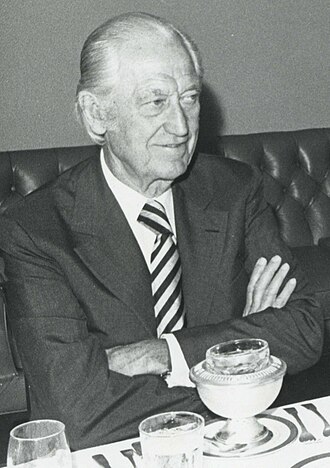
Leslie C. Arends was a Republican U.S. Representative from Illinois and served as the House Minority Whip throughout the entirety of the Nixon administration. During the White House taping period from February 1971 to July 1973, Arends acted as a crucial liaison between the Oval Office and House Republicans, frequently meeting with President Nixon to coordinate legislative strategy. As the ranking Republican on the House Armed Services Committee, he was a steadfast loyalist who consistently supported the President's defense and budget policies, remaining one of Nixon's most dedicated defenders during the Watergate scandal.
President Nixon met with Republican congressional leaders and cabinet members to discuss rural development initiatives and solicit support for the administration's policy agenda. Secretary of Agriculture Clifford Hardin and staff provided an extensive briefing on the status of rural America, highlighting demographic shifts and explaining the mechanics of proposed federal revenue-sharing programs designed to foster economic growth. Participants also reviewed legislative priorities, including the upcoming vote on the supersonic transport (SST) appropriation and other pending congressional business.
President Nixon met with Vice President Agnew and Republican Congressional leaders to secure support for two of his primary initiatives: the Supersonic Transport (SST) program and a major government reorganization plan. Secretary of Transportation John Volpe advocated for the SST by addressing environmental, economic, and technological concerns, arguing that the project was essential for U.S. aviation preeminence and long-term economic growth. Subsequently, John Connally detailed the work of the Ash Council, urging the legislators to embrace a fundamental restructuring of the executive branch to improve government efficiency, accountability, and public trust. Nixon emphasized that these measures were critical for ensuring that his administration could effectively manage federal programs and maintain the nation's competitive edge.
President Nixon met with House Minority Whip Leslie C. Arends to discuss legislative strategy, defense spending, and the upcoming congressional briefing regarding the Laos operation. The two men addressed concerns over Federal Communications Commission activities and the potential impact of network regulation, while also touching upon the status of various presidential nominees. The President emphasized the importance of ensuring bipartisan participation—specifically including Democrats—in the scheduled briefing to maintain support for his foreign policy initiatives.
President Nixon met with Vice President Agnew and Republican Congressional leaders to discuss the administration's legislative and economic agenda. The participants analyzed current economic indicators, including inflation and productivity, and evaluated the implementation of the Task Force for International Development's recommendations regarding foreign and military aid. Additionally, the group addressed the future of the military draft, focusing on pay increases and the transition toward an all-volunteer force while assessing potential legislative hurdles in Congress.
President Nixon called Representative Leslie Arends to thank him for his supportive remarks during a recent meeting regarding the administration’s handling of the Vietnam War. The two discussed the disparity between the pessimistic outlook of Washington politicians and the underlying stability of the country. They concluded with a mutual agreement on the political necessity of communicating the administration’s strategy for ending the war to the American public, specifically noting that Democrats were worried the President's approach would ultimately succeed.
President Nixon met briefly with Congressman Leslie C. Arends to express gratitude for Arends’ supportive remarks during an earlier meeting. The two men briefly discussed the public's changing perception of the Vietnam War and the administration's progress in achieving its objectives. Nixon emphasized his determination to maintain control over the war effort despite opposition from Democrats who feared the administration's policies might succeed.
President Nixon met with Vice President Agnew, Treasury Secretary John Connally, and Republican Congressional leaders to address critical economic and legislative challenges. The primary focus was the potential bankruptcy of the Lockheed Corporation and the necessary legislative strategy to secure government loan guarantees to prevent a ripple effect of industrial failures and job losses. Additionally, the group reviewed the administration's legislative priorities, including welfare reform, general and special revenue sharing, and the status of various appropriations bills.
President Nixon met with Republican congressional leadership, including Hugh Scott and Gerald Ford, to coordinate the administration’s messaging on key domestic and economic issues. The discussion focused on framing the recent mass arrests of anti-war protesters as a necessary measure to maintain public order against vandalism. Additionally, the President urged the leaders to publicly support the Lockheed loan guarantee as a critical initiative for protecting peacetime jobs, aiming to preempt political opposition from Democratic rivals.
President Nixon met with key advisors and congressional leadership to strategize on economic stimulation and political coalition-building. The discussion prioritized directing federal funds and public works projects—particularly in California—to combat unemployment and secure electoral support. Concurrently, Nixon and his aides explored strategies to form a coalition of Republicans and conservative Southern Democrats in Congress to advance key administration goals, including the revival of the Supersonic Transport (SST) program and countering anti-war legislative efforts.
President Nixon consulted with various staff and political allies, including H.R. Haldeman, Leslie Arends, and Frank Bow, to coordinate strategy regarding House legislative votes and foreign policy objectives. A primary focus was managing opposition to the Mansfield Amendment, which proposed significant reductions to NATO troop levels, and leveraging John Scali to organize effective public and legislative pushback. Additionally, Nixon reflected on his upcoming foreign policy address, contrasting his broader vision for the nation with the mechanical nature of domestic initiatives like revenue sharing.
President Nixon calls House Minority Whip Leslie C. Arends to congratulate him on securing a narrow legislative victory regarding the supersonic transport (SST) funding. Arends explains how strategic procedural maneuvers, including securing pairs from the Illinois delegation—specifically Representatives Philip M. Crane, Robert H. Michel, and Harold R. Collier—were instrumental in the vote. The two discuss the importance of selecting favorable House-Senate conference committee members to maintain their momentum against the Senate.
President Nixon met with his Cabinet and Republican Congressional leaders to coordinate the administration's legislative agenda, specifically addressing the ongoing national railroad strike and the upcoming Congressional vote on the military draft. The discussion also focused on foreign policy, with Secretary of Defense Melvin Laird and Henry Kissinger providing briefings on the status of NATO, the credibility of U.S. military commitments in Europe, and the implications of recent Soviet statements regarding mutual force reductions. The President urged the Congressional leaders to maintain a firm stance against unilateral U.S. force withdrawals while emphasizing the need to handle these matters through stable, negotiated frameworks rather than disruptive legislative amendments.
President Nixon met with Vice President Agnew and a bipartisan group of Congressional leaders to announce a significant diplomatic breakthrough in the Strategic Arms Limitation Talks (SALT). Nixon informed the attendees of a forthcoming joint statement with the Soviet Union pledging to focus on limiting anti-ballistic missile (ABM) systems and certain offensive strategic weapons. While some lawmakers advocated for immediate unilateral U.S. defense cuts to demonstrate good faith, the President and his advisors successfully urged the leaders to maintain existing defense programs during the negotiations to avoid losing vital bargaining leverage.
President Nixon spoke with Congressman Leslie C. Arends to emphasize that the recent breakthrough in Strategic Arms Limitation Talks (SALT) was a direct result of Congressional support for the antiballistic missile (ABM) program. Nixon credited the firm stance of his allies for the success of his latest announcement and the resulting silence from political opponents like J. William Fulbright. Arends agreed to convey this message to his fellow committee members, including F. Edward Hébert, to reinforce the strategic value of their legislative unity.
President Nixon met with Stephen B. Bull to coordinate logistical details regarding his upcoming attendance at an event at the French embassy. Following this brief administrative check, the President held a short interaction with Leslie C. Arends. The primary focus of the brief session was the management of the President's daily schedule.
President Nixon met with Republican congressional leaders, including Gerald Ford and Leslie Arends, to discuss strategies for defeating proposed legislative amendments that would mandate a withdrawal date for U.S. troops in Vietnam. The President emphasized that setting a legislative deadline would undermine sensitive, ongoing, and potentially critical negotiations, while also damaging the U.S. position regarding the return of prisoners of war. Nixon and the leadership agreed to maintain a firm stance against these anti-war resolutions to protect executive authority and preserve bargaining power, while assuring the lawmakers that the administration remained committed to ending the war and ensuring political success for the party.
President Nixon met with Republican Congressional leaders to discuss the administration’s new, multi-pronged national strategy for combating drug abuse, emphasizing a shift toward treatment, rehabilitation, and the creation of a centralized Special Action Office. During the discussion, Nixon and his team outlined plans for increased interdiction, expanded military detoxification programs, and a firm, non-permissive stance against the legalization of marijuana. Furthermore, the participants addressed the political climate surrounding the Vietnam War, with Nixon urging support against anti-war amendments and arguing that congressional deadlines for withdrawal would undermine sensitive ongoing negotiations.
President Nixon met with a bipartisan group of Congressional leaders and administration officials to propose a centralized federal office for coordinating drug abuse prevention and treatment strategies. The discussion highlighted the urgency of addressing drug addiction, particularly among servicemen in Vietnam and youth in the United States, by shifting from a fragmented, multi-agency approach to a unified, performance-based model. Participants debated the integration of law enforcement, research, and treatment programs, with an emphasis on establishing flexible, community-based solutions and securing Congressional support for new enabling legislation.
President Nixon met with bipartisan Congressional leaders and senior administration officials to discuss the sensitive diplomatic initiative concerning the normalization of relations between the United States and the People’s Republic of China. The President and Henry Kissinger briefed the group on the nature of these confidential negotiations, emphasizing the necessity of absolute discretion to ensure the process remained successful. Nixon and his team requested that participants avoid speculation and maintain a unified, non-partisan front when speaking publicly about the delicate geopolitical implications of this shift in U.S. foreign policy.
President Nixon and his administration met with Republican Congressional leaders to discuss the 1971-1972 economic outlook, focusing on key indicators such as GNP, unemployment rates, and inflation. The discussion centered on evaluating recent economic growth, managing ongoing labor disputes in the steel and transportation sectors, and addressing political concerns regarding the administration's fiscal and wage-price policies. The President and his economic advisors emphasized their commitment to achieving peacetime economic stability and requested support from leadership to convey a positive but measured economic narrative to the public.
President Nixon met with Republican congressional leadership, including Gerald R. Ford, Hugh Scott, and Robert P. Griffin, to coordinate legislative strategy on pressing domestic economic issues and sensitive foreign policy matters. The discussion focused on securing congressional cooperation for trade and tax policies, addressing unemployment and inflation, and managing public perception regarding the Vietnam War. Additionally, Nixon emphasized the necessity of maintaining strict confidentiality in diplomatic negotiations, particularly regarding his administration’s opening to the People's Republic of China and future discussions with the Soviet Union.
President Nixon convened a meeting with Vice President Agnew and a bipartisan group of Congressional leaders to discuss the national economy and his administration's "New Economic Policy." Key topics included the wage-price freeze, investment tax credits, the international monetary situation, and an import surcharge. The discussion focused on the necessity of Congressional cooperation for implementing these measures and their potential impact on inflation, trade, and specific industries like automobiles.
President Nixon met with a large group of Republican Congressional leaders to solicit support for his administration's economic initiatives, specifically the New Economic Policy and tax reform measures. Key topics included the Job Development Tax Credit, depreciation reform, and strategies to secure bipartisan support for the Economic Stabilization Act as the program entered its second phase. The participants also discussed the necessity of public and business cooperation, as well as the international trade context of the President's economic agenda.
President Nixon met with Senator Gordon Allott and other administration and congressional officials to secure the passage of the military draft extension bill. The discussion focused on overcoming legislative stalemates, specifically the concerns surrounding the Mansfield Amendment and the threat of a Senate filibuster. Nixon emphasized that extending the draft was critical to maintaining the United States' international standing and global leverage, and he committed to personally lobbying Senate Majority Leader Mike Mansfield to reach a resolution.
President Nixon met with congressional leaders and administration officials, including John C. Stennis and Melvin R. Laird, to coordinate legislative strategy regarding HR 6531 and the broader Military Procurement Bill. The participants discussed the status of the bill in Congress, specifically focusing on managing the Mansfield amendment and navigating the conference committee process. The discussion emphasized building support for the administration's military objectives and preparing for legislative action items in the coming week.
President Nixon met with Republican congressional leadership, staff, and advisors to coordinate the administration’s legislative agenda for the final months of the 1971 session. The discussion focused on securing passage of the President's tax package, welfare reform, and revenue-sharing initiatives, while navigating difficult Senate opposition and House parliamentary hurdles. Nixon emphasized the urgent need for political pressure on Democrats regarding a federal wage deferral bill and outlined strategies for upcoming Supreme Court nominations to ensure successful confirmations.
President Nixon met with a bipartisan group of Congressional leaders and key administration officials to discuss his upcoming summit in Moscow and broader U.S. strategy regarding the Soviet Union and China. The President emphasized that his administration sought to maintain a delicate balance between the two powers without appearing to collude with one against the other. The discussion underscored the importance of bipartisan support for national defense funding and the need for diplomatic engagement to prevent escalation in volatile regions like the Middle East.
President Nixon and Republican Congressional leaders met to coordinate strategy on key foreign and domestic policy initiatives, emphasizing the administration's progress in achieving global peace and economic stabilization. Secretary of State William Rogers provided an assessment of U.S. leadership, focusing on the upcoming United Nations vote regarding Taiwan, the ongoing India-Pakistan crisis, and preparations for Nixon's summits in Moscow and Beijing. The group also discussed legislative tactics for securing Republican priorities, specifically the Economic Stabilization Act and the ongoing challenge of the Mansfield Amendment to Vietnam policy. Nixon urged the leaders to maintain a firm, unified front to avoid projecting vulnerability to foreign adversaries and domestic political opponents.
President Nixon met with his legislative leaders and foreign policy advisor Henry Kissinger to discuss the precarious political situation in the House of Representatives regarding Vietnam troop withdrawal legislation and foreign aid. Facing pressure from the Mansfield Amendment and potential legislative deadlines, the President emphasized the need to maintain negotiating leverage—specifically to ensure the return of POWs—and urged his team to prevent the House from forcing an early withdrawal deadline. Nixon directed his allies to reward Democrats who supported his Vietnam policy while instructing them to leverage Justice Department intervention in the Grand Rapids school busing case to gain political favor.
President Nixon, John Connally, Donald Rumsfeld, and a delegation of Republican Congressional leaders met to coordinate legislative strategy regarding the administration's domestic economic program and various foreign policy concerns. The discussion focused on the implementation of wage and price controls, pending tax legislation, and the management of international trade negotiations, particularly regarding Japan and the import surcharge. Participants also addressed the confirmation of Supreme Court nominees Lewis F. Powell and William Rehnquist, as well as ongoing legislative battles concerning the Vietnam War and Defense Department appropriations.
President Nixon met with Vice President Agnew and Republican congressional leaders to discuss strategy regarding his recent speech on Vietnam and the administration's upcoming FY 1973 budget. The President and Henry Kissinger briefed the attendees on the Vietnam peace negotiations, emphasizing that the U.S. had made comprehensive offers while denouncing North Vietnamese intransigence and political maneuvering. Economic advisors, including George Shultz and Herbert Stein, presented the administration's fiscal plans, highlighting the importance of balancing the budget while supporting a transition to a peacetime economy through controlled spending and wage-price stabilization. Participants agreed on the necessity of maintaining a firm stance on defense and economic policy to solidify public support and improve the administration's negotiating leverage.
President Nixon met with a bipartisan group of Congressional leaders to discuss his upcoming historic trip to the People's Republic of China. The President sought to build support for the mission, briefing the group on communication protocols with Peking and his strategy for managing the international and domestic implications of the visit. The discussion emphasized the goal of establishing a new dialogue with the PRC to foster long-term global stability and balance regional power dynamics.
President Nixon met with a bipartisan group of Congressional leaders to provide a firsthand report on his recent diplomatic mission to the People's Republic of China (PRC). During the briefing, the President discussed his interactions with Chinese leadership, the strategic importance of establishing communication channels, and the complex geopolitical dynamics concerning Taiwan and the broader Pacific region. The meeting emphasized the necessity of maintaining trust and diplomatic dialogue to navigate future international relations and manage long-term foreign policy objectives.
President Nixon met with Vice President Agnew and Republican Congressional leaders to coordinate legislative strategy on key domestic priorities, specifically revenue sharing, welfare reform, and Social Security legislation. The discussion focused on overcoming legislative stalemates in the Ways and Means Committee and the Senate, particularly regarding the influence of Chairman Wilbur Mills and the need for a unified Republican stance. The President urged the leadership to maintain pressure for compromise bills that align with administration goals while avoiding fiscally irresponsible mandates during an election year.
President Nixon met with Republican congressional leaders and cabinet officials to strategize on the administration's legislative agenda, specifically focusing on revenue sharing, welfare reform, and the Equal Educational Opportunities Act. The discussion addressed the political and procedural challenges of implementing a busing moratorium and the importance of countering Democratic criticism regarding the economy. Nixon emphasized the need for a unified party strategy to leverage economic accomplishments and maintain pressure on Democratic opponents leading into the 1972 election cycle.
President Nixon met with Republican congressional leadership to coordinate administration talking points on sensitive domestic and foreign policy issues. The discussion focused primarily on the ongoing military situation in Vietnam, emphasizing the success of Vietnamization, the importance of maintaining public support, and the necessity of keeping political opposition from undermining the war effort. Additionally, the President and his advisors briefed members on key legislative priorities, specifically the administration's stance against forced busing and efforts to address rising food prices and drug-related crime. The participants discussed strategies for distributing these fact sheets and maintaining a unified front to influence public perception and legislative outcomes.
President Nixon met with Republican congressional leadership to coordinate strategy on key domestic and foreign policy issues during an election year. The discussion focused on distributing fact sheets regarding economic improvements, crime reduction, and unemployment to bolster support, while also strategizing to defeat restrictive anti-war amendments in Congress. Additionally, the President announced his decision to appoint an acting FBI director to ensure institutional stability following the death of J. Edgar Hoover, aiming to shield the bureau from partisan political controversy.
President Nixon met with Vice President Agnew and key Republican Congressional leaders to coordinate legislative strategy on critical administration priorities, specifically revenue sharing, the defense procurement bill, and Vietnam-related war powers resolutions. The discussion focused on overcoming Democratic resistance to the President’s revenue-sharing program and maintaining a firm legislative stance on maintaining military strength. Nixon emphasized that American foreign policy, including negotiations with the Soviet Union, remains contingent upon the credibility of U.S. defenses and a unified national commitment.
President Nixon met with Vice President Agnew and Republican Congressional leaders to analyze the current political landscape and formulate electoral strategies heading into the 1972 campaign. A significant portion of the discussion focused on the perceived bias of the media in their treatment of Democratic candidate George McGovern compared to historical GOP figures like Barry Goldwater. Nixon encouraged leadership to coordinate closely on legislative and campaign messaging, noting that the Republican party must remain disciplined to capitalize on the internal divisions within the Democratic party.
President Nixon held a large-scale photographic session in the Oval Office with numerous Republican senators, representatives, and congressional candidates. The event was coordinated by technical staff to capture official images of the President with party members. Following the main group session, Clark MacGregor remained for a brief private discussion with the President.
President Nixon met with a large group of Republican Congressional leaders to coordinate legislative strategy and discuss the administration's economic record ahead of the upcoming election. The conversation focused on countering Senator George McGovern's economic proposals, with the President and his advisors emphasizing that the administration's policies had fostered recovery, reduced inflation, and increased civilian employment. Key action items included distributing briefing materials to counter Democratic attacks, pushing for a government spending ceiling to avoid future tax increases, and planning strategy for upcoming votes on controversial appropriation bills and foreign aid legislation.
President Nixon met with Vice President Agnew and Republican Congressional leaders to coordinate legislative strategy ahead of the upcoming election, specifically focusing on the status of pending bills and the management of the Congressional schedule. Key priorities included securing a federal spending ceiling, advancing revenue sharing, and emphasizing anti-busing legislation as a must-pass measure to counter Democratic-led policies. The President urged the leadership to maintain a unified front on fiscal restraint, framing opposition to Republican economic proposals as reckless and warning that Democrats should bear the political cost for failing to curb government spending.
President Nixon met with Secretary of Defense Melvin Laird and various congressional leaders to discuss the signing of the Uniformed Services Health Provisions Revitalization Act (HR 2) and the promotion of defense-related legislation. The conversation transitioned into campaign strategy for the 1972 election, with Nixon and Laird analyzing the political implications of George McGovern's defense platform and coordinating appearances to target specific demographics in key states like Massachusetts and Wisconsin. Additionally, they praised the public speaking skills of Brigadier General Daniel 'Chappie' James Jr. and discussed administrative efforts to bolster military support through strategic announcements, such as new contracts for the Quincy shipyards.
President Nixon hosted a bipartisan group of Congressional members and Department of Defense officials in the Cabinet Room for the formal signing of HR 10670, a bill establishing a survivor benefit plan for retired military personnel. The discussion emphasized the necessity of providing military families with benefits comparable to those in the Foreign Service and other civilian sectors. The President utilized the event to express his administration's gratitude for Congressional support and to stress the importance of national respect for those serving in an all-volunteer armed force.
President Nixon met with Republican Congressional leaders to discuss the critical need for a $250 billion federal spending ceiling to combat inflation and prevent the necessity of tax increases. The participants strategized on how to manage the upcoming House vote on HR 16810, expressing concern that Democratic leadership was pushing irresponsible, expansive spending bills—including massive social welfare and Social Security packages—that threatened the administration's fiscal goals. The President emphasized that passing the spending cap was a vital political and economic tool to hold Congress accountable and establish a framework for the 1974 budget, while also providing leverage for future presidential vetoes.
President Nixon met with a bipartisan group of Congressional leaders to provide a detailed briefing on the recently finalized Vietnam Peace Agreement and its implementing protocols. Henry Kissinger explained the strategic nuances of the agreement, including the status of North and South Vietnam, the mechanisms for the International Control Commission, and the timeline for the withdrawal of U.S. forces and the release of prisoners of war. The President emphasized the necessity of bipartisan Congressional support to ensure the agreement's stability and signaled that the administration would work with Congress to frame a positive resolution regarding the end of the war.
President Nixon met with Republican congressional leadership to outline his fiscal strategy for the 1974 budget, emphasizing the necessity of expenditure control to avoid tax increases and curb inflation. Nixon and his advisors discussed the use of budget impoundments to maintain a spending ceiling of $269 billion, framing this approach as a critical move for economic prosperity despite the anticipated pushback from special interest groups. The meeting concluded with a call for Republican leaders to unify behind the administration's fiscal restraint and to clearly communicate that budget cuts are essential for maintaining national economic stability.
President Nixon met with Republican congressional leaders to discuss his administration's legislative priorities, focusing primarily on securing support for a fiscally responsible budget. He emphasized the necessity of cutting spending and utilizing presidential vetoes to combat inflation and avoid tax increases, framing these actions as essential for the nation's economic stability. Additionally, the President and the leaders engaged in an extensive review of recent foreign policy, specifically highlighting the significance of the Vietnam cease-fire and the strategic importance of U.S. global leadership.
President Nixon and Republican congressional leaders met to discuss the administration's legislative agenda, specifically focusing on the "New Federalism" approach to governance. The President emphasized shifting decision-making power from the federal bureaucracy to local and state authorities through programs like the Better Communities Act and the Responsive Government Act. Additionally, the conversation addressed a robust crime-fighting package, including proposed federal death penalty statutes and mandatory sentences for major drug traffickers, while positioning these initiatives as essential to restoring national law and order.
President Nixon met with Republican Congressional leaders and economic advisors to discuss strategies for addressing rising food prices, inflation, and the ongoing transition of the wage-price stabilization program. Key topics included the administration's efforts to increase food supplies and imports, the management of labor-management relations, and the necessity of maintaining party unity to sustain presidential vetoes on spending legislation. The meeting underscored the administration's focus on economic control and the importance of Congressional support in implementing fiscal policy.
President Nixon met with Congressional leaders Hugh Scott and Leslie Arends, along with staff members, to coordinate a strategy for responding to the Watergate investigation while emphasizing the administration's commitment to cooperation without compromising executive privilege. Nixon stressed the importance of framing their stance around the constitutional separation of powers and the legal precedent against compelling White House staff to testify before Congressional committees. Additionally, the participants discussed legislative priorities, specifically the need to build Republican support for the President's vetoes on budget appropriations to curb inflation and rising food costs.
President Nixon met with Vice President Agnew and a bipartisan group of Congressional leaders to outline the administration's proposed foreign trade legislation. The discussion focused on securing presidential authority to negotiate trade agreements, implementing safeguards for domestic industries, and establishing pension and unemployment insurance reforms. Nixon emphasized the necessity of shifting away from a 'one-way street' trade policy to protect American workers and leverage better terms with international partners, while urging caution against attaching human rights conditions to Most Favored Nation (MFN) status for the Soviet Union to avoid jeopardizing broader diplomatic and arms control initiatives.
President Nixon and Representative Leslie C. Arends discuss the successful effort to sustain a recent presidential veto, noting high morale among congressional supporters and attributing the shift in legislative favor to increased public pressure regarding taxes and government spending. The two men plan a reception for the 'veto crowd' to celebrate this legislative win and coordinate speakers for the event. Additionally, they touch upon upcoming legislative challenges, specifically opposition to the Patman bill, and address growing concerns regarding the national energy crisis and gasoline shortages.
President Nixon and House Minority Whip Leslie C. Arends discussed recent legislative successes regarding veto overrides and strategic outreach to congressional members. The conversation focused on maintaining momentum for administration initiatives, specifically planning an upcoming meeting with senators and representatives to solidify support. Nixon emphasized the need for aggressive advocacy on legislative priorities, particularly regarding energy policy, and requested input on incorporating bipartisan and Southern Democratic perspectives into his outreach efforts.
President Nixon met with Vice President Agnew and a bipartisan group of Congressional leaders to address the nation's growing energy needs and proposed legislative solutions. The discussion focused on mitigating potential future shortages by balancing environmental protections with domestic production efforts, including natural gas deregulation, expanded offshore oil leasing, and the completion of the Alaska pipeline. The President and his cabinet members emphasized the importance of developing a cohesive national energy strategy to maintain independence and discussed the foreign policy implications of relying on foreign oil exports. The administration sought Congressional cooperation for pending energy legislation and signaled an intent to increase research and development funding for alternative fuel sources like coal and nuclear power.
President Nixon met with Vice President Agnew, Secretary of State Rogers, USAID Administrator John A. Hannah, and a bipartisan group of Congressional leaders to secure support for the administration's foreign aid and security assistance requests. The discussion covered the implementation of the Nixon Doctrine, the strategic importance of military and development aid to maintain stability in Southeast Asia, the Middle East, and Latin America, and the necessity of burden-sharing with allies. Nixon emphasized that maintaining U.S. strength and diplomatic engagement was vital for ongoing negotiations regarding arms reduction and global peace, warning against unilateral reductions that could weaken the U.S. negotiating position.
President Nixon and Representative Leslie C. Arends discuss the fallout from the recent resignations of H. R. Haldeman and John Ehrlichman and the positive congressional reception to the President’s April 30th address regarding the Watergate scandal. Arends reassures the President of continued support among House Republicans while expressing frustration with Senator Charles Percy’s criticism and call for a special prosecutor. The two also touch upon recent legislative discussions regarding Israel, with Arends confirming his intent to offer an amendment to restrict aid.
President Nixon met with Representative Leslie C. Arends to discuss the ongoing political pressure surrounding the Watergate scandal. Comparing his current personnel difficulties to President Eisenhower's dismissal of Sherman Adams, Nixon expressed his resolve in managing the crisis and his administration's staffing changes. The conversation focused on maintaining political support and addressing the contentious push from figures like Senator Charles Percy for the appointment of a special prosecutor.
President Nixon met with Republican congressional leaders and key aides to discuss strategies for managing the fallout from the Watergate scandal and controlling the political narrative. The group focused on coordinating a response to the upcoming Senate Ervin Committee hearings, specifically addressing the risks posed by potential testimony from grand jury witnesses, and explored launching a bipartisan "blue ribbon" commission on campaign finance reform to seize the legislative initiative. Additionally, the President reviewed pending administrative appointments, including the nomination of Elliot Richardson as Attorney General and the selection of William Colby to lead the CIA, while emphasizing the importance of maintaining consistent, public support from Republican allies.
President Nixon met with a broad group of Republican Congressional leaders to propose the creation of a bipartisan, independent commission on federal election reform. The President outlined the commission's broad mandate to study and recommend improvements to campaign financing, ethics, disclosure rules, and potentially the length of election campaigns. Nixon emphasized that the commission, which would include both public members and Congressional representatives, should serve as a catalyst for practical reform and generate public support for legislative action without preempting the authority of existing Congressional committees. The meeting focused on establishing a non-partisan framework to address the inefficiencies and technical challenges identified in previous election laws.
President Nixon met with key Republican congressional leaders and White House staff to discuss strategies for containing the political fallout from the Watergate scandal. The participants debated the timing and content of a forthcoming White House "White Paper" and discussed the potential benefits of a presidential press conference to restore public confidence. They also reviewed legislative management, specifically the importance of maintaining congressional support for administration initiatives amidst ongoing committee investigations and allegations of intelligence-gathering activities.
President Nixon and Representative Leslie C. Arends discuss the positive reception and improved morale among Republican Congressmen following a recent leadership meeting. Nixon emphasizes the necessity of maintaining national security and secret diplomacy, arguing that leakers threaten initiatives with China, the USSR, and the release of POWs. Arends commits to echoing these themes in upcoming speeches and encourages Nixon to address Republican members directly to further bolster support.
President Nixon and Representative Leslie C. Arends briefly discussed the state of political morale and the importance of maintaining a firm stance regarding instances of intentional, brutal violence. Nixon emphasized the necessity of addressing such misconduct aggressively to ensure public support and effective leadership. The conversation concluded with an exchange of mutual resolve regarding their political strategy.
President Nixon met with bipartisan Congressional leaders, Vice President Agnew, and key cabinet members to discuss U.S. foreign policy developments in Latin America, Southeast Asia, and Europe. Secretary of State William Rogers briefed the group on his recent tour of eight Latin American nations, emphasizing improved diplomatic relations despite complex issues regarding oil, inflation, and expropriation. Henry Kissinger provided an update on ongoing negotiations in Paris aimed at reinforcing the Vietnam ceasefire, while he and the President outlined a new strategy for strengthening Atlantic alliances, stressing the need to link economic, political, and defense policies to ensure future international stability.
President Nixon met with Vice President Agnew and Republican congressional leadership to solidify legislative strategy and enhance communication between the White House and Capitol Hill. Key discussions included Henry Kissinger’s briefing on recent negotiations in Iceland regarding the 'Year of Europe' and the progress of the Vietnam Peace Accord. The group also addressed the need for improved coordination on pending legislation, political appointments, and the management of vetoes to maintain party unity in the face of domestic challenges.
President Nixon met with Vice President Agnew, cabinet members, and a bipartisan group of Congressional leaders to announce an upcoming economic policy address and discuss the administration's new strategy to combat inflation. The President detailed a 60-day price freeze—excluding wages and raw agricultural products—and sought legislative assistance regarding export controls on food and gasoline supply allocations. Additionally, the President arranged for key Congressional leaders to receive ongoing briefings from administration officials during the upcoming summit with Soviet leader Leonid Brezhnev to ensure better oversight of the resulting agreements.
President Nixon met with Vice President Agnew, top economic advisors, and a large group of Republican Congressional leaders to discuss the administration's current 60-day economic freeze and the development of a subsequent "Phase IV" program. The primary challenge identified was managing inflation and supply shortages—particularly in food—while avoiding the long-term economic damage of permanent price and wage controls. The President and his advisors sought Congressional support for a balanced budget and specific legislative measures, such as the release of strategic stockpiles, while acknowledging the significant political difficulty of passing unpopular fiscal reforms. Participants emphasized the need for a careful balance between short-term political relief and long-term economic stability to avoid the pitfalls of past rationing and supply-side distortions.