Nixon, Richard M. (President)
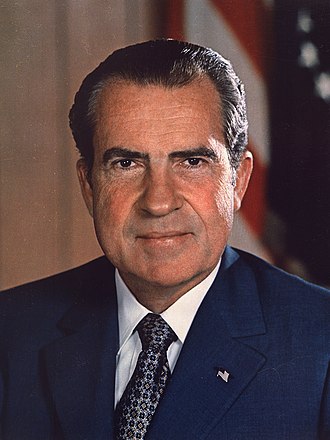
Richard M. Nixon served as the 37th President of the United States from January 1969 until his resignation in August 1974. In February 1971, he ordered the installation of a secret voice-activated taping system in the White House to preserve a historical record of his administration. Until the system's existence was revealed and dismantled in July 1973, the tapes captured Nixon directing major foreign policy initiatives, such as the opening to China, as well as his central role in the Watergate cover-up.
What Nixon talks about on the tapes
White House operations 4,718Presidential scheduling 2,225Public relations 1,784Presidential schedule 1,782Vietnam War 1,693Logistics 1,650Manolo Sanchez 1,626White House communications 1,400White House administration 1,399Presidential communication 1,243Henry Kissinger 1,191Foreign Policy 1,183
Conversations (21,010)
— Page 104 of 211President Nixon contacted the White House operator to facilitate an outgoing call to his personal secretary, Rose Mary Woods. The brief interaction served exclusively as a procedural request to connect the President with his long-time assistant. No policy matters or administrative decisions were addressed during this short administrative communication.
President Richard M. Nixon contacted the White House operator to facilitate an outgoing call. Due to the lack of a transcript or further documentation regarding the conversation's content, the specific subject matter remains unidentified. This brief interaction served administrative purposes to connect the President with another party.
President Nixon and his personal secretary, Rose Mary Woods, discuss scheduling matters regarding a trip to Camp David and Woods's personal commitments following a recent death in her family. The conversation shifts to the security implications of the assassination attempt on George C. Wallace, with the participants evaluating the mental state of the assailant, Arthur Bremer. They conclude by debating the necessity of heightened Secret Service protection for other political figures, including Edward M. Kennedy and John B. Connally.
President Nixon and his personal secretary, Rose Mary Woods, discuss the ongoing intensification of the air war in Vietnam, specifically referencing a target count of 1,100. The conversation also involves logistical planning for a meeting at Camp David, where the President intends to host an unidentified individual for breakfast. These discussions reflect the President's strategic focus on military operations and the management of sensitive, high-level scheduling.
President Nixon consulted with his physician, Dr. William M. Lukash, to receive a medical briefing regarding the condition of Governor George Wallace following an assassination attempt. Lukash provided details on the bullet locations, the status of the governor’s surgery, and the potential risk of paralysis. This exchange served as a crucial intelligence update for the President on the health and prognosis of the wounded presidential candidate.
President Nixon consulted with his personal physician, Dr. William M. Lukash, regarding the security measures and protective details surrounding an unnamed individual facing a specific threat. The brief exchange reflects the President’s concern for the adequacy of the protection provided and his justification for actions taken to address the situation. No specific policy decisions were finalized, but the dialogue emphasizes the President's direct involvement in overseeing high-stakes security protocols.
President Nixon held a brief telephone conversation with Ann Duggan for reasons that remain classified or personal, as indicated by the withdrawal of the recording's content. Because the transcript is unavailable and the segment is categorized as a personal returnable item, no substantive policy matters or administrative decisions can be discerned from this exchange. The interaction stands as a recorded but private communication between the President and an associate.
President Nixon held a brief, informal check-in with Ann Duggan late in the evening to discuss the status of a specific legislative bill. The conversation focused on the lack of available information regarding the proposal's progress. The exchange concluded with the President instructing Duggan to retire for the night after acknowledging the ambiguity of the situation.
President Nixon met with an unknown individual, likely a staff member, to briefly discuss the health and appearance of Manolo Sanchez, a longtime White House valet. The participants exchanged observations regarding Sanchez's recovery, noting that he appeared somewhat thin or "dull" despite generally looking well. No significant policy decisions were made during this brief check-in regarding a personal staff matter.
President Nixon and Alexander Haig reviewed the ongoing military situation in Vietnam, focusing on the effectiveness of ground operations, South Vietnamese resistance, and the psychological impact of recent U.S. air strikes. They discussed the tactical deployment of B-52s and the positive morale shifts resulting from recent military successes and the blockade policy. Nixon emphasized the importance of aggressive counter-offensive action, while Haig provided updates on enemy attrition and the strategic positioning of naval assets to deter Soviet interference.
President Nixon contacted the White House operator to facilitate an urgent communication with his personal physician, Dr. William M. Lukash. This brief exchange served solely as a logistical request to initiate the call. No further substantive policy matters or decisions were recorded during this brief administrative interaction.
President Nixon contacted the White House operator to facilitate an urgent connection with John D. Ehrlichman. The primary purpose of the brief interaction was to secure a direct line to his top domestic policy advisor for an immediate consultation. No further discussion or substantive policy developments occurred during this brief exchange.
President Nixon contacted the White House operator to facilitate an urgent communication with special counsel Charles W. Colson. The call served as a logistical bridge to reach his advisor late in the evening. No further substantive discussion was recorded, as the interaction was limited to the request for this connection.
President Nixon and Charles Colson discuss the investigation into Arthur Bremer, the assailant who shot George Wallace, with a particular focus on his potential political affiliations and motives. They assess the efficacy of FBI Director L. Patrick Gray’s investigation and strategize on how to manage public perception regarding the shooter's ideological leanings and the broader implications for gun control. Additionally, the pair reviews Wallace’s medical prognosis and evaluates the domestic political climate concerning the President's Vietnam policies and the upcoming Moscow summit.
President Nixon received a brief telephone connection from the White House operator to facilitate a call from domestic policy advisor John D. Ehrlichman. The interaction served as a routing mechanism for the President to communicate directly with his senior aide. No substantive policy discussions or decisions were recorded during this brief administrative exchange.
President Nixon, Joe D. Waggonner, Jr., and H. R. Haldeman discussed the immediate aftermath of the assassination attempt on Governor George Wallace. The conversation centered on the status of the investigation into Arthur H. Bremer, including concerns regarding evidence recovered from his apartment and the coordination between the FBI and Secret Service. Furthermore, the participants evaluated the medical prognosis of Wallace following his surgery and debated the political and physical propriety of a presidential visit to the hospital.
President Nixon contacted the White House operator to facilitate a telephone call to First Lady Pat Nixon. The brief interaction served as a administrative request to connect the President with his wife. No other policy matters or substantive discussions were addressed during this exchange.
President Nixon and H. R. Haldeman met briefly to coordinate administrative logistics and discuss scheduling concerns. The primary focus involved clarifying the status of a Secret Service deployment to ensure no unauthorized increases in staffing had occurred. The two concluded the session by briefly aligning on upcoming priorities and personal meetings.
President Nixon and H. R. Haldeman met to review the day's schedule and discuss optics regarding presidential public appearances. Following reports concerning Secret Service protection levels for candidates, Nixon sought to increase his public visibility by proposing a walk to the Treasury Department to interact with tourists. Haldeman facilitated the planning of these events and the President’s upcoming meetings with key staff, including John Ehrlichman, Charles Colson, and Henry Kissinger.
President Nixon contacted the White House operator to facilitate a telephone connection with Alexander M. Haig, Jr. This brief administrative interaction served as a routing request to reach his deputy assistant for national security affairs. No further policy discussions or substantive developments were recorded during this brief exchange.
President Nixon contacted the White House operator to facilitate an urgent communication with Alexander M. Haig, Jr. The primary purpose of this brief exchange was to initiate a connection for a direct conversation with the Deputy Assistant to the President for National Security Affairs. No further policy discussions or substantive developments were recorded during this brief administrative request.
President Nixon met with an unknown woman to discuss diplomatic and domestic administrative matters, including upcoming travel to the Soviet Union and her own recent trip. The conversation touched upon the President’s perspectives on George C. Wallace and involved the handling of an urgent packet for Secretary of State William P. Rogers. Additionally, Nixon expressed frustration regarding the lack of professional courtesy shown to Don Kendall by Department of Commerce officials concerning ongoing trade negotiations with the Soviets.
President Nixon dictated a memorandum to H.R. Haldeman expressing dissatisfaction regarding the lack of credit given to Maurice Stans for his pivotal role in Soviet trade negotiations. Nixon argued that Stans, a loyalist who handled the difficult management work, was being overlooked in favor of Peter Peterson and Peter Flanigan. Consequently, he instructed Haldeman to reprimand Peterson and Flanigan for this oversight and mandated that actions be taken to ensure Stans receives formal recognition for his contributions.
President Nixon instructed the White House operator to contact Dr. Lukacs regarding the medical status of George Wallace, who was recently hospitalized following an assassination attempt. During the call, Nixon also inquired about the whereabouts of Henry Kissinger to determine if he was available or currently occupied in a staff meeting. The exchange served primarily to facilitate urgent communication regarding the aftermath of the Wallace shooting and to coordinate the President's internal schedule.
President Nixon met with his personal secretary, Marjorie P. Acker, to briefly coordinate administrative matters regarding Dr. William M. Lukash. The discussion focused on scheduling a meeting between the President and Dr. Lukash, as well as clarifying the status and location of George C. Wallace following a phone call. This meeting served as a logistical update to manage the President's immediate calendar and communications.
President Nixon consulted with Alexander M. Haig, Jr. regarding ongoing administrative and logistical matters. While the transcript is fragmentary, the discussion centers on internal communication protocols and the coordination of presidential affairs. No major policy shifts or strategic decisions were finalized during this brief exchange.
President Nixon consulted with his physician, Dr. William Lukash, regarding the medical status of Governor George Wallace following the recent assassination attempt. They discussed the extent of Wallace's injuries, including the risk of paralysis, his prognosis for recovery, and the logistics of potentially transferring the governor to Bethesda Naval Hospital. Additionally, the President inquired about the condition of the Secret Service agent wounded in the attack and reviewed public relations strategies with his staff to manage the dissemination of these sensitive updates.
President Nixon consulted with Alexander Haig to determine the current location of Henry Kissinger. The primary objective was to coordinate logistics regarding Kissinger’s scheduled briefing for members of the Senate. The discussion concluded with arrangements for a subsequent meeting between the President and Haig.
President Nixon met briefly with Marjorie P. Acker in the Oval Office to discuss administrative logistics and personnel matters involving the White House staff. The conversation touched upon the scheduling of Rose Mary Woods and the processing of a permit for a staff member. The brief exchange concluded with brief, ambiguous commentary regarding security concerns at the President's private residence.
President Nixon met with Marjorie P. Acker in the Oval Office to discuss a political advertisement filmed at his private residence. The conversation centered on the background of an individual involved in the production, who was identified as a member of the Young Democrats. No specific policy actions or formal decisions were recorded during this brief encounter.
President Nixon and General Alexander Haig discussed the ongoing Vietnam War, emphasizing the success of current U.S. military operations, including air strikes and the use of anti-tank weapons against North Vietnamese forces. Nixon reviewed the positive psychological and strategic impact of his recent blockade speech on domestic opinion and international relations with the Soviet Union and China. The President also instructed Haig to pressure General Abrams to improve the strategic deployment of tanks, citing historical military tactics. Additionally, Nixon received a brief update on the condition of George Wallace following an assassination attempt and directed staff to offer him the use of the presidential suite during his recovery.
President Nixon met with key advisors, including H. R. Haldeman, John Ehrlichman, and Charles Colson, to discuss the political and psychological fallout following the attempted assassination of George Wallace and the administration's military strategy in Vietnam. The group deliberated on how to leverage the shooting to push for tougher gun control legislation while managing the negative public perception of White House-led investigations. Additionally, the President issued firm instructions to General Alexander Haig regarding military promotions and leadership, emphasizing a policy of rewarding personnel who take risks over those who strictly adhere to bureaucratic caution.
President Nixon contacted the White House operator to facilitate a communication or scheduling request regarding Alexander M. Haig, Jr. The primary purpose of the brief call was to coordinate an upcoming meeting between the President and Haig. No further substantive policy matters were discussed during this administrative exchange.
President Nixon instructed the White House operator to facilitate a meeting with General Alexander M. Haig, Jr. Shortly after the operator placed the call, Stephen B. Bull joined the President in the Oval Office. The brief exchange primarily functioned to coordinate logistics for Haig's arrival.
President Nixon and Alexander Haig discussed the positive reception among military cadets at West Point to the President's recent speech announcing a naval blockade in Vietnam. Haig reported that the cadets were enthusiastic and buoyed by the administration's decisive stance against the conflict. The two also coordinated administrative details regarding upcoming announcements and meeting logistics for later that day.
President Nixon contacted the White House operator to facilitate a telephone connection with his close friend and confidant, Charles G. “Bebe” Rebozo. The brief exchange served as an administrative request to place an outgoing call to Rebozo. No further substantive matters were discussed during this brief interaction.
President Nixon instructed H. R. Haldeman to contact Secretary of State William P. Rogers regarding the upcoming announcement of John B. Connally’s resignation during a Cabinet meeting. The discussion focused on coordinating the messaging and anticipating Rogers's reaction to the personnel shift. Additionally, the President reviewed logistics for his scheduled walk to the Treasury Department.
President Nixon spoke with the White House operator to facilitate an outgoing call. The interaction served as a brief administrative exchange to connect the President with another party. No substantive policy discussions took place during this short telephonic transition.
President Nixon met with Alexander P. Butterfield, Stephen B. Bull, and H. R. Haldeman to review administrative materials and schedule updates. The discussion focused on routine paperwork, logistics regarding the upcoming presidential trip to Moscow, and the scheduling of meetings for key staff members including Alexander Haig and Charles Colson. The participants also addressed staff correspondence and procedural matters related to the President's daily agenda.
President Nixon consulted with Alexander P. Butterfield and Stephen B. Bull regarding administrative arrangements before speaking directly with H. R. Haldeman. The brief discussion primarily focused on the scheduling of Secretary of State William P. Rogers. No substantive policy decisions were reached during this short coordination call.
President Nixon and Bebe Rebozo discuss the immediate aftermath and security implications of the attempted assassination of George Wallace. They analyze the suspect, Arthur Bremer, while contrasting current Secret Service protocols with the protection provided to Nixon during his vice presidency. Additionally, the conversation touches upon the logistical arrangements for an upcoming Florida trip involving Manolo and Fina Sanchez.
President Nixon and his close associate Bebe Rebozo discuss the recent assassination attempt on Alabama Governor George Wallace, focusing on the assailant’s political background and the public reaction. Nixon notes that he has ordered Secret Service protection for Senator Ted Kennedy and offered the presidential suite for Wallace's potential recuperation. The conversation reflects Nixon’s desire to project a sense of presidential concern and bipartisanship in the wake of the violent incident.
President Nixon contacted the White House operator to facilitate a telephone call to First Lady Pat Nixon. The brief interaction served as an administrative request to connect the President with his wife. No substantive policy matters or further developments were recorded during this brief exchange.
President Nixon discusses the recent assassination attempt on George Wallace with a White House operator, expressing skepticism about the shooter's political affiliation and motives. He highlights his decision to order Secret Service coverage for Ted Kennedy and contrasts the massive security detail assigned to the Kennedy family with his own philosophy on presidential risk. The conversation serves as a reflection on political violence and the logistical challenges of protecting high-profile public figures.
President Nixon consulted with his physician, Dr. Walter R. Tkach, to discuss the medical condition, prognosis, and potential relocation of George Wallace following the assassination attempt against him. Simultaneously, the President spoke with First Lady Pat Nixon regarding her reactions to the recent redecoration of the Blue Room and press coverage in the Washington Post. The call also touched upon administrative scheduling matters involving John Cardinal Krol.
President Nixon, First Lady Pat Nixon, and White House physician Walter R. Tkach discussed the medical condition and potential recovery prospects of an unnamed individual facing significant spinal mobility concerns. The participants evaluated the patient's prognosis and debated whether to pursue treatment at Walter Reed National Military Medical Center or a facility in Alabama. Additionally, the President inquired about public and staff reactions to a recent, unspecified event, though the conversation remained brief as the President concluded the meeting to attend to other obligations.
President Nixon consulted with the White House operator to facilitate an outgoing call. This brief interaction served administrative purposes to initiate contact with another party. No substantive policy discussions or complex developments occurred during this connection.
President Nixon held a brief, informal telephone conversation with First Lady Pat Nixon. The discussion involved personal matters and family considerations, as indicated by the withdrawal of the content under personal privacy provisions. No official policy decisions or political actions were recorded during this exchange.
President Richard M. Nixon met with First Lady Pat Nixon in the Oval Office for a brief, one-minute discussion. Due to the lack of an available transcript and the restricted nature of the recording, the specific subjects addressed remain confidential. The session serves primarily as a record of their personal interaction during a period of significant presidential activity.
President Nixon consulted with Alexander P. Butterfield to finalize arrangements for a forthcoming meeting with a Mexican delegation. Nixon emphasized his preference for a brief, informal encounter focused on handshakes and personal greetings rather than formal remarks. He specifically requested that the scheduling include time for the First Lady, Pat Nixon, to participate in the reception.
President Nixon and Stephen B. Bull reviewed photographs featuring a diverse group of schoolchildren, including students of various ethnic backgrounds. The President utilized the images to comment on the multicultural composition of the school, identifying specific groups such as Mexican-American, African-American, and Japanese students. The meeting served as a brief interlude for the President to engage with visual documentation of his constituents before proceeding with his daily schedule, which included a meeting with Ronald L. Ziegler.
President Nixon met with H. R. Haldeman and Ronald Ziegler to discuss press management ahead of his upcoming Soviet summit, including the selection of journalists and the briefing of key press figures. The President also addressed his public appearance strategy in the wake of the assassination attempt on Governor George Wallace, deciding to take a brief walk to the Treasury Department to maintain a calm, presidential image without appearing reckless. Finally, the group reviewed the redecoration of the White House and discussed the roles of Peter Peterson and Peter Flanigan in managing economic negotiations for the Soviet trip.
President Nixon and Henry Kissinger met to discuss urgent matters of foreign policy and national security strategy during a critical period of the Vietnam War and ahead of the upcoming Moscow summit. The brief discussion focused on evaluating international developments and refining the administration's diplomatic maneuvers. This exchange highlights the close coordination between the President and his National Security Advisor regarding sensitive global engagements.
President Nixon and Henry Kissinger met to discuss domestic political support for the Vietnam War effort ahead of the President's upcoming Soviet trip, emphasizing the need for congressional unity rather than a cutoff of funds. The two discussed maintaining a firm negotiating stance with North Vietnam, specifically regarding the necessity of a ceasefire and the return of POWs as non-negotiable conditions. Additionally, they reviewed the upcoming resignation of Secretary of the Treasury John Connally and the subsequent appointment of George Shultz as his successor.
President Nixon met with his Cabinet and key staff to discuss the upcoming departure of Secretary of the Treasury John B. Connally and to address broader administration matters. The discussion covered the timing of administrative changes, the transition of economic policy responsibilities to George Shultz, and the status of ongoing federal investigations following the recent shooting of George C. Wallace. Connally reflected on his tenure as Treasury Secretary and his future plans, while the President reaffirmed his commitment to his current economic program and leadership agenda.
President Nixon and H. R. Haldeman met in the Oval Office to coordinate the President's daily agenda. The primary focus of the discussion was the scheduling of a high-level meeting between Nixon and John B. Connally. Following the planning of these administrative details, Haldeman concluded the meeting and departed.
President Nixon and John B. Connally discuss the logistics of Connally's upcoming diplomatic trip to Latin America, which is intended to counter regional influence while Nixon visits the Soviet Union. The two also coordinate the transition of the Treasury Department leadership, planning a joint walk to the department to announce George P. Shultz as the successor to the resigning Connally. Additionally, they touch upon recent international diplomatic missions, including Henry Kissinger's trip to the People's Republic of China and William P. Rogers' NATO engagement.
President Nixon initiated a brief telephone communication through the White House operator to place a call to First Lady Pat Nixon. This administrative exchange served as a logistical step to facilitate direct contact with the First Lady. No further policy or substantive matters were discussed during this brief connection.
President Nixon and H. R. Haldeman met briefly in the Oval Office to coordinate the President's upcoming schedule. The discussion focused on logistics for a planned walk to the Treasury Department to meet with John B. Connally and George P. Shultz. The meeting was briefly interrupted by an unknown individual for the delivery of a food order.
President Nixon and H. R. Haldeman met to strategize the press narrative surrounding Treasury Secretary John B. Connally’s resignation, specifically aiming to preempt speculation linking the departure to the recent shooting of George C. Wallace or Texas political dynamics. They discussed the content of the President’s statement, emphasizing that the timing was pre-planned during a January meeting in San Clemente rather than reactive. Additionally, they touched upon the personal transition for Nellie Connally, comparing her reluctance to leave Washington with the Nixons' own past experiences with relocation.
President Richard Nixon and First Lady Pat Nixon engaged in a brief telephone conversation. The exchange consisted of personal matters, as indicated by the withdrawal of the segment due to its private nature. No official policy decisions or political developments were addressed during this call.
President Nixon met with H. R. Haldeman, John Connally, George Shultz, Caspar Weinberger, and Ronald Ziegler to coordinate the logistics and press strategy surrounding Connally's resignation as Secretary of the Treasury. The participants discussed handling media inquiries regarding Connally's potential political future, including questions about the Vice Presidency and the Democratic National Convention. Following the discussion, the group planned a walk to the Treasury Department to introduce Shultz to the staff and address the transition publicly.
President Nixon and John Ehrlichman discussed the administration's policy on pending gun control legislation, with the President directing Ehrlichman to prepare formal recommendations. The discussion also touched upon the President's public image and the positive response to his recent foreign policy actions, specifically the mining of Haiphong. Additionally, the participants coordinated scheduling details regarding international visitors and potential meetings with public figures like Arthur Linkletter.
President Nixon met with Enayet Karim and Samuel Hoskinson to formally express the United States' desire to establish friendly relations with the newly independent nation of Bangladesh. During the discussion, the President emphasized a commitment to providing humanitarian aid to help the country recover from the suffering caused by recent conflict. Nixon also shared personal anecdotes about his past relationships with former Pakistani officials from East Pakistan to foster rapport with the delegation as they moved to establish a diplomatic mission in Washington.
President Nixon met with Yugoslavian representative Toma Granfil and advisor Helmut Sonnenfeldt to discuss diplomatic relations and upcoming geopolitical objectives. The discussion centered on fostering strong bilateral ties with Yugoslavia, including the exchange of birthday greetings for President Josip Broz Tito, and clarifying the objectives of Nixon’s impending trip to Moscow. Nixon emphasized his commitment to maintaining independent state sovereignty and pledged to provide Tito with a personal, frank report on the outcomes of his Soviet negotiations.
President Richard M. Nixon met with Alexander P. Butterfield in the Old Executive Office Building to review the President’s daily schedule. This brief one-minute meeting served as a routine administrative coordination between the President and his deputy assistant. No major policy developments were recorded during this session.
President Nixon met with an unknown female guest and Zosimo T. Monzon to briefly coordinate personal scheduling and logistics, including upcoming travel plans and a dinner engagement. The discussion touched upon a recent trip involving John B. Connally and the President's recent visit to a hospitalized individual. The participants concluded the brief session by confirming personal arrangements and administrative tasks.
President Nixon met with Alexander P. Butterfield to review and finalize the logistical details for an upcoming reception honoring a United States Senate group and a visiting Mexican delegation. The discussion focused specifically on confirming the list of attendees to ensure appropriate representation at the event. This brief administrative consultation served to organize the President’s official schedule for the reception.
President Nixon contacted the White House operator to facilitate a telephone connection with his Press Secretary, Ronald L. Ziegler. This brief administrative interaction served as an intermediary step in managing the President's daily communications. No substantive policy discussions occurred during this exchange.
President Nixon and Press Secretary Ronald Ziegler coordinate media strategy regarding recent press coverage of the President's public activities. They discuss the framing of statements concerning the upcoming Soviet Union summit and a recent meeting with John B. Connally. The dialogue specifically addresses the messaging surrounding the shooting of George C. Wallace and the subsequent briefing responsibilities for reporters Jim Gannon and Gaylord Shaw.
President Nixon contacted the White House operator from his office in the Old Executive Office Building to place a call. This brief exchange served administrative purposes related to the President's telecommunications needs. The interaction reflects the routine logistical operations of the White House internal switchboard.
President Nixon and Press Secretary Ronald Ziegler discuss the positive public reception following a recent, undisclosed event involving children. Nixon expresses satisfaction with the optics of the situation, particularly noting the encouraging atmosphere and public engagement. The brief exchange confirms that the administration’s strategy successfully garnered favorable coverage.
President Nixon initiated a call through the White House operator to contact his Chief of Staff, H. R. Haldeman. This brief administrative interaction served exclusively as a logistical coordination effort to facilitate a direct conversation between the President and his senior aide. No substantive policy matters or further developments were recorded during this brief exchange.
President Nixon met with an unknown staff member to establish specific communication protocols regarding his office buzzers. He instructed the individual to ensure that when the buzzer sounds, staff should enter the office under the guise of delivering coffee or other items to maintain discretion. This conversation focused on managing the President's personal security and administrative workflow within the Executive Office Building.
President Nixon and H.R. Haldeman discussed the strategic management of John Connally's resignation, focusing on controlling press narratives through coordinated Cabinet statements and a highly publicized walk to the Treasury Department. The conversation also addressed mounting political challenges in the Senate regarding Vietnam policy, specifically analyzing Republican defections on the Byrd and Case-Church amendments. Nixon and Haldeman assessed the potential electoral impact of these votes and deliberated on internal messaging tactics ahead of the President’s upcoming summit in the Soviet Union.
President Nixon contacted the White House operator to facilitate a telephone connection with his Special Counsel, Charles W. Colson. This brief administrative interaction served as an intermediary step to initiate official communication between the President and a key staff member. No further substantive discussion occurred beyond the request to place the call.
President Nixon and Charles W. Colson discussed congressional voting patterns regarding the Vietnam War, specifically focusing on efforts to influence Republican senators on the Byrd amendment. The conversation also covered the political implications of the recent assassination attempt on George Wallace, the public response to Nixon's handling of the Vietnam blockade, and strategies for securing labor support, particularly from Frank Fitzsimmons, for the upcoming 1972 election. Additionally, the participants touched on the logistical management of John B. Connally’s departure and the public relations surrounding Nixon’s recent walk to the Treasury Department.
President Nixon met with Clark MacGregor to discuss congressional reactions to the Vietnam War, specifically focusing on opposition to the blockade of Haiphong harbor and concerns regarding Senate negotiations with the National Liberation Front. They reviewed recent Harris Poll data indicating public support for the President’s policies despite negative media coverage and critical Senate maneuvers. The conversation also touched upon the assassination attempt on George Wallace, the management of the Black Lung bill, and upcoming changes in the Treasury Department.
President Nixon met with John Mitchell and Ray Bliss to discuss party political strategy, specifically regarding the upcoming Ohio election and the need for Bliss to coordinate closely with Mitchell. Throughout the conversation, Nixon encouraged Bliss to balance his private insurance business with Republican National Committee work while offering him future prospects, such as presidential representative trips or commission appointments, as a reward for his service. The group also briefly touched upon political optics, including the President's recent public walk to the Treasury and the importance of favorable photographic coverage.
President Nixon met with Stephen B. Bull and an unknown individual to coordinate upcoming logistical and scheduling matters. The discussion centered on arrangements for a trip to Camp David, preparations for an impending Soviet visit, and the scheduling of a meeting with John Cardinal Krol. Additionally, the group addressed administrative concerns regarding personnel workloads, including those of Rose Mary Woods and Marjorie P. Acker, alongside the receipt of materials from John B. Connally.
President Nixon met with John Cardinal Krol to discuss the political climate following the attempted assassination of George Wallace, as well as the President’s upcoming summit in the Soviet Union. Nixon explained his decision to maintain public appearances despite the violence, emphasizing his refusal to govern under a climate of fear. The two also addressed the strategic necessity of the U.S. naval blockade in Vietnam and the positive signals regarding the stability of the Soviet summit.
President Nixon met with an unknown individual, likely a staff member or aide, to discuss logistical arrangements at Camp David. The conversation centered on the scheduling of dinner guests, involving Alexander Butterfield and a doctor, as well as plans for the President's return to the White House. The brief exchange focused primarily on administrative coordination and confirming the headcount for evening entertainment.
President Nixon contacted the Camp David operator to facilitate a communication link with General Alexander M. Haig, Jr. The brief exchange served as a logistical request to place a telephone call to the General. No substantive policy discussions occurred during this administrative interaction.
President Nixon communicated with the Camp David operator via the facility's hard-wire system to address logistical or telephonic requirements at the Aspen Lodge. This brief interaction facilitated necessary administrative connectivity for the President during his stay at the retreat. No substantive policy discussions occurred, as the exchange focused exclusively on operational communication needs.
President Nixon coordinated morning communications with the Camp David operator to facilitate administrative outreach. He requested that General Alexander Haig return his call upon arriving at the office and instructed the operator to reach H.R. Haldeman only if he were already available at his desk. This brief exchange served to organize the President’s schedule for urgent internal staff consultations.
President Nixon held a brief exchange with the Camp David telephone operator to facilitate a connection for an outgoing call. The discussion served purely administrative purposes to establish communication from the Aspen Lodge. No substantive policy matters or political developments were addressed during this interaction.
President Nixon held an brief, informal morning meeting with an unidentified individual at the Aspen Lodge in Camp David. The discussion, which was interrupted by significant recording discontinuities and withdrawn personal segments, touched upon mundane domestic details including the maintenance of a fireplace and the staffing of Filipino cooks at the White House. No substantive policy decisions or political developments were recorded during this brief encounter.
President Nixon met with Henry Kissinger to dictate a formal memorandum regarding the management of U.S. propaganda efforts concerning the Vietnam War. The discussion focused on coordinating the messaging between the White House and the Military Assistance Command, Vietnam (MACV) to ensure a unified public stance. Nixon explicitly outlined his preferred strategic direction for these communications to maintain consistency in official statements.
President Richard Nixon and H. R. Haldeman met at the Aspen Lodge in Camp David to discuss matters of state, though the specific details of their dialogue remain classified or excised from the record. Due to significant discontinuities and the withdrawal of materials from the official archival transcript, the precise nature of the decisions reached during this brief morning session is not publicly available. The exchange serves as a record of high-level deliberation between the President and his Chief of Staff during a period of intense administration activity.
President Nixon met with Henry Kissinger to discuss the implementation of a more aggressive and centralized propaganda strategy regarding the Vietnam War. Drawing comparisons to previous conflicts, the President emphasized the need to appoint a director of propaganda within the White House staff to improve the administration's messaging. They evaluated the roles of key personnel, including Richard Helms, Ronald Ziegler, John Scali, and Herbert Klein, while considering how to better manage their relationship with the press.
President Nixon dictates a memorandum to H. R. Haldeman regarding strategies to improve the administration's relations with the American business community. The discussion builds upon a recent consultation with Donald Kendall and reviews past outreach efforts involving organizations like the Chamber of Commerce and the National Alliance of Businessmen. Nixon outlines a plan to further leverage key figures and cabinet members, including Maurice Stans and Peter Flanigan, to cultivate stronger support among corporate leaders.
President Nixon, Soviet Ambassador Anatoliy Dobrynin, and National Security Advisor Henry Kissinger met at Camp David to conduct high-level diplomatic discussions shortly before the 1972 Moscow Summit. The meeting served as a final preparation phase to address outstanding bilateral issues and stabilize U.S.-Soviet relations ahead of the President's upcoming state visit. Although the specific dialogue remains largely inaccessible due to recording gaps, the session functioned as a critical venue for managing the strategic agenda between the two superpowers.
President Nixon and Charles Colson discussed political strategies regarding the stalling of administration nominees in the Senate, which Nixon proposed framing as an issue of congressional inaction. The two also reviewed foreign policy maneuvering, including Senate voting dynamics, and touched upon preparations for the President’s upcoming trip to the Soviet Union. Additionally, the conversation included a brief evaluation of George Wallace’s potential third-party threat in the 1972 election.
President Nixon contacted the Camp David operator to facilitate an outgoing call to John B. Connally. This brief administrative interaction served as the necessary logistical step to connect the President with his former Treasury Secretary. No substantive policy matters were discussed during this short communication.
President Nixon and John Connally discussed political strategy for the 1972 election, focusing on the performances of George Wallace, Hubert Humphrey, and George McGovern in recent primaries. Nixon advised Connally’s brother to focus his campaign on the single issue of busing to gain electoral traction. The two also addressed personnel transitions within the Treasury Department, specifically emphasizing the importance of George Shultz retaining key staff like James W. Donley, and reviewed upcoming diplomatic travel plans for Connally.
President Nixon instructed the Camp David operator to facilitate a series of return phone calls to key individuals. He specifically requested that the operator connect him with Dr. William M. Lukash, Julie Nixon Eisenhower, and Henry A. Kissinger, in that order. This brief exchange served to organize the President's personal and official communications for the morning.
President Nixon consulted with his physician, Dr. William M. Lukash, regarding the medical prognosis of Governor George Wallace following his recent assassination attempt. Dr. Lukash advised that there was a high likelihood of paralysis, noting the unpredictability of Wallace's recovery. Nixon concluded the brief call by arranging to contact the governor later that day through the White House operator.
President Nixon and his daughter, Julie Nixon Eisenhower, held a brief check-in to coordinate family schedules and discuss personal matters at Camp David. The President updated Julie on the recovery of valet Manolo Sanchez and his upcoming trip to Key Biscayne, while also sharing positive public feedback regarding the recent redecoration of the White House Blue Room. They concluded by discussing upcoming travel plans and potential appearances for Julie and her sister, Tricia Nixon Cox.
President Nixon consulted with Henry Kissinger regarding the strategic objectives and logistical preparations for his upcoming summit in the Soviet Union. The discussion centered on managing diplomatic channels with Leonid Brezhnev and Andrei Gromyko, as well as coordinating official toasts and speeches for the Soviet audience. Additionally, they reviewed ongoing military operations in Vietnam, including the effectiveness of current air strikes and domestic political challenges posed by Congressional opposition to the war.
President Nixon and Henry Kissinger discussed preparations for the upcoming Soviet summit, emphasizing the need for brevity in speeches and strict control over the back-channel communication with Soviet leaders to avoid involving Secretary of State William Rogers. The conversation also touched on the ongoing Vietnam War, with Nixon reiterating his commitment to the recent mining and blockade operations and expressing frustration with domestic political opposition, particularly from Senator Mike Mansfield. Kissinger received guidance on managing negotiations and public appearances, as the two aligned on maintaining a firm stance regarding potential agreements before the summit.