Nixon, Richard M. (President)
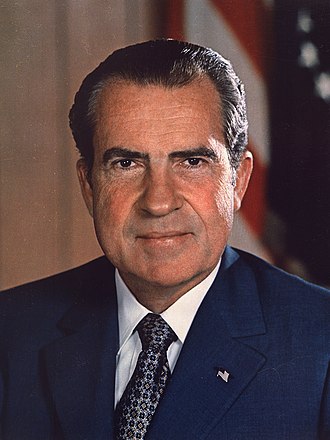
Richard M. Nixon served as the 37th President of the United States from January 1969 until his resignation in August 1974. In February 1971, he ordered the installation of a secret voice-activated taping system in the White House to preserve a historical record of his administration. Until the system's existence was revealed and dismantled in July 1973, the tapes captured Nixon directing major foreign policy initiatives, such as the opening to China, as well as his central role in the Watergate cover-up.
What Nixon talks about on the tapes
White House operations 4,718Presidential scheduling 2,225Public relations 1,784Presidential schedule 1,782Vietnam War 1,693Logistics 1,650Manolo Sanchez 1,626White House communications 1,400White House administration 1,399Presidential communication 1,243Henry Kissinger 1,191Foreign Policy 1,183
Conversations (21,010)
— Page 51 of 211President Nixon and Donald Kendall discuss the strategic selection of new Supreme Court justices, emphasizing the need for younger candidates who can handle heavy workloads. They critique the inefficiency and aging composition of the current Court, specifically citing the performance of Justices Black, Harlan, and others. The conversation reflects Nixon’s desire to appoint energetic jurists capable of reversing the backlog issues inherited from the Warren era.
President Nixon and his advisors, including Henry Kissinger and Peter Peterson, discussed the political challenges surrounding the textile trade industry and the upcoming announcement of a new agreement. The conversation also touched upon the necessity of managing various personnel issues, including the potential resignation of a Supreme Court justice and growing concerns regarding the deteriorating leadership and internal stability of FBI Director J. Edgar Hoover. Nixon expressed frustration with staff members threatening resignation, ultimately asserting that he would prioritize decisive administrative control over such internal pressures.
President Nixon and H. R. Haldeman engaged in an extensive discussion regarding the logistical and symbolic challenges of managing the President's upcoming state visits to China and Russia. The conversation focused on balancing the desire for positive public optics—such as large crowds—with the diplomatic necessity of not appearing as a captive of foreign governments. Nixon emphasized the importance of maintaining control over his itinerary and messaging, particularly regarding the potential inclusion of First Lady Pat Nixon, to ensure these high-stakes diplomatic missions aligned with American foreign policy interests.
President Nixon, Henry Kissinger, and Japanese Ambassador Nobuhiko Ushiba met to discuss the status of delicate Japanese-American relations, specifically focusing on the progress of textile trade negotiations involving Peter G. Peterson. The participants addressed the necessity of managing political expectations in Congress and maintaining a collaborative approach to foreign policy issues. The meeting concluded with a brief exchange regarding planned diplomatic efforts and the presentation of a formal gift.
President Nixon and Stephen B. Bull discuss logistical arrangements regarding upcoming travel, specifically noting the exclusion of Japan from the current itinerary. The conversation shifts to a strategic evaluation of public appearances and motorcade security protocols, with Nixon expressing skepticism toward overly casual or dangerous interactions with crowds. Nixon emphasizes the need for a balanced, discreet approach to public engagement that avoids the perceived risks of overexposure while maintaining the dignity of the office.
President Nixon met with John B. Connally, Henry Kissinger, and Robert S. McNamara to discuss various administrative and foreign policy issues, including logistics for upcoming presidential travel and the management of press coverage. The conversation covered concerns regarding the size of the presidential entourage, particularly the number of military personnel, and criticized the press for sensationalist reporting regarding administration officials. The group also addressed economic matters, specifically the complexities of global expropriation of U.S. business interests and strategies for dealing with international financial institutions.
President Nixon met with Henry Kissinger, John Mitchell, and John Ehrlichman to discuss high-level administration business, ranging from foreign policy to domestic personnel matters. The primary focus of the session was an extensive deliberation regarding potential Supreme Court nominees—specifically evaluating candidates like Herschel Friday and Mildred Lillie—amidst reports of Chief Justice Warren Burger’s dissatisfaction and rumored resignation threats. Additionally, the group reviewed internal FBI tensions, including the management of William C. Sullivan and the leadership status of J. Edgar Hoover, as well as various trade and political scheduling issues.
President Nixon met with his staff and Henry Kissinger to coordinate logistics and public relations strategies for his upcoming diplomatic trips to the People's Republic of China and the USSR. The discussion focused on managing international itineraries, advance team assignments, telecommunications infrastructure, and the extensive press corps requirements for these state visits. Additionally, the group addressed domestic personnel matters, including Supreme Court appointment contingencies and media coverage regarding the President's personal finances.
President Nixon met with Alexander P. Butterfield in the Oval Office to review and organize the President’s upcoming daily schedule. The discussion focused on logistical planning and the prioritization of official engagements. No major policy decisions were recorded during this administrative briefing.
President Nixon met with his personal valet, Manolo Sanchez, in the Oval Office for a brief, private exchange. The conversation was limited in scope, consisting primarily of a short personal segment that was subsequently withdrawn from the public record. No substantial policy discussions or administrative actions were documented during this encounter.
President Nixon held a private meeting with his valet, Manolo Sanchez, in the Oval Office. The conversation consisted of a brief exchange regarding personal matters that were subsequently withdrawn from the public record. No official policy business or administrative decisions were recorded during this session.
President Nixon held a brief, private meeting with an unidentified woman in the Oval Office. During the encounter, the participants briefly touched upon the activities or status of National Security Advisor Henry A. Kissinger. Due to the lack of available transcriptions and the unintelligible nature of the audio, no further substantive policy decisions or action items were documented from this exchange.
President Nixon and Alexander P. Butterfield met to review the President’s upcoming schedule and administrative priorities. Key discussion points included the leadership agenda regarding Secretary of State William P. Rogers and logistical preparations for a state visit by Yugoslavian officials. The participants specifically focused on the planning of a state dinner, involving a directive to Rex W. Scouten regarding wine procurement and budgetary considerations.
President Nixon contacted the White House operator to request a telephone connection with Danny Murtaugh, the manager of the Pittsburgh Pirates. Murtaugh was located in Baltimore at the time of the request, presumably for the ongoing Major League Baseball postseason. The brief exchange served solely to facilitate this communication through the White House switchboard.
President Richard Nixon called Pittsburgh Pirates manager Danny Murtaugh to offer personal congratulations following the team’s World Series victory over the Baltimore Orioles. During the brief conversation, the President praised the team's collective defensive performance and specifically lauded the individual contributions of Roberto Clemente and Steve Blass. Nixon also commended Murtaugh's calm leadership throughout the series.
President Nixon initiates a call to Earl Weaver, the manager of the Baltimore Orioles, via the White House operator. This brief interaction serves as a follow-up to coordinate a direct line of communication with the baseball manager. No further substantive policy matters are addressed during this brief request.
President Nixon called Baltimore Orioles manager Earl Weaver to offer condolences following the team's loss to the Pittsburgh Pirates in the 1971 World Series. The President praised the Orioles' competitive spirit and their historical achievement of winning 100 games for three consecutive seasons. Nixon specifically commended the performance of Frank Robinson and offered well wishes for the team's upcoming goodwill trip to Japan.
President Nixon instructed the White House operator to place a telephone call to National Security Advisor Henry Kissinger. Upon learning that Kissinger was currently in Hawaii, the President acknowledged the information and awaited the connection. This brief exchange served as a routine procedural step to facilitate communication between the President and his top foreign policy advisor regarding ongoing diplomatic matters.
President Nixon held a brief meeting in the Old Executive Office Building with an unidentified individual, though the substantive content of this discussion remains unavailable. The recorded segment is largely comprised of a seven-second withdrawn item, precluding any analysis of topics or decisions made. Due to the lack of a transcript or verifiable context, the specific purpose and outcome of this interaction remain unknown to researchers.
President Nixon requested that the White House operator connect him with National Security Advisor Henry Kissinger for a private telephone consultation. The brief exchange focused on establishing a secure line of communication to discuss ongoing diplomatic developments and upcoming meetings. No substantive policy decisions were finalized during this logistical coordination.
President Nixon and Henry Kissinger discussed global security and diplomatic strategy, specifically focusing on developments in Vietnam, Japan, and the United Nations vote on Taiwan. Nixon expressed frustration over the perceived lack of support from allies and uncommitted nations regarding the Taiwan issue and tasked the administration with applying more aggressive diplomatic pressure. The two also reviewed the status of India-Pakistan border tensions and Kissinger's upcoming travel schedule.
President Nixon and Henry Kissinger discuss international diplomatic strategies and the necessity of securing support within Congress regarding the status of Taiwan. The conversation touches upon the importance of leveraging relationships with various nations, including Greece and Turkey, to bolster the administration's foreign policy goals. Nixon emphasizes the need for a coordinated effort among his staff and diplomatic envoys to ensure consistent backing for their objectives.
President Nixon contacted the White House operator to initiate an urgent telephone connection with Secretary of State William P. Rogers. The brief exchange served as a logistical step to facilitate direct communication between the President and his cabinet official. No substantive policy discussions occurred during this brief request for assistance.
President Nixon initiates a brief exchange with the White House operator to facilitate a telephonic connection with Secretary of State William P. Rogers. The President briefly engages the operator in casual conversation regarding a sporting event before transitioning to his official request. The call serves as the administrative bridge to connect the President with his Secretary of State for subsequent high-level government business.
President Nixon and Secretary of State William P. Rogers spoke to discuss the upcoming United Nations vote on the status of Taiwan and the People's Republic of China. The two reviewed lobbying strategies for critical uncommitted nations, including Italy, Turkey, and Argentina, and considered using targeted diplomatic pressure and presidential communication to secure votes. They also briefly discussed the President's recent interactions with World Series players and explored the idea of Nixon increasing his public visibility at other sporting events like professional bowling.
President Richard M. Nixon and Secretary of State William P. Rogers engaged in an informal discussion that, based on the transcript's focus on sports commentary and game analysis, appears to be a casual social interaction rather than a formal policy meeting. While the transcript contains extensive, repetitive commentary regarding specific football players, team strategies, and game events, it provides no substantive evidence of government business, policy decisions, or official action items. The conversation reflects a brief period of personal rapport between the two men.
President Nixon held a private meeting with an unidentified individual in his Old Executive Office Building suite to conduct business that remains largely undocumented due to the lack of a transcript. A brief four-second segment of the interaction was designated as a personal returnable item and withdrawn from the record. The meeting concluded without a public account of the specific policy discussions or administrative decisions reached during the encounter.
President Nixon met with his longtime valet, Manolo Sanchez, in the Old Executive Office Building. The recording consists entirely of a brief personal exchange, as indicated by the withdrawal of the contents for personal privacy reasons. No substantive policy discussions or administrative decisions occurred during this interaction.
President Richard M. Nixon met with his valet, Manolo Sanchez, in the Old Executive Office Building. The recording consists entirely of a withdrawn segment classified as a personal returnable item. Consequently, no substantive policy discussions or significant political developments are documented in this portion of the tapes.
President Nixon met with his longtime valet, Manolo Sanchez, in the Old Executive Office Building. The recording consists entirely of a sixteen-second segment marked as personal and returnable. No substantive policy discussions or administrative actions were documented during this exchange.
President Nixon contacted the White House operator to facilitate a personal telephone call to his daughter, Tricia Nixon Cox. The brief exchange served solely as an administrative request to connect the President with her. No further policy or political matters were discussed during this brief communication.
President Nixon met with his aide, Stephen B. Bull, to coordinate administrative logistics regarding his personal schedule. The primary focus of the brief discussion was confirming the appointment time for the President’s barber. They ultimately resolved the scheduling conflict by settling on 5:30 p.m. for the service.
President Nixon and H.R. Haldeman reviewed various administrative concerns, including staff scheduling, public relations, and the political fallout from Supreme Court nominations. The discussion addressed the perceived media bias surrounding Henry Kissinger's China initiative and the President’s desire to maintain control over the narrative regarding foreign policy summits. Additionally, they evaluated campaign finance matters and the management of White House photography to improve the President's public image.
President Nixon met with his personal secretary Rose Mary Woods and aide Alexander P. Butterfield to discuss administrative matters, including the handling of presidential correspondence to children. The group also addressed sensitive campaign financing issues, specifically involving a $200,000 contribution from Dwayne O. Andreas and the storage of those funds by Bebe Rebozo. Additionally, the President reviewed his schedule and touched upon the purchase of wine for the White House.
President Nixon met with William P. Rogers and Robert H. Finch to discuss upcoming diplomatic travel, administrative scheduling, and political strategy. Key discussions included planning First Lady Pat Nixon's trip to Africa, finalizing the itinerary and delegation for Finch's upcoming Latin American tour, and managing domestic Hispanic outreach. The participants also consulted on foreign policy initiatives, specifically regarding media strategy for the President's planned visits to China and the Soviet Union, and the potential for preliminary negotiations concerning a European security conference.
President Nixon and Alexander P. Butterfield discussed the strategic nuances of potential upcoming summitry and international diplomatic relations. Nixon emphasized his desire to visit the Soviet Union, citing the positive reception of his China policy by Russian media as a catalyst for potential progress. The conversation centered on leveraging this momentum to address key global issues, specifically European security, SALT negotiations, and force reduction in the Middle East.
President Nixon met with Stephen B. Bull to coordinate logistical arrangements for the President’s upcoming schedule and appointments. The discussion included administrative details regarding a visit from a barber and a meeting with Alexander M. Haig, Jr. Additionally, the pair touched upon economic concerns involving inflation and the preservation of personal savings.
President Nixon met with his longtime valet, Manolo Sanchez, for a brief exchange regarding personal logistics and social arrangements. The discussion touched upon the distribution of photographs and travel plans for visitors. The interaction concluded with mutual expressions of appreciation and final pleasantries.
President Nixon and Alexander Haig met to discuss urgent foreign policy matters, specifically coordinating a unified administration stance on the upcoming United Nations vote regarding Taiwan's status. They addressed concerns about press leaks, particularly regarding the Strategic Arms Limitation Treaty (SALT) and the President's planned trip to Moscow, with Nixon directing Haig to sternly warn Secretary of State William Rogers and the Defense Department against disloyalty. Additionally, they reviewed global pressures, including the situation in India-Pakistan, the impact of Soviet naval movements, and the status of John Connally’s upcoming diplomatic travel arrangements.
President Nixon and Alexander Haig discussed the political landscape surrounding domestic opposition to the Vietnam War. They focused specifically on the implications of Daniel Ellsberg’s activities and influence. During the meeting, they also coordinated aspects of the President's upcoming schedule, including a potential meeting with Robert F. Ellsworth.
President Nixon met with Rose Mary Woods to coordinate his scheduling and manage the logistics of upcoming White House social functions. The discussion focused on streamlining guest lists for formal dinners, specifically those involving foreign dignitaries like Josip Broz Tito, to minimize the President's personal burden of shaking hands with numerous attendees. Additionally, they reviewed potential ambassadorial appointments and campaign finance considerations regarding donor Cornelius V. Whitney.
President Nixon met with aide Stephen B. Bull to coordinate logistical details regarding his official schedule and upcoming appointments. Their discussion focused on arranging refreshments and meetings with key officials, including Secretary George P. Shultz. The conversation also touched upon the President's engagement with members of the Washington Redskins football team, specifically Jack Pardee, Maxie Baughan, and George Burman.
President Nixon met with H. R. Haldeman to evaluate potential Supreme Court nominees, weighing the political implications and qualifications of figures such as Howard Baker, Caspar Weinberger, Hershel Friday, and Mildred Lillie. The discussion focused on selecting candidates who could secure Senate confirmation while adhering to the administration's philosophical goals and navigating regional and gender-based political concerns. Additionally, the President and his staff touched upon U.S. foreign economic policy, specifically assessing the performance of Peter G. Peterson regarding textile negotiations.
President Richard Nixon and his daughter, Tricia Nixon Cox, discuss personal logistics and upcoming social plans, including a scheduled visit to Camp David with Bebe Rebozo. The conversation touches upon Tricia's voter registration status across several states, specifically noting her interest in New York. Additionally, they briefly mention an interest in the Baltimore Orioles' progress in postseason play.
President Nixon consulted with an unidentified individual regarding political developments in Richmond. The discussion focused on localized electoral or regional concerns relevant to his administration's political strategy. No further details regarding specific actions or outcomes were documented in this brief fragment.
President Nixon directs the White House operator to place a call to Richmond-based attorney Lewis F. Powell, Jr. on behalf of Attorney General John N. Mitchell. The conversation serves to facilitate communication between the administration and the prospective Supreme Court nominee regarding his current travel schedule. This action reflects the coordination efforts undertaken by the White House to manage judicial appointment logistics.
President Nixon hosted a social visit in the Oval Office for professional football players Jack Pardee, George Burman, and Maxie Baughan, along with their spouses and children. The meeting served as a ceremonial event featuring a White House tour and photo opportunities, with the President discussing the importance of football in the Washington, D.C. community. The conversation covered various aspects of the sport, including local team news and personal family backgrounds, before concluding with the exchange of gifts and farewells.
President Nixon met with his aide Stephen B. Bull to coordinate logistical details regarding his official schedule. The discussion centered on arrangements for the President to conduct meetings at the Executive Office Building, specifically noting an appointment with Robert F. Ellsworth. The brief exchange served to confirm the timing and location of these upcoming professional obligations.
President Nixon met with Robert F. Ellsworth and Alexander M. Haig, Jr. to deliberate on the selection of a new U.S. Ambassador to NATO. The discussion emphasized finding a candidate who possesses the President's full confidence, understands the complexities of the Washington bureaucracy, and can effectively navigate sensitive geopolitical issues, including Mutual and Balanced Force Reductions (MBFR) and relations with the Soviet Union. The participants evaluated potential candidates and administrative requirements, ultimately aiming to appoint a professional capable of advancing U.S. foreign policy interests in Europe.
President Nixon, John Mitchell, and John Ehrlichman met to strategize on upcoming Supreme Court nominations, specifically evaluating candidates like Lewis Powell, William French Smith, and Herschel Friday. They discussed the complications of appointing a woman to the Court, focusing on the potential for the American Bar Association (ABA) to deem a female candidate unqualified, which the President sought to avoid to prevent political backlash. Ultimately, Nixon decided to prioritize the nomination of Lewis Powell, aiming to finalize the selection while managing the ABA's evaluation process through Mitchell's liaison, Lawrence Walsh.
President Nixon and his daughter, Tricia Nixon Cox, discussed the logistics and political implications of Tricia and Edward F. Cox attending Senator Edward Brooke’s birthday party. The conversation focused on the strategic benefits of the couple's appearance at the event, incorporating advice from H.R. Haldeman regarding how their attendance could reflect positively on the President. The participants weighed the importance of the social engagement as a means of demonstrating political support for the administration.
President Nixon initiated a brief exchange regarding J. Edgar Hoover, though the recording for this segment is undefined or lacks substantial content. The conversation serves as a fragmented bridge between broader administrative communications involving the President and the White House operator. Efforts were directed toward coordinating a call with Representative Chet Holifield, highlighting the President's ongoing management of legislative and executive relations.
President Nixon instructed the White House operator to place a telephone call to Congressman Chet Holifield of California. The brief exchange served as a logistical request to facilitate direct communication with the legislator. No further substantive policy matters were discussed during this brief connection.
President Nixon and John Ehrlichman discussed the potential forced resignation of FBI Director J. Edgar Hoover and the administrative details surrounding his potential departure. The pair also addressed damaging allegations in Newsday regarding Bebe Rebozo’s financial dealings, specifically concerning Fisher Island stock transactions. They weighed the strategic benefits of filing a lawsuit against Newsday to force a retraction and generate positive publicity to counter the reports.
President Nixon instructed the White House operator to place an outgoing call to Congressman Chet Holifield. The brief exchange focused on establishing a connection with the California representative. No further policy discussion or substantive political matters were addressed during this interaction.
President Nixon held a brief meeting with Alexander P. Butterfield regarding scheduling matters before speaking with Congressman Chet Holifield via telephone. During the call, Nixon expressed his personal gratitude to Holifield for his assistance in passing consumer protection legislation. The conversation concluded with a brief discussion concerning the recruitment of a suitable candidate for an unspecified vacancy.
President Nixon initiated this call to express his appreciation to Congressman Chet Holifield for his instrumental role in shaping a balanced consumer protection bill. The two discussed the importance of incorporating Administrative Procedures Act guidelines and agreed on the necessity of appointing a judicious, competent administrator to oversee the new organization. Holifield affirmed his commitment to the legislation's success while noting his upcoming schedule for committee work on Capitol Hill.
President Nixon initiates a brief telephone call to the White House operator to be connected with First Lady Pat Nixon. The primary objective of the communication is to establish a direct line for a personal conversation with his wife. No substantive political or administrative matters are addressed during this brief exchange.
President Nixon and Alexander Haig coordinate the transmission and timing of a sensitive signal or message. The President instructs Haig to notify Secretary of State William P. Rogers once the task is completed. The exchange serves as a brief operational update regarding administrative communications and personnel coordination.
President Nixon contacted the White House operator to facilitate a personal phone call to First Lady Pat Nixon. The brief interaction served as a logistical request for the operator to connect the President to his wife. No policy matters or significant administrative decisions were discussed during this brief exchange.
President Richard Nixon and First Lady Pat Nixon engaged in a brief telephone conversation to coordinate personal matters. Due to the sensitive nature of the discussion, the recording was marked as a personal returnable item and excluded from public release. The exchange serves as a record of the couple's private communication during the President's term.
President Nixon and First Lady Pat Nixon coordinate their personal schedule for the upcoming evening. The two discuss potential timing for dinner and their subsequent departure, ultimately agreeing on a meeting time of 6:15 PM. The brief exchange serves strictly as an organizational check-in regarding their domestic itinerary.
President Nixon initiates a brief telephone call through the White House operator to contact special counsel Charles W. Colson. The exchange serves exclusively as a logistical step to facilitate direct communication between the President and his aide. No substantive policy matters or tactical decisions are discussed during this brief request for a connection.
President Nixon consulted with the White House operator to initiate an urgent telephone connection. The primary objective of the interaction was to facilitate a direct line of communication with special counsel Charles W. Colson. No substantive policy matters were discussed during this brief administrative exchange.
President Nixon and Charles Colson reviewed positive economic indicators, including rising industrial production, housing starts, and retail sales, while discussing strategies to leverage favorable polling data and media narratives. They analyzed various public opinion polls, including Gallup, Harris, and Sindlinger, to assess the President's standing and Democratic fragmentation. Additionally, they coordinated efforts to criticize network news coverage via allies like William L. Springer and Dean Burch and noted strong support for the President among youth groups such as the Future Farmers of America.
President Nixon, Charles W. Colson, and Ronald L. Ziegler met to coordinate upcoming administrative communications and scheduling priorities. The discussion centered on managing the press rollout for John B. Connally’s diplomatic travel to Asia, handling public relations for First Lady Pat Nixon’s reception at the Kennedy Center, and finalizing preparations for upcoming legislative announcements regarding the Wage and Price Board. The group also reviewed the status of potential Supreme Court nominations while emphasizing a need for discretion regarding controversial public commentary.
President Nixon initiates a request through the White House operator to be connected with H.R. Haldeman. He also requests an additional call to be placed to Mr. Holloman. This brief communication serves as a routine administrative coordination of the President's schedule and staff interactions.
President Nixon initiated a phone call to his Chief of Staff, H.R. Haldeman, through the White House operator. Upon learning that Haldeman was currently unavailable, the President instructed the operator to have him return the call as soon as he returned to his office. No policy or substantive matters were discussed during this brief administrative exchange.
President Nixon consulted with the White House operator to facilitate an urgent communication with his Chief of Staff, H.R. Haldeman. This brief interaction served as a logistical step to bridge the President and his top aide for further consultation. No additional substantive policy discussions were recorded during this brief exchange.
President Nixon communicated briefly with a White House operator to place an outgoing telephone call. The exchange served exclusively as a procedural interaction to connect the President to another party. No substantive policy discussions or decision-making processes occurred during this brief connection.
President Nixon and H. R. Haldeman coordinate upcoming scheduling commitments and internal White House messaging. Nixon orders a total media blackout regarding Supreme Court appointments to conceal a private strategy being developed with John Mitchell. The two also discuss polling methodologies concerning youth demographics and resolve logistical disagreements regarding travel arrangements for John Connally and Robert Finch.
President Nixon and H. R. Haldeman discussed strategies regarding upcoming judicial appointments, emphasizing the need for a total media blackout among staff to avoid premature speculation. The conversation also touched upon logistical coordination for travel, specifically prioritizing Conway for backup plane access due to the duration of his upcoming mission. Additionally, the pair briefly coordinated on foreign policy concerns involving Moscow, noting an ego-related dispute that required resolution.
President Nixon initiates a call to the White House operator to be connected with Congressman Richard H. Poff. This brief exchange serves as the administrative bridge for a follow-up consultation with Poff. No substantive policy discussions occur during this short request.
President Nixon contacted the White House operator to issue a specific administrative instruction regarding his outgoing communications. He ordered the cancellation of a previously requested telephone call to Congressman Richard H. Poff. No further official business was conducted during this brief exchange.
President Nixon initiates a request for the White House operator to place a telephone call to Congressman Richard H. Poff. The brief exchange serves strictly as an administrative request to facilitate communication between the President and the Congressman. No further policy or strategic details are discussed during this specific connection.
President Nixon consulted with an unidentified individual regarding an urgent administrative or policy matter that required an immediate refusal or firm stance. The brevity of the exchange indicates a decisive rejection of a proposed action or request. No further details were preserved, leaving the specific nature of the decision subject to external historical context.
President Nixon initiates a brief telephone call to his wife, First Lady Pat Nixon, through the White House operator. The conversation serves as a routine administrative request to establish contact with the First Lady. No further substantive policy matters or political developments are recorded in this interaction.
President Nixon met with his aide, Stephen B. Bull, to coordinate his daily agenda and review upcoming scheduling requirements. The discussion focused on managing the President's morning activities to ensure a smooth transition into the day's commitments. No specific policy decisions were recorded during this brief administrative briefing.
President Nixon and Republican Congressional leaders met to coordinate strategy on key foreign and domestic policy initiatives, emphasizing the administration's progress in achieving global peace and economic stabilization. Secretary of State William Rogers provided an assessment of U.S. leadership, focusing on the upcoming United Nations vote regarding Taiwan, the ongoing India-Pakistan crisis, and preparations for Nixon's summits in Moscow and Beijing. The group also discussed legislative tactics for securing Republican priorities, specifically the Economic Stabilization Act and the ongoing challenge of the Mansfield Amendment to Vietnam policy. Nixon urged the leaders to maintain a firm, unified front to avoid projecting vulnerability to foreign adversaries and domestic political opponents.
President Nixon, John Mitchell, and H.R. Haldeman met in the Oval Office to strategize on impending Supreme Court nominations and the administration's relationship with the American Bar Association (ABA). The discussion centered on vetting candidates—specifically Lewis F. Powell, Jr., Howard H. Baker, Jr., and various women—while navigating potential political fallout and media criticism regarding judicial qualifications. The President decided to prioritize Powell and expressed a willingness to move forward with nominees like Baker even if they did not receive full ABA approval, aiming to limit the influence of the organized bar and avoid public controversies similar to past nomination failures.
Following a discussion with H. R. Haldeman regarding domestic political appointments and strategies to manage public broadcasting, President Nixon hosted Prime Minister Sirimavo Bandaranaike of Ceylon in the Oval Office. The two leaders primarily discussed the security challenges in Ceylon, the implications of Nixon's upcoming diplomatic trips to the PRC and the USSR, and the importance of global agricultural development. Nixon emphasized that his foreign policy initiatives aimed to establish a dialogue with major powers to prevent conflict while maintaining U.S. support for regional allies.
President Nixon and Alexander Haig met to discuss diplomatic strategies regarding Ceylon’s role in the upcoming United Nations vote on Taiwan, specifically addressing the influence of Prime Minister Sirimavo Bandaranaike. The discussion shifted to Vietnam, focusing on U.S. casualty figures, congressional concerns over South Vietnamese domestic politics, and the status of ongoing negotiations and POWs. Haig briefed the President on his recent meetings with congressmen to manage political fallout concerning the administration’s military withdrawal policy.
President Nixon and Stephen B. Bull discuss scheduling administrative matters regarding the National Multiple Sclerosis Society before shifting to a substantive review of legislative strategy. The President expresses strong opposition to congressional resolutions regarding a troop withdrawal timeline, arguing that such actions undermine his bargaining position regarding POWs and South Vietnam. Nixon confirms his intent to maintain pressure on wavering congressmen to ensure continued support for his foreign policy objectives.
President Nixon initiates a brief administrative contact with a White House operator to place an outgoing call. This interaction serves as a functional step in facilitating the President's telephonic communications from the Oval Office. No substantive policy matters or political discussions are recorded during this brief exchange.
President Nixon contacted the White House operator to facilitate an outgoing call. This interaction served purely as an administrative bridge to connect the President with another party. No substantive policy matters or decisions were discussed during this brief exchange.
President Nixon met with representatives of the National Multiple Sclerosis Society, including Sylvia Lawry and Charles W. V. Meares, to discuss the organization's ongoing medical research efforts. During the visit, the group presented the President with a Paul Revere-style silver tray to commemorate the society’s 20th anniversary and acknowledge his support for voluntary service. Following the presentation and photo session, Stephen B. Bull briefly joined the President to review scheduling matters.
President Nixon interacted with a White House operator to facilitate an outgoing communication. This brief exchange served as a logistical step to connect the President with another party. No substantive policy discussions or significant political developments occurred during this brief administrative interaction.
President Nixon met with Stephen B. Bull, Ross Tomkins, and Charlton Reynders in the Oval Office to discuss personal matters and engage in lighthearted conversation. The participants exchanged pleasantries, discussed their New York residences, and posed for a White House photograph. They also spoke briefly about the television show "To Tell the Truth" and exchanged gifts before the brief meeting concluded.
President Nixon met with his personal valet, Manolo Sanchez, in the Oval Office for a brief, informal interaction. The discussion, largely obscured by withdrawn material and undefined audio segments, focused on personal matters rather than substantive policy. No significant administrative decisions or historical action items were recorded during this brief encounter.
In this Oval Office meeting, President Nixon and his personal secretary, Rose Mary Woods, discuss administrative matters, personnel staffing, and political strategy. The conversation covers internal concerns regarding the management of the Kennedy Center, the political reception of Treasury Secretary John Connally's performance, and the vetting process for potential Supreme Court nominees. Woods also seeks the President's guidance on staff hiring for her office and organizational details regarding upcoming presidential appearances.
President Nixon telephoned Representative Richard H. Poff to extend personal birthday greetings. The brief, informal exchange served as a gesture of goodwill and rapport-building between the President and the Congressman. No official policy matters or political actions were discussed during the conversation.
President Richard Nixon and First Lady Pat Nixon engaged in a brief, private telephone conversation. The recording consists entirely of a withdrawn segment classified as personal returnable material. No substantive policy matters or administrative decisions were documented in this interaction.
President Nixon initiates a request to the White House operator to be connected with Attorney General John N. Mitchell. This brief administrative interaction serves as the preliminary step for a subsequent high-level discussion between the President and the Attorney General. No substantive policy matters are addressed during this initial call placement.
President Nixon held a brief administrative interaction with the White House operator to facilitate an outgoing call. This exchange served a routine operational purpose to connect the President with a desired party. No substantive policy matters or major political decisions were recorded during this brief communication.
President Nixon met with an unknown individual to coordinate a schedule for a meeting with Charles W. Colson. The participants discussed drafting a letter concerning a West Virginia seizure and personal correspondence from Pat Nixon. The conversation concluded with the President acknowledging a photograph and offering congratulations to Dr. Robson.
President Nixon and Attorney General John Mitchell discuss the political viability of potential Supreme Court nominees amidst opposition from the Los Angeles Bar Association. They specifically weigh the negative feedback regarding Mildred L. Lillie against the ongoing search for other candidates. The conversation concludes with a status update on the exploratory discussions being held with Lewis F. Powell, Jr.
President Nixon instructed the White House operator to connect him with Attorney General John N. Mitchell. The call served as a routine administrative request to facilitate a direct line of communication between the President and the Attorney General. No substantive policy matters were discussed during this brief exchange.
President Nixon and John Mitchell engage in a brief, informal discussion focused on the aesthetics of portraiture displayed within the White House. The conversation centers on the President's critique of specific photographs and paintings, particularly his dissatisfaction with a bland portrait of Dwight D. Eisenhower currently in the Cabinet Room. Nixon expresses a clear preference for portraits that preserve facial character and requests that the current depiction be replaced with a better-lit version seen at the Kennedy Center.
President Nixon met with H.R. Haldeman and Charles Colson to discuss a broad range of domestic political strategies, including countering media and congressional opposition to potential Supreme Court nominees. The group examined methods to undermine the influence of the "Common Cause" organization and evaluated the political utility of the Kennedy Center, including its management and potential renaming. Additionally, they reviewed strategies for leveraging Lyndon B. Johnson’s memoir to discredit political opponents and analyzed positive economic trends in housing starts despite ongoing stock market volatility.
President Nixon and John Mitchell discuss potential candidates for a Supreme Court appointment, specifically focusing on the hesitancy of Lewis F. Powell, Jr., and the viability of Howard H. Baker, Jr., and William H. Mulligan. Mitchell outlines Powell's concerns regarding his health and eyesight, though Nixon insists that securing Powell is a priority due to his prestige and the Court's urgent needs. The two agree that Mitchell will personally press Powell to reconsider and that they will keep Baker and Mulligan as contingency options should Powell decline.