Nixon, Richard M. (President)
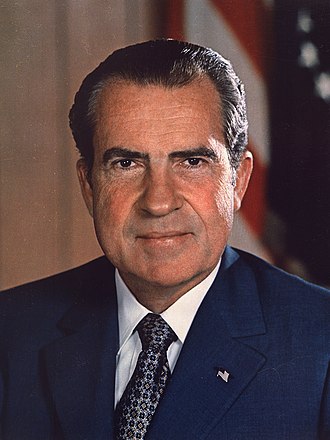
Richard M. Nixon served as the 37th President of the United States from January 1969 until his resignation in August 1974. In February 1971, he ordered the installation of a secret voice-activated taping system in the White House to preserve a historical record of his administration. Until the system's existence was revealed and dismantled in July 1973, the tapes captured Nixon directing major foreign policy initiatives, such as the opening to China, as well as his central role in the Watergate cover-up.
What Nixon talks about on the tapes
White House operations 4,718Presidential scheduling 2,225Public relations 1,784Presidential schedule 1,782Vietnam War 1,693Logistics 1,650Manolo Sanchez 1,626White House communications 1,400White House administration 1,399Presidential communication 1,243Henry Kissinger 1,191Foreign Policy 1,183
Conversations (21,010)
— Page 90 of 211President Nixon and Stephen B. Bull reviewed the details of the President's upcoming daily schedule, focusing on logistics for a meeting with Turkish Prime Minister Nihat Erim and an appointment with George P. Shultz in the Cabinet Room. The discussion included administrative preparations such as conducting name checks and confirming proper name pronunciations for scheduled visitors. Bull also coordinated with the President regarding the involvement of Alexander M. Haig, Jr. in the day's itinerary.
President Nixon met with George Shultz and later H. R. Haldeman to coordinate strategy regarding the labor members of the Pay Board, who were threatening to resign. Nixon instructed Shultz to contact labor leaders to urge them to remain on the board while signaling that the administration would continue to enforce wage and price controls, including a new exemption for small businesses. The participants also discussed foreign policy, specifically evaluating the potential political benefits of adding a visit to Poland to the upcoming Soviet summit itinerary and planning Marshall Green's post-China trip media appearances.
President Nixon met with Turkish Prime Minister Nihat Erim to discuss Turkey's critical role as a Western ally and a "firewall" against communist expansion in the Middle East. The leaders addressed internal security threats in Turkey, specifically the rise of anarchist and terrorist movements, while Erim emphasized the need for economic stability and modernized military equipment to counter Soviet-backed propaganda. Nixon pledged to maintain support for Turkey's parliamentary democracy, promising U.S. assistance through international lending institutions like the World Bank and affirming his commitment to the U.S.-Turkey military alliance despite evolving global diplomatic priorities.
President Nixon and Alexander Haig discuss the geopolitical challenge of maintaining diplomatic dialogues with the Soviet Union and China while those nations simultaneously undermine U.S. interests in Turkey, Iran, and Afghanistan. Nixon expresses significant skepticism regarding the sincerity of these adversaries, warning that their subversion efforts contradict ongoing diplomatic engagements. The two emphasize the need for greater caution and strategic awareness to prevent these powers from exploiting U.S. foreign policy discussions.
President Nixon met with his aide, Stephen B. Bull, to coordinate logistics for an upcoming bill signing ceremony. The discussion focused on the event schedule for the Special Action Office for Drug Addiction Prevention, which was slated to take place in the East Room. The brief meeting concluded with the two departing the Oval Office to proceed with these administrative arrangements.
President Nixon contacted the White House operator to facilitate an outgoing call. The primary purpose of this communication was to connect with George P. Shultz, then serving as the Director of the Office of Management and Budget. No further details regarding the substance of the subsequent conversation were recorded.
President Nixon consulted with the White House operator to determine the whereabouts of George P. Shultz. The inquiry was specifically linked to the location or status of labor leader George Meany. No substantive policy decisions were reached during this brief administrative check.
President Nixon met with H. R. Haldeman, George Shultz, and Ronald Ziegler to coordinate administration messaging, particularly regarding the war on drugs and economic policy. They discussed the tactical advantages of conducting a televised "fireside chat" on drugs rather than a press conference, which Nixon feared would focus on negative or unrelated topics. Additionally, they reviewed various personnel matters and appointments, including strategies for handling potential ambassadors and managing interactions with business leaders to bolster the administration's public image.
President Nixon and George Shultz discuss Shultz's recent meeting with labor leader George Meany regarding Meany's potential resignation from the Pay Board amid tensions over wage and price controls. The conversation centers on Administration frustration with Federal Reserve Chairman Arthur Burns regarding rising interest rates, which Nixon views as contradictory to their economic stabilization program. Nixon and Shultz conclude that while they must manage these political optics carefully to avoid appearing as the sole champions of government regulation, they remain prepared to confront both Burns and labor leadership if necessary to maintain control over the economy.
President Nixon contacted the White House operator to facilitate a telephone connection with his special counsel, Charles W. Colson. The brief exchange served as a routine administrative request to initiate communication between the President and a key advisor. No substantive policy matters or further action items were discussed during this initial connection.
President Richard Nixon met with his personal aide Stephen B. Bull in the Oval Office to discuss administrative logistics and presidential scheduling. During this session, Bull conveyed an unspecified message to the President regarding the conduct of his daily affairs. The interaction concluded with Bull departing the office, leaving the President to resume his official duties.
President Nixon held an undocumented meeting in the Oval Office with an unidentified individual to discuss matters pertaining to the President's daily schedule. Due to the lack of available transcript data, the specific substance of the exchange remains unknown. The meeting concluded when the participant departed the office shortly before 3:03 pm.
President Nixon met with the General Advisory Committee on Arms Control and Disarmament to deliberate on the ongoing negotiations with the Soviet Union regarding strategic arms limitations. The discussion focused on the complexities of ABM systems, the technical challenges of verification, and the political implications of potential agreements for domestic support and international relations. Participants also analyzed the strategic balance between the U.S. and the USSR, weighing the risks and opportunities of reaching a formal accord.
President Nixon and Press Secretary Ronald Ziegler coordinated the logistics for a forthcoming meeting with the White House News Photographers Association. The discussion focused on scheduling, the sequence of photo opportunities, and how to handle potential inquiries regarding the President’s dinner attendance. Nixon instructed Ziegler to provide non-committal responses to any questions about his interactions with the attendees.
President Nixon and Stephen B. Bull met briefly to coordinate logistical arrangements for an upcoming event with the White House News Photographers Association (WHNPA). The discussion focused on preparations for the meeting, which was scheduled to take place in the Cabinet Room. The encounter served as a final administrative check to ensure the President's schedule proceeded as planned.
President Nixon met with members of the White House News Photographers' Association in the Cabinet Room to discuss their annual photo contest and professional activities. The participants engaged in general conversation regarding the recognition of winning photographers, coverage of the President's recent travels, and National Geographic features. The session concluded with the group posing for a commemorative photograph.
President Nixon met with a Romanian delegation, led by Manea Manescu, to discuss the ongoing development of U.S.-Romanian political, economic, and cultural relations. The participants reviewed the impact of Nixon’s recent diplomatic initiatives in China and the Soviet Union, with Manescu expressing Romania's support for principles of national sovereignty and non-interference. Nixon reaffirmed his commitment to strengthening ties with Romania, promising to prioritize the country's economic interests, including the pursuit of Most Favored Nation (MFN) trade status.
President Nixon and H. R. Haldeman discuss administrative discipline regarding the length and quality of briefing materials provided for the President’s meetings, reflecting on his recent engagement with the Turkish delegation. The conversation shifts to potential foreign travel, specifically weighing the diplomatic implications of a stopover in Turkey versus a proposed trip to Poland. Additionally, Nixon explores the logistics of a nationwide publicity tour for the arrival of pandas at the Washington Zoo and reviews recent public commentary and political messaging regarding busing.
President Nixon met with Gerard Smith and Alexander Haig to discuss the strategic approach and political risks regarding the upcoming Soviet summit and potential arms control agreements. The President emphasized that while an agreement is desirable, it must be robust enough to withstand political attacks from the right wing, which he viewed as a greater threat than critics on the left. The participants assessed the implications of including submarine-launched ballistic missiles (SLBMs) in the deal and discussed tactics for managing congressional reactions and maintaining bargaining power ahead of the Moscow summit.
President Nixon met briefly with his personal valet, Manolo Sanchez, in the Oval Office. The interaction focused on the delivery of tea, serving as a routine service encounter within the President's daily schedule. No policy discussions or significant administrative decisions occurred during this brief engagement.
President Nixon met with Raymond Shafer, John Ehrlichman, and Egil Krogh to discuss the forthcoming release of the President's Commission on Marijuana and Drug Abuse report. The group strategized on how to frame the findings, with the President emphasizing his opposition to marijuana legalization while acknowledging the commission's recommendation to decriminalize private possession. Additionally, they reviewed political campaign dynamics, the President's position on school busing, and a sensitive plan to involve J. Edgar Hoover in authenticating an ITT-related document to neutralize media scrutiny.
President Nixon and his personal secretary, Rose Mary Woods, reviewed the guest list and logistical arrangements for an upcoming state dinner honoring Turkish Prime Minister Nihat Erim. The discussion focused on confirming attendance for various prominent figures, including Max M. Fisher and Del E. Webb, while addressing potential issues regarding missing invitations. The pair specifically noted the delivery status of an invitation intended for O.J. Simpson and evaluated the influence of various contributors on the guest selection process.
President Nixon and his personal secretary Rose Mary Woods briefly discuss the status of a specific, unnamed individual, noting her positive condition. This exchange serves as a check-in regarding the welfare of an associate. No formal policy decisions or administrative actions were recorded during this brief encounter.
President Nixon met with his personal valet, Manolo Sanchez, in the Oval Office for an informal discussion regarding personal administrative matters and the president's daily domestic requirements. While no transcript is available, these routine interactions between Nixon and Sanchez typically centered on household arrangements and the management of the president’s private quarters. No major policy developments or national security decisions were initiated during this brief exchange.
President Nixon and Charles Colson discussed a variety of political and administrative issues, including the status of Democratic-led ITT hearings and the potential resignation of George Meany from the Pay Board. The President emphasized his intent to take a firm stance against labor leaders if they chose to leave the board, prioritizing national interest over special interests. Additionally, the pair reviewed the media reception of recent White House initiatives, specifically praising the President’s aggressive rhetoric regarding inter-agency competition in drug control efforts.
President Nixon spent this session in the Old Executive Office Building dictating a series of personal memoranda and reflecting on contemporary political affairs. Accompanied briefly by aides Stephen Bull, Alexander Butterfield, and Manolo Sanchez, Nixon reviewed briefing materials regarding international figures such as Turkish Prime Minister Nihat Erim and discussed his broader 1972 election prospects. The President utilized the time to document his thoughts on global leadership, comparisons to past administrations, and his personal views on national political challenges.
President Nixon met with U.N. Ambassador George H.W. Bush to commend his performance and technical competence in the role. Nixon shared praise from the Turkish Foreign Minister, who specifically highlighted Bush’s effectiveness and the personal kindness shown by Barbara Bush toward the families of other diplomats. The discussion reinforced the President’s high regard for Bush’s diplomatic efforts compared to traditional career officers.
President Nixon and H. R. Haldeman met to coordinate preparations for an upcoming engagement. The primary focus of the discussion was reviewing briefing materials and organizing the President’s daily schedule. The participants concluded by deciding to collaborate on a final review of the necessary documentation to ensure the President was adequately prepared for his meeting.
President Nixon utilized this session to dictate an official memorandum. While the specific subject matter of the document remains undefined in the available transcript, the session served as a formal administrative exercise to capture executive policy or directives. No further deliberations or external parties were involved in the process.
President Nixon reviews previously recorded dictation regarding administrative engagements and scheduling. The discussion centers on finalizing specific agreements related to upcoming commitments. No major policy shifts are indicated, as the dialogue focuses primarily on the logistical clarification of these personal or professional arrangements.
President Nixon reviewed a prior dictation to clarify his strategic management approach regarding a specific, unspecified issue. The conversation emphasizes a directive for the administration to exert firm control over the situation at hand. No further details were recorded, as the exchange focused exclusively on reinforcing this command-oriented decision.
President Nixon held a private meeting with an unidentified individual in the Old Executive Office Building to conduct official business. While no transcript exists to detail the specific content, the session functioned as a recorded administrative consultation. The meeting concluded before the taping system ceased operation at 11:01 am, leaving the substance of the discussion and any resulting action items unrecorded.
President Nixon met with H.R. Haldeman to direct a more strategic approach to the public scheduling of Julie Nixon Eisenhower and Tricia Nixon Cox in key electoral states. Additionally, the President discussed potential international travel, specifically evaluating the geopolitical implications of visits to Poland and Turkey. These discussions aimed to balance domestic political outreach through his family with the complex diplomatic maneuvering required regarding NATO relations and Soviet-bloc engagement.
President Nixon and Alexander P. Butterfield coordinate the secure exchange of briefing materials, including a current briefing book and a previous version containing Nixon's handwritten notes. Butterfield confirms he will have Manolo Sanchez deliver these documents to the President immediately. The brief exchange concludes with Butterfield arranging for the materials to be routed through an assistant.
President Nixon initiates a call to the White House operator to facilitate a follow-up conversation with Charles W. Colson. The President specifically inquires about the status of ongoing developments regarding wage policies. This brief exchange serves to coordinate high-level communication regarding the administration's economic initiatives.
President Nixon, H.R. Haldeman, and Alexander Haig met to discuss political strategy, media management, and the planning of the President's upcoming international travel. A significant portion of the conversation focused on analyzing recent polling data, specifically regarding the public's reaction to the administration's stance on busing and various foreign policy initiatives. Nixon and his advisors agreed to prioritize television appearances over radio to maintain tighter control over the presentation of his message and minimize negative media framing, while also deciding to approach future diplomatic trips with a more cynical focus on domestic political benefits for the upcoming election cycle.
President Nixon and H. R. Haldeman discussed the political implications of public reaction to the busing issue. The President requested an analysis to determine if there is a correlation between approval ratings and the administration's stance on busing, particularly among voters in the South. This inquiry sought to identify whether support for the administration was driven by its position on desegregation busing or other external factors.
President Nixon initiates a brief interaction with the White House operator to place an outgoing telephone call. No substantive policy discussions occur, as the exchange serves primarily as a logistical step for the President to connect with another party. The recording concludes immediately after the request is processed, reflecting standard administrative procedure within the Executive Office Building.
President Nixon and Charles Colson discussed the potential resignation of George Meany from the Pay Board, debating whether Meany's departure would offer an opportunity for the administration to establish stricter, government-controlled wage policies. They agreed that any effort to accommodate labor would project weakness and dismissed the necessity of maintaining a tripartite structure. Additionally, the pair strategized on how to counter negative press coverage and congressional investigations related to the ITT case, emphasizing the need to expose the media's bias and coordinate supportive commentary through journalists like Willard Edwards.
President Nixon and Charles Colson discuss campaign strategy, polling data, and the importance of monitoring media coverage leading up to the 1972 election. They evaluate political vulnerabilities and the potential for unfair bias from news organizations regarding the administration. Nixon emphasizes the necessity of closely tracking opposition activities and maintaining an effective, controlled campaign operation to mitigate perceived media hostility.
President Nixon contacted the White House operator to initiate a telephone call to his special counsel, Charles W. Colson. The interaction served as a routine administrative request to facilitate direct communication between the President and a key advisor. The call was successfully placed, connecting Nixon with Colson for a private consultation.
President Nixon and H. R. Haldeman consulted on the potential fallout from an impending walkout by the AFL-CIO from the Pay Board. The discussion centered on assessing the political impact of this labor conflict and coordinating a strategic response involving key advisors such as George P. Shultz, John B. Connally, and Donald H. Rumsfeld. Nixon specifically weighed the option of addressing the situation directly through a televised public statement.
President Nixon and Alexander Haig discussed the strategic presentation of U.S. humanitarian aid to Bangladesh to ensure the administration's contributions appear robust compared to other nations, including the Soviet Union. Nixon directed Haig to compile a strong case detailing both current aid offerings and mandatory commitments to bolster the administration's public narrative. The primary goal of this meeting was to prepare a data-driven justification for U.S. efforts that the President could utilize in upcoming briefings or diplomatic discourse.
President Nixon met with his valet, Manolo Sanchez, in the Old Executive Office Building. The brief interaction consisted solely of a personal greeting between the President and his longtime staff member. No substantive policy discussions or official business were recorded during this segment.
President Nixon and his personal secretary Rose Mary Woods briefly discuss the arrangements for an upcoming dinner. The conversation is limited to coordinating plans for the event and confirming follow-up communication. No major policy or strategic decisions are addressed during this brief logistical exchange.
President Nixon and Press Secretary Ronald Ziegler consulted on a forthcoming public statement regarding organized labor's recent withdrawal from the Pay Board. The discussion focused on framing the actions of labor leaders, such as George Meany, as detrimental to the national fight against inflation. Nixon instructed Ziegler to emphasize that the administration would not allow powerful labor interests to supersede the law or sabotage the economic interests of the majority of American wage earners.
President Nixon and H. R. Haldeman consulted on the administration's strategy regarding the Pay Board and the future of organized labor's participation. They discussed the involvement of John B. Connally in these negotiations and the timing of potential policy announcements. Nixon ultimately deferred taking any immediate action, indicating a preference to delay these decisions rather than address them in the short term.
President Nixon consulted with the White House operator to facilitate an outgoing call. This brief interaction served administrative purposes, as the President utilized the operator's services to reach a requested party. No substantive policy discussions or significant political developments occurred during this connection.
President Nixon met with his personal aide, Manolo Sanchez, in the Old Executive Office Building to discuss the acquisition of Chinese tea. This brief interaction focused on the President's request for the specific item, which Sanchez confirmed he had secured. No other policy or administrative matters were addressed during this short exchange.
President Nixon and Charles Colson discussed the political fallout following George Meany's resignation from the Wage Board, agreeing on the need for a hardline public relations strategy to frame Meany as an obstructionist to the public interest. The two men explored strategies for restructuring the board—potentially moving toward a wholly public membership—while leveraging the conflict to align the administration with the public's concerns regarding rising food prices. Nixon instructed Colson to pressure George Shultz to finalize a new board proposal and develop a stronger stance on controlling food costs despite potential friction with the agricultural sector.
President Nixon and Charles W. Colson discussed a strategic media offensive intended to aggressively discredit political opponents regarding a perceived food crisis. The President instructed Colson to frame the administration's narrative using inflammatory language like "sabotage" to sway public opinion and deflect blame. The meeting focused on consolidating a unified, critical message to exploit the public's anxieties about market instability for political gain.
President Nixon and his personal secretary, Rose Mary Woods, discuss logistical arrangements regarding the President’s upcoming schedule and a planned visit by Charles “Bebe” Rebozo to Camp David on March 24, 1972. During the brief exchange, they deliberate on the secure handling or drafting of sensitive correspondence. No definitive policy decisions were reached, as the conversation focused primarily on administrative coordination.
President Nixon and H. R. Haldeman discuss the strategic recruitment of Black candidates for White House staff positions. The President expresses a preference for diversifying the administration's personnel to include Black representatives alongside other existing priorities. This dialogue reflects the administration's focus on political optics and staffing maneuvers during the 1972 election cycle.
President Nixon speaks with his daughter, Julie Nixon Eisenhower, in a brief personal exchange following a state dinner held for the Turkish Prime Minister. The President commends Julie's performance during the event and briefly discusses upcoming scheduling details, including his plans for the Easter holiday and a visit to Camp David. They also touch upon the President's professional calendar and movie screenings coordinated by White House projectionist Paul Fisher.
President Nixon and his daughter, Julie Nixon Eisenhower, coordinate their upcoming schedules at Camp David. The President notes that his travel plans are restricted by pressing administration business, specifically the restructuring of the Pay Board. Additionally, the President shares praise he received regarding Julie's recent public appearances.
President Nixon held a brief, four-second meeting with an unidentified individual in the Old Executive Office Building. Due to the extremely short duration of the encounter and the absence of a transcript, the specific context, topics, and outcomes remain undocumented. The recording serves only as a record of a momentary interaction during the President's afternoon schedule.
President Nixon and Alexander Haig review the United States' humanitarian aid strategy regarding the recently formed nation of Bangladesh. The discussion centers on the allocation and structure of $100 million in relief funds, specifically debating whether aid should be administered bilaterally or channeled through the United Nations. Nixon seeks clarification on the international perception of the American contribution following the recent conflict between India and Pakistan.
President Nixon and Alexander Haig discussed the intensity and public messaging surrounding U.S. bombing operations in North Vietnam. The two reviewed recent casualty figures and confirmed that the current military approach remained consistent with established "protective reaction" policies. They ultimately reached a consensus that no deviation from their existing public stance on these air strikes was necessary.
President Nixon consulted with the White House operator to facilitate the cancellation of a previously scheduled telephone call. The brief exchange focused solely on the administrative adjustment of the President's call list. No further policy or substantive matters were addressed during this interaction.
President Nixon and John Ehrlichman met to discuss the President's upcoming schedule and priorities. Their conversation focused specifically on the administration's Phase II economic policies. The participants coordinated their agendas to ensure alignment on these critical domestic initiatives.
President Nixon met with his senior advisors and cabinet members to finalize strategy for an upcoming press conference and address recent developments regarding the Pay Board. The discussion focused on responding to the withdrawal of AFL-CIO leadership from the Pay Board, managing public perception of inflation and economic policy, and formulating official stances on contentious social issues including busing, abortion, marijuana legalization, and Social Security increases. The group debated the optimal timing and format for the President to announce the administration's economic adjustments to ensure maximum impact and clarity while minimizing political vulnerability.
President Nixon and his senior advisors, including John Ehrlichman, H.R. Haldeman, and John Connally, met to formulate an aggressive administrative response to the resignation of George Meany and other labor leaders from the Pay Board. The group discussed the timing and format of a public statement intended to demonstrate decisive presidential action and secure political leverage against Democratic opponents. They also debated potential replacements for the labor positions, reviewed strategies for handling the national economy, and coordinated the President's upcoming press conference to ensure it effectively overshadowed current controversies like the IT&T investigation.
President Nixon met with Alexander P. Butterfield to address modifications and additions to a briefing book. The discussion focused on specific revisions being prepared by speechwriters William L. Safire and Patrick J. Buchanan. The President reviewed the inclusion of new pages to finalize the contents of the document.
President Nixon met with Alexander P. Butterfield in the Old Executive Office Building to discuss administrative matters concerning the White House taping system. The brief interaction included a segment of withdrawn personal information, after which Butterfield departed. No specific policy decisions were recorded during this restricted portion of their engagement.
President Nixon consulted with Marjorie P. Acker to review his daily activities and administrative schedule. The brief discussion primarily focused on coordinating formal dinner arrangements and managing an invitation for Senator John C. Stennis and his wife. The dialogue served as an executive briefing to ensure the President's upcoming social and professional commitments were properly organized.
President Nixon met with H. R. Haldeman and John Ehrlichman in the Executive Office Building to review the presidential schedule. The discussion focused on coordinating upcoming appointments and logistical planning for the President's administrative agenda. No specific policy decisions were finalized, as the dialogue remained centered on managing the President's time and meeting requests.
President Nixon met with H. R. Haldeman and John Ehrlichman in his Executive Office Building suite to coordinate internal administrative and political priorities. The discussion focused on managing White House operations and assessing pressing strategic developments. Following the meeting, the participants moved to address outstanding executive tasks and maintain oversight of ongoing policy initiatives.
President Nixon met with H.R. Haldeman and John Ehrlichman to coordinate administration strategy on several high-stakes domestic and foreign policy issues. The discussion centered on legislative maneuvering to curb school busing, the management of economic messaging regarding the Pay Board's recent labor disputes, and the handling of the ITT controversy. They also deliberated on potential presidential travel, the projection of moral leadership, and the public relations strategy for the President’s recent trip to China.
President Nixon and H. R. Haldeman coordinated with speechwriter William Safire to revise the President's upcoming television address regarding the Pay Board. The discussion centered on crafting a paragraph to criticize AFL-CIO leader George Meany for walking out of the board after it rejected a 20% wage increase for longshoremen. Safire was instructed to emphasize the inequity of such a raise compared to the 5% cap applied to the general American workforce.
President Nixon met with his personal valet, Manolo Sanchez, to discuss the President's personal schedule and potential outreach activities. The two focused on balancing official duties with personal commitments, specifically considering regular items for the President's list to avoid repetitive public appearances like roadside handshaking. During the meeting, Nixon also briefly coordinated with Sanchez regarding a typing assignment involving Rose Mary Woods.
President Nixon consulted with an unknown female aide regarding media strategy and the management of public perceptions during a period of perceived crisis. The discussion focused on crafting a specific, impactful 'Nixon line' similar to previous efforts regarding drug policy to better frame his public messaging. The President expressed concerns about the timing of media broadcasts and emphasized the need for a strategic approach to communications rather than routine public appearances.
President Nixon met with Marjorie P. Acker in the Old Executive Office Building to facilitate the processing and filing of an official Pay Board statement. The discussion focused on the necessary administrative steps for the document's delivery and archival. The meeting concluded with Acker departing after managing the distribution and filing requirements for the statement.
President Nixon met with Marjorie P. Acker and Manolo Sanchez in the Old Executive Office Building to discuss a formal statement regarding the Pay Board. The brief meeting centered on administrative or public messaging related to this economic regulatory body. No further details were recorded, and the participants departed the office shortly after the discussion.
President Nixon met with Marjorie P. Acker to discuss administrative tasks related to clerical work. He specifically requested that she obtain a staff member's district number for typing purposes. The exchange centered on coordinating internal office logistics and documentation.
President Nixon and H. R. Haldeman met to coordinate the finalization and editorial review of an upcoming Pay Board statement. The discussion focused on organizing necessary documentation and delegating the revision process to William Safire, specifically concerning policy details related to the longshoremen. The pair resolved to route the materials to Safire for his final assessment to ensure the statement's accuracy before release.
President Nixon held a brief, fifteen-minute meeting with an unidentified individual in his Old Executive Office Building suite. Due to the lack of a transcript or descriptive records, the specific substance of the policy or personnel matters discussed remains unknown. This brief encounter serves primarily as a logistical entry in the President’s daily schedule, documenting an undocumented interaction during the work week.
President Nixon met with his personal secretary, Rose Mary Woods, to coordinate the preparation of administrative documents. The discussion centered on the retyping of a Pay Board statement onto speech cards to ensure proper formatting for upcoming remarks. Woods was tasked with completing the task by a specific deadline, necessitating a brief exchange regarding typewriter use and project timeline.
President Nixon consulted with William Safire regarding the administration's official position and messaging strategy concerning the Pay Board. The discussion centered on the President's personal views on the Board's activities and incorporated the perspective of Treasury Secretary John B. Connally. This meeting served to refine the administration's public statement to ensure alignment on wage and price control policy.
President Nixon met briefly with an unidentified woman in the Executive Office Building to facilitate the delivery of an unspecified item. Due to the limited nature of the recording, the identity of the visitor and the nature of the object exchanged remain unknown. The interaction concluded quickly, with no further substantive discussion recorded.
President Nixon and Henry Kissinger met to finalize administrative or strategic details involving the Sixth Fleet's home port in Greece and diplomatic positioning regarding Israel. The discussion suggests a focus on maintaining geopolitical stability in the Mediterranean while managing interdepartmental relations with the State Department. The participants confirmed their course of action, signaling a decision to move forward with their established diplomatic objectives.
President Nixon met with John D. Ehrlichman and an unidentified woman to discuss the administrative preparation of a Pay Board statement. The conversation focused on the drafting and clarification of the document's language. The President also provided instructions regarding the inclusion of specific district information within the text.
President Nixon and William Safire discuss revisions to a presidential statement regarding the Pay Board and a public dispute with labor leader George Meany. Despite concerns from George Shultz and John Connally that the President should avoid commenting on individual Pay Board decisions, Nixon insists on directly criticizing Meany to demonstrate a firm stance. The conversation concludes with the approval of language intended to frame the administration’s position as pro-worker while diminishing the representative authority of labor leadership.
President Nixon contacted the White House operator to place a follow-up telephone call to Press Secretary Ronald L. Ziegler. The brief exchange served as an administrative request to facilitate communication with his staff. No substantive policy matters were discussed during this short logistical interaction.
President Nixon met with members of the Cost of Living Council and other key economic advisors to assess the efficacy of Phase II wage and price controls. The discussion focused on controlling inflation, managing food prices, and navigating political pressures from organized labor and Congress. Participants evaluated the impact of economic policies on the public interest and discussed strategies for future price stability across various sectors.
President Nixon practiced a public address regarding the resignation of AFL-CIO President George Meany from the Pay Board. The speech frames Meany's departure as a rejection of anti-inflationary wage controls, specifically citing the Pay Board's decision to deny a 20% wage increase for longshoremen. Nixon announced his decision to restructure the Pay Board with remaining labor and business leaders to ensure the continuation of his economic policies aimed at halving inflation.
President Nixon and Press Secretary Ronald L. Ziegler met to coordinate the President's upcoming speech regarding the Pay Board. The discussion focused on preparing Ziegler for potential press questions and ensuring the administration's messaging remained consistent. Nixon directed Ziegler to contact George P. Shultz to finalize the briefing strategy and clarify specific policy points.
President Nixon met with Marshall Green, John H. Holdridge, and Alexander Haig to provide strategic guidance for Green's upcoming appearance on 'Meet the Press' following Nixon's historic visit to the People's Republic of China. The discussion focused on projecting a message of regional stability and reassuring U.S. allies in Asia about the sincerity of American treaty commitments. The President emphasized that the China initiative was a necessary, proactive step toward global peace rather than a policy of isolationism, and he urged Green to dismiss rumors regarding secret deals or State Department disagreements.
President Nixon met with Ronald L. Ziegler to coordinate White House messaging regarding George Meany's resignation from the Pay Board and the broader administration strategy for handling public attacks on the economy and key officials. They discussed tactics for Nixon's upcoming press conference, specifically emphasizing a firm, "fight to the finish" stance against critics while deflecting questions about Arthur K. Watson and Peter M. Flanigan to subordinate departments. The conversation concluded with plans to frame the President’s weekend at Camp David as a period dedicated to reviewing stalled domestic policy initiatives, thereby pressuring Congress to act before the Democratic National Convention.
President Nixon met with Alexander P. Butterfield to refine his upcoming schedule, specifically focusing on a meeting with Republican leadership. The discussion addressed the agenda for that session, with a particular emphasis on the status of the Pay Board and the involvement of George P. Shultz. Additionally, the President briefly discussed correspondence intended for Luci Johnson Nugent and noted a requirement to allocate time for a matter involving Hayward.
President Nixon met briefly with Alexander P. Butterfield in the Oval Office to facilitate the delivery of a specific item. The discussion was extremely short and lacked substantive political discourse, concluding immediately upon the item's handover. This brief interaction served administrative or logistical purposes rather than policy formulation.
President Nixon met with H. R. Haldeman, Charles Colson, and others to strategize on managing the political fallout from George Meany’s resignation from the Pay Board and the ongoing ITT controversy. The participants discussed crafting the President’s public response to minimize criticism of his labor policies, focusing on the "special interests" narrative to isolate Meany and neutralize Democratic attacks. Additionally, the President issued directives to accelerate government spending through federal agencies and instructed his staff to aggressively challenge congressional misconduct, including the potential release of derogatory information on political opponents.
President Nixon consulted with Ronald Ziegler and Alexander Haig regarding the administration's public response to allegations of ITT involvement in Chilean politics. The discussion centered on a recent State Department denial concerning controversial statements attributed to Ambassador Edward M. Korry, which had been leaked by columnist Jack Anderson. Nixon and his aides agreed to deflect further inquiries by referencing the President’s previously stated policy positions on Latin America and Chile.
President Nixon met with his personal aide Manolo Sanchez and secretary Rose Mary Woods to discuss plans for an evening social gathering. The participants coordinated their schedules, specifically addressing time constraints regarding Woods's departure and dinner plans. The meeting served as a brief administrative arrangement for their personal logistics before the group concluded the discussion.
President Nixon and H. R. Haldeman briefly discuss the perceived orchestration of news coverage by major networks and publications, specifically referencing the "Alan Drury theory" regarding coordinated media agendas. Nixon expresses frustration over a recent negative news treatment and seeks validation from Haldeman regarding the synchronicity of these media outlets. The conversation concludes with a recognition of the conflicting motivations behind the press's reporting efforts.
President Nixon met briefly with Rose Mary Woods and an unidentified male visitor in the Oval Office to engage in informal, general conversation. The discussion was limited in scope, focusing on routine matters before the group departed together after approximately one minute. No substantive policy decisions or political developments were recorded during this brief interaction.
President Nixon speaks with his daughter, Tricia Nixon Cox, to discuss various personal and official matters. Their conversation covers updates regarding the President’s recent schedule, including the state visit of Turkish Prime Minister Nihat Erim and the status of an opium agreement. They also touch upon George Meany’s health and the President's public statement, before concluding with a discussion about Tricia's upcoming plans at Camp David.
President Nixon contacted the White House operator to place an outgoing call to his special counsel, Charles W. Colson. The brief communication served solely as a logistical request to initiate this connection. No substantive policy matters or tactical decisions were discussed during this exchange.
President Nixon and Charles Colson discuss a strategic media push to frame the President’s recent Pay Board confrontation with AFL-CIO leader George Meany as a stand against special interests. The two also address the ongoing controversy surrounding the International Telephone and Telegraph (ITT) case, specifically expressing frustration over inconclusive FBI reports and potential leaks to Senator Edward Kennedy. Colson is tasked with notifying John Ehrlichman of concerns regarding Kennedy's prior knowledge of sensitive investigations, reflecting the administration's belief in systemic bureaucratic hostility.
President Nixon initiates a brief request to the White House operator to be connected with Charles W. Colson. This administrative call serves as a logistical step to facilitate direct communication with his special counsel. No further substantive policy discussions occur during this brief interaction.
President Nixon and John Ehrlichman discuss the administration's struggle with internal discipline and the tendency of staff members to speak publicly without authorization. Frustrated by the lack of message control, Nixon directs Ehrlichman to instruct an unidentified subordinate to remain silent regarding sensitive issues. The pair briefly touch upon concerns regarding personnel resignations and potential inquiries they might face during an upcoming press conference.