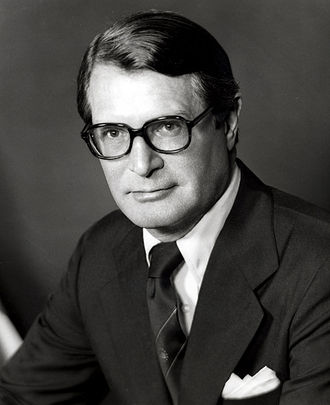
Richardson, Elliot L.
Elliot L. Richardson served in an unprecedented four senior positions during the Nixon administration, beginning as Under Secretary of State from January 1969 to June 1970. During the majority of the White House taping period, he served as Secretary of Health, Education, and Welfare (June 1970 to January 1973), where he oversaw major domestic policy initiatives. He briefly served as Secretary of Defense from January to May 1973 before being appointed Attorney General in May 1973, a role he famously resigned from in October 1973 during the "Saturday Night Massacre" rather than fire Watergate Special Prosecutor Archibald Cox.
President Nixon and his Cabinet met to discuss the ongoing military operations in Indochina and the development of the administration's national health reform agenda. Regarding the war, officials reviewed the progress of South Vietnamese incursions into Laos and Cambodia, noting that the strategy was successfully disrupting enemy supply lines while shifting the burden of ground operations away from American forces. The conversation then transitioned to a detailed proposal from Secretary of Health, Education, and Welfare Elliot Richardson regarding healthcare reform, with the group debating the costs, tax implications, and administrative feasibility of implementing Health Maintenance Organizations (HMOs) and national health insurance standards.
President Nixon calls Secretary of Health, Education, and Welfare Elliot Richardson to offer well-wishes and guidance ahead of his upcoming diplomatic trip to Europe. Nixon encourages Richardson to take time for personal enjoyment, specifically urging him to visit Paris with his wife, while also coordinating potential diplomatic discussions with leaders like Alec Douglas-Home and Edward Heath. They also discuss the political importance of Richardson's attendance at an education conference in Spain, which relates to broader ongoing base negotiations.
President Nixon met with his administration officials, including John Mitchell, Elliot Richardson, and George Shultz, to coordinate the White House's response to a recent Supreme Court ruling on school desegregation. Concerned about the ruling's political impact and the potential for a "double standard" between the North and South, Nixon directed his subordinates to remain disciplined and avoid proactive initiatives, emphasizing that the administration would comply with the law without going beyond what was strictly required by the courts. The President also instructed his team to keep a low profile on the Ribicoff amendment to avoid further legislative complications while managing upcoming political optics regarding Southern school policies.
President Nixon met with Gerald Ford, John Byrnes, Elliot Richardson, and other key administration officials to develop a strategy for the administration's health insurance bill. The discussion focused on the political and economic risks of placing the financial burden of the plan on small business owners and marginal employers. To address these concerns and counter potential Democratic opposition led by Edward Kennedy and Wilbur Mills, the group decided to introduce a bill that signals the administration's awareness of the economic impact on small businesses while keeping options open for committee modifications.
President Nixon met with Arthur S. Flemming, John B. Martin, Elliot L. Richardson, and Leonard Garment to discuss preparations for the upcoming White House Conference on Aging. The President emphasized his desire to foster greater intergenerational connection and respect for the elderly, suggesting that the administration's volunteer initiatives should prioritize mobilizing retired citizens while also encouraging youth to engage with and assist older populations. Participants addressed political sensitivities regarding recent administrative transfers of programs for the elderly and agreed to coordinate closely on the conference agenda to ensure it effectively reflects the administration's commitment to the quality of life for aging Americans.
President Nixon met with Senator Russell Long, administration officials, and congressional representatives to strategize on the advancement of the President’s welfare and health care legislation. The discussion focused on overcoming opposition to the administration's health bill, particularly the competing proposal from Senator Edward Kennedy, while emphasizing the need for congressional education and potential compromises to secure passage. Additionally, the President and Senator Long discussed refining welfare reform, specifically focusing on work incentives, child support enforcement, and addressing public concerns regarding welfare dependency.
President Nixon met with his Cabinet and key staff to coordinate legislative strategies and manage domestic policy agendas. The discussion focused on securing passage for welfare reform and other administration priorities by engaging directly with congressional leadership and balancing competing interests within the labor market. Participants assessed the challenges of mobilizing support among both Democrats and Republicans and emphasized the necessity of persistent lobbying and effective communication with legislative committees.
President Nixon and Elliot Richardson discuss messaging for an upcoming press conference, focusing on sensitive foreign policy objectives regarding China and the USSR, as well as the administration's stance on Supreme Court busing rulings. The two coordinate the government's legal position on housing discrimination cases and address the complexities of the Vietnam War, specifically regarding POW negotiations and U.S. credibility. The conversation concludes with administrative scheduling and the potential hiring of a new personnel candidate.
President Nixon and his Cabinet met to receive a briefing on international affairs and domestic policy, with a focus on Secretary of State William P. Rogers' recent diplomatic travels to the Middle East and the feasibility of desalinization technology. Rogers reported on his efforts to stabilize the Middle East through ceasefire maintenance and discussed the geopolitical concerns of various regional leaders. Dr. Edward E. David Jr. and other experts presented a detailed plan to advance domestic water desalinization and nuclear power capabilities, with the President calling for a major, accelerated federal effort to ensure American technological leadership. The meeting concluded with a brief status report from Treasury Secretary David M. Kennedy regarding the current international monetary situation and the fluctuations of the dollar.
President Nixon met with Secretary of Health, Education, and Welfare Elliot Richardson, incoming official Dr. Merlin K. "Morty" DuVal, and senior staff to discuss the administration's health care reform strategy and the challenges of managing federal health bureaucracies. The President emphasized the need for DuVal to establish firm control over autonomous agencies like the NIH and NIMH while cautioning him against being co-opted by the entrenched bureaucracy. The group also strategized on how to secure political support from the medical profession for the administration's health plan, framing it as a pragmatic, centrist alternative to the more radical proposals championed by Senator Edward Kennedy.
President Richard M. Nixon met with representatives from several prominent senior citizens' organizations to discuss federal policy and the specific needs of the elderly population. The participants, including administration officials such as George Shultz and Dr. Arthur S. Flemming, addressed critical issues including Social Security cost-of-living adjustments, Medicare and health care accessibility, housing, and transportation. The President emphasized his commitment to addressing these challenges through government programs and invited the organizations to continue providing input to his staff to assist in developing effective legislative solutions.
President Nixon met with his Cabinet and key advisors to announce a major breakthrough in Strategic Arms Limitation Talks (SALT) with the Soviet Union, culminating in a joint statement to be released simultaneously in both nations. The agreement establishes a framework to prioritize limiting anti-ballistic missile (ABM) systems while pursuing parallel measures for offensive weapons. Nixon emphasized that the breakthrough was achieved by maintaining a strong U.S. defense posture, and he urged his administration to avoid public speculation or detailed commentary that could complicate sensitive ongoing negotiations.
President Nixon met with his senior staff and cabinet members to finalize a new, centralized strategy for combating the heroin epidemic among Vietnam veterans and the general public, including the establishment of a Special Action Office. The President directed that this new office would oversee federal drug rehabilitation, prevention, and enforcement efforts across all departments, emphasizing the urgent need for a cohesive, high-level response to prevent former servicemen from turning to crime. During the discussions, Nixon also pressed for stricter loyalty within the administration, authorized an investigation into intelligence leaks, and evaluated personnel appointments within the CIA and military leadership.
President Nixon, Vice President Agnew, and a large group of Cabinet members and senior staff met to establish a strategic framework for domestic policy, budget planning for the 1973 fiscal year, and the development of the 1972 Republican legislative and election platform. Participants reviewed polling data regarding national, community, and family concerns, noting that the economy, inflation, and unemployment are primary public priorities while other issues like pollution and consumerism are often driven by media visibility. The President and attendees emphasized the need for better communication to receive credit for administration accomplishments, focusing on a limited number of 'gut issues' rather than overextending on too many programs. Ultimately, the group discussed the necessity of coordinating policy initiatives and messaging to ensure visible progress on key economic and social concerns ahead of the 1972 election.
President Nixon met with Secretary of Health, Education, and Welfare Elliot Richardson and other officials to discuss the administration's health policy agenda, specifically focusing on Health Maintenance Organizations (HMOs) and the rising national drug crisis. The President emphasized the need to repair the public image of the medical profession by encouraging doctors to take a proactive, non-moralizing role in public education regarding the dangers of drug abuse. Nixon and his advisors agreed to leverage the influence of the American Medical Association (AMA) to mobilize physicians as credible community voices to combat drug dependency among youth.
President Nixon met with John Ehrlichman and Elliot Richardson to navigate the political strategy surrounding revenue sharing and welfare reform initiatives. The discussion focused on securing legislative support by managing relationships with key figures like Wilbur Mills and leveraging administration victories to appeal to the President's constituency. Additionally, they evaluated personnel shifts, specifically considering the potential reassignment of Robert Finch and the effectiveness of various cabinet members in implementing the administration's policy agenda.
President Nixon called Secretary of Defense Elliot L. Richardson to offer personal praise for a favorable article about Richardson recently published in the New York Times. Nixon noted that he and John Ehrlichman had reviewed the piece and agreed it was an excellent and well-deserved assessment of the Secretary's performance. The President concluded the call by emphasizing to Richardson that his staff at the Department of Defense should recognize the value of his leadership.
President Nixon met with his cabinet, diplomatic staff, and intelligence officials to declare drug abuse 'public enemy number one' and to coordinate a comprehensive strategy for eradicating the international supply of narcotics. The participants evaluated the effectiveness of current interdiction programs in Southeast Asia, the Middle East, and Europe, ultimately concluding that despite increased law enforcement efforts, the drug problem was expanding. The President directed his team to prioritize the escalation of foreign pressure, including potential subsidies for poppy crop eradication in Turkey, and announced the centralization of domestic drug policy under a new White House office.
President Nixon met with Sammy Davis, Jr. to discuss the effectiveness of utilizing high-profile celebrities to combat drug abuse among youth by appealing to their aspirations rather than moralizing. Following this, the President met with administration officials, including Elliot Richardson, James Hodgson, and George Shultz, to navigate a political impasse regarding welfare reform waivers requested by California Governor Ronald Reagan. The group debated the legal risks of granting waivers for work-relief programs, deciding to pursue a strategy of providing federal public service job funding to California while avoiding an outright endorsement of Reagan's controversial welfare proposals. Additionally, the President reviewed labor statistics and planned an activist approach for a forthcoming steel industry meeting aimed at preventing a national strike.
President Nixon held a series of meetings involving staff and administration officials to coordinate on several pressing domestic and economic policy matters. The participants discussed legislative strategy regarding the Lockheed Corporation, the political risks associated with school busing and desegregation litigation in Texas, and the appointment of William D. Eberle as the new Special Trade Representative. Nixon emphasized a transition toward prioritizing domestic interests in international trade negotiations and sought to align his team on messaging regarding the administration's stance on school integration compliance.
President Nixon met with the Cabinet Committee on Opportunities for the Spanish Speaking (CCOSS), led by Dr. Henry M. Ramirez, to discuss increasing Hispanic representation and employment within the federal government. Emphasizing that the administration must proactively identify and promote talent rather than waiting for external political pressure, the President linked the development of human resources to the broader necessity of maintaining American economic competitiveness against global rivals like Japan and Western Europe. Nixon formally charged cabinet members to improve departmental hiring practices and mandated regular progress reports to ensure accountability in expanding opportunities for Hispanic Americans.
President Nixon, Pat Nixon, and the Cabinet met with their spouses to discuss the implementation and public perception of the administration’s New Economic Policy. Secretary of the Treasury John Connally led a comprehensive briefing on the wage-price freeze, tax reforms, and international monetary adjustments aimed at curbing inflation. The discussion emphasized the necessity of these economic measures for restoring national growth, managing federal expenditures, and building public and congressional support for the administration's program.
President Nixon, Vice President Agnew, and members of his Cabinet met to coordinate a unified administration strategy ahead of critical International Monetary Fund (IMF) meetings and ongoing global trade negotiations. The discussion emphasized the necessity of maintaining the recently imposed 10% import surcharge and a firm bargaining stance to address the nation's economic balance of payments and reshape the international monetary system. Nixon and his advisors agreed that while foreign partners would likely criticize U.S. policy, maintaining domestic political support and correcting long-standing trade imbalances remained the administration's primary objective.
President Nixon met with leaders from various national education organizations to hear their concerns regarding the state of public education, specifically focusing on the financial crisis facing schools. Representatives emphasized the need for federal assistance, the reliance on inequitable property taxes for school funding, and the challenges of integrating diverse student populations. Nixon reaffirmed his support for education and his administration's commitment to exploring tax reform and alternative funding methods, such as revenue sharing, to alleviate the pressure on local school districts.
Henry Kissinger contacts Secretary of Health, Education, and Welfare Elliot Richardson to request that he attend the upcoming inauguration of South Vietnamese President Nguyen Van Thieu as the President's personal representative. Kissinger argues that Richardson’s presence would signal a focus on peaceful development and humanitarian aid, intentionally opting for a less hawkish diplomatic profile than Secretary of Defense Melvin Laird. Richardson expresses willingness to accept the assignment, pending a brief review of his schedule and congressional commitments.
President Nixon met with his Cabinet and key staff members to review the administration’s domestic and foreign policy priorities, primarily focusing on the economic transition to 'Phase II' and the announcement of a 1972 Soviet summit. Officials discussed the successful implementation of the wage-price freeze and the strategy for securing organized labor's cooperation on the newly formed Pay Board and Price Commission to curb inflation. Additionally, the President addressed the importance of linking economic policy to job growth through his pending tax proposals, while Secretary of State Rogers and the President emphasized that international diplomatic overtures toward the Soviet Union and China were part of a cohesive, long-term strategy for global peace.
President Nixon met with John Ehrlichman and later Henry Kissinger to discuss a range of sensitive administrative and political matters, including Supreme Court appointments and the declassification of CIA documents related to the Ngo Dinh Diem assassination. The participants strategized on managing intelligence disclosures and potential immunity questions, while also coordinating the President's upcoming schedule, budget priorities, and Phase II wage and price controls. Finally, they deliberated on diplomatic appointments for the inauguration of South Vietnamese President Nguyen Van Thieu, ultimately favoring Elliot Richardson for the delegation.
President Nixon met with his Cabinet Committee on Executive Reorganization to coordinate strategy for the administration's departmental restructuring proposals. The discussion focused on overcoming bureaucratic resistance, navigating complex Congressional committee jurisdictions, and addressing concerns regarding constituency-based programs like the Rural Electrification Administration. To advance these reforms, Nixon directed his Cabinet members to personally engage with key Congressional leaders and exert stricter control over their respective bureaucracies to ensure support for the legislative agenda.
President Nixon met with his Cabinet and staff to discuss high-stakes domestic and foreign policy issues, including the administration's stance on school desegregation and busing, and potential vetoes regarding child development and welfare legislation. The President also briefed Secretary of Commerce Maurice Stans on his upcoming trip to the Soviet Union, emphasizing that trade should be treated as a strategic tool rather than an over-eager pursuit. Nixon instructed Stans to maintain a shrewd bargaining position and to subtly convey the administration's political strength to Soviet leadership to influence diplomatic negotiations.
President Nixon met with the President’s Committee on Mental Retardation to discuss the status of federal programs, research initiatives, and the ongoing efforts to integrate individuals with intellectual disabilities into community settings. The discussion emphasized shifting away from long-term institutionalization toward modern community-based care models, while also addressing advancements in prenatal diagnosis and genetic counseling for prevention. Nixon praised the committee's work and international outreach, culminating in a gesture of appreciation where he presented commemorative White House gifts to the participants.
President Nixon and Secretary of Health, Education, and Welfare Elliot L. Richardson exchanged Christmas greetings and reflected on the recent signing of the National Cancer Act of 1971. The President commended Richardson and his team for their role in securing favorable legislation for the initiative, expressing guarded optimism regarding its potential for medical progress. Nixon also briefly mentioned his upcoming travel to Florida, where he was scheduled to meet with West German Chancellor Willy Brandt.
President Nixon met with Arthur S. Flemming, his family, and various administration officials in the Oval Office to mark Flemming's appointment to a federal position focused on the needs of older citizens. The ceremony included formal introductions, the presentation of gifts, and a brief photograph session with the White House press corps. Flemming expressed his gratitude for the opportunity and affirmed his commitment to championing the dignity and welfare of the nation’s elderly population.
President Nixon met with Vice President Agnew and members of the McElroy Commission and the Advisory Commission on Intergovernmental Relations (ACIR) to discuss the pressing issue of school finance reform. The discussion focused on the potential shift toward state-level funding to reduce reliance on regressive local property taxes, as well as the feasibility of implementing a Value Added Tax (VAT) as a federal revenue source to support educational equalization. Nixon directed both the McElroy Commission and the ACIR to prioritize the study of these funding models and their implications for intergovernmental relations and local school control.
President Nixon met with his Vice President and Cabinet to discuss the state of the U.S. economy, the administration's fiscal policy, and the upcoming 1973 budget. Key areas of focus included interpreting unemployment data—specifically the impact of new entrants to the workforce—and managing inflation through Phase II price and wage controls. Nixon urged his department heads to aggressively implement approved spending programs to stimulate the economy, while simultaneously directing them to more effectively communicate and promote the administration's economic achievements and social policy investments to the public.
President Nixon met with members of the President’s Cancer Panel, including Benno C. Schmidt, R. Lee Clark, and Robert A. Good, alongside Secretary of Health, Education, and Welfare Elliot Richardson to discuss the administration's cancer research initiative. The discussion focused on organizational strategies, the need for international cooperation, and the importance of balancing clinical and scientific perspectives to maximize research efficacy. Nixon emphasized his support for the panel’s mission and suggested that if the current model proves successful, it could serve as a template for tackling other major diseases in the future.
President Nixon met with his Cabinet and senior staff to debrief them on the results and implications of his recent diplomatic trip to the People's Republic of China. The President emphasized that the primary success of the visit was the establishment of a new communication channel between the two nations, which he argued was essential for managing long-term stability and reducing the potential for future conflict. Nixon shared his impressions of Chinese leadership, particularly his discussions with Chou En-lai, noting the stark ideological differences while highlighting common strategic interests, such as peace in the Pacific and balancing influence against the Soviet Union. The discussion concluded with a focus on how this opening could be leveraged to reshape international relations and manage regional tensions across Asia.
President Nixon held an Oval Office meeting with Peter G. Peterson, his family, and members of the Cabinet to commemorate Peterson's recent Senate confirmation. The event served primarily as a formal ceremony for the administration of the oath of office and a subsequent photograph session with White House photographer Ollie Atkins. The interaction concluded with informal social conversation regarding Camp David and scheduling logistics.
President Nixon met with the Cabinet Committee on Education to deliberate on federal education policy, with a primary focus on the political and constitutional challenges surrounding school busing and desegregation. The discussion addressed the need for improved quality of education in inner-city and rural schools, the complexities of federal financing, and the potential implementation of tax credits for private education. The participants explored ways to balance integration mandates with community-based solutions, emphasizing the importance of school accountability and the development of a coherent administration strategy to address public concerns.
President Nixon met with the Cabinet Committee on Education and the Council of Black Appointees to discuss the final report of the President’s Commission on School Finance. Participants examined the challenges of educational equity, focusing on funding disparities between urban and rural districts, the role of federal and state responsibilities, and the contentious issues of busing and support for non-public schools. The President expressed appreciation for the committee's research, and the discussion concluded with a commitment to further reviewing the commission's recommendations for legislative and policy implementation.
President Nixon met with Vice President Agnew and Republican Congressional leaders to coordinate legislative strategy on key domestic priorities, specifically revenue sharing, welfare reform, and Social Security legislation. The discussion focused on overcoming legislative stalemates in the Ways and Means Committee and the Senate, particularly regarding the influence of Chairman Wilbur Mills and the need for a unified Republican stance. The President urged the leadership to maintain pressure for compromise bills that align with administration goals while avoiding fiscally irresponsible mandates during an election year.
President Nixon met with John B. Connally, Elliot L. Richardson, Arthur S. Flemming, George P. Shultz, and John D. Ehrlichman to strategize on the administration's position regarding pending Social Security and Medicare legislation, specifically House Resolution 1 (HR 1). The group evaluated various fiscal alternatives to manage benefit increases and wage base adjustments without exacerbating inflation or creating an adverse impact on the 1973 federal budget. The discussion centered on balancing the political necessity of supporting the elderly with the economic imperative of maintaining fiscal responsibility, with participants weighing the potential for a presidential veto against the possibility of working with congressional leaders like Wilbur Mills to moderate the bill's provisions.
President Nixon met with his Cabinet Committee on Education and a group of prominent private attorneys to develop a legislative and constitutional strategy for addressing federal court-ordered school busing. The participants debated the merits of proposing a temporary moratorium on new busing orders while Congress pursued longer-term, systemic solutions focused on improving educational quality. The meeting resulted in a consensus to refine these legislative proposals and maintain strict confidentiality regarding the involvement of the private counsel to protect the administration's political and legal standing.
President Nixon met with bipartisan Congressional leaders, administration officials, and cabinet members to advocate for a legislative moratorium on court-ordered busing to achieve racial balance in schools. Nixon argued that current judicial mandates were causing societal turmoil and urged Congress to act immediately to stop new busing orders while advancing his broader 'Equal Educational Opportunities Act.' The administration proposed a two-pronged strategy involving an immediate legislative moratorium followed by a long-term commitment to compensatory education funding to improve school quality, specifically for low-income and minority students.
President Nixon met with Republican congressional leaders and cabinet officials to strategize on the administration's legislative agenda, specifically focusing on revenue sharing, welfare reform, and the Equal Educational Opportunities Act. The discussion addressed the political and procedural challenges of implementing a busing moratorium and the importance of countering Democratic criticism regarding the economy. Nixon emphasized the need for a unified party strategy to leverage economic accomplishments and maintain pressure on Democratic opponents leading into the 1972 election cycle.
President Nixon met with Frank J. Rauscher, Elliot L. Richardson, Kenneth R. Cole, Jr., and James H. Cavanaugh to discuss the administration's cancer research program and broader legislative concerns. Nixon emphasized his commitment to concentrating resources on cancer as a model for addressing other health issues, while also instructing Rauscher on how to frame this approach publicly. The conversation concluded with Nixon expressing deep frustration regarding the current legislative climate in Congress, specifically citing difficulties with Social Security and overall spending policies.
President Nixon met with Vice President Agnew, Cabinet members, and senior staff to discuss the administration's recent escalation in Vietnam, specifically the blockade of North Vietnamese ports. The President articulated his rationale for the decision and sought unified support from his team to manage potential congressional and public opposition. He emphasized the necessity of leadership during difficult times and urged his Cabinet to present a cohesive front in defending the policy to the public.
President Nixon met with his Cabinet and key staff to discuss the upcoming departure of Secretary of the Treasury John B. Connally and to address broader administration matters. The discussion covered the timing of administrative changes, the transition of economic policy responsibilities to George Shultz, and the status of ongoing federal investigations following the recent shooting of George C. Wallace. Connally reflected on his tenure as Treasury Secretary and his future plans, while the President reaffirmed his commitment to his current economic program and leadership agenda.
President Nixon met with his senior advisors and Cabinet members, including Elliot Richardson and Caspar Weinberger, to evaluate the legislative strategy for H.R. 1, the administration's welfare reform bill. The participants debated whether to maintain a firm stance on the original proposal or pursue a compromise with Senator Ribicoff to improve the chances of Senate passage before the Democratic National Convention. Nixon expressed concern that moving toward a compromise might blur the administration's policy distinctions from Democratic nominee George McGovern, while his advisors argued that failing to act could lead to the collapse of the legislation. Ultimately, the President deferred a final decision, requesting further analysis on the political and budgetary implications of the potential concessions.
President Nixon met with HEW Secretary Elliot Richardson and medical experts, including John Millis and Theodore Cooper, to discuss the U.S.-Soviet Union Cooperative Health Program regarding cancer and heart disease research. The discussion focused on international data sharing, the impact of diet and lifestyle on cardiovascular health, and the importance of public health education initiatives. The President emphasized prioritizing medical research funding and promoting wellness awareness, ultimately tasking the group with preparing recommendations for future health policy and educational outreach.
President Nixon met with Secretary Richardson and other officials to discuss the burgeoning US-Soviet health research agreement, emphasizing its importance for public opinion and comparing it to US-PRC exchanges. Key topics included the shift from confrontation to cooperation in scientific exchanges, potential meetings with Soviet and Polish health officials, and the sensitive issue of Soviet dissidents being confined to mental hospitals, which could impact the Soviet Health Minister's upcoming visit. The discussion also touched upon domestic health initiatives like triage and emergency care projects.
President Nixon met with Soviet Health Minister Boris V. Petrovsky, Ambassador Anatoliy F. Dobrynin, and Secretary of Health, Education, and Welfare Elliot L. Richardson to discuss international cooperation in medical research. The participants highlighted the importance of collaborative initiatives regarding cancer, cardiovascular diseases, and infectious diseases as a non-controversial bridge for broader U.S.-Soviet relations. The discussion also touched upon the health of Soviet leadership, the benefits of mandatory vacation policies for officials, and the potential for shared medical advancements to benefit humanity.
President Nixon met with his administration officials, including Elliot Richardson and John Ehrlichman, to discuss the political feasibility of passing welfare reform (H.R. 1) before the 1972 election. Given the lack of time and the potential for a hostile or obstructionist legislative environment, the participants concluded that passing a comprehensive welfare bill was unlikely and that aggressive pressure on Congress would be counterproductive. Nixon decided that the administration should maintain its formal support for H.R. 1 while simultaneously pivoting to a strategy of aiming for a decisive election mandate, intending to reintroduce the reform package in the next Congress under more favorable conditions.
President Nixon met with Elliot Richardson and several senior staff members to discuss political strategy regarding the welfare reform bill, H.R. 1, and the potential impact of a new amendment offered by Senator Adlai E. Stevenson III. The group analyzed the risks of appearing inconsistent if the administration supported the Stevenson proposal, which closely mirrored the President's original welfare plans, while balancing the need to preserve the administration's credibility as the bill faced likely defeat. Ultimately, they discussed using a parliamentary tactic—having Senator Hugh Scott support the amendment—to expose the lack of substantive differences between the two parties and ensure the administration would not be blamed if the legislation failed.
President Nixon met with incoming Secretary of Defense Elliot Richardson and National Security Advisor Henry Kissinger to outline the President's expectations for a major overhaul of the Department of Defense. Nixon emphasized the need to dismantle the existing management systems, reduce the number of assistant secretaries, eliminate bureaucratic duplication, and assert civilian control over the military establishment. He also directed Richardson to prioritize strategic thinking over administrative brokering, specifically highlighting the importance of reevaluating defense spending, intelligence operations, and R&D programs in coordination with the National Security Council.
In this meeting, President Nixon met with his Vice President, Cabinet, and senior staff to provide a briefing on the impending Vietnam cease-fire agreement, scheduled for signing on January 27, 1973. National Security Advisor Henry Kissinger detailed the arduous negotiation process, emphasizing that the agreement achieved key U.S. objectives including the return of POWs, the withdrawal of American forces, and the right of South Vietnamese self-determination. Following the Vietnam discussion, the President transitioned to a briefing on the fiscal year 1974 budget, where Director Caspar Weinberger presented plans for spending cuts and program terminations designed to maintain a full-employment balance and avoid tax increases.
President Nixon met with his Vice President, Cabinet members, and senior staff to conduct a briefing on the upcoming federal budget. The discussion focused on the necessity of fiscal restraint, including the reduction and termination of certain government programs, to avoid tax increases and curb inflationary pressures while maintaining an expanding economy. Cabinet members analyzed projections for the 1974 and 1975 budgets, emphasizing the shift in spending priorities from defense toward human resources and the importance of presenting the budget to Congress and the public as a responsible alternative to higher taxation.
President Nixon and his Cabinet members strategized on how to promote the administration’s 1974 budget and defend proposed spending cuts against inevitable Congressional and lobbying opposition. The participants emphasized shifting from a constituency-based political strategy to a national message centered on fiscal responsibility, specifically using the themes of 'jobs' and 'taxes' to appeal to working-class voters. Nixon underscored the necessity of forcing Congress to accept accountability for spending, ultimately positioning the administration to blame Democrats if tax increases become required to fund legislative priorities.
President Nixon and Secretary of Defense Elliot L. Richardson discussed plans for a presidential visit to the Pentagon to bolster military morale following the return of American prisoners of war (POWs). They coordinated the meeting's logistics, including the invitation list of military and NSC officials and the public messaging strategy to frame the event around honoring the heroes of the Vietnam War. Nixon emphasized that the visit was specifically intended to boost national and military pride in the wake of the ceasefire agreement.
President Nixon and Secretary of Defense-designate Elliot L. Richardson discuss the strategic messaging and format for Richardson’s upcoming visits to various military agencies. The President emphasizes the importance of boosting military morale and ensuring service secretaries and military chiefs feel included in the decision-making process. They finalize plans for a meeting the following day to discuss policy initiatives and personnel attendance, aiming to present a unified and appreciative front to the armed services.
President Nixon met with Vice President Agnew, Cabinet members, and key staff to discuss recent foreign policy developments and economic strategy. Vice President Agnew briefed the group on his recent tour of Southeast Asian nations, while Treasury officials and Cabinet members deliberated on international monetary policy, trade barriers, and the need for a more competitive U.S. industrial posture. The President emphasized the importance of maintaining international engagement, securing legislative tools for trade negotiations, and justifying reconstruction aid for Vietnam as a strategic security necessity rather than purely humanitarian relief.
President Nixon met with members of the National Security Council and other senior officials to discuss the strategic balance of power between the U.S. and the USSR, specifically in anticipation of the SALT II negotiations. The discussion focused on the impact of qualitative and quantitative disparities in throw-weight, bombers, and MIRV technology on U.S. and Soviet first- and second-strike capabilities. Nixon emphasized the importance of maintaining an appearance of strategic equivalence to preserve the confidence of U.S. allies and domestic support, directing his team to refine their negotiating strategy without rushing into a premature moratorium on weapons testing.
President Nixon and his Cabinet met to launch a strategic public relations campaign, titled the Presidential Spokesmen program, aimed at pressuring Congress to support his budget priorities and oppose spending-heavy legislation. Nixon urged his officials to frame the budget debate not as a constitutional conflict, but as a direct choice between the economic interests of the 'New American Majority' and the fiscal irresponsibility of the opposition. The session included briefings on foreign policy, defense spending, and law enforcement, emphasizing the need for administration spokesmen to maintain a positive, disciplined narrative while avoiding defensive posturing on 'false issues.'
President Nixon hosted the recipients of the 1972 Management Improvement Award in the Cabinet Room to coordinate the logistics for a formal ceremony. Brian Usilaner facilitated a briefing for award winners and cabinet members, including William P. Rogers and Caspar Weinberger, to establish the specific order of presentation and photography arrangements. The session focused on streamlining the proceedings to manage the large group effectively while ensuring individual recognition for the agency and department representatives.
President Nixon held a ceremony in the Oval Office to present awards to various federal employees and government agency representatives for their public service. Accompanied by H. R. Haldeman and several cabinet members, the President recognized individuals from departments including Agriculture, Treasury, Defense, and the Atomic Energy Commission. During his remarks, Nixon praised the recipients for prioritizing public service over private financial gain, emphasizing that the intrinsic rewards of their work provided a satisfaction that private enterprise could not match.
President Nixon and members of the National Security Council met to discuss the strategic importance of Mutual Balanced Force Reductions (MBFR) amidst growing congressional pressure for unilateral U.S. troop cuts. The discussion focused on maintaining a credible conventional defense posture in Europe to avoid a reliance on "tripwire" nuclear escalation, which Nixon and his advisors agreed would be untenable given the current parity in nuclear capabilities between the U.S. and the Soviet Union. Participants ultimately reached a consensus to pursue negotiations that link force improvements with potential reductions while resisting domestic isolationist trends and preserving NATO's operational cohesion.
President Nixon met with his senior advisors and staff to manage the escalating Watergate crisis and coordinate a response to the looming threat of grand jury indictments. The participants debated potential strategies for compelling John Mitchell to testify, considered whether key White House staff should resign or remain in their positions, and assessed the risks of congressional investigations. Nixon emphasized the necessity of seizing the initiative and establishing a narrative of presidential transparency and cooperation to protect the integrity of his administration.
President Nixon and Secretary of Defense Elliot L. Richardson discussed a public relations strategy to counter criticism regarding recent military base closures. Nixon advised Richardson to quantify the long-term budgetary savings, framing the closures as evidence of a lean defense budget to pressure liberal critics who simultaneously demand defense cuts and the retention of local bases. Richardson agreed to implement this messaging strategy to highlight the hypocrisy of those opposing the administration's fiscal austerity.
In this meeting, President Nixon addressed his Cabinet and senior staff regarding the recent departures of top aides H.R. Haldeman and John Ehrlichman, framing the transition as a necessary move to restore stability amidst the escalating Watergate investigation. Nixon emphasized the importance of maintaining public trust, directed the staff to cooperate fully with investigators, and insisted that the White House avoid any appearance of a cover-up. Cabinet members and staff discussed the administration’s focus on governance, foreign policy, and economic management, reaffirming their collective commitment to the President's agenda despite the political crisis.
President Nixon and Attorney General-designate Elliot Richardson discuss the impending appointment of a Special Prosecutor to investigate the Watergate scandal. They agree that while Richardson should appoint an independent figure to oversee the investigation, he must retain ultimate authority and responsibility as Attorney General rather than fully abdicating oversight. Richardson plans to consult with Senate Judiciary Committee members to ensure his proposed management structure, which includes replacing Henry E. Petersen, maintains his command while satisfying congressional demands for integrity.
President Nixon and Elliot Richardson discuss the ongoing Watergate investigations and the political challenges surrounding the nomination of a new special prosecutor. Nixon emphasizes that as Attorney General, Richardson holds absolute authority over the investigation and suggests replacing Henry Petersen to alleviate public pressure. The two men agree on the importance of Richardson maintaining control while navigating the expectations of the Senate.
President Nixon met with Vice President Agnew and his Cabinet to discuss the ongoing impact of the Watergate scandal on the administration, personnel changes, and the need to maintain governmental stability. Key topics included the appointment of a special prosecutor, the selection of Elliot Richardson, and the importance of professional coordination between the White House and Cabinet departments to ensure the administration's 1972 election mandate remained the primary focus. Nixon emphasized the necessity of improving Congressional relations and maintaining morale within the bureaucracy despite the political distractions caused by the Ervin Committee hearings.
President Nixon met with his Vice President, Cabinet members, and senior staff to receive departmental updates and reinforce the administration's policy goals. The discussion spanned a wide array of topics, including minority recruitment, the status of the Watergate special prosecutor search, energy policy, and the administration's foreign policy record. Nixon emphasized the importance of maintaining a strong national defense and a unified front against political challenges while encouraging his team to continue their work with confidence.
President Nixon calls Elliot L. Richardson to congratulate him on his Senate confirmation as Attorney General, commending his skill in navigating the difficult confirmation process. The conversation shifts to the Watergate investigation, specifically addressing the role of Special Prosecutor Archibald Cox and concerns regarding the continuity of ongoing work by U.S. Attorneys. Nixon emphasizes the importance of the administration’s recent public statement on the scandal and confirms logistics for Richardson’s upcoming swearing-in ceremony at the Department of Justice.
President Nixon met with Alexander Haig to discuss the ongoing fallout from the Watergate scandal, specifically focusing on managing the White House staff's morale, press relations, and the administration's strategic response. They coordinated the upcoming swearing-in ceremony for Attorney General Elliot Richardson and discussed utilizing cabinet members like Henry Kissinger to handle press briefings to shield the President from direct confrontation. Additionally, the President reviewed his schedule, including planned meetings with Congressional leaders and potential public appearances to project stability and strength during the crisis.
President Nixon and Vice President Agnew met with the Cabinet and senior staff to discuss major foreign and domestic policy priorities and internal administration management. The discussion centered on upcoming diplomatic summits with Leonid Brezhnev and Georges Pompidou, negotiations with North Vietnam regarding the ceasefire, and economic challenges including inflation and energy policy. Additionally, General Alexander Haig briefed the Cabinet on the administration's efforts to stabilize internal governance, improve relations with Congress, and manage the ongoing political fallout from the Watergate scandal.
President Nixon met with newly appointed Attorney General Elliot L. Richardson to discuss the administration of the Justice Department, personnel appointments, and the ongoing Watergate scandal. Nixon emphasized the importance of maintaining strict executive privilege regarding presidential papers while encouraging Richardson to take a proactive leadership role in national security and law enforcement issues. The two also addressed the necessity of curbing government leaks, which Nixon argued were damaging to sensitive foreign policy negotiations, including those involving the Soviet Union and China.
President Nixon met with his Cabinet and key legislative leaders to discuss the restructuring of domestic policy operations, the appointment of Clarence M. Kelley as FBI Director, and strategies for improving congressional cooperation. Nixon emphasized a team-based approach to policy formulation, delegating significant oversight to Mel Laird, and urged Cabinet members to actively engage with Congress to pass the administration's legislative agenda. The discussion also addressed the administration's response to inflation, the importance of maintaining public morale amidst the Watergate crisis, and the necessity of presenting a unified, forward-looking policy front to the American people.
President Nixon met with Attorney General Elliot Richardson and FBI Director-designate Clarence M. Kelley to coordinate strategy ahead of Kelley’s Senate confirmation hearings. The discussion focused on highlighting Kelley’s leadership potential and his record on reducing local crime rates to ensure bipartisan support. Nixon provided guidance on the themes Kelley should emphasize, specifically FBI cooperation with other law enforcement agencies and the administration's progress in crime reduction.
President Nixon met with his Vice President, Cabinet members, and senior staff to announce the implementation of a 60-day price freeze as part of a strategy to combat inflation. He explained that this measure, aimed at stabilizing food and gasoline prices, was a necessary pragmatic step to preempt more extreme, mandatory controls favored by Congress. Nixon emphasized his commitment to maintaining a free-market economy and tasked his Cabinet with actively promoting this policy to the public and opinion makers. He also highlighted the administration's broader accomplishments in foreign policy, including the end of the draft and the upcoming U.S.-Soviet summit.
President Nixon met with Vice President Agnew and his Cabinet to discuss the transition from the current wage and price freeze to a "Phase IV" economic policy. The President emphasized the need to balance controlling inflation with maintaining domestic production, while acknowledging the political difficulty of removing controls due to congressional and public pressure. Key developments included the administration's resolve to move toward a free-market economy as quickly as possible, coupled with a renewed commitment to fiscal austerity and a balanced federal budget to bolster economic confidence.