Woods, Rose Mary
Rose Mary Woods served as President Richard Nixon's fiercely loyal Personal Secretary from January 1969 to May 1973, acting as a crucial gatekeeper to the Oval Office. During the White House taping period (February 1971 – July 1973), she maintained strict control over access to Nixon and was one of the few staff members whose daily interactions with the President were frequently recorded. Following the Watergate-related resignations of top aides H.R. Haldeman and John Ehrlichman, her responsibilities expanded and she was promoted to Executive Assistant and Personal Secretary to the President in June 1973, serving until August 1974. She later became infamous for the "Rose Mary stretch," claiming she accidentally erased 18.5 minutes of a subpoenaed June 1972 tape while transcribing it.
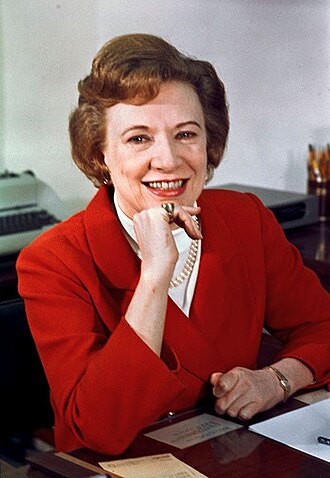
President Nixon and personal secretary Rose Mary Woods discuss the President's demanding schedule and the logistical planning for an upcoming daytime press conference. The conversation touches on the President's desire to manage media access efficiently later in the week. Additionally, Nixon expresses significant frustration regarding AFL-CIO leader George Meany, characterizing his adversarial behavior as particularly troublesome.
President Nixon and his personal secretary, Rose Mary Woods, engaged in a brief, informal check-in regarding the President's daily wellbeing and administrative matters. The discussion touched upon general staff communications and the reception of recent public appearances, characterized by a supportive and collegial tone. No substantive policy decisions were reached, as the brief exchange primarily functioned to maintain personal rapport between the President and his long-time aide.
President Nixon and his personal secretary, Rose Mary Woods, held a brief personal telephone conversation to discuss scheduling and private matters. The dialogue covered updates regarding Woods's health and daily activities, alongside coordination for an upcoming family visit to Camp David involving Tricia Nixon Cox and Edward R. F. Cox. The exchange served as a routine check-in between the President and a close aide concerning personal and social arrangements.
President Nixon and his personal secretary, Rose Mary Woods, held a brief informal check-in to discuss her current health status and medical treatments. The conversation also touched upon routine administrative matters, including the upcoming schedules for Julie Nixon Eisenhower and Tricia Nixon Cox. Additionally, they reviewed details regarding the President’s itinerary, specifically focusing on a planned visit from Tricia Nixon Cox and a scheduled appearance by Miss America.
President Nixon and his personal secretary, Rose Mary Woods, exchanged brief remarks regarding the demanding nature of the President's schedule. Their conversation touched upon the President's recent travel and his attendance at a dinner for Prisoners of War (POWs). The dialogue reflects the exhaustion caused by the relentless pace of White House obligations.
President Nixon met with his personal secretary, Rose Mary Woods, in the Oval Office to coordinate his daily schedule. The discussion focused on establishing an upcoming meeting, reflecting the routine administrative management required for the President's calendar. No substantive policy matters were recorded, as the brief exchange was primarily procedural in nature.
President Nixon met with his personal secretary Rose Mary Woods and aide Stephen B. Bull to address various administrative and personal tasks. The discussion covered drafting correspondence to medical staff, organizing a guest list for church services, and reviewing potential official photographs for distribution to friends. Additionally, the President discussed his personal wardrobe preferences and emphasized the importance of maintaining his health and schedule to manage the demands of the presidency.
President Nixon checked in on Rose Mary Woods’ recovery from illness and coordinated their upcoming schedule. The discussion centered on Woods' potential assistance with the President's speech preparation, which Nixon suggested could be handled by Marjorie P. Acker if Woods remained fatigued. They also addressed a pending dinner invitation from First Lady Pat Nixon, with the President advising Woods to prioritize her health over these professional and social obligations.
President Nixon and his personal secretary, Rose Mary Woods, held a brief, one-minute meeting in the Old Executive Office Building. While no transcript or recording details are available to specify the exact agenda, this interaction occurred in the context of their ongoing professional collaboration. The meeting concluded without any documented public policy shifts or major administrative decisions.
President Richard Nixon and his personal secretary, Rose Mary Woods, met to discuss administrative matters and the management of sensitive documents. While the transcript remains largely obscured by unintelligible Welsh audio fragments, the interaction focuses on the logistical coordination of presidential records and internal office communications. No major policy decisions are documented in this brief exchange.
President Nixon invited his personal secretary, Rose Mary Woods, to attend a small dinner at the White House that evening. The guest list included First Lady Pat Nixon, Margaret Theriault, and Henry Kissinger. The President requested Woods's presence specifically to facilitate a brief policy discussion with Kissinger during the event.
President Nixon met with his personal secretary, Rose Mary Woods, to discuss political strategy and potential nominees for the Supreme Court. The conversation included a review of press criticism regarding Nixon's personal finances and an evaluation of various political figures, including comparisons between Nixon and former President Lyndon B. Johnson. They specifically focused on the vetting process and potential political advantages of appointing a woman to the Court, weighing candidates such as Mildred L. Lillie against the complexities of Senate confirmation.
Rose Mary Woods met with unknown individuals in the Oval Office to coordinate logistics regarding the President’s schedule and location. The discussion focused on managing the President's upcoming movements and ensuring that necessary administrative items were addressed. The participants concluded their business briefly, departing the office shortly thereafter.
President Nixon consulted with Henry Kissinger regarding the scheduling of First Lady Pat Nixon for an upcoming diplomatic trip to Liberia. Both parties agreed that the visit would be a positive development, offering the First Lady a significant international platform. Nixon decided to move forward with the plan, anticipating that she would respond favorably to the assignment.
President Nixon and his personal secretary, Rose Mary Woods, held a brief meeting to debrief following a social engagement with guests. They exchanged pleasantries regarding the visitors, whom they identified as Spanish, and discussed plans for a future visit to a library. The conversation concluded with Nixon expressing the need for a narrative regarding a specific item or event.
President Nixon met with Rose Mary Woods, H. R. Haldeman, and others to manage his upcoming schedule, including decisions on ambassadorial credentials and potential appearances in Florida. The group discussed administrative personnel issues, specifically the President's frustration with cabinet members failing to promote his agenda, as well as the logistics of White House social events and guest list management. Nixon expressed a desire to reduce time spent on ceremonial tasks like hand-shaking, citing them as an inefficient use of his time.
President Nixon met with H.R. Haldeman and pollster Louis Harris to discuss administrative logistics, public opinion, and political strategy regarding his economic policies and international relations. They evaluated the effectiveness of recent diplomatic initiatives, including upcoming summits with the Soviet Union and China, and explored strategies for managing public expectations regarding inflation and wage-price controls. The conversation concluded with an analysis of current polling trends on sensitive social issues, such as busing and racial politics, and a review of the President's public standing.
President Nixon met with his staff and Henry Kissinger to coordinate logistics and public relations strategies for his upcoming diplomatic trips to the People's Republic of China and the USSR. The discussion focused on managing international itineraries, advance team assignments, telecommunications infrastructure, and the extensive press corps requirements for these state visits. Additionally, the group addressed domestic personnel matters, including Supreme Court appointment contingencies and media coverage regarding the President's personal finances.
President Nixon met with his personal secretary Rose Mary Woods and aide Alexander P. Butterfield to discuss administrative matters, including the handling of presidential correspondence to children. The group also addressed sensitive campaign financing issues, specifically involving a $200,000 contribution from Dwayne O. Andreas and the storage of those funds by Bebe Rebozo. Additionally, the President reviewed his schedule and touched upon the purchase of wine for the White House.
President Nixon met with Rose Mary Woods to coordinate his scheduling and manage the logistics of upcoming White House social functions. The discussion focused on streamlining guest lists for formal dinners, specifically those involving foreign dignitaries like Josip Broz Tito, to minimize the President's personal burden of shaking hands with numerous attendees. Additionally, they reviewed potential ambassadorial appointments and campaign finance considerations regarding donor Cornelius V. Whitney.
In this Oval Office meeting, President Nixon and his personal secretary, Rose Mary Woods, discuss administrative matters, personnel staffing, and political strategy. The conversation covers internal concerns regarding the management of the Kennedy Center, the political reception of Treasury Secretary John Connally's performance, and the vetting process for potential Supreme Court nominees. Woods also seeks the President's guidance on staff hiring for her office and organizational details regarding upcoming presidential appearances.
President Nixon contacted his personal secretary, Rose Mary Woods, to address a technical issue with a malfunctioning buzzer in her Old Executive Office Building (OEOB) workspace. Beyond the maintenance request, Nixon directed Woods to transcribe a rough draft of a speech he recorded on tape. He explicitly commanded that the material remain strictly confidential and prohibited Woods from sharing or showing the tape to anyone without his express authorization, citing concerns about unauthorized access by staff members.
President Nixon and his personal secretary, Rose Mary Woods, engaged in a brief, non-substantive exchange regarding unresolved technical or administrative issues. The dialogue reflects frustration over a lingering operational failure that had persisted for two days. No specific policy decisions were reached, as the conversation focused on the inability to effectively address or troubleshoot the ongoing matter.
President Nixon initiates a brief request through the White House operator to speak with his personal secretary, Rose Mary Woods. The interaction serves as a functional bridge to facilitate further discussion between the President and Woods regarding administrative or personal scheduling. No substantive policy matters are addressed in this short exchange.
President Nixon and his personal secretary, Rose Mary Woods, coordinate the delivery of a speech draft that Woods has completed. Woods confirms the document is ready, and they arrange for Manolo Sanchez to retrieve it from her. The discussion ensures the secure and prompt transfer of the material to the President.
President Nixon met briefly with his personal secretary, Rose Mary Woods, to address immediate administrative or personal business in the Executive Office Building. Due to the extremely short duration of the meeting and the lack of a transcript, the specific nature of their discussion remains undocumented. This interaction serves as an example of the routine, private logistical coordination between the President and his long-time aide.
President Nixon met with his personal valet Manolo Sanchez and secretary Rose Mary Woods to discuss administrative adjustments to records and schedules. The dialogue focuses on managing specific documentation and limiting the duration of recorded materials or logs. The participants reach an understanding regarding the need to restrict the volume of these records while ensuring designated personnel follow the prescribed instructions.
President Nixon calls his personal secretary, Rose Mary Woods, to request her presence in the Oval Office. He notes that her office bell is malfunctioning, necessitating a direct telephone summons. The brief exchange serves as a logistical coordination to facilitate an immediate in-person meeting between the two.
President Nixon met with Rose Mary Woods and H. R. Haldeman to discuss ongoing judicial vacancies and the broader implications of his Supreme Court selections. The group reviewed candidate credentials—specifically those of Herschel H. Friday and William H. Rehnquist—while evaluating the judicial philosophies of current and prospective Justices. Additionally, Nixon provided Woods with instructions regarding specific revisions for upcoming speech materials.
President Nixon met with Richard A. Moore and Rose Mary Woods to rehearse and refine a televised speech regarding his nominations for the Supreme Court. The discussion focused on articulating the President’s judicial philosophy, specifically his preference for judicial conservatism, while incorporating a quote from commentator Walter Lippmann to support his stance. The participants also addressed the logistics of notifying key stakeholders and the drafting process for the broadcast, which aimed to clarify the administration's approach to judicial appointments.
President Nixon directs his personal secretary, Rose Mary Woods, to bring a copy of his upcoming speech to the White House. This brief administrative exchange serves to coordinate the distribution of presidential materials in preparation for a scheduled appearance. No further policy matters or decisions were addressed during the interaction.
Rose Mary Woods requests that the White House operator place a telephone call to Marjorie P. Acker. The interaction serves as a brief administrative coordination to facilitate communication between the two parties. No substantive policy matters or further developments are discussed during this brief exchange.
Rose Mary Woods and Marjorie P. Acker discuss specific revisions and formatting requirements for a document currently being typed. The conversation focuses on clarifying discrepancies in the text, specifically concerning a philosophy-related section that had been modified but was missing from the carbon copy. The participants resolve these administrative details to ensure the final typed set is accurate.
President Nixon, Rose Mary Woods, and Marjorie P. Acker collaborated on the final editing and structural revisions of a speech concerning upcoming Supreme Court nominations. The President consulted with H. R. Haldeman throughout the process to refine specific content, including references to Chief Justice John Marshall. The session concluded with final instructions regarding the document's pagination and formatting to ensure the speech was prepared for delivery.
President Nixon and his personal secretary, Rose Mary Woods, coordinate the correction of a typographical error in the draft of an upcoming presidential speech regarding the career of William H. Rehnquist. The discussion focuses on whether the document, which incorrectly lists Rehnquist’s title as 'Assistant Attorney' rather than 'Assistant Attorney General,' requires a full retyping before it is released to Press Secretary Ronald Ziegler. They ultimately decide to have the page corrected to ensure accuracy for the post-speech press distribution.
President Nixon met briefly with his personal secretary, Rose Mary Woods, in the Old Executive Office Building. Given the brevity of the one-minute interaction and the absence of a transcript, the discussion likely concerned immediate administrative or scheduling matters. No specific policy decisions or significant developments were recorded during this session.
President Nixon met with Rose Mary Woods and H. R. Haldeman to evaluate his pending Supreme Court nominations, specifically focusing on the qualifications and backgrounds of William H. Rehnquist and Lewis F. Powell, Jr. The discussion included a review of the candidates' legal school rankings and ages, as well as coordination regarding the President's upcoming speech on the appointments. Additionally, the participants addressed the President's schedule and the status of various administrative tasks handled by his speechwriting team.
President Nixon and his personal secretary, Rose Mary Woods, discuss the length of an upcoming speech. After realizing they had not yet tallied the total word count, the President instructs Woods to calculate the figures and report back to him. This brief exchange highlights the administrative focus on speech preparation and timing requirements.
President Nixon and his personal secretary, Rose Mary Woods, discuss the professional background and legal credentials of William Rehnquist. The brief interaction focuses on Rehnquist’s academic history, his previous clerkship for Justice Robert Jackson, and his subsequent legal career in Arizona prior to his federal service. The dialogue serves to review Rehnquist’s qualifications, likely in preparation for his upcoming nomination to the Supreme Court.
President Nixon and his personal secretary, Rose Mary Woods, held a brief telephone conversation to confirm a specific monetary figure. Woods provided the President with the exact amount of $1,694, which Nixon acknowledged before ending the call. The exchange served as a routine administrative verification of financial data.
President Nixon held a brief, one-minute meeting with his personal secretary, Rose Mary Woods, in the Old Executive Office Building. The conversation primarily served as a logistical touchpoint between the President and his trusted assistant. No substantive policy decisions or historical developments were recorded during this session.
President Nixon and his personal secretary Rose Mary Woods discussed the positive reception of the President's televised speech regarding his nominations of Lewis F. Powell, Jr. and William H. Rehnquist to the Supreme Court. Woods relayed congratulatory feedback from key administration figures and allies, including John Connally, George Romney, and John Mitchell, who particularly praised the President's historical context regarding the Court. Although Woods relayed a request from Secretary James D. Hodgson for the President to call labor leader George Meany regarding Wage and Price Board issues, Nixon firmly declined to initiate the call.
President Nixon and Rose Mary Woods discuss the overwhelmingly positive public and political reception to the President’s recent televised speech announcing his Supreme Court nominations. The conversation highlights the effective delivery of the speech and the public's preference for the President's direct messaging over the influence of the Washington Post. They also address minor logistical concerns regarding property near Mount Vernon and coordinate a plan for the President to follow up with key officials, including John Mitchell and Chief Justice Warren E. Burger.
President Nixon consulted with his personal secretary, Rose Mary Woods, to coordinate his evening telephone schedule and finalize his list of evening calls. During the brief exchange, they dismissed a potential call to Senator James O. Eastland and confirmed that Nixon would instead reach out to Secretary of State William P. Rogers. The conversation concluded with Woods preparing to depart for the evening after helping organize the President's remaining communications.
President Nixon and his personal secretary, Rose Mary Woods, discuss the administration's stance on appointing women and minorities to high-level positions, specifically regarding the Supreme Court. The two express skepticism toward selecting candidates based on identity politics, arguing that such appointments undermine meritocracy and the professional readiness of the individuals involved. This exchange highlights the President's internal deliberations concerning diversity initiatives and the pressure to fill influential government roles.
President Nixon and personal secretary Rose Mary Woods met to discuss the President's upcoming schedule, including plans for a radio address and potential travel to Camp David. They reviewed logistical concerns regarding upcoming meetings, such as the visit of Josip Broz Tito, and touched upon various personal and staff-related matters, including the travel expenses and conduct of family members. The conversation concluded with Nixon deciding to postpone certain commitments due to health concerns and scheduling conflicts.
President Nixon met with Rose Mary Woods and Stephen B. Bull to discuss his recent televised address, manage his daily schedule, and address personnel and political matters. The group coordinated the President's attendance at a meeting regarding the Pay Board and Price Commission, ensuring no photography occurred due to the absence of labor leaders. Additionally, they reviewed potential Supreme Court nominees, evaluated a letter from Senator Charles Percy, and considered guest list arrangements for an upcoming White House dinner.
President Nixon met with his personal secretary, Rose Mary Woods, and personal aide Manolo Sanchez in the Oval Office to address administrative matters and logistics regarding his personal schedule. The discussion centered on planning the President's upcoming activities, including arrangements for Imelda Marcos's book presentation and logistics for family travel to Camp David. The session concluded with the President coordinating his lunch and departure schedule with his staff.
Rose Mary Woods, Anne Whitman, and Manolo Sanchez met briefly in the Oval Office to exchange casual conversation and tour the room's historical features. The participants discussed the provenance of presidential office furniture and personal photographs, including a specific portrait created by Leo Cherne. This informal gathering served primarily as a social encounter rather than a policy or administrative briefing.
President Nixon and his personal secretary, Rose Mary Woods, discuss the success of a recent dinner with former Japanese Prime Minister Nobusuke Kishi. Expressing gratitude for Kishi's long-standing support, Nixon considers appropriate reciprocal gift-giving to honor the relationship. They ultimately decide to frame and send a photograph of the two men to Kishi as a gesture of appreciation.
President Nixon and Richard A. Moore discussed the recent backlash and media speculation surrounding his Supreme Court nominations, specifically addressing leaks and the public reaction to his decision-making process. The President also held a telephone conversation with Mexican President Luis Echeverria Alvarez to lobby for Mexico's support during a critical upcoming United Nations vote regarding the status of Taiwan. Throughout the meeting, the participants emphasized the importance of maintaining confidentiality in high-level executive decisions and strategized on how to manage negative press coverage.
President Nixon and his personal secretary, Rose Mary Woods, engage in a brief, informal discussion regarding an undisclosed personal matter or private situation. The participants exchange brief remarks about navigating a difficult circumstance, with Nixon expressing a sense of optimism regarding his ability to resolve the issue successfully. The conversation concludes with a mutual acknowledgment of the day's unpleasant nature.
President Nixon and his personal secretary, Rose Mary Woods, held a brief administrative check-in regarding the status of the President's correspondence. Woods confirmed that she was actively working on drafting a response to the President's current projects. The exchange served primarily as a status update to ensure organizational matters were being addressed without concern.
President Nixon, Rose Mary Woods, and John Ehrlichman discussed the management of anti-war demonstrations, press relations, and personnel issues, including the logistical planning for the First Lady's participation in the upcoming trip to the People's Republic of China. The President expressed frustration with staff leaks to the media and emphasized the need for maintaining professional distance from reporters. Additionally, the group addressed the President's personal schedule, the costs and protocols regarding family visits to California and Camp David, and instructions for managing condolence correspondence.
President Nixon met with George Shultz and John Ehrlichman to strategize on international economic policy, specifically addressing the U.S. surcharge, currency convertibility, and the role of the Federal Reserve. A central goal of the discussion was managing the complex relationships between the Treasury Department, international allies like Japan and European nations, and domestic economic advisors. Nixon emphasized the need for a unified strategy that maintains U.S. independence, while Shultz was tasked with brokering better cooperation among staff to ensure policy decisions are implemented effectively and without bureaucratic interference.
President Nixon contacted his personal secretary, Rose Mary Woods, shortly after she arrived home to discuss administrative preparations for his upcoming diplomatic trip to the People's Republic of China. The brief conversation served to initiate a discussion regarding logistics or planning associated with the visit. No specific policy decisions were finalized during this exchange, as the dialogue primarily functioned as a prompt to address itinerary or scheduling details.
President Nixon met with Rose Mary Woods and Tricia Nixon Cox to discuss administrative logistics and political concerns, including the appropriate frequency of the First Family's use of government JetStar aircraft to avoid public scrutiny. The group also addressed the recent United Nations vote regarding Taiwan, expressing frustration over the conduct of delegates during the proceedings. Additionally, they reviewed scheduling matters, campaign-related travel for Tricia, and the selection of an official portrait photograph for the President and First Lady.
Rose Mary Woods coordinated with the White House operator and an official from the military office to determine the expected arrival time of First Lady Pat Nixon. By tracking Mrs. Nixon’s departure from LaGuardia, the staff confirmed that she was scheduled to return to the White House by approximately 2:15 p.m. This brief administrative exchange ensured that internal logistics and security were aligned with the First Lady's travel itinerary.
President Nixon met with H.R. Haldeman and Charles Colson to refine political strategies, focusing on the potential for federal tax relief to appeal to key demographics, specifically Catholics and homeowners, through a proposed property tax relief act. The discussion also addressed foreign policy, with Nixon expressing intense frustration over the UN's expulsion of Taiwan and authorizing a strategy of rewarding allies and punishing those who voted against U.S. interests. Finally, Henry Kissinger joined to brief the President on his recent press engagement, where he managed expectations regarding Nixon's upcoming trips to China and the Soviet Union while defending the administration's stance on the UN vote.
President Nixon met with H.R. Haldeman and Henry Kissinger to discuss scheduling logistics for upcoming diplomatic engagements, specifically regarding the visit of Yugoslav President Josip Broz Tito. The participants addressed the handling of White House visitor lists, the potential inclusion of additional officials in diplomatic meetings, and the management of domestic political fallout regarding the United Nations vote on China. Nixon also reviewed his recent efforts to secure support from members of Congress for the foreign aid bill and debated the optimal timing for a public announcement regarding U.S. troop levels in Vietnam.
President Nixon and Henry Kissinger met to discuss the administration's foreign policy challenges, particularly the United Nations vote to expel Taiwan and the potential for a new geopolitical dynamic involving the People's Republic of China and the USSR. They reviewed the political impact of the UN loss, dismissing it as an unavoidable setback while framing it as a catalyst for future organizational reform. Additionally, the participants touched upon regional tensions, specifically criticizing Indian demands regarding Pakistan, and coordinated the scheduling of an upcoming meeting with Yugoslav President Josip Broz Tito.
President Nixon met with Henry Kissinger and Charles Colson to discuss foreign policy developments, specifically focusing on the unstable future of Yugoslavia following the eventual departure of Josip Broz Tito. They examined concerns regarding Soviet interference in the region and evaluated recent diplomatic communications with Yugoslav foreign minister Mirko Tepavac. Additionally, the group reviewed the domestic and international political fallout concerning United States policy toward the People's Republic of China, including recent congressional reactions.
President Nixon consulted with his personal secretary, Rose Mary Woods, to finalize changes to his upcoming personal schedule. He informed Woods of his decision to cancel a planned trip to Florida due to unfavorable weather conditions. Instead, the President pivoted to a potential visit to Camp David, noting that he had already coordinated these scheduling adjustments with his daughter, Julie Nixon Eisenhower.
President Nixon and personal secretary Rose Mary Woods met to discuss the management of various administrative matters and personal property within the White House. The conversation covered the placement of presidential gifts, including items from the Shah of Iran, and addressed logistical planning regarding the President's upcoming schedule and meetings with guests. Additionally, the pair touched upon political reactions to the recent United Nations vote to expel Taiwan and reviewed official portraiture.
President Nixon met with his personal secretary, Rose Mary Woods, to discuss private administrative or personal matters. The conversation was brief, lasting less than thirty seconds, and did not involve substantive policy discussions or executive decision-making. The interaction reflects the routine nature of their professional relationship within the Oval Office.
President Nixon and his personal secretary, Rose Mary Woods, met to discuss the scheduling of Dr. W. Kenneth Riland, the President's personal physician. The brief exchange focuses on determining Riland's current whereabouts and confirming his availability for an upcoming appointment. No major policy decisions were reached, as the discussion was limited to administrative logistics and personnel coordination.
President Nixon consulted with his personal secretary, Rose Mary Woods, to clarify the specific dates and details regarding his past international travels to Australia. The President sought to verify whether he had visited the country in 1965 or 1967 to resolve a discrepancy in his historical itinerary. Woods was tasked with reviewing his scheduling records to confirm these details and report back to him.
In this Oval Office meeting, President Nixon, John Ehrlichman, and Henry Kissinger discussed various administrative and political priorities, including government reorganization, the replacement of Cabinet Secretaries, and the management of the Agriculture Department. The participants also reviewed strategies for handling the Pentagon Papers controversy, addressed the status of the FBI under J. Edgar Hoover, and debated the implementation of a Value Added Tax (VAT). Additionally, the group strategized on domestic legislative hurdles, specifically the pending Congressional vote on school busing, and coordinated their approach to upcoming meetings regarding Vietnam troop withdrawal policies.
President Nixon instructed his personal secretary, Rose Mary Woods, to contact Ambassador Walter H. Annenberg regarding recent election results and the administration's political positioning. Nixon specifically requested that Woods inform Annenberg of his congratulatory call to Frank L. Rizzo, emphasizing the importance of Rizzo's victory over William Thacher Longstreth. The conversation also touched upon favorable electoral outcomes for Republicans Richard G. Lugar and Ralph J. Perk, reflecting the President's satisfaction with these results.
Rose Mary Woods informs President Nixon that Frank Rizzo successfully contacted Ambassador Walter H. Annenberg following the President’s earlier intervention. The conversation confirms that the Ambassador was pleased with the interaction and encourages Nixon to personally follow up with him. Consequently, Nixon agrees to place a call to Annenberg to discuss matters further, noting that the Ambassador will no longer be attending a specific upcoming dedication.
President Nixon and his personal secretary, Rose Mary Woods, met briefly to coordinate administrative logistics regarding Press Secretary Ronald Ziegler. The primary objective of the discussion was to arrange a briefing involving Ziegler. This interaction reflects the routine management of press relations and staff scheduling handled by the President’s inner circle.
President Nixon and his secretary, Rose Mary Woods, met to discuss administrative scheduling, including managing telephone calls to supporters and planning White House social functions. They reviewed recent electoral trends, specifically the importance of ethnic voting blocs and the political implications of outreach to Black voters. The conversation concluded with discussions regarding future invitations for high-profile political figures and State Dinner logistics, including the potential inclusion of Democratic Mayor Frank Rizzo.
President Nixon met with his senior staff and economic advisors to manage the ongoing national economic stabilization program, focusing specifically on the Pay Board's negotiations and the administration's messaging strategy. Amidst concerns regarding the money supply and Federal Reserve policy, Nixon dictated a firm memorandum to Arthur Burns, stressing the electoral importance of economic expansion and the dangers of restrictive monetary policy. The President also discussed diplomatic and personnel matters, including upcoming meetings with world leaders, media relations, and potential staffing changes within public broadcasting and the executive branch.
President Nixon and his personal secretary, Rose Mary Woods, discuss the guest list for an upcoming state dinner honoring Indian Prime Minister Indira Gandhi. Nixon expresses strong personal distaste for former U.S. ambassadors to India, specifically Chester Bowles and John Kenneth Galbraith, while confirming that these individuals were excluded from the invitation list. The conversation concludes with the President deciding not to involve former ambassadors in the event protocols.
President Nixon and Rose Mary Woods discuss the guest list and planning for an upcoming state dinner honoring Indian Prime Minister Indira Gandhi. The conversation focuses on streamlining the invitee list, specifically regarding officials from the State Department, military representatives, and cabinet members like Elliot Richardson. Nixon emphasizes limiting the number of attendees to avoid unnecessary complications while managing the social protocol for the event.
President Nixon met with his personal secretary, Rose Mary Woods, to discuss matters regarding his daily agenda and administrative scheduling. The brief interaction focused on coordinating the President's upcoming commitments and managing the flow of his appointments. No major policy decisions were reached during this session, which served primarily as a routine administrative briefing.
President Nixon and Rose Mary Woods reviewed recent political fundraising events in Chicago and New York, assessing crowd reactions and the political stature of figures such as Richard B. Ogilvie. They discussed strategies for donor recognition, including the distribution of certificates of appreciation and letters from the President to event chairmen and speakers. Additionally, the pair coordinated guest lists and logistical arrangements for upcoming White House events, including a state dinner for Emilio Garrastazu Medici.
President Nixon calls Rose Mary Woods to check on her recovery from an illness and discuss upcoming weekend plans. Nixon encourages Woods to join him at Camp David, despite her hesitation regarding space constraints and her personal responsibilities. The President ultimately instructs Woods to attend a White House church service and tour with her visiting aunt to ensure the relative is properly escorted.
President Nixon met briefly with his personal secretary, Rose Mary Woods, in the Old Executive Office Building. While the specific substance of this one-minute exchange remains undocumented due to the lack of a transcript, such meetings typically involved coordinating personal schedules, managing correspondence, or addressing confidential administrative directives. No major policy decisions or significant developments are recorded as a result of this brief encounter.
President Nixon and his personal secretary, Rose Mary Woods, met to discuss administrative matters and personal correspondence. The President dictated a note intended for the University of Nebraska football coach and addressed a letter received from editors at the Omaha World-Herald. Additionally, the brief meeting touched upon updates regarding Woods's health.
President Nixon met with his personal secretary, Rose Mary Woods, to refine the administration's approach to White House social functions and manage the President's demanding schedule. They discussed shifting toward more efficient public engagement strategies, such as replacing time-consuming handshake lines with personal phone calls to veterans and paraplegics, and limiting social guests at church services and dinners. Additionally, Nixon encouraged Woods to take a vacation in California to recover from the stress of recent work and to prepare for the rigorous demands of upcoming diplomatic summits in China and the Soviet Union.
President Nixon met with his personal secretary, Rose Mary Woods, to coordinate administrative tasks regarding the filing and transcription of personal recordings and presidential notes. The discussion also addressed a forthcoming television appearance by Julie Nixon Eisenhower and the President’s reflections on her teaching career and recent injury. The meeting concluded with a brief administrative call placed by the President to the White House operator.
In this extensive Oval Office meeting, President Nixon, Rose Mary Woods, H. R. Haldeman, Henry Kissinger, and others discussed a variety of administrative and policy matters, including the selection of guests for upcoming White House events, the management of Cabinet and sub-cabinet appointees, and the President's upcoming diplomatic trips to the USSR and the People's Republic of China. A significant portion of the conversation focused on congressional strategy regarding national security, specifically managing Democratic support for administration policies amidst ongoing debates over Vietnam and foreign aid. Additionally, the President and his advisers addressed the leakage of sensitive foreign policy information, the potential for an interim settlement in the Middle East involving Israel, and the political fallout of his Vietnam withdrawal strategy.
President Nixon met with his personal secretary, Rose Mary Woods, to coordinate his upcoming itinerary and administrative schedule. The brief discussion focused on managing the President's professional appointments and logistical planning within the Executive Office Building. No major policy decisions were reached, as the dialogue remained limited to routine organizational matters.
President Nixon met with his personal secretary, Rose Mary Woods, and assistant Manolo Sanchez to review administrative matters, correspondence, and upcoming scheduling details. They discussed a variety of topics, including logistics for the President's planned trips to China and the Soviet Union, arrangements for White House Christmas entertainment, and the handling of various letters and gifts. The conversation also touched upon administrative decisions regarding Nixon's past law school applications and potential donations of materials to the Eisenhower Foundation.
President Nixon consulted with his personal secretary, Rose Mary Woods, regarding logistical arrangements for his upcoming travel to Florida. The discussion focused on coordinating his attendance at the AFL-CIO convention, specifically addressing potential interactions with George Meany and scheduling constraints related to college football games. The two also addressed general administrative concerns and the President's personal travel itinerary.
President Nixon met with key advisors, including H.R. Haldeman, Henry Kissinger, Charles Colson, and John Connally, to strategize on public relations, international diplomacy, and his upcoming travel schedule. The discussion centered on managing the press fallout from Nixon's recent speech to the AFL-CIO, coordinating announcements regarding foreign trips to countries like the PRC, and addressing international monetary and military issues, particularly regarding Vietnam and the Middle East. Nixon emphasized the importance of controlling the public narrative and timing announcements to maximize political advantage while balancing his cabinet members' roles.
President Nixon met with family members Tricia Nixon Cox and Julie Nixon Eisenhower, along with aides Stephen B. Bull and Rose Mary Woods, and Senator Alan Bible. The discussion focused on television coverage of the President's recent address to the AFL-CIO convention and the handling of various personal telegrams, including correspondence from Mrs. Lou Gehrig. The participants also touched upon administrative tasks, such as the processing of documents and the management of office communications.
President Nixon met with his daughter, Julie Nixon Eisenhower, and his personal secretary, Rose Mary Woods, to coordinate scheduling and public outreach efforts. The participants discussed Julie's potential speaking engagements on the President's behalf, as well as logistical arrangements involving David N. Parker, Woods, and upcoming events at Camp David. The conversation also touched upon administrative tasks, including follow-up documentation related to the President's recent address to the AFL-CIO convention.
President Nixon met with H. R. Haldeman and later Julie Nixon Eisenhower to discuss public relations strategy following a contentious speech at the AFL-CIO convention and ongoing economic policy debates. The conversation centered on managing the administration's image, particularly regarding George Meany and the Pay Board, while planning future outreach efforts for the First Family. The President and his advisors emphasized leveraging family members for volunteer and community engagement events, specifically targeting key demographic groups and regions, to bolster support for his policies.
President Nixon met with H.R. Haldeman, Clark MacGregor, and John Connally to coordinate legislative strategy and manage the President's public schedule. Key discussions focused on securing the confirmation of Earl Butz, advancing economic and tax legislation, and navigating partisan challenges regarding campaign finance reform. The participants also strategized on potential presidential vetoes and discussed public relations efforts to bolster the administration's standing with labor and Congress.
President Nixon, Rose Mary Woods, and unidentified participants engage in a brief, informal exchange characterized by repetitive phrasing regarding specific individuals. The discussion lacks substantive policy content and appears to involve the identification or categorization of people present in the room. No formal decisions or significant developments occur during this two-minute recording.
In this Oval Office meeting, Rose Mary Woods briefs President Nixon on various administrative matters, including his upcoming travel schedule to California and New York. The conversation also touches upon social arrangements, specifically managing house guests and visitors during the holiday season. The President additionally holds a brief telephone call with Mrs. Betty Kaplow to offer condolences regarding her father's death.
President Nixon met with his personal secretary Rose Mary Woods to discuss various administrative, scheduling, and personnel matters. The conversation included coordinating details for upcoming White House events and travel, as well as evaluating the efficiency and size of his White House staff. The President expressed concerns regarding office space, staffing levels during trips, and general administrative organization.
President Nixon and his personal secretary, Rose Mary Woods, coordinate logistics for an upcoming off-site meeting. The participants arrange a rendezvous point at the West Wing entrance, specifically referencing a landmark known as the 'elephant.' This brief exchange serves primarily to facilitate the President's departure from the office to another location.
President Nixon met with Henry Kissinger, Robert Finch, and Herbert Klein to strategize on U.S. foreign policy toward Latin America, emphasizing the need for stronger personal diplomacy and effective ambassadorships. The discussion centered on managing regional economic issues, specifically the import surcharge and tuna fishery disputes, while fostering relationships with friendly military regimes like Brazil's. Nixon directed the participants to form a working group to coordinate concrete programs and trade initiatives, aiming to demonstrate the effectiveness of his administration's diplomatic outreach.
President Nixon met with Alexander P. Butterfield, Rose Mary Woods, and Stephen B. Bull to discuss administrative logistics and personnel appointments. The conversation addressed the potential reassignment of Roger E. Johnson and evaluated various candidates for U.S. ambassadorial positions in Spain and Argentina. Additionally, the group touched upon the President’s upcoming schedule, including media appearances and his recognition as Time’s "Man of the Year."
President Nixon met with Alexander P. Butterfield and Rose Mary Woods to coordinate logistical arrangements for an upcoming trip to Chicago. The participants reviewed scheduling details, specifically focusing on the preparation of materials and the selection of academics and former ambassadors for meetings. They also discussed administrative matters regarding potential media appearances and ongoing negotiations involving financial interests.
President Nixon, Rose Mary Woods, and Stephen B. Bull met to coordinate the President's upcoming travel schedule and discuss various administrative logistics. The conversation included planning for a dinner with Canadian Prime Minister Pierre Trudeau, reviewing Rose Mary Woods' personal schedule, and evaluating potential staff roles for Robert L. King. Additionally, the President briefly addressed a tax-related inquiry from Clark MacGregor during the session.
President Nixon met with H.R. Haldeman, Clark MacGregor, and others to discuss key administrative and political matters, including the successful confirmation of Earl Butz as Secretary of Agriculture despite opposition, and the management of legislative issues such as the tax bill. The group also coordinated the President’s upcoming diplomatic schedule, the logistical handling of his planned trip to the People's Republic of China, and strategies for improving the quality and impact of presidential speeches. Finally, Rose Mary Woods joined the President to review his personal schedule, correspondence, and various staffing concerns.