Woods, Rose Mary
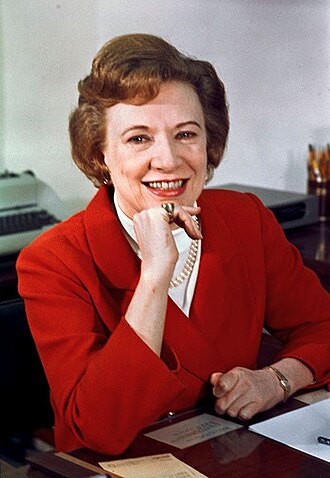
Rose Mary Woods served as President Richard Nixon's fiercely loyal Personal Secretary from January 1969 to May 1973, acting as a crucial gatekeeper to the Oval Office. During the White House taping period (February 1971 – July 1973), she maintained strict control over access to Nixon and was one of the few staff members whose daily interactions with the President were frequently recorded. Following the Watergate-related resignations of top aides H.R. Haldeman and John Ehrlichman, her responsibilities expanded and she was promoted to Executive Assistant and Personal Secretary to the President in June 1973, serving until August 1974. She later became infamous for the "Rose Mary stretch," claiming she accidentally erased 18.5 minutes of a subpoenaed June 1972 tape while transcribing it.
President Nixon and Henry Kissinger discussed complex diplomatic strategies regarding the Middle East, focusing on the implications of recent negotiations with Israeli Prime Minister Golda Meir and the necessity of managing US-USSR-PRC relations. They strategized on how to stall formal settlement processes until at least 1973 to avoid political fallout and potential conflicts while maintaining the balance of power. Additionally, the conversation touched upon personnel matters, including the potential appointment of David M. Kennedy and the handling of the ongoing India-Pakistan crisis.
President Nixon and Rose Mary Woods discussed the arrangements for First Lady Pat Nixon’s attendance at an upcoming funeral and planned for the President’s scheduled NBC filming the following day. The majority of the conversation focused on finalizing the guest list and seating capacity for a White House dinner featuring international monetary discussions, specifically resolving conflicts regarding the inclusion of George Shultz and the removal of Peter Flanigan or Dr. Edward David. Nixon directed Woods to prioritize Shultz due to his role in economic negotiations and instructed her to handle the diplomatic adjustment of the guest list.
President Nixon met with Senator Milton R. Young and journalist Willard Edwards to discuss various administrative tasks, including sending congratulatory notes and certificates of recognition to citizens for heroic acts. The participants reviewed personal correspondence and discussed arrangements for upcoming holiday observances. Additionally, the President took time to recognize Willard Edwards for his long-standing career in journalism, marking his professional longevity with a birthday acknowledgment.
President Nixon met with H. R. Haldeman and briefly spoke with Rose Mary Woods to coordinate scheduling and administrative details regarding upcoming diplomatic and social events. The discussion covered logistics for an upcoming Bermuda trip, a photo opportunity with Senator Strom Thurmond, and the reporting process for Maurice Stans following his visit to the USSR. Additionally, they addressed seating and invitation issues for a White House dinner involving George Shultz and the Brazilian delegation, emphasizing the need to manage professional optics and avoid unnecessary attendance at specific diplomatic meetings.
President Nixon met with Rose Mary Woods and later H. R. Haldeman to coordinate various administrative tasks, scheduling matters, and public relations efforts. Discussions included the career status of labor mediator J. Curtis Counts, the logistics for upcoming presidential holiday appearances, and the scheduling of a meeting between John B. Connally and the President regarding the Cost of Living Council. Additionally, the participants reviewed personal correspondence and debated the nature of the modern presidency compared to previous administrations.
President Nixon and his personal secretary Rose Mary Woods briefly coordinated his schedule regarding upcoming appointments and personal commitments. The discussion centered on an upcoming dinner with First Lady Pat Nixon and a scheduled meeting with Dr. W. Kenneth Riland. No major policy decisions were made during this short administrative exchange.
President Nixon and his personal secretary, Rose Mary Woods, discuss the administrative details regarding the death of diplomat Ralph J. Bunche, including coordinating a presidential statement and a personal call to Ruth H. Bunche. Additionally, the pair reviews correspondence from Elmer H. Bobst and plans for the placement and display of a bust of Winston Churchill in the Oval Office. The meeting concludes with a brief logistical exchange involving a White House operator.
President Nixon met with his personal secretary, Rose Mary Woods, and personal aide, Manolo Sanchez, to discuss the decor and arrangement of the Oval Office. The group specifically focused on the placement and aesthetic style of an Abraham Lincoln bust within the room. No significant policy decisions were recorded during this informal administrative discussion.
President Nixon and his personal secretary, Rose Mary Woods, discuss the logistical and public relations challenges surrounding the scheduling of television appearances for Julie Nixon Eisenhower. The President expresses frustration with the inadequate planning currently being handled by staff and directs Woods to coordinate with Bob Haldeman to ensure the proposed Christmas-themed program moves forward effectively. They agree that positive media exposure featuring Julie is essential for the administration's public image and conclude that stronger oversight is required to regain control over the scheduling process.
President Nixon and his personal secretary, Rose Mary Woods, coordinated logistical details for the President's upcoming schedule and personal social arrangements. They discussed the handling of correspondence and an appointment regarding Cornelius V. “Sonny” Whitney, as well as the timing for a visit to Camp David. Additionally, the pair planned logistics for a theater outing involving Julie Nixon Eisenhower, specifically debating the timing of dinner and pre-theater preparations to ensure a smooth schedule.
President Nixon met with Stephen B. Bull and Rose Mary Woods to coordinate his daily schedule and manage upcoming meetings. The discussion focused on logistical priorities regarding scheduled appointments with David Packard and Nicholas P. Thimmesch, alongside the handling of reports provided by Franklin Haydn Williams. The session concluded with instructions to prioritize the meeting with Packard and the management of sensitive administrative documentation.
President Nixon consulted with his personal secretary, Rose Mary Woods, to verify whether his daughter, Tricia Nixon Cox, had appeared on the "Today" show as scheduled. Nixon expressed concern over her absence during the live broadcast and instructed Woods to investigate whether the segment had been pre-recorded. Woods was tasked with confirming the status of the taping and reporting back to the President.
President Nixon and his personal secretary, Rose Mary Woods, met to discuss logistical details regarding White House amenities and personal gifts. The conversation focused on procuring specific glassware previously used by the President and reviewing the design and placement of a crystal gift from Ambassador Walter H. Annenberg. Additionally, the pair coordinated the President’s upcoming schedule, including dinner plans with Jack and Helene Drown and potential arrangements at Camp David.
President Nixon and John B. Connally reviewed a busy schedule of administrative and geopolitical affairs, including the recent signing of the Revenue Act of 1971 and ongoing international monetary negotiations. The two men discussed strategy for upcoming diplomatic engagements, specifically focusing on how to pressure the French and Japanese for trade concessions while maintaining a diplomatic posture. Additionally, they addressed the escalating India-Pakistan crisis, with the President emphasizing the need to prevent the collapse of West Pakistan and questioning the commitment of the Soviet Union to regional stability.
President Nixon and his personal secretary Rose Mary Woods met to coordinate administrative details, including the President's upcoming interview schedule with Jerrold Schecter and logistics regarding Julie Nixon Eisenhower's travel. The pair also discussed a gift, the "Star of the President," received from Ambassador Walter H. Annenberg. Additionally, they reviewed standard protocols for handling gifts to the President and confirmed dinner arrangements.
President Nixon met with his personal secretary, Rose Mary Woods, and later aide Alexander P. Butterfield to discuss a range of personal, administrative, and political matters. The conversation covered the President's upcoming schedule and need for relaxation, the political threat posed by Democratic candidates—specifically Ted Kennedy and Edmund Muskie—and the ongoing efforts to secure Nixon's reelection. Nixon also discussed the importance of the Azores summit regarding international economic policy and authorized various administrative tasks, including follow-up meetings and correspondence with foreign dignitaries.
President Nixon and his personal secretary, Rose Mary Woods, met briefly in the Oval Office to coordinate his official schedule. The discussion focused on administrative logistical arrangements regarding upcoming appointments and presidential obligations. No major policy decisions were recorded during this short exchange.
President Nixon met with Rose Mary Woods, Alexander Butterfield, and other staff members to finalize administrative tasks and discuss his upcoming holiday schedule. The conversation centered on the President's personal plans for Christmas, including weather concerns, football, and potential travel to Florida or Bermuda. Additionally, the group addressed office operations, such as signing paperwork, managing Christmas card messages, and approving a holiday financial gift for a staff member's wife in recognition of her assistance with data organization.
President Nixon and his personal secretary, Rose Mary Woods, met to discuss personal scheduling arrangements, upcoming holiday travel to Florida, and administrative tasks for the Christmas season. The conversation focused on managing the President's correspondence, coordinating phone calls, and finalizing logistics regarding Woods's time away. They also exchanged seasonal well-wishes and brief updates concerning mutual acquaintances, including Elmer H. Bobst.
President Nixon and his personal secretary, Rose Mary Woods, discuss personal holiday arrangements and the welfare of various acquaintances experiencing health issues. The conversation focuses on coordinating the delivery of Christmas gifts and cards, as well as checking on the condition of several mutual friends, including Ben Freeman. Woods concludes the meeting by coordinating the placement of holiday packages under the President's tree.
President Nixon met with H.R. Haldeman and John Ehrlichman to discuss a serious security breach involving a yeoman who leaked classified information to columnist Jack Anderson. The participants addressed the existence of an unauthorized channel between the National Security Council staff and the Joint Chiefs of Staff, which allowed for the improper dissemination of internal decision-making documents. Nixon directed his staff to shut down this channel and strategy was discussed regarding how to handle the leaker and potentially confront Anderson, while carefully avoiding direct involvement from Henry Kissinger in the ongoing investigation.
President Nixon speaks with his personal secretary, Rose Mary Woods, to exchange Christmas greetings and discuss the television broadcast of his daughter Julie Nixon Eisenhower’s show, "Christmas at the White House." The two also review Woods's progress in making holiday telephone calls to various associates, including McIntyre Faries and Ralph H. Cake. The conversation concludes with mutual well-wishes for the holiday.
President Nixon and his personal secretary, Rose Mary Woods, held a brief end-of-year conversation to coordinate administrative logistics regarding Fina Sanchez’s travel schedule to Spain. The discussion centered on managing gift arrangements for the mothers of Manolo and Fina Sanchez, with Stephen Bull identified as the point of contact for these items. No further policy or significant political matters were addressed during this brief exchange.
President Nixon consulted with his personal secretary, Rose Mary Woods, to initiate a phone call with Ambassador George H.W. Bush. The brief interaction focused on connecting the President with Bush, during which Nixon briefly noted his view of the Ambassador as a potential role model for the United States Air Force. No substantive policy decisions were finalized during this one-minute exchange.
President Nixon and his personal secretary Rose Mary Woods exchanged New Year's greetings and discussed their respective holiday activities, including watching football games. The President noted that he was dedicating his time to studying and preparing for his upcoming television interview with Dan Rather. They also briefly touched upon logistics regarding Pat Nixon’s scheduled departure for an official trip to Africa.
President Nixon and his personal secretary, Rose Mary Woods, exchanged brief New Year's greetings in the Executive Office Building. Following the pleasantries, Nixon noted his intention to spend the evening preparing for upcoming professional responsibilities. The discussion was informal and focused solely on holiday well-wishes and the President's immediate work schedule.
President Nixon directs his personal secretary, Rose Mary Woods, to contact William P. Rogers and Donald Rumsfeld to gauge their reactions to his recent television interview with Dan Rather. Nixon explains that he is isolating himself from direct communication with staff and relies on Woods to serve as a conduit for their feedback. He tasks Woods with gathering their impressions and reporting back to him within fifteen minutes.
President Nixon and his personal secretary Rose Mary Woods discussed the positive public and political reception of the President's recent television interview with Dan Rather. Woods relayed enthusiastic feedback from William P. Rogers and Donald Rumsfeld, both of whom praised Nixon's composed performance and criticized Rather's unprofessional, combative questioning. The conversation also touched upon the President's firm stance regarding amnesty for draft evaders and the treatment of prisoners of war, positions that Woods felt resonated well with the public.
President Nixon and his personal secretary, Rose Mary Woods, held a brief late-night telephone call to coordinate the President's sleep schedule and discuss his recent interview with CBS journalist Dan Rather. Woods provided her personal assessment of the interview's reception and updated the President regarding subsequent phone calls she had received concerning the broadcast. The conversation served primarily as a debriefing session to gauge public and media reaction before the President retired for the evening.
President Nixon met with Gerald L. Warren and Rose Mary Woods to assess the fallout and public reception of his recent televised interview with CBS correspondent Dan Rather. The participants reviewed Rather's confrontational tone and the specific subject matter covered, including the Vietnam War, POWs, and race relations. Nixon and Warren concluded that the interview was ultimately favorable for the President’s interests despite Rather's critical approach.
President Nixon and Henry Kissinger met to coordinate strategy for the upcoming SALT negotiations and a planned foreign policy speech regarding Vietnam. They discussed maintaining a firm negotiating position on ABM and SLBM weapon systems while managing public perception and potential domestic political criticism during an election year. Additionally, the President issued a directive requiring all U.S. diplomatic contacts with Bangladesh to be cleared through the White House to avoid jeopardizing sensitive relations with China.
President Nixon met with Rose Mary Woods, Manolo Sanchez, and others in the Oval Office to discuss administrative tasks, including the location of misplaced papers and the placement of a bust of John Foster Dulles in the Executive Office Building. The conversation prominently featured a review of Nixon's recent television interview with Dan Rather, during which Woods praised the President's composed demeanor despite Rather's aggressive questioning regarding the Vietnam War and the President's use of formal honorifics. Additionally, Nixon briefly consulted Gerald L. Warren regarding the scheduling and announcement of the upcoming State of the Union address.
President Nixon and his personal secretary Rose Mary Woods briefly consulted regarding the whereabouts of missing important papers. Nixon questioned Woods about the contents of his outbox and whether aide Alexander Butterfield had collected any materials. They also discussed potential locations for the misplaced documents, including the possibility that they were left in the White House residence.
President Nixon consults with Rose Mary Woods to pivot from sending a letter to Maj. Gen. Leslie E. Brown’s mother, Nora L. Moore, to instead initiating a direct telephone call. The President, operating from the Executive Office Building, instructs Woods to enlist White House operators to locate the mother, potentially in Los Angeles, to facilitate a personal conversation. This action reflects a preference for direct presidential outreach over written correspondence.
President Nixon and his personal secretary Rose Mary Woods briefly discuss logistical arrangements for managing his telephone communications and potential administrative support. The conversation focuses on identifying a reliable operator or general staff member to facilitate calls and ensure connectivity with specific individuals. No major policy decisions are reached, as the dialogue remains centered on internal office procedures and staffing coordination.
President Nixon met with his personal secretary, Rose Mary Woods, to dictate a letter regarding the daughter of Japanese Prime Minister Kakuei Tanaka. The discussion focused on securing the daughter's name and address to facilitate the delivery of a gift following a recent luncheon. This interaction highlights the President's personal attention to diplomatic protocol and the management of international correspondences.
President Nixon and his personal secretary, Rose Mary Woods, met to discuss a range of administrative and personal matters, including the President's upcoming work schedule at Camp David, correspondence logistics, and the successful reception of First Lady Pat Nixon's recent trip to Africa. They also addressed the procurement of drinking glasses for the White House and the handling of birthday greetings and gifts received by the President. During the meeting, Nixon provided instructions regarding the delegation of administrative tasks and expressed interest in coordinating a recognition event for General James D. Hughes.
President Nixon met with his personal secretary, Rose Mary Woods, in the Old Executive Office Building to conduct administrative business. The brief discussion primarily concerned routine office management and internal scheduling matters. No significant policy decisions or major developments were recorded during this exchange.
President Nixon and his secretary, Rose Mary Woods, met to discuss administrative matters, personal gifts, and logistics regarding the President's recent birthday. The conversation covered the review of correspondence and medical reports, specifically an article concerning the drug Dilantin and John Connally's health. Additionally, they coordinated upcoming travel arrangements and scheduling for First Lady Pat Nixon and family members.
President Nixon met with his personal secretary Rose Mary Woods and valet Manolo Sanchez to review administrative matters, including phone logs and upcoming scheduling requirements. The discussion addressed staffing concerns regarding the President’s impending trip to the People's Republic of China, specifically focusing on the involvement of USIA personnel and Henry Kissinger's decision-making process. The group also briefly touched upon recent public relations activities and upcoming swearing-in ceremonies.
President Nixon met with Rose Mary Woods and Alexander P. Butterfield to discuss administrative matters, including the handling of a specific letter and a speech draft. Following Butterfield’s departure, Stephen B. Bull joined the President to review scheduling arrangements regarding meetings with Vice President Spiro Agnew, a Joint Chiefs of Staff representative, and George Romney. The brief session focused on managing the President's immediate office workflows and upcoming appointments.
President Nixon met with George Romney, John Ehrlichman, and John Whitaker to discuss the administration's new "Operation TACLE" initiative, a national growth policy designed to address urban and rural decay through decentralized, competitive consortia. The President and Romney also addressed sensitive political matters, including the upcoming departures of cabinet members Maurice Stans and John Mitchell, as well as the need for coordination between Secretary of State William Rogers and National Security Advisor Henry Kissinger. Nixon emphasized his desire for Romney to remain in the cabinet while encouraging him to maintain a low-profile approach to sensitive housing issues during an election year.
President Nixon met with his personal secretary, Rose Mary Woods, and aide Stephen B. Bull to address routine administrative tasks and correspondence. The participants reviewed documents requiring the President’s signature, discussed the proper handling of presidential gifts such as custom flag cufflinks, and coordinated upcoming scheduling matters regarding Camp David. Stephen B. Bull joined the session briefly to assist with organizing gift inventories for official visitors.
President Nixon and H.R. Haldeman reviewed potential U.S. representation at the funeral of King Frederik IX of Denmark, discussing various candidates including John S. D. Eisenhower and Victor Borge. The conversation shifted to managing John Connally’s role within the administration, specifically addressing his sensitivities regarding White House staff interactions and his involvement in reviewing the State of the Union address. Nixon and Haldeman decided to handle the dissemination of the speech draft to Connally with care, coordinating a specific timeline to ensure control over the document's release and revisions.
President Nixon met with his staff and Treasury Secretary John Connally to coordinate administrative messaging, discuss upcoming speeches, and refine international economic policy. A significant portion of the discussion focused on political strategy for the 1972 election year, with Connally advising the President to adopt a more aggressive, "fighting" posture rather than strictly maintaining a "professional" presidential image. Additionally, the participants deliberated on restructuring roles within the White House, specifically regarding Pete Peterson and Peter Flanigan, to centralize economic and trade authority under the Treasury Department.
President Nixon and H.R. Haldeman reviewed drafts of upcoming major addresses, specifically the President's Vietnam peace plan speech and his State of the Union address. The discussion focused on refining the tone, structure, and factual presentation of these speeches, with particular emphasis on how to communicate the complexity of secret peace negotiations and the necessity of the Vietnamization policy to the American public. They also coordinated logistical details for a forthcoming White House dinner and discussed personnel management within the administration, including the roles of John Connally and Peter Flanigan.
President Nixon met with Alexander P. Butterfield and Rose Mary Woods to manage a variety of administrative and scheduling tasks, ranging from locating missing Treasury Department memoranda to coordinating the President’s personal correspondence. The President emphasized the urgent need for a final draft of his State of the Union speech by late afternoon and directed his staff to compile favorable editorial coverage regarding First Lady Pat Nixon’s trip to Africa. These discussions served to streamline White House operations and ensure the timely completion of key policy and public relations materials.
President Nixon met with Charles Colson to strategize for the 1972 campaign, emphasizing the need for an aggressive, hard-hitting approach against Democratic opponents. The discussion focused on framing the Vietnam War as the responsibility of the Democratic Party and exploiting divisions among contenders like Edward Kennedy, Edmund Muskie, and Hubert Humphrey. Nixon and Colson also reviewed the political impact of busing, polling data trends, and the necessity of keeping Republican Congressional leadership actively engaged in the political counterattack.
President Nixon met with Arthur Burns and John Connally to coordinate economic policy and public messaging ahead of the State of the Union and the upcoming budget message. The discussion focused on establishing a federal spending ceiling, managing inflation, and potential leadership changes within the Pay Board, including the possible recruitment of Arthur Goldberg. The group also addressed the challenges of wage and price controls, specifically concerning the decontrol of small businesses and the administration's political narrative regarding economic recovery.
President Nixon met with his staff, including Raymond K. Price, Jr. and Ronald L. Ziegler, to finalize the text and release strategy for his upcoming State of the Union Address. They discussed refining the speech's tone and content, particularly regarding foreign policy, agriculture, and the need for a non-partisan approach to contrast with Senator Edward Kennedy's recent criticisms. Additionally, the President and Ziegler addressed the political fallout from the Jack Anderson Papers, focusing on managing administration credibility and the role of Henry Kissinger in sensitive foreign policy matters.
President Nixon met with his personal secretary Rose Mary Woods to discuss the reception of his recent State of the Union Address and administrative strategy. The two analyzed the reactions of political opponents, specifically Senator Edward Kennedy, and reviewed the logistics of promoting the Equal Rights Amendment to ensure the administration's position was clear. Additionally, the President discussed personal matters, including securing funding for his daughters, Julie and Tricia, to purchase campaign-appropriate clothing to bolster their public appeal.
President Nixon and his personal secretary, Rose Mary Woods, discuss the recent death of Harold O. Lovre. The President instructs Woods to ensure that a wreath is sent on his behalf, specifically coordinating with a military aide to handle the arrangement. This brief administrative exchange serves to ensure a proper expression of presidential condolences for the late former congressman.
President Nixon, H. R. Haldeman, and various staff members met to coordinate administrative logistics, including the upcoming budget message press strategy and the planning of political events. The discussion touched on the status of the Bicentennial celebration in Philadelphia, the professional transition of Major General James D. Hughes, and the management of White House social functions. The group also finalized communication tactics for the President’s forthcoming Vietnam peace plan speech, emphasizing the need for a unified public relations effort involving key administration officials and congressional allies.
President Nixon and Henry Kissinger met to finalize the content and tone of an upcoming speech regarding Vietnam, focusing on the public disclosure of secret negotiations. They also discussed preparations for the President’s historic trip to the People's Republic of China, specifically addressing the need for tailored briefing books and the management of diplomatic note-taking. The President instructed Kissinger to compile essential background materials and intelligence to ensure he was fully prepared for upcoming summits and potential military contingencies.
President Nixon met with his senior advisors and staff to finalize the details of his upcoming January 25, 1972, televised address regarding a new Vietnam peace proposal. The discussion focused on coordinating network scheduling, managing media speculation, and refining the tone of the speech to ensure it effectively presented the administration's negotiating efforts. Additionally, the participants reviewed staffing requirements for upcoming presidential trips and strategic political considerations for the 1972 election cycle, including Robert Finch's future political trajectory.
President Nixon met with Robert Finch and H. R. Haldeman to finalize details for his upcoming televised address regarding the administration's Vietnam peace plan. During the discussion, Nixon emphasized the necessity of public disclosure to counter North Vietnamese intransigence and correct misperceptions about U.S. negotiating efforts. Additionally, the President reviewed his broader political strategy for 1972, focusing on his legislative agenda and the need to adopt a more aggressive, combative stance against political opponents, drawing parallels to the campaign tactics of Franklin D. Roosevelt and Harry S. Truman.
President Nixon met with Rose Mary Woods, Henry Kissinger, and Marjorie Acker to finalize the text and pacing of an upcoming major address on Vietnam. The participants coordinated last-minute revisions to the speech, discussed international diplomatic reactions—specifically regarding the French government—and reviewed feedback from administration officials like Robert Finch. Additionally, Nixon established communication protocols for the evening, directing staff to screen all incoming calls so he could focus exclusively on the speech preparations.
President Nixon met with Rose Mary Woods and Alexander M. Haig, Jr. to finalize the text of an upcoming televised address regarding the Vietnam War. The participants focused on editorial revisions to the speech, specifically clarifying the administration's willingness to implement military withdrawals and prisoner releases while negotiations remained ongoing. The meeting also included brief logistical discussions concerning scheduling and administrative matters involving Wiley T. Buchanan.
President Nixon and Alexander M. Haig, Jr. discuss the drafting of an upcoming speech regarding the Vietnam War, focusing specifically on how to phrase the administration's willingness to implement military concessions, such as troop withdrawals and POW exchanges. Nixon expresses concern regarding the ambiguity of the current draft and its impact on his credibility, while Haig defends the vague language as a tactical choice that Henry Kissinger intends to clarify through press briefings. The two also review the positive reception of Kissinger's recent internal briefings, noting a shift toward a more optimistic tone to ensure the speech conveys a clear, forward-looking policy proposal.
President Nixon met with his economic advisors, John Connally, George Shultz, and Herbert Stein, to review the state of the economy and coordinate administration messaging. The discussion focused on addressing business confidence, managing the federal budget and spending, and navigating upcoming international trade and monetary negotiations. Nixon emphasized the need for a unified administration front to present an optimistic economic outlook while preparing for legislative battles, including the debt ceiling and potential gold policy changes.
President Nixon consulted with his personal secretary, Rose Mary Woods, to gauge the reception of his recent Vietnam speech among guests at a social gathering held the previous evening. Woods reported that attendees responded positively to the televised address, noting that it successfully diverted conversation away from political controversies. The discussion confirmed that the President’s messaging was well-received by his inner circle and supporters.
President Nixon met with Charles Colson and H.R. Haldeman to discuss the unfavorable media coverage regarding his recent Vietnam peace proposal. Nixon expressed frustration with the press, specifically criticizing newspapers like the New York Times and Washington Post for their negative framing and lack of objective reporting. The President directed his staff to proactively challenge these narratives by mobilizing friendly journalists and political allies to attack the media's divisive tone and emphasize positive public support for the administration's policy.
President Nixon consulted with Rose Mary Woods to coordinate logistical details regarding his schedule and pending communications. The discussion centered on tracking the location of Governor Ronald Reagan and managing a scheduled call with Cornelius Scott. These administrative arrangements reflect the President's ongoing efforts to streamline his outreach and appointments with key political figures.
President Nixon met with Henry Kissinger, Ronald Ziegler, and Rose Mary Woods to assess the domestic and political reception of his January 25 Vietnam peace proposal. Kissinger provided a detailed briefing on his efforts to explain the complexities of the proposal to congressional leaders and the press, specifically focusing on the administration’s strategy to maintain a unified front despite opposition. Nixon emphasized the importance of aggressive communication to counter critics and directed his staff to combat misinformation, reinforcing that the administration's current proposal represented the maximum extent of their concessions.
President Nixon, Rose Mary Woods, and Stephen B. Bull discussed the reception of a recent dinner event, contrasting Henry Kissinger's successful performance against the perceived hostility of Senator Frank Church. The conversation touched on the President's frustrations with antagonistic press coverage and his refusal to attend future industry dinners. Additionally, they reviewed legal updates regarding a stock case involving Charles Rebozo and coordinated Woods's upcoming attendance at the DeWitt Wallace dinner and her work preparations for the President's forthcoming trip to the People's Republic of China.
President Nixon met with Rose Mary Woods and Stephen B. Bull to finalize the seating arrangements and logistics for a White House dinner honoring DeWitt and Lila Wallace. The discussion focused on balancing the guest list to ensure a lively atmosphere while navigating the last-minute attendance changes caused by a flu outbreak. Additionally, the President reviewed various administrative matters, including incoming correspondence, potential fundraising requests, and his own upcoming travel and scheduling preferences.
President Nixon and Rose Mary Woods confer to finalize the guest list for an upcoming White House dinner honoring DeWitt and Lila Wallace. The discussion focuses on balancing the attendance of high-profile political figures, such as the Mitchells and various cabinet members, with the logistical challenge of filling remaining tables. Nixon and Woods deliberate on potential last-minute additions to ensure the event's social success and political utility.
President Nixon and his personal secretary, Rose Mary Woods, discuss the guest list for an upcoming dinner hosted by DeWitt and Lila Acheson Wallace. They coordinate final invitations for administration officials and their spouses, including the Secretary of State, while balancing the attendance numbers. Nixon specifically suggests inviting Henry Kissinger to increase the event's prestige, prompting Woods to facilitate the invitation following Kissinger's briefing with POW wives.
President Nixon calls his personal secretary, Rose Mary Woods, to discuss her potential visit to Camp David and her weekend plans. During the conversation, the two address a prior instance of interpersonal tension or frustration, with Woods expressing her belief that a specific individual involved in a recent incident may have been a political plant. The exchange concludes with mutual well-wishes and acknowledgment of their working relationship.
President Nixon and Rose Mary Woods discussed the fallout from an incident involving Carol Feraci, a member of the Ray Conniff Singers, who had publicly criticized the Vietnam War during a recent White House dinner. The conversation addressed the necessity of a background check on Feraci and the broader implications for White House security protocols. Additionally, the pair touched upon administrative matters, including support for the President and logistical details regarding his memoir, 'Six Crises.'
President Nixon met with Rose Mary Woods, H. R. Haldeman, and Alexander Butterfield to manage his schedule and handle administrative tasks, including a document signature request from John Dean. The group discussed preparations for an upcoming prayer breakfast, specifically expressing frustration over the excessive length of speeches and the need for the President to keep his own remarks brief. Additionally, they reviewed presidential gifts, including sculptures of Winston Churchill and John Foster Dulles, and briefly reflected on the deaths of prominent aging statesmen.
President Nixon and Henry Kissinger strategized on countering North Vietnamese propaganda efforts during ongoing Vietnam negotiations. They discussed the necessity of aggressively rebutting inaccuracies in the press to ensure public perception remains favorable to the administration. As part of this effort, they agreed to coordinate outreach to figures such as Max Frankel and Senator Mike Mansfield, while Rose Mary Woods briefly consulted on the President's schedule.
President Nixon directs his personal secretary, Rose Mary Woods, to secure a spot for Rita Rajnich De Fantis on the upcoming presidential trip to the People’s Republic of China. Emphasizing that it is essential for First Lady Pat Nixon to have proper assistance on the trip, the President instructs Woods to coordinate with H. R. Haldeman to either add an extra position or reallocate an existing one. Woods agrees to discuss the logistical arrangements with Haldeman the following morning.
President Nixon met with Billy Graham and H. R. Haldeman to discuss political strategy, the President's upcoming travel, and media relations heading into the 1972 election year. Graham provided advice on maintaining presidential dignity, focusing on controlled, televised appearances rather than frantic campaigning, and offered to help shore up support in key states like Pennsylvania and Texas. The participants also engaged in a lengthy, conspiratorial discussion regarding perceived media bias, specifically alleging that Jewish journalists and editors exerted undue influence on American cultural and political discourse.
President Nixon met with his personal secretary, Rose Mary Woods, in the Oval Office to discuss administrative or personal matters. The recorded audio is largely unintelligible, consisting primarily of a brief exchange regarding Woods's current tasks. No significant policy decisions or substantive developments were captured during this brief interaction.
President Nixon met with his personal secretary, Rose Mary Woods, to discuss political strategy and administrative tasks regarding upcoming campaign materials. The conversation focused on a memorandum intended for H.R. Haldeman concerning public statements by Democratic rivals Edmund Muskie, John Lindsay, and George McGovern. Specifically, they addressed the implications of recent primary and caucus results in Iowa and Arizona to shape the administration's political narrative.
President Nixon met with H. R. Haldeman and Henry Kissinger to discuss preparations for his upcoming trip to the People's Republic of China, including logistical arrangements and media strategy. The conversation centered on managing the professional friction between Secretary of State William Rogers and Kissinger, with Nixon emphasizing the need for a unified administration front to ensure the success and perception of his China initiative. Additionally, they reviewed domestic issues such as stock market performance, unemployment figures, and the President's upcoming schedule, which included a visit to Florida to provide a quiet environment for policy study.
President Nixon, Charles Colson, and Ron Ziegler met to discuss domestic political strategy, focusing on exploiting the recent peace negotiation failures of Democratic candidate Edmund Muskie. Nixon directed his team to aggressively attack Muskie's public statements regarding the Vietnam War, arguing that they undermined the administration's ongoing diplomatic efforts. Additionally, the group reviewed positive economic indicators—specifically improvements in unemployment rates for married men—and strategized on how to promote these figures to the public to improve the President's image ahead of the 1972 campaign.
President Nixon met with various staff members and advisors to manage his schedule and coordinate messaging regarding his upcoming trip to the People's Republic of China. The participants discussed handling press inquiries, the timing of the announcement of the press list, and how to address potential questions about administration policy. Additionally, Nixon held a telephone conversation with Argentine General Alejandro A. Lanusse to discuss bilateral economic cooperation and regional diplomatic relations.
President Nixon and Rose Mary Woods engaged in a wide-ranging discussion regarding the personal dynamics and professional tensions among his Cabinet members and close associates. The President expressed frustration over the interpersonal conflict between Secretary of State William P. Rogers and National Security Advisor Henry A. Kissinger, as well as his irritation regarding Martha Mitchell. Ultimately, the conversation highlighted Nixon's sense of professional isolation and his struggle to identify close confidants who could provide companionship without bringing political or personal drama into his inner circle.
President Nixon and Rose Mary Woods reviewed the final agenda and logistics for an upcoming White House cabinet meeting and a speech to business leaders. The conversation focused on refining the President's public messaging regarding economic policy, including his defense of wage and price controls, and managing the political fallout surrounding a controversial article about Donald Nixon. Nixon directed Woods to finalize speech materials, emphasizing the need for brevity and a clear, even-handed tone while avoiding specific endorsements of pending legislative proposals during his upcoming diplomatic travel.
President Nixon met with key advisors and staff, including H. R. Haldeman and Henry Kissinger, to prepare for his upcoming historic trip to the People's Republic of China and discuss the 1972 campaign strategy. The participants reviewed sensitive internal polling data, evaluated the political risks posed by news stories from columnist Jack Anderson involving F. Donald Nixon, and analyzed public reaction to Vietnam policy and recent busing controversies. Additionally, the President provided guidance on managing press relations for the China trip and discussed the importance of maintaining a unified administration stance on foreign and domestic policy matters.
President Nixon and his personal secretary, Rose Mary Woods, discussed administrative details regarding a speech draft prepared by William L. Safire, emphasizing the necessity of obtaining Henry Kissinger’s approval for the document. The two also reviewed Nixon's upcoming schedule, specifically coordinating a meeting with Jack Brown. Furthermore, the conversation touched upon the logistics of Manolo Sanchez's speech drafting and acknowledged the steady stream of visitors to Woods’ office.
President Nixon and H. R. Haldeman met to discuss political strategy and administrative messaging, specifically regarding Haldeman's recent appearance on the Today show and public reaction to administration stances on Vietnam. The pair reviewed potential inquiries from the press and strategies for responding to critics, while also addressing logistical concerns related to the President's upcoming schedule, including a memorial service for Llewellyn E. Thompson. The conversation concluded with administrative updates involving Rose Mary Woods and the management of office materials.
President Nixon and his personal secretary, Rose Mary Woods, met briefly to coordinate administrative logistics and the President's upcoming schedule. They discussed the timing of a potential trip to Camp David and a prospective press conference. Additionally, the conversation touched upon personnel matters, specifically regarding a promotion for General Walter R. Tkach.
President Nixon, Rose Mary Woods, and Congressman John N. Erlenborn engaged in a brief telephone conversation primarily to exchange birthday greetings. Erlenborn initiated the call to wish the President well following his recent birthday, noting the coincidental shared birth date of two other Republican congressmen. The exchange remained social and congratulatory in nature, focusing on the lighthearted trivia surrounding their birthdays and the prospect of Erlenborn's future congressional seniority.
President Nixon and H.R. Haldeman met to finalize the President's upcoming radio speech concerning his foreign policy report. They discussed the political strategy of criticizing presidential candidates who were undermining Vietnam peace negotiations, framing these candidates as irresponsible for potentially prolonging the war for electoral gain. Additionally, the President reviewed his public relations approach, deciding to minimize direct press interactions to avoid further controversy while emphasizing his role as the sole negotiator for an honorable peace.
President Nixon met with Henry Kissinger, H. R. Haldeman, and other staff members to discuss media strategy, public messaging, and foreign policy, specifically regarding Vietnam and China. The participants deliberated on the effectiveness of Nixon's recent public statements, focusing on how to maintain a strong, authoritative image while navigating complex geopolitical tensions. They also addressed the importance of controlling the narrative through concise, impactful communication and the potential political implications of upcoming scheduled appearances and policy announcements.
President Nixon met with Rose Mary Woods and Stephen B. Bull to coordinate scheduling for upcoming congressional meetings regarding busing, followed by a brief discussion with Henry Kissinger regarding diplomatic strategy. Kissinger and the President analyzed a recent communication from Le Duc Tho concerning potential peace negotiations and the impact of an upcoming trip to the People's Republic of China. The participants deliberated on whether to accept the invitation for further meetings and established the need for a private consultation to finalize their policy approach before traveling.
President Nixon and Rose Mary Woods discussed preparations for the upcoming trip to the People's Republic of China, specifically focusing on wardrobe choices and official gifts. The President expressed a clear preference against wearing hats during the visit, despite inquiries from Secretary of State William P. Rogers. Additionally, the group reviewed logistics regarding portrait signatures and the distribution of watches as diplomatic gifts.
President Nixon met with Andre Malraux and Henry Kissinger to discuss the geopolitical implications of the upcoming U.S. opening to the People's Republic of China (PRC) and the necessity of maintaining a U.S. global presence. They evaluated the stability of a 'balance of power' framework in light of regional concerns, specifically Japan's future nuclear and military trajectory, the risks of U.S. isolationism, and the containment of Soviet influence in Europe. Kissinger provided strategic updates on secret negotiations with North Vietnam and coordinated the drafting of a joint communiqué to be finalized during the President's visit to Beijing.
President Nixon and H.R. Haldeman discuss logistical arrangements for the upcoming trip to the People's Republic of China, emphasizing the need for strict control over media coverage to prevent unauthorized exclusives. They decide against granting early commitments to networks like ABC, opting instead to utilize a White House-contracted film unit to manage output. Additionally, the President deliberates on his post-trip schedule, specifically debating whether to stop in Anchorage to allow for a prime-time arrival in Washington, D.C., and expresses his personal disdain for hosting social dinners as a political outreach tool.
President Nixon, H. R. Haldeman, and various staff members met to finalize the logistics and scheduling for the upcoming presidential trip to the People's Republic of China. The discussion focused on managing the President's daily schedule, including meeting times with Chou En-lai and Mao Tse-tung, while ensuring adequate downtime and physical recovery. Additionally, the participants reviewed domestic political concerns, including public reaction to the President's recent Vietnam peace proposal and potential strategies for handling press coverage and political opponents like Edmund Muskie.
President Nixon met with his personal secretary, Rose Mary Woods, to provide detailed instructions on editing and marking passages within specific books, including a copy of André Malraux's 'Anti-Memoirs.' The President directed Woods to highlight specific sentences and paragraphs regarding China while omitting other sections. Additionally, the pair briefly touched upon scheduling matters related to his office's Valentine's Day activities.
President Nixon, Rose Mary Woods, and H. R. Haldeman met to coordinate final logistics for the President's upcoming diplomatic trip to the People’s Republic of China, including the handling of correspondence from well-wishers and dignitaries like Lyndon B. Johnson. The discussion shifted to domestic management, where the President and Haldeman reviewed staffing adjustments, specifically the movement of personnel to support political operations under John Mitchell and the appointment of a new ambassador to Portugal. They ultimately decided to keep airport farewells low-profile to avoid political friction and prioritized streamlining White House staff responsibilities ahead of the campaign season.
President Nixon met with his Cabinet and senior staff to debrief them on the results and implications of his recent diplomatic trip to the People's Republic of China. The President emphasized that the primary success of the visit was the establishment of a new communication channel between the two nations, which he argued was essential for managing long-term stability and reducing the potential for future conflict. Nixon shared his impressions of Chinese leadership, particularly his discussions with Chou En-lai, noting the stark ideological differences while highlighting common strategic interests, such as peace in the Pacific and balancing influence against the Soviet Union. The discussion concluded with a focus on how this opening could be leveraged to reshape international relations and manage regional tensions across Asia.
President Nixon and his personal secretary, Rose Mary Woods, spoke briefly to discuss the recent death of Calvin E. Brumley, who suffered a fatal heart attack on March 4. The President offered his condolences and coordinated plans to place a sympathy call to the widow, Jayne Brumley. Additionally, the two checked in on Woods’s personal health status following her recent concerns.
President Nixon and his personal secretary, Rose Mary Woods, briefly coordinated the President’s morning schedule regarding an upcoming meeting with H.R. Haldeman. Nixon provided instructions for Woods to facilitate a follow-up discussion once a presentation by Mr. Holland concluded. This exchange functioned primarily as an administrative adjustment to ensure the availability of key staff for internal deliberations.
President Nixon met with his personal secretary, Rose Mary Woods, to discuss administrative directives and his recent travel to Florida. The conversation touched upon the logistics of the trip, including weather conditions and the involvement of Julie Nixon Eisenhower. Additionally, the pair addressed the handling and placement of specific gifts and personal items within the office.
President Nixon and H. R. Haldeman met to review recent polling data assessing the public impact of the President’s historic trip to China. They analyzed approval ratings compared to Gallup and Harris polls, noting a solid, consistent level of support and a decline in disapproval. The discussion also covered voter sentiment on foreign policy issues and the perceived political efficacy of the summit, with the participants concluding that the trip provided a favorable benchmark despite some lingering skepticism regarding secret agreements.