Butterfield, Alexander P.
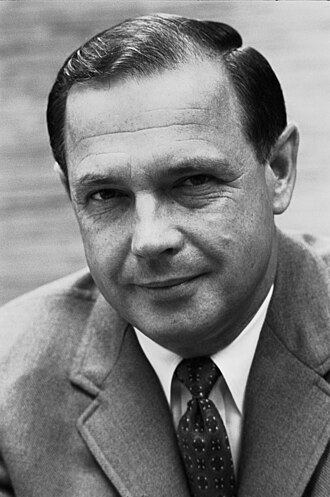
Alexander P. Butterfield served as Deputy Assistant to President Nixon from January 1969 to March 1973, a role in which he oversaw the installation and operation of the secret White House taping system. In March 1973, he transitioned out of the White House to become the Administrator of the Federal Aviation Administration (FAA). While serving as FAA Administrator in July 1973, Butterfield famously testified before the Senate Watergate Committee and publicly revealed the existence of the taping system he had previously managed.
President Nixon met with Alexander P. Butterfield to coordinate administrative scheduling and later consulted with John D. Ehrlichman regarding the appointment of a new General Counsel for the Department of Labor. Nixon expressed a desire to appoint someone aligned with the administration to gain political credit with business leaders, while also vetting the candidate to avoid the confirmation difficulties associated with G. Harrold Carswell. The discussion shifted to labor relations, with Nixon expressing frustration toward business executives who criticized his stance on unions despite his efforts to manage congressional action like the Davis-Bacon Act.
President Nixon met with John Ehrlichman and George Shultz to manage various administrative and political priorities, including the appointment of Dr. Jerome Jaffe to lead a new government drug abuse program and strategies for labor-related political initiatives. The participants discussed the rollout of housing integration policies, the status of revenue-sharing legislation, and preparations for an upcoming Domestic Council meeting. Furthermore, the group reviewed economic performance, specifically consumer confidence and inflation, while debating the efficacy of potential wage and price controls.
President Nixon met with Alexander Butterfield and Rose Mary Woods to coordinate logistical arrangements for upcoming events and personal scheduling. The discussion focused on securing a suitable venue for a reception involving the Peter G. Peterson group and clarifying the President's protocol and time commitments for a meeting with the American Committee on Italian Migration. Additionally, the participants reviewed the maintenance and use of the Tayloe House and discussed potential dinner reservations for the President and First Lady.
President Nixon consulted with Alexander P. Butterfield and Stephen B. Bull regarding the logistics of an upcoming appearance before a group of visitors. The discussion focused on coordinating the President's brief two-minute remarks with the scheduled tour of the White House. Rose Mary Woods also joined the brief meeting, which centered on ensuring the group could efficiently transition from the President's address to their tour.
President Nixon and Alexander P. Butterfield discussed logistical arrangements for an upcoming bipartisan congressional briefing, focusing on venue constraints and the exclusion of Blair House due to its current unavailability. Nixon mandated a streamlined approach for the associated reception, explicitly restricting the event to drinks only and prohibiting the serving of hors d'oeuvres. Additionally, the pair confirmed that Arthur F. Burns would be included on the guest list for an upcoming dinner honoring Willy Brandt.
President Nixon met with Alexander P. Butterfield and Stephen B. Bull to finalize arrangements for a scheduled photo session. Butterfield confirmed that the necessary preparations had been completed and that the staging area had been relocated to the White House library. Nixon acknowledged the update and signaled his readiness to proceed with the appointment.
President Nixon and Alexander P. Butterfield discussed the guest list for an upcoming dinner with West German Chancellor Willy Brandt. Nixon expressed dissatisfaction with the overrepresentation of government officials, ordering that future events prioritize business supporters instead to ensure a more favorable atmosphere. Butterfield confirmed that Charles Colson’s suggestions had been integrated to rectify the current list and agreed to limit state personnel in future guest planning.
President Nixon, Henry Kissinger, and Alexander Butterfield met to coordinate strategy regarding ongoing Vietnam peace negotiations and broader geopolitical concerns, including trade and upcoming summits. The discussion focused on the administration's frustration with the lack of progress in Vietnam negotiations, the political challenges posed by domestic anti-war sentiment, and the necessity of maintaining a firm stance to ensure the survival of South Vietnam. Nixon directed his staff to expedite decision-making and secure a more assertive military and diplomatic posture to avoid being perceived as weak during the troop withdrawal process.
President Nixon and John Ehrlichman met to discuss the administration's legislative and political strategy, specifically focusing on the drafting of housing policy, budget reduction measures, and the public image of his domestic programs. They debated the most effective ways to communicate policies to the public, with Nixon emphasizing the need to create clear, compelling political narratives regarding law enforcement, drug control, and the economy. The conversation also touched on foreign policy, specifically Nixon's decision to avoid unnecessary foreign travel and his desire to shift the public's focus from fear to a sense of confidence in his leadership.
President Nixon and Alexander P. Butterfield coordinate the movement of a marked-up draft of a housing policy statement. Nixon instructs Butterfield to expedite the delivery of the document to John D. Ehrlichman. The brief exchange concludes with Butterfield promising to retrieve the draft from Raymond K. Price, Jr.’s office and send it over immediately.
President Nixon and Alexander P. Butterfield held a brief, one-minute meeting in the Oval Office. The participants discussed an unidentified female individual, noting her unique status. No further context or significant policy decisions were documented during this short exchange.
President Nixon met with Alexander P. Butterfield to coordinate a meeting with his tailors. They decided that the tailors should be brought directly into the Oval Office for the appointment. The brief discussion focused exclusively on the logistics and venue of this personal scheduling matter.
President Nixon and H. R. Haldeman engaged in an extensive series of consultations regarding the 1972 presidential campaign, administrative scheduling, and foreign policy strategy. The participants discussed political intelligence, potential staff appointments, and the necessity of managing press relations, particularly concerning leaks and the administration's public image. Additionally, they reviewed travel plans for international summits and assessed the timing of significant announcements in relation to the domestic political calendar.
President Nixon met with staff and diplomats in two distinct sessions to coordinate logistics for Tricia Nixon’s upcoming wedding and to discuss foreign policy strategy regarding the Soviet Union and China. During the first segment, Nixon and his aides finalized guest lists, entertainment plans, and security arrangements for wedding-related social events, specifically managing the inclusion of personal friends and family members. In the second portion, the President pivoted to a strategic review of trade and foreign policy with Jacob Beam and Helmut Sonnenfeldt, focusing on the potential for utilizing trade incentives, such as grain deals and commercial credits, to improve U.S. relations with Communist powers and expand American diplomatic leverage. Nixon emphasized a desire for a more assertive, hard-line administrative image while exploring the practical utility of trade restrictions as a tool for Cold War maneuvering.
President Nixon met with Alexander P. Butterfield and Peter M. Flanigan to coordinate upcoming press engagements and labor union strategy. The President expressed frustration regarding the scheduling of an interview with newspaper leadership and sought clarification on promises made to them by staff. Additionally, Nixon directed that Charles W. Colson facilitate communications with Charlie Luna to ensure the United Transportation Union's cooperation with the administration.
President Nixon met with Everett D. Collier, Philip G. Warner, and Herbert G. Klein to discuss Texas politics, urban development, and the future of leadership in the state. The discussion touched on the upcoming gubernatorial race, the political influence of John Connally, and the management of urban challenges such as mass transit, pollution, and racial integration in Houston. Nixon emphasized the need for firm leadership and the importance of maintaining the 'can-do' spirit of Texas to prevent the stagnation seen in older American cities.
President Nixon met with staff members, including H. R. Haldeman and Charles Colson, to discuss his upcoming schedule, press relations, and political strategy against Democratic opponents. The group focused on capitalizing on the rift between Ted Kennedy and Hubert Humphrey, including Nixon’s brief congratulatory phone call to Humphrey for publicly defending the President's Vietnam policy. Additionally, Nixon and Colson strategized on weakening Kennedy's presidential prospects by initiating a book project regarding the Chappaquiddick incident and highlighting the financial struggles of Edmund Muskie's campaign.
President Nixon met with his staff to discuss a broad range of economic and administrative strategies aimed at stimulating the economy and creating jobs, particularly through federal spending and infrastructure projects. The discussion focused on leveraging the Highway Trust Fund for railroad improvements, expediting government spending, and pressuring the Justice Department to take a more lenient stance on corporate mergers and antitrust regulations. Nixon directed his team to prioritize practical results over bureaucratic obstacles, emphasizing the need to channel resources and construction projects into key states to bolster employment.
President Nixon and H.R. Haldeman discuss the potential recruitment of a new writer who is described as a "zealot" with strong, articulate views that align with the President's perspective. The conversation touches upon the effectiveness of current political messaging, the need for sharper, more focused public communication, and the strategic impact of high-profile upcoming events, specifically referencing the potential for a trip to China. They also coordinate logistics for an upcoming social event, including the President's attire and guest arrangements.
President Nixon met with Stephen B. Bull to finalize logistical details regarding Tricia Nixon’s upcoming wedding rehearsal and associated television coverage. They coordinated the timing of briefings with staff members Ronald L. Ziegler, William H. Carruthers, and Mark I. Goode to ensure the event schedule remained manageable. Alexander P. Butterfield briefly joined the President toward the end of the session to discuss preparations for a forthcoming meeting.
President Nixon met with Baron Guido Zerilli-Marimo to discuss the political and diplomatic situation in Italy, focusing on the need for effective U.S. representation in Rome. Zerilli-Marimo argued that the current U.S. ambassador lacked the necessary energy and networking capabilities to navigate Italy's complex political landscape and growing Communist influence. The conversation also touched upon broader geopolitical themes, including the necessity of a strong, unified Europe and a robust Japan to serve as counterbalances to Soviet influence and reduce the burden on the United States as the sole global policeman.
President Nixon and Alexander Butterfield met in the Oval Office to briefly review the President’s upcoming daily schedule. The discussion addressed logistical details, including appointments involving Samuel L. Devine, William E. Timmons, H. R. Haldeman, and a barber. No major policy decisions were reached during this short administrative briefing.
President Nixon met briefly with Alexander P. Butterfield and Ronald L. Ziegler to coordinate his daily schedule and review logistics for an upcoming event. The discussion centered on final preparations for a White House lawn ceremony, specifically addressing the weather forecast and the physical appearance of the site. The participants ensured that all arrangements were set to proceed as planned for the day's activities.
President Nixon and H.R. Haldeman met to discuss sensitive foreign policy and political strategy, specifically regarding the Middle East, the Vietnam War, and the role of Secretary of State William P. Rogers. They reviewed reports from John N. Mitchell concerning Israel, the Jewish community’s political influence, and Henry Kissinger’s covert diplomatic backchannels. Nixon expressed frustration with Rogers' management of the State Department, questioning his effectiveness and loyalty, while contemplating how to utilize his staff to better monitor foreign affairs.
President Nixon met with H.R. Haldeman and other staff members to address the political fallout from the publication of the Pentagon Papers and to plan the administration's defensive response. The discussion centered on delegitimizing the leaks by implicating the Brookings Institution and framing the disclosure as a moral failure of the intellectual community and the previous administration. Additionally, the President and his staff managed logistical details regarding his upcoming summer schedule, including travel to California, Florida, and Camp David, while coordinating his public relations strategy for a television documentary on his drug initiatives.
President Nixon, Rose Mary Woods, and Alexander P. Butterfield met to coordinate the President's upcoming travel and social schedule while managing personal frustrations regarding certain acquaintances, specifically Jack and Helene Drown. The discussion focused on changing travel plans to avoid the Drowns, balancing the President’s need for privacy with First Lady Pat Nixon's social obligations, and addressing media criticism regarding the President’s workload. Nixon and Woods also briefly touched upon White House gift policies and past administrative practices.
President Nixon met with Alexander P. Butterfield for a brief, one-minute administrative interaction in the Old Executive Office Building. While the transcript remains undefined, the brevity of the exchange suggests a routine scheduling matter or the relaying of a quick directive between the President and his Deputy Assistant. No significant policy decisions were recorded during this short encounter.
President Nixon met with his key economic advisors—John Connally, George Shultz, Paul McCracken, and Arthur Burns—to assess the sluggish state of the economy and deliberate on potential government interventions. The discussion centered on rising inflation, the psychological impact of economic news, high interest rates, and the growing public frustration regarding wage costs. The group debated the timing and feasibility of implementing wage and price controls, ultimately reaching a consensus to maintain a defensive posture while preparing to apply pressure on the steel industry and other key sectors to curb inflationary expectations.
President Nixon met with staff members Stephen Bull, Alexander Butterfield, and Secretary of Labor James Hodgson to discuss the television coverage of a recent wedding. The participants reviewed the broadcast, with the President expressing particular satisfaction regarding the production quality and timing of the footage. Nixon concluded the brief meeting by requesting that the segment be replayed for an additional thirty minutes.
President Nixon met with Alexander P. Butterfield and Stephen B. Bull in the Oval Office to coordinate his daily schedule. The primary focus of the discussion involved administrative planning for upcoming meetings with Kenneth B. Keating and Arthur K. Watson. The brief interaction served as a routine logistical briefing to manage the President’s agenda for the day.
President Nixon met with H. R. Haldeman and various officials to discuss urgent administration challenges, specifically the unauthorized publication of the Pentagon Papers and strategies to combat press leaks and political criticism. The conversation transitioned into a broader policy meeting with representatives from the National Association of Real Estate Boards regarding the President's revenue sharing initiatives, housing market stabilization, and rising construction costs. Nixon emphasized the importance of aligning administration rhetoric on taxes and housing to bolster support among key stakeholders.
President Nixon and Press Secretary Ronald Ziegler met to prepare for an upcoming press conference by reviewing potential inquiries regarding the President's meeting with West German Chancellor Willy Brandt. The discussion centered on foreign policy and economic issues, including Berlin negotiations, Mutual and Balanced Force Reduction (MBFR), NATO relations, and international monetary policy. Nixon commended Secretary of State William P. Rogers for his briefing work, and Ziegler concluded the session to prepare for his own press briefing.
President Nixon and H. R. Haldeman discussed a wide range of administrative and public relations strategies, including managing press coverage for upcoming presidential trips and dealing with the political fallout of the Pentagon Papers. The President emphasized his desire to treat the Pentagon Papers leak as a breach of national security and directed his staff to maintain a policy of refusing to comment on the previous administration's actions. Additionally, they reviewed personnel matters, such as the resignation of Robert C. Hill and a request from Donald L. Jackson, and finalized plans to improve media outreach regarding Vietnam troop withdrawals.
President Nixon met with Alexander P. Butterfield for a brief one-minute session in the Oval Office. Given the extremely limited duration and lack of available documentation, the meeting likely served as a routine administrative check-in or the delivery of immediate correspondence. No substantive policy discussions were recorded during this brief interaction.
President Nixon met with H.R. Haldeman and other staff members to discuss administration strategy regarding the publication of the Pentagon Papers and internal scheduling matters. The participants focused on framing the controversy as a "family quarrel" between the Kennedy-Johnson administrations and emphasizing the threat to national security, while coordinating a legal and public relations response. They also evaluated upcoming press conference strategy, including the potential for audience overexposure and the merits of adjusting prime-time scheduling.
President Nixon met with Ambassador Kenneth Keating and Henry Kissinger to discuss the evolving political climate in India following Indira Gandhi’s decisive election victory, as well as the escalating humanitarian crisis in East Pakistan. The group explored strategies for the President's upcoming meeting with the Indian Foreign Minister, specifically focusing on providing economic assistance to alleviate the refugee burden while avoiding direct entanglement in the internal conflict between India and Pakistan. Additionally, Nixon and Kissinger addressed the national security implications of the leaked Pentagon Papers, expressing deep frustration with the New York Times and the broader intellectual establishment, while reviewing progress on sensitive diplomatic channels with China and the Soviet Union.
President Nixon instructed Alexander P. Butterfield to contact Senator John Sherman Cooper regarding the attendance of Ambassador Kenneth Keating at a White House dinner. Nixon aimed to coordinate Keating's presence at the dinner alongside Cooper, despite Cooper already hosting an event for Keating that same evening. Butterfield was tasked with inviting Cooper to bring Keating to the White House dinner, ensuring the invitation did not appear to be an intrusion on Cooper's existing social engagement.
President Nixon directs Alexander P. Butterfield to contact Senator John Sherman Cooper regarding a social invitation for a woman named Katie. The President explicitly instructs Butterfield to ensure Cooper knows that the President was aware of the situation and that Katie is included in the invitation. This brief interaction serves as a routine coordination of White House social communications.
President Nixon met with H. R. Haldeman, John Ehrlichman, and others to strategize on managing various administration challenges, specifically the public relations fallout from the Pentagon Papers leak and the need to improve the effectiveness of White House social functions. The President directed staff to create a structured plan for Cabinet members and senior officials to engage more effectively with guests at White House dinners to maximize political and personal influence. Regarding the Pentagon Papers, the group discussed separating the legal issue of government secrecy from the political debate over the origins of the Vietnam War, and they considered shifting the public focus toward the perceived failures of previous Democratic administrations. Additionally, they reviewed domestic policy updates, including farm policy publicity and potential labor-related nominations.
President Nixon met with H.R. Haldeman, Henry Kissinger, and other key advisors to formulate the administration's strategic response to the unauthorized publication of the Pentagon Papers. The President emphasized a firm, unified messaging approach that distinguishes between the protection of classified national security information and the political culpability of the previous administrations, while also directing staff to maintain strict discipline regarding press access. Furthermore, the meeting addressed pressing foreign and domestic policy matters, including the need for a bipartisan response to the drug crisis, the management of relations with West German Chancellor Willy Brandt, and the long-term support strategy for South Vietnam.
President Richard Nixon met with Alexander P. Butterfield in the Oval Office to conduct a brief review of the President's schedule. The discussion remained informal and focused on administrative coordination. No major policy decisions were recorded during this brief exchange.
President Nixon met with H. R. Haldeman and Alexander Butterfield to finalize details regarding his upcoming meeting with Indian Foreign Minister Swaran Singh, specifically confirming the list of diplomatic participants including Henry Kissinger and Kenneth Keating. The group also coordinated logistics for a visit by the Rural Electrification Youth group, discussing the President’s potential participation in greeting them on the South Lawn. Nixon weighed his scheduling constraints against the public relations value of interacting with the visiting youth group.
President Nixon met briefly with aides Stephen B. Bull and Alexander P. Butterfield to address administrative matters regarding the President’s daily schedule. The participants coordinated the transfer of specific documents or items for the President's review. The meeting concluded quickly as the President and his staff prepared to depart the Oval Office.
President Nixon met with John M. O'Neill and other representatives of Vietnam Veterans for a Just Peace to discuss the political challenges of the Vietnam War and efforts to counter anti-war sentiment led by figures like John Kerry. Nixon expressed his appreciation for the group's public support, framing the conflict as a test of national resolve and criticizing the media and 'Eastern establishment' for their lack of patriotism. The conversation emphasized the necessity of staying the course to avoid the geopolitical consequences of abandonment, with Nixon invoking the legacy of Munich to argue for presidential leadership over public opinion polls.
Alexander P. Butterfield and Manolo Sanchez met in the Oval Office to coordinate the President's morning schedule and logistical arrangements. The discussion focused on the timing of certain deliveries or appointments, with both men noting that the early arrival was intentional to ensure a positive outcome. The conversation concluded with the participants departing to finalize the day's agenda.
Alexander P. Butterfield met with an unidentified woman in the Oval Office to participate in a brief, religious-themed exchange. The participants engaged in a short recitation involving references to a father figure and religious invocations. No administrative business or political decisions were recorded during this brief encounter.
Manolo Sanchez, Alexander P. Butterfield, and unidentified individuals met in the Oval Office to discuss logistical and administrative details regarding the President’s daily schedule. The conversation focused on minor operational matters, including the physical status of the Cabinet room and a request for food service. No major policy decisions were made during this brief, routine coordination meeting.
President Nixon met with Alexander P. Butterfield to review and finalize the President’s daily schedule. During this brief encounter, the two discussed preparations for an upcoming drug policy message. The session concluded with the President signing administrative documents.
President Nixon held a brief, informal meeting with Alexander P. Butterfield and guests Christian de Guigne III and IV to exchange gifts and engage in light social conversation. The discussion covered the security challenges associated with potential presidential travel, including a proposed visit to Bohemian Grove, and touched upon regional politics and professional Bay Area sports, specifically the performance of Vida Blue and the San Francisco Giants. The meeting concluded after the presentation of commemorative gifts featuring the presidential seal.
Stephen B. Bull and Alexander P. Butterfield meet in the Oval Office to discuss the operational status and visual output of the White House taping system. The participants compare recording quality settings and deliberate on the administrative management of the equipment. Their brief exchange concludes with an acknowledgement of the system's active recording capacity.
President Nixon met with H.R. Haldeman, John Ehrlichman, and Henry Kissinger to coordinate an aggressive administration response to the New York Times' publication of the Pentagon Papers. Nixon emphasized the need to frame the issue as a defense of the integrity of the presidency and the necessity of maintaining national security, rather than merely litigating the court case. The group discussed strategies to pressure the press, leak information regarding Daniel Ellsberg, and discredit the previous administrations of Johnson and Kennedy regarding their Vietnam policy.
President Richard M. Nixon met with his Deputy Assistant Alexander P. Butterfield in the Old Executive Office Building to review administrative details. The primary focus of the discussion concerned the scheduling arrangements for an individual identified only as John. This brief consultation reflects the routine operational management of the President's calendar handled by his staff.
President Nixon met with Alexander P. Butterfield in the Oval Office to receive and review an item delivered by National Security Advisor Henry Kissinger. The brief two-minute session served as a logistical exchange of sensitive materials. No further details regarding the nature of the document or subsequent actions were recorded during this interaction.
President Nixon, H.R. Haldeman, and Alexander Butterfield met to coordinate the administration's strategic response to the publication of the Pentagon Papers. The President decided to avoid immediate personal public statements to steer clear of ongoing judicial proceedings, opting instead to have National Security Advisor Henry Kissinger attack the media and the leaks through background briefings. The group concluded that they should shift the political narrative by highlighting the documents' inclusion of actions by previous Democratic administrations while emphasizing that the release of classified information threatens national security and ongoing delicate diplomatic negotiations.
President Nixon and Alexander P. Butterfield met to coordinate the President's daily schedule, specifically addressing requested meetings with Henry Kissinger and John Ehrlichman. Nixon instructed Butterfield to prioritize urgent matters with Kissinger while deferring non-essential requests to the following day. The brief discussion concluded with the President deciding to review briefing materials before receiving Ehrlichman.
President Nixon met with his senior advisors and Cabinet members to discuss managing the political and legal fallout of the Pentagon Papers release. The group strategized how to handle demands for document declassification and congressional access without appearing to capitulate to leakers or damaging the ongoing criminal prosecution of the New York Times. Nixon decided to distance himself from direct negotiations with congressional leaders, opting instead to have Secretaries Laird and Rogers manage the process through administrative channels, while firmly limiting the scope of declassification to prevent broader security compromises.
President Nixon and Vice President Agnew met with a group of Appalachian governors and key administration advisors to discuss the legislative strategy for extending the Appalachian Regional Commission (ARC) and managing regional political concerns. The discussion shifted toward the administration's aggressive response to the leaking of the Pentagon Papers, which Nixon characterized as a threat to national security and a move by political opponents to damage his administration. Nixon and Agnew coordinated on the narrative for Agnew's upcoming international trip, with the President tasking his team with countering domestic criticism and emphasizing the administration's commitment to ending the Vietnam War through established diplomatic channels.
President Nixon met with his senior advisors to strategize on managing the political fallout from the release of the Pentagon Papers and the Senate's recent passage of the non-binding Mansfield amendment regarding troop withdrawals. The President decided to counter the growing legislative pressure by emphasizing that the amendment was inconsistent with ongoing diplomatic efforts to secure a ceasefire and prisoner of war (POW) releases, while also directing his team to frame the document leak as a breach of national security perpetrated by the previous Democratic administrations. Additionally, the participants discussed the ongoing legal battle against the New York Times and the Washington Post, weighing the public relations benefits of pursuing the case through the Supreme Court versus allowing the matter to be resolved through congressional inquiry.
President Nixon met with H. R. Haldeman and Charles Colson to develop a political strategy for responding to the Pentagon Papers, aiming to shift public attention away from the administration and toward the failures of the Kennedy and Johnson administrations. Nixon emphasized the importance of maintaining a calm, presidential demeanor while delegating aggressive attacks against the Democratic field, particularly targeting Edward Kennedy and Edmund Muskie, to subordinates and allies. The group also discussed using upcoming policy initiatives and economic indicators to bolster confidence, while Nixon directed his staff to demand significant financial contributions from potential ambassadorial appointees to secure necessary party funding.
President Nixon and Alexander P. Butterfield met to coordinate logistics for an upcoming dinner honoring Postmaster General Winton M. “Red” Blount. The discussion focused on securing suitable "family-type" entertainment to ensure a light atmosphere for the guests. They also decided that the formal presentation of Blount’s Cabinet Room chair would occur at a future Cabinet meeting rather than during the dinner event.
President Nixon met briefly with Alexander P. Butterfield to coordinate the scheduling of General Alexander M. Haig, Jr. The discussion focused on determining Haig's current location and integrating him into the President's immediate agenda. No major policy decisions were reached during this short logistical exchange.
President Nixon and H. R. Haldeman met to discuss the administration's response to the Pentagon Papers, focusing on delegating a team to manage the declassification process while emphasizing that the documents originated during the Kennedy and Johnson administrations. Nixon stressed the importance of framing the leaks as a national security risk, using the argument that a single compromised document could reveal codes or endanger lives to justify the administration's legal stance. Additionally, they reviewed scheduling for the President’s upcoming Midwest trip and discussed the necessity of curbing internal leaks and exerting tighter control over White House and Congressional staff regarding policy recommendations.
President Nixon met with H.R. Haldeman, Alexander Butterfield, and Ronald Ziegler to coordinate the administration's political and public relations response to the House vote on the Mansfield amendment. The group deliberated on the appropriate wording for presidential statements to effectively manage the amendment's impact on ongoing negotiations. Additionally, the participants briefly touched upon scheduling matters and personnel considerations, including a potential role for Alexander Haig.
President Richard M. Nixon met with Alexander P. Butterfield in the Oval Office for a brief administrative exchange. The purpose of the meeting was to facilitate the delivery of specific physical documents. The interaction concluded immediately after the transfer of the papers.
President Nixon and Alexander P. Butterfield discussed the logistical arrangements for handling a phone call from Billy Graham, who was traveling in San Francisco. Butterfield briefed the President on his earlier conversation with Graham and coordinated a plan to manage the callback through the White House operator. Ultimately, Nixon decided to postpone the conversation until the following day due to a pressing meeting.
President Nixon and Alexander P. Butterfield met to finalize the guest list and protocol for an upcoming dinner honoring Postmaster General Winton M. Blount. The discussion focused on ensuring that key political allies and assistants, such as Willie J. Usery, Jr., were included while excluding carryover staff. Additionally, they reviewed the upcoming Cabinet meeting agenda, specifically coordinating with John D. Ehrlichman to address sensitive matters regarding document security.
President Nixon and Henry Kissinger met to discuss recent developments in the Vietnam peace negotiations, specifically a significant counter-proposal delivered by the North Vietnamese during Kissinger's secret trip to Paris. The two reviewed the North Vietnamese concessions, including the potential for prisoner releases and a formal ceasefire, while strategizing on how to handle the political status of the South Vietnamese leadership. The conversation also touched upon broader foreign policy initiatives, including plans for Nixon's opening to the People's Republic of China and the ongoing impact of the Pentagon Papers on domestic politics and the administration's credibility.
President Nixon met with Ronald Ziegler and Alexander Butterfield in the Oval Office to conduct a brief administrative session. The participants focused on reviewing the defense budget, utilizing the time for a quick executive briefing. The meeting concluded after approximately one minute without recorded follow-up actions.
Alexander P. Butterfield consulted Patrick J. Buchanan for a quick assessment of Terry McGinnity prior to McGinnity’s brief meeting with President Nixon. Buchanan characterized McGinnity as an "okay guy" but expressed a tepid level of enthusiasm, noting that he was not overly impressed. Butterfield sought this input to provide the President with a brief evaluation following the scheduled handshake in the receiving line.
President Nixon and Alexander Butterfield met to review administrative tasks and upcoming scheduling requirements. The discussion focused on the President's signature on sugar legislation, arrangements for a dinner honoring Winton M. Blount, and logistical preparations for a forthcoming presentation involving the press. Additionally, they addressed a request for a meeting regarding a personnel matter.
President Nixon, H.R. Haldeman, and Alexander Butterfield met to coordinate administrative logistics for upcoming White House social functions, including the planning of state dinners and the management of guest lists. The discussion addressed personnel roles regarding these events, specifically touching upon the involvement of Rose Mary Woods and Charles Colson. Additionally, the President reviewed his current schedule and discussed political reactions to staff appointments and potential public responses to the Supreme Court's pending decision on the Pentagon Papers.
President Nixon met with Alexander P. Butterfield, Stephen B. Bull, and Ronald A. Harley to recognize Harley's twenty-five years of service. During this brief encounter, the President presented Harley with a gift and briefly discussed his professional tenure. The meeting concluded after a formal photograph was taken to commemorate the occasion.
President Nixon met with Alexander P. Butterfield to discuss adjustments and logistical details regarding the President's upcoming daily schedule. The conversation focused on coordination with staff members H.R. Haldeman and Terry McGinnity. The participants reached an understanding on the handling of schedule-related materials to ensure the President maintained control over his appointments.
President Nixon met with Alexander P. Butterfield to review administrative details regarding the President's upcoming schedule. The discussion focused specifically on arrangements for the Chowder and Marching Society, with particular attention given to Gerald R. Ford's involvement. This brief exchange served to coordinate protocol and logistics for the group's activities.
President Nixon met with Charles W. Colson to discuss the administration's political strategy regarding the ongoing Pentagon Papers controversy and the prosecution of Daniel Ellsberg. Nixon emphasized the importance of keeping the focus on Ellsberg’s theft of government documents to damage the credibility of the Democratic Party and potential 1972 challengers. They also analyzed the political impact of economic performance and polling data, with Nixon deciding to enforce tighter message discipline within his administration to prevent unauthorized leaks from economic advisors.
President Nixon, H.R. Haldeman, and Peter G. Peterson met to discuss personnel appointments, including the potential recruitment of Marty Anderson, and strategic roles within the administration. The conversation focused on the internal structure of the White House, the need for a stronger, politically-minded economic team to support the administration, and the President's vision for long-term economic planning. Nixon explicitly requested that Peterson coordinate closely with John Connally and emphasized a long-term approach to economic policy over short-term political headlines.
President Nixon and Alexander P. Butterfield met briefly to discuss adjustments to the President's daily schedule. The primary focus of the conversation involved coordinating meetings for Stephen B. Bull and his visitors, Mrs. Frank Mason and Mrs. Pam Bull. The discussion concluded with Butterfield facilitating the necessary arrangements for the guests' arrival.
President Nixon and Alexander P. Butterfield met briefly to review the President's upcoming schedule and confirmed the readiness of four key individuals for scheduled engagements. The discussion centered on finalizing arrangements for meetings involving William P. Rogers, George H.W. Bush, and John D. Ehrlichman. The participants confirmed that all necessary preparations for these briefings were in order before concluding the meeting.
President Richard M. Nixon met with Alexander P. Butterfield to facilitate a telephonic communication regarding F. Edward Hébert. The brief discussion served to connect the President with the Representative for an urgent or scheduled call. Following the transition of this information, the meeting concluded immediately.
President Nixon met with H.R. Haldeman and Alexander Butterfield to discuss speechwriting strategy, emphasizing a "tough" message against permissiveness regarding crime and drugs. He later consulted with Paul McCracken, who offered his resignation as head of the Council of Economic Advisors to return to teaching. The President requested that McCracken delay his departure to avoid the appearance of economic failure and urged his staff to pursue more aggressive research and development initiatives to stimulate the economy.
President Richard M. Nixon met briefly with Alexander P. Butterfield in the Oval Office to address administrative matters. The primary purpose of the session was for the President to provide necessary signatures on official documents. Following the brief interaction, Butterfield departed the office.
President Nixon and H.R. Haldeman met to discuss the need for more effective, slogan-driven messaging in administration speeches to better counter political opponents and articulate key accomplishments. Nixon expressed frustration with his current speechwriters, critiquing their work as overly literate and lacking the “gut-level” impact required to connect with the public on issues like law enforcement and the economy. The President also authorized the recruitment of a new staff member to assist with stenography and speech dictation to increase his personal responsiveness, while emphasizing the necessity of a more combative, partisan approach to public relations.
President Nixon met with Henry Kissinger and Attorney General John Mitchell to discuss the legal and political fallout following the Supreme Court's ruling on the Pentagon Papers. The President directed his team to aggressively pursue the criminal case against Daniel Ellsberg, emphasizing that they should utilize leaks to the press to discredit him and his supporters. They also strategized on reforming the executive classification system to prevent future unauthorized disclosures of presidential memoranda and sensitive national security information.
President Nixon met with his senior advisors, including H.R. Haldeman, Henry Kissinger, John Mitchell, and Melvin Laird, to determine the administration's strategy following the Supreme Court's ruling allowing the publication of the Pentagon Papers. The President rejected the idea of broad declassification as a response to the court defeat, fearing it would appear like an admission that the government's classification system was worthless. Instead, he decided to maintain a hard line on the prosecution of Daniel Ellsberg, pursue investigations into potential leaks and conspiracies within the government, and direct his staff to target the Brookings Institution to recover classified materials.
President Nixon and Alexander P. Butterfield coordinate the signing of pending legislation and an urgent action paper regarding foreign aid. Butterfield requests approval for a $50 million transfer to Israel, which the State Department deems necessary for the end of the fiscal year. Nixon approves the immediate processing of the Israeli funds but directs that the remaining bills be held for his review the following morning.
President Nixon met with his Deputy Assistant Alexander P. Butterfield to review the day's upcoming agenda and administrative schedule. The brief discussion focused on logistical coordination and the management of the President's morning activities. No major policy decisions were recorded during this short planning session.
President Nixon and Alexander P. Butterfield discuss administrative logistics regarding the distribution of White House souvenirs, specifically paperweights and lighters, to staff or guests. The brief exchange focuses on the failure to properly deliver these items to the intended recipients during the morning schedule. Butterfield is tasked with ensuring these materials are promptly forwarded.
President Nixon met with Alexander P. Butterfield and Stephen B. Bull to coordinate his daily schedule and administrative logistics. The brief discussion focused on operational readiness and managing the President’s immediate movements. Following these instructions, the participants prepared to depart the Oval Office.
President Nixon, H.R. Haldeman, and Alexander Butterfield met to discuss personnel and strategic planning for a new administration project focused on the systematic declassification of historical national security documents. The participants reviewed potential candidates to lead this effort, emphasizing the need for an individual with an aggressive, "bear-cat" personality capable of navigating institutional resistance from the CIA, Department of State, and Joint Chiefs of Staff. Additionally, the President and Haldeman briefly touched upon economic indicators, specifically unemployment targets, and expressed frustration regarding Arthur Burns's lack of cooperation.
President Nixon and Alexander Butterfield met to finalize logistical arrangements for an upcoming luncheon honoring Consuelo Velasco Alvarado. They discussed the specific sequence of remarks, including the decision to have the ambassador respond rather than the guest of honor. Additionally, Nixon provided explicit instructions regarding the seating protocol for the luncheon to ensure the ambassador was appropriately placed next to First Lady Pat Nixon.
President Nixon met with Henry Kissinger, H. R. Haldeman, John Ehrlichman, and others to discuss sensitive foreign policy matters, specifically the Vietnam War negotiations and the status of U.S.-China relations. The participants evaluated propaganda efforts regarding the peace process and reviewed internal concerns about potential leaks and the handling of classified materials, including the Daniel Ellsberg case. Additionally, the President provided directives to staff regarding administrative scheduling and his desire to minimize unauthorized communication between the White House and the press.
President Nixon and Alexander P. Butterfield met to review the selection process for the President's upcoming official schedule, specifically regarding the inclusion of volunteer organizations. Nixon expressed concern over the omission of a volunteer group leader from the current list and sought clarification on the origins of the scheduling recommendations. The two discussed the vetting process for event participants, with Butterfield confirming the involvement of various groups in developing the activity roster.
President Nixon met with Lane and Elizabeth Dwinell to express his personal appreciation for Lane Dwinell's service to the administration. The brief encounter included a discussion regarding a scheduled luncheon for Mrs. Juan Velasco, to which the Dwinells were invited as part of broader diplomatic engagement. The meeting concluded with the exchange of presidential gifts and a photograph, marking the formal end of Dwinell's tenure.
President Nixon met with Master Chief Eleuterio Mendoza, his family, and Brig. Gen. James D. Hughes to recognize and commend the Chief's dedicated service at the White House. The brief social encounter included a photo opportunity, the presentation of presidential gifts, and informal conversation about the Mendoza children. The meeting served as a formal farewell and expression of appreciation for the Chief's contributions.
President Nixon hosted a brief meeting in the Oval Office with Robert J. Newbrand and his family, accompanied by Alexander P. Butterfield. The visit served as a formal gesture of appreciation for Newbrand's service dating back to 1968, as he prepared to relocate to Florida. The encounter included a commemorative photo session and the presentation of official presidential gifts to the family.
President Nixon and Alexander P. Butterfield met briefly in the Oval Office to coordinate administrative logistics regarding the President's schedule. The discussion focused on H.R. Haldeman’s recent interview, the potential recording of that session, and an upcoming engagement involving Harry S. Dent. The meeting served to ensure synchronization between the President and his staff regarding pending appointments and personnel matters.
President Nixon met with Alexander P. Butterfield to coordinate administrative details regarding the President’s upcoming schedule. The brief discussion centered on managing appointments and logistical arrangements for the following day. No substantive policy decisions were reached during this short logistical exchange.
President Nixon met with Rose Mary Woods, H. R. Haldeman, and Alexander Butterfield to manage presidential logistics, including scheduling, correspondence, and photography, while discussing high-level foreign policy and security concerns. The participants addressed the handling of autograph and photo requests to improve efficiency, and Nixon expressed frustration over the perceived disloyalty of NSC staff members like William Lake and Morton Halperin. Furthermore, Nixon and Haldeman coordinated strategy regarding Secretary of State William Rogers' potential Mideast diplomatic mission and the ongoing secret negotiations with China, ultimately transitioning into a discussion on the messaging and tone of the President's upcoming July 3rd Bicentennial speech.
President Nixon met with Stephen B. Bull and Alexander P. Butterfield to coordinate scheduling details regarding a forthcoming luncheon for Mrs. Juan Velasco. The discussion centered on logistics involving the First Lady and considerations related to the weather. The participants finalized the arrangements before departing together.
President Nixon met with Alexander P. Butterfield, Rose Mary Woods, and briefly with John K. Andrews, Jr. in his Old Executive Office Building office to address internal administrative or scheduling matters. The discussion largely remained unintelligible, consisting of brief consultations with his staff before they departed. No substantive policy decisions or historical milestones were recorded during this brief administrative meeting.