Butterfield, Alexander P.
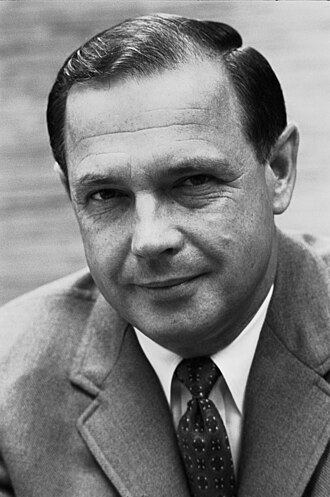
Alexander P. Butterfield served as Deputy Assistant to President Nixon from January 1969 to March 1973, a role in which he oversaw the installation and operation of the secret White House taping system. In March 1973, he transitioned out of the White House to become the Administrator of the Federal Aviation Administration (FAA). While serving as FAA Administrator in July 1973, Butterfield famously testified before the Senate Watergate Committee and publicly revealed the existence of the taping system he had previously managed.
What Butterfield talks about on the tapes
Presidential scheduling 225White House administration 163Presidential schedule 158White House operations 153Public relations 133Vietnam War 113Logistics 83White House logistics 82Foreign Policy 75Henry Kissinger 66Economic policy 62Scheduling 59
Conversations (1,038)
— Page 4 of 11President Nixon met with his Cabinet members to discuss the delicate political landscape surrounding the administration's efforts to open communications with the People's Republic of China. The conversation centered on the necessity of maintaining strict discretion to avoid premature public speculation, which could jeopardize sensitive diplomatic negotiations and create political vulnerabilities. Nixon emphasized the importance of a unified front among Cabinet members to manage domestic and international expectations as the policy shift progressed.
President Nixon, H. R. Haldeman, and Alexander P. Butterfield convened in the Oval Office to address administrative details regarding White House interior maintenance. The participants briefly discussed the specific logistical task of refurbishing and reupholstering chairs within the executive office. The discussion concluded with a directive to proceed with the requested furniture maintenance.
President Nixon, H.R. Haldeman, and Henry Kissinger met to discuss the positive domestic media reception of the administration's surprise initiative toward the People’s Republic of China. The participants reviewed the favorable coverage in national magazines, emphasizing the importance of maintaining strict secrecy while framing the initiative as a decisive, presidential-led move. They also addressed political strategy, including managing congressional relations, handling potential polling volatility related to the Vietnam War, and coordinating upcoming briefings for the White House staff.
President Nixon met with staff members Stephen B. Bull and Alexander P. Butterfield to coordinate logistical arrangements for upcoming meetings. The discussion centered on scheduling appointments with Senator Robert J. Dole and Senator James O. Eastland, as well as managing a briefing with Henry A. Kissinger. The participants specifically addressed requests regarding photography and the allocation of time for these high-level political engagements.
President Nixon and Alexander P. Butterfield met to coordinate the logistics and staffing for an upcoming White House visit by a group of African athletes. The discussion included the participation of key aides, such as Henry Cashen, Charles Colson, and H.R. Haldeman, as well as the involvement of the official photographer, Ollie Atkins. Additionally, the President briefly touched upon fundraising efforts and the potential scheduling of a follow-up call with a political supporter.
President Nixon, H. R. Haldeman, Charles Colson, and Henry Kissinger met to discuss the domestic and international implications of the administration's new initiative toward the People's Republic of China (PRC). The group evaluated the public’s fascination with the move, comparing its impact to the release of the Pentagon Papers, and strategized on how to leverage the policy to appeal to American youth ahead of the 1972 election. They also addressed political contingencies, including the potential for Vice President Spiro Agnew’s resignation, the political future of John Connally, and ongoing efforts to secure a resolution to the Vietnam War.
President Nixon met with Alexander P. Butterfield to finalize administrative tasks regarding his official schedule. The discussion centered on the review and signing of pending executive documents. The meeting concluded briefly with the President providing final instructions for the evening's workflow.
President Nixon met with his Deputy Assistant Alexander P. Butterfield for a brief administrative check-in at the Oval Office. The discussion focused on routine logistical matters and the scheduling of White House operations. No major policy decisions or significant developments were recorded during this short encounter.
President Nixon met with H.R. Haldeman, Henry Kissinger, John Ehrlichman, and Alexander Butterfield to coordinate the administration's response to ongoing leaks of classified national security information. The President directed that all staff with access to sensitive documents be subjected to polygraph tests to identify the sources, expressing deep frustration with the Department of State and the Department of Defense. Additionally, the participants reviewed the status of Vietnam peace negotiations and planning for the President's forthcoming diplomatic initiative with the People's Republic of China.
President Nixon and Alexander P. Butterfield held a brief morning meeting to coordinate the President's daily schedule. The discussion focused on upcoming appointments involving General James D. Hughes and H.R. Haldeman. No substantive policy matters were addressed during this brief logistical check-in.
President Nixon and Alexander P. Butterfield met to finalize logistical arrangements for an upcoming meeting involving Vice President Spiro T. Agnew and Secretary of State William P. Rogers. The primary discussion focused on the seating arrangement for National Security Advisor Henry Kissinger to ensure his presence during the sensitive policy consultation. No major policy decisions were made, as the exchange was strictly limited to administrative planning and protocol for the group session.
President Nixon and H.R. Haldeman discussed media management, scheduling, and the political optics surrounding Vice President Spiro Agnew’s recent trip. They focused on refining the President's public image, specifically regarding press access at events and the potential political fallout from his relationship with Agnew. The pair also addressed the President's upcoming schedule, staff appointments for the First Lady, and the development of economic messaging to be managed by the administration’s key fiscal advisors.
President Nixon met with Alexander P. Butterfield in the Oval Office to address administrative duties regarding pending paperwork. The discussion focused primarily on the review and signature of official documents, including a judicial appointment. The meeting concluded after these items were processed and Butterfield departed.
President Nixon, H.R. Haldeman, and Alexander Butterfield met to coordinate administration strategy regarding economic messaging, legislative priorities, and personnel assignments. They discussed the tactical use of senior officials like John Connally and the management of staff roles, including potential diplomatic or special ambassador assignments for Charles Rhyne and others. A significant portion of the discussion focused on managing conservative opposition to the administration's foreign policy initiatives, specifically the opening to China and arms control, with Nixon directing that Henry Kissinger engage with key conservative figures like Ronald Reagan to maintain their support.
President Nixon and his advisors discussed the scheduling of various domestic and international political meetings, including an upcoming engagement with Ronald Reagan. Much of the conversation focused on managing the public relations challenges surrounding Vice President Spiro Agnew’s recent foreign travel, with the participants expressing frustration over his negative relationship with the press and his preference for recreational activities over substantive engagement. The group also touched upon economic strategy, the upcoming federal budget, and ongoing labor concerns in the steel and shipping industries.
President Nixon met with H.R. Haldeman to finalize logistical arrangements and press strategy for his upcoming trip to Bohemian Grove, emphasizing the importance of ensuring off-the-record coverage and maintaining specific prohibitions on recording his speeches. The pair also extensively discussed personnel and management issues, including the performance and role of Vice President Spiro Agnew, the influence of Murray Chotiner, and the internal dynamics among senior staff members like John Ehrlichman and John Mitchell. Additionally, the President reviewed various upcoming scheduling items, including meetings with political allies, photo sessions, and administrative tasks related to his executive schedule.
President Nixon and Alexander P. Butterfield met to coordinate the President's upcoming schedule and manage communications with George P. Shultz. The discussion focused on logistical arrangements for Shultz's meeting with railroad officials and the potential need for a follow-up telephone briefing. Nixon deliberated on whether a direct meeting with Shultz was necessary or if a telephonic update would suffice, ultimately questioning the utility of a formal sit-down.
President Nixon and Alexander P. Butterfield met to coordinate the President's upcoming schedule and administrative personnel matters. The discussion focused on the logistics of engaging Ronald Reagan as a personal representative, alongside briefings regarding the Republic of China and various California-based meetings. They further addressed the procedural requirements for formal documentation and the transparency needed for high-level appointments.
President Nixon and Alexander Butterfield met to coordinate the administrative agenda for an upcoming Cabinet meeting and manage various logistical scheduling matters. They deliberated on the inclusion of topics such as veteran employment and departmental reports from figures like the Vice President, while also discussing the strategic optics of a potentially divisive policy issue. The President ultimately declined a request to meet with Jack J. Dreyfuss, Jr. due to scheduling constraints.
President Nixon met with Alexander Butterfield and Ronald Ziegler to review strategy for upcoming press engagements and manage media narratives regarding the economy and foreign policy. The discussion focused on addressing wage increases, the status of current job legislation, and the administration's stance on congressional recess. Nixon explicitly instructed Ziegler to emphasize that Congress must remain in session to pass pending jobs bills, while also providing guidance on how to respond to inquiries about wage and price controls.
President Nixon and Press Secretary Ronald L. Ziegler met to evaluate the effectiveness and strategic utility of holding informal press conferences in the Oval Office. They discussed the benefits of the setting, noting that it allows the President to maintain tighter control over questioning and avoid the public scrutiny of follow-up inquiries compared to televised events. Ultimately, Nixon decided to increase the frequency of these sessions to better manage public perception and communicate key administration messages on specific topics like economic policy.
President Nixon, Henry Kissinger, and H. R. Haldeman met to coordinate communication strategies and manage relations with various political factions and the media. Key discussions focused on neutralizing conservative opposition to the Administration's foreign policy—specifically regarding China and defense budget concerns—and crafting a narrative that prioritized the President's foreign policy successes over economic criticisms. The group also evaluated the impact of recent presidential trips on public opinion and planned upcoming public relations efforts to highlight legislative inaction by Congress and address the ongoing debate over the Pentagon Papers.
President Nixon met with Vice President Agnew and his Cabinet to discuss the administration's foreign policy objectives and the state of the national economy. Agnew briefed the attendees on his recent international tour, highlighting the global reception of the Nixon Doctrine and the challenges posed by the Arab-Israeli conflict, East Pakistan, and the increasing Soviet and Chinese presence in various regions. Nixon and his advisers subsequently addressed the economic outlook, emphasizing the need for an aggressive, unified defense of administration policies regarding inflation and unemployment, while dismissing the viability of permanent wage and price controls. Finally, the President mandated a strict reduction in government personnel and grade-level escalation to improve budget management across executive departments.
President Nixon and Alexander P. Butterfield met briefly in the Oval Office to coordinate the President's upcoming schedule and manage logistical priorities. The discussion centered on adjusting congressional engagements and handling specific meeting requests, including a prior appointment involving Maurice H. Stans. The exchange concluded with the President directing Butterfield to proceed with these administrative arrangements.
President Nixon held a series of brief, informal meetings in the Oval Office with various members of Congress and constituent groups. The sessions were largely ceremonial, involving a bill-signing for veterans' loans, the presentation of a Gideons International Bible, and the reception of commemorative gifts including artwork and presidential keepsakes. These interactions served as photo opportunities and constituent relations, allowing the President to engage with representatives and their guests on topics ranging from local history to personal anecdotes.
President Nixon met with H. R. Haldeman and Charles Colson to discuss the administration's political and public relations strategy, focusing specifically on managing economic perceptions and highlighting foreign policy achievements. The participants critiqued the current distribution of economic talking points to Cabinet members and Congress, resolving to push for more aggressive, simplified communication to counter negative media narratives. Additionally, they reviewed scheduling logistics for upcoming presidential trips to New York, Illinois, and the American West, emphasizing the need for carefully orchestrated events that maximize positive media exposure.
President Nixon, Alexander Butterfield, and Stephen Bull met to coordinate the distribution of an economic fact sheet to Cabinet members. They discussed administrative logistics and timelines regarding these materials, specifically noting the roles of Charles Colson and Secretary John A. Volpe. The discussion focused on ensuring consistent communication of economic statistics across the administration to avoid redundancy or conflicting statements.
President Nixon met with Alexander P. Butterfield to review the logistics of an upcoming signing ceremony for the Council on Environmental Quality report. They discussed the expected attendance, including John C. Whitaker, and the management of press involvement for the event. This discussion served to finalize the President's schedule and administrative preparations for the ceremony.
President Richard Nixon met with Alexander Butterfield in the Oval Office to review the President’s daily schedule and prepare necessary documentation. The discussion focused on organizing materials intended for signature, specifically referencing the contents of the President's briefcase. This brief administrative consultation served to finalize the President's immediate operational agenda.
President Nixon met with members of the Council on Environmental Quality, including Russell E. Train and John C. Whitaker, to express his appreciation for their work. The meeting began with a brief photo session, followed by casual conversation regarding the President's upcoming travel plans, pop culture references, and historical anecdotes. The meeting concluded with Nixon presenting commemorative paperweights to the council members.
President Nixon met with Alexander P. Butterfield in the Oval Office to address the administrative task of signing official documents. The discussion specifically concerned the use of pens for these signatures, including arrangements for Senator Michael J. Mansfield. This brief encounter served to finalize procedural details regarding presidential correspondence.
President Richard Nixon met with Alexander P. Butterfield to discuss administrative details regarding the President's upcoming schedule on the presidential yacht, Sequoia, including menu selections. The conversation also touched upon official matters concerning Henry A. Kissinger and specific instructions to be relayed to Charles W. Colson. This brief administrative meeting functioned primarily to coordinate executive logistics and staff communications.
President Nixon met with Alexander P. Butterfield and Stephen B. Bull to coordinate logistical details for an upcoming public relations event involving the "Cyclemates II" bicycling group. The discussion focused on choreographing the group's route around the South Portico to ensure optimal media coverage and scheduling the President’s subsequent greeting. The meeting concluded with a plan to bring the participants into the Oval Office for a final photo opportunity with official photographer Oliver Atkins.
President Nixon, George Shultz, and Alexander Butterfield met briefly in the Oval Office to coordinate logistics regarding the President's schedule. The conversation focused on the arrival of a bicycle and the necessity of follow-up communication. The participants concluded the meeting quickly to attend to these immediate administrative tasks.
President Nixon met briefly with Alexander P. Butterfield in the Old Executive Office Building to review the President's schedule. This short interaction served as a logistical check-in regarding upcoming appointments and administrative planning. No substantive policy matters or major decisions were recorded during this brief encounter.
President Nixon met with Alexander P. Butterfield to coordinate administrative logistics regarding his daily schedule. The discussion centered on the location and arrangements for a meeting with Attorney General John N. Mitchell in the Situation Room. Additionally, the two addressed matters pertaining to the President's personal secretary, Rose Mary Woods.
President Nixon and Alexander P. Butterfield met briefly in the Oval Office to coordinate logistics for an upcoming photograph session in the mess. The discussion focused on scheduling preparations and the necessity of planning the event effectively. The conversation concluded with the President confirming his availability to accommodate these arrangements.
President Nixon met with Deputy Assistant Alexander P. Butterfield to review and coordinate the President's upcoming schedule. The discussion centered on finalizing arrangements for meetings with key figures, including Chairman of the Council of Economic Advisers Paul W. McCracken and Ambassador Ellsworth F. Bunker. This session served to ensure the President's administrative agenda remained aligned with his strategic priorities.
President Richard M. Nixon met with Alexander P. Butterfield in the Oval Office to facilitate an urgent administrative request. The primary purpose of this brief interaction was for the President to summon Henry A. Kissinger for a consultation. Following the exchange, Butterfield departed to carry out the President's instructions.
President Nixon and Alexander P. Butterfield met in the Oval Office to coordinate administrative logistics regarding Henry Kissinger's schedule. The brief discussion served to align the President's priorities with the National Security Advisor's upcoming appointments. No major policy decisions were recorded during this exchange.
President Nixon and Alexander Butterfield met to review the exchange of diplomatic gifts between the President and Prime Minister Lon Nol of Cambodia. The discussion centered on the specific items presented, including a clock and flowers given by the White House, and a silver urn and gold ruby necklace received in return. This meeting served as a procedural wrap-up of the gift-giving protocols associated with the Prime Minister's visit.
President Nixon met with Alexander P. Butterfield to coordinate the logistics of an upcoming meeting with Jon M. Huntsman. The brief discussion served to finalize the President's schedule regarding this visit. No other policy matters were addressed during this exchange.
Alexander P. Butterfield and Stephen B. Bull met in the Oval Office to coordinate administrative matters regarding the President’s daily schedule. The discussion focused on logistical planning for upcoming appointments and operational arrangements for the executive office. No substantive policy decisions were reached during this brief organizational meeting.
President Nixon met with Alexander P. Butterfield and Stephen B. Bull to coordinate his daily schedule and manage pending administrative tasks. Key discussions centered on the timeline for an urgent appropriations bill and the logistics of a White House tour for broadcaster Paul Harvey. Nixon sought to streamline these appointments to accommodate upcoming meetings with the Council of Economic Advisers and other staff members.
President Nixon and Alexander Butterfield coordinate the logistics and movement of a visitor through the White House residence. The brief exchange focuses on ensuring the individual’s arrival and departure are managed discreetly, including confirming the visitor's awareness of their schedule. The discussion concludes with procedural instructions regarding the guest's path through the executive complex.
President Nixon met with Alexander P. Butterfield to address administrative matters concerning the President's daily schedule. Specifically, the discussion centered on coordinating a meeting with Thomas R. Shepard, Jr. The brief exchange served to finalize these scheduling arrangements for the President's calendar.
President Nixon met with Peter M. Flanigan to address pending policy decisions regarding petrochemicals and international textile trade. The discussion focused on evaluating options for oil import policies and the political implications of utilizing the national security clause to manage textile negotiations with Japan. Flanigan reported on consultations with various Cabinet members and congressional figures, emphasizing the need for timely decisions to navigate complex industry pressures and diplomatic relations.
Stephen B. Bull and Alexander P. Butterfield met briefly in the Oval Office to confirm the President's current location. The discussion served as a routine administrative check-in regarding the President's movements. No further substantive policy matters were addressed during this one-minute exchange.
President Nixon met with his staff and advisors to organize a crucial upcoming strategy session at Camp David regarding his forthcoming economic program. The discussion focused on finalizing the details of his August 16, 1971, address, specifically addressing the closing of the gold window, the implementation of import taxes, and the mechanics of a wage-price freeze. Nixon emphasized the need for decisive action and strict control over the bureaucratic process to ensure a coherent policy rollout, while also addressing ongoing concerns regarding school desegregation and busing litigation.
President Nixon met with Alexander P. Butterfield to coordinate logistical arrangements for the President’s upcoming schedule. The discussion centered on managing Nixon's time and movement between the Oval Office and the Executive Office Building. They specifically deliberated on the potential scheduling of a private meeting with an unidentified individual.
President Nixon and Alexander P. Butterfield met to refine a speech draft, likely pertaining to the administration's new economic policies announced on the same day. The discussion focused on articulating the rationale behind recent financial interventions and shifting international economic partnerships. The exchange emphasized the necessity of these measures to ensure global stability and frame the transition toward a new era of international cooperation.
President Nixon convened a large meeting with Vice President Agnew and his Cabinet to discuss the national economy and the "New Economic Policy" he had announced the previous day. Key topics included the wage-price freeze, import surcharges, tax relief, budget cuts, and the convertibility of the dollar. The administration sought Cabinet support for these initiatives and discussed their potential impact on international trade and domestic employment.
President Nixon met with Alexander P. Butterfield to coordinate administrative logistics regarding his immediate schedule and upcoming engagements. The discussion centered on managing arrivals for a meeting at the State Department, specifically involving Arthur F. Burns and George P. Shultz, as well as the status of speech drafts being prepared by William L. Safire. Butterfield was tasked with overseeing these appointments and ensuring the necessary materials were ready for the President's review.
President Nixon and Alexander P. Butterfield met to coordinate the logistics and scheduling for an upcoming high-level meeting at the State Department. The discussion focused on confirming the attendance of key economic advisors, including John B. Connally, Arthur F. Burns, and Paul W. McCracken, and addressing gaps in the briefing materials. Butterfield assisted the President in refining departure times and initiating a follow-up call to Alexander M. Haig, Jr. to ensure administrative preparations were finalized.
President Nixon and H. R. Haldeman met to assess the overwhelmingly positive press coverage and market reaction following the administration’s recent economic policy announcements. The discussion focused on leveraging the current momentum, including potential political strategies for dealing with Democratic opponents and coordinating a strategic, unannounced visit to the New York Stock Exchange. Additionally, the President reviewed pending matters such as textile negotiations with Japan and decided against meeting with the Mayor of West Berlin to avoid political complications.
President Nixon met with his senior advisors, including John B. Connally and H.R. Haldeman, to formulate a strategy for promoting his newly announced "New Economic Policy" and to address political fallout. The participants discussed the necessity of maintaining a unified, aggressive message, specifically targeting Democratic critics like Hubert Humphrey and labor leaders who might oppose the administration's wage and price freeze. Connally was tasked with representing the administration's economic message to the media and Congressional leaders, while the group emphasized the importance of framing these economic measures as essential for bipartisan national interest and international monetary stability.
President Nixon hosted a social gathering in the Oval Office for Dr. James R. Schlesinger, his family, and the Doub and Radcliffe families. The meeting primarily served as a ceremonial visit featuring a photographic session and the presentation of presidential gifts, including cufflinks and Apollo viewers, to the guests. Following the departure of the families, the President briefly discussed his schedule, specifically regarding the Oakland A's and Henry Kissinger, with Alexander P. Butterfield, Gerald R. Ford, and Robert P. Griffin.
President Nixon met with Alexander P. Butterfield in the Oval Office to handle brief administrative duties. During this brief encounter, they addressed an incoming call from an unidentified businessman and processed an item requiring the President's signature. The discussion concluded quickly after these tasks were completed.
President Nixon met with key advisors and members of Congress to discuss the administration's new economic program and strategy for securing legislative support. The participants emphasized the need to maintain political momentum, project unity, and avoid excessive amendments from Democrats that could derail the administration's tax and economic goals. The conversation also covered the effective use of rhetoric to blame political opponents for partisanship, as well as the personnel requirements for managing the newly established wage and price controls under the Cost of Living Council.
President Nixon, H.R. Haldeman, and Alexander Butterfield met to coordinate the President's public messaging strategy and administrative appointments. The discussion centered on the importance of repetitive, consistent messaging across upcoming speeches to ensure the administration's core economic policies resonated with the public. Additionally, the group reviewed potential personnel assignments, specifically evaluating the roles of Peter G. Peterson and Donald Rumsfeld regarding the wage and price freeze and the Office of Emergency Preparedness.
President Nixon met with Alexander P. Butterfield and Stephen B. Bull to conduct routine administrative tasks, including the signing of documents and coordination of the President's upcoming travel schedule to Camp David. The participants facilitated communication between staff members, specifically confirming the location and availability of Charles W. Colson and Ronald L. Ziegler. The meeting concluded with logistics regarding the President’s departure and the handling of personal effects, such as his briefcase.
President Nixon met with Raymond K. Price, Jr. and John D. Ehrlichman to finalize his upcoming economic address to Congress. The participants reviewed and revised multiple drafts of the speech, focusing on the tone toward congressional Democrats and the strategic presentation of tax and spending policies. Nixon emphasized the need for bipartisan cooperation and specific wording regarding the legislative agenda, while also discussing logistical arrangements for the event and upcoming official functions with Alexander P. Butterfield.
Raymond K. Price, Jr. contacted Alexander P. Butterfield to coordinate the final drafting stages of a speech the President was scheduled to deliver to Congress. Price, working from the Executive Office Building, requested that Nell Yates bring the current draft to his location to facilitate a review of necessary revisions. The pair confirmed that typing was underway and agreed to meet immediately to incorporate the required changes.
President Nixon met with speechwriter Raymond K. Price, Jr. to finalize the draft of his upcoming September 9 address to Congress regarding economic stabilization. The participants, assisted briefly by Alexander P. Butterfield and Nellie L. Yates, focused on structural edits to the speech, specifically refining sections on Phase II price controls, revenue sharing, welfare reform, and inflation rhetoric. The conversation also touched upon administrative logistics for a forthcoming Kennedy Center event.
President Nixon and Alexander P. Butterfield discussed the status of a draft speech intended for delivery to Congress. Nixon instructed Butterfield to wait until the document was fully completed by typist Nellie L. Yates rather than reviewing it in partial segments. The President emphasized that there was no urgency in receiving the draft, opting to review the entire 21-page document once it was ready.
President Nixon and Alexander P. Butterfield coordinated the logistics for the President's upcoming address to Congress. They arranged for the delivery of a speech draft prepared by Nellie L. Yates to be left for the President, and they discussed the necessity of professional makeup services for the event. Nixon ultimately decided against using makeup for the appearance.
President Nixon and Alexander P. Butterfield discussed logistical arrangements for several upcoming White House events, focusing primarily on the guest list for a luncheon with Billy Graham and his family. The conversation also covered the attendee list for a meeting with Japanese Foreign Minister Takeo Fukuda and structural arrangements for a dinner honoring the Apollo 15 astronauts. Nixon sought to strictly manage the number of attendees at these functions, specifically directing Butterfield to limit the inclusion of extended family members and children.
H. R. Haldeman and Alexander P. Butterfield met briefly to discuss adjustments to the scheduling of Secretary of the Treasury John B. Connally. The discussion centered on the constraints imposed by a tight timeline regarding the President's upcoming engagements. No further substantive policy issues were addressed before the participants concluded their meeting.
President Nixon met with H.R. Haldeman, Henry Kissinger, and other staff to discuss political strategies following his September 9, 1971, economic speech, specifically focusing on managing bureaucratic handling of Japanese trade negotiations and exchange rates. The group addressed concerns regarding the competency of Peter G. Peterson and the necessity of centralizing economic authority within a small White House-led group. Additionally, they reviewed positive public reaction to the President's assertive leadership tone and discussed upcoming scheduling matters, including a potential appearance at the Al Smith dinner and the terminal illness of Senator Winston L. Prouty.
President Nixon met with Alexander P. Butterfield to briefly review the scheduling for an upcoming photography session. The conversation also touched upon the necessity of maintaining political momentum regarding Phase II of the administration's economic policy. The President expressed concern about neutralizing potential political attacks against his economic agenda.
President Nixon met with Donald Rumsfeld and H.R. Haldeman to discuss domestic political strategy, upcoming speaking engagements, and the administration’s approach to college campuses and youth outreach. The group evaluated Republican standing in key states like Illinois, emphasizing the importance of managing public perceptions of incumbent governors and party unity. Furthermore, they coordinated the logistical planning for the President's upcoming trip to the People's Republic of China, specifically addressing press access, media coverage, and the size of the official delegation.
President Nixon met with Alexander P. Butterfield to coordinate logistical details for an upcoming meeting. The discussion focused on establishing the guest list of participants and finalizing the expected duration of the session. These administrative arrangements were intended to maintain the efficiency of the President's schedule.
Alexander P. Butterfield and Terry L. Decker convened in the Oval Office for an informal discussion regarding administrative or personal matters. The brief exchange includes an expression of surprise from an unidentified participant, though the lack of a substantial transcript prevents a determination of specific policy or action items. The meeting concludes with both individuals departing the office together before the end of the recording session.
President Nixon, Pat Nixon, and the Cabinet met with their spouses to discuss the implementation and public perception of the administration’s New Economic Policy. Secretary of the Treasury John Connally led a comprehensive briefing on the wage-price freeze, tax reforms, and international monetary adjustments aimed at curbing inflation. The discussion emphasized the necessity of these economic measures for restoring national growth, managing federal expenditures, and building public and congressional support for the administration's program.
President Nixon met with H. R. Haldeman and Alexander P. Butterfield to finalize logistical arrangements for an upcoming Cabinet meeting. The discussion focused on managing the attendance of officials, including Paul McCracken and George Shultz, and preparing the necessary domestic policy briefings. Nixon directed adjustments to the meeting's order of proceedings to ensure a more efficient presentation of the agenda.
President Nixon met with Alexander P. Butterfield to briefly coordinate administrative scheduling matters regarding a meeting with Senator Robert J. Dole. The conversation focused on the timing of this appointment and the management of the President's upcoming schedule. Butterfield confirmed he would finalize the necessary arrangements for the meeting.
President Nixon met with Robert Dole, Alexander Haig, and H. R. Haldeman to discuss political strategy, the administration's wage and price freeze, and foreign affairs. A significant portion of the conversation centered on the Attica state prison riots, where Nixon expressed support for Governor Nelson Rockefeller's refusal to grant amnesty to the rioters. Additionally, the participants reviewed Dole's recent trip to the Far East and evaluated potential Democratic opponents and general campaign messaging for the 1972 election.
President Nixon and Alexander Butterfield discuss the selection and acquisition of specific photographs, referencing notes provided by Julie Nixon Eisenhower. The conversation centers on clarifying which photos have been designated for purchase versus those previously handled by Rose Mary Woods. Nixon instructs Butterfield to ensure that the specific selections made by his daughter are prioritized and finalized.
President Nixon met with Alexander P. Butterfield and Stephen B. Bull to finalize scheduling and logistical details regarding his daughter, Julie Nixon Eisenhower. The discussion centered on the timing of her upcoming visit and the selection of new, professional family portraits to display in the Oval Office. Nixon directed his staff to review and select the best images from the photographer Ollie Atkins for immediate use.
President Nixon met with Alexander P. Butterfield to review and finalize specific details regarding the President’s upcoming daily schedule. The brief two-minute session served as a logistical consultation to ensure alignment on administrative arrangements. No further actions were recorded beyond this review of the presidential itinerary.
President Nixon consulted with Alexander P. Butterfield to finalize arrangements for specific mementos to be distributed at a family event held that evening. The President provided explicit instructions regarding the procurement of gifts, specifically requesting silver compacts for the wives, cufflinks for the men, and tie bars and charms for the children. Butterfield acknowledged the directives and committed to securing these items through Stephen B. Bull.
President Nixon directed Alexander P. Butterfield to arrange specific gifts for a family in Indiana. He instructed Butterfield to procure silver cufflinks for the three men, tie bars for the boys, charms for the girls, and silver contacts for the two wives. This meeting served as a brief administrative directive to ensure appropriate tokens were prepared for the family.
President Nixon met with his staff and members of the press to review his recent, highly effective performance during a press conference. They discussed the tactical success of his responses regarding key administration initiatives, including the military draft extension, Phase II of his economic policy, and his upcoming summit in the People's Republic of China. The conversation underscored the administration's determination to maintain the draft to safeguard U.S. peace initiatives and focused on framing the South Vietnamese elections within a realistic, historical context of global democratic development. Finally, the group considered future media strategies and the need for supporting data regarding U.S. foreign aid distribution to bolster the President's public narrative.
President Nixon met with Alexander P. Butterfield to coordinate logistics for Tricia Nixon Cox and her husband, Edward R.F. Cox, to stay at Camp David. The discussion focused on securing accommodations for the couple in the Aspen Lodge and planning for potential future housing arrangements. Nixon instructed Butterfield to work directly with Tricia to finalize these stay details.
President Nixon and his advisors, including H. R. Haldeman and Henry Kissinger, held this meeting to strategize on public relations, congressional management, and the administration's aggressive posture toward political opponents. The discussion focused on framing the President's economic policies, neutralizing criticism regarding the military draft and Vietnam, and managing press relations to better promote the administration's leadership. Key outcomes included a decision to escalate military pressure in the DMZ and a plan to utilize media allies and station owners to counter perceived bias in news coverage.
Alexander P. Butterfield met with an unidentified individual in the Oval Office to provide specific instructions or clarifications. The brief encounter focused on ensuring the unknown participant reached a proper understanding of these directives. No further actions or developments were recorded before the participants departed shortly thereafter.
Alexander P. Butterfield met with Secret Service agents to discuss the logistical arrangements for the President's upcoming activities, including the President's use of the White House bowling alley. The participants engaged in light conversation regarding the merits of bowling as a family-friendly sport before briefly addressing the President's scheduled appointment with Ginger Rogers. The meeting concluded as the agents prepared to coordinate the President's movements for the remainder of the day.
President Nixon met with entertainer Ginger Rogers and Alexander P. Butterfield to discuss the arts, the entertainment industry, and cultural shifts in American media. They exchanged views on the architecture and acoustics of the Kennedy Center, the decline of moral values in contemporary films, and the challenges faced by conservative-leaning entertainers. The conversation concluded with Nixon gifting Rogers a presidential compact and expressing his appreciation for her political support.
President Nixon met with his aides Stephen B. Bull and Alexander P. Butterfield to finalize the President's daily schedule. The primary focus of the brief discussion was coordinating the logistics for an upcoming meeting with John H. Geiger. Following the review of these administrative arrangements, the aides departed the Oval Office.
President Nixon consulted with staff and Chief Justice Warren E. Burger regarding the public announcement of Supreme Court Justice Hugo Black's sudden resignation. The participants coordinated a messaging strategy for press secretary Ronald Ziegler to handle media inquiries, specifically emphasizing that the President would seek the "best qualified" successor rather than committing to geographic or ideological litmus tests. The discussion also addressed the timeline of when the White House received Black's formal letter and the necessary coordination with Attorney General John Mitchell.
President Nixon met with H.R. Haldeman and other staff members to review a wide range of administrative, political, and foreign policy matters, notably including the impending vacancy on the Supreme Court following Justice Hugo Black's resignation. The discussion addressed the political strategy for potential court nominees, the administration's stance on the Office of Economic Opportunity extension bill, and military maneuvers in Vietnam. Additionally, the President reviewed his upcoming travel schedule and press relations, and he met briefly with reporter Eugene Risher to bid him farewell before his departure for a fellowship.
President Nixon met with Alexander P. Butterfield to coordinate administrative tasks and facilitate communication with his staff. During the brief session, the President requested a phone call to Attorney General John N. Mitchell. Additionally, the meeting served to process various documents requiring the President’s signature.
Alexander P. Butterfield, Charles W. Colson, and John D. Ehrlichman convened in the Oval Office to discuss administrative operations and scheduling matters. The brief interaction focused on the staff's need for dedicated time to manage official White House work. The recording concludes abruptly before any significant decisions or follow-up actions could be finalized.
President Nixon met with Alexander P. Butterfield in the Oval Office to discuss the handling and organization of specific documents. The brief conversation focused on the contents and management of a briefcase containing sensitive materials. No further details regarding the nature of these documents were established during the short session.
President Nixon met with Alexander P. Butterfield to coordinate a response to a call from Edward J. Dwyer. The discussion focused on drafting a reply to Dwyer and evaluating the necessity of sending a personal note from the President. This administrative meeting centered on managing external correspondence and determining appropriate executive communication protocols.
President Nixon and Alexander P. Butterfield met to coordinate the details of the President’s upcoming schedule, specifically regarding a planned meeting with the consumer council. The brief discussion centered on managing the President's interactions with these stakeholders to ensure the tone and objectives of the engagement were appropriately addressed. Butterfield confirmed the logistics before exiting the Oval Office.
Alexander P. Butterfield, Stephen B. Bull, and Manolo Sanchez met in the Oval Office to coordinate administrative logistics regarding the President’s location. The participants discussed a phone call initiated by Bull while managing scheduling uncertainties. The brief interaction concluded with the group exiting the office to facilitate ongoing operations.
President Nixon met with his personal valet Manolo Sanchez and aide Alexander P. Butterfield in the Oval Office for a brief, two-minute discussion. Although the specific substance of the exchange remains largely obscured by withdrawn segments and undefined transcript data, the meeting focused on logistics involving personal staff. No major policy decisions were recorded during this abbreviated interaction.
President Nixon met with H.R. Haldeman and other staff to review administrative and political matters, including the handling of the Pentagon Papers and the reorganization of the Council on International Economic Policy (CIEP). The President emphasized the need to move beyond current staffing limitations by centering economic policy work around George Shultz and John Connally, rather than Peter Peterson. Additionally, the group discussed potential candidates for Secretary of Agriculture, the legislative strategy for a Supreme Court appointment, and the necessity of managing Vice President Agnew's role leading into the upcoming campaign.
President Nixon met with Alexander P. Butterfield to handle routine administrative tasks, including the signing of presidential documents and the review of a briefing book. The two discussed the security clearance and political background of Irving Brown, comparing his ideological history to Jay Lovestone. Nixon provided brief instructions regarding the handling of specific memoranda and materials located on his desk in the Oval Office.