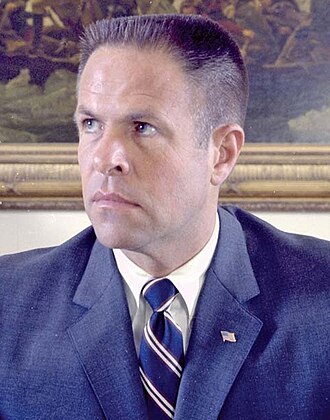
Haldeman, H. R. ("Bob")
H. R. ("Bob") Haldeman served as President Richard Nixon's White House Chief of Staff from January 1969 until his resignation in April 1973. Acting as Nixon's primary gatekeeper and closest aide, Haldeman was a central figure during the White House taping period and is featured prominently in hundreds of recorded conversations. His tenure ended abruptly when he was forced to resign due to his deep involvement in the Watergate cover-up, most notably captured directing the obstruction of justice on the infamous "Smoking Gun" tape.
President Nixon and H. R. Haldeman held a brief meeting to verify the status of an ongoing communication or administrative task. The discussion centered on confirming the readiness of a specific operating system or protocol. The participants concluded the exchange by establishing that the necessary steps were being handled within the appropriate operational area.
President Nixon and H. R. Haldeman discuss the operational logistics of crowd control for an upcoming public event. They deliberate on the potential deployment of the National Guard and address concerns regarding the official documentation and photographic record of the situation. This exchange focuses on managing security optics and personnel coordination for the President's appearance.
President Nixon and H. R. Haldeman met to coordinate logistics regarding an upcoming public appearance or event featuring photographer Oliver F. Atkins. The discussion focused on the management of photography and the handling of the participants involved in the event. This meeting served to finalize arrangements for official documentation of the President’s scheduled activities.
President Nixon met with H. R. Haldeman in the Old Executive Office Building to coordinate the President's upcoming daily schedule. The primary focus of the discussion concerned logistical arrangements for a forthcoming meeting involving Henry Kissinger. No further substantive policy decisions were finalized during this brief administrative exchange.
President Nixon and H. R. Haldeman met to coordinate preparations for an upcoming press conference, focusing specifically on formulating effective responses to anticipated inquiries. Their discussion included a review of pending policy matters, most notably the administration's stance on gun control legislation. The participants concluded the session by establishing a plan for follow-up communications to finalize the briefing strategy.
President Nixon and H. R. Haldeman met to discuss a wide-ranging agenda including administration public relations, political strategy for the 1972 election, and staffing efficiency. The President emphasized his desire to reduce White House paperwork and strictly prohibited staff members from engaging in political backgrounders with the press. They also planned upcoming events, such as a televised Fourth of July address at the National Archives, and reviewed strategies to counter Democratic criticism regarding Vietnam and the economy.
President Nixon and H.R. Haldeman reviewed the potential economic impact of a Lockheed collapse, noting that approximately 31,000 jobs were tied to a specific contract. Additionally, Haldeman briefed the President on the status of an administration study aimed at developing objective criteria for new gun control legislation. This initiative sought to address existing loopholes in the 1968 Gun Control Act by regulating the domestic manufacture of firearms based on performance and quality standards.
President Nixon and H. R. Haldeman discuss administrative personnel matters, specifically addressing compensation issues related to White House photographer Oliver F. Atkins. The discussion centers on the necessity of formalizing these arrangements through official correspondence to resolve outstanding concerns. Haldeman is tasked with overseeing the resolution of these procedural and staffing-related issues.
President Nixon and H.R. Haldeman reviewed the success of Nixon’s June 1, 1971, press conference, focusing on the positive public reception of his firm stance on the recent May Day demonstrations. They discussed the effectiveness of framing the protesters as vandals and lawbreakers to bolster his 'law and order' platform, while noting the media's disproportionate fixation on Vietnam and the neglect of domestic policy issues. Nixon also addressed logistical concerns regarding television camera angles and concluded that in future briefings, he should speak directly to the camera rather than the reporters to improve his communication with the public.
President Nixon and H.R. Haldeman reviewed the feedback and public reception following the President’s recent televised press conference. They discussed the administration's performance on key issues such as drug policy, the May Day protests, and diplomatic efforts regarding China and Vietnam. The two also assessed the effectiveness of Nixon's presentation style, specifically debating the merits of looking directly into the camera versus engaging with the press, while planning adjustments for future appearances.
In this extensive meeting, President Nixon and H. R. Haldeman, later joined by Henry Kissinger and other staff, discussed a broad range of administrative, political, and foreign policy matters. The conversation focused heavily on the President's recent press conference, strategies for managing the press and domestic public opinion, and the imperative to achieve foreign policy breakthroughs in Vietnam, relations with the USSR, and potential overtures to the People's Republic of China. Significant developments included internal planning for clandestine diplomatic channels and a firm resolve to maintain a "law and order" stance against anti-war demonstrators and critics of the administration.
President Nixon met with H. R. Haldeman, Robert Finch, Ronald Ziegler, and Alexander Butterfield to coordinate 1972 re-election strategy, focusing specifically on California politics and the management of Republican primaries. The group discussed the potential for Caspar Weinberger to run for mayor of San Francisco to boost the President's standing in the state, while also strategizing on how to handle potential stand-in candidates and primary challenges. Nixon emphasized a desire to minimize his direct campaign travel during the primaries, delegating tactical operations to a small, loyal team including Haldeman, Finch, and Bryce Harlow, while expressing distrust toward Charles Colson’s political judgment.
President Nixon and H. R. Haldeman discuss public relations strategy, focusing on how the President should project strength and manage his emotions during media appearances. They analyze the political effectiveness of Nixon's recent press conferences, debating whether he should adopt a more combative, 'righteous' tone rather than maintaining a perpetually cool demeanor. Additionally, they discuss the logistical coordination of upcoming social events, including a dinner with Nicaraguan President Somoza, and the continued use of polling to gauge public opinion on specific issues like drug policy.
President Nixon and H. R. Haldeman met to review the President's upcoming schedule, including various appointments and the preparation for a press conference. The discussion focused heavily on the political risks posed by unfavorable economic indicators, specifically rising unemployment figures and the wholesale price index. They strategized on how to manage media narratives surrounding these economic reports and potential legislative vetoes to minimize negative press coverage.
President Nixon and H. R. Haldeman discuss strategies for upcoming press conferences, focusing on how the President should handle political questions and maintain his control over the news cycle. Nixon expresses a desire to avoid being drawn into partisan debates or candidate-specific topics, instead preferring to project a presidential image that resonates with the public. They also review the political utility of recent law-and-order rhetoric, particularly regarding police support and the administration's firm stance against drug legalization, and deliberate on the timing and location of future press engagements to maximize reach and impact.
President Nixon, H. R. Haldeman, and Ronald Ziegler met to coordinate logistics for upcoming presidential travel, review scheduling for meetings with political allies and foreign officials, and discuss the administration's media strategy regarding recent May Day protests. The group reviewed gift-giving protocols for members of Congress and evaluated the political risks associated with various appearances, including a rejected proposal for a concert in the Rose Garden. Nixon and his staff also discussed managing press relations, specifically reinforcing the President's policy of declining to answer partisan political questions during televised press conferences.
President Nixon met with H. R. Haldeman, Robert Dole, and John Mitchell to discuss the administration's political strategy, including the management of the 1972 Republican National Convention site selection and efforts to increase youth voter registration. The group evaluated the political risks of pending legislation, specifically gun control, health care, and public works bills, while coordinating messaging to contrast Nixon's policies with Democratic alternatives. Additionally, the President and his advisors reviewed strategies for handling press relations—including a potential public moratorium for Vice President Agnew—and addressed concerns regarding the Vietnam War, POW repatriation, and the impact of economic issues on his reelection prospects.
President Nixon and H.R. Haldeman discussed the need to implement a "one-man responsibility" program within the administration to increase accountability on key policy initiatives, drawing a parallel to Egil Krogh’s leadership on drug policy. The President reflected on the positive reception he received at a recent event for members of Congress, suggesting that he should host more informal, social gatherings to foster personal loyalty and capitalize on the power of the White House. Additionally, they reviewed strategies for handling economic messaging regarding unemployment, explored the benefits of utilizing Q&A formats in public appearances, and confirmed the cancellation or relocation of certain social events to accommodate renovations at the White House.
President Nixon, Henry Kissinger, and H.R. Haldeman met to discuss a wide-ranging agenda involving U.S. foreign policy, specifically relations with India, Pakistan, China, and the Soviet Union, as well as the ongoing conflict in Vietnam. They strategized on managing domestic political pressures, including the potential for trade with China and the Soviet Union and how to mitigate public criticism regarding the war. The President emphasized the need to maintain a firm stance with international allies and adversaries, particularly regarding force reductions and prisoner of war issues, while seeking ways to keep the administration's diplomatic initiatives in a positive light.
President Nixon met with H. R. Haldeman and briefly with Ronald Ziegler to refine his political outreach and public messaging strategy. The discussion focused on managing the President's schedule to maximize positive media impact, specifically regarding energy policy announcements, radio addresses, and strategic use of White House events for political supporters. Nixon also directed staff to initiate a national program for presidential commendations of law enforcement and student leaders to bolster support among core constituencies.
President Nixon and H. R. Haldeman met to streamline the structure and membership of his economic policy group to prioritize strategic decision-making over administrative bureaucracy. The President expressed a desire to limit participants to a core group—including John Connally, John Ehrlichman, and Peter Peterson—to foster effective policy planning and avoid the stagnation caused by larger, disparate committees. The discussion centered on balancing economic management, such as the jobs bill, with the broader necessity of instilling public confidence and optimism in the administration's leadership.
President Nixon and H. R. Haldeman met to discuss various political and policy matters, including potential personnel appointments like Arlen Specter and strategies for managing the national economy. They evaluated the political impact of upcoming public opinion polls and assessed the strategic implications of the administration's Vietnam policy, specifically regarding the McGovern-Hatfield resolution. Additionally, the pair coordinated on the delicate planning and potential domestic impact of the President’s prospective visit to the People’s Republic of China, emphasizing the secrecy required for Henry Kissinger's diplomatic efforts.
President Nixon and Henry Kissinger met to discuss the logistics and political implications of Vice President Spiro Agnew's upcoming foreign trip, focusing on concerns that Agnew's planned stop in Greece would become an emotional focal point for his critics. The conversation also covered broader foreign policy objectives, including sensitive negotiations regarding China, Vietnam, and the Soviet Union, while managing the President's personal schedule and image. Nixon ultimately directed Kissinger to coordinate a breakfast meeting to finalize Agnew's itinerary, emphasizing the need to steer the Vice President away from controversial stops while maintaining discretion regarding ongoing geopolitical initiatives.
President Nixon directs H. R. Haldeman to coordinate the appointment of Bryce N. Harlow to a delegation accompanying Vice President Spiro Agnew. The President intends for Harlow to act as a confidant and informal advisor to Agnew during the trip. Haldeman agrees to the plan and commits to contacting Harlow, along with Senators Hugh Scott and Gale W. McGee, to organize the details.
President Nixon met with Henry Kissinger to discuss the Vietnam War, particularly the military situation in the Mekong Delta and the political challenges posed by the McGovern-Hatfield amendment. They strategized on foreign policy, specifically the ongoing Berlin negotiations, the pursuit of a U.S.-Soviet summit, and potential future initiatives involving the People's Republic of China. Later, the President consulted with John Ehrlichman and Virginia Governor Linwood Holton regarding domestic school integration, emphasizing the importance of legal compliance in the South without public confrontation, and addressed various scheduling and administrative matters.
President Nixon held a brief consultation with H.R. Haldeman regarding military buildup before speaking with Frank E. Fitzsimmons to congratulate him on his election as president of the Teamsters Union. Nixon declined an invitation to address the upcoming Teamsters convention in July due to confidential travel commitments, though he hinted at their significance. To maintain the relationship, the President committed to attending a future Teamsters Executive Board meeting, offering to coordinate his schedule with the union leadership.
President Nixon met with H.R. Haldeman and other staff to review administrative, political, and foreign policy matters, including the handling of foreign cables and the management of cabinet officers. The President emphasized his desire to delegate decision-making authority to cabinet secretaries to minimize his personal involvement in routine disputes and to streamline government operations. Additionally, they discussed strategies for dealing with the press, the importance of maintaining loyalty from political allies, and the specific goal of ending federal funding for the Corporation for Public Broadcasting.
President Nixon and H.R. Haldeman reviewed internal administration polling data to assess public opinion on various policy issues, including the Vietnam War, SALT talks, marijuana legalization, and economic priorities. They discussed the disparity between public awareness of administration initiatives and the actual results of these polls, with the President cautioning against overestimating the public's grasp of complex foreign policy details. Following the review, Nixon instructed his staff to pause further polling efforts to avoid excessive internal focus on shifting approval numbers.
President Nixon met with his senior staff and Caspar Weinberger to develop a political and economic strategy centered on job creation and tax policy. The discussion focused on leveraging construction projects to stimulate the economy, addressing the regressive nature of property taxes, and crafting a messaging strategy that emphasizes the President's leadership and strength. Nixon directed his team to prioritize projects that provide immediate employment and instructed them to present these efforts as a decisive counter-argument to the spending agendas proposed by Congress.
President Nixon met with key advisors and economist Milton Friedman to discuss administrative scheduling, the current economic climate, and potential policy adjustments ahead of the 1972 election. A primary focus was the ongoing struggle to balance inflation and unemployment, with Friedman cautioning against reactive policy shifts and emphasizing the need for stability in the money supply. Nixon expressed concern over the volatility of Federal Reserve Chairman Arthur Burns and sought advice on managing economic expectations while avoiding the political pitfalls of wage and price controls.
President Nixon, H. R. Haldeman, and Rose Mary Woods met to discuss logistics for an upcoming event involving California guests, alongside personal staffing concerns and household management. The conversation transitioned into a strategic review of the administration's public image, with Nixon expressing frustration over his Cabinet’s lack of focus and the administration's failure to gain political credit for its foreign and domestic policy accomplishments. Nixon and Haldeman concluded by emphasizing the need to adopt a more aggressive leadership posture, particularly by identifying and confronting political adversaries, to better resonate with the public.
President Nixon, Charles Colson, and H. R. Haldeman discuss the President’s recent meeting with NBC executives, focusing on the media's perceived liberal bias and the effectiveness of Nixon’s confrontational yet calm demeanor. The participants analyze the executives' reactions to Nixon's challenges regarding press coverage and his refusal to be intimidated by journalistic hostility. Additionally, they discuss media strategy, including the potential for using economic data to counter negative reporting, the management of public broadcasting, and efforts to secure equal time for administration viewpoints.
President Nixon and H.R. Haldeman debriefed on a recent meeting with NBC executives, focusing on Nixon's efforts to confront the network's perceived bias and unfair coverage of his administration. Nixon emphasized his strategy of maintaining a cold, firm demeanor during the encounter to signal his effectiveness as an adversary, while refusing to apologize for the critical rhetoric of Vice President Agnew. The discussion also covered the administration's stance on equal-time requirements for campaign coverage and the president's decision to control the scheduling of his own press conferences rather than bowing to network convenience. Following this, Stephen B. Bull briefed the president on a logistical issue regarding the attendance of members of Congress for an upcoming meeting with Peter G. Peterson.
President Nixon and John Ehrlichman met to discuss the administration's legislative and political strategy, specifically focusing on the drafting of housing policy, budget reduction measures, and the public image of his domestic programs. They debated the most effective ways to communicate policies to the public, with Nixon emphasizing the need to create clear, compelling political narratives regarding law enforcement, drug control, and the economy. The conversation also touched on foreign policy, specifically Nixon's decision to avoid unnecessary foreign travel and his desire to shift the public's focus from fear to a sense of confidence in his leadership.
President Nixon, H.R. Haldeman, and Rose Mary Woods discuss a piece of writing by Terry McKinney that articulates a populist defense of middle-class American values against perceived "anti-American" cultural influence. Nixon praises the text, deciding it should be circulated within the White House and suggesting he may use it for a future speech. The participants also coordinate logistics for an upcoming wedding reception, including potential outings to Camp Hoover and managing the President’s family engagements.
President Nixon and H. R. Haldeman met to discuss scheduling arrangements for the Chief of Staff. The primary focus involved reorganizing Haldeman's availability to better accommodate the President's needs. Nixon indicated a desire for Haldeman to clear his schedule to allow for increased flexibility in their upcoming interactions.
President Nixon and H. R. Haldeman engaged in an extensive series of consultations regarding the 1972 presidential campaign, administrative scheduling, and foreign policy strategy. The participants discussed political intelligence, potential staff appointments, and the necessity of managing press relations, particularly concerning leaks and the administration's public image. Additionally, they reviewed travel plans for international summits and assessed the timing of significant announcements in relation to the domestic political calendar.
President Nixon, Ronald Ziegler, and H. R. Haldeman discussed how to manage media reporting regarding Vietnam casualty figures after a premature report by Howard K. Smith. Nixon emphasized the importance of formally announcing the figures to highlight that casualties had reached their lowest level since 1965, thereby validating the administration's policy following the Laos incursion. Additionally, Ziegler reported that he had publicly criticized Clark Clifford for making politically motivated, unsubstantiated claims regarding prisoners of war.
President Nixon consulted with Ronald Ziegler and H.R. Haldeman to identify the source of news reports regarding upcoming Vietnam casualty figures. The participants determined that Secretary of Defense Melvin Laird was responsible for the information appearing in Howard K. Smith's report following a speech at the Air Force Academy. The discussion confirmed that an official announcement regarding the casualty statistics was scheduled for the following Thursday.
President Nixon met with staff and diplomats in two distinct sessions to coordinate logistics for Tricia Nixon’s upcoming wedding and to discuss foreign policy strategy regarding the Soviet Union and China. During the first segment, Nixon and his aides finalized guest lists, entertainment plans, and security arrangements for wedding-related social events, specifically managing the inclusion of personal friends and family members. In the second portion, the President pivoted to a strategic review of trade and foreign policy with Jacob Beam and Helmut Sonnenfeldt, focusing on the potential for utilizing trade incentives, such as grain deals and commercial credits, to improve U.S. relations with Communist powers and expand American diplomatic leverage. Nixon emphasized a desire for a more assertive, hard-line administrative image while exploring the practical utility of trade restrictions as a tool for Cold War maneuvering.
President Nixon and H. R. Haldeman met to review the President's upcoming schedule, focusing on political strategy and the management of his public appearances. They discussed vetting invitations for events, such as the Chowder and Marching Society dinner and meetings with congressional supporters, to ensure maximum political utility while maintaining the President's time. Additionally, Nixon reviewed Patrick Buchanan's political memoranda regarding the 1972 election, agreeing on a strategy to push Edward M. Kennedy to the political left to benefit Republican electoral prospects. The President emphasized a desire for more ruthless selectivity in his engagements, preferring events that offer clear political or media advantages.
President Nixon met with staff members, including H. R. Haldeman and Charles Colson, to discuss his upcoming schedule, press relations, and political strategy against Democratic opponents. The group focused on capitalizing on the rift between Ted Kennedy and Hubert Humphrey, including Nixon’s brief congratulatory phone call to Humphrey for publicly defending the President's Vietnam policy. Additionally, Nixon and Colson strategized on weakening Kennedy's presidential prospects by initiating a book project regarding the Chappaquiddick incident and highlighting the financial struggles of Edmund Muskie's campaign.
H. R. Haldeman contacts the White House operator to initiate a telephone call to Peter M. Flanigan. The brief interaction serves as a logistical bridge to connect the Chief of Staff with a key presidential aide. No substantive policy discussions occur, as the conversation is limited to the operator connecting the requested line.
H. R. Haldeman coordinates with Peter M. Flanigan to invite him to a dinner meeting aboard the presidential yacht, the Sequoia. Flanigan confirms his attendance for the evening gathering, which includes key administration figures John Connally, William P. Rogers, and John Ehrlichman. The primary purpose of the call is the logistical arrangement of this high-level policy discussion.
President Nixon and H.R. Haldeman discuss the potential recruitment of a new writer who is described as a "zealot" with strong, articulate views that align with the President's perspective. The conversation touches upon the effectiveness of current political messaging, the need for sharper, more focused public communication, and the strategic impact of high-profile upcoming events, specifically referencing the potential for a trip to China. They also coordinate logistics for an upcoming social event, including the President's attire and guest arrangements.
President Nixon met with H. R. Haldeman and Henry Kissinger to discuss the administration's political strategy regarding the Vietnam War, press relations, and international economic policy. The group addressed criticism from figures like Clark Clifford and Senator Edward Kennedy, while emphasizing the importance of projecting positive movement in peace negotiations and foreign initiatives. Additionally, Nixon directed his staff to adopt a tougher stance on international loan policies and foreign leaders, specifically targeting Salvador Allende in Chile and bureaucratic resistance within the State Department.
President Nixon met with H. R. Haldeman, Henry Kissinger, John Sherman Cooper, and Clark MacGregor to discuss the necessity of maintaining secrecy regarding sensitive foreign policy negotiations, particularly those involving the Soviet Union, China, and the ongoing war in Vietnam. Nixon emphasized that he requires time to explore these diplomatic channels and urged Congressional leaders to support his administration's approach rather than forcing early legislative deadlines that could derail potential breakthroughs. The participants reviewed legislative strategy regarding the Vietnam War, including the potential for drafting a substitute to the Nedzi-Whalen Amendment based on Nixon's October 7, 1970, proposal to better reflect the administration's goals.
President Nixon and H. R. Haldeman coordinated the arrangements and personnel for upcoming meetings, specifically focusing on the participation of Peter G. Peterson, John B. Connally, and Henry A. Kissinger. The President instructed Haldeman to ensure that key stakeholders were properly briefed, emphasizing the importance of candid discourse regarding trade policy. This discussion solidified the agenda and attendee list intended to address significant economic and trade-related priorities.
President Nixon met with H. R. Haldeman and Henry Kissinger to discuss personnel changes within the State Department and strategic shifts in U.S. foreign policy. The conversation focused on the need for more "vigorous" and loyal leadership in diplomatic postings, specifically criticizing the performance of Graham A. Martin in Italy and exploring potential roles for Peter M. Flanigan. Additionally, the group reviewed the status of U.S. relations with China, the Soviet Union's internal leadership dynamics, and plans for managing international expropriation issues.
President Nixon and H. R. Haldeman briefly conferred regarding the status of John Ehrlichman. The discussion focused on confirming that Ehrlichman was in good standing and effectively managing his responsibilities. No further policy actions or significant administrative shifts were recorded during the exchange.
President Nixon and H.R. Haldeman met to discuss sensitive foreign policy and political strategy, specifically regarding the Middle East, the Vietnam War, and the role of Secretary of State William P. Rogers. They reviewed reports from John N. Mitchell concerning Israel, the Jewish community’s political influence, and Henry Kissinger’s covert diplomatic backchannels. Nixon expressed frustration with Rogers' management of the State Department, questioning his effectiveness and loyalty, while contemplating how to utilize his staff to better monitor foreign affairs.
President Nixon and H. R. Haldeman met to discuss various political and administrative issues, specifically focusing on the upcoming wedding of Tricia Nixon Cox and the associated media management. The conversation moved to strategic foreign policy concerns, including the status of Vietnam negotiations, the potential for a breakthrough with China, and the management of sensitive Middle East relations despite friction with Secretary of State William Rogers. Additionally, they reviewed domestic political tactics, such as the strategy for handling the hostile press establishment and the use of the drug initiative to build public support.
President Nixon and H. R. Haldeman met to discuss a wide-ranging agenda of administration business, primarily focusing on managing press relations, staffing decisions, and public perception. A significant portion of the discussion centered on logistics and symbolic management of Tricia Nixon Cox's upcoming White House wedding, including strategies for handling potential rain and maximizing positive television coverage. The participants also reviewed internal friction regarding Secretary of State William P. Rogers, the expansion of the speechwriting office to better appeal to 'Middle America,' and strategies to improve the administration's image through carefully coordinated events and outreach to specific interest groups.
President Nixon and H.R. Haldeman discuss the media coverage surrounding Tricia Nixon Cox's wedding, evaluating the performance of various television networks and the print coverage in the Washington Post. They express satisfaction with the overall quality of the televised event while criticizing a negative newspaper article. The conversation concludes with a strategic recommendation to improve future White House event coverage by adjusting camera angles to capture the faces of guests in receiving lines.
President Nixon met with H.R. Haldeman and other staff members to address the political fallout from the publication of the Pentagon Papers and to plan the administration's defensive response. The discussion centered on delegitimizing the leaks by implicating the Brookings Institution and framing the disclosure as a moral failure of the intellectual community and the previous administration. Additionally, the President and his staff managed logistical details regarding his upcoming summer schedule, including travel to California, Florida, and Camp David, while coordinating his public relations strategy for a television documentary on his drug initiatives.
President Nixon and H.R. Haldeman reviewed the President's upcoming schedule, focusing on legislative management regarding Vietnam-related amendments and securing unanimous Republican support. They also coordinated meetings with congressional leadership, various cabinet members, and administrative staff to address political strategy and media narratives. Additionally, the pair discussed private logistical concerns regarding the President’s travel to California and expressed personal frustrations regarding family acquaintances, specifically Helene and Jack Drown, whose presence the President wished to minimize during his time at the San Clemente residence.
President Nixon and H. R. Haldeman discuss a strategy to pressure NBC into rebroadcasting the coverage of Tricia Nixon Cox's wedding during prime time. The President suggests mobilizing key administration figures like Charles Colson and influential corporate allies to lobby the network through letters and direct outreach from major advertisers. Nixon frames this as a positive public relations effort, specifically requesting that Colson coordinate the campaign to ensure the rebroadcast occurs by the following week.
President Nixon and H. R. Haldeman discuss a strategic plan to exert pressure on the television networks by leveraging the influence of major corporate advertisers. Nixon proposes focusing on a single network to create a high-profile confrontation, aiming to manipulate media coverage through economic coercion. The brief exchange reflects the administration's ongoing efforts to challenge and undermine perceived hostile media outlets.
President Nixon and H. R. Haldeman met to coordinate the President's upcoming schedule and prioritize preparation time for an important meeting with West German Chancellor Willy Brandt. They evaluated the necessity of a meeting with Arthur K. Watson and discussed timing adjustments for an event involving the Association of Real Estate Boards. Ultimately, the two agreed to postpone the Watson meeting to ensure Nixon had sufficient time to review briefing materials for his diplomatic engagements.
President Nixon met with H. R. Haldeman and various officials to discuss urgent administration challenges, specifically the unauthorized publication of the Pentagon Papers and strategies to combat press leaks and political criticism. The conversation transitioned into a broader policy meeting with representatives from the National Association of Real Estate Boards regarding the President's revenue sharing initiatives, housing market stabilization, and rising construction costs. Nixon emphasized the importance of aligning administration rhetoric on taxes and housing to bolster support among key stakeholders.
President Nixon and H. R. Haldeman discussed a wide range of administrative and public relations strategies, including managing press coverage for upcoming presidential trips and dealing with the political fallout of the Pentagon Papers. The President emphasized his desire to treat the Pentagon Papers leak as a breach of national security and directed his staff to maintain a policy of refusing to comment on the previous administration's actions. Additionally, they reviewed personnel matters, such as the resignation of Robert C. Hill and a request from Donald L. Jackson, and finalized plans to improve media outreach regarding Vietnam troop withdrawals.
President Nixon, Charles Colson, and H.R. Haldeman met to discuss administration strategies regarding the unauthorized publication of the Pentagon Papers and ongoing political maneuvering. They resolved to take a hard-line stance on the New York Times by framing the leak as a reckless breach of national security, while emphasizing that the issue was a "family quarrel" belonging to the previous administration. Additionally, the participants reviewed the status of various Democratic presidential contenders—including Ted Kennedy, Hubert Humphrey, and Henry "Scoop" Jackson—and analyzed potential tactics to exploit their weaknesses and internal party divisions.
President Nixon met with H.R. Haldeman and other staff members to discuss administration strategy regarding the publication of the Pentagon Papers and internal scheduling matters. The participants focused on framing the controversy as a "family quarrel" between the Kennedy-Johnson administrations and emphasizing the threat to national security, while coordinating a legal and public relations response. They also evaluated upcoming press conference strategy, including the potential for audience overexposure and the merits of adjusting prime-time scheduling.
President Nixon and H. R. Haldeman discuss the administration's strategic response to the publication of the Pentagon Papers, focusing on mobilizing editorial support to counter the New York Times. Nixon emphasizes the need to frame the unauthorized disclosure of secret documents as a violation of law and suggests leveraging William P. Rogers to spearhead this public messaging campaign. The pair also touches on an upcoming congressional vote and the status of Vietnam peace negotiations regarding the release of prisoners of war.
President Nixon met with H. R. Haldeman, John Ehrlichman, and others to strategize on managing various administration challenges, specifically the public relations fallout from the Pentagon Papers leak and the need to improve the effectiveness of White House social functions. The President directed staff to create a structured plan for Cabinet members and senior officials to engage more effectively with guests at White House dinners to maximize political and personal influence. Regarding the Pentagon Papers, the group discussed separating the legal issue of government secrecy from the political debate over the origins of the Vietnam War, and they considered shifting the public focus toward the perceived failures of previous Democratic administrations. Additionally, they reviewed domestic policy updates, including farm policy publicity and potential labor-related nominations.
President Nixon met with H.R. Haldeman, Henry Kissinger, and other key advisors to formulate the administration's strategic response to the unauthorized publication of the Pentagon Papers. The President emphasized a firm, unified messaging approach that distinguishes between the protection of classified national security information and the political culpability of the previous administrations, while also directing staff to maintain strict discipline regarding press access. Furthermore, the meeting addressed pressing foreign and domestic policy matters, including the need for a bipartisan response to the drug crisis, the management of relations with West German Chancellor Willy Brandt, and the long-term support strategy for South Vietnam.
President Nixon met with H. R. Haldeman and Alexander Butterfield to finalize details regarding his upcoming meeting with Indian Foreign Minister Swaran Singh, specifically confirming the list of diplomatic participants including Henry Kissinger and Kenneth Keating. The group also coordinated logistics for a visit by the Rural Electrification Youth group, discussing the President’s potential participation in greeting them on the South Lawn. Nixon weighed his scheduling constraints against the public relations value of interacting with the visiting youth group.
President Nixon, H. R. Haldeman, and Stephen B. Bull coordinated a surprise appearance by the President to address a group of women touring the White House. The participants discussed the logistics of the 'drop-by' and the content of the remarks Nixon would provide to the group. The meeting concluded with preparations to integrate the unscheduled greeting into the President's ongoing public relations agenda.
President Nixon and H.R. Haldeman reviewed the administration's political strategy, focusing on the benefits of impromptu presidential appearances versus scheduled events to maximize press coverage and mitigate protests. They discussed scheduling for upcoming trips to the Midwest and California, specifically emphasizing the need for the President to have a period of rest while framing the time away as focused on federal budget reviews. The conversation also touched upon managing public relations regarding partisan attacks from Democrats, the use of media documentaries to shape the President's image, and the coordination of the July 4th holiday period.
President Nixon met with H. R. Haldeman and key staff members to discuss administration strategy regarding the unauthorized publication of the Pentagon Papers and the public messaging for a new drug policy. Regarding the Pentagon Papers, the participants analyzed the shifting public and press sentiment, with Nixon deciding to withhold a formal presidential statement for the moment while exploring potential leaks concerning the Kennedy administration. Simultaneously, they deliberated the format for a drug policy announcement, ultimately rejecting a request for prime-time television in favor of a concise, high-impact radio or press room statement to emphasize the administration's proactive stance. The President also evaluated political polling data and coordination efforts within the Domestic Council to ensure that upcoming legislative and public initiatives were effectively managed.
President Nixon and H.R. Haldeman met to coordinate the administration's public relations strategy regarding the recent publication of the Pentagon Papers. Nixon emphasized that the White House should focus exclusively on the fact that the documents involved previous Democratic administrations rather than his own, framing the leak as a broader national security threat rather than a partisan issue. The President directed staff to push this narrative through House allies and press secretary Ron Ziegler while insisting on a bold, aggressive stance against the New York Times.
President Nixon and H.R. Haldeman met to coordinate the administration's response to the publication of the Pentagon Papers and to refine the messaging for the President's upcoming anti-drug initiative. Nixon emphasized the need for a unified strategy that frames the security breach as an assault on the government and shifts focus toward the failures of previous Democratic administrations. The President also discussed refining polling techniques to better gauge public opinion on key issues like housing and racial integration, while expressing frustration with his speechwriters' inability to produce concise, punchy rhetoric.
President Nixon met with his staff and businessman Donald McI. Kendall to coordinate administration messaging, discuss drug policy, and review foreign relations. The group focused on refining the President's public rhetoric regarding federal drug enforcement efforts, with Nixon expressing frustration with current speechwriting and emphasizing the need for a more decisive, impactful message. Kendall provided an extensive briefing on international affairs, specifically regarding Greece, Iran, Egypt, and Japan, advocating for a pragmatic trade policy that prioritizes American economic interests over traditional foreign aid paradigms.
President Nixon met with his staff to orchestrate a coordinated public relations and legal counter-offensive against the New York Times regarding the publication of the Pentagon Papers, framing the leak as the trafficking of stolen goods and an act of providing aid and comfort to the enemy. He subsequently consulted with Senator Barry Goldwater and Clark MacGregor to discuss congressional support for the administration's stance on the war and security, while exploring ways to leverage Goldwater’s influence to shift the narrative. The meeting concluded with a broader review of foreign policy strategies, including relations with China, the Soviet Union, and the status of the U.S. aircraft industry.
President Nixon met with H.R. Haldeman, John Ehrlichman, and Henry Kissinger to coordinate an aggressive administration response to the New York Times' publication of the Pentagon Papers. Nixon emphasized the need to frame the issue as a defense of the integrity of the presidency and the necessity of maintaining national security, rather than merely litigating the court case. The group discussed strategies to pressure the press, leak information regarding Daniel Ellsberg, and discredit the previous administrations of Johnson and Kennedy regarding their Vietnam policy.
H. R. Haldeman coordinates with the White House operator to facilitate a phone connection with Charles W. Colson. President Nixon is present in the background as the arrangements for the call are made. This administrative interaction serves as the preliminary step to establish direct communication with Colson regarding undisclosed executive business.
President Nixon and H.R. Haldeman discuss the administration’s strategy for responding to the unauthorized publication of the Pentagon Papers. Nixon expresses reluctance to issue a formal televised statement, fearing that a prepared, legalistic speech would be ineffective and draw excessive attention to the issue. He decides to review a draft from John Ehrlichman the following morning, ultimately favoring either a simple written statement or a brief, unscripted address to avoid appearing overly focused on technical legalisms.
President Nixon and H. R. Haldeman met to discuss the presentation and delivery strategy for an upcoming presidential statement, incorporating advice from Egil Krogh. The discussion touched upon the President’s preference for a low-key approach while reviewing recent media coverage and the evening news cycle. Additionally, the pair coordinated scheduling matters, including an upcoming meeting with Charles Colson and logistical arrangements for visitors.
President Nixon, H.R. Haldeman, and Alexander Butterfield met to coordinate the administration's strategic response to the publication of the Pentagon Papers. The President decided to avoid immediate personal public statements to steer clear of ongoing judicial proceedings, opting instead to have National Security Advisor Henry Kissinger attack the media and the leaks through background briefings. The group concluded that they should shift the political narrative by highlighting the documents' inclusion of actions by previous Democratic administrations while emphasizing that the release of classified information threatens national security and ongoing delicate diplomatic negotiations.
President Nixon met with his senior advisors and Cabinet members to discuss managing the political and legal fallout of the Pentagon Papers release. The group strategized how to handle demands for document declassification and congressional access without appearing to capitulate to leakers or damaging the ongoing criminal prosecution of the New York Times. Nixon decided to distance himself from direct negotiations with congressional leaders, opting instead to have Secretaries Laird and Rogers manage the process through administrative channels, while firmly limiting the scope of declassification to prevent broader security compromises.
President Nixon met with USIA Director Frank Shakespeare, H.R. Haldeman, and others to review Shakespeare's recent fact-finding trip to Southeast Asia. Shakespeare assessed regional attitudes toward Communist China, the Nixon Doctrine, and the emergence of Japan as a major economic and potential military power. He also criticized the current State Department handling of various ambassadors and communication centers, specifically advocating for more strategic management of personnel and institutions like Radio Free Europe and Radio Liberty.
President Nixon met with his senior advisors to strategize on managing the political fallout from the release of the Pentagon Papers and the Senate's recent passage of the non-binding Mansfield amendment regarding troop withdrawals. The President decided to counter the growing legislative pressure by emphasizing that the amendment was inconsistent with ongoing diplomatic efforts to secure a ceasefire and prisoner of war (POW) releases, while also directing his team to frame the document leak as a breach of national security perpetrated by the previous Democratic administrations. Additionally, the participants discussed the ongoing legal battle against the New York Times and the Washington Post, weighing the public relations benefits of pursuing the case through the Supreme Court versus allowing the matter to be resolved through congressional inquiry.
President Nixon met with H. R. Haldeman, John Ehrlichman, and Henry Kissinger to strategize their public and political response to the leak of the Pentagon Papers and the ongoing Vietnam peace negotiations. Nixon emphasized a desire to appear dignified while shifting the burden of declassification to Congress, simultaneously plotting to expose the perceived duplicity of previous Democratic administrations. The President signaled a tough stance against Senate interference, warning that if negotiations with North Vietnam were derailed, he would prioritize a military escalation over a fixed withdrawal date.
President Nixon met with H. R. Haldeman and Charles Colson to develop a political strategy for responding to the Pentagon Papers, aiming to shift public attention away from the administration and toward the failures of the Kennedy and Johnson administrations. Nixon emphasized the importance of maintaining a calm, presidential demeanor while delegating aggressive attacks against the Democratic field, particularly targeting Edward Kennedy and Edmund Muskie, to subordinates and allies. The group also discussed using upcoming policy initiatives and economic indicators to bolster confidence, while Nixon directed his staff to demand significant financial contributions from potential ambassadorial appointees to secure necessary party funding.
President Nixon and H. R. Haldeman met briefly in the Old Executive Office Building to coordinate the President's upcoming schedule. The discussion focused on managing the logistics and priorities of the presidential calendar. No specific substantive decisions or further actions were recorded in this brief exchange.
President Nixon met with H. R. Haldeman, Bryce Harlow, Harry Dent, and others to discuss political strategy, specifically regarding the fractured state of the Democratic Party and the potential for voter realignment. The participants analyzed the political fallout of busing, evaluated strategies for the 1972 campaign, and deliberated on how to leverage patriotism and national security to gain public support. Nixon emphasized the importance of projecting strong, aggressive leadership on television to maintain voter confidence and effectively contrast his administration against Democratic opponents.
President Nixon called jazz legend Duke Ellington to offer well wishes for his upcoming diplomatic trip to the Soviet Union. The President also provided an update on his administration's efforts to facilitate the logistics for a Youth Symphony project spearheaded by Leonard Garment. The call concluded with an exchange of mutual appreciation regarding the success of a recent White House event honoring Ellington.
President Nixon and H. R. Haldeman met to discuss the administration's response to the Pentagon Papers, focusing on delegating a team to manage the declassification process while emphasizing that the documents originated during the Kennedy and Johnson administrations. Nixon stressed the importance of framing the leaks as a national security risk, using the argument that a single compromised document could reveal codes or endanger lives to justify the administration's legal stance. Additionally, they reviewed scheduling for the President’s upcoming Midwest trip and discussed the necessity of curbing internal leaks and exerting tighter control over White House and Congressional staff regarding policy recommendations.
President Nixon met with H.R. Haldeman, Alexander Butterfield, and Ronald Ziegler to coordinate the administration's political and public relations response to the House vote on the Mansfield amendment. The group deliberated on the appropriate wording for presidential statements to effectively manage the amendment's impact on ongoing negotiations. Additionally, the participants briefly touched upon scheduling matters and personnel considerations, including a potential role for Alexander Haig.
President Nixon met with the Cabinet Committee on Economic Policy to address ongoing issues regarding internal leaks of economic strategy and the lack of a unified administration voice. He stressed the necessity of presenting a cohesive front to the public, designating Secretary of the Treasury John B. Connally as the primary spokesperson for economic policy. The President mandated that all advisors cease unauthorized contacts with the press and align their public statements with the official administration line to restore public trust and policy stability.
President Nixon met with H.R. Haldeman, Henry Kissinger, and other aides to devise political and legislative strategies to counter a looming Congressional effort to cut off funding for the Vietnam War. The discussion focused on stalling tactics, such as the potential for a Senate filibuster, to buy time for the administration's broader foreign policy initiatives, including upcoming breakthroughs regarding China and the Soviet Union. Nixon and his team aimed to use these diplomatic successes to shift public and Congressional focus away from the war, despite concerns that a legislative fund cutoff remained a significant threat by the autumn.
President Nixon, H.R. Haldeman, and Henry Kissinger met to discuss administration strategy regarding the upcoming announcement of the President’s planned visit to the People’s Republic of China and the ongoing controversy surrounding the Pentagon Papers. The group focused on coordinating a disciplined message for a forthcoming Cabinet meeting, emphasizing the need to project strength and unity to both Congress and the public. Kissinger provided updates on Vietnam peace negotiations and international diplomatic dynamics, while Nixon finalized plans for the television address to announce the China trip.
President Nixon and his advisors, including H. R. Haldeman and Henry Kissinger, discussed a recent New York Times leak suggesting Nixon was seeking a diplomatic opening to China. The President expressed frustration with the unauthorized disclosure and its potential impact on his delicate diplomatic strategy, deciding to postpone ambassadorial appointments as a disciplinary measure against leaks. Additionally, the group addressed the necessity of tighter control over presidential travel, the management of personal guests at the President's California home, and the political insights provided by John Connally regarding the President’s public image and the 1972 election strategy.
H. R. Haldeman coordinates with the White House operator to place an outgoing call to Peter M. Flanigan. This brief administrative interaction serves as a connection request to facilitate communication between two key administration officials. No substantive policy discussions or decisions occur during this brief relay.
President Nixon, Peter Flanigan, and H. R. Haldeman discuss the retirement of John S.D. Eisenhower and address a misleading New York Times report regarding the appointment of his successor. The President expresses frustration over the lack of initiative from the State Department and Secretary William P. Rogers concerning diplomatic assignments. To address the leaks and administrative delays, Nixon directs Flanigan to have someone follow up with Rogers to clarify the situation regarding personnel appointments.
H. R. Haldeman consulted with Treasury Secretary John B. Connally regarding the President's strategy for an upcoming Cabinet meeting. Both men agreed that Nixon should replicate the effective, explicit conduct he displayed during an earlier morning meeting rather than following a standard agenda. This approach was intended to set a clear precedent for subsequent economic policy discussions involving Cabinet members Melvin Laird and William Rogers.
H. R. Haldeman met with unidentified participants in the Oval Office to conduct administrative business. Due to the lack of an available transcript, the specific subjects addressed remain unknown. No clear decisions or significant developments can be attributed to this brief, uncatalogued exchange.
President Nixon, H.R. Haldeman, and Alexander Butterfield met to coordinate administrative logistics for upcoming White House social functions, including the planning of state dinners and the management of guest lists. The discussion addressed personnel roles regarding these events, specifically touching upon the involvement of Rose Mary Woods and Charles Colson. Additionally, the President reviewed his current schedule and discussed political reactions to staff appointments and potential public responses to the Supreme Court's pending decision on the Pentagon Papers.
President Nixon and H. R. Haldeman discussed administrative staffing, the need for simpler, more direct public communication, and concerns regarding foreign policy secrecy. They reviewed potential speechwriting candidates and criticized current drafts for being too profound or "deep" for the public to grasp. Additionally, they assessed the political implications of Henry Kissinger's clandestine negotiations and managed upcoming legislative challenges concerning Vietnam and the Pentagon Papers.
President Nixon held a series of meetings with top advisors, including H.R. Haldeman, John Connally, and George Shultz, to discuss political messaging, economic strategy, and staff management. Key developments included a directive to stop administration officials from providing background briefings to the press and a decision to maintain a firm, non-conciliatory stance regarding the prosecution of Daniel Ellsberg. Additionally, the President and Connally strategized on the public communication of economic policy, with the President emphasizing the need for a strong, unified message that highlights economic growth while rejecting wage and price controls.