Haldeman, H. R. ("Bob")
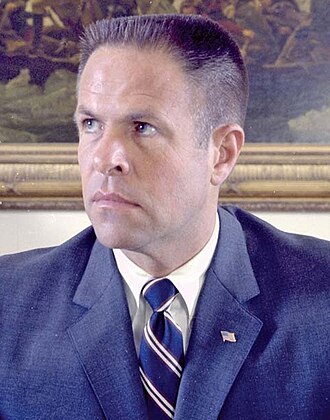
H. R. ("Bob") Haldeman served as President Richard Nixon's White House Chief of Staff from January 1969 until his resignation in April 1973. Acting as Nixon's primary gatekeeper and closest aide, Haldeman was a central figure during the White House taping period and is featured prominently in hundreds of recorded conversations. His tenure ended abruptly when he was forced to resign due to his deep involvement in the Watergate cover-up, most notably captured directing the obstruction of justice on the infamous "Smoking Gun" tape.
President Nixon and H. R. Haldeman consulted on logistical preparations for an upcoming press conference, specifically discussing stage setup, podium positioning, and the President's preference to avoid makeup. They also strategized on how to deflect a proposal from Gerald Ford regarding the reinstatement of a Republican coordinating committee, with Nixon expressing concern that such a body would interfere with White House policy-making. Finally, they reviewed efforts to manage public perception regarding Vietnam veterans and agreed to have Alexander Haig coordinate with Maj. Gen. James Hughes to ensure consistent, firm messaging regarding POW negotiations.
President Nixon and H. R. Haldeman met to discuss technical logistics regarding a camera setup and platform arrangements for an upcoming visual recording or presentation. The conversation focuses on the physical placement of equipment and the aesthetic concerns surrounding the President's positioning relative to the recording apparatus. No substantive policy or political decisions were reached, as the dialogue remained focused on these operational and visual configurations.
President Nixon and H. R. Haldeman discussed the logistics and optics of an upcoming press conference, specifically focusing on the President's physical positioning relative to the media. Nixon expressed concern about camera angles and the potential for a downward angle to diminish his appearance of authority. Ultimately, they decided to maintain the existing stage platform to preserve the presidential "mystique" and avoid a lower vantage point.
President Nixon and H. R. Haldeman engaged in a brief, one-minute meeting in the Old Executive Office Building. Given the lack of a transcript or detailed record, the specific substance of their discussion remains undocumented. This interaction serves as a placeholder in the White House archival record, indicating a direct consultation between the President and his Chief of Staff.
President Nixon and H. R. Haldeman met to coordinate administration messaging and logistics, specifically focusing on the Paris peace talks, public relations regarding refugee statements, and the President's upcoming appearance at Camp Pendleton. Nixon expressed frustration with the lack of organization among his staff and emphasized the need for strict adherence to official messaging, particularly regarding foreign policy rhetoric involving the USSR and China. The discussion concluded with tactical decisions on staffing assignments and instructions for Clark MacGregor to handle sensitive political outreach.
President Nixon and H.R. Haldeman met to coordinate the President's upcoming daily schedule and administrative availability. The brief discussion served to verify the President's immediate freedom to address pending matters. No major policy decisions were recorded during this brief logistical exchange.
President Nixon and H.R. Haldeman met to discuss a range of administrative and political concerns, including personnel vetting for appointments and the management of media relations. They touched upon strategic matters regarding Vietnam withdrawal rates and the handling of anti-war protests and civil unrest. Additionally, they analyzed the importance of economic psychology, focusing on how stock market performance influences consumer confidence and investment behavior.
President Nixon met with Alexander Haig and H.R. Haldeman to coordinate strategy for an upcoming press conference, focusing heavily on countering North Vietnamese propaganda regarding Prisoners of War (POWs) and ceasefire proposals. They discussed correcting public misinterpretations of Secretary of State William Rogers' recent statements on China, emphasizing the need to keep diplomatic rhetoric low-key to avoid unnecessary friction. Additionally, the President and his staff reviewed concerns over television production techniques and public image management, balancing the importance of authentic substance over staged performance.
President Nixon and H. R. Haldeman reviewed public and media reaction to the President's recent televised news conference. They discussed positive feedback regarding his performance on contentious domestic and foreign policy issues, including the Vietnam War, busing, and diplomatic overtures toward the People's Republic of China. The conversation concluded with a discussion on the frequency of future presidential press conferences, with Nixon expressing a desire to maintain a consistent, effective media presence.
President Nixon and H. R. Haldeman met to discuss the status of anti-war protests and arrests in Washington, D.C., alongside the performance of the stock market. The President also reviewed procedures for an upcoming meeting with Republican congressional leadership, expressing a desire to avoid lengthy, unproductive sessions in favor of efficient, agenda-driven discussions. Nixon drew on his past experience with the Eisenhower administration to structure these meetings, aiming to maintain rapport with leadership while minimizing wasted time.
President Nixon and H.R. Haldeman discuss the political fallout and public reception of the ongoing anti-war demonstrations in Washington, D.C. They express satisfaction with the perceived public backlash against the protesters' disruptive tactics and the firm handling of the situation by the local police. The President and Haldeman analyze the strategic benefit of highlighting the extremism of the demonstrators to bolster public support for the administration's policies.
President Nixon met with H.R. Haldeman and Charles Colson to discuss the administration's political strategy regarding recent anti-war protests and civil demonstrations in Washington, D.C. They focused on discrediting Democratic rivals—specifically Hubert Humphrey, Ted Kennedy, and Edmund Muskie—by highlighting their earlier endorsements of these movements, which the President characterized as hypocritical in light of the resulting violence and disorder. Additionally, the participants reviewed the effectiveness of local police leadership, discussed Rose Mary Woods’ recent trip to the Kentucky Derby, and touched upon logistical details for an upcoming meeting with Jeane Dixon and a gift donation from Walter Annenberg.
President Nixon met with his senior advisors, including Ronald Ziegler and H. R. Haldeman, to discuss managing public opinion regarding anti-war demonstrations, the potential release of North Vietnamese prisoners of war (POWs), and upcoming administration events. Nixon emphasized the need for a more aggressive public relations strategy, specifically suggesting the use of television coverage to highlight the voluntary return of 507 sick and wounded POWs across the demilitarized zone. The participants also explored strategies to frame the recent mass arrests of protesters as a necessary maintenance of law and order, while aiming to politically damage Democratic candidates who supported the demonstrations.
President Nixon convened an extensive afternoon meeting in the Oval Office with his key economic advisors, including George Shultz, John Connally, Arthur Burns, and Paul Volcker, to deliberate on pressing fiscal and monetary policy issues. The discussion focused on addressing the nation's ongoing economic instability, involving high-level strategy sessions with administration officials and cabinet members. These deliberations were critical in shaping the Nixon administration's approach to inflation and international monetary concerns, ultimately informing the direction of domestic economic policy.
President Nixon and H.R. Haldeman discuss the administration’s strategy for responding to ongoing civil unrest and related legal issues, specifically advising a steadfast, "hard line" approach. Nixon emphasizes his refusal to yield to domestic critics or "do-good" lawyers, maintaining that the administration must prioritize public order over political optics. The conversation serves to reinforce internal resolve and ensure that subordinates remain committed to this firm stance despite negative media coverage.
President Nixon and H.R. Haldeman reviewed the President's upcoming schedule, prioritizing discussions on trade strategy with Peter Peterson and managing the political fallout from ongoing anti-war demonstrations. Nixon expressed frustration with the bureaucratic process regarding sugar quotas and requested tighter control over the administration's interactions with the Business Council. Furthermore, they discussed the government's firm response to recent mass arrests of protesters and the potential to leverage public support for the police and administration.
President Nixon, H.R. Haldeman, and John Dean met to discuss political strategy regarding regional economic challenges, specifically the drought situation and unemployment in key states like California. They evaluated the effectiveness of recent administration outreach and media tactics, including utilizing the President’s press conferences to bypass critical coverage and shape public opinion. The participants also discussed coordinating with congressional leadership to build support among Southern Democrats for the administration’s legislative agenda.
President Nixon met with key advisors and congressional leadership to strategize on economic stimulation and political coalition-building. The discussion prioritized directing federal funds and public works projects—particularly in California—to combat unemployment and secure electoral support. Concurrently, Nixon and his aides explored strategies to form a coalition of Republicans and conservative Southern Democrats in Congress to advance key administration goals, including the revival of the Supersonic Transport (SST) program and countering anti-war legislative efforts.
President Nixon met with H.R. Haldeman, John Ehrlichman, and Ronald Ziegler to coordinate the administration's response to the anti-war "May Day" protests in Washington, D.C., and to strategize on key legislative priorities. The participants discussed public relations efforts regarding the recent mass arrests, specifically aiming to project a unified, firm stance of support for local law enforcement. Additionally, Nixon directed efforts to secure sufficient support in Congress for the Supersonic Transport (SST) funding bill, linking its success to future technological defense initiatives like the B-1 bomber program.
President Nixon and H.R. Haldeman discuss administrative adjustments to cancer research legislation to ensure direct presidential oversight, as well as strategies to address Deputy Secretary of Defense David Packard's threatened resignation over the Lockheed decision. Nixon emphasizes his intent to take a personal lead on the cancer initiative to bypass bureaucratic inefficiencies within HEW and the NIH. Regarding Packard, they confirm that John Connally is actively working to persuade him to remain in his post by emphasizing his past contributions and the potential for upcoming policy successes.
President Nixon and H.R. Haldeman reviewed the President's upcoming schedule, focusing on the "Salute to Agriculture" event and strategies for congressional outreach regarding the Supersonic Transport (SST) and war-related resolutions. The two discussed domestic political tactics, including the potential for polling public sentiment on war protests and managing the optics of POW/MIA casualty reports. Nixon also directed staff to take a more aggressive, "workmanlike" approach to administrative initiatives, such as the cancer program and breeder reactor funding, to ensure the White House receives proper political credit.
President Nixon met with H. R. Haldeman and Ronald Ziegler to discuss administrative strategies for managing public perception regarding Vietnam War protests, upcoming economic data, and the Peace Corps. A primary focus was developing a firm communications strategy to commend law enforcement and law-abiding citizens while condemning the tactics of anti-war demonstrators in Washington, D.C. The President also touched upon legislative lobbying for the Supersonic Transport (SST) program and coordinated with staff regarding the timing and delivery of critical documents related to international negotiations.
President Nixon met with H.R. Haldeman and Alexander Haig to discuss the critical need for a major policy announcement to strengthen his position against mounting congressional pressure regarding the Vietnam War. They evaluated the political impact of potential developments, including a Strategic Arms Limitation Talks (SALT) agreement and diplomatic initiatives involving China and the USSR. Ultimately, Nixon emphasized that he required a decisive, high-profile move to bolster his support in the Senate, deciding to prioritize a meeting with South Vietnamese President Nguyen Van Thieu as a key strategic action. The conversation concluded with a brief meeting involving Charles Rhyne and Richard Moore regarding the potential for a presidential initiative to promote international law.
President Nixon met with H. R. Haldeman to discuss political strategy, focusing on upcoming public opinion polls regarding Vietnam and the orchestration of publicity efforts to counter congressional efforts to force a withdrawal. They reviewed logistical plans for the President’s potential visit to the Gateway National Bank project and discussed the political benefits of attending the NATO Conference on Cities in Indianapolis. The conversation also touched upon the President’s travel schedule and the strategic value of appearing at major cultural events, such as the Indianapolis 500, to connect with middle-American audiences.
President Nixon and H. R. Haldeman coordinated upcoming administrative communications and scheduling priorities. They discussed the positive twenty-year trend in farm disposable income and the President’s desire to publicly acknowledge the D.C. police for their management of recent demonstrations. Additionally, the pair confirmed a meeting between the President and Attorney General John N. Mitchell.
President Nixon and H.R. Haldeman briefly discussed the ongoing crisis surrounding the Lockheed Corporation's financial stability. The conversation focused on the potential resignation of Deputy Secretary of Defense David Packard amidst the government's deliberations over a corporate bailout. No final policy resolution was reached during this brief exchange, which centered primarily on personnel implications regarding the Lockheed decision.
President Nixon and H.R. Haldeman review a wide-ranging agenda of administrative tasks, public relations strategies, and pending legislative goals. They discuss the potential for a presidential proclamation regarding a Prisoner of War event, the status of the Supersonic Transport (SST) funding, and managing the White House press and public opinion in the face of ongoing demonstrations. Additionally, Nixon expresses dissatisfaction with certain Cabinet members' performance and emphasizes the need for stronger, more loyal advocacy for his policies, specifically praising John Connally's aggressive support.
President Nixon and H. R. Haldeman met to discuss a wide-ranging agenda, including the restructuring of the cancer research program, current unemployment statistics, and upcoming presidential scheduling. They reviewed foreign policy, specifically focusing on the administration’s China initiative and strategic arms negotiations, while agreeing to ignore pressure from public anti-war demonstrations. Nixon emphasized the need for administrative control over federal bureaucracies and finalized plans for his upcoming travel and press conference strategy.
President Nixon and H. R. Haldeman met to discuss various personnel matters, upcoming scheduling, and economic policy strategies. The conversation focused on the administration's support for Lockheed despite internal cabinet dissent and general economic stabilization efforts. Additionally, they reviewed logistical plans for upcoming public relations events, including meetings with local officials and Business Council members.
President Nixon met with H.R. Haldeman and other staff members to discuss public relations strategies, specifically focusing on how to capitalize on recent public approval of the administration's firm handling of anti-war protests in Washington, D.C. They reviewed internal polling data showing strong support for the police and authorized the administration to project a tough 'law and order' stance. Furthermore, they coordinated plans to move forward with revenue sharing legislation and addressed the need for better communication strategies regarding foreign policy and upcoming agricultural events.
President Nixon dictates a memorandum to H. R. Haldeman regarding the administration's public image and the necessity of projecting stronger, more decisive leadership. Nixon expresses frustration with how the press portrays his administration, specifically regarding demonstrations and his handling of domestic policy, and instructs Haldeman to coordinate with staff like John Scali to counter narratives of indecisiveness. The President emphasizes the need for public figures like Spiro Agnew and John Mitchell to take a more aggressive stance to solidify support for the administration's position against disruptive demonstrators.
President Nixon and H. R. Haldeman met to discuss administration messaging, the President's upcoming schedule, and strategies for managing domestic protests. The two explored firm tactics for handling future demonstrations, including the potential for martial law and mandatory bonds for protest permits, while also criticizing current press briefing practices. Additionally, the President reviewed his legislative goals and the need to craft a more compelling narrative for his "New American Revolution" agenda to better compete with the legacy of Lyndon Johnson's "Great Society."
President Nixon met with H. R. Haldeman and John Ehrlichman to discuss domestic economic policy, the status of the Supersonic Transport (SST) program, and sensitive foreign policy issues. The President expressed frustration with Secretary of State William Rogers' handling of Middle East policy and explicitly directed that Henry Kissinger be sidelined from Israeli-related negotiations to prevent partisan complications. Nixon also finalized a decision to adopt a more confrontational approach toward the press, ending his participation in traditional social dinners with journalists.
President Nixon met with H.R. Haldeman and John Ehrlichman to discuss establishing a high-priority, federally funded national program for water desalinization. Expressing frustration with the existing bureaucracy within the Department of the Interior, Nixon directed his aides to reorganize the effort under the leadership of NASA to leverage its project management capabilities and improve public relations. The President proposed immediate action to construct large-scale prototype plants in California and Texas, aiming to address critical water shortages and align the initiative with his national growth policy.
President Nixon and H. R. Haldeman discussed a wide range of administrative and political concerns, including public relations strategies for the administration's domestic programs and the management of federal personnel relocations. A significant portion of the conversation focused on the political repercussions of moving federal staff from Ohio to Florida, with Nixon emphasizing the electoral importance of Ohio and the need for better oversight of bureaucratic decisions. Additionally, the two discussed potential budget reallocations for NASA, specifically shifting funds from moon missions to other space projects to maximize public support and political utility.
President Nixon met with his staff to discuss public relations strategies, specifically focusing on improving outreach to congressional wives and managing the public perception of the administration's accomplishments. The group reviewed the President's schedule and evaluated the effectiveness of recent social events, while also debating the political implications of shifting federal facilities and promoting key initiatives like cancer research and desalinization programs. Additionally, they touched upon legislative concerns, including the potential for a volunteer army and the reaction to Senator Mike Mansfield's resolution regarding the reduction of U.S. troops in Europe.
President Nixon held a series of wide-ranging meetings with senior administration officials to discuss legislative priorities, economic policy, and institutional management. Key topics included advancing revenue sharing and welfare reform through strategic cooperation with Representative Wilbur Mills, managing federal aid to higher education, and reorganizing desalinization research. Additionally, the President and his advisors examined anti-trust policy, the financial struggles of the railroad industry, and the positive implications of a revised upward tick in first-quarter Gross National Product (GNP) figures.
President Nixon coordinated with the White House operator and H.R. Haldeman to arrange a series of telephone calls to members of Congress. The discussion focused on placing outreach calls to Representatives Frank T. Bow, Edward P. Boland, and John J. McFall. The primary action item was the administrative facilitation of these specific congressional contacts.
President Nixon consulted with various staff and political allies, including H.R. Haldeman, Leslie Arends, and Frank Bow, to coordinate strategy regarding House legislative votes and foreign policy objectives. A primary focus was managing opposition to the Mansfield Amendment, which proposed significant reductions to NATO troop levels, and leveraging John Scali to organize effective public and legislative pushback. Additionally, Nixon reflected on his upcoming foreign policy address, contrasting his broader vision for the nation with the mechanical nature of domestic initiatives like revenue sharing.
President Nixon met with John B. Connally and other advisors to discuss legislative strategy, particularly regarding the House of Representatives' progress on H.R. 1 and efforts to influence the Senate. Connally was identified as a key political strategist, with the President praising his ability to lobby lawmakers on issues such as Lockheed funding and to secure support from diverse coalitions. The conversation also touched upon the necessity of shaping public image and the strategic use of media appearances to strengthen the administration's political standing.
President Nixon met with Henry Kissinger and H.R. Haldeman to coordinate strategy regarding the Mansfield Amendment, which sought to withdraw U.S. troops from Europe. The President emphasized his firm opposition to the amendment, arguing that such decisions must be handled through executive negotiation rather than legislative mandate. The discussion also covered the delicate geopolitical maneuvering regarding a 'two-China' policy at the United Nations, domestic welfare reform messaging, and the management of economic news to combat negative public sentiment.
President Nixon met with key staff and Mayor Richard J. Daley to coordinate administrative policy, discuss political strategies for the 1972 election, and address urban issues. The conversation covered the management of welfare reform, the privatization of legal services, and the handling of social issues like narcotics and homosexuality. Nixon specifically emphasized establishing a direct, cooperative relationship with Mayor Daley to navigate urban housing challenges, reinforce law enforcement support, and promote federal initiatives at the local level.
President Nixon and H.R. Haldeman reviewed various administrative matters, including the President's upcoming schedule, Mrs. Nixon's travel engagements, and the potential security risks associated with a presidential visit to Bohemian Grove. They discussed political strategy, specifically regarding the Supersonic Transport (SST) project, the influence of communist organizers in anti-NATO protests, and the political efficacy of public demonstrations. The conversation concluded with an evaluation of Vice President Spiro Agnew’s role in public outreach and a critique of contemporary media depictions of the American working class, such as the television show 'All in the Family.'
President Nixon met with H.R. Haldeman, John Ehrlichman, John Connally, and others to discuss strategies for securing Senate support for the supersonic transport (SST) project and to coordinate political appointments. The group analyzed the legislative landscape, focusing on shifting the framing of the SST from a purely environmental issue to a matter of jobs and economic impact. Furthermore, Nixon emphasized the need for a loyal, aggressive leader within the IRS to ensure the administration could effectively utilize the agency to monitor political enemies and friends alike.
President Nixon consulted with H.R. Haldeman to arrange a telephone call with William M. Magruder regarding his current activities. Upon learning that Magruder was located in the Virgin Islands and already engaged in a separate discussion with Tod R. Hullin, Nixon decided to cancel the request. He ultimately opted to receive a briefing on the situation through his secretary instead of interrupting the ongoing call.
President Nixon and H. R. Haldeman met to coordinate upcoming travel, press strategies, and the scheduling of First Lady Pat Nixon. The discussion centered on managing the President's public image and political capital regarding issues like the Supersonic Transport (SST) program and NATO, while ensuring administration goals remained insulated from unfavorable press coverage. They also reviewed various appointments and personnel matters, including strategies for Texas political races and the handling of sensitive meetings involving external groups.
President Nixon directs H. R. Haldeman to meet with Senator John Tower to discuss developments regarding John B. Connally and Texas politics. Nixon emphasizes that a significant deal involving Connally is reaching a critical stage and is being handled at the highest level. The President instructs Haldeman to ensure Tower is briefed on this matter and to discourage any potential political skepticism or complaints from the Senator.
President Nixon dictates a memorandum to H. R. Haldeman outlining political messaging strategies intended to appeal to the "far right" while neutralizing critics on the left. The President emphasizes the importance of projecting a bold, courageous image regarding his foreign policy—specifically Vietnam—and his economic agenda, including the Family Assistance Plan and budget priorities. This guidance serves as an directive for the White House staff to adopt a more assertive posture in public communications and future press conferences.
President Nixon met with H.R. Haldeman to finalize his upcoming public schedule, focusing on managing media engagements and minimizing redundant appearances with business leaders. The conversation addressed the logistical handling of upcoming events, including a trip to the Lyndon B. Johnson Library opening and the scheduling of Saudi King Faisal, while also coordinating the administration's stance on the Supersonic Transport (SST) funding and a ongoing railroad strike. Additionally, they reviewed internal personnel issues, specifically regarding the promotion of a member of the First Family's extended relatives and the necessity of maintaining presidential control over executive scheduling.
President Nixon met with John Ehrlichman and George Shultz to discuss the political collapse of the Supersonic Transport (SST) program and strategy regarding a pending railroad strike. The participants reviewed the administration's economic agenda, including the need for a long-term fiscal strategy and a potential tax revision to address property taxes and broaden the political constituency. Additionally, they coordinated preparations for an off-the-record briefing with business magazine editors and discussed international economic concerns and civil unrest.
President Nixon met with H.R. Haldeman to discuss a wide range of administrative and political concerns, including public messaging on drug policy and the vetting of potential presidential appointees. The two reviewed preparations for the 1972 campaign, with a focus on convention scheduling and state-level political strategy in Pennsylvania, Ohio, and Illinois. Additionally, they deliberated on personnel assignments, specifically evaluating Donald Rumsfeld for a leadership role in the Office of Emergency Preparedness and addressing the ongoing challenges regarding John Volpe’s performance in the Cabinet.
President Nixon and Henry Kissinger met in the Oval Office to coordinate strategy regarding ongoing SALT negotiations and domestic opposition in the Senate. They discussed frustration over Soviet delays in finalizing terms and explored the potential for a major breakthrough in foreign policy, including upcoming summits and arms control agreements. Additionally, the President reviewed his interactions with Congressional leadership and expressed disdain for the lack of support from moderate Republicans and Senate colleagues regarding his Vietnam and foreign policy agenda.
President Nixon, H.R. Haldeman, and Charles Colson met to discuss political strategy for the 1972 election, focusing on how to undermine potential Democratic rivals like Edward Kennedy and Edmund Muskie. They also assessed the legislative status of the Supersonic Transport (SST) and expressed frustration regarding the current leadership in the U.S. Senate. Henry Kissinger joined the latter portion of the meeting to finalize the timing and announcement strategy for the upcoming Strategic Arms Limitation Talks (SALT) negotiations with the USSR.
President Nixon and H.R. Haldeman met to coordinate scheduling and strategy regarding upcoming meetings with Henry Kissinger, John Scali, and Ronald Ziegler. The brief discussion emphasized the political importance of the events slated for the following weekend. The participants aimed to ensure alignment among key advisors to effectively manage the administration's messaging.
H. R. Haldeman and an unidentified interlocutor briefly discussed logistics regarding a meeting with Secretary of State William P. Rogers scheduled for the following day. The exchange focused on coordinating the arrival of Rogers, potentially involving his pets or associates, to ensure the meeting proceeded as planned. No major policy decisions were reached during this short logistical check-in.
President Nixon met with his staff and advisors to coordinate the strategic announcement of the Strategic Arms Limitation Talks (SALT) agreement with the Soviet Union. The group focused heavily on controlling the release of information to the press and Congressional leaders to prevent premature leaks and to ensure that the administration controlled the narrative regarding the agreement's historical significance. They devised a plan to conduct high-level briefings for wire services and network correspondents to shape media coverage, while also briefly discussing the termination of the Supersonic Transport (SST) project.
President Nixon met with H.R. Haldeman, Henry Kissinger, George Shultz, and others to discuss recent legislative developments, specifically the House progress on a manpower revenue-sharing bill and the resolution of an impending rail strike. The group reviewed the President's recent meeting with business leaders, focusing on his stance on free trade and domestic economic priorities. Additionally, Nixon emphasized his refusal to be pressured into reactive international monetary policy changes and authorized the initiation of a new intelligence program.
President Nixon and Secretary of State William Rogers discussed strategies for advancing peace negotiations in the Middle East and the status of Strategic Arms Limitation Talks (SALT) with the Soviet Union. Rogers provided an update on his recent diplomatic tour, noting promising overtures from Egyptian President Anwar el-Sadat regarding a potential interim settlement and the future removal of Soviet personnel. The President emphasized a firm stance toward Israel, arguing that the U.S. must leverage its military and economic support to pressure Israel into serious negotiations, while also planning to coordinate closely with Congressional leaders on the upcoming SALT announcement regarding anti-ballistic missile (ABM) systems.
President Nixon and H. R. Haldeman discussed coordinating the logistics of King Faisal’s upcoming state visit to avoid scheduling conflicts with a scheduled press conference. Nixon directed Haldeman to shift the King’s visit from an 11:00 am meeting to a formal dinner. Haldeman agreed to review the schedule and identify a suitable night, such as Wednesday or Saturday, to accommodate the change.
President Nixon, H. R. Haldeman, and Henry Kissinger met to coordinate the upcoming public announcement of a breakthrough in the Strategic Arms Limitation Talks (SALT). A primary concern for the participants was managing the ego and professional expectations of Secretary of State William P. Rogers, who was reportedly frustrated by his exclusion from these sensitive negotiations. The group decided to present the achievement as a collective effort involving the State and Defense Departments, while privately acknowledging that such high-level diplomatic channels are uniquely the President's responsibility. They also finalized the schedule for briefing congressional leaders and Cabinet members to ensure the announcement was handled with appropriate gravitas and controlled messaging.
President Nixon held separate discussions with Rose Mary Woods and Henry Kissinger regarding social, political, and strategic matters. Woods reported on her recent travel and media appearances, while Kissinger briefed the President on delicate negotiations involving Strategic Arms Limitation Talks (SALT), Soviet relations, and potential leaks regarding Vietnam defense policies. The President provided guidance on managing various political associates and addressed concerns regarding Secretary of Defense Melvin Laird’s communication tactics.
President Nixon and H. R. Haldeman briefly conferred regarding the President's upcoming schedule and the coordination of meetings. Nixon specifically instructed Haldeman not to join him and Henry Kissinger at that moment, opting instead to initiate a follow-up call with Haldeman later. The exchange served primarily as a logistical check-in to manage the President's immediate agenda.
President Nixon, H. R. Haldeman, and Henry Kissinger discussed how to manage Secretary of State William Rogers' frustration regarding his exclusion from sensitive SALT negotiations. The participants aimed to develop a unified 'party line' for Rogers to use with Congress and the press, framing the breakthrough as a successful presidential initiative while shielding the specifics of the diplomatic channels used. They agreed that Rogers must be reassured of his standing and protected from appearing uninformed, even as they emphasized that maintaining secrecy was essential to the negotiation's success.
President Nixon, H. R. Haldeman, and Henry Kissinger met to coordinate the announcement of a breakthrough in the Strategic Arms Limitation Talks (SALT), emphasizing that the agreement was a presidential initiative. They strategized on how to manage key Cabinet members, particularly William Rogers and Melvin Laird, to ensure they felt included and supportive without revealing the sensitive details of the negotiation process. Additionally, the President discussed his plans to brief legislative leaders and handle potential leaks, while Kissinger briefed the group on secret diplomatic efforts involving China and North Vietnam.
President Nixon met with Henry Kissinger to finalize the announcement of a breakthrough in the Strategic Arms Limitation Talks (SALT), emphasizing the need for a brief and controlled public presentation. Following this, the President convened a broader group of officials to address domestic policy, specifically focusing on expanding agricultural drought relief for Texas and Oklahoma and managing national economic policy, including interest rates and housing market stability. The meeting concluded with a review of upcoming congressional votes, where administration staff expressed confidence in defeating the Mathias Amendment.
In this Oval Office meeting, President Nixon met with H.R. Haldeman, Henry Kissinger, and other key staff to coordinate the rollout of a major breakthrough in the Strategic Arms Limitation Talks (SALT) with the Soviet Union. The President emphasized the need to maintain secrecy regarding the specific channels used to achieve this diplomatic progress while ensuring that the public message highlighted his personal initiative and the transition to simultaneous negotiations on offensive and defensive weapons. Additionally, Donald Rumsfeld and Robert Finch reported on their recent foreign tour, discussing European perceptions of U.S. foreign policy, the status of U.S. ambassadors, and the challenge of managing drug usage among military personnel abroad.
President Nixon initiated a brief telephone call to Secretary of State William P. Rogers with H. R. Haldeman present. The conversation functioned primarily as a coordination effort to facilitate a direct communication between the President and the Secretary. No substantive policy discussions were recorded during this brief connection attempt.
President Nixon and H. R. Haldeman discuss legislative strategy regarding upcoming Senate votes on the Mathias and Mansfield amendments. The conversation centers on timing the floor votes to minimize opposition success, specifically noting that the Mansfield amendment is expected to be defeated. Nixon consults with Secretary of State William P. Rogers to coordinate communication with Senator Mike Mansfield, aiming to manage the debate schedule and ensure favorable outcomes for the administration.
President Nixon and H. R. Haldeman discuss the surprisingly lopsided 73-20 defeat of the Mathias resolution and the potential for subsequent parliamentary maneuvering. Fearing a legislative trap involving alternative amendments or a coordinated effort by opponents, they decide to delay a planned thank-you call from the President to Senator John Sherman Cooper. Haldeman is instructed to contact Secretary of State William P. Rogers to share the news while maintaining vigilance over ongoing Senate debates regarding the Mansfield Amendment.
President Nixon met with his Cabinet and key advisors to announce a major breakthrough in Strategic Arms Limitation Talks (SALT) with the Soviet Union, culminating in a joint statement to be released simultaneously in both nations. The agreement establishes a framework to prioritize limiting anti-ballistic missile (ABM) systems while pursuing parallel measures for offensive weapons. Nixon emphasized that the breakthrough was achieved by maintaining a strong U.S. defense posture, and he urged his administration to avoid public speculation or detailed commentary that could complicate sensitive ongoing negotiations.
President Nixon and his advisors met to finalize the announcement of the Strategic Arms Limitation Talks (SALT) agreement and coordinate the administration's strategy for managing congressional and public reactions. The discussion focused on emphasizing the historic nature of the deal—despite its initial status as a framework—and included logistical planning for a televised address and related press briefings. Additionally, the President addressed minor White House operational concerns, such as plumbing issues in his residence, while maintaining focus on the political leverage gained through recent ABM (Antiballistic Missile) defense initiatives.
President Nixon and his senior aides, including H. R. Haldeman and Henry Kissinger, reviewed the successful public reception of the President's televised announcement regarding the Strategic Arms Limitation Talks (SALT) agreement. They analyzed press coverage, specifically the favorable reactions from media figures like Dan Rather, and discussed the strategic value of the brief, dramatic presentation to the public. Additionally, the group addressed the tepid responses from certain congressional leaders and planned a follow-up briefing for the NSC and negotiating team to reinforce the narrative of a mutual, high-level diplomatic breakthrough.
President Nixon met with his senior advisors to coordinate the administration's messaging strategy following the announcement of the Strategic Arms Limitation Talks (SALT) agreement. The participants discussed managing the press, addressing potential discrepancies between U.S. and Soviet translations of the agreement, and ensuring the President received proper credit for the diplomatic breakthrough. Kissinger provided updates on his communication with Soviet Ambassador Anatoliy Dobrynin, while the group planned briefings to counter potential negative interpretations from the media and ensure a unified administration position.
President Nixon met with key advisors including John Ehrlichman, George Shultz, and Henry Kissinger to navigate a broad agenda covering economic policy, domestic legislative priorities, and the recent Strategic Arms Limitation Talks (SALT) agreement. The participants discussed strategies for managing inflation and fiscal policy, coordinating economic messaging through the Quadriad, and securing congressional support for revenue-sharing initiatives. Furthermore, the President focused on maintaining political discipline regarding his SALT negotiations, successfully leveraging support from key figures like McGeorge Bundy to bolster the agreement's reception among Senate leadership.
President Nixon and H. R. Haldeman consulted via telephone regarding personnel or policy matters involving George Shultz. The brief exchange focused on coordinating a specific administrative or cabinet-level action. No definitive final decision was recorded, as the conversation served as a preliminary coordination effort.
President Nixon met with H.R. Haldeman, Henry Kissinger, and other advisors to review his upcoming schedule, including appearances at the INTELSAT conference and a National Medal of Science ceremony. The discussion covered the President’s recent surprise visit to a Tulane alumni dinner, various domestic policy issues such as school desegregation and environmental regulations, and potential personnel moves within the administration. Additionally, the President and his staff strategized on handling media coverage of the SALT agreement and discussed the importance of presenting a confident, coordinated economic policy in anticipation of upcoming meetings in Europe.
President Nixon met with H. R. Haldeman, George Shultz, John Ehrlichman, and Henry Kissinger to discuss several pressing domestic and foreign policy issues. The team reviewed Peter Peterson's potential new roles in intelligence and government reorganization, addressed political concerns regarding environmental regulations, and formulated plans to require an "economic impact statement" for future agency decisions. Additionally, the President and Kissinger finalized plans for a diplomatic meeting with South Vietnamese President Nguyen Van Thieu, deciding to prioritize the regional impact over potential negative reactions from American liberals.
President Nixon, H.R. Haldeman, and Alexander Butterfield met to coordinate upcoming presidential remarks and review scheduling logistics. The discussion included planning for an honorary dinner for Nicaraguan President Anastasio Somoza Debayle and television arrangements for the upcoming Lyndon B. Johnson library dedication ceremony. Nixon also expressed his personal preference to avoid future use of a presidential library, favoring his office in San Clemente instead.
President Nixon and H. R. Haldeman discussed scheduling logistics for upcoming domestic and foreign policy events, including a meeting with South Vietnamese President Nguyen Van Thieu and various budget-related briefings. They reviewed the success of the President’s recent trip to Alabama, noting favorable crowd reactions and the effectiveness of his engagement with regional media and local editors. Additionally, the two discussed the strategic timing for a future press conference to maximize television audience reach during the Memorial Day weekend, while acknowledging the positive public relations value of recent family photos featuring Julie and David Eisenhower.
President Nixon, H.R. Haldeman, and Henry Kissinger discussed the recent killings of police officers in New York and Washington D.C., with Nixon expressing strong support for law enforcement and frustration over perceived inaction. They also covered upcoming presidential travel, including potential trips for Vice President Agnew and Kissinger's own international engagements, as well as the ongoing Vietnam War and the complex diplomatic situation regarding the People's Republic of China. A decision was made to schedule a press conference for Tuesday, May 25th, and Nixon emphasized the need for a strong statement on marijuana policy.
President Nixon and Secretary of State William P. Rogers discussed internal security concerns regarding police violence and coordinated a private strategy meeting regarding sensitive diplomatic outreach to the People's Republic of China. Nixon directed Rogers and Henry Kissinger to prepare comprehensive political and diplomatic arguments for this China policy shift while maintaining a firm presidential posture. The participants agreed to meet privately following a scheduled luncheon with King Faisal to finalize their approach before Rogers’ upcoming trip to Europe.
President Nixon met with H.R. Haldeman and other staff members to review administrative operations and discuss public relations strategies. They evaluated the success of a recent trip to Alabama, debated the appropriate use of motorcades and podiums to maintain presidential dignity, and addressed upcoming personnel appointments, including a potential position for Albert Watson. Additionally, Nixon emphasized his preference for controlling his media appearances and artistic portraiture, insisting that staff streamline his briefing materials and limit his direct physical engagement with crowds.
President Nixon and H. R. Haldeman discuss various administrative priorities, focusing on the successful defeat of the Harold Hughes pay amendment and positive economic indicators. They review legislative progress, including federal efforts regarding New York City police, and coordinate upcoming meetings on drug policy involving John Ehrlichman and J. Edgar Hoover. Additionally, they finalize the decision to postpone the President's press conference to a Tuesday to maximize Nielsen ratings.
President Nixon and H.R. Haldeman discuss administrative updates, including a scheduled meeting with Congressman Glenn Earthman regarding drug policy and the progress of internal efforts involving J. Edgar Hoover and John Mitchell. They also evaluate the political impact of recent foreign policy stances on NATO and the Soviet Union, with Haldeman noting potential influence on congressional support. The conversation concludes with a brief assessment of current market trends and upcoming scheduling logistics.
President Nixon met with H. R. Haldeman, Henry Kissinger, and others to discuss administrative matters, including the President's recent Southern trip, press strategy, and upcoming state visits. The group reviewed the success of the President's recent tour, debated the merits of using certificates of appreciation to bolster local support, and strategized on how to better leverage public relations for administration priorities like the drug crisis. Furthermore, the President and Kissinger discussed the ongoing Strategic Arms Limitation Talks (SALT), with Nixon emphasizing the need to adopt a hardline stance toward the Soviet Union to ensure progress before any potential summit.
President Nixon met with H.R. Haldeman and later Henry Kissinger to navigate sensitive political scheduling and high-stakes foreign policy dilemmas. The group discussed managing state visits, including the logistical and political optics of hosting King Faisal and Anastasio Somoza, while also deliberating on the timing of a presidential press conference and potential meetings with congressional leadership. A significant portion of the session focused on the 'Two Chinas' issue, where the President weighed the risk of losing Taiwan's United Nations seat against the diplomatic consequences of shifting U.S. policy toward the People's Republic of China. Ultimately, Nixon directed his team to stall for time, opting for noncommittal consultations with allies while prioritizing the preservation of existing diplomatic postures.
President Nixon, H. R. Haldeman, and Alexander Butterfield met to coordinate the President's upcoming schedule, specifically balancing congressional social engagements with official duties. They discussed the logistics of a congressional mixer and the necessity of rescheduling certain events to accommodate a visit from Nicaraguan President Anastasio Somoza Debayle. The group decided to shift the congressional event to the following week to ensure proper planning and to account for the President’s travel to California.
President Nixon met with his senior staff and cabinet members to finalize a new, centralized strategy for combating the heroin epidemic among Vietnam veterans and the general public, including the establishment of a Special Action Office. The President directed that this new office would oversee federal drug rehabilitation, prevention, and enforcement efforts across all departments, emphasizing the urgent need for a cohesive, high-level response to prevent former servicemen from turning to crime. During the discussions, Nixon also pressed for stricter loyalty within the administration, authorized an investigation into intelligence leaks, and evaluated personnel appointments within the CIA and military leadership.
President Nixon and H.R. Haldeman discuss logistical and scheduling arrangements for upcoming White House events, including a dinner for Anastasio Somoza Debayle and preparations for Tricia Nixon’s wedding. They decide to expand the Somoza dinner to include wives to simplify social obligations and reach a consensus on clearing the White House schedule of non-essential events leading up to the wedding to reduce staff strain. Additionally, they coordinate the President’s participation in upcoming Kennedy Center opening events, specifically opting for the symphony concert led by Antal Dorati while choosing to avoid the Leonard Bernstein performance associated with the Kennedy family.
President Nixon and H. R. Haldeman met in the Oval Office to facilitate the presidential dictation of an official memorandum. The discussion focused on the drafting of this specific document to record executive instructions or observations. No further policy deliberations or significant administrative actions were recorded during this brief encounter.
President Nixon met with H.R. Haldeman, Henry Kissinger, and other staff members to strategize on administration messaging, foreign policy initiatives, and political tactics. The conversation centered on managing the upcoming press conference, refining the administration's stance on drug policy by shifting focus toward youth rather than just veterans, and monitoring polling data regarding China and the United Nations. Nixon and his advisors also reviewed plans for an upcoming speech at West Point and discussed sensitive diplomatic maneuvering regarding potential summits and China-related negotiations.
President Nixon and H.R. Haldeman met to coordinate the President’s upcoming travel schedule, which included stops in Indianapolis, California, Midway Island, and Maine. They discussed speech drafting, particularly for an upcoming address to the American Medical Association, and debated the logistics of using helicopters versus airplanes for these trips. Additionally, the pair reviewed recent polling data from Louis Harris and George Gallup regarding public opinion on the People's Republic of China’s admission to the United Nations, noting a shift in Republican sentiment in response to administration policy.
President Nixon met with Henry Kissinger, John N. Mitchell, and other staff to refine a forthcoming speech at West Point and discuss a wide range of domestic and international political strategy. Key topics included the U.S. response to Soviet naval activity in Cuba, the ongoing effort to manage the Vietnam War in the public consciousness, and organizational strategies for the 1972 primaries, specifically concerning Ohio, California, and Texas. Nixon and Mitchell also reviewed potential personnel appointments and cabinet-level changes, including the roles of Leonard Firestone and Louie Nunn, while finalizing the administration's political positioning regarding Democratic challengers.
President Nixon initiated a brief telephone call to his personal secretary, Rose Mary Woods, with Chief of Staff H. R. Haldeman present. The primary purpose of the communication was to establish contact with Woods, though the recording concludes before substantive business is conducted. This interaction serves as a brief administrative coordination involving the President’s inner circle.
President Nixon instructed Rose Mary Woods to inform his speechwriting staff, including John K. Andrews, Jr. and Raymond K. Price, Jr., that the final draft of his speech was approved and they could conclude their work for the evening. He also directed Woods to coordinate with Press Secretary Ronald Ziegler regarding the distribution of the text to the press, granting authorization for an advance release to news magazines if desired. Finally, the President requested that Woods prepare a clean reading copy of the document for his personal use.
President Nixon met with H.R. Haldeman and Henry Kissinger to strategize on high-stakes foreign policy issues, including Vietnam peace negotiations, the Berlin Agreement, and the impending US-Soviet summit. The President emphasized his desire to present a firm, blunt ultimatum to the North Vietnamese to force a final resolution, while also discussing the political necessity of ensuring the U.S. is disengaged from ground combat before the 1972 election. The conversation also touched upon domestic political concerns, including the management of the press, the potential impact of Democratic candidates' foreign policy positions, and Nixon's efforts to cultivate support through key allies like Nelson Rockefeller.
President Nixon and H.R. Haldeman met to discuss strategic communications, including talking points for Henry Kissinger’s upcoming trip to Paris and managing the administration’s relationship with the press regarding columnist Chalmers Roberts. The conversation also touched upon logistical arrangements for Special Assistants to the President attending an event at West Point. The President emphasized the importance of maintaining a firm public stance and controlling the narrative against critical media coverage.
President Nixon and H. R. Haldeman reviewed the President's domestic approval ratings, discussing regional disparities and the impact of public communication strategies. They assessed the effectiveness of press conferences versus televised interviews in shaping the President’s image, noting that Nixon should emphasize themes of leadership, dignity, and decisive action to address concerns about inflation, the economy, and crime. Finally, the two planned the President's upcoming travel schedule for June 1971, including trips to Maine, Rochester, and Portsmouth, while strategically scheduling a press conference to coincide with the announcement of a forthcoming trip.
President Nixon and H. R. Haldeman met to discuss political strategy and public opinion regarding the administration's performance. The conversation touched upon the perceived conservative leanings of specific groups and concerns regarding the influence of the press and public polling, such as Gallup. The President emphasized the need to mobilize support for upcoming initiatives while evaluating the efficacy of previous media engagements and press conferences.
President Nixon and H.R. Haldeman discuss a strategic plan to dominate media coverage throughout the summer of 1971 by scheduling regular radio and television statements on weekends. Nixon directs Haldeman to develop a program that utilizes Saturday and Sunday for public appearances and statements to avoid competing with weekday news cycles. They also address the logistical coordination of drafting materials with Patrick Buchanan and Raymond Price for upcoming events, including a presidential trip to Tulsa.