Scali, John A.
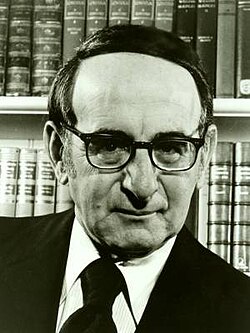
John A. Scali was a former ABC News correspondent who joined the Nixon administration in April 1971 as a Special Consultant to the President for foreign affairs information policy. Throughout the majority of the White House taping period, he advised President Nixon on communications strategies for major diplomatic initiatives, including the historic summits in China and the Soviet Union. In February 1973, Scali transitioned to become the United States Ambassador to the United Nations, a role he held through the end of the taping system and the remainder of Nixon's presidency.
President Nixon, H.R. Haldeman, Henry Kissinger, and John Scali met to integrate Scali into the White House team, specifically to manage press relations and provide strategic counsel on foreign policy. The President emphasized a cautious, long-term approach to publicizing his China initiative, prioritizing secret diplomatic channels over immediate publicity to avoid alarming the Soviet Union. They also discussed future personnel changes within the State Department and Defense Department, the strategy for a potential summit with the Soviets, and the ongoing handling of the Vietnam War.
President Nixon met with Graham B. Steenhoven, leader of the U.S. table tennis team, along with Henry Kissinger, Ronald Ziegler, and John Scali to discuss the team's recent historic trip to the People's Republic of China (PRC). Steenhoven provided detailed accounts of his interactions with Chinese officials, including Chou En-lai, and the team's experiences navigating the culture and political atmosphere of China. The group discussed the logistical and diplomatic considerations for a reciprocal visit by a Chinese table tennis team to the United States, emphasizing the need for a well-planned, dignified exchange to avoid a media circus or political embarrassment.
President Nixon consulted with John A. Scali regarding the sensitive management of an upcoming visit by a Chinese athletic team to the United States. Emphasizing the need for subtlety, the President instructed Scali to coordinate with Henry Kissinger and William T. Gossett to ensure the visit was controlled, low-key, and aligned with diplomatic protocol. Nixon stressed the importance of timely execution to maximize the impact of the initiative while maintaining a balance between visible government oversight and avoiding excessive press scrutiny.
President Nixon and John A. Scali discussed the sensitive logistical and protocol-related preparations for an upcoming visit by an athletic team, likely related to the diplomatic opening with the People's Republic of China. Nixon emphasized the need for discretion to avoid excessive press scrutiny and political backlash, mandating that the visit be handled strictly and exclusively through the White House rather than standard government channels. The President directed Scali to coordinate with Henry Kissinger and William Gossett to ensure the visit proceeded promptly and effectively while maintaining diplomatic decorum.
President Nixon met with his staff and advisors to coordinate the strategic announcement of the Strategic Arms Limitation Talks (SALT) agreement with the Soviet Union. The group focused heavily on controlling the release of information to the press and Congressional leaders to prevent premature leaks and to ensure that the administration controlled the narrative regarding the agreement's historical significance. They devised a plan to conduct high-level briefings for wire services and network correspondents to shape media coverage, while also briefly discussing the termination of the Supersonic Transport (SST) project.
In this Oval Office meeting, President Nixon met with H.R. Haldeman, Henry Kissinger, and other key staff to coordinate the rollout of a major breakthrough in the Strategic Arms Limitation Talks (SALT) with the Soviet Union. The President emphasized the need to maintain secrecy regarding the specific channels used to achieve this diplomatic progress while ensuring that the public message highlighted his personal initiative and the transition to simultaneous negotiations on offensive and defensive weapons. Additionally, Donald Rumsfeld and Robert Finch reported on their recent foreign tour, discussing European perceptions of U.S. foreign policy, the status of U.S. ambassadors, and the challenge of managing drug usage among military personnel abroad.
President Nixon met with his Cabinet and key advisors to announce a major breakthrough in Strategic Arms Limitation Talks (SALT) with the Soviet Union, culminating in a joint statement to be released simultaneously in both nations. The agreement establishes a framework to prioritize limiting anti-ballistic missile (ABM) systems while pursuing parallel measures for offensive weapons. Nixon emphasized that the breakthrough was achieved by maintaining a strong U.S. defense posture, and he urged his administration to avoid public speculation or detailed commentary that could complicate sensitive ongoing negotiations.
President Nixon met with Vice President Agnew and a bipartisan group of Congressional leaders to announce a significant diplomatic breakthrough in the Strategic Arms Limitation Talks (SALT). Nixon informed the attendees of a forthcoming joint statement with the Soviet Union pledging to focus on limiting anti-ballistic missile (ABM) systems and certain offensive strategic weapons. While some lawmakers advocated for immediate unilateral U.S. defense cuts to demonstrate good faith, the President and his advisors successfully urged the leaders to maintain existing defense programs during the negotiations to avoid losing vital bargaining leverage.
President Nixon and his senior aides, including H. R. Haldeman and Henry Kissinger, reviewed the successful public reception of the President's televised announcement regarding the Strategic Arms Limitation Talks (SALT) agreement. They analyzed press coverage, specifically the favorable reactions from media figures like Dan Rather, and discussed the strategic value of the brief, dramatic presentation to the public. Additionally, the group addressed the tepid responses from certain congressional leaders and planned a follow-up briefing for the NSC and negotiating team to reinforce the narrative of a mutual, high-level diplomatic breakthrough.
President Nixon consulted with John A. Scali regarding media relations and the effective communication of administration messaging. The discussion touched upon the public and press reception of the President's upcoming schedule, including coverage by NBC's John Chancellor concerning relations with the PRC and the USSR. They also coordinated details regarding a social event for Strategic Arms Limitation Talks (SALT) negotiators involving key cabinet members and the Nixon family.
President Nixon met with his senior advisors to coordinate the administration's messaging strategy following the announcement of the Strategic Arms Limitation Talks (SALT) agreement. The participants discussed managing the press, addressing potential discrepancies between U.S. and Soviet translations of the agreement, and ensuring the President received proper credit for the diplomatic breakthrough. Kissinger provided updates on his communication with Soviet Ambassador Anatoliy Dobrynin, while the group planned briefings to counter potential negative interpretations from the media and ensure a unified administration position.
President Nixon met with bipartisan Congressional leaders and senior administration officials to discuss the sensitive diplomatic initiative concerning the normalization of relations between the United States and the People’s Republic of China. The President and Henry Kissinger briefed the group on the nature of these confidential negotiations, emphasizing the necessity of absolute discretion to ensure the process remained successful. Nixon and his team requested that participants avoid speculation and maintain a unified, non-partisan front when speaking publicly about the delicate geopolitical implications of this shift in U.S. foreign policy.
President Nixon, Vice President Agnew, and Secretary of State Rogers met to debrief on Agnew's recent diplomatic tour of Africa and the Middle East, while also discussing the administration's ongoing initiative to open relations with the People's Republic of China. The participants expressed frustration with press coverage—specifically in Newsweek—regarding the Vice President's trip and the China policy, and they strategized on how to manage the ensuing public and congressional reactions. Additionally, the President and his staff discussed personnel changes, including the potential replacement of Ambassador Joseph Farland in Pakistan, and reviewed the broader geopolitical implications of the unfolding China initiative.
President Richard Nixon engaged in a brief telephone conversation with John A. Scali, a journalist and future diplomat. Given the lack of a transcript and the withdrawn status of the primary segment, the specific subject matter remains restricted. No substantive policy decisions or actionable outcomes are reflected in the available documentation.
President Nixon met with a bipartisan group of Congressional leaders and key administration officials to discuss his upcoming summit in Moscow and broader U.S. strategy regarding the Soviet Union and China. The President emphasized that his administration sought to maintain a delicate balance between the two powers without appearing to collude with one against the other. The discussion underscored the importance of bipartisan support for national defense funding and the need for diplomatic engagement to prevent escalation in volatile regions like the Middle East.
In this meeting, President Nixon and his senior advisors, including H. R. Haldeman and John B. Connally, finalized their strategy regarding the recently negotiated international monetary agreement, often referred to as the "Azores Doctrine." The participants focused on managing public perception of the deal, emphasizing that it represented a successful and fair realignment of currencies rather than a unilateral devaluation of the dollar. Furthermore, they discussed the necessity of coordinating a unified message to the press through the Treasury Department and prepared for a briefing with Congressional leadership to solidify legislative support for their economic initiatives. The conversation also touched upon sensitive foreign policy matters, specifically the India-Pakistan conflict and the need to maintain delicate diplomatic relations with the Soviet Union and France.
President Nixon met with a bipartisan group of Congressional leaders to brief them on his recent diplomatic discussions with French President Georges Pompidou and the status of U.S. international economic policy. The conversation focused on efforts to address the global monetary crisis, the necessity of realigning exchange rates to restore the competitive position of American goods, and the importance of burden-sharing among trade partners. Nixon highlighted the recent breakthrough in negotiations with France as a critical step toward stabilizing the international monetary system and advancing domestic economic goals like job creation and inflation control.
President Nixon consulted with John A. Scali regarding the utility of Scali’s recent preparatory mission for the President’s upcoming trip to the People's Republic of China. Scali, alongside Alexander Haig and Ronald Ziegler, confirmed that the experience was highly productive and provided essential insights into the diplomatic landscape. The President expressed satisfaction with the progress made in organizing the visit and encouraged Scali to rest following his return.
Henry Kissinger contacted John Scali to gauge the public and media reception following President Nixon's speech regarding Vietnam. Scali offered a favorable assessment, predicting a 90% positive response despite potential minor criticism later from the press. Kissinger expressed appreciation for Scali’s assistance, emphasizing the need to maintain the positive momentum generated by the address.
President Nixon met with a bipartisan group of Congressional leaders to discuss his upcoming historic trip to the People's Republic of China. The President sought to build support for the mission, briefing the group on communication protocols with Peking and his strategy for managing the international and domestic implications of the visit. The discussion emphasized the goal of establishing a new dialogue with the PRC to foster long-term global stability and balance regional power dynamics.
President Nixon met with his Cabinet and senior staff to debrief them on the results and implications of his recent diplomatic trip to the People's Republic of China. The President emphasized that the primary success of the visit was the establishment of a new communication channel between the two nations, which he argued was essential for managing long-term stability and reducing the potential for future conflict. Nixon shared his impressions of Chinese leadership, particularly his discussions with Chou En-lai, noting the stark ideological differences while highlighting common strategic interests, such as peace in the Pacific and balancing influence against the Soviet Union. The discussion concluded with a focus on how this opening could be leveraged to reshape international relations and manage regional tensions across Asia.
President Nixon met with Dallas Cowboys player Calvin Hill, Kevin Heald, and several guests for a photo opportunity and gift exchange in the Oval Office. The discussion focused on professional football, including the Cowboys' team performance and injuries to various players in the league. Additionally, the President and Hill discussed Hill's charitable work with youth drug prevention programs, with Nixon commending his efforts to help prevent addiction.
President Nixon met with Vice President Agnew, Cabinet members, and senior staff to discuss the administration's recent escalation in Vietnam, specifically the blockade of North Vietnamese ports. The President articulated his rationale for the decision and sought unified support from his team to manage potential congressional and public opposition. He emphasized the necessity of leadership during difficult times and urged his Cabinet to present a cohesive front in defending the policy to the public.
President Nixon met with his Cabinet and key staff to discuss the upcoming departure of Secretary of the Treasury John B. Connally and to address broader administration matters. The discussion covered the timing of administrative changes, the transition of economic policy responsibilities to George Shultz, and the status of ongoing federal investigations following the recent shooting of George C. Wallace. Connally reflected on his tenure as Treasury Secretary and his future plans, while the President reaffirmed his commitment to his current economic program and leadership agenda.
President Nixon met with bipartisan Congressional leaders to discuss the upcoming Soviet summit and the administration's strategic approach to international relations. The discussion focused on complex issues including trade, Most Favored Nation (MFN) status for the Soviet Union, and the potential for bilateral cooperation despite ideological differences. Nixon emphasized the importance of maintaining a unified stance to ensure the success of the negotiations while managing domestic political expectations.
President Nixon met with Charles Colson, Kenneth Clawson, and John Scali to assess media coverage of his administration's foreign policy and the ongoing presidential campaign. The discussion focused on how international developments, such as the situation in Thailand and broader Cold War dynamics, impacted public and press perception of the President versus his opponent, George McGovern. Additionally, Nixon directed his staff to monitor media relations more closely and advised that Vice President Spiro Agnew should exercise more rhetorical discipline to maintain his political effectiveness.
President Nixon met with a large group of reporters and staff in the Oval Office to conduct a press conference, followed by a private debriefing with his senior aides, including H.R. Haldeman, John Ehrlichman, and Charles Colson. During the public session, Nixon addressed current events such as the 1972 campaign, the status of the Vietnam peace negotiations, allegations regarding the U.S.-Soviet grain deal, and his stance against a 1973 tax increase. Following the departure of the press, the President and his advisors discussed the effectiveness of his performance, particularly the benefit of using his responses as recorded campaign material, and strategized on future scheduling and media messaging.
President Nixon consulted with John A. Scali regarding a personal phone call the President made to professional football player Sonny Jurgensen to offer encouragement following a professional setback. Nixon expressed concern about the optics of the gesture and explicitly instructed Scali to keep the call private. He authorized Scali to confirm the conversation only if the information were to leak to the public, emphasizing that he did not want to appear to be exploiting the athlete's situation.
President Nixon consulted with John A. Scali regarding a personal matter involving a potential future commitment. The brief exchange centered on Nixon’s recent conversation with professional football player Sonny Jurgensen and the President's deliberation over an unspecified offer or request. Nixon ultimately expressed a desire to keep the matter private, concluding the discussion without any further formal action.
In this wide-ranging discussion, President Nixon met with top aides and political associates to strategize for his second term, with a primary focus on navigating the difficult final stages of the Vietnam peace negotiations. Nixon emphasized his resolve to continue bombing campaigns until a satisfactory agreement was reached while managing public perception and Congressional relations. The conversation also covered extensive planning for second-term personnel appointments—including naming John Scali as UN Ambassador—and organizational restructuring to ensure a loyal, efficient administration. Throughout, Nixon stressed the need for his appointees to avoid being captured by existing bureaucracies and to cultivate new political constituencies rather than deferring to the traditional East Coast establishment.
President Nixon, Charles Colson, and John Scali coordinate the administration's public relations strategy following the announcement of a halt to U.S. bombing north of the 20th parallel and the planned resumption of Vietnam peace negotiations. The participants emphasize a message of presidential decisiveness and seriousness, aiming to counter potential criticism from domestic "doves" and the media. Scali details his efforts to brief journalists and manage press coverage to ensure the administration's narrative regarding the bombing halt and negotiation efforts remains unified and controlled.
President Nixon met with Charles Colson and John Scali to coordinate administration messaging and congressional relations regarding the ongoing Vietnam War negotiations and recent bombings. The President expressed frustration with Henry Kissinger's sensitivity to press criticism and over-reliance on external perceptions of the administration's negotiation strategy. Nixon instructed his aides to maintain a firm, determined tone in public communications while avoiding premature projections of a settlement, and he specifically tasked them with managing political outreach to key congressional figures to bolster support.
In this meeting, President Nixon met with his Vice President, Cabinet, and senior staff to provide a briefing on the impending Vietnam cease-fire agreement, scheduled for signing on January 27, 1973. National Security Advisor Henry Kissinger detailed the arduous negotiation process, emphasizing that the agreement achieved key U.S. objectives including the return of POWs, the withdrawal of American forces, and the right of South Vietnamese self-determination. Following the Vietnam discussion, the President transitioned to a briefing on the fiscal year 1974 budget, where Director Caspar Weinberger presented plans for spending cuts and program terminations designed to maintain a full-employment balance and avoid tax increases.
President Nixon met with his Vice President, Cabinet members, and senior staff to conduct a briefing on the upcoming federal budget. The discussion focused on the necessity of fiscal restraint, including the reduction and termination of certain government programs, to avoid tax increases and curb inflationary pressures while maintaining an expanding economy. Cabinet members analyzed projections for the 1974 and 1975 budgets, emphasizing the shift in spending priorities from defense toward human resources and the importance of presenting the budget to Congress and the public as a responsible alternative to higher taxation.
President Nixon and his Cabinet members strategized on how to promote the administration’s 1974 budget and defend proposed spending cuts against inevitable Congressional and lobbying opposition. The participants emphasized shifting from a constituency-based political strategy to a national message centered on fiscal responsibility, specifically using the themes of 'jobs' and 'taxes' to appeal to working-class voters. Nixon underscored the necessity of forcing Congress to accept accountability for spending, ultimately positioning the administration to blame Democrats if tax increases become required to fund legislative priorities.
President Nixon met with incoming UN Ambassador John A. Scali and General Brent Scowcroft to discuss strategies for representing U.S. interests within the United Nations. Nixon emphasized that Scali should adopt a pragmatic approach, defend U.S. foreign policy, and actively challenge the 'double standard' often applied to the United States by smaller nations. The discussion also covered logistical improvements for the UN mission staff, the status of Vietnam POWs, and the administration's firm stance against international subversion, particularly regarding Cuba.
President Nixon met with Vice President Agnew, Cabinet members, and key staff to discuss recent foreign policy developments and economic strategy. Vice President Agnew briefed the group on his recent tour of Southeast Asian nations, while Treasury officials and Cabinet members deliberated on international monetary policy, trade barriers, and the need for a more competitive U.S. industrial posture. The President emphasized the importance of maintaining international engagement, securing legislative tools for trade negotiations, and justifying reconstruction aid for Vietnam as a strategic security necessity rather than purely humanitarian relief.
President Nixon and his Cabinet met to launch a strategic public relations campaign, titled the Presidential Spokesmen program, aimed at pressuring Congress to support his budget priorities and oppose spending-heavy legislation. Nixon urged his officials to frame the budget debate not as a constitutional conflict, but as a direct choice between the economic interests of the 'New American Majority' and the fiscal irresponsibility of the opposition. The session included briefings on foreign policy, defense spending, and law enforcement, emphasizing the need for administration spokesmen to maintain a positive, disciplined narrative while avoiding defensive posturing on 'false issues.'
President Nixon called John A. Scali to offer his well wishes before Scali assumed his new role as the U.S. Ambassador to the United Nations. During the brief exchange, the President also extended congratulations regarding Scali’s recent marriage to his wife, Denise. The conversation served primarily as a formal and personal gesture of encouragement as Scali prepared for his upcoming diplomatic assignment.
President Nixon held a brief, unscheduled exchange with John A. Scali, his newly appointed Ambassador to the United Nations, to touch base regarding his recent appointment. The conversation lasted only one minute and appears to have served as an informal check-in rather than a substantive policy discussion. No significant developments or specific action items were recorded during this brief interaction.
In this meeting, President Nixon addressed his Cabinet and senior staff regarding the recent departures of top aides H.R. Haldeman and John Ehrlichman, framing the transition as a necessary move to restore stability amidst the escalating Watergate investigation. Nixon emphasized the importance of maintaining public trust, directed the staff to cooperate fully with investigators, and insisted that the White House avoid any appearance of a cover-up. Cabinet members and staff discussed the administration’s focus on governance, foreign policy, and economic management, reaffirming their collective commitment to the President's agenda despite the political crisis.
President Nixon met with Vice President Agnew and his Cabinet to discuss the ongoing impact of the Watergate scandal on the administration, personnel changes, and the need to maintain governmental stability. Key topics included the appointment of a special prosecutor, the selection of Elliot Richardson, and the importance of professional coordination between the White House and Cabinet departments to ensure the administration's 1972 election mandate remained the primary focus. Nixon emphasized the necessity of improving Congressional relations and maintaining morale within the bureaucracy despite the political distractions caused by the Ervin Committee hearings.
President Nixon met with his Vice President, Cabinet members, and senior staff to receive departmental updates and reinforce the administration's policy goals. The discussion spanned a wide array of topics, including minority recruitment, the status of the Watergate special prosecutor search, energy policy, and the administration's foreign policy record. Nixon emphasized the importance of maintaining a strong national defense and a unified front against political challenges while encouraging his team to continue their work with confidence.
President Nixon and Vice President Agnew met with the Cabinet and senior staff to discuss major foreign and domestic policy priorities and internal administration management. The discussion centered on upcoming diplomatic summits with Leonid Brezhnev and Georges Pompidou, negotiations with North Vietnam regarding the ceasefire, and economic challenges including inflation and energy policy. Additionally, General Alexander Haig briefed the Cabinet on the administration's efforts to stabilize internal governance, improve relations with Congress, and manage the ongoing political fallout from the Watergate scandal.
President Nixon met with Secretary of State William Rogers, UN Ambassador John Scali, and National Security Advisor Henry Kissinger to discuss international affairs and the mounting pressure of the Watergate scandal. The conversation covered progress on foreign relations, including Rogers's recent trip to Latin America and planned diplomatic messaging for the Middle East, while Nixon expressed frustration with the administration's political paralysis and persistent negative media coverage. Nixon analyzed the unfolding Watergate investigations, including the role of former aides, the potential for grand jury testimony, and the necessity of managing public perceptions and congressional hearings to protect the presidency.
President Nixon met with his Cabinet and key legislative leaders to discuss the restructuring of domestic policy operations, the appointment of Clarence M. Kelley as FBI Director, and strategies for improving congressional cooperation. Nixon emphasized a team-based approach to policy formulation, delegating significant oversight to Mel Laird, and urged Cabinet members to actively engage with Congress to pass the administration's legislative agenda. The discussion also addressed the administration's response to inflation, the importance of maintaining public morale amidst the Watergate crisis, and the necessity of presenting a unified, forward-looking policy front to the American people.